

Auto U-bolt former buying guide: how to choose the right machine for your production line
Sep 20,2026


Author:
Aisen Machinery

Article overview
This guide is written for Turkish manufacturing procurement managers who are actively evaluating Auto U-Bolt Former suppliers. It covers machine types, technical specs, a supplier comparison table, a structured selection process, and a FAQ block — all benchmarked against 2026 industry standards.
Table of contents
- 1. What is an Auto U-Bolt Former and why it matters in 2026
- 2. Main types of Auto U-Bolt Former machines explained
- 3. Key technical specifications to evaluate before buying
- 4. Performance and cost comparison: CNC vs. hydraulic vs. mechanical cam
- 5. Step-by-step process for selecting the right machine for your line
- 6. Turkey market overview: suppliers, pricing, and lead times
- 7. Common mistakes buyers make and how to avoid them
- 8. FAQ
What is an Auto U-Bolt Former and why it matters in 2026
An Auto U-Bolt Former is a specialized automated machine that feeds, bends, and shapes solid steel rod or threaded bar stock into precision U-shaped bolts in a continuous production cycle — without manual repositioning between strokes. Unlike general-purpose wire bending machines, it is engineered specifically for the dimensional consistency demands of fastener manufacturing, pipeline clamp systems, and automotive suspension components.
Why does this distinction matter right now? According to recent 2026 data from Grand View Research, the global fastener market is on course to exceed USD 110 billion this year. U-bolts, while a sub-segment, represent one of the highest-volume formed fastener categories — particularly in Turkey's strong automotive OEM, heavy transport, and construction sectors. Production facilities that still rely on semi-manual bending operations are leaving measurable efficiency gains on the table.
Real-world benchmarking shows that an automatic U-bolt fabrication equipment installation consistently reduces per-piece cycle time by 60–70% compared to manual press-and-fixture methods. That is not a marketing claim — it is the operational baseline most Turkish Tier-2 automotive suppliers now use when justifying capital expenditure to their finance departments.
Why the 2026 procurement landscape has shifted
Two converging forces are reshaping buyer priorities this year. The first is the accelerated adoption of CNC U-Bolt Former technology with IoT-enabled monitoring — head-level manufacturers have already compressed automatic die changeover time to under five minutes, a threshold that was considered aspirational just three years ago. The second is the growth of Turkey's new-energy commercial vehicle segment, which demands machines capable of processing Grade 8.8+ high-strength alloy steel and stainless rod stock. A machine that could only handle standard S235 bar is no longer a future-proof investment.
Who should read this guide
This article targets procurement managers, plant engineers, and operations directors at Turkish manufacturing companies who are currently in the supplier shortlisting phase. If you are comparing three to five Auto U-Bolt Former vendors and need a structured evaluation framework rather than a sales brochure, this is built for you.
Main types of Auto U-Bolt Former machines explained
The market offers five principal machine architectures, and choosing the wrong category is the single fastest way to overspend or under-perform. Each type addresses a different combination of volume, flexibility, and rod diameter range.
CNC U-Bolt Former (servo-driven)
The CNC U-Bolt Former uses servo motors and programmable logic controllers to execute each bending axis with closed-loop positional feedback. Practically speaking, this means springback compensation is calculated automatically, and switching between a M12 and M30 bolt program takes minutes rather than hours. For high-mix, medium-to-high volume facilities — think automotive subframe bracket suppliers or truck suspension component manufacturers — this is the reference standard in 2026. The U-Bolt Manufacturing Machine category at this level typically supports rod diameters from 8 mm up to 42 mm.
Hydraulic U-Bolt Former
A Hydraulic U-Bolt Former uses hydraulic cylinder pressure to drive the bending punch. It is mechanically simpler, more tolerant of scale and surface condition variations in bar stock, and generally lower in initial purchase cost. The trade-off is slower cycle time and higher energy consumption per stroke. In the Turkish market, hydraulic models like the UFB-30+ and UFB-36 series remain popular in shops running single-diameter families at volumes under 500 pieces per shift. They handle bolt max diameters up to 30 mm and 36 mm respectively, with no workpiece length limitation — a practical advantage for pipeline and spring U-bolt applications.
Mechanical cam-type U-Bolt Bending Machine
The mechanical cam machine uses a fixed cam profile to drive the forming motion. It is the oldest architecture, offers the lowest capital cost, and delivers cycle rates that can rival CNC machines on a single profile — because there is no servo positioning overhead. The limitation is obvious: changing to a different bolt diameter or bend radius requires physical tooling swaps that can idle a line for two to four hours. For dedicated production lines running one specification, this Heavy Duty U-Bolt Bender design still makes economic sense. For any facility needing specification flexibility, it does not.
Composite / integrated U-Bolt Production Line
The most capable — and most expensive — option combines the Auto U-Bolt Former with in-line thread rolling, straightening correction, and discharge conveyor systems. The XZ-series correction machines, for example, use six high-strength shaping columns to reshape bent workpieces before they exit the line, effectively eliminating the rework queue. This level of U-Bolt Production Line integration is appropriate for facilities producing over 2,000 pieces per shift across multiple diameter ranges. The motor power requirement steps up to 5.5 kW–6 kW per module, and total machine footprints can reach 1,660 × 850 × 1,200 mm for the forming unit alone.
Key technical specifications to evaluate before buying
Before requesting a quotation, every procurement team should build an internal spec sheet covering these parameters. Suppliers who cannot provide verified values for all of them should be flagged for follow-up.
Rod diameter capacity and material grade
This is the non-negotiable starting point. A U-Bolt Cold Forming Machine rated for 30 mm diameter on mild steel may not safely form 30 mm Grade 8.8 high-tensile rod without die cracking or springback error accumulation. Always request tensile strength ratings alongside diameter specs. For Turkey's heavy transport sector — trucks, trailers, and axle assemblies — 36 mm capacity with Grade 8.8 compatibility is increasingly the baseline requirement.
Forming length and bend radius range
The UFB series is described as having "no workpiece length limitation," which is accurate for the bending operation itself — the machine does not constrain how long the straight leg of the bolt can be. However, your floor layout imposes its own length limit through material handling logistics. Confirm the minimum inner bend radius the machine can achieve without tool interference. For suspension U-bolt machine applications, inner radii as tight as 1.5× rod diameter are common on CNC models.
Cycle time and production output
Published cycle times are measured under ideal conditions with pre-cut bar stock. Real-world output in a Turkish factory environment — accounting for operator intervention, material feed checks, and periodic dimensional verification — typically runs 15–20% below the brochure number. Build this correction factor into your ROI model from day one.
Die changeout and program switching time
This specification is rarely printed in catalogues but drives a disproportionate share of total operating cost in high-mix facilities. Ask your supplier for a witnessed die-change demonstration at their showroom or a reference customer's facility. Industry consensus in 2026 is that any CNC U-Bolt Former positioned for high-mix production should achieve full die changeover in under eight minutes.
Performance and cost comparison: CNC vs. hydraulic vs. mechanical cam
The table below consolidates performance benchmarks and indicative pricing data sourced from 2026 supplier documentation and industry reference data. Prices are expressed in USD for cross-market comparability; Turkish buyers should factor in current EUR/TRY and USD/TRY exchange rates when converting to budget figures.
| Specification | CNC / servo | Hydraulic (UFB-36) | Mechanical cam |
|---|---|---|---|
| Max rod diameter | 8–42 mm | Up to 36 mm | Up to 30 mm |
| Cycle time (per piece) | 8–15 sec | 20–35 sec | 10–18 sec |
| Die changeover time | <5–8 min | 30–60 min | 2–4 hours |
| Springback compensation | Automatic (software) | Manual adjustment | Fixed tooling |
| Grade 8.8 alloy capability | Yes (model-dependent) | Partial | No |
| Motor power | 7.5–15 kW | 5.5–6 kW | 3–5.5 kW |
| Indicative price range (USD) | $18,000–$55,000 | $6,000–$14,000 | $3,500–$8,000 |
| Best for | High-mix, precision OEM | Medium volume, limited SKUs | Single-spec bulk runs |
"The total cost of ownership gap between CNC and hydraulic U-bolt formers closes significantly when facilities run more than four diameter changeovers per week. At that frequency, CNC payback periods routinely fall below 18 months."
— Industry benchmark analysis, Fastener Technology International reference data, 2026
Understanding productivity efficiency gains
Across validated case data, automatic U-bolt fabrication equipment consistently delivers 300%–500% higher throughput versus manual bending operations, while reducing scrap rates by approximately 30%. That is the industry baseline. What these aggregate numbers mask is the variance introduced by operator skill on hydraulic machines — a gap that essentially disappears on CNC models where springback correction is software-managed.
Step-by-step process for selecting the right machine for your line
Many buyers jump straight to price comparison. That approach works only if every machine on the shortlist is already confirmed to meet the technical requirements — which, in practice, is rarely verified before the negotiation starts. Here is the sequence that experienced procurement teams follow.
- Map your current and 18-month-forward bolt specification matrix — list every rod diameter, grade, bend radius, and leg length combination your facility currently produces or expects to produce. This is your capability floor.
- Quantify your changeover frequency — calculate how many specification switches happen per shift on average. If the answer is more than two, a mechanical cam machine is immediately disqualified regardless of price.
- Establish a production volume target per shift — this determines whether a single-machine solution or a U-bolt production line with integrated correction and discharge is appropriate.
- Set a material grade ceiling — confirm whether Grade 8.8 or stainless steel forming will be required within your planning horizon. If yes, this eliminates most entry-level hydraulic models.
- Request witnessed factory acceptance tests (FAT) from shortlisted suppliers using your own bar stock samples. A legitimate supplier will not refuse this.
- Evaluate after-sales support depth — for the Turkish market specifically, ask whether the supplier has a local service partner or a spare parts warehouse inside Turkey. Import lead times for critical components (servo drives, hydraulic seals) can otherwise run 6–10 weeks.
- Calculate total cost of ownership (TCO) over 5 years, not just purchase price — include tooling replacement intervals, energy consumption differentials, and estimated downtime costs per unplanned stop.
H3: When a semi-automatic machine is the smarter choice
Of course, there are situations where full automation is not the optimal decision. A facility processing fewer than 200 U-bolts per day across two or three fixed specifications may find that a UFB-30+ semi-automatic U-bolt bending machine delivers a better ROI than a fully automated CNC system — simply because the utilization rate on the CNC machine would be too low to justify its capital and maintenance cost. Recognizing this boundary is part of disciplined procurement, not a compromise.
Turkey market overview: suppliers, pricing, and lead times
Turkey is one of the largest fastener consuming markets in the Middle East and Europe, driven by its automotive OEM cluster (centred around Bursa, Gebze, and İzmir), heavy transport manufacturing, and active construction sector. The demand for U-Bolt Shaping Machine Turkey suppliers has grown measurably since 2023, and 2026 data confirms continued import growth from Chinese and Taiwanese equipment manufacturers alongside emerging domestic assembly operations.
Supplier sourcing channels active in Turkey
Turkish buyers currently access Auto U-Bolt Former equipment through three primary channels. The first is direct import from Chinese manufacturers — brands offering the UFB series, XZ correction machine line, and bolt forging machine combinations are well established in the market and offer FOB pricing that, after Turkish customs duties and freight, typically lands 20–30% below equivalent European-manufactured machines. The second channel is Taiwanese CNC machine specialists, whose servo-driven wire bending machine for U-bolts platforms command a premium but offer superior software integration. The third and smallest channel is domestic Turkish machine builders who assemble hydraulic press machine variants using imported components.
Lead times and payment terms in 2026
Standard production and shipping lead times from Chinese manufacturers to Turkey range from 35 to 60 days for stocked models, and 60 to 90 days for custom-configured CNC units. Most suppliers quote on 30% T/T deposit, balance against bill of lading — a structure that Turkish importers are well-accustomed to. Some manufacturers offer LC (letter of credit) terms for orders above USD 20,000, which provides an additional layer of payment security for first-time procurement relationships. Spare parts stocking locally is strongly recommended: a minimum 12-month consumable inventory (forming dies, feed rollers, hydraulic seals) should be negotiated into the supply contract.
Common mistakes buyers make and how to avoid them
Experience reviewing procurement decisions across Turkish manufacturing facilities reveals a consistent set of errors. Awareness is the first defence.
Mistake 1: Selecting machine tonnage as the primary filter
Why do so many buyers fall into the "bigger tonnage is safer" logic? It feels intuitive — more force means more forming capability. The reality is more nuanced. For small-radius U-bolt cold forming, excessive tonnage with the wrong die geometry causes material cracking and surface damage, not better parts. The critical variables are die material hardness, radius geometry, and springback compensation algorithm — not peak press force. Always specify bend radius and material grade first, then confirm the tonnage requirement with your supplier's application engineer.
Mistake 2: Confusing an Auto U-Bolt Former with a general wire bending machine
This is a genuine industry misunderstanding, not just a semantic one. A general automatic bolt forming machine or wire bending machine is designed for wire gauge material — typically under 12 mm diameter, in coil feed format, and often without the structural rigidity to handle solid rod stock under high bending force. A Truck U-Bolt Forming Equipment application involving 36 mm rod at Grade 8.8 is a fundamentally different mechanical challenge. Procuring the wrong category of machine leads to premature tooling failure and dimensional non-conformance within the first production month.
Mistake 3: Ignoring after-sales infrastructure
Just as a strong bridge needs continuous maintenance, a high-throughput U-bolt production line depends entirely on access to fast, competent technical support. Turkish buyers have reported 4–6 week production stops waiting for imported servo drive replacements from suppliers without local inventory. Before signing any purchase order, verify the supplier's spare parts response commitment — in writing — and consider whether a local integrator or agent with stocked components exists. This single factor can determine whether your investment delivers ROI within two years or three.
Conclusion: aligning your Auto U-Bolt Former investment with 2026 production realities
The Auto U-Bolt Former market in Turkey is maturing rapidly. The gap between facilities running CNC servo-driven systems with IoT monitoring and those still relying on hydraulic semi-automatic machines is widening — not just in output volume, but in product quality consistency, energy efficiency, and the ability to respond to new specification requirements from OEM customers. Making the right procurement decision now positions your facility on the correct side of that gap for the next five to seven years.
Use the comparison table and selection checklist in this guide as your internal evaluation framework. Request FAT demonstrations. Negotiate spare parts inventory commitments. And apply total cost of ownership thinking rather than purchase price alone. The investment in a correctly specified Auto U-Bolt Former pays back faster than most capital equipment in the fastener sector — but only when the machine matches the real production requirement, not the idealised one.
Frequently asked questions
Q: What is the difference between an Auto U-Bolt Former and a semi-automatic U-bolt bending machine?
A: An Auto U-Bolt Former performs the complete forming cycle — feeding, bending, and ejection — without operator intervention between pieces. A semi-automatic machine requires the operator to manually position or clamp the rod before each stroke. The fully automatic version delivers significantly higher throughput and more consistent dimensional results, particularly in high-volume production environments.
Q: How do I determine the right rod diameter capacity for my application?
A: Start with your largest current production specification and add one size increment as a future-proofing buffer. Critically, also specify the material tensile strength — a machine rated at 36 mm for mild steel may require de-rating for Grade 8.8 alloy rod. Always confirm capacity with the supplier's application engineer using your exact material grade, not generic diameter numbers.
Q: What lead time should Turkish buyers expect when importing an Auto U-Bolt Former from China?
A: For standard stocked models, expect 35–60 days from order confirmation to arrival at a Turkish port. Custom-configured CNC machines typically require 60–90 days. Factor in 1–2 weeks for customs clearance and inland transport. Order placement well ahead of planned production ramp dates is strongly advisable to avoid line launch delays.
Q: Is a CNC U-Bolt Former worth the higher price compared to a hydraulic model?
A: It depends entirely on changeover frequency and product mix. If your facility changes bolt specifications more than twice per shift, the productivity and scrap reduction advantages of a CNC model typically deliver payback within 12–24 months. For single-specification bulk production, a hydraulic U-Bolt Former often provides better capital efficiency.
Q: What maintenance schedule should I plan for an Auto U-Bolt Former in a production environment?
A: Based on real-world operational data, forming dies should be inspected every 50,000 cycles and replaced at or before 200,000 cycles depending on material hardness. Hydraulic fluid should be changed every 2,000 operating hours. For CNC models, servo motor brushes and encoder calibration checks are recommended every 6 months. Maintaining a local spare parts inventory covering at least 12 months of consumables is considered best practice.
PREVIOUS:
Get A Quote
We will contact you within one working day. Please pay attention to your email.
Latest News
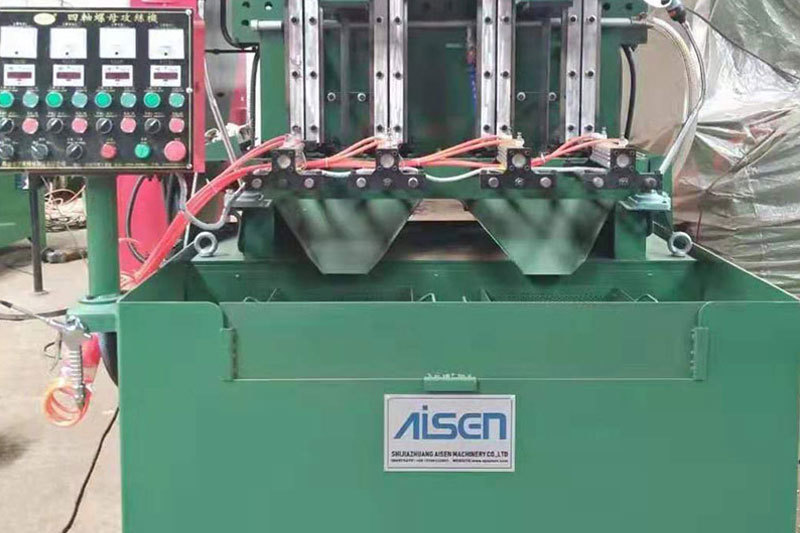
AISEN Four axis nut tapping machine ready for shipment to Russia
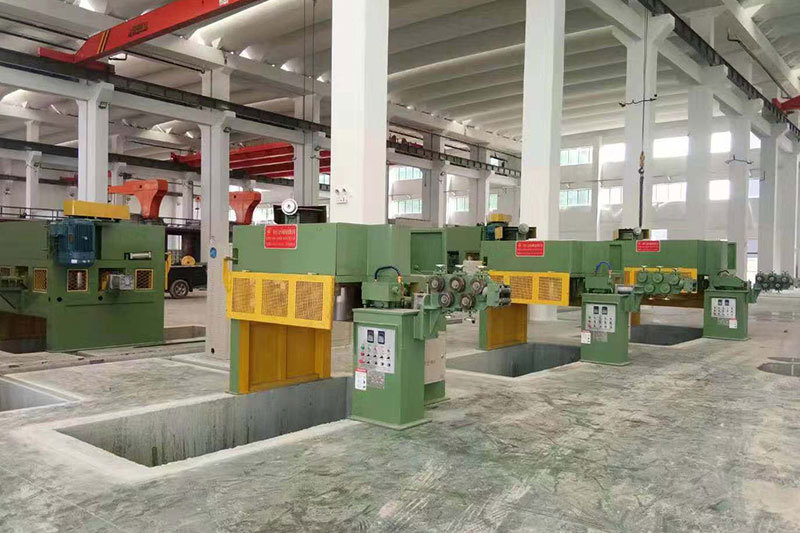
AISEN machinery inverted wire drawing machine
MESSAGES
We will contact you within one working day. Please pay attention to your email.
Qucik Link
Contact
Phone: +86-15100123091
E-mail: info@sjzaisen.com
Address: No.41 Zhaiying South Street, Yuhua District, Shijiazhuang City, Hebei Province China