

Automatic cold header machines: features, benefits, and use cases
Nov 21,2026


Author:
Aisen Machinery

Article overview
This guide explains automatic cold header machines — their core features, technical parameters, machine-type comparisons, tooling and maintenance costs, safety standards, and a step-by-step selection framework. Designed for fastener manufacturers and process engineers at the procurement and evaluation stage.
Table of contents
- 1. What are automatic cold header machines?
- 2. Key technical specifications and machine types
- 3. Cold heading vs. alternative forming processes
- 4. Die life, tooling costs, and maintenance schedules
- 5. Safety compliance and regulatory requirements
- 6. Total cost of ownership and ROI analysis
- 7. How to select the right machine for your application
- 8. Frequently asked questions
What are automatic cold header machines?
Cold header machines are high-speed metal forming machines that shape wire or rod stock into fasteners and precision parts at room temperature, without cutting or heating the material. The process relies on compressive force — typically delivered by a ram striking heading tooling — to displace metal into a die cavity, producing bolts, screws, rivets, pins, and custom near-net-shape components in one or more progressive stations.
Unlike machining, which removes material, the cold forming process redistributes the grain structure of the metal, which measurably increases tensile strength and fatigue resistance in the finished part. This is why aerospace, automotive, and construction fastener engineers specify cold-formed parts over turned parts whenever load-bearing performance is critical.
Modern automatic cold header machines integrate wire feeding, straightening, cutting, and multi-blow forming into a single continuous cycle. Production rates typically range from 60 to 400 parts per minute (PPM), depending on part complexity, wire diameter, and the number of forming stations. The automation eliminates most manual handling between operations, which is what distinguishes today's automatic machines from earlier single-blow bench headers.
Why do so many procurement teams underestimate the complexity of selecting this equipment? The answer usually comes down to the gap between a supplier's brochure and the actual production reality — specifically, how machine specifications interact with die design, material grade, and part geometry. The sections below address exactly that gap.
Key technical specifications and machine types
Core hardware parameters you must evaluate
Every automatic cold header machine purchase decision should start with hard specifications. Vague terms like "medium-duty" or "heavy-duty" mean nothing without numbers. The parameters below are the minimum set any fastener manufacturer or process engineer should request from a supplier before issuing an RFQ.
| Parameter | Typical range | Why it matters |
|---|---|---|
| Max wire diameter | 2 mm – 32 mm | Defines the fastener size range the machine can produce |
| Number of stations | 1 die 1 blow / 1 die 2 blow / 2–6 station progressive | Determines part complexity and secondary ops required |
| Production rate (PPM) | 60 – 400 PPM | Direct impact on throughput and unit cost |
| Max cut length | 10 mm – 200 mm | Limits shank length of the finished part |
| Forming force (tonnage) | 10 tons – 500 tons | Determines material hardness and head-to-shank volume ratio the machine can handle |
| Motor power | 5 kW – 110 kW | Affects energy cost and available force reserve |
Machine type classification
Cold header machines fall into three broad categories, each suited to a different production profile. Single-station headers (1 die 1 blow or 1 die 2 blow) are fast and simple — ideal for high-volume nails, rivets, and simple pins where geometry is minimal. Progressive headers, also called multi-station cold formers or parts formers, transfer the blank through 2 to 6 stations sequentially, allowing complex head geometries, undercuts, and reduced secondary machining. Solid-die nut forming machines operate on a different kinematic principle, using closed dies to forge hexagonal and other polygonal profiles — these are the standard for nut forming machines producing M6 through M24 hex nuts.
Wire forming machinery that feeds directly from coil offers the highest automation level and the lowest per-piece labor cost. Solid bar feeders are used for shorter, larger-diameter parts. Actual testing at production facilities consistently shows that switching from bar feed to coil feed on diameters below 10 mm reduces material waste by 3–7% and increases uptime by eliminating frequent bar changeovers.
Cold heading vs. alternative forming processes
How does cold heading compare to warm forging and machining?
The choice between cold heading, warm forging, and CNC turning is not purely technical — it involves volume thresholds, material constraints, and total cost targets. Cold header machines operate at room temperature, which keeps energy costs low and maintains tight dimensional tolerances (typically ±0.02–0.05 mm on head diameter). Warm forging heats the blank to 300–700°C before forming, which reduces forming force requirements and allows higher alloy steels to be processed — but energy costs increase significantly and cycle times slow down.
| Process | Typical tolerance | Material suitability | Best volume range | Relative unit cost |
|---|---|---|---|---|
| Cold heading | ±0.02–0.05 mm | Low–medium carbon, stainless, aluminum, copper | >500K pieces/run | Lowest |
| Warm forging | ±0.05–0.15 mm | High-alloy, tool steel, titanium | 50K–500K pieces | Medium |
| CNC turning | ±0.005–0.02 mm | Any machinable material | <50K pieces | Highest |
Which process is right for which part type?
For standard fasteners — hex bolts, socket head cap screws, carriage bolts, and most rivets — cold header machines are almost universally the correct choice above 500,000 pieces per run. For custom pin axles and specialty shoulder bolts with complex step geometries, a 4- or 5-station progressive header typically eliminates the need for downstream turning. Turned parts still win on very tight tolerances (under ±0.01 mm) and exotic materials above 45 HRC hardness.
Cold forging press equipment occupies a middle ground — essentially a slower, higher-force variant of cold heading used for flanged parts, ball studs, and near-net-shape blanks that go on to light machining. Industry consensus is that any fastener manufacturer producing more than 1 million pieces per month of a single SKU should model the lifecycle cost comparison carefully before defaulting to machining.
Die life, tooling costs, and maintenance schedules
What determines cold heading die lifespan?
Heading tooling is the single largest recurring cost in cold heading operations — not energy, not labor. Cold heading dies are typically manufactured from tungsten carbide (WC-Co grades) for the die cavity and high-speed tool steel (M2, M4, D2) for punches and knockout pins. Under normal operating conditions with low-carbon steel wire, a carbide die cavity can produce 1 million to 5 million pieces before dimensional drift exceeds tolerance.
Several variables compress die life significantly: wire surface lubrication quality, incoming wire hardness variation, die preload fit, ram alignment, and operating speed. Real-world observations from production floors show that 60–70% of premature die failures trace back to insufficient lubrication or incorrect die fit — not die material quality. This is a critical point that gets overlooked when teams focus exclusively on machine specifications.
"Tooling cost accounts for 15–30% of the total per-piece cost in a typical cold heading operation. Optimizing die geometry, lubricant selection, and change schedules is often more impactful than upgrading to a faster machine." — Industry benchmark data, Precision Metalforming Association technical guidelines
Recommended maintenance and changeover schedule
A structured preventive maintenance program for cold header machines and their associated header tooling components should follow this sequence:
- Every shift (8 hours): Check lubrication flow rate and wire surface condition; inspect ejector pin tip for wear; verify ram-to-die alignment within 0.03 mm; clear any slug debris from the die pocket.
- Every 500,000 pieces: Measure die cavity diameter against nominal; inspect punch tip radius; replace carbide inserts proactively if wear exceeds 15 µm radial deviation.
- Every 2,000,000 pieces or 30 days (whichever comes first): Full tooling set replacement; re-grease all linear bearings and crankshaft journals; check flywheel clutch brake engagement time.
- Every 6 months: Complete crankshaft end-play measurement; spindle runout check; electrical cabinet inspection for vibration-loosened connections; motor insulation resistance test.
- Annually: Full machine geometric accuracy survey; replace all wear bushings; hydraulic system oil flush if applicable; update firmware/PLC parameters.
Die changeover time on a well-organized 4-station progressive header typically runs 45–90 minutes with a trained two-person crew. Quick-change tooling systems, now standard on most modern screw manufacturing equipment platforms, can cut this to under 30 minutes. The business case for quick-change is straightforward: each hour of machine downtime on a 150 PPM header represents roughly 9,000 parts — at $0.05 average unit value, that is $450 of lost output per hour.
Safety compliance and regulatory requirements
What U.S. compliance requirements apply to cold header machines?
Cold header machines operate at high speed with significant forming forces and present serious entanglement, crush, and noise hazards. U.S. buyers and plant engineers must verify compliance with the following before equipment acceptance:
ANSI B11.9 is the primary American National Standard for the safe use of metal cold forming machines, including cold header machines and cold forging press equipment. It specifies guarding requirements, two-hand controls, light curtains, and minimum safety distance calculations. Any machine delivered to a U.S. facility should be verified against ANSI B11.9-2010 (or the current revision at time of delivery).
OSHA 29 CFR 1910.212 (general machine guarding) and 1910.217 (mechanical power presses, often applied by analogy to headers) set the federal regulatory floor. Non-compliance can result in OSHA citations with penalties currently reaching $16,131 per serious violation and $161,323 per willful violation (2026 figures).
For equipment imported from outside the U.S., CE marking (per EU Machinery Directive 2006/42/EC) is frequently cited in supplier documentation but is not a U.S. regulatory requirement. It is, however, a useful proxy for systematic safety engineering documentation. Buyers should request the full Declaration of Conformity and risk assessment file regardless.
Lockout/tagout (LOTO) and noise requirements
Lockout/tagout procedures under OSHA 29 CFR 1910.147 must be established before any maintenance personnel access the die area or tooling. Cold header machines have multiple energy sources: main motor, pneumatic ejection systems, hydraulic overload protection, and capacitor-stored electrical energy in drive controllers. All must be isolated and verified zero-energy before die changes begin. Training and written LOTO procedures are mandatory — not optional recommendations.
Noise levels on high-speed cold header machines commonly reach 90–105 dB(A) at the operator position. OSHA's permissible exposure limit (PEL) of 90 dB(A) over an 8-hour TWA, combined with an action level of 85 dB(A) triggering a hearing conservation program, means virtually all cold heading operations require engineering noise controls or hearing protection. Acoustic enclosures, vibration-damping mounts, and machine placement strategies should be designed into the facility layout before installation.
Total cost of ownership and ROI analysis
What does a cold header machine actually cost?
Price transparency is one of the biggest gaps in cold header machine content online. Based on market data available through 2026, the following price ranges represent typical new-machine FOB pricing (before freight, installation, and tooling):
| Machine type | Wire diameter range | New machine price (USD) | Used/refurbished (USD) |
|---|---|---|---|
| 1-die 2-blow header | 2–8 mm | $18,000–$45,000 | $6,000–$18,000 |
| 3-station progressive header | 3–14 mm | $55,000–$130,000 | $20,000–$55,000 |
| 5-station multi-station cold former | 6–20 mm | $150,000–$380,000 | $55,000–$140,000 |
| Nut forming machine (hex nut) | 8–24 mm | $80,000–$220,000 | $30,000–$85,000 |
TCO beyond the sticker price
The machine purchase price is typically 40–55% of 5-year total cost of ownership (TCO). The remaining cost breaks down approximately as follows: tooling and header tooling components (15–25%), energy (8–12%), labor (10–18%), maintenance and spare parts (8–12%), and facility overhead allocation (5–8%). These proportions shift considerably based on part complexity and production volume.
A simple ROI model for a 3-station progressive header producing M8 hex bolts at 150 PPM: at 20 hours/day, 250 days/year, the machine produces 45 million pieces annually. At a typical market price of $0.04–$0.06 per piece for M8 bolts in 2026, gross annual revenue potential is $1.8M–$2.7M from a single machine. Machine payback period at this throughput is typically 18–30 months on a new machine, 8–14 months on a well-refurbished unit — provided die changeover efficiency and OEE (overall equipment effectiveness) remain above 75%.
How to select the right machine for your application
Step-by-step selection framework
Selecting cold header machines without a structured process leads to either over-specification (paying for capacity you'll never use) or under-specification (buying a machine that can't hold tolerance on your target part). Follow this sequence before issuing any RFQ or purchase order:
- Define your part family: Confirm wire diameter range, finished part length range, head geometry, and required tolerance. If you're making bolts, screws, rivets, or pin axles — categorize them by complexity level (simple head, flanged head, undercut, multi-diameter).
- Set your volume and PPM target: Determine annual volume per SKU and required daily output. Back-calculate the minimum PPM requirement with realistic OEE of 70–80%.
- Choose station count: Single-blow for simple geometry; 2-blow for moderate head displacement; 3+ stations for complex heads, reduced flash, or near-net-shape profiles.
- Confirm material compatibility: Verify the machine's forming force (tonnage) is sufficient for your wire grade. Rule of thumb: forming force required (tons) ≈ 0.7 × cross-sectional area (mm²) × material UTS (MPa) / 1000.
- Evaluate supplier support and lead time: For U.S.-based buyers in 2026, typical new machine delivery from Asian manufacturers runs 90–150 days; domestic or European-stocked units can ship in 2–6 weeks. Request spare parts availability confirmation, training options, and installation/runoff (acceptance testing) terms in writing.
- Prepare your RFQ checklist: Include part drawing, material spec, annual volume, required PPM, tolerance limits, wire feed format (coil or bar), available floor space, power supply (460V/3-phase standard in U.S.), and noise/safety compliance requirements.
Red flags to watch for during supplier evaluation
Not every supplier listing for fastener manufacturing machines or metal cold working machines provides honest specification data. Watch for these warning signs: PPM claims with no mention of the specific part geometry used in testing; forming force specifications given in ambiguous units (some manufacturers list nominal tonnage, others list peak); die life warranties without defining wire grade or lubrication conditions; and CE documentation that doesn't include a risk assessment or only covers the base machine without the feeder and ejection system.
Of course, there are cases where a supplier's standard model falls just short of your requirement and a customized configuration is the right answer. This isn't necessarily a red flag — but it does mean the runoff acceptance test becomes even more critical. Always specify the actual production part (not a simplified test part) in the runoff criteria, and define acceptable dimensional variance, PPM, and scrap rate thresholds in the purchase contract before the machine ships.
Frequently asked questions
Q: What is the difference between a cold header machine and a cold forging press?
A: A cold header machine is a high-speed continuous-feed machine optimized for fasteners and wire-fed parts, typically producing 60–400 PPM. A cold forging press operates at lower speed with higher tonnage, used for larger, more complex near-net-shape blanks. Both rely on the same underlying cold forming process, but serve different part size and volume profiles.
Q: How long do cold heading dies typically last?
A: Under normal conditions with low-carbon steel wire and proper lubrication, tungsten carbide die cavities typically last 1–5 million pieces. Die life drops sharply with higher-alloy or harder wire, inadequate lubrication, or die misalignment. Punch and knockout pins usually require replacement 2–4× more frequently than the die cavity itself.
Q: What U.S. safety standards apply to cold header machines?
A: The primary standards are ANSI B11.9 (cold forming machines), OSHA 29 CFR 1910.212 (machine guarding), and OSHA 29 CFR 1910.147 (lockout/tagout). Noise exposure above 85 dB(A) triggers mandatory hearing conservation programs under OSHA 29 CFR 1910.95. Buyers should request full safety documentation from suppliers before accepting delivery.
Q: How much does a cold header machine cost in 2026?
A: New machine pricing ranges from roughly $18,000 for a basic 1-die 2-blow header to over $380,000 for a 5-station multi-station cold former with large wire capacity. Used and refurbished machines typically sell for 30–50% of new price. Full 5-year TCO, including tooling, energy, and maintenance, is typically 1.8–2.5× the initial purchase price.
Q: What information should I prepare before requesting a quote for a cold header machine?
A: Prepare a complete part drawing with tolerances, material specification (grade and wire diameter), annual volume per part number, required production rate (PPM), coil or bar feed preference, available floor space and power supply details (460V/3-phase is U.S. standard), and any applicable safety or compliance requirements. The more precise your RFQ inputs, the more accurate and comparable the supplier proposals will be.
Automatic cold header machines represent one of the most cost-efficient manufacturing investments available to fastener producers and precision parts manufacturers operating at scale. The key to a successful procurement decision lies not in selecting the most powerful machine on the market, but in matching the machine's station count, forming force, and PPM capability to your specific part family — then building a realistic TCO model that accounts for tooling, compliance, and maintenance costs from day one. With the right selection framework and supplier evaluation criteria in place, cold header machines consistently deliver sub-24-month payback periods and significant per-piece cost advantages over machining for volumes above 500,000 pieces per run.
PREVIOUS:
Get A Quote
We will contact you within one working day. Please pay attention to your email.
Latest News
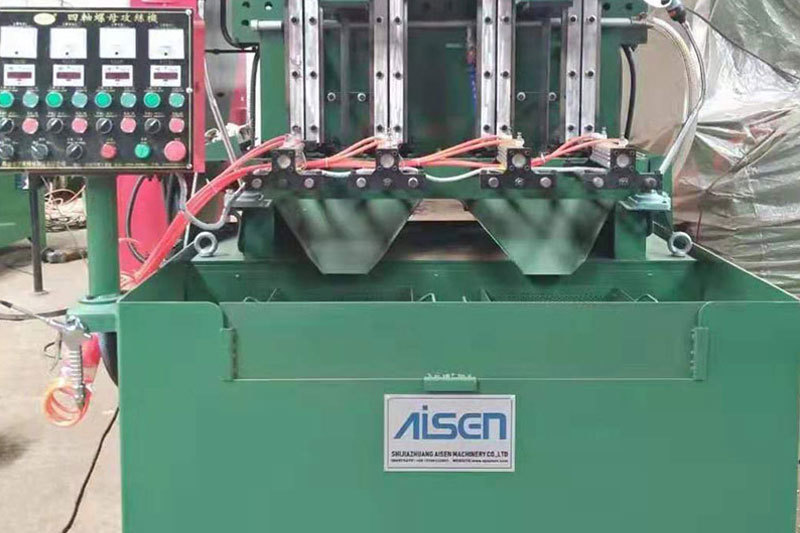
AISEN Four axis nut tapping machine ready for shipment to Russia
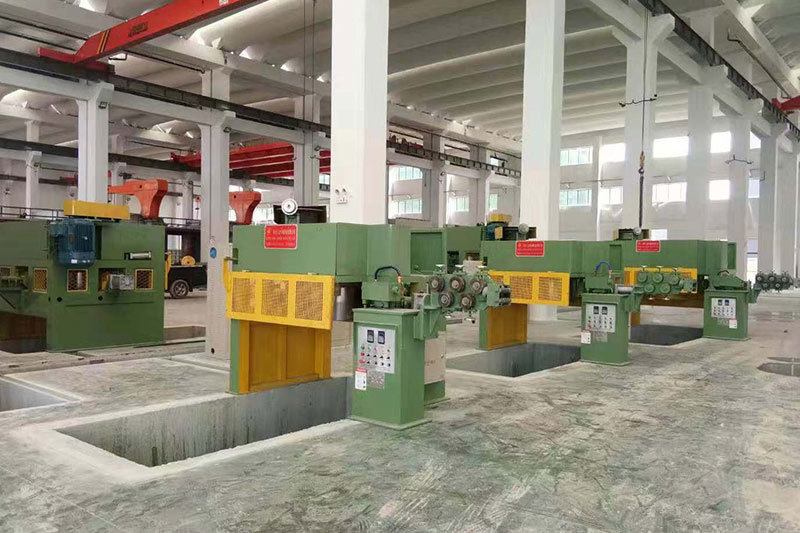
AISEN machinery inverted wire drawing machine
MESSAGES
We will contact you within one working day. Please pay attention to your email.
Qucik Link
Contact
Phone: +86-15100123091
E-mail: info@sjzaisen.com
Address: No.41 Zhaiying South Street, Yuhua District, Shijiazhuang City, Hebei Province China