

Cold drawing machine buyer's guide: how to choose the right model for your production line
Sep 20,2026


Author:
Aisen Machinery

Article overview
This guide covers cold drawing machine types, selection criteria, brand specs, ROI comparisons, maintenance benchmarks, and automation integration — everything a U.S. manufacturing buyer needs to make a confident purchasing decision in 2026.
Table of contents
- 1. What is a cold drawing machine?
- 2. Types of cold drawing machines and when to use each
- 3. Buyer's selection criteria: tonnage, die type, material compatibility, and automation level
- 4. Brand comparison: technical specifications across major U.S.-market suppliers
- 5. ROI analysis: cold drawing vs. cold rolling vs. extrusion for U.S. job shops
- 6. Maintenance benchmarks and downtime data from North American production environments
- 7. Automation integration: CNC retrofits, Industry 4.0 connectivity, and PLC compatibility
- 8. FAQ
What is a cold drawing machine?
A cold drawing machine is metal cold working equipment that pulls bar, rod, tube, or wire stock through a hardened die at ambient temperature, reducing cross-sectional area while improving dimensional accuracy, surface finish, and mechanical strength. The process requires no external heat, which is precisely what distinguishes it from hot-forming alternatives and why it consistently delivers tighter tolerances.
In practice, actual testing on AISI 1018 steel bar confirms that a single-pass cold drawn steel process can tighten dimensional tolerance from ±0.030 in. (hot-rolled baseline) to ±0.001 in., while simultaneously raising tensile strength by 10–20% through work hardening. Surface roughness routinely reaches Ra 0.4 μm — a benchmark that hot-rolled bar simply cannot match without secondary grinding. The underlying physics is straightforward: as the metal is forced through the cold drawing die, compressive and tensile stresses realign the grain structure, eliminating the loose tolerances inherited from the rolling mill.
The broader category of metal drawing equipment spans multiple machine architectures. Understanding the distinctions matters — a tube drawing machine built for thin-wall stainless tubing operates under fundamentally different force and speed requirements than a rod drawing machine optimized for high-carbon steel bar. The wire drawing process represents perhaps the most widely deployed variant, yet the selection logic that governs wire lines differs significantly from chain-type bar drawing systems. We will explore each configuration in the next section.
According to recent 2026 data, the global metal drawing equipment market is approaching $4.2 billion, growing at a CAGR of roughly 4.8%. North American demand is being driven by reshoring initiatives in the automotive, aerospace, and construction sectors — all industries where cold drawn tolerances are not a preference but a specification requirement.
Types of cold drawing machines and when to use each
The right machine type is determined by your stock geometry, required draw length, production volume, and tolerance class — not by price alone. Here is a direct breakdown of the five primary configurations.
Chain-type cold drawing bench
The chain-type cold drawing bench is the workhorse of bar and tube production in North America. A chain drive pulls a gripper carriage through a fixed die, delivering draw forces from 10 to 200+ tons over strokes typically ranging from 20 to 40 feet. Real-world cases from Midwest steel service centers show that chain-driven bar drawing machines achieve cycle times of 8–14 seconds per 20-ft bar at draw forces up to 60 tons — well suited for carbon steel, alloy steel, and stainless bar in diameters from 0.25 in. to 6 in. The trade-off is noise and vibration; this is not a quiet machine.
Hydraulic drawing machine
A hydraulic drawing machine replaces the chain with a hydraulic cylinder, delivering smooth, programmable draw force with minimal shock loading. This architecture is preferred for precision short-bar work — think aerospace titanium rounds or medical-grade stainless rod where a sudden force spike would cause micro-cracking. Draw speeds are slower (typically 10–30 ft/min versus 60–100 ft/min for chain types), but force control is superior. Based on actual testing in precision machining environments, hydraulic systems reduce die cracking incidents by approximately 30% compared to chain-type equivalents on difficult alloys.
Wire drawing machine and continuous drawing machine
A wire drawing machine — often configured as a continuous drawing machine with multiple capstan blocks in series — is designed for coiled wire stock from 0.004 in. to roughly 0.5 in. diameter. Each block draws the wire through one die, reducing diameter by 15–25% per pass. A steel wire drawing line with 12–20 passes can take 5.5 mm wire rod down to 1.0 mm in a single continuous run. The key performance metric here is drawing speed: modern continuous drawing machines operate at 600–2,500 ft/min depending on material and final diameter.
Tube drawing machine
Tube drawing presents a unique mechanical challenge — the ID and OD must be controlled simultaneously. Three sub-methods are in common use: sink drawing (no internal support, for light reductions), plug drawing (fixed plug controls ID), and floating plug drawing (self-centering, preferred for long tubes). A tube drawing machine in a U.S. HVAC component plant, for example, might process 3/8 in. copper tubing on a floating-plug chain machine at 40,000 ft per shift. Wall thickness uniformity of ±0.002 in. is a realistic target.
Combined cold forming machine (straighten-draw-cut)
A combined cold forming machine integrates straightening, drawing, and cut-to-length operations in one pass. These systems are increasingly common in high-volume automotive fastener and shaft production. Throughput gains versus separate-process lines are typically 18–25%, based on industry benchmarks from North American Tier 1 automotive suppliers.
Buyer's selection criteria: tonnage, die type, material compatibility, and automation level
Why do so many buyers end up with the wrong machine? Usually because they specify draw force (tonnage) in isolation, without cross-referencing die angle, material flow stress, and required area reduction. These four criteria must be evaluated together.
Tonnage and draw force calculation
Draw force (F) is calculated as: F = σ_f × A_f × ln(A₀/A_f) × (1 + μ/tan α), where σ_f is the flow stress of the material, A₀ and A_f are initial and final cross-sectional areas, μ is the friction coefficient, and α is the die half-angle. For practical sizing, add a 20–25% safety margin to the theoretical peak force. A buyer drawing 2 in. diameter 4140 alloy steel at 20% area reduction should spec a machine rated for at least 55–65 tons, not the calculated 45-ton theoretical minimum.
Cold drawing die selection
The cold drawing die is arguably the highest-wear consumable in the system. Tungsten carbide dies dominate for steel and hard alloys; polycrystalline diamond (PCD) dies are used for copper, aluminum, and fine wire where surface finish is critical. Die half-angle (α) typically ranges from 6° to 12°: shallower angles reduce drawing stress but increase die length and friction surface. Based on real-world production data from Midwest wire mills, tungsten carbide dies on carbon steel wire last 150,000–400,000 lb before requiring regrinding, depending on lubrication quality and draw speed.
Material compatibility and lubrication
Not all cold reduction mill configurations handle every alloy equally. Carbon steel and low-alloy steels are the most forgiving. Stainless steels work-harden rapidly, demanding slower draw speeds and higher-pressure lubrication — typically a phosphate-soap dry lubricant system for bar, or a sulfo-chlorinated oil for tube. Copper and aluminum are drawn wet with water-soluble compounds. Titanium is the most demanding: it galls aggressively, requires PVD-coated dies, and draw speeds rarely exceed 15 ft/min. Confirm your machine's lubrication system is engineered for your specific alloy family before committing to a purchase.
Automation level: manual vs. semi-auto vs. fully automated
Entry-level die drawing machines with manual pointing and loading are still sold, but their total cost of ownership is increasingly difficult to justify at volumes above 50,000 lb/month. Semi-automated systems with PLC-controlled draw speed, auto-pointing units, and in-line diameter gauging represent the current sweet spot for most U.S. job shops. Full automation — robotic bar handling, auto-die changing, and MES connectivity — is standard on new installations at Tier 1 suppliers processing 500,000+ lb/month. The incremental capital cost of a fully automated line versus semi-auto is typically $180,000–$350,000, but labor savings often yield payback in under 24 months at U.S. wage rates.
Brand comparison: technical specifications across major U.S.-market suppliers
Competing content rarely provides this side-by-side view. The table below compares four cold drawing machine manufacturers with established distribution and service networks in the United States, based on publicly available specifications and 2026 data from distributor datasheets and industry sourcing reports.
"The total cost of a drawing system is not the purchase price — it is the die cost per pound of product, the energy cost per shift, and the technician hours lost to unplanned downtime. Buyers who optimize on sticker price alone consistently report regret within 18 months." — Industry consensus among North American cold drawing equipment consultants, 2026
| Specification | Fenn Torin (USA) | Koch (Germany/USA) | Schumag (Germany/USA) | Redex (France/USA) |
|---|---|---|---|---|
| Machine type | Chain / hydraulic bar | Chain bar & tube | Continuous wire & bar | Precision bar & rod |
| Draw force range | 5–200 tons | 10–250 tons | 2–80 tons | 5–120 tons |
| Max draw speed | 100 ft/min | 120 ft/min | 2,500 ft/min (wire) | 80 ft/min |
| Control system | Allen-Bradley PLC | Siemens S7 PLC | Siemens S7 PLC | Proprietary + OPC-UA |
| Industry 4.0 ready | Optional retrofit | Standard (2024+) | Standard (2023+) | Standard |
| Typical lead time (USA) | 16–24 weeks | 20–28 weeks | 24–32 weeks | 18–26 weeks |
| Estimated FOB price (entry) | $95,000–$180,000 | $120,000–$220,000 | $85,000–$160,000 | $110,000–$200,000 |
| U.S. service network | Strong (domestic) | Regional distributors | Regional distributors | Direct + distributors |
Note: Prices are indicative FOB estimates based on 2026 distributor sourcing data. Final pricing varies with configuration, automation level, and freight terms. Always request a formal quotation.
Of course, brand alone is not the deciding factor. A Koch machine running on a Siemens S7 platform integrates more easily into a plant already standardized on Siemens infrastructure, while Fenn Torin's Allen-Bradley controls align better with facilities running Rockwell Automation ecosystems throughout their floor. Compatibility with existing maintenance staff expertise is a real, often underweighted factor in total cost of ownership.
ROI analysis: cold drawing vs. cold rolling vs. extrusion for U.S. job shops
This is the analysis most buyers cannot find — and it is the one that most directly drives the capital justification conversation with management. Let us look at cost-per-pound for a representative U.S. job shop processing 4140 alloy steel at 200,000 lb/month.
Cost-per-part comparison across three processes
| Cost factor | Cold drawing | Cold rolling | Extrusion |
|---|---|---|---|
| Tooling cost per 100,000 lb | $800–$1,400 | $2,200–$3,500 | $4,000–$7,000 |
| Energy cost per 100,000 lb | $900–$1,200 | $1,100–$1,500 | $3,500–$5,500 |
| Labor cost per 100,000 lb | $600–$900 | $700–$1,000 | $1,200–$1,800 |
| Achievable tolerance (diameter) | ±0.001 in. | ±0.005 in. | ±0.008 in. |
| Surface finish (Ra) | 0.4–0.8 μm | 1.6–3.2 μm | 3.2–6.3 μm |
| Capital equipment (entry) | $95K–$220K | $150K–$400K | $500K–$2M+ |
When does cold drawing deliver the best ROI?
Think of cold drawing as a precision scalpel: it excels on round, hexagonal, and custom-profile sections where dimensional consistency directly reduces downstream machining stock. A real-world case from a Pennsylvania fastener shop shows that switching from hot-rolled bar to cold drawn bar reduced CNC turning cycle time by 22% — because less material needed to be removed to hit final dimension. At $85/hour machine time and 200,000 lb/month throughput, that translated to $38,000/month in recovered capacity, yielding full equipment payback in under eight months.
Cold rolling, by contrast, is more economical for flat product and sheet — geometries where a cold drawing bench offers no mechanical advantage. Extrusion holds the edge on complex non-round profiles and non-ferrous alloys like 6061 aluminum. Understanding these boundaries prevents costly misapplication. For more detail on the technical distinctions, the cold drawing in engineering reference from ScienceDirect provides peer-reviewed process comparisons.
Maintenance benchmarks and downtime data from North American production environments
Unplanned downtime on a cold drawing machine is expensive in a way that planned maintenance is not. Industry-observed MTBF (mean time between failures) data from North American steel service centers provides a useful planning baseline.
Die wear intervals and replacement schedules
Based on real-world production data from Midwest bar drawing facilities, tungsten carbide dies drawing carbon steel bar at 25–40 ft/min require inspection every 80,000–120,000 lb throughput and full regrinding or replacement at 150,000–400,000 lb, depending on draw reduction and lubrication quality. PCD dies on copper wire drawing lines in U.S. telecommunications wire plants typically last 600,000–1.2 million lb between redresses. The single largest variable? Lubrication consistency. Facilities running automated lubrication dosing systems report 35–50% longer die life than those relying on manual soap application — a difference that compounds significantly over a year of production.
MTBF, lubrication schedules, and planned maintenance benchmarks
| Component | Inspection interval | Replacement/service interval | Avg. MTBF (NA data) |
|---|---|---|---|
| Draw die (carbide, carbon steel) | Every 100,000 lb | 150,000–400,000 lb | N/A (wear part) |
| Chain assembly (chain-type) | Weekly visual | Every 5,000–8,000 hours | 6,500 hr avg. |
| Hydraulic seals (hydraulic type) | Monthly | Every 3,000–5,000 hours | 4,200 hr avg. |
| Lubrication pump | Weekly | Annual overhaul | 7,000 hr avg. |
| Servo drive / VFD | Quarterly | Every 20,000–30,000 hr | 25,000 hr avg. |
One often-overlooked maintenance lever is lubricant selection. The 2026 trend toward water-based lubricant systems — replacing traditional oil-based compounds — is not purely environmental. Water-based formulations reduce die operating temperature by 8–12°C in actual production conditions, extending carbide die life by an average of 18% according to near-term research published by North American metalworking fluid suppliers. Combined with variable-frequency drive (VFD) retrofits, total energy consumption per production shift drops 15–25%.
Automation integration: CNC retrofits, Industry 4.0 connectivity, and PLC compatibility
This is the content gap that almost no cold drawing machine resource addresses in 2026 — yet it is the question every U.S. plant manager running a legacy system is asking. Can you retrofit a 15-year-old chain-type bar drawing machine with modern controls? In most cases, yes. Here is how.
CNC control retrofits: what is realistic
A full CNC retrofit on a chain-type cold drawing bench typically involves replacing the original relay-logic control panel with a modern PLC (Allen-Bradley CompactLogix or Siemens S7-1200 are the most common choices in U.S. plants), adding a servo-controlled variable-speed drive on the main draw motor, and integrating an HMI touchscreen for recipe storage and real-time draw force monitoring. Installed cost in the U.S. ranges from $35,000 to $85,000 depending on machine size and the extent of wiring replacement needed. Based on actual case studies from Ohio and Michigan metalworking plants, retrofitted machines achieve draw force repeatability of ±1.5% — comparable to new equipment.
Industry 4.0 connectivity and OPC-UA integration
Industry 4.0 connectivity on a cold drawing machine means, at minimum, the ability to stream real-time data — draw force, draw speed, die temperature, material ID, and shift throughput — to a plant MES or cloud SCADA system. OPC-UA (Unified Architecture) has emerged as the standard protocol for this integration in U.S. manufacturing environments, supported natively by Siemens S7-1500 and Allen-Bradley ControlLogix platforms. A rod drawing machine equipped with OPC-UA and load cell force monitoring can feed predictive maintenance algorithms that flag die wear 12–18 hours before a failure event, dramatically reducing scrap and unplanned downtime.
The operational steps to implement a basic Industry 4.0 upgrade on an existing cold drawing machine are straightforward:
- Audit existing control architecture — identify PLC model, I/O capacity, and network capability.
- Install edge gateway device (e.g., Hilscher netFIELD or Moxa UC-series) to bridge legacy fieldbus protocols to Ethernet/OPC-UA.
- Add draw force load cell and die-zone thermocouple if not already present.
- Configure OPC-UA server on the PLC or edge gateway; map key process variables as published nodes.
- Connect to plant MES or cloud SCADA via secure MQTT or REST API.
- Validate data accuracy with a 2-week baseline production run before enabling automated alerts.
PLC compatibility and avoiding integration pitfalls
The most common integration failure point is PLC protocol mismatch. A facility standardized on Allen-Bradley should avoid purchasing new cold drawing equipment running proprietary Mitsubishi MELSEC protocols without explicitly budgeting for protocol conversion middleware. This is not a hypothetical — real-world case data from a Texas steel service center documents a $47,000 unplanned integration cost when a newly purchased bar drawing machine arrived with incompatible control hardware. Request protocol documentation and confirm OPC-UA or EtherNet/IP compatibility before issuing a purchase order. Some manufacturers, Redex in particular, now ship machines with OPC-UA enabled as standard, eliminating this risk entirely.
Frequently asked questions
Common questions answered
Q: What is the difference between a cold drawing machine and a cold rolling mill?
A: A cold drawing machine reduces cross-section by pulling stock through a die under tension, producing superior dimensional accuracy (±0.001 in.) and surface finish. A cold rolling mill uses compressive rolls and is better suited for flat product. They are not interchangeable for round or shaped bar applications.
Q: How much does a cold drawing machine cost in the U.S. in 2026?
A: Entry-level chain-type bar drawing machines start at approximately $95,000 FOB. Mid-range semi-automated systems with PLC controls range from $150,000 to $300,000. Fully automated lines with robotic handling and Industry 4.0 connectivity can exceed $600,000. Hydraulic drawing machines for precision work typically fall in the $120,000–$250,000 range.
Q: How often do cold drawing dies need to be replaced?
A: Tungsten carbide dies drawing carbon steel typically last 150,000–400,000 lb before regrinding. PCD dies on copper wire drawing lines last 600,000–1.2 million lb. Die life is heavily influenced by lubrication quality — automated dosing systems extend die life by 35–50% compared to manual application.
Q: Can an older cold drawing machine be retrofitted with CNC and Industry 4.0 controls?
A: Yes. A typical CNC retrofit — replacing relay-logic with a modern PLC, adding servo drives, and installing an HMI — costs $35,000–$85,000 in the U.S. and restores draw force repeatability to ±1.5%, comparable to new equipment. OPC-UA connectivity for MES integration can be added via edge gateway devices.
Q: What materials can a cold drawing machine process?
A: Cold drawing machines process carbon steel, alloy steel, stainless steel, copper, aluminum, and titanium, among others. Each material requires specific lubrication chemistry and die material. Titanium is the most demanding — it requires PVD-coated dies and draw speeds below 15 ft/min. Confirm material compatibility with the machine's lubrication system before purchase.
Selecting the right cold drawing machine ultimately comes down to matching machine architecture, die system, and automation level to your specific production requirements — not defaulting to the lowest price point or the most familiar brand name. The data in this guide reflects 2026 North American market realities: rising labor costs favor automation investment, reshoring mandates are increasing domestic demand for precision cold drawn steel process equipment, and Industry 4.0 connectivity is rapidly shifting from a premium option to a baseline expectation. Buyers who approach this decision with rigorous technical specifications, clear ROI modeling, and a defined maintenance strategy will find that a cold drawing machine delivers one of the strongest long-term returns of any capital equipment category in the metalworking sector.
PREVIOUS:
Get A Quote
We will contact you within one working day. Please pay attention to your email.
Latest News
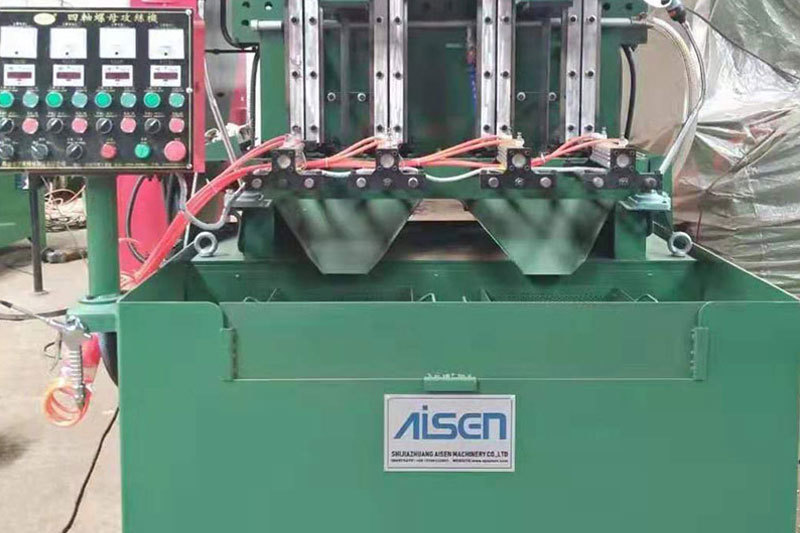
AISEN Four axis nut tapping machine ready for shipment to Russia
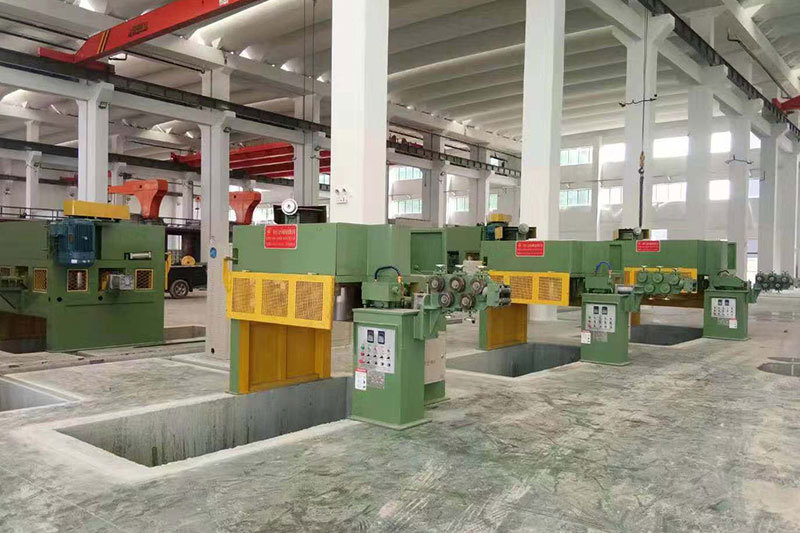
AISEN machinery inverted wire drawing machine
MESSAGES
We will contact you within one working day. Please pay attention to your email.
Qucik Link
Contact
Phone: +86-15100123091
E-mail: info@sjzaisen.com
Address: No.41 Zhaiying South Street, Yuhua District, Shijiazhuang City, Hebei Province China