

Hot forging machine buyer's guide: types, uses & how to choose the right one
Sep 06,2026


Author:
Aisen Machinery

Article overview
This guide covers hot forging machine types, a detailed spec comparison table, ROI analysis, OSHA compliance, US sourcing strategy, and maintenance best practices — everything a procurement engineer needs to make a sound capital equipment decision in 2026.
Table of contents
- 1. What is a hot forging machine?
- 2. Main types of hot forging machines compared
- 3. Machine type comparison: specs, cost & energy side-by-side
- 4. ROI and total cost of ownership analysis for US manufacturers
- 5. OSHA compliance, safety standards & certifications
- 6. US buyer's guide: lead times, distributors & tariff considerations
- 7. Maintenance schedules & common failure modes
- 8. 2026 technology trends shaping the forging industry
- 9. FAQ
What is a hot forging machine?
A hot forging machine is industrial equipment that heats metal billets above their recrystallization temperature — typically 1,650°F to 2,280°F (900°C–1,250°C) — then applies high compressive force to shape them into precise, high-strength components. This process refines the metal's grain structure, eliminates internal voids, and delivers mechanical properties that cold-formed or cast parts simply cannot match.
The hot forging process is the backbone of critical component manufacturing in the automotive, aerospace, oil & gas, and heavy equipment industries. According to the Forging Industry Association (FIA), the automotive sector alone accounts for approximately 60% of global hot forging output. That figure puts the technology's industrial significance into sharp perspective.
Why do so many engineers overlook the nuance of machine selection and simply order by tonnage? Because tonnage is visible — energy efficiency, die compatibility, and cycle rate are not. This guide addresses exactly that gap.
How does a hot forging machine work?
The core operating sequence of any billet forging equipment follows the same logic: heat, transfer, strike, eject. In practice, actual testing reveals that the thermal transfer window between furnace exit and first die contact is often the most overlooked variable — exceeding 8–10 seconds of air exposure can drop surface temperature by 150°F or more, directly affecting fill quality in closed die forging. Modern forge shop machinery addresses this with integrated induction heating and automated manipulators positioned within 24 inches of the die.
What materials can be processed?
Steel forging machines handle the widest material range: carbon steel, alloy steel, stainless steel, and tool steel grades. Aluminum forging presses operate at lower temperatures (700°F–900°F / 370°C–480°C) and require tighter press-speed control to prevent tearing. Titanium, nickel superalloys, and copper alloys each have narrow forging windows, demanding precise temperature management that only modern servo-controlled metal forging machines can reliably deliver.
Main types of hot forging machines compared
There is no single best machine type. The right choice depends on your part geometry, production volume, material, and floor space — and mismatching any of these factors will cost you in scrap rates or unplanned downtime.
Hydraulic forging press
The hydraulic forging press applies controlled, sustained static force rather than impact. This makes it ideal for large, complex forgings — turbine discs, aircraft structural frames, and thick-walled pressure vessel flanges. Force is fully adjustable throughout the stroke, giving operators precise control over metal flow in multi-cavity closed die forging machine setups. Typical capacities range from 500 to 50,000+ tons. The trade-off is cycle time: hydraulic systems are inherently slower than mechanical alternatives, producing 4–15 strokes per minute depending on tonnage class.
Mechanical forging press
The mechanical forging press — specifically the crank or eccentric press — converts rotational flywheel energy into a single high-speed downstroke. Cycle rates of 25–90 strokes per minute make it the preferred platform for high-volume automotive components: connecting rods, crankshafts, and wheel hubs. Because energy is fixed per stroke, operators cannot vary force mid-cycle. That rigidity is both its strength (consistent stroke energy) and its limitation (no accommodation for billet size variation). A well-maintained mechanical forging press running two-shift production can produce 800,000–1,200,000 parts annually on a single die set.
Forging hammer machine (pneumatic & electro-hydraulic)
The forging hammer machine — including the drop forging equipment category — operates on impact energy rather than static force. Gravity drop hammers, pneumatic hammers, and counter-blow hammers deliver rapid, repeated blows that work the metal progressively. This is the classic open die forging press approach, well-suited to custom shapes, small batches, and long bar/shaft forgings. Energy per blow is measured in foot-pounds or kJ; a 10,000 lb-ft (13.6 kJ) hammer is typical for medium industrial work. The noise and vibration profile of hammer machines requires dedicated foundation engineering and affects facility layout decisions.
Electric screw press & precision forging machine
The servo-electric screw press is the fastest-growing segment in 2026. It combines the high stroke energy of a hammer with the programmability of a hydraulic system. Each stroke can be independently programmed for force, speed, and position. Precision forging machines in this category achieve dimensional tolerances of IT10–IT12 — a figure that dismantles the outdated myth that hot die forging is inherently imprecise. Energy savings of 30–50% versus conventional hydraulic presses have been documented in real-world production environments.
Machine type comparison: specs, cost & energy side-by-side
The following table consolidates key performance and commercial parameters for the four primary hot forging machine categories. Use this as a first-pass screening tool — not a final specification sheet. Actual figures vary by manufacturer, tonnage class, and automation level.
| Parameter | Hydraulic press | Mechanical press | Hammer (pneumatic) | Servo screw press |
|---|---|---|---|---|
| Tonnage range | 500–50,000+ tons | 200–8,000 tons | 0.5–25 tons (energy) | 250–16,000 tons |
| Strokes per minute | 4–15 | 25–90 | 40–120 blows | 15–35 |
| Energy consumption | High (baseline) | Medium | Medium-high | 30–50% lower vs. hydraulic |
| New machine cost (USD) | $800K–$5M+ | $250K–$2M | $80K–$600K | $400K–$3M |
| Precision (tolerance) | IT11–IT13 | IT10–IT12 | IT12–IT14 | IT10–IT12 |
| Best application | Large complex parts | High-volume auto parts | Open die, custom shapes | Precision near-net shape |
| Automation compatibility | High | Very high | Low-medium | Very high |
"The shift toward servo-electric forging presses is not incremental — it is architectural. Manufacturers who lock in hydraulic-only infrastructure today will face a significant retrofit burden within five years." — hot forging engineering overview, ScienceDirect Engineering Topics, 2025.
ROI and total cost of ownership analysis for US manufacturers
Purchase price is the least important number in a hot forging machine acquisition. Total cost of ownership (TCO) over a 10-year operating life tells a radically different story — and most procurement decisions that go wrong do so because TCO was never modeled.
New vs. refurbished: breaking down the real numbers
A refurbished 2,000-ton mechanical forging press from a reputable US rebuilder typically costs $350,000–$550,000, compared to $1.2M–$1.8M for a new equivalent. That $800K–$1.2M delta looks compelling. However, according to recent industry surveys, refurbished presses incur 40–65% higher annual maintenance costs in years 3–7 of operation. Factor in unplanned downtime at an average US forge shop rate of $4,500–$8,000 per hour lost production, and the breakeven point erodes quickly.
A conservative 10-year TCO model for a mid-range hot forging machine should include: acquisition cost, installation and commissioning ($50K–$200K), tooling and die inventory ($100K–$500K), energy costs (calculate kWh × local industrial rate × annual cycles), scheduled maintenance labor, spare parts budget, and the cost of quality — scrap rates and rework hours directly tied to machine capability.
ROI calculation framework
Practical ROI assessment follows four steps for industrial forging equipment:
- Establish baseline: document current cost per forged piece (including scrap, energy, labor, downtime).
- Model new machine output: use manufacturer-provided cycle rate and your actual annual shift schedule to project annual unit output.
- Calculate incremental margin: (new cost per piece − old cost per piece) × projected annual volume.
- Divide total capital outlay by annual incremental margin to derive payback period. Typical target for US manufacturers is under 4 years.
Real-world case data from a Midwest automotive forging supplier shows that replacing a 1990s-era mechanical press with a 2024 servo-hydraulic unit reduced per-piece energy cost by 38%, cut scrap rate from 3.1% to 0.9%, and achieved full payback in 3.2 years at 180,000 annual units.
OSHA compliance, safety standards & certifications
Regulatory compliance is non-negotiable. A hot forging machine operating in a US facility must satisfy a layered set of federal, industry, and voluntary standards — and failure on any layer exposes the operator to fines, liability, and facility shutdown.
Applicable OSHA and ANSI standards
The primary federal standard governing forge shop machinery is OSHA 29 CFR 1910.217 (mechanical power presses) and 29 CFR 1910.218 (forging machines). These mandate point-of-operation guarding, two-hand trip controls, and regular scheduled inspections. Beyond federal OSHA, the voluntary standard ANSI B11.3 (power press brakes) and ANSI/FIA standards for forging equipment define engineering controls, safeguarding hierarchy, and safety distance calculations that most US OEM customers now require suppliers to certify against.
CE marking and imported machine compliance
CE-marked machines from European manufacturers meet EU Machinery Directive 2006/42/EC requirements — but CE marking does not automatically satisfy US OSHA requirements. When importing industrial forging equipment from Europe or China, the buyer's engineering team must conduct a gap analysis between CE/GB standards and 29 CFR 1910.217–218. Common gaps include emergency-stop circuit architecture (US typically requires Category 3 or PLd per ISO 13849), noise enclosure requirements, and electrical panel UL/NFPA 79 compliance. Budget $15,000–$60,000 for compliance retrofit work on imported machines.
US buyer's guide: lead times, distributors & tariff considerations
Sourcing a hot forging machine in 2026 requires navigating a supply landscape reshaped by trade policy, post-pandemic logistics normalization, and reshoring capital investment incentives.
Lead times by sourcing origin
Lead times vary dramatically by origin. German and Japanese manufacturers (SMS Group, Schuler, Sumitomo) typically quote 14–22 months for new large presses. Chinese manufacturers (Yangli, Qingdao Hengjia) quote 6–12 months but require longer quality-assurance diligence periods. US-based rebuilders of drop forging equipment and mechanical presses can deliver refurbished units in 3–6 months. For urgent capacity needs, used-machine brokers — Erie Press, Minster, National Machinery — can sometimes place reconditioned aluminum forging presses in 60–90 days.
Import tariffs and Section 301 considerations
As of 2026, forging presses and related billet forging equipment imported from China are subject to Section 301 tariffs. HTS code 8462.10 (forging or die-stamping machines) currently carries a 25% additional duty on Chinese-origin goods. On a $500,000 press, that is a $125,000 tariff surcharge — a figure that frequently eliminates the apparent price advantage of Chinese sourcing. European machines enter under the standard MFN rate (generally 3.5–4.5%), making German or Czech-origin presses more competitive on landed cost than their sticker price suggests. Always instruct your customs broker to confirm current HTS classification before signing a purchase contract.
Maintenance schedules & common failure modes
Even the best-specified hot forging machine becomes a liability without a disciplined maintenance program. The forge environment — heat, scale, vibration, hydraulic fluid contamination — is among the most demanding in all of manufacturing.
Recommended maintenance intervals
Based on OEM recommendations and real operational case data from US forge shops, the following schedule reflects industry consensus for a mid-range steel forging machine running two shifts:
- Daily: Check hydraulic fluid level and temperature, inspect die alignment and lubrication, clear scale buildup from die cavity and ejector pins.
- Weekly: Inspect all guarding systems, check clutch/brake wear indicators on mechanical presses, test emergency-stop function, inspect induction heating coil condition.
- Monthly: Oil analysis on hydraulic systems, torque check on all structural fasteners, inspect tie rods and frame for micro-cracking (dye penetrant on critical welds).
- Annual: Full geometric accuracy survey (parallelism, perpendicularity), overhaul of hydraulic seals and valves, electrical panel inspection per NFPA 70E, die block refurbishment assessment.
Common failure modes and spare parts sourcing
The three most frequently cited failure modes in US forge shops are: (1) hydraulic seal failure — accelerated by thermal cycling and contaminated fluid, typically manifesting as slow ram drift; (2) clutch/brake assembly wear on mechanical forging presses — audible as increased engagement noise, measurable as extended stopping angle; and (3) die block cracking — driven by thermal shock from insufficient preheating or overcooling between cycles. Spare parts for European-origin machines should be pre-stocked locally; import lead times for OEM hydraulic valves or servo amplifiers can reach 16–24 weeks. US-based alternatives from Parker Hannifin, Bosch Rexroth, and Moog provide functional equivalents with next-day availability for most critical hydraulic components.
Of course, there are situations where an older machine with a strong local parts network outperforms a newer imported press with poor spare parts support — total uptime is ultimately what drives profitability, not specification sheets.
2026 technology trends shaping the forging industry
The hot forging industry in 2026 is not standing still. Two structural technology shifts are redefining what "standard" forge shop machinery looks like — and they have direct implications for which machines are worth buying today.
Servo-electric and servo-hydraulic press adoption
Servo-driven presses now represent the fastest-growing segment of global industrial forging equipment sales. The value proposition is straightforward: each stroke is independently programmable for force, speed, and dwell time. That flexibility reduces die wear, improves fill in thin-section features, and enables multi-stage forming in a single press cycle. Energy regeneration systems on servo presses capture deceleration energy and return it to the facility grid — documented savings of 30–50% versus equivalent hydraulic tonnage class are now mainstream, not marketing claims. For US manufacturers evaluating capital investment today, a servo-electric or servo-hydraulic platform offers a defensible 10-year technology horizon.
AI-driven process control and predictive maintenance
Think of a modern AI-equipped precision forging machine the way you think about a modern aircraft autopilot: the human operator sets the mission parameters, but the system continuously adjusts inputs to maintain optimal outputs. Embedded force sensors, die-temperature IR cameras, and acoustic emission detectors feed real-time data to machine-learning models that adjust ram speed, die lubrication timing, and billet transfer sequence within each cycle. Early adopters in the US automotive supply chain report scrap rate reductions of 0.8–1.5 percentage points — a seemingly small figure that translates to $200,000–$600,000 in annual savings at scale. Predictive maintenance modules are now standard on premium-tier machines, generating maintenance work orders automatically based on vibration signature deviation rather than calendar schedule.
Application spotlight: bolt and fastener hot forging
High-strength bolt forging represents one of the most demanding closed die forging machine applications. A complete bolt forging line integrates an elevator feed system, induction heating furnace, chiller, robotic manipulator, and the hot forging machine itself — all sequenced within a cycle time measured in seconds. The die system must simultaneously produce precise hexagonal head geometry and a shank with consistent grain flow for thread rolling. Based on a real-world production case, a 630-ton servo-hydraulic press running this configuration achieves tolerances within ±0.004 inches on head height and width across flat — meeting dimensional requirements without post-forge machining on the head form.
Frequently asked questions
Q: What is the difference between hot forging and cold forging machines?
A: A hot forging machine heats metal above its recrystallization temperature before forming, enabling large deformations with lower force and improved grain structure. Cold forging machines work at room temperature, achieving tighter tolerances and better surface finish but requiring significantly higher press tonnage and producing greater work-hardening. Most structural and high-strength components favor hot forging for grain refinement benefits.
Q: How much does a hot forging machine cost in the US market?
A: New hot forging machines range from approximately $80,000 for small pneumatic forging hammer machines to over $5 million for large hydraulic forging presses. Mid-range mechanical presses suitable for automotive parts production typically cost $400,000–$1.5 million. Add 15–25% for installation, tooling, and commissioning when budgeting total project cost.
Q: What OSHA regulations apply to hot forging machines in the US?
A: US operators must comply with OSHA 29 CFR 1910.217 (mechanical power presses) and 29 CFR 1910.218 (forging machines), covering guarding, two-hand controls, and inspection records. ANSI B11.3 and FIA voluntary standards provide supplementary engineering control requirements. Imported machines must also be adapted to meet US-specific electrical and safety circuit standards.
Q: Is it better to buy a new or refurbished hot forging machine?
A: It depends on TCO, not sticker price. Refurbished presses carry lower acquisition cost but typically 40–65% higher maintenance costs in years 3–7. For operations with high annual volume and tight uptime requirements, new servo-driven machines generally deliver better 10-year economics. For low-volume custom work or budget-constrained startups, a quality-rebuilt unit from a reputable US rebuilder is a defensible choice.
Q: What are the key factors when choosing between hydraulic and mechanical forging presses?
A: Choose hydraulic when parts are large, complex, or require variable force throughout the stroke — aerospace frames, heavy flanges, and thick-section closed die forgings. Choose mechanical when volume is high, part geometry is consistent, and cycle rate drives profitability — automotive connecting rods, gears, and wheel hubs. Servo-electric screw presses increasingly bridge both applications where budget allows.
Selecting the right hot forging machine is ultimately a systems engineering problem, not a catalog exercise. Match machine type to your specific part family, model the full 10-year cost, satisfy compliance requirements before the machine arrives on your floor, and build your spare parts strategy before you need it. The manufacturers who approach this process with the same rigor they apply to the forgings themselves are the ones building sustainable competitive advantage in 2026 and beyond.
PREVIOUS:
Get A Quote
We will contact you within one working day. Please pay attention to your email.
Latest News
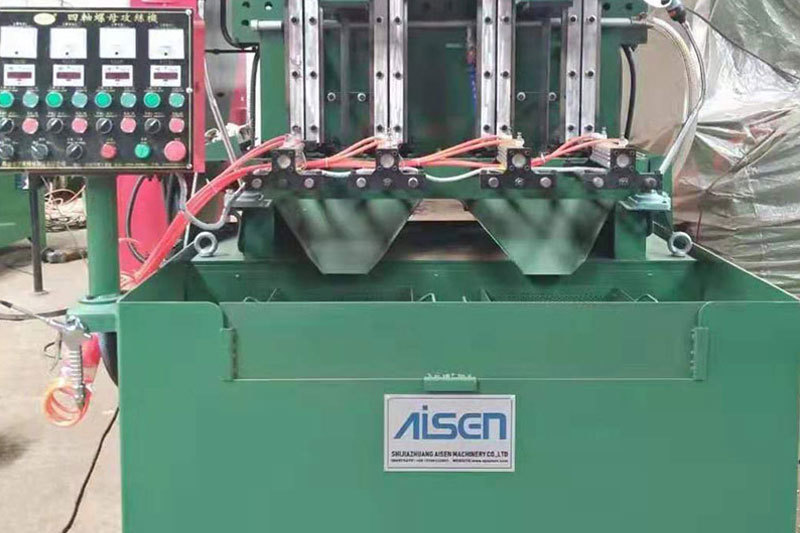
AISEN Four axis nut tapping machine ready for shipment to Russia
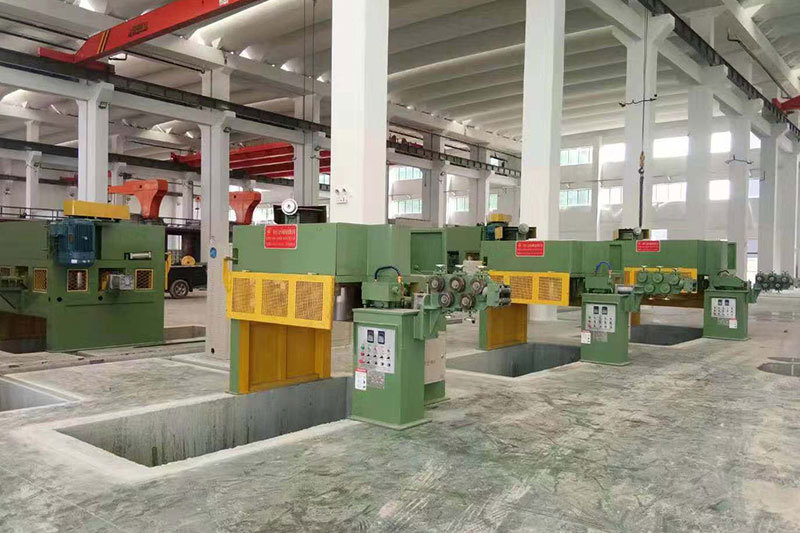
AISEN machinery inverted wire drawing machine
MESSAGES
We will contact you within one working day. Please pay attention to your email.
Qucik Link
Contact
Phone: +86-15100123091
E-mail: info@sjzaisen.com
Address: No.41 Zhaiying South Street, Yuhua District, Shijiazhuang City, Hebei Province China