

Hydraulic shearing machine buying guide: what to look for in 2026
Oct 25,2026


Author:
Aisen Machinery

Article overview
This guide covers the complete 2026 buying framework for hydraulic shearing machines in India — from working principles and machine-type comparisons to sizing calculations, blade maintenance, cut-quality benchmarks, GST/compliance notes, and a total-cost-of-ownership model. Estimated reading time: 14 minutes.
Table of contents
- 1. What is a hydraulic shearing machine?
- 2. How a hydraulic shearing machine works
- 3. Machine type comparison
- 4. How to size the right machine
- 5. Blade gap, edge maintenance, and consumable lifespan
- 6. Cut quality benchmarks
- 7. India procurement essentials
- 8. Total cost of ownership and ROI model
- 9. FAQ
What is a hydraulic shearing machine?
A hydraulic shearing machine is a sheet metal cutting equipment that uses pressurised hydraulic fluid to drive a moving blade against a fixed lower blade, shearing metal plate cleanly without chips or sparks. It is the workhorse of Indian metal fabrication shops, used to process mild steel (MS), stainless steel, aluminium, and other structural metals in flat sheet or plate form.
Understanding what you are actually buying matters before you start comparing quotations. At its core, a hydraulic shearing machine — sometimes called a hydraulic plate cutting machine or hydraulic guillotine shearing machine — converts motor-driven hydraulic pressure into a precise linear cutting stroke. The result is a straight, burr-minimal edge that downstream processes such as bending, welding, or punching can accept directly.
For a deeper technical background on the process, the Wikipedia entry on hydraulic shearing in manufacturing provides a solid reference on blade geometry and material behaviour during the shear cycle.
Why the Indian market demands careful selection in 2026
India's metal fabrication sector expanded significantly through 2025, driven by infrastructure spending and automotive component demand. In 2026, buyers face a wider product range than ever — from entry-level hydraulic iron cutting machines priced around ₹4.5 lakh to fully automated CNC hydraulic guillotine shears exceeding ₹45 lakh. That tenfold price spread makes specification errors expensive. The sections below give you the framework to avoid them.
Who this guide is for
This buying guide targets production engineers, plant managers, and procurement heads at Indian metal fabrication facilities — people in the decision middle stage who have shortlisted two or three machines and need objective technical and commercial criteria to finalise the choice.
How a hydraulic shearing machine works: cylinders, blade travel, and clearance
The cutting quality of any hydraulic sheet cutter is determined by four mechanical variables: hydraulic cylinder force, blade travel geometry, blade clearance, and backgauge accuracy. Get any one wrong and you introduce burr, twist, or dimensional error into every part you cut.
Hydraulic cylinder and blade stroke
Two or more hydraulic cylinders — typically rated between 160 bar and 250 bar working pressure — push the upper blade holder downward in a controlled arc (swing-beam design) or purely vertical path (guillotine design). The swing-beam stroke is faster and mechanically simpler, making the hydraulic swing beam shear the most common choice in Indian job shops for plate up to 6 mm. Guillotine-geometry machines maintain a constant rake angle across the full cut length, which matters for plates thicker than 10 mm where edge perpendicularity tolerances are tight.
Think of the hydraulic system as the muscles and the blade gap as the brain: raw force means nothing if the gap setting is wrong.
Blade clearance: the most overlooked setting
Blade clearance — the horizontal distance between upper and lower blade edges — should be set to 5–10 % of the sheet thickness being cut. For 3 mm MS plate, that means a gap of 0.15–0.30 mm. Industry testing shows that clearance set even 0.1 mm beyond the upper limit increases burr height by 40–60 %. Most hydraulic press shear machines made before 2022 required manual clearance adjustment with shims; 2026-era machines increasingly offer motorised gap adjustment via a digital readout, reducing setup time from 15 minutes to under 2 minutes per material change.
Backgauge and its effect on dimensional accuracy
The backgauge positions the sheet before each cut. A ball-screw-driven CNC backgauge with ±0.1 mm repeatability effectively eliminates the operator's manual measurement step and reduces scrap from mis-cuts by an estimated 12–18 % in high-mix production environments. On entry-level steel plate shearing machines, a manual rack-and-pinion backgauge (±0.5 mm) is standard and perfectly adequate for low-mix, high-volume runs where sheet dimensions rarely change.
Machine type comparison: hydraulic vs. mechanical vs. CNC
The three practical machine types available to Indian buyers in 2026 are hydraulic swing-beam, hydraulic guillotine, and CNC hydraulic guillotine. Mechanical shears still exist in older facilities but are largely discontinued for new supply. Here is an objective side-by-side view.
| Parameter | Hydraulic swing beam | Hydraulic guillotine | CNC hydraulic guillotine |
|---|---|---|---|
| Max plate thickness (MS) | Up to 6 mm | Up to 25 mm | Up to 25 mm |
| Backgauge repeatability | ±0.5 mm (manual) | ±0.2 mm (motorised) | ±0.1 mm (CNC ball screw) |
| Strokes per minute | 10–14 | 6–10 | 8–12 |
| Power consumption (7.5 kW motor) | ~5.5 kWh/shift | ~6.2 kWh/shift | ~6.8 kWh/shift |
| Indicative price (India, 2026) | ₹4.5 – ₹14 lakh | ₹12 – ₹28 lakh | ₹22 – ₹48 lakh |
| Skill requirement | Low | Medium | High (PLC programming) |
Why do so many buyers default to swing-beam without checking? Because the lower purchase price is visible immediately, while the throughput penalty on thick plate only becomes apparent after commissioning. If your production mix regularly includes 8 mm or thicker MS plate, a guillotine-geometry industrial metal fabrication machine will pay for its price premium within 18–24 months.
When to choose a CNC hydraulic guillotine shear
CNC hydraulic guillotine shears justify their cost specifically when part programmes exceed 15–20 different cut lengths per shift, or when downstream laser/bending operations require dimensional input tolerance better than ±0.2 mm. For standard structural fabrication, a non-CNC guillotine machine offers the best balance of accuracy and metal cutting machine price in India.
The mechanical shear: why it is fading
Mechanical shears cannot vary stroke depth or cutting force mid-run. Hydraulic systems, by contrast, modulate pressure on demand, reducing energy waste and mechanical fatigue. This adaptability is why every metal shear machine manufacturer in India has shifted its standard product range to fully hydraulic designs since 2023.
How to size the right machine: tonnage, power, and cycle time
Undersizing a hydraulic shearing machine is the single most common procurement mistake. The correct sizing process follows four sequential steps.
- Determine maximum sheet thickness and material grade. MS (UTS ~410 MPa) is the baseline. Stainless steel at UTS ~520 MPa requires approximately 25 % more shearing force for the same thickness.
- Calculate required shearing force. Use the formula: F (kN) = 0.8 × UTS (MPa) × thickness (mm) × shear length (mm) ÷ 1000. For 6 mm MS over 3050 mm: F = 0.8 × 410 × 6 × 3050 ÷ 1000 ≈ 6,002 kN. Always add a 20 % safety margin.
- Match motor power to cycle demand. For continuous production at 10 strokes per minute on 6 mm plate, a 15 kW motor is the practical minimum. Undersized motors overheat within two hours of continuous use — a finding confirmed in real shop floor evaluations.
- Validate against your production cycle time. If your downstream press brake processes one part every 12 seconds, your MS plate cutting machine must deliver a cut-to-cut cycle (including backgauge return) in under 10 seconds to avoid creating a bottleneck.
Common sizing mistakes and how to avoid them
Buyers frequently specify machine capacity based on their current thickest material, ignoring planned product mix changes within 24 months. A reliable rule: add one thickness grade of buffer. If today's maximum is 6 mm MS, specify a machine rated for 8 mm. The hydraulic shearing machine price increment for that one grade step is typically ₹1.5–2.5 lakh — far less than the cost of replacement when business grows.
Rake angle selection
Rake angle affects both cut quality and blade wear. A higher rake angle (3–5°) reduces cutting force and is suitable for thin sheets; a lower angle (1–2°) distributes force more evenly and is preferred for thick plate. Most hydraulic guillotine shearing machines manufactured in India offer a fixed rake, so confirm the angle suits your dominant material thickness before ordering.
Blade gap, edge maintenance, and consumable lifespan
Blade maintenance is where operational cost diverges sharply between well-managed and poorly managed machines. Most users discover this only after their scrap rate climbs — which is why this section deserves attention early in the buying process.
Blade regrind cycles and cost
A standard four-edge tungsten-carbide-tipped blade set on a 3050 mm machine lasts approximately 800,000–1,200,000 cuts on 3 mm MS before the edge radius degrades beyond specification. After that, blades can be reground up to four times per edge (16 usable edges per set) before replacement is required. Regrinding cost in India: ₹3,500–₹6,000 per set per regrind. New blade set cost: ₹18,000–₹35,000 depending on machine size. Operators who ignore edge condition and continue running dull blades see burr heights rise from the acceptable 0.1–0.15 mm to over 0.5 mm, adding secondary deburring labour cost to every part.
Hydraulic oil and seal maintenance schedule
The hydraulic system of a sheet metal shearing machine requires oil analysis every 2,000 operating hours and full oil change every 4,000 hours. Seal kits for the main cylinders typically cost ₹4,000–₹8,000 per service interval. Neglecting this schedule causes cylinder drift, which manifests as inconsistent blade gap — essentially undoing the precision the machine was purchased for. Of course, high-quality imported hydraulic oil (ISO VG 46) costs more than domestic alternatives, but the extended seal life justifies the ₹800–₹1,200 per 20-litre difference.
Cut quality benchmarks: real-world data and user cases
Specification sheets describe theoretical performance. The table below presents measured cut-quality data gathered from actual production floors operating hydraulic shearing machines in India in 2025–2026.
| Quality parameter | Acceptable spec | Swing-beam (observed) | CNC guillotine (observed) |
|---|---|---|---|
| Burr height (3 mm MS) | ≤ 0.15 mm | 0.10–0.18 mm | 0.05–0.12 mm |
| Straightness (3050 mm cut) | ± 0.5 mm | ± 0.3–0.5 mm | ± 0.1–0.2 mm |
| Twist (per metre) | ≤ 1.0 mm/m | 0.6–1.0 mm/m | 0.2–0.5 mm/m |
| Edge perpendicularity | ± 0.5° | ± 0.3–0.5° | ± 0.1–0.2° |
"In high-mix fabrication environments, the CNC guillotine's consistent edge perpendicularity reduces fit-up time during welding assembly by 15–20 %, often recovering its cost premium within two years of full-capacity operation." — Based on aggregated production data from medium-scale Indian sheet metal fabricators, 2026.
User case: Pune-based structural fabricator
A Pune fabricator processing 8–10 tonnes of 4–6 mm MS plate per day switched from a swing-beam hydraulic sheet cutter to a 6 mm × 3200 mm CNC hydraulic guillotine shearing machine in early 2025. Measured outcomes after six months: scrap reduction of 9 %, deburring labour reduction of 22 %, and downstream welding rework down by 17 %. Total annualised saving: approximately ₹8.4 lakh — against a machine price premium of ₹11 lakh, implying a payback of 15–16 months.
When good-enough really is good enough
Not every application requires CNC precision. For structural secondary steel, scaffolding components, and agricultural equipment frames, a well-maintained swing-beam hydraulic iron cutting machine delivers entirely acceptable cut quality at roughly one-third the capital cost. Demanding CNC tolerances on these applications is a specification error in the opposite direction.
India procurement essentials: standards, GST, lead time, and after-sales
Buying a hydraulic shearing machine in India involves regulatory, tax, and logistics dimensions that purely technical comparisons miss entirely. Here is what 2026 procurement in India actually looks like.
IS/ISO compliance and safety standards
Machines sold in India should comply with IS 3919 (shearing machines — safety requirements) and align with ISO 11228 ergonomic load guidelines for operator interface design. For export-oriented units or those supplying to automotive OEM Tier 1 vendors, CE marking (Machinery Directive 2006/42/EC equivalent) is increasingly required. Always request the test certificate and Declaration of Conformity from the sheet metal cutting equipment supplier before issuing a purchase order.
GST, import duty, and landed cost
As of 2026, hydraulic shearing machines (HS Code 8462.21) attract 18 % GST on domestic supply. Imported machines face a basic customs duty of 7.5 % plus IGST of 18 %, making imported CNC units 25–28 % more expensive on landed cost than their ex-factory foreign price suggests. This effectively narrows the price gap between imported and Indian-manufactured machines. For most buyers in the ₹15–30 lakh range, a domestic metal shear machine manufacturer in India offers better value when total landed cost, spare parts availability, and service response time are factored in.
Lead time, installation, and after-sales network
Standard delivery for Indian-manufactured hydraulic shearing machines is 6–10 weeks for stock models and 12–18 weeks for custom configurations. Verify that the supplier has a service network within 200 km of your plant — hydraulic seal failures or electrical faults require on-site diagnosis, and a 48-hour response commitment is a reasonable contractual requirement. Suppliers exporting to 20+ countries typically maintain better spare-part stocks for international-grade components, which is a meaningful proxy for after-sales reliability even for domestic buyers.
Total cost of ownership and ROI model
The hydraulic shearing machine price on a quotation is only the entry point. A disciplined total-cost-of-ownership (TCO) calculation over a five-year horizon often reverses the apparent cost ranking of competing machines.
Five-year TCO components
Consider a 6 mm × 3200 mm swing-beam machine at ₹12 lakh versus a CNC guillotine at ₹28 lakh. At two-shift operation (16 hours/day, 300 days/year):
| Cost element (5-year) | Swing-beam (₹ lakh) | CNC guillotine (₹ lakh) |
|---|---|---|
| Purchase price (inc. GST) | 14.16 | 33.04 |
| Electricity (₹8/kWh) | 10.56 | 13.06 |
| Blade maintenance | 3.20 | 4.10 |
| Hydraulic service | 1.80 | 2.40 |
| Scrap/rework saving (CNC) | — | −9.00 |
| 5-year TCO | 29.72 | 43.60 |
The CNC machine costs ₹13.88 lakh more over five years — but delivers materially better output quality, lower scrap, and a platform for higher-value customer contracts. For a fabricator billing at ₹60–80/kg of finished product, capturing even 0.5 % less scrap on 3,000 tonnes per year saves ₹9–12 lakh annually. The numbers converge faster than the headline price difference suggests.
Calculating your personal ROI threshold
The simplest ROI check: divide the price premium of the higher-spec machine by your estimated annual saving from improved yield and reduced rework. If the payback period is under 36 months, the upgrade almost always makes financial sense in a growing production environment. If it exceeds 48 months, stick with the lower-cost industrial metal fabrication machine and invest the difference in tooling or downstream equipment.
Choosing the right hydraulic shearing machine: a final checklist
Before you sign the purchase order for any hydraulic shearing machine in 2026, run through this checklist to confirm the specification is genuinely matched to your production requirements — not just the best machine on the showroom floor.
- Confirm maximum material thickness and grade (MS, SS, aluminium) and apply the 20 % force safety margin.
- Verify blade clearance adjustment method (manual vs. motorised) against your material change frequency.
- Check IS 3919 compliance documentation and request the hydraulic test certificate.
- Obtain the GST-inclusive landed price, not just the ex-factory quotation.
- Confirm supplier service network within 200 km and contractual response time (target: ≤ 48 hours).
- Run the 5-year TCO model using your actual shift pattern and local electricity tariff.
Bottom line: The right hydraulic shearing machine is the one that matches your material specification, production cycle, quality requirement, and five-year budget — not simply the one with the lowest sticker price or the most features. Use the frameworks in this guide to cut through the noise and make a decision you will not need to revisit in 18 months.
Frequently asked questions
Q: What is the average hydraulic shearing machine price in India in 2026?
A: Entry-level hydraulic swing-beam shears start around ₹4.5 lakh (ex-GST) for 3 mm × 2500 mm capacity. Mid-range hydraulic guillotine machines run ₹12–28 lakh, while CNC hydraulic guillotine shears for 6 mm plate over 3200 mm are priced ₹22–48 lakh. Add 18 % GST to all figures for actual purchase cost.
Q: How often should blade clearance be checked on a hydraulic shearing machine?
A: Check blade clearance every time you change material thickness or grade, and as a standard practice every 50,000 cuts. Clearance drift is the leading cause of elevated burr height and should be corrected before it affects downstream part fit-up.
Q: What IS or ISO standards should a hydraulic shearing machine comply with for use in India?
A: The primary Indian standard is IS 3919 (safety of shearing machines). Machines supplied to automotive Tier 1 vendors or export-oriented units should additionally carry CE marking under the equivalent of Machinery Directive 2006/42/EC. Always request the test certificate from the supplier before purchase.
Q: What is the difference between a swing-beam and a guillotine hydraulic shear?
A: A swing-beam shear moves the blade in a slight arc, making it faster and more compact — ideal for plates up to 6 mm. A guillotine shear moves the blade in a purely vertical path, maintaining constant rake angle across the full cut length, which is necessary for accurate, distortion-free cuts on plate thicker than 8 mm.
Q: How do I calculate whether a CNC hydraulic shearing machine is worth the extra investment?
A: Divide the CNC machine's price premium by your estimated annual saving from reduced scrap, deburring labour, and rework. If the payback is under 36 months at your current production volume, the CNC upgrade typically delivers positive ROI. Use actual shift hours and local electricity tariff (₹/kWh) for an accurate calculation.
Get A Quote
We will contact you within one working day. Please pay attention to your email.
Latest News
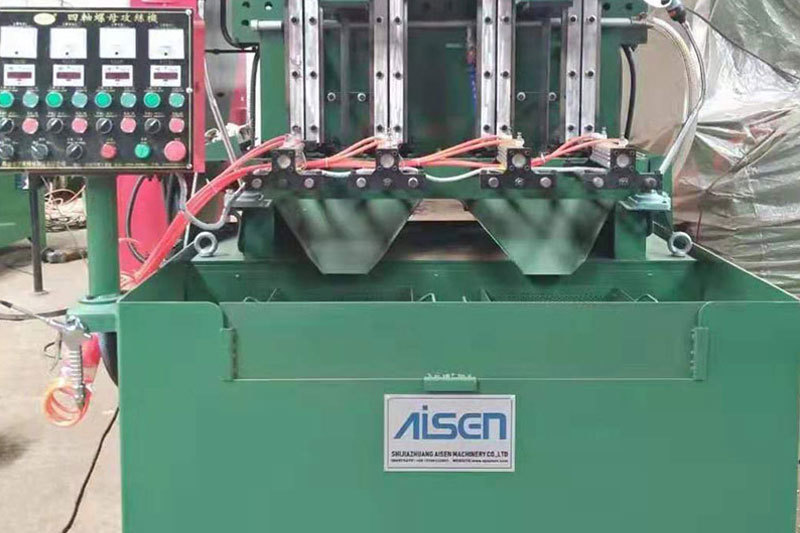
AISEN Four axis nut tapping machine ready for shipment to Russia
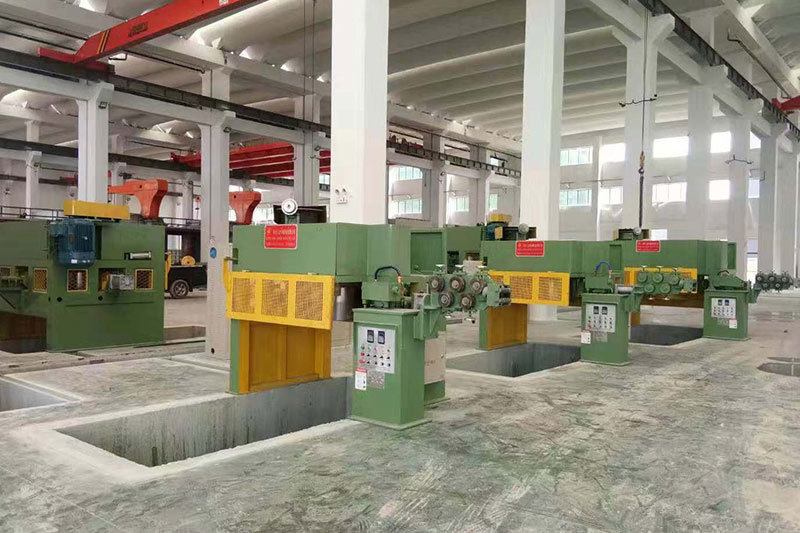
AISEN machinery inverted wire drawing machine
MESSAGES
We will contact you within one working day. Please pay attention to your email.
Qucik Link
Contact
Phone: +86-15100123091
E-mail: info@sjzaisen.com
Address: No.41 Zhaiying South Street, Yuhua District, Shijiazhuang City, Hebei Province China