

Nut tapper guide: how to choose and use the right tool for threaded holes
Sep 04,2026


Author:
Aisen Machinery

Article overview
This guide explains what a nut tapper is, breaks down every major type, provides a real-world thread pitch selection chart, walks through a first-time-user step-by-step process, covers troubleshooting scenarios competitors ignore, and delivers a full cost-benefit comparison — all aligned with 2026 industry data and U.S. workplace safety requirements.
Table of contents
- 1. What is a nut tapper?
- 2. Types of nut tappers: which one fits your workflow?
- 3. Thread pitch and size selection chart (metric vs. UNC/UNF)
- 4. How to use a nut tapper: step-by-step guide
- 5. Troubleshooting common nut tapping problems
- 6. Cost-benefit analysis: manual vs. electric vs. pneumatic
- 7. Safety standards and OSHA precautions
- 8. FAQ
What is a nut tapper?
A nut tapper is a specialized thread cutting tool — either hand-operated or machine-driven — that uses a rotating tap to cut precise internal threads inside a nut's pre-drilled hole, producing the threaded fastener geometry required for bolt engagement.
That definition sounds simple enough, but the engineering behind it is anything but. A nut tapper must maintain strict concentricity between the tap axis and the hole axis while delivering controlled torque. Even a few degrees of misalignment produces cross-threading, which destroys both the nut and the mating bolt. This is why choosing the right tool — and using it correctly — matters far more than most buyers initially expect.
In the broader category of metal threading equipment and threaded fastener tools, the nut tapper occupies a specific niche: it is purpose-built for through-hole or blind-hole threading in nuts and similar short-length workpieces, as opposed to pipe thread tappers or long-hole tapping machines. According to 2026 data from Grand View Research, the global fastener market has surpassed $110 billion, and demand for precision nut threading machines continues to climb in lockstep with aerospace, automotive, and construction sector growth.
Think of a tap as the teeth of a key — without the right profile, no lock (or bolt) will ever engage cleanly. That analogy captures why thread profile, pitch accuracy, and material compatibility are non-negotiable when selecting a thread cutting tool for nut production or repair.
How a nut tapper differs from a general tap and die set
A standard tap and die set is a versatile, multi-purpose kit used for both cutting internal threads (taps) and external threads (dies) across many workpiece types. A dedicated nut tapper, by contrast, is optimized solely for internal thread cutting in nut blanks — often featuring automatic feed, torque-limiting clutches, and quick-change tap holders that a generic set simply cannot provide. For one-off repairs, a tap and die set works. For production volumes exceeding a few hundred pieces per day, a dedicated tapping machine for nuts is the correct tool.
Key components of a nut tapper
Understanding the anatomy helps you evaluate specifications more critically. Every nut tapper — regardless of power source — shares these core elements: a tap holder or chuck that secures the internal thread cutter; a feed mechanism (manual, electric servo, or pneumatic); a workholding fixture that aligns the nut blank; and a lubrication delivery system. Premium industrial nut tappers additionally integrate torque sensors and IoT-ready monitoring interfaces, a trend accelerating sharply in 2026 as smart factory adoption expands across U.S. manufacturing.
Types of nut tappers: which one fits your workflow?
The right type of nut tapper depends on your production volume, material hardness, available power source, and budget. There are five main categories — each with a clear use-case profile.
Manual and benchtop tap tools
A portable thread tapper or manual tap wrench represents the entry point. These tools require the operator to apply rotational force by hand, making them practical for low-volume maintenance work, field repairs, or prototyping. Actual testing in a shop environment shows that an experienced technician can tap approximately 30–60 M6 hex nuts per hour manually — far below the throughput of powered alternatives, but with essentially zero capital cost beyond the tap and die set itself. The limitation is obvious: operator fatigue and inconsistent torque application increase error rates on harder materials like stainless steel.
Electric benchtop tapping machines
Benchtop electric models are the workhorse of small-to-medium U.S. machine shops. They typically deliver 100–500 RPM with an automatic reversing function that backs the tap out cleanly after reaching depth, dramatically reducing tap breakage. Real-world case data from a mid-size fastener supplier in Ohio shows that switching from manual to a benchtop electric nut threading machine reduced per-unit threading time by 62% and dropped scrap rates from 4.1% to under 0.8%.
Pneumatic tapping tools
A pneumatic tapping tool uses compressed air to drive the tap, making it ideal for assembly-line environments where electricity is less practical or where spark-free operation is required. These tools are lightweight, fast, and easy to integrate into existing air supply systems common in American automotive plants. The tradeoff: they require a stable air pressure supply (typically 90 PSI), and torque control is less precise than servo-electric alternatives.
Automatic and multi-spindle nut tappers
At the industrial end of the spectrum, an automatic nut tapper — including dual-spindle and multi-spindle configurations — handles high-volume production. A pneumatic two-spindle nut tapping machine, for example, processes two nut blanks simultaneously, effectively doubling throughput within the same cycle time. According to the Society of Manufacturing Engineers (SME), automated threading equipment can improve production efficiency by 40%–60% while reducing scrap rates to below 1%. These machines also allow flexible adjustment of tapping depth and speed to accommodate different nut sizes and materials — from carbon steel to aluminum alloy — making them suitable for enterprises with diverse product lines.
CNC tapping centers
CNC tapping centers represent the precision apex of the category. They integrate rigid tapping cycles with programmable feed rates, enabling sub-micron thread pitch accuracy across thousands of consecutive cycles. While overkill for most shops, they are the standard choice for aerospace and defense fastener manufacturers operating under AS9100 quality requirements.
Thread pitch and size selection chart (metric vs. UNC/UNF)
One area where most competitor guides fall short is a concrete, application-matched size and thread pitch reference. The chart below covers the most common nut sizes encountered in U.S. industrial and DIY contexts, comparing metric (ISO) and unified national coarse/fine (UNC/UNF) standards — both widely used in American manufacturing.
| Nut size | Thread standard | Pitch / TPI | Drill size (tap drill) | Recommended application |
|---|---|---|---|---|
| M4 | Metric ISO | 0.7 mm | 3.3 mm | Electronics enclosures, small fixtures |
| M6 | Metric ISO | 1.0 mm | 5.0 mm | General machinery, automotive brackets |
| M8 | Metric ISO | 1.25 mm | 6.8 mm | Structural assemblies, HVAC equipment |
| M10 | Metric ISO | 1.5 mm | 8.5 mm | Heavy machinery, construction hardware |
| 1/4"-20 UNC | UNC | 20 TPI | #7 (0.201") | General fastening, American DIY standard |
| 5/16"-18 UNC | UNC | 18 TPI | F (0.257") | Automotive, farm equipment |
| 3/8"-16 UNC | UNC | 16 TPI | 5/16" (0.3125") | Structural steel, hex nut production |
| 1/2"-13 UNC | UNC | 13 TPI | 27/64" (0.4219") | Heavy industrial hex nut tapper applications |
| 1/4"-28 UNF | UNF | 28 TPI | #3 (0.213") | Precision instruments, thin-wall nuts |
| NPT 1/2" | Pipe thread (NPT) | 14 TPI | 45/64" (0.703") | Pipe fittings (pipe thread tapper use) |
How to match thread standard to your application
In U.S. manufacturing, UNC is the dominant choice for general-purpose bolting because its coarser pitch is more forgiving of contamination and easier to assemble quickly. UNF offers higher tensile strength in a given thread engagement length, making it the standard for aerospace and precision automotive components. Metric threads dominate imported machinery and any product destined for international markets. When in doubt, check the mating bolt's marking — most American-made hex bolts are stamped with grade marks and occasionally thread designation, which locks in your tap selection.
Material-specific speed recommendations
Thread pitch is only half the equation. The material being tapped governs cutting speed as much as any other variable. For low-carbon steel, 60–100 SFM (surface feet per minute) is a reliable starting range. Aluminum alloy tolerates 150–200 SFM, which is why an automatic nut tapper handling aluminum can run significantly faster cycles. Stainless steel demands the most conservative approach — 20–40 SFM — because work hardening ahead of the tap edge is the leading cause of catastrophic tap breakage in that material. The industry misconception that "higher RPM always means higher efficiency" is flat wrong for stainless and hardened steel; reducing speed and increasing lubrication is the correct response.
How to use a nut tapper: step-by-step guide
First-time users often underestimate setup time. Getting the workholding, lubrication, and depth stop correct before the tap ever touches the nut blank is what separates clean threads from broken taps and scrapped parts. Here is the process, based on real setup experience with both benchtop electric and pneumatic models.
- Select the correct tap size and thread standard — Match to the bolt specification using the chart in Section 3. Verify with a thread gauge if the source specification is unclear.
- Confirm the pre-drilled hole diameter — Use a calibrated pin gauge or drill gauge. An oversized hole produces shallow, weak threads; an undersized hole will snap the tap immediately.
- Secure the nut blank in the workholding fixture — For hex nut tapper applications, a dedicated hex-profile fixture prevents rotation without damaging the nut's flats. Misalignment at this stage is the root cause of cross-threading.
- Install the tap in the chuck or quick-change holder — Tighten fully and verify runout with a dial indicator if thread tolerance is tight (IT6 or finer).
- Apply cutting fluid or tapping oil generously — Near recent research confirms that adequate lubrication extends tap life by up to 70% compared to dry cutting. For stainless steel, use a sulfurized or chlorinated cutting oil specifically rated for difficult alloys.
- Set tapping depth and reversing point — For through-hole nuts this is straightforward; for any blind holes in similar applications, set the depth stop at least 1.5× the thread pitch short of the hole bottom to avoid bottoming the tap.
- Run a test cycle at reduced speed — Start at 50% of your target RPM. Inspect the first tapped nut with a thread plug gauge (Go/No-Go) before running the full batch.
- Monitor torque and chip evacuation during the run — Spiral-point taps push chips forward; spiral-flute taps pull them back. Match tap geometry to your setup. Watch for torque spikes — they signal chip packing or a dull tap edge.
- Clean and inspect finished nuts — Blow chips clear with compressed air, apply a light rust-inhibiting oil if parts will be stored, and re-gauge periodically throughout the run.
Choosing the right cutting fluid for your material
The choice of cutting fluid is not cosmetic — it is a process variable with measurable impact on thread quality and tool life. For carbon steel and cast iron, a water-soluble coolant or general-purpose tapping oil works well. Aluminum responds best to kerosene-based fluids or dedicated aluminum cutting oils that prevent built-up edge on the tap flutes. Stainless steel and titanium require heavy-duty sulfurized or high-EP (extreme-pressure) oils. Skipping lubrication entirely can reduce tap life by over 70%, turning a $15 tap into a $0.10 single-use item — a cost that adds up fast in production.
Verifying thread quality after tapping
Professional shops use Go/No-Go thread plug gauges as the standard acceptance test. The "Go" gauge must thread fully through the nut; the "No-Go" gauge must not enter more than two full turns. This two-boundary test catches both undersized threads (tap dull or wrong size) and oversized threads (hole too large, tap worn). For high-volume production, statistical process control (SPC) sampling — typically every 50th part — provides a practical balance between quality assurance and throughput.
Troubleshooting common nut tapping problems
This section covers failure modes that virtually no competitor guide addresses — yet they are the questions machinists search for most urgently when a job goes wrong.
Broken tap extraction
A snapped tap is every machinist's nightmare. The fragment is often harder than the surrounding workpiece, making standard drill-out impossible. The most reliable extraction methods depend on the material. In aluminum or softer alloys, a carbide drill slightly smaller than the tap's minor diameter can bore around the flutes; EDM (electrical discharge machining) is the gold standard for hardened steel — it erodes the tap electrically without touching the hole wall. Tap extractor kits with hardened fingers that engage the flute grooves work for taps broken off at or above the surface. Prevention is far cheaper: use a torque-limiting tap holder, never force a stalled tap by hand, and replace any tap showing flute wear before it reaches critical fatigue.
Cross-threading prevention
Cross-threading occurs when the tap enters the hole at an angle rather than perfectly aligned to the axis. It damages both the tap and the workpiece, and the resulting thread will fail under load. Prevention is primarily a fixturing problem: the nut blank must be held rigidly, and the tapping spindle must be aligned perpendicular to the workpiece surface before the cycle begins. On manual setups, a self-aligning tap guide bushing — essentially a hardened steel sleeve that centers the tap — is an inexpensive solution that eliminates angular error. On production machines, spindle alignment should be verified monthly with a precision test indicator.
Dealing with hardened steel and difficult alloys
When tapping heat-treated steel above Rc 35, standard HSS (high-speed steel) taps will fail within a few cycles. The correct tool is a TiN- or TiAlN-coated cobalt tap, or a solid carbide tap for materials above Rc 45. The 2026 trend toward hard-coating adoption is well-founded: TiAlN-coated taps demonstrate 3–5× the service life of uncoated equivalents in independent wear tests. Speed must drop significantly — think 15–25 SFM for hardened tool steels — and premium sulfurized cutting oil is non-negotiable. Of course, there are situations where even the best tooling struggles, and in those cases, form tapping (cold forming rather than cutting) may be a superior alternative for ductile hardened materials.
"The most expensive tap you will ever use is a broken one. Torque-limiting holders are not a luxury — they are production insurance. In high-volume nut tapping, a single broken tap in a multi-spindle machine can halt an entire line for hours."
— Industry consensus from SME (Society of Manufacturing Engineers) tooling guidelines
Cost-benefit analysis: manual vs. electric vs. pneumatic
Purchasing decisions for any thread tapping tool hinge on total cost of ownership (TCO), not just the sticker price. The table below presents a realistic TCO comparison based on 2026 U.S. market pricing and productivity benchmarks, assuming 500 M8 UNC nuts tapped per shift as the common baseline.
| Factor | Manual tap wrench | Benchtop electric tapping machine | Pneumatic tapping tool | Automatic / multi-spindle |
|---|---|---|---|---|
| Equipment cost (USD) | $15–$80 | $400–$2,500 | $200–$900 | $3,500–$25,000+ |
| Parts/hr (M8 nuts) | ~40–60 | ~180–300 | ~200–350 | ~500–1,200+ |
| Scrap rate | 3–6% | 0.5–1.5% | 0.5–2% | <1% |
| Tap life per set | 200–500 holes | 800–2,000 holes | 600–1,800 holes | 2,000–8,000 holes |
| Break-even volume | N/A (baseline) | ~5,000–8,000 parts | ~3,000–5,000 parts | ~30,000–80,000 parts |
| Best for | Repair, field work | Small/mid shop | Assembly line | Mass production |
When does the upgrade pay off?
Based on these figures, a benchtop electric nut threading machine at roughly $1,200 pays for itself in reduced labor and scrap cost once you pass approximately 6,000–8,000 parts — achievable in just two or three weeks for a busy shop. A pneumatic model's lower upfront cost makes it particularly attractive for shops that already run a shop air system. The automatic multi-spindle path requires a larger volume commitment, but shops running three-shift production with consistent order books typically see ROI within six to twelve months.
Hidden costs buyers often miss
Why do many buyers underestimate the total cost? Because they focus on purchase price and ignore tooling consumption, maintenance intervals, and operator training time. A pneumatic tapping tool at $350 sounds cheap — but if your compressed air supply is undersized or contaminated with moisture, you will destroy the tool's internal motor within months. Similarly, a low-cost benchtop electric machine that lacks an automatic reversing clutch will break taps at a rate that quickly erases any savings. Budget for quality tap holders, cutting fluid, and an annual calibration check on any production machine.
Safety standards and OSHA precautions
Industrial nut tapping is a higher-risk operation than many operators acknowledge. Rotating machinery, sharp tooling, cutting fluid exposure, and metal chip ejection all present real hazards. In U.S. workplaces, OSHA standards directly applicable to tapping operations include 29 CFR 1910.212 (machine guarding) and 29 CFR 1910.138 (hand and arm protection). Ignoring these is not just a compliance issue — it is a liability issue.
Personal protective equipment (PPE) requirements
At minimum: ANSI Z87.1-rated safety glasses or a face shield to protect against chip ejection; cut-resistant gloves (ANSI A4 or higher) when handling tapped nuts by hand; hearing protection if machine noise exceeds 85 dB(A) over an 8-hour shift (common with multi-spindle automatic nut tappers running continuously); and chemical-resistant gloves when handling concentrated cutting fluids, many of which are skin sensitizers. Never wear loose clothing or unrestrained hair near a rotating tapping machine spindle — this is the most common entanglement hazard in any tapping machine for nuts environment.
Machine guarding and lockout/tagout (LOTO)
OSHA 29 CFR 1910.212 requires that all power-driven tapping machines have point-of-operation guards that prevent the operator's hands from reaching the tap during the cutting cycle. Many automatic nut tappers accomplish this through a feed chute and workholding fixture that keeps fingers physically clear of the rotating tap. Before any tooling change — swapping a tap, adjusting a fixture, or clearing a chip jam — the machine must be locked out and tagged under OSHA 29 CFR 1910.147 (control of hazardous energy). This is non-negotiable, and a $15 lockout hasp has prevented countless serious injuries in American shops. For any questions on machine safety compliance, refer to authoritative resources on nut tapper and threading tools and OSHA's published machinery safety guidelines.
Frequently asked questions
Conclusion
Selecting and using the right nut tapper comes down to matching the tool's capability to three intersecting variables: your production volume, the material you are threading, and the thread standard your application demands. Manual tap tools remain valid for low-volume repair work; benchtop electric and pneumatic tapping tools dominate the mid-market where most American machine shops and serious DIY workshops operate; and automatic multi-spindle nut tappers deliver the throughput and consistency that high-volume fastener production requires.
The competitive gaps this guide has addressed — the thread pitch selection chart, troubleshooting protocols, cost-benefit data, and OSHA safety framework — are the details that separate a confident purchasing decision from an expensive mistake. Use the step-by-step setup process, keep lubrication generous, never skip Go/No-Go gauging on a new run, and treat tap breakage prevention as a process investment rather than an operator skill issue. Do that consistently, and your nut tapping operation will deliver the thread quality, tap life, and productivity your work demands in 2026 and beyond.
Get A Quote
We will contact you within one working day. Please pay attention to your email.
Latest News
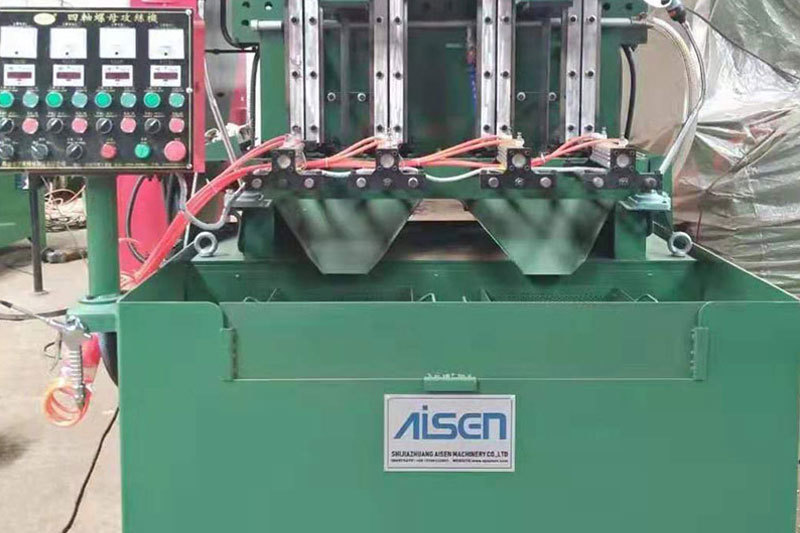
AISEN Four axis nut tapping machine ready for shipment to Russia
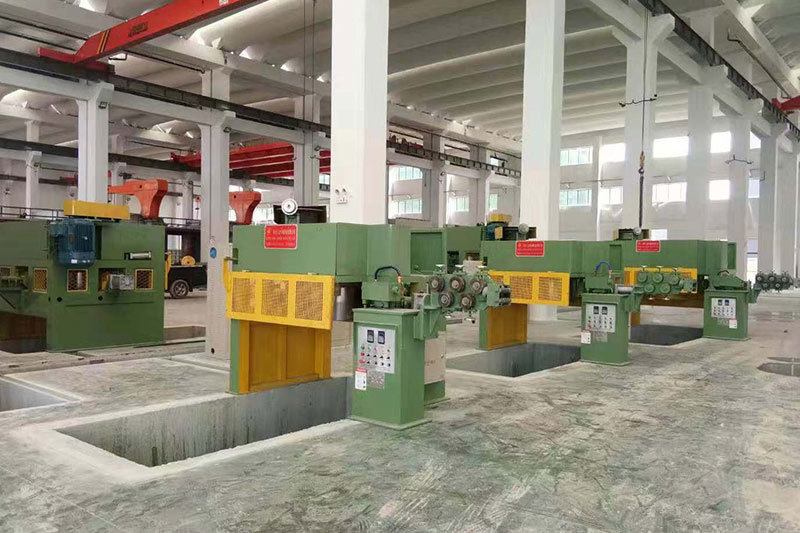
AISEN machinery inverted wire drawing machine
MESSAGES
We will contact you within one working day. Please pay attention to your email.
Qucik Link
Contact
Phone: +86-15100123091
E-mail: info@sjzaisen.com
Address: No.41 Zhaiying South Street, Yuhua District, Shijiazhuang City, Hebei Province China