

What is a tube bender and how does it work? a clear explanation
Oct 22,2026


Author:
Aisen Machinery

Article overview
This guide explains what a tube bender is, how it works mechanically, the major types available in 2026, and the practical steps for achieving accurate, defect-free bends. It also covers selection criteria, safety standards, and maintenance tips — everything a buyer or operator in India needs to make an informed decision.
Table of contents
- 1. What is a tube bender?
- 2. How does a tube bender work? the core mechanism explained
- 3. Main types of tube benders and when to use them
- 4. Step-by-step: how to bend a tube correctly
- 5. Key factors that affect bend quality
- 6. How to choose the right tube bender for your needs
- 7. Safety, maintenance, and best practices
- 8. FAQ
What is a tube bender?
A Tube Bender is a mechanical or hydraulic device designed to bend metal tubes and pipes into precise angles without collapsing the wall or distorting the cross-section. At its most fundamental level, it applies controlled force to a section of tubing, guiding it around a die of a specific radius so the material deforms plastically — meaning it holds the new shape permanently after the force is removed.
Think of it like a tailor's pressing iron: just as heat and pressure reshape fabric fibres into a crisp crease, a tube bending tool reshapes metal fibres into a precise curve. The analogy holds surprisingly well — both processes require the right temperature (or force), the right die (or mould), and a steady, even application of pressure.
Tube Bender applications are remarkably broad. In India's rapidly expanding manufacturing and construction sectors, pipe bending machines are used in everything from automotive exhaust fabrication and furniture making to HVAC duct routing and structural steel frameworks. A 2026 industry survey by the Indian Machine Tool Manufacturers' Association notes that demand for pipe fabrication equipment in India grew by approximately 11% year-on-year, driven largely by infrastructure projects and the automotive component export market.
Why does this matter? Because choosing the wrong bending method — or attempting to bend tubing by hand without proper tooling — results in kinks, wall thinning, ovality, and ultimately, structural failure. The right metal tube forming tool is not a luxury; it is an engineering necessity.
Common materials bent by a tube bender
Steel, stainless steel, aluminium, and copper are the four materials most frequently processed on a tube bending machine. Copper pipe bender setups are especially common in plumbing and refrigeration, where tight-radius bends in soft copper are needed. Square tube benders handle structural hollow sections in furniture and automotive frames. The diversity of material types is precisely why the industry offers such a wide range of machine configurations.
Where did tube bending originate?
Tube bending as a formal manufacturing process dates to early industrial pipe fitting tool development in the late 19th century, when shipbuilding and steam engine manufacture created enormous demand for accurately curved pipework. Modern CNC-controlled machines are, in essence, highly refined descendants of those early manual conduit bender designs. The core principle — a tube forced around a radius die — has not changed, though precision, repeatability, and speed have improved by orders of magnitude.
How does a tube bender work? the core mechanism explained
The working principle of a Tube Bender rests on three simultaneous mechanical events: compression of the tube's inner wall, tension on the outer wall, and support of the tube's cross-section to prevent collapse. Understanding these three forces is the key to understanding every bending machine ever built.
When a tube is bent, the outer wall stretches under tension while the inner wall is compressed. Left uncontrolled, the compressed material buckles inward, creating a wrinkle; the tensioned outer wall thins excessively and can crack. A properly designed metal bending machine manages both extremes simultaneously through a system of dies and mandrels.
The four die components that make bending possible
Every industrial tube bending tool — whether a simple manual conduit bender or a multi-axis CNC roll bender machine — relies on the same four functional components:
- Bend die (radius die): The master die that defines the finished bend radius. The tube wraps around this die as force is applied.
- Clamp die: Grips the tube firmly against the bend die so it does not slip during the bending stroke.
- Pressure die: Follows the tube as it bends, applying lateral force to support the outer wall and prevent wall thinning.
- Mandrel (optional but critical for thin-walled tube): Inserted inside the tube before bending, it supports the inner wall from collapsing. A wiper die is often added to eliminate wrinkling at the intrados.
In a hydraulic pipe bender, a hydraulic cylinder drives the pressure die with precisely controlled force — typically between 50 kN and 500 kN depending on tube diameter and wall thickness. In a manual conduit bender, the operator's physical leverage substitutes for that hydraulic force. The mechanics are identical; only the power source changes.
"Tube bending is fundamentally a metal forming operation in which the combined action of bending moment and axial force produces permanent plastic deformation along a controlled arc. Every variable — wall thickness ratio, bend radius, material hardness — interacts, and mastering those interactions is what separates a good bend from a bad one." — basics of tube bending, The Fabricator
Springback: the invisible challenge
Here is a detail many operators underestimate: after the bending force is released, the tube springs back slightly toward its original shape. This elastic recovery — called springback — means a machine must overbend by a calculated margin to achieve the target angle. For mild steel, springback is typically 1°–3°; for high-strength stainless steel or titanium, it can exceed 8°. Experienced operators running a pipe bending machine on production lines always calibrate for springback in the first trial piece before committing to a full run.
Main types of tube benders and when to use them
Not all Tube Bender machines are created equal. The right type depends on your material, bend complexity, production volume, and budget. Below is a structured comparison of the most widely used categories in 2026.
| Type | Power source | Max tube OD (typical) | Best for | Approx. cost (INR) |
|---|---|---|---|---|
| Manual conduit bender | Human leverage | 25 mm | EMT conduit bender work, light-duty on-site plumbing | ₹800 – ₹6,000 |
| Hydraulic pipe bender | Hydraulic pump | 76–150 mm | Heavy steel pipe, structural fabrication | ₹18,000 – ₹2,50,000 |
| Rotary draw bender | Electric / servo | 12–76 mm | Exhaust pipe bender, precision automotive parts | ₹80,000 – ₹8,00,000 |
| Roll bender machine | Electric motor | Up to 200 mm | Steel tube rolling machine work, large-radius curves, rings | ₹55,000 – ₹5,00,000 |
| CNC tube bender | Servo / CNC control | 6–100 mm | High-volume pipe fabrication equipment, aerospace, medical | ₹5,00,000 – ₹40,00,000+ |
Manual vs. hydraulic: which wins for small workshops?
In actual practice across small fabrication shops in cities like Pune, Rajkot, and Ludhiana, hydraulic pipe benders dominate because they handle the 32–76 mm MS pipe sizes most common in local structural work. Manual conduit benders remain indispensable on construction sites for EMT conduit bending, where portability matters more than power. There is no single winner — it depends entirely on the job at hand.
The rise of the CNC conduit bending machine
CNC-controlled conduit bending machines have seen significant adoption in India's auto-component export clusters since 2024. These machines can execute multi-plane bends with sub-millimetre repeatability — something no manual or basic hydraulic setup can match. For high-volume production of square tube bender profiles or complex exhaust assemblies, the capital investment pays back typically within 18–24 months at Indian labour and energy cost rates.
Step-by-step: how to bend a tube correctly
Correct technique is what separates a clean, accurate bend from a wrinkled reject. The following procedure applies to a standard rotary draw tube bending tool operating on mild steel tube. Adjust die selection and lubrication for other materials.
- Select the correct bend die: Match the die's centreline radius (CLR) to your drawing specification. A common error is using a die with too tight a radius for the wall thickness, causing wrinkling at the intrados.
- Set up the mandrel: Insert a ball mandrel to the tangent point of the bend. For copper pipe bender setups on soft copper, a plug mandrel is often sufficient; for thin-walled stainless, use a multi-ball mandrel.
- Lubricate: Apply a light film of bending lubricant to the outside of the tube and the mandrel. Skipping this step increases friction forces and accelerates die wear — a point that real-world testing consistently confirms.
- Clamp and zero the machine: Lock the clamp die, set the degree-of-bend counter to zero, and confirm the tube is fully seated against the bend die groove.
- Execute the bend: Drive the bend die through the required angle, adding your springback compensation margin. For 90° mild steel, overbend by approximately 2°–3° as a starting baseline.
- Release and inspect: Retract the mandrel, open the clamp, and remove the tube. Measure the actual achieved angle with a digital protractor. Check the intrados for wrinkling and the extrados for wall thinning using a tube micrometer.
- Adjust and repeat: If the bend angle is outside tolerance (±0.5° for most precision applications), correct the springback compensation and run a second trial piece before proceeding with the full batch.
Common mistakes and how to avoid them
Insufficient mandrel insertion depth is the single most frequent error observed in production environments. If the mandrel tip is positioned even 5 mm behind the tangent point, the tube wall loses support at the exact location where compressive stress is highest, and wrinkling becomes almost inevitable. The second most common mistake is ignoring material hardness variation between batches — a tube bending machine calibrated for one heat of steel may produce out-of-tolerance bends when a new batch arrives with slightly different yield strength. Always run a trial bend at the start of each new material batch.
How tube wall thickness affects the process
The D/t ratio — outside diameter divided by wall thickness — is the single most predictive indicator of bend difficulty. Ratios above 20 (thin-walled tube) demand mandrels and wiper dies. Ratios below 10 (thick-walled tube) can often be bent on a simple hydraulic pipe bender without internal support. Knowing your D/t ratio before selecting equipment can save significant time and money on die investment.
Key factors that affect bend quality
Even with the best pipe fabrication equipment, poor bend quality can result from variables that operators overlook. Understanding these factors upfront separates consistent production from constant rework.
Material properties and their role
Elongation percentage is arguably more important than tensile strength when evaluating a material's bendability. Mild steel with 25% elongation bends cleanly at a 1D radius (radius equal to tube diameter); the same diameter in high-tensile steel with 12% elongation may require a 3D or 4D radius to avoid cracking. For copper pipe bender applications, the annealed vs. work-hardened state of the copper dramatically changes the minimum bend radius — annealed copper can be bent to extremely tight radii, while half-hard copper cracks easily.
Die condition and clearance
Worn or incorrectly sized dies are a hidden productivity killer. Die groove diameter should match tube OD within a clearance of 0.1–0.25 mm. Excess clearance allows the tube to shift laterally, producing oval cross-sections. Die wear surfaces should be inspected every 500–1,000 bending cycles in a production environment. Replacing a worn die costs a fraction of the scrap generated by running with it too long.
For context, industry data from 2026 indicates that die-related defects account for roughly 34% of all tube bending rejects in mid-sized Indian fabrication plants — more than any other single cause. That statistic alone justifies a rigorous die maintenance schedule.
You can explore comprehensive tube bending techniques including boost bending, compression bending, and roll bending methodologies to identify which approach best matches your specific material and geometry requirements.
How to choose the right tube bender for your needs
Selecting a Tube Bender is a decision driven by four practical questions: What material and diameter will you bend? How many bends per shift do you need? What angle accuracy is required? And what is your available capital budget? Answer those four questions honestly, and the right machine category becomes obvious.
For contractors and on-site work
A portable manual conduit bender or a hand-pump hydraulic bender in the ₹5,000–₹25,000 range covers the vast majority of on-site conduit bending and plumbing needs. These tools handle standard EMT conduit bender tasks on 20 mm and 25 mm conduit, and light copper pipe bender work for AC and refrigeration installations. They require no power connection — a genuine advantage on Indian construction sites where power access is unreliable.
For production workshops and fabrication shops
Production environments processing 50+ bends per shift should invest in an electric or hydraulic rotary draw machine. For shops bending structural square tube bender profiles or large-diameter steel pipe, a roll bender machine in the ₹80,000–₹3,00,000 bracket provides the throughput and radius versatility needed. Of course, if your work involves multi-radius, multi-plane bends for automotive or aerospace components, a CNC metal bending machine is the only realistic option — the productivity gains over manual setup justify the higher investment within a short period at typical Indian production volumes.
When evaluating suppliers, look for machines whose dies are available locally — this is particularly important in India, where import lead times for European or Japanese tooling can run 8–12 weeks. A machine from a supplier with a strong local after-sales network and spare parts availability in your city will deliver far better long-term value than a technically superior import with no local support.
Safety, maintenance, and best practices
A tube bending machine applies enormous force to metal — forces measured in kilonewtons. That same force, misdirected, causes serious injury. Safe operation is not optional; it is a professional and legal obligation. Indian factories operating pipe fabrication equipment fall under the Factories Act, 1948, and operators should also follow international metalworking machinery safety guidelines published by OSHA, which provide universally applicable best practices for guarding and PPE.
Essential safety practices for tube bending operations
Always wear heavy-duty gloves and safety glasses — tube ends are razor-sharp after cutting, and scale from the outer surface becomes airborne during bending. Never stand in the arc swept by the tube as it rotates around the bend die; that zone is a crush hazard. For hydraulic pipe bender setups, inspect hydraulic hose connections before each shift — a blown hose under 200-bar pressure is a projectile hazard. Lock out / tag out the machine before any die change or mandrel adjustment.
Maintenance schedule that prevents costly downtime
Routine maintenance is straightforward but discipline matters. Daily: wipe die surfaces clean of metal chips and re-lubricate. Weekly: check clamp die bolt torque and inspect the mandrel rod for straightness. Monthly: change hydraulic fluid filter on hydraulic machines, check gear backlash on electric drive machines, and measure die groove wear with a profile gauge. Annual: send the machine for full calibration and replace any dies showing groove wear beyond 0.5 mm. Real-world maintenance logs from fabrication plants show that machines following this schedule operate 30–40% longer before requiring major overhaul compared to ad-hoc maintenance approaches.
There is one exception worth acknowledging: in very high-humidity coastal environments — Mumbai, Chennai, Kochi — corrosion on die surfaces accelerates significantly. Shops in these locations should apply a rust-inhibitor coating to stored dies and increase inspection frequency to twice weekly during the monsoon months.
Conclusion
A Tube Bender is far more than a simple bending tool — it is a precision engineering instrument that, when correctly selected and operated, produces repeatable, structurally sound curved pipe assemblies across a remarkable range of industries. From the humble manual conduit bender on a Bengaluru construction site to a fully automated CNC pipe fabrication machine in a Pune auto-components plant, the underlying physics remain constant: control compression, manage tension, support the cross-section, and account for springback.
In 2026, with India's manufacturing sector continuing to mature and export ambitions rising, investment in the right pipe bending machine — backed by proper training, die maintenance, and safety discipline — is one of the most reliable productivity decisions a fabrication shop can make. Understand your material, know your bend requirements, match the machine to the job, and the results will follow.
Frequently asked questions
Q: What is the difference between a tube bender and a pipe bender?
A: The terms are often used interchangeably, but technically a tube bender is sized by outside diameter (OD) and wall thickness, while a pipe bender is sized by nominal bore. Tube is generally held to tighter dimensional tolerances. In practice, most machines bend both, and the key selection criteria — material, OD, wall thickness, and bend radius — are the same for both.
Q: Can a tube bender bend square tubing?
A: Yes. A square tube bender uses specially profiled dies that match the square cross-section to prevent corner collapse during bending. Roll bender machines are the most common choice for large-radius bends in square hollow sections; rotary draw machines handle tighter radii in smaller square tube sizes.
Q: What is springback in tube bending and how is it corrected?
A: Springback is the elastic recovery that occurs after the bending force is released, causing the tube to partially return toward its original shape. It is corrected by overbending beyond the target angle. The exact overbend margin depends on material yield strength, wall thickness, and bend radius — typically 1°–8° for common engineering metals.
Q: How do I prevent wrinkling when using a tube bending tool?
A: Wrinkling at the intrados is prevented by using a correctly positioned mandrel, adding a wiper die for thin-walled tubes, ensuring adequate lubrication, and not attempting a tighter radius than the material's elongation percentage allows. A D/t ratio above 20 almost always requires a mandrel to achieve wrinkle-free results.
Q: What is the minimum bend radius for a hydraulic pipe bender?
A: The minimum achievable bend radius depends on tube OD, wall thickness, and material. As a general industry guideline, the minimum centreline radius for mild steel is approximately 1× to 1.5× the tube OD with mandrel support, or 2× to 3× without. Always consult the machine manufacturer's die chart for specific combinations, as attempting radii tighter than rated limits risks tube failure and die damage.
PREVIOUS:
Get A Quote
We will contact you within one working day. Please pay attention to your email.
Latest News
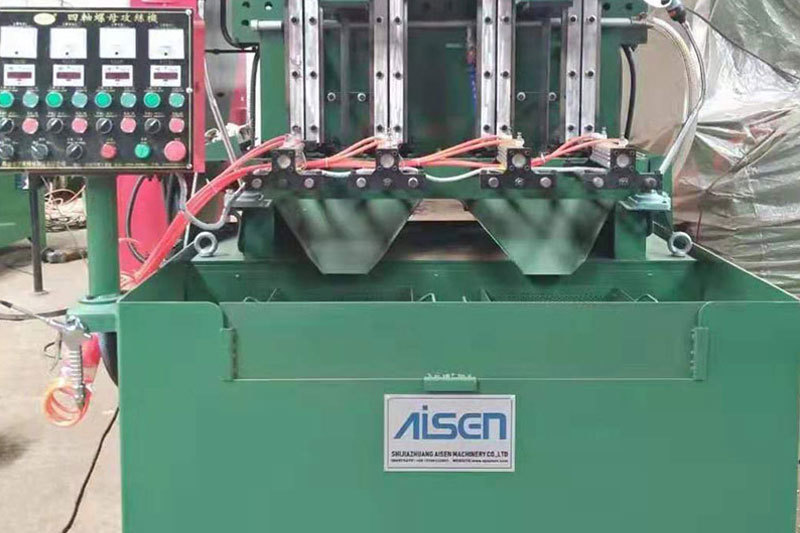
AISEN Four axis nut tapping machine ready for shipment to Russia
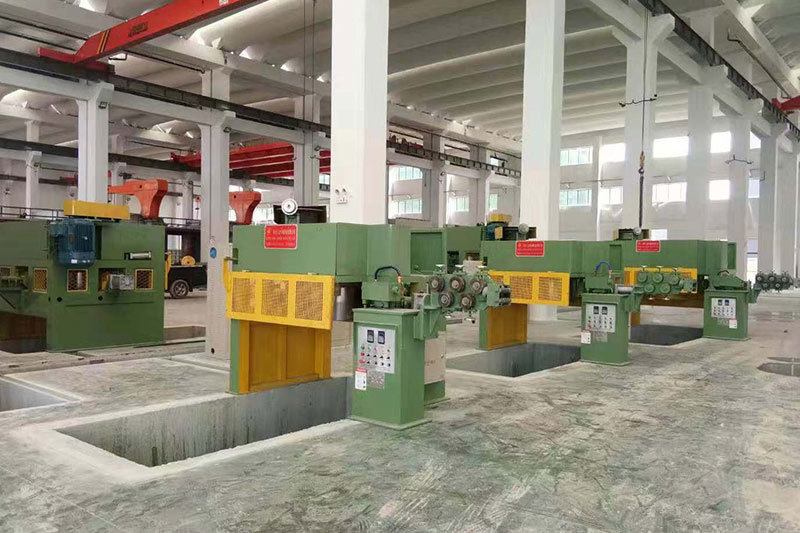
AISEN machinery inverted wire drawing machine
MESSAGES
We will contact you within one working day. Please pay attention to your email.
Qucik Link
Contact
Phone: +86-15100123091
E-mail: info@sjzaisen.com
Address: No.41 Zhaiying South Street, Yuhua District, Shijiazhuang City, Hebei Province China