

Why sourcing thread rolling machines from India can reduce production costs
Nov 25,2026


Author:
Aisen Machinery

Article overview
This article helps fastener producers, hardware manufacturers, and rebar processing units evaluate whether sourcing thread rolling equipment from India makes commercial sense. It covers the structural cost advantages of Indian manufacturing, a breakdown of machine types and their suitable applications, price ranges by capacity, quality certifications to verify, total cost of ownership calculations including die life and power consumption, and a practical procurement checklist covering MOQ, lead times, payment terms, and after-sales service.
Table of contents
- The cost equation: why India is a viable sourcing destination for thread rolling equipment
- Machine types and what each one is actually suited for
- Thread rolling vs. thread cutting: strength, efficiency, and material savings
- Selecting the right machine by bolt size and production rate
- Certifications, material hardness, and quality signals worth verifying
- Pricing tiers, MOQ, lead times, payment terms, and export packaging
- Total cost of ownership: dies, power consumption, and ROI estimation
- Industry applications driving demand and real-world production contexts
- Manufacturer vs. trader: how to verify who you are actually buying from
- After-sales support, spare parts availability, and installation considerations
- Procurement questions: sampling, factory visits, and new vs. used machines
- Frequently asked questions
Sourcing thread rolling machines from India can reduce production costs in a measurable way—not just through lower ex-works pricing, but through a combination of competitive tooling costs, accessible spare parts, local technical support, and machines designed around the fastener grades and rebar diameters most common in South Asian and export markets. For a fastener unit or rebar processing shop currently evaluating equipment, understanding where those savings actually come from—and where the trade-offs lie—is what determines whether the decision holds up over three to five years of operation.
The cost equation: why India is a viable sourcing destination for thread rolling equipment
India's machine tool sector has grown consistently, reaching an estimated market size of around USD 1.83 billion in 2025 and projected to approach USD 3.51 billion by 2034, according to IMARC Group data. That growth is underpinned by a large domestic base of fastener and hardware manufacturers—India's industrial fastener market alone was valued at approximately USD 8.03 billion in 2025—which means machinery manufacturers have developed around actual production requirements rather than purely theoretical specifications.
The cost advantage for buyers has several distinct sources. Manufacturing clusters in Ludhiana, Rajkot, and Kolkata concentrate tooling suppliers, component fabricators, and skilled machining labour within short distances of each other. This reduces the input costs that a thread rolling machine manufacturer in India carries compared to importing raw castings or hydraulic components from overseas. Those savings flow through to ex-works pricing.
Beyond the initial purchase price, buyers benefit from the fact that replacement dies, hydraulic seals, and feed components are either manufactured domestically or held in local distributor stock. When a machine running two shifts goes down, the ability to source a replacement flat die or a hydraulic cylinder seal within 48 to 72 hours rather than waiting weeks for an international shipment has a direct impact on production uptime—and therefore on effective cost per piece.
India-based thread rolling machine exporters have also built familiarity with documentation requirements for GST invoicing, export packing standards, and sea freight consolidation, which simplifies procurement logistics for domestic buyers and reduces hidden transaction costs for overseas importers.
Machine types and what each one is actually suited for
The choice of machine type determines thread quality, throughput capacity, and long-term tooling costs. Treating all thread rolling equipment as interchangeable is one of the more expensive mistakes a procurement decision-maker can make.
Two-roller hydraulic machines
The most widely used configuration for bolt and stud production. Two opposing cylindrical dies rotate in the same direction while the workpiece rolls between them. This design handles M6 to M36 bolt blanks reliably, produces consistent thread geometry, and is straightforward to set up and adjust. Most Indian manufacturers offer this as their core product range, and tooling availability is highest for this type.
Three-roller hydraulic machines
Three dies arranged symmetrically around the workpiece produce better concentricity, which matters for round bar, steel pipe threading, and rebar coupler sleeves. If your application involves threaded rebar couplers, scaffold tube ends, or long-stud threaded rod, a three-roller cylindrical die thread rolling machine will produce more consistent results than a two-roller setup. The tooling is more expensive, but thread run-out is significantly lower.
Flat die (rack-type) thread rolling machines
A flat die thread rolling machine uses one stationary die and one reciprocating die. The blank is pushed between them and exits as a finished threaded part. This design is best suited for small-diameter, high-volume work—M4 to M16 fasteners at high cycle rates. Output rates are typically higher per hour than cylindrical die machines of comparable size, but the flat die thread rolling machine is less flexible when it comes to switching between thread profiles. It suits dedicated production lines rather than job shops that frequently change specifications.
Planetary and rotary thread rolling machines
Used for long, slender components where the workpiece needs to be fed axially through the die set rather than pushed transversely. Applications include threaded rod in continuous lengths, long anchor bolts, and certain automotive shaft components.
CNC and automatic thread rolling lines
A CNC thread rolling machine integrates servo-controlled feed, digital pitch adjustment, and in some configurations, automatic loading via vibratory bowl feeders. These systems reduce operator dependency and improve piece-to-piece consistency. Indian manufacturers now offer CNC-controlled automatic thread rolling machines with domestic electrical components, bringing pricing into a range that was previously associated only with high-cost imported equipment.
Thread rolling vs. thread cutting: strength, efficiency, and material savings
This distinction matters for anyone comparing thread forming machine options or justifying capital expenditure to production management.
Thread rolling is a cold forming process. The die displaces metal rather than removing it. The result is that the grain structure of the workpiece flows continuously through the thread form rather than being interrupted by cutting. Independent testing reported in fastener industry literature consistently shows that cold-rolled threads exhibit approximately 10–30% higher tensile and fatigue strength compared to cut threads of the same nominal diameter and material grade. The improvement is more pronounced under dynamic loading—which is precisely the condition that matters for automotive, structural, and scaffold fasteners.
From a material cost standpoint, rolling produces no chips and therefore no material loss. For a shop producing bolts from pre-cut blanks, the difference is marginal. For operations threading rod stock, the absence of swarf eliminates both material waste and the cost of swarf disposal or recycling handling.
Cycle time comparison favours rolling in high-volume production. A flat die thread rolling machine producing M10 bolts can typically complete a thread form in under two seconds per piece. Thread cutting on a comparably priced lathe or tapping machine is slower per piece once setup and tool change time is factored in, and cutting tool wear adds a variable cost that rolling dies—with their significantly longer service life—do not.
The practical limitation of thread rolling is that the material must be ductile enough to cold-form without cracking. Materials with hardness above approximately 38–40 HRC are generally not suitable for cold rolling. This covers most standard fastener grades (8.8, 10.9, stainless 304/316 in annealed condition) but excludes hardened tool steels or certain case-hardened components.
Selecting the right machine by bolt size and production rate
Matching machine capacity to your actual production requirements prevents both under-specification (which causes premature wear and inconsistent thread quality) and over-specification (which ties up capital in unused capacity).
| Thread size range | Recommended machine type | Approximate output (pcs/hr) | Typical application |
|---|---|---|---|
| M4–M16 | Flat die (rack type) | 1,500–4,000+ | Small bolts, screws, high-volume hardware |
| M6–M24 | Two-roller cylindrical die | 600–1,800 | Standard bolts, studs, anchor fasteners |
| M16–M36 | Heavy-duty two-roller or three-roller | 200–600 | Heavy structural bolts, rebar couplers |
| M16–M36 (rebar/pipe) | Three-roller cylindrical die | 150–400 | Rebar coupler sleeves, scaffold tube ends |
| Any diameter, continuous rod | Planetary/rotary (axial feed) | Variable by length | Threaded rod, long anchor bolts |
To estimate daily output, the basic formula is: Daily capacity = Hourly output rate × Effective operating hours per shift × Number of shifts × Efficiency factor (typically 0.75–0.85 for planned downtime and setup). For example, a flat die machine rated at 2,000 pieces per hour running two 8-hour shifts at 80% efficiency produces approximately 25,600 pieces per day—a figure useful for sizing machine count against order volumes.
When evaluating machines, ask the supplier to specify rated capacity at the thread diameter you actually produce, not the maximum diameter the machine can physically handle. These two figures can differ substantially.
Certifications, material hardness, and quality signals worth verifying
The quality signals that matter when evaluating a thread rolling machine supplier India vary between what is verifiable and what is marketing language. Here is what to actually check.
Standards compliance
Machines built for the domestic market should comply with relevant BIS (Bureau of Indian Standards) and IS standards for electrical safety and machine guarding. For export-oriented customers or those supplying to MNC assembly plants, CE marking (applicable for European end-use) or compliance with ISO machine safety standards may be required. Ask the supplier for the specific standard reference and documentation, not just a verbal claim.
Thread quality produced by the machine should be verified against the pitch and form tolerances defined in ISO 965 (metric threads) or DIN 13 depending on your end-customer's specification. The machine itself does not carry an ISO thread standard certification—the threads it produces are what need to meet those tolerances, confirmed through gauge measurement.
Die material and hardness
Thread rolling dies are typically manufactured from high-speed steel (HSS, commonly M2 or M35 grade) or D2 tool steel. For long-run production, dies hardened to 60–64 HRC provide significantly better service life than softer alternatives. When sourcing from a thread rolling dies manufacturer, ask for the material grade and hardness range as a standard specification. Dies with unclear material provenance tend to show premature wear, which inflates the per-piece tooling cost over the machine's life.
Machine build quality indicators
Key things to inspect or request documentation for: bed and housing casting grade (CI Grade 2 or better for stability), hydraulic system pressure rating relative to the thread size range, spindle bearing quality and rated axial load, and whether the electrical cabinet uses components from verifiable suppliers. A machine that meets rated specifications on paper but uses undersized hydraulic cylinders or low-grade bearings will not maintain pitch consistency over sustained production runs.
Pricing tiers, MOQ, lead times, payment terms, and export packaging
Thread rolling machine price in India varies significantly by type, capacity, and automation level. The ranges below are indicative based on market knowledge as of 2025–2026 and should be treated as a starting reference—actual quotes will depend on specifications, supplier, and order quantity.
| Machine type | Indicative price range (INR, ex-works) | Notes |
|---|---|---|
| Basic flat die thread rolling machine (M4–M16) | ₹1.5L – ₹4L | Manual feed; widely available from multiple suppliers |
| Two-roller hydraulic (M6–M24) | ₹3.5L – ₹10L | Price varies by hydraulic pressure and automation level |
| Three-roller hydraulic (rebar/pipe, M16–M36) | ₹8L – ₹25L | Higher tooling cost; better concentricity |
| CNC/automatic thread rolling machine with auto feed | ₹15L – ₹60L+ | Servo-controlled; reduces operator requirement |
GST: Machines fall under GST Chapter 84; the applicable rate should be confirmed with the supplier as it may vary by machine classification. For domestic purchases, GST is recoverable as input tax credit if your business is registered.
MOQ: Most Indian manufacturers supply single units to domestic buyers. For exports, some suppliers have minimum order conditions for certain machine types, but single-unit exports are common and widely practiced.
Lead times: Standard catalogue machines are typically available in 2–6 weeks from order confirmation. Custom-specification machines or CNC models may require 8–14 weeks. Confirm lead time in writing before placing the order.
Payment terms: Common domestic terms are 30–50% advance with balance before dispatch, or letter of credit for export orders. Some established suppliers offer milestone-based payment for larger orders. Avoid full advance payment to unverified suppliers regardless of price attractiveness.
Export packaging: Sea-worthy wooden crating with anti-corrosion treatment is standard for export. Confirm whether the quoted price includes packing, or whether it is charged separately—this can add ₹15,000–₹50,000 depending on machine weight and crate complexity.
Total cost of ownership: dies, power consumption, and ROI estimation
The purchase price of a thread rolling machine is rarely its largest long-term cost. For high-production environments, die replacement and energy consumption can exceed the machine's depreciated value within three to five years.
Die life and tooling cost
Well-made HSS flat dies for M10–M16 bolts typically last 500,000–1,500,000 pieces depending on material being threaded, lubrication consistency, and die hardness. At the lower end of that range with a die set costing ₹8,000–₹15,000, the tooling cost per piece works out to roughly ₹0.01–₹0.03. For harder materials like grade 10.9 or stainless steel, die life shortens considerably—sometimes to 100,000–300,000 pieces—so tooling cost per piece increases proportionately. This is a critical variable to factor into cost-per-piece calculations when evaluating machine proposals.
Cylindrical dies for two- and three-roller machines have higher upfront cost (₹20,000–₹80,000 per set depending on diameter and profile) but are resharpened multiple times before disposal, which distributes the tooling cost over a larger total piece count.
Power consumption
A hydraulic two-roller machine in the M6–M24 range typically draws 3–7.5 kW. At an industrial electricity rate of approximately ₹7–₹9 per kWh (rates vary by state and tariff slab), a machine running two 8-hour shifts consumes roughly ₹340–₹1,300 of electricity per day depending on motor size and actual load cycle. CNC machines with servo drives often consume less than equivalent hydraulic systems at partial load, though peak consumption during forming may be similar.
ROI framework
A simplified ROI calculation for justifying a thread rolling machine purchase: estimate the current cost of outsourcing threading or the per-piece cost differential between your existing method and rolling, multiply by your annual production volume, and compare the cumulative savings over three years against total investment (machine + tooling + installation + training). For a fastener unit producing 500,000 pieces per month where rolling reduces per-piece threading cost by ₹0.15, the annual saving is ₹9,00,000—enough to justify a mid-range hydraulic machine within the first year of operation.
Industry applications driving demand and real-world production contexts
Understanding which industries create sustained demand for thread rolling equipment helps buyers assess whether their own application is well-served by the available machine range from Indian suppliers.
Fastener manufacturing: The largest application segment. Bolts, nuts, studs, and anchor fasteners across grades 4.6 to 10.9 are produced on flat die and two-roller machines. The domestic fastener industry's growth—anchored by automotive OEM supply chains and infrastructure hardware—has driven Indian machine manufacturers to refine machines specifically around common Indian fastener specifications.
Rebar coupler sleeves and rebar thread rolling: Infrastructure projects—metro rail, elevated highways, bridges—use mechanical rebar splicing systems that require stripped and threaded rebar ends. Demand for rebar thread rolling machines (typically three-roller, handling 12mm to 40mm TMT rebar) has expanded substantially. The Asia-Pacific rebar coupler market was estimated at approximately USD 2.9 billion in 2026, and India represents a significant and growing share of that figure. This segment has pushed Indian machine manufacturers to improve three-roller machine precision and durability.
Scaffold tube threading: Scaffolding systems for construction use threaded tube couplers. High-volume tube-end threading is handled by dedicated automatic thread rolling machines, often integrated with cutting and chamfering stations.
Automotive components: Wheel bolts, engine fasteners, and suspension components require consistent thread quality under dynamic load. Grade 10.9 and 12.9 bolts for automotive supply chains increasingly use cold-rolled threads for the fatigue strength advantage described earlier. Some Indian metal thread rolling machine manufacturers have configured machines specifically for automotive-grade tolerances.
Manufacturer vs. trader: how to verify who you are actually buying from
This is one of the most practically important distinctions in the procurement process, and it is frequently obscured by suppliers presenting trading operations as manufacturing units.
A direct thread rolling machine manufacturer in India typically has a verifiable factory address (not just an office), production equipment for casting, machining, and assembly on-site, an in-house quality control setup, and the ability to provide factory trial run before dispatch. Traders source assembled or partially assembled machines from third-party fabricators and may offer lower prices but carry limited technical ability to modify specifications, troubleshoot installation problems, or supply non-standard spare parts.
Verification steps that actually work:
- Request a factory video call or physical visit before order confirmation. A genuine manufacturer will walk you through the production floor without hesitation.
- Check whether the GST registration address matches the manufacturing facility address, or whether it is a separate trading office.
- Ask for the machine's serial number format and confirm it corresponds to in-house production records rather than a third-party OEM plate.
- Search the supplier's export history on DGFT or through commercial export data services to verify whether they export under their own entity name and whether machines appear as the declared product.
- Request references from customers in your industry segment—not generic testimonials, but specific contacts you can reach directly.
Machines supplied through trading intermediaries are not necessarily inferior, but the buyer should understand that post-sale technical support will route through that intermediary rather than the actual builder, which affects response time and the availability of non-standard parts.
After-sales support, spare parts availability, and installation considerations
The economics of thread rolling equipment depend heavily on uptime. A machine that runs reliably at 85% utilisation over five years delivers fundamentally different returns than one that sits idle waiting for imported parts or unresponsive technicians.
When evaluating a screw thread rolling machine supplier for a significant purchase, the after-sales structure deserves as much scrutiny as the machine price. Specifically:
Spare parts depth: Ask for a list of recommended consumables and fast-wear parts with current prices. Hydraulic seals, die spacers, feed guide components, and bearing sets are the items most likely to require replacement within the first two years. If the supplier cannot provide a parts list, that is a meaningful signal about post-sale support capability.
Response time commitment: For buyers operating two-shift production, a supplier response time of 24–48 hours for technical support and 72 hours for part dispatch is a reasonable baseline expectation. Get this in writing as a service commitment rather than a verbal assurance.
Warranty terms: Standard warranty for Indian-manufactured industrial machinery is typically 12 months from commissioning or 18 months from dispatch, whichever comes first. Confirm what the warranty covers—usually manufacturing defects and component failure under normal operating conditions—and what it excludes (die wear, electrical damage from site power quality, operator misuse).
Installation and commissioning: Most suppliers provide installation support either as part of the machine price or at a fixed service charge. For CNC thread rolling machines or automatic lines, on-site commissioning and operator training are more critical than for basic hydraulic models. Confirm the number of commissioning days included and the cost of additional visits if needed.
Training: Operator training for a basic hydraulic machine can be completed in one to two days on-site. CNC machines require more structured training covering die setup, parameter programming, and fault diagnosis. Ask whether training materials (manuals, setup guides) are provided in a language your operators can use effectively.
Procurement questions: sampling, factory visits, and new vs. used machines
Trial run and sample parts
Before committing to a large purchase, it is reasonable to request a trial production run on your actual material and thread specification. Reputable precision thread rolling equipment suppliers will accommodate this, either at their factory or by producing sample pieces and providing thread gauge measurements for your review. If a supplier refuses sample production on a machine of significant value, treat that refusal as a risk signal.
Factory inspection
For orders above ₹10–15 lakhs, a factory visit prior to dispatch is worth the cost of travel. The inspection should cover: the actual machine against the agreed specification sheet, a witnessed trial run, review of electrical panel components, hydraulic pressure test, and confirmation that the machine is built to the standard discussed rather than a substituted variant.
New vs. used machines
The used thread rolling machine market in India exists, particularly for older hydraulic two-roller models. The case for a used machine is straightforward when budget is constrained and the machine type is simple. The risks are equally straightforward: unknown wear on the spindle bearings and die mounting faces, hydraulic seals that may need replacement immediately, and no warranty coverage. Used machines from verifiable industrial units with documented maintenance histories are a different proposition from machines sold through brokers with unclear provenance. For a used machine purchase, independent inspection by a qualified machinist before payment is non-negotiable.
Evaluating total acquisition value
Buyers who have previously relied on imported thread rolling equipment often cite initial purchase price as a primary decision factor. Indian-manufactured industrial fastener machinery has closed much of the specification gap for standard thread forms and common material grades. The remaining differentiation tends to be at the high end of CNC automation—multi-axis servo-controlled machines with integrated gauging and statistical process control. For the M6–M36 hydraulic range covering the majority of fastener and rebar applications, Indian precision thread rolling equipment now represents a technically viable option at a lower total acquisition cost, particularly when after-sales logistics and local technical support are weighted appropriately in the evaluation.
Frequently asked questions
What is the difference between a flat die and a cylindrical die thread rolling machine?
A flat die thread rolling machine uses one fixed and one reciprocating flat die to form threads as the blank passes between them. It is best suited for small-diameter, high-volume fastener production. A cylindrical die machine uses rotating round dies and handles a wider range of diameters and workpiece geometries, including pipe ends and long studs. For rebar coupler applications, a three-roller cylindrical die setup provides better concentricity than flat die alternatives.
Can Indian-manufactured thread rolling machines handle grade 10.9 and stainless steel fasteners?
Yes, with the right die material and machine capacity. Grade 10.9 bolts (pre-heat treated to final hardness before threading) and annealed stainless steel (304/316) can be cold-rolled, though die life is shorter than on standard low-carbon grades. Confirm with the supplier that the machine's hydraulic pressure rating and die material specification are matched to your material grade. Using standard dies on hardened material accelerates wear and produces inconsistent thread geometry.
How long does it typically take to receive a thread rolling machine after placing an order in India?
Standard hydraulic models are generally dispatched within 2–6 weeks of order confirmation and advance payment. CNC and automatic thread rolling machines with custom configurations may require 8–14 weeks. Confirm the lead time in writing at the time of order, and check whether the stated lead time is from order confirmation or from receipt of advance payment—these can differ.
What should I check to confirm I am buying from an actual manufacturer rather than a trader?
Request a factory video call or physical visit and verify that machining, assembly, and quality testing occur on-site. Check whether the GST registration address corresponds to the manufacturing facility. Ask for a serial number traceability explanation and request direct customer references in your industry. Cross-check the supplier's export records if the transaction involves export, using available commercial trade data services.
Is GST applicable on thread rolling machine purchases in India, and can I claim input tax credit?
Thread rolling machines fall under HSN Chapter 84 of the GST schedule. GST is applicable on the purchase. If your business is GST-registered and the machine is used for manufacturing, the GST paid is generally eligible as input tax credit, reducing the effective net cost. Confirm the specific HSN code and applicable rate with the supplier and your tax advisor, as classification details can affect the rate applied.
PREVIOUS:
Get A Quote
We will contact you within one working day. Please pay attention to your email.
Latest News
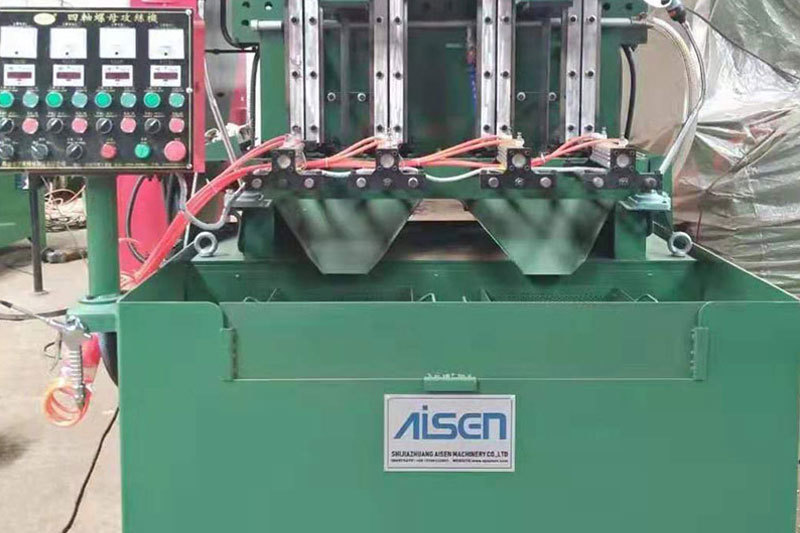
AISEN Four axis nut tapping machine ready for shipment to Russia
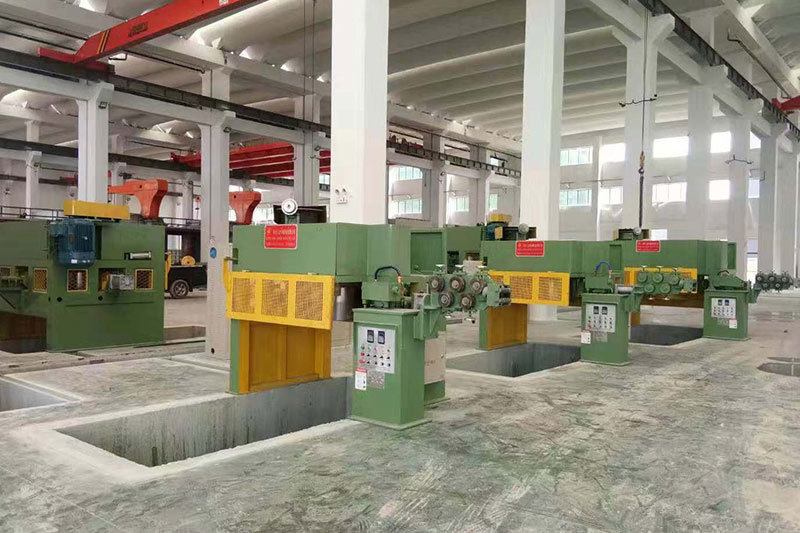
AISEN machinery inverted wire drawing machine
MESSAGES
We will contact you within one working day. Please pay attention to your email.
Qucik Link
Contact
Phone: +86-15100123091
E-mail: info@sjzaisen.com
Address: No.41 Zhaiying South Street, Yuhua District, Shijiazhuang City, Hebei Province China