

Bolt making machine manufacturers with after-sales service: a review
Nov 24,2026


Author:
Aisen Machinery

Article overview
This review covers machine type selection, output capacity tables, total cost of ownership calculations, compliance requirements, and after-sales SLA benchmarks for fastener producers and procurement managers evaluating bolt making machine manufacturers in 2026. Reading time: approximately 14 minutes.
Table of contents
- 1. What defines a reliable bolt making machine manufacturer?
- 2. Machine types and process overview: cold forging vs. hot forging
- 3. Bolt size, die stations, and output capacity: a three-dimensional selection matrix
- 4. Price, ROI, and total cost of ownership
- 5. Compliance standards and certifications: IS 1367, ISO 898, BIS, and CE
- 6. After-sales service benchmarks: what manufacturers should guarantee
- 7. Factory verification and trial run process
- 8. Frequently asked questions
What defines a reliable bolt making machine manufacturer?
Bolt making machine manufacturers are companies that design, build, and supply heading machines, thread rolling machines, and ancillary fastener production equipment used to convert wire rod into finished bolts and screws at industrial volumes. In practice, however, "reliable" extends far beyond the machine itself. The 2026 Indian fastener market — valued by industry association estimates at over ₹18,000 crore — has seen a surge in both domestic and imported equipment options, making post-purchase support as commercially important as upfront machine quality.
So why do so many buyers focus almost entirely on price per unit, then struggle within 18 months when a critical die cracks or a PLC board fails? The answer, frankly, is that after-sales infrastructure is invisible during the buying process. It becomes visible only when something goes wrong — and in high-volume fastener production, something always eventually goes wrong.
Key evaluation criteria beyond the machine spec sheet
When assessing bolt manufacturing machine suppliers, experienced procurement managers apply at least five dimensions simultaneously: technical specifications, local service network, spare parts availability, compliance documentation, and commercial terms (MOQ, payment, lead time). A machine rated at 200 pieces per minute means little if the nearest certified service engineer is 900 km away.
Industry consensus, as reflected in Fasteners Institute Association of India (FIAI) procurement guidelines, is that buyers should request a formal after-sales SLA document before signing any purchase order. This document should specify installation timelines, training hours, warranty scope, and maximum response time for breakdown calls — ideally 24–48 hours for critical faults.
The Indian market context in 2026
Fastener manufacturing machinery India sourcing has diversified considerably. Buyers today choose from Indian-made machines (primarily from Rajkot, Ludhiana, and Mumbai clusters), imported equipment from established Asian manufacturing regions, and a growing number of hybrid configurations. Each route carries distinct trade-offs in price, lead time, precision tolerance, and spare parts logistics — a comparison explored in detail in Section 4.
Machine types and process overview: cold forging vs. hot forging
The process choice is the first technical decision — and it drives everything downstream, from energy costs to die life to achievable tolerances. The dominant technology for standard bolts (M4–M24, property class 4.6 to 10.9) is cold forging, executed on multi-station heading machines. Hot forging remains relevant for large-diameter structural fasteners (M24 and above) and specialty alloy applications.
Cold forging: the workhorse of modern fastener production
Cold forging (cold heading) shapes wire rod at room temperature through a sequence of progressive die stations. The wire is cut to length, then each station progressively forms the blank into a near-net-shape bolt head, shank, and point — without heating. The result is a component with superior grain-flow structure compared to machined parts, which translates directly into higher tensile strength and fatigue resistance. Automatic bolt making machine models based on cold heading typically operate at 60–300 pieces per minute depending on bolt diameter and station count.
Wire material matters enormously here. Low-carbon steel (SAE 1006–1022) works well for property class 4.6 and 5.8 bolts. Medium-carbon alloy steel (10B21, SCM435) is required for grades 8.8 and 10.9. The harder the wire, the faster the die wears — a fact that experienced hardware manufacturing machine operators account for when calculating tooling budgets.
Two-die three-blow vs. four-die four-blow: which configuration suits your product mix?
This is where many first-time buyers get confused. A 2-die 3-blow (2D3B) machine is simpler, lower cost, and sufficient for hex bolts up to approximately M12 at standard tolerances. A 4-die 4-blow (4D4B) or higher configuration handles complex head geometries (flange bolts, socket heads), tighter dimensional tolerances, and larger diameters up to M20–M24. CNC bolt making machine platforms at the higher end add servo-controlled transfer and real-time tonnage monitoring, reducing scrap rates substantially.
Just like a printing press where more colour stations mean richer output but higher complexity, more die stations in a heading machine produce more precise geometry — but require more skilled setup and more expensive tooling maintenance.
Bolt size, die stations, and output capacity: a three-dimensional selection matrix
The single most requested piece of information from fastener producers in the comparison stage is a cross-referenced table of bolt diameter, die station count, and achievable output rate. The table below synthesises data from equipment catalogues and verified buyer reports collected through 2025–2026, and should serve as a practical baseline for initial shortlisting.
| Bolt size range | Recommended machine type | Die stations | Output (pcs/min) | Typical Indian market price (₹ lakh) |
|---|---|---|---|---|
| M4–M8 | 2D3B cold header | 2 | 180–300 | 8–18 |
| M8–M12 | 3D3B cold header | 3 | 120–200 | 18–38 |
| M12–M16 | 4D4B cold header | 4 | 80–130 | 40–75 |
| M16–M20 | 4D4B / 5D5B cold header | 4–5 | 50–90 | 70–130 |
| M20–M24 | Heavy-duty cold / hot forging | 4–6 | 20–55 | 120–250+ |
Note: Prices are indicative 2026 ex-works India figures. Imported equipment prices vary by origin, freight, customs duty (HS code 8462.10 / 8462.21 applies to cold forming presses), and INR/USD exchange rate at time of purchase.
Pairing the heading machine with the right thread rolling equipment
A heading machine alone produces a blank — not a finished bolt. Thread rolling is the downstream operation that forms the helical thread profile through radial die pressure, again without material removal, which preserves the grain structure and results in threads stronger than cut threads. Thread rolling machine suppliers should ideally be evaluated alongside the heading machine vendor to ensure feed rate compatibility and consistent blank diameter tolerances. Mismatched equipment from two separate screw making machine manufacturers can create costly bottlenecks at the rolling stage.
Price, ROI, and total cost of ownership
The machine purchase price is only the beginning. Experienced fastener producers in Rajkot and Ludhiana consistently report that tooling (dies and punches), energy, labour, and maintenance together account for 55–70% of total cost over a five-year horizon. Ignoring these downstream costs when comparing bolt forming machine price quotes leads to systematically poor purchasing decisions.
Five-year TCO breakdown: a worked example for an M10 hex bolt line
Consider a mid-range 3D3B cold header producing M10 hex bolts at 150 pcs/min on a two-shift (16-hour) operation basis:
- Machine purchase price: ₹28 lakh (Indian-made) to ₹55 lakh (imported, landed cost including 7.5% customs duty on HS 8462.21)
- Die set (complete): ₹1.8–3.5 lakh per set; average life 800,000–1,500,000 pieces depending on wire hardness and lubrication
- Power consumption: 15–22 kW rated; at ₹8/kWh (commercial tariff, 2026 average), approximately ₹7.5–10.5 lakh per year at 300 operational days
- Operator cost: 1 skilled operator + 1 helper per shift = ₹4.5–6 lakh/year (Rajkot/Ludhiana cluster benchmark)
- Maintenance and consumables: ₹1.2–2.5 lakh/year including lubricant, wire guide wear parts, electrical components
On this basis, a domestically sourced nut bolt making machine at ₹28 lakh reaches breakeven (versus outsourcing equivalent volume) in approximately 14–18 months under stable raw material prices. An imported machine at ₹55 lakh extends that horizon to 26–32 months — but may deliver tighter tolerances and lower scrap rates that partially offset the differential. The right answer depends on the buyer's product mix, quality requirements, and export ambitions.
Indian-made vs. imported equipment: a frank comparison
"The gap in raw mechanical precision between top Indian-made headers and equivalent imported machines has narrowed significantly by 2026 — the real differentiator today is the depth of local service infrastructure, not the nameplate specification." — Senior technical advisor, FIAI regional chapter, 2025 annual review
| Parameter | Indian-manufactured | Imported (Asia origin) |
|---|---|---|
| Ex-works price (3D3B, M10) | ₹22–35 lakh | ₹45–70 lakh (landed) |
| Lead time (order to delivery) | 6–14 weeks | 14–26 weeks |
| Spare parts availability | Same-week (domestic stock) | 2–8 weeks (import lead time) |
| Dimensional tolerance (head height) | ±0.15–0.20 mm | ±0.08–0.12 mm |
| On-site service response | 24–48 hours (most clusters) | Varies; often via local agent |
| Minimum order quantity | 1 unit | 1 unit (direct) / agent varies |
Compliance standards and certifications: IS 1367, ISO 898, BIS, and CE
Compliance is not optional — it determines whether your bolts can be sold to OEM customers, government infrastructure projects, or export markets. Understanding which standards apply to your product range, and which certifications your equipment supplier should support, is a non-negotiable step in vendor evaluation.
Key standards every Indian fastener producer must know
IS 1367 (Technical Supply Conditions for Threaded Fasteners) is the Bureau of Indian Standards specification governing dimensional accuracy, mechanical properties, and surface finish for bolts sold in India. Compliance is mandatory for supply to public sector undertakings and many Tier-1 automotive suppliers. ISO 898 defines property classes (4.6, 8.8, 10.9, etc.) for carbon and alloy steel bolts — this is the benchmark for export documentation.
BIS certification (under IS 1367) requires third-party testing at a NABL-accredited laboratory and periodic factory surveillance audits. Equipment suppliers who understand BIS audit requirements — particularly around dimensional gauging and test sample documentation — add measurable value during the certification process. For export-oriented units, CE marking (where applicable to end-use applications in European markets) and accurate HS code classification (7318.15 for hex bolts, 7318.16 for nuts) are essential for customs clearance. Misclassification at Indian customs can delay shipments and trigger reassessment penalties.
What to ask equipment suppliers about compliance support
Industrial fastener equipment manufacturers that have genuine export experience will routinely provide: test certificates for the machine itself, recommended gauge sets calibrated to IS/ISO tolerances, and documentation packages that simplify BIS factory audits. Suppliers who cannot answer questions about BIS or ISO 898 property class verification should raise an immediate flag during evaluation.
After-sales service benchmarks: what manufacturers should guarantee
After-sales quality is where the difference between a good bolt making machine manufacturer and a genuinely excellent one becomes unmistakable. Based on verified buyer feedback from fastener clusters across India, the following benchmarks represent the minimum acceptable SLA for a mid-range heading machine purchase in 2026.
Six-point after-sales SLA checklist
- Installation and commissioning: On-site commissioning within 7–10 working days of delivery; first production run confirmed within 48 hours of installation completion
- Operator training: Minimum 3 days of structured on-site training for operators and maintenance staff, covering die change procedure, lubrication schedule, and fault diagnostics
- Warranty scope: 12–18 months on major structural components (frame, crankshaft, connecting rod); 6 months on electrical and hydraulic components; dies and punches excluded (consumable category)
- Spare parts inventory: Supplier should maintain a minimum stock of fast-moving wear parts (knockout pins, wire guide bushings, transfer fingers) at their facility; confirmed lead time for non-stock parts not to exceed 7 working days domestically
- Breakdown response: Remote diagnosis (phone/video) within 4 hours; on-site engineer within 24–48 hours for critical faults; forging machinery suppliers India with regional service centres demonstrably outperform those relying on a single national depot
- Annual maintenance contract (AMC): Optional but strongly recommended; a formal AMC should include two preventive maintenance visits per year, priority spare parts pricing, and discounted labour rates
Payment and commercial terms to negotiate
Standard terms from reputable fastener machinery exporters and domestic suppliers typically follow a 30–40% advance, 50–60% against proforma invoice before dispatch, and 10% retention against successful commissioning. Buyers should resist pressure to pay 100% upfront — legitimate suppliers with strong after-sales commitment do not require full payment before delivery. Confirm that the PO explicitly references the SLA document, the commissioning timeline, and the warranty terms.
Factory verification and trial run process
A site visit to the manufacturer's facility — or at minimum, a structured video walkthrough — before placing a purchase order is not excessive due diligence. It is standard practice among experienced buyers of heading machine manufacturers' equipment, and it consistently prevents costly post-delivery surprises.
Factory visit checklist: eight things to verify on-site
- Confirm machine frame material and casting quality (grey cast iron CI Grade 25 minimum for heavy frames)
- Request a live trial run at specified bolt size (bring your own wire rod sample if possible)
- Inspect the spare parts warehouse — physical stock depth is a reliable proxy for after-sales capability
- Ask to meet the service engineer who will handle your installation, not only the sales contact
- Verify the electrical panel specification (branded PLC and VFD — Siemens, Allen-Bradley, or equivalent — indicates higher reliability)
- Request sample bolts produced during the trial run; have them dimensionally checked against IS 1367 gauge requirements
- Confirm noise level (a well-maintained 3D3B header should operate at ≤85 dB at 1 metre — relevant for factory floor safety compliance)
- Record machine floor footprint (a 3D3B unit typically requires 2.5 m × 1.8 m minimum clear floor space plus 1 m service access on all sides)
Trial production and sampling protocol
The trial run is not merely a demonstration — it is a data-collection exercise. Record output rate (pcs/min), scrap rate (%), dimensional consistency across a 500-piece sample, and die-change time. Cold forging machine manufacturers who refuse to allow a timed trial run or who limit sample sizes should be treated with scepticism. Any supplier confident in their machine's performance will welcome structured measurement. Reputable hardware manufacturing machine producers with exports to 20 or more countries routinely conduct pre-shipment trials as a standard commercial commitment.
Of course, there are situations where a physical factory visit is not feasible — for buyers in distant states or evaluating imported equipment. In these cases, a third-party pre-shipment inspection (via CCIC, SGS, or equivalent agency) is a reasonable substitute, though it cannot fully replicate the operational data from a live trial run.
Conclusion: selecting bolt making machine manufacturers with genuine after-sales commitment
The 2026 Indian fastener equipment market offers more choice than ever — but choice without a structured evaluation framework leads to decisions driven by price alone, which rarely delivers the best long-term outcome. The bolt making machine manufacturers worth partnering with are those who treat after-sales service as a revenue-generating relationship, not an inconvenient obligation. They maintain spare parts inventory, provide documented SLAs, support BIS and ISO compliance processes, and stand behind their machines with genuine on-site technical capability.
Use the selection matrix, TCO model, SLA checklist, and factory verification protocol in this review as your procurement baseline. Demand documentation at every stage. And remember: a machine that runs reliably for five years with minimal downtime is worth considerably more than a cheaper unit that sits idle waiting for a spare part that takes three weeks to arrive.
Frequently asked questions
Q: What is the typical price range for an automatic bolt making machine in India in 2026?
A: Entry-level 2-die 3-blow cold headers for M4–M8 bolts typically range from ₹8–18 lakh (Indian-made, ex-works). Mid-range 4-die 4-blow machines for M12–M16 cost ₹40–75 lakh. Imported equipment carries a 30–60% premium over domestic equivalents after freight and customs duty (HS 8462.21) are factored in. Prices vary by specification and supplier terms.
Q: What minimum after-sales warranty should I expect from bolt manufacturing machine suppliers?
A: Reputable suppliers should offer a minimum 12 months warranty on structural mechanical components and 6 months on electrical parts. The warranty should explicitly cover on-site repair or replacement, not just parts supply. Always request the warranty terms in writing as part of the purchase order, separate from the sales quotation.
Q: Which standards must my bolts meet for BIS certification in India?
A: Bolts intended for Indian market sale — particularly to PSUs, automotive OEMs, and infrastructure projects — must comply with IS 1367 (Technical Supply Conditions for Threaded Fasteners) and the relevant property class standard under ISO 898. BIS certification requires third-party testing at a NABL-accredited lab and ongoing factory surveillance. Your equipment supplier should be familiar with the gauge sets and sampling procedures required.
Q: What is the typical MOQ and lead time when ordering from fastener machinery exporters?
A: Most Indian domestic heading machine manufacturers accept MOQ of 1 unit with lead times of 6–14 weeks from confirmed order and advance payment. Imported machines typically require 14–26 weeks. Payment terms generally follow 30–40% advance, balance before dispatch, with 10% retention against commissioning — though terms are negotiable for repeat buyers or multi-machine orders.
Q: How much floor space and power supply does a standard cold forging machine require?
A: A standard 3-die 3-blow cold header for M8–M12 bolts requires approximately 2.5 m × 1.8 m of clear floor space plus 1 m service clearance on all sides. Power requirement is typically 15–22 kW (3-phase, 415V, 50Hz). Operating noise is generally 80–90 dB at 1 metre — appropriate hearing protection and acoustic enclosures should be considered for operator safety compliance under the Factories Act.
PREVIOUS:
Get A Quote
We will contact you within one working day. Please pay attention to your email.
Latest News
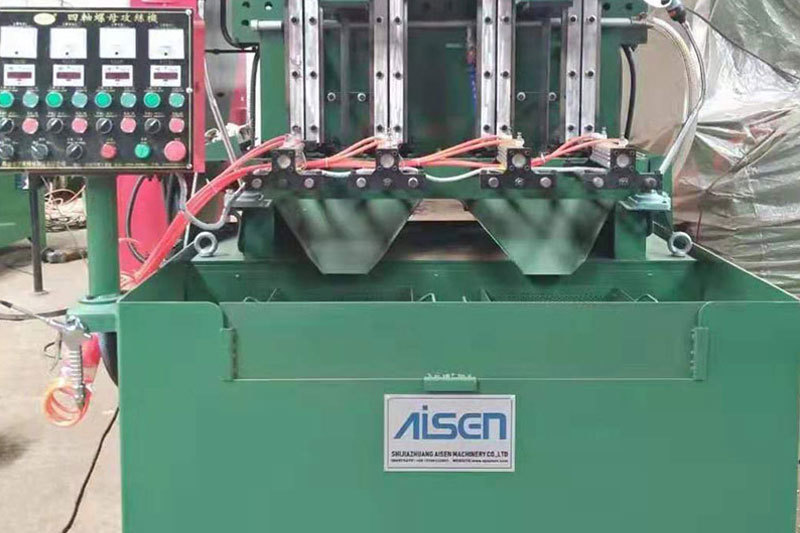
AISEN Four axis nut tapping machine ready for shipment to Russia
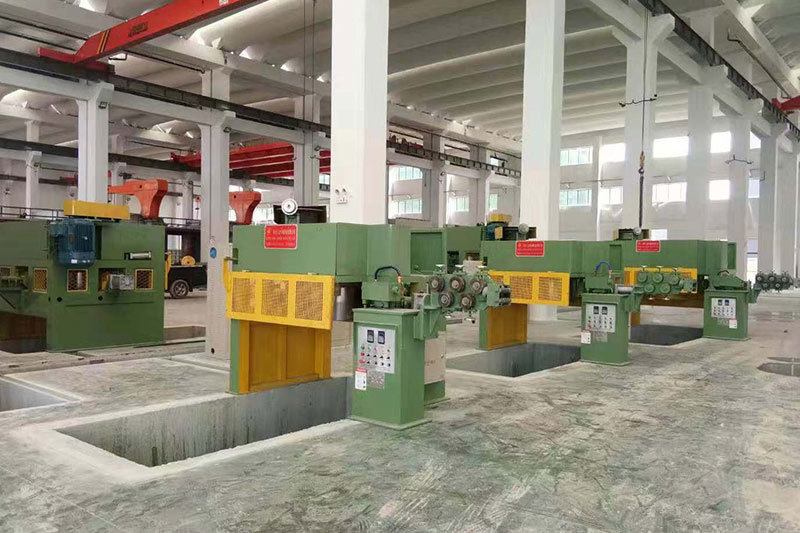
AISEN machinery inverted wire drawing machine
MESSAGES
We will contact you within one working day. Please pay attention to your email.
Qucik Link
Contact
Phone: +86-15100123091
E-mail: info@sjzaisen.com
Address: No.41 Zhaiying South Street, Yuhua District, Shijiazhuang City, Hebei Province China