

Bolt making machine setup cost and ROI: a practical breakdown
Nov 24,2026


Author:
Aisen Machinery

Article overview
This guide covers the full setup cost and ROI framework for a bolt making machine in India — including machine prices by type, per-unit economics, compliance requirements, and a supplier inspection checklist. Estimated reading time: 12 minutes.
Table of contents
- 1. What a complete bolt making machine line actually costs in India
- 2. Per-bolt cost breakdown and profit margin reality check
- 3. ROI calculation: how long before the machine pays for itself?
- 4. India compliance roadmap: BIS, GST, MSME subsidies, and factory permits
- 5. Supplier vetting and machine inspection checklist
- 6. Factory operations data: power, dies, yield rate, and staffing
- 7. Choosing the right machine configuration for your bolt specification
- 8. Downstream sales: where Indian fastener buyers actually come from
A bolt making machine in India refers to the complete production line — header, trimmer, thread roller, and wire drawing unit — used to cold-forge wire rod into finished fasteners ready for sale or export. The Indian fastener industry is valued at approximately ₹20,000 crore and is growing at a CAGR of 4.67% through 2034, according to IMARC Group research. Yet most entrepreneurs entering this space make the same mistake: they budget only for a single machine and are blindsided by the true capital requirement of a functional line. This breakdown fixes that.
What a complete bolt making machine line actually costs in India
The honest answer is that there is no single price — there is a production line price. A standalone cold forging header does not produce a sellable bolt. You need a wire drawing machine to prepare the rod, a header machine for bolt head forming, a trimming press for hex geometry, and a thread rolling machine for the fastener thread. Each station adds capital cost and, critically, production capacity interdependency.
Machine categories and 2026 price ranges
| Machine type | Bolt range | Speed (pcs/min) | Indicative price (₹ lakh) |
|---|---|---|---|
| Semi-auto single-die header | M4–M12 | 40–80 | 4–8 |
| Automatic 2-die 3-blow header | M6–M20 | 80–150 | 8–20 |
| Multi-station progressive header | M8–M36 | 100–300 | 20–60 |
| Flat-die thread rolling machine | M4–M24 | 100–200 | 3–10 |
| Wire drawing machine (5–9 passes) | Ø 4–20 mm | — | 5–15 |
| Hex trimming press | M6–M30 | 80–180 | 2–8 |
Total startup capital: three realistic scenarios
Think of the investment in three tiers, just as you would size a commercial kitchen before opening a restaurant. A small M6–M12 semi-auto line in a Ludhiana shed runs ₹25–40 lakh all-in. A mid-range automatic nut bolt making machine setup targeting M8–M20 in Rajkot or Pune costs ₹55–90 lakh. A full fastener manufacturing plant with multi-station cold forging, automatic bolt threading machine, wire drawing and surface treatment clears ₹1.2–2.5 crore. These figures include machine purchase, installation, initial die sets, electrical switchgear, and three months of working capital for wire rod inventory.
Per-bolt cost breakdown and profit margin reality check
Revenue per kilogram of finished bolts means little unless you know cost per kilogram with equal precision. Based on operational data from fastener clusters in Ludhiana and Rajkot, here is a representative cost structure for a standard M10×50 hex bolt made from low-carbon wire rod (IS 10415 Grade CHQ).
Cost per 1,000 bolts (M10×50, batch production)
| Cost element | Unit basis | ₹ per 1,000 bolts | % of total |
|---|---|---|---|
| Wire rod (CHQ) | ~5.4 kg @ ₹72/kg | 389 | 52% |
| Electricity | ~3.2 kWh @ ₹8/unit | 26 | 3% |
| Labour (3 operators, 8 hr shift) | Allocated per output | 85 | 11% |
| Die and tooling amortisation | Per million cycles | 55 | 7% |
| Machine depreciation (10 yr) | Allocated per output | 72 | 10% |
| Overheads (rent, misc.) | Allocated | 120 | 16% |
| Total cost | — | 747 | 100% |
At a market selling price of ₹950–1,100 per 1,000 bolts (wholesale, Ludhiana cluster 2026 rates), the gross margin sits at roughly 22–32%. That is a workable margin — but only if the rejection rate stays below 3%. Why do so many new units struggle in the first year? Because reject rates of 8–12% from improperly maintained dies can erode the entire margin and push operations into loss.
The die cost problem most buyers ignore
A carbide punch set for M10 bolts costs ₹18,000–35,000 and lasts approximately 800,000–1,200,000 strokes under proper lubrication. At 120 pieces per minute, that is 5.5–8.3 days of continuous production. Die replacement, therefore, is not an occasional cost — it is a weekly operational budget line. Industrial fastener machinery suppliers who cannot guarantee spare die availability within 72 hours should be disqualified at the selection stage.
ROI calculation: how long before the machine pays for itself?
A mid-range automatic bolt making machine in India — a ₹60 lakh all-in line targeting M8–M20 hex bolts at 100 pieces per minute — can achieve payback in 28–36 months under realistic operating conditions. Here is how that calculation is built, step by step.
Step-by-step payback calculation
- Annual output: 100 pcs/min × 60 min × 20 hr/day (2 shifts) × 300 working days = 36,000,000 bolts/year (before rejects)
- Adjusted output at 95% yield: 34,200,000 bolts/year
- Revenue at ₹1.00/bolt average (mixed M8–M20): ₹3.42 crore/year
- Total variable + fixed cost at ₹0.75/bolt: ₹2.57 crore/year
- Net annual profit: ₹85 lakh/year
- Total investment (machines + civil + working capital): ₹70 lakh
- Simple payback period: ₹70 lakh ÷ ₹85 lakh = approximately 10 months (best case); add 18 months for ramp-up, market development, and regulatory compliance = 28–36 months realistic
"The fastener industry in India is at an inflection point — domestic demand from automotive, infrastructure, and renewable energy is expanding faster than organised small-scale capacity can respond. Entrepreneurs who invest in compliant, automated production lines now will capture the premium tier of this demand." — EEPC India, Fastener Export Sector Report, 2025
Break-even volume: the number to know before you sign anything
For the same ₹60 lakh line, fixed costs (depreciation + rent + salaried staff) total roughly ₹18 lakh/year. At a contribution margin of ₹0.25/bolt, the break-even volume is 72 lakh bolts/year — achievable in a single shift at 100 pcs/min. This means any production above one 8-hour shift is pure profit contribution. That margin of safety is what separates a viable unit from one that collapses at the first order cancellation.
India compliance roadmap: BIS, GST, MSME subsidies, and factory permits
Compliance is not optional — the Bureau of Indian Standards (BIS) Quality Control Order (QCO) for fasteners mandates IS 1363, IS 1364, and IS 1367 certification for hex bolts and structural fasteners sold in India. Factories found supplying non-BIS-marked fasteners face seizure and penalties. This is a hard entry requirement, not a future upgrade.
Compliance steps in sequence
- MSME Udyam registration: Free online registration at udyamregistration.gov.in. Required for PMEGP loan eligibility and priority sector lending.
- GST registration: Mandatory above ₹40 lakh turnover threshold. HSN code 7318 covers bolts, screws, and fasteners. Input tax credit on machinery purchase reduces effective machine cost by 18%.
- BIS licence application: Apply to BIS via manakonline.in. Lab testing of samples against relevant IS standard. Factory audit required. Timeline: 3–6 months. Fee: approximately ₹8,000–25,000 depending on scope.
- Factory licence under Factories Act, 1948: Required if employing 10+ workers with power or 20+ without. Obtain from State Directorate of Industrial Safety and Health.
- Pollution NOC: Cold forging generates minimal liquid effluent, but lubricant waste and noise require a "Green Category" consent from the State Pollution Control Board.
- PMEGP subsidy loan: PM Employment Generation Programme offers 15–35% capital subsidy (higher for rural/SC/ST applicants) on project cost up to ₹50 lakh for manufacturing. Routed through KVIC, KVIB, or DIC.
How much can subsidies actually save you?
On a ₹40 lakh project, a 25% PMEGP subsidy means ₹10 lakh is a non-repayable grant. Combined with the 18% GST input credit on machinery, effective cash outflow on a ₹40 lakh machine purchase drops to approximately ₹26–28 lakh. That is not an insignificant number. Of course, subsidy disbursement timelines vary by state — Rajasthan and Gujarat have historically processed approvals faster than some other states, based on cluster-level feedback.
Supplier vetting and machine inspection checklist
The bolt making machine price in India ranges from ₹4 lakh to ₹60 lakh for a header alone. That spread exists for a reason — build quality, component sourcing, die steel grade, and after-sales support differ enormously. Buying on price alone is the single most common reason new fastener units underperform.
Pre-purchase supplier qualification
Before visiting a metal forging machine supplier in India, verify these points remotely: How many countries does the supplier export to? Can they provide live customer references in India you can call? What is their quoted spare parts delivery time? Do they carry carbide die stock or outsource it? A supplier exporting to 20+ countries with traceable customer references and in-house die inventory represents a substantially lower risk than one operating only domestically with no reference list.
Factory floor inspection checklist (at the supplier's plant)
- Request a trial run on your target bolt specification — M size, material grade, head type. Collect 500 pieces and measure head height, across-flats, and thread pitch against IS 1363/1364 tolerance.
- Check bearing brands used in the crankshaft — SKF, FAG, or reputable Indian equivalents indicate quality build.
- Ask to see the spare parts inventory physically. If dies, punches, and quills are not in stock, understand lead time before committing.
- Confirm electrical panel rating matches your factory's available power supply (3-phase, 415V, 50 Hz). Verify the motor brand and HP rating against the specification sheet.
- Inspect weld quality on the frame — porosity, undercuts, or unfinished grinding are indicators of rushed fabrication.
- Ask for the warranty terms in writing: minimum 12 months on structure, 6 months on electrical components. Reject verbal-only commitments.
- For second-hand machines: request full service history, die run count, and insist on a 4-hour continuous run test before payment.
Factory operations data: power, dies, yield rate, and staffing
Operational efficiency determines whether the ROI calculation holds in practice. The numbers below reflect actual unit economics from functioning fastener production units in Ludhiana and Rajkot, not theoretical estimates.
Power consumption and electrical infrastructure
A mid-range automatic bolt making machine (15–22 kW motor) draws approximately 12–18 kW effective load in production. Add the wire drawing machine (7.5–15 kW), trimming press (5.5 kW), and thread roller (3–5.5 kW), and the total connected load for a standard line sits at 35–60 kW. This requires a 3-phase connection of at least 63–100 amps from DISCOM. Monthly electricity cost on two shifts runs ₹55,000–85,000. Power factor correction capacitors are worth installing immediately — they reduce reactive power penalties and can save ₹3,000–6,000/month on the electricity bill.
Staffing and skill requirements
A two-shift operation of a single bolt forming line requires three to four operators per shift plus one supervisor. Operators need basic mechanical sense — they do not need engineering degrees. However, the die setter (the person who changes and aligns punch-and-die sets) is a skilled role that takes 6–9 months to develop internally or commands a salary of ₹18,000–28,000/month if hired from an established cluster. This is a staffing cost new entrants consistently underestimate.
Choosing the right machine configuration for your bolt specification
What is the right fastener production machine for your use case? The answer depends entirely on your target bolt diameter, length, production volume, and head type. Matching these parameters incorrectly is the most expensive mistake in this industry — a machine bought for M6 bolts cannot efficiently produce M24 without a full retool that costs nearly as much as a new machine.
Specification-to-machine mapping table
| Target bolt size | Recommended header type | Min. daily volume (8 hr) | Key pitfall |
|---|---|---|---|
| M4–M8 | Single-die, 2-blow header | 150,000+ | Over-investing in multi-station at this size |
| M10–M16 | 2-die 3-blow progressive header | 80,000–120,000 | Undersizing thread roller capacity |
| M18–M24 | Multi-station cold forging machine | 40,000–70,000 | Skipping annealing for high-tensile grades |
| M27–M36 | Hot forging or heavy cold former | 10,000–25,000 | Cold forging machine rated too low in tonnage |
Common costly mistakes to avoid
Why do so many buyers get this wrong? Partly because suppliers sometimes recommend machines that move their own inventory rather than match the buyer's production plan. Always start with your anchor customer's purchase order specification, reverse-engineer the required daily output, then select the machine. Never start from the machine and hope to find customers for whatever it produces. Additionally, buying a screw making machine designed for wood screws and attempting to run metric hex bolts on it is a failure mode that appears in multiple fastener cluster case studies — the head geometry tooling is simply incompatible.
Downstream sales: where Indian fastener buyers actually come from
A bolt making machine in India generates value only when the output is sold consistently at target margins. Production capacity without a sales channel is just an expensive storage problem. The Indian fastener market has several distinct buyer categories, each with different requirements and payment behaviour.
Primary domestic channels
Hardware wholesale distributors in clusters like Ludhiana (Punjab), Rajkot (Gujarat), and Pune (Maharashtra) purchase in bulk and pay net-30 to net-60. OEM automotive suppliers — Tier 2 and Tier 3 vendors to companies like Maruti Suzuki, Tata Motors, and Mahindra — require BIS-certified, grade-stamped fasteners with material test certificates. These buyers pay slowly but provide volume consistency. Construction and infrastructure contractors purchase through hardware traders and are price-sensitive but volume-significant. Getting listed on IndiaMART and TradeIndia with verified supplier status and product specifications measurably improves inbound inquiry volume for hex bolt manufacturing units.
Export pathways for Indian fastener manufacturers
India is the third-largest fastener exporter globally. The primary export markets are the Middle East, Africa, Southeast Asia, and increasingly Europe for standard-grade commercial fasteners. EEPC India membership provides access to buyer databases and participation in overseas trade delegations. Export requires an IEC (Importer Exporter Code) from DGFT — a straightforward online process. Fastener export shipments attract zero GST (zero-rated supply) and are eligible for RoDTEP (Remission of Duties and Taxes on Exported Products) benefits, improving export margin by 1.5–3% over domestic sales.
Key takeaways for investors evaluating a bolt making machine in India
- Budget for a complete line, not a single machine — minimum ₹25 lakh for a functional small-scale setup
- Wire rod and die costs dominate operating economics — model both conservatively before committing
- BIS certification is non-negotiable for domestic sales; begin the application process before machines arrive
- PMEGP subsidy can effectively reduce capital outlay by 15–35% — apply early as processing takes 3–6 months
- Choose machine configuration by working backwards from your confirmed order specification, not forward from the supplier's catalogue
- Target a minimum 22% gross margin and sub-3% rejection rate as the operational KPIs that define viability
Frequently asked questions
Q: What is the minimum investment to start a bolt making machine unit in India?
A: A functional small-scale unit producing M6–M12 bolts requires a minimum of ₹25–40 lakh for machines, installation, electrical works, initial die sets, and three months of wire rod working capital. A single header costing ₹5 lakh without supporting equipment cannot produce saleable finished bolts.
Q: Is BIS certification mandatory for selling bolts in India?
A: Yes. Under the BIS Quality Control Order covering fasteners, structural bolts and hex bolts sold in India must carry ISI marking per IS 1363, IS 1364, or IS 1367 as applicable. Non-compliant products are liable to seizure. The BIS licence application typically takes 3–6 months from submission to grant.
Q: How many machines are needed to make a complete bolt?
A: A minimum of four stations: a wire drawing machine to prepare rod diameter, a cold forging header for head formation, a hex trimming press for head geometry, and a thread rolling machine for fastener threads. Surface treatment (zinc plating or phosphating) adds a fifth process, often outsourced by small units initially.
Q: What PMEGP subsidy can I get for a bolt manufacturing unit?
A: The PM Employment Generation Programme offers a capital subsidy of 15% (urban general category) to 35% (rural SC/ST/women) on project cost up to ₹50 lakh for manufacturing. Applications are submitted through KVIC, KVIB, or the District Industries Centre. Processing typically takes 3–6 months.
Q: What is a realistic payback period for a bolt making machine investment in India?
A: Under realistic two-shift operations with a 95% yield rate and stable raw material costs, a mid-range automatic line costing ₹60–70 lakh all-in typically achieves full payback in 28–36 months. Best-case scenarios with anchor OEM customers can shorten this to 18–24 months; poor yield or delayed BIS certification can extend it to 48 months.
Get A Quote
We will contact you within one working day. Please pay attention to your email.
Latest News
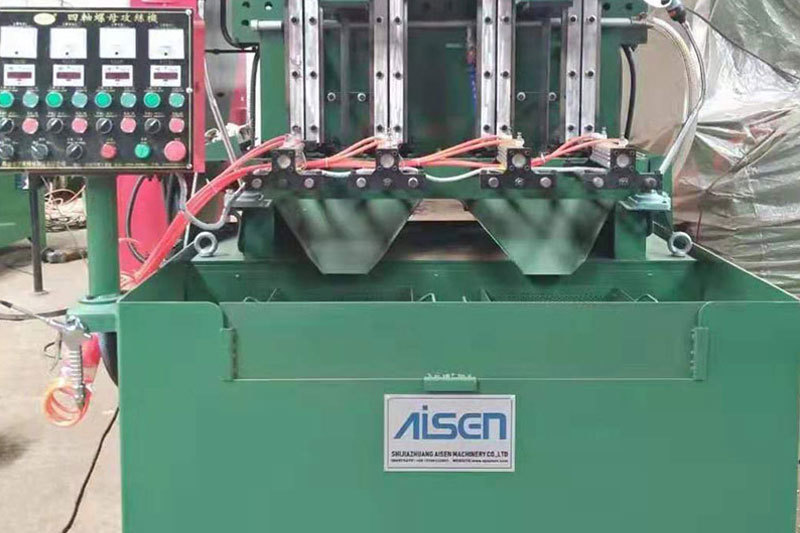
AISEN Four axis nut tapping machine ready for shipment to Russia
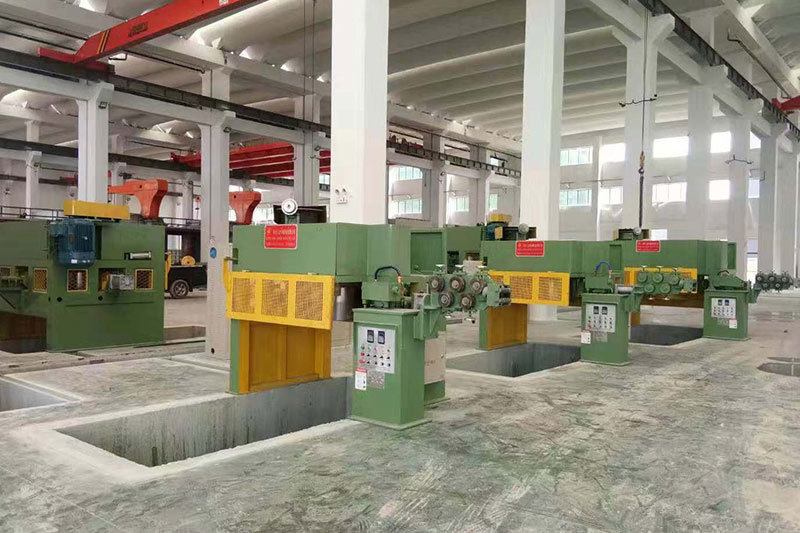
AISEN machinery inverted wire drawing machine
MESSAGES
We will contact you within one working day. Please pay attention to your email.
Qucik Link
Contact
Phone: +86-15100123091
E-mail: info@sjzaisen.com
Address: No.41 Zhaiying South Street, Yuhua District, Shijiazhuang City, Hebei Province China