

How to reduce scrap rate when using a U bolt bending machine on site
Nov 23,2026


Author:
Aisen Machinery

Article overview
This guide explains how to reduce scrap rate when operating a U Bolt Bending Machine on site. It covers root-cause analysis, machine selection, tooling calibration, material control, preventive maintenance, an ROI model, and Indian compliance requirements — giving procurement and production managers a single reference to cut rejection losses.
Table of contents
- 1. Why scrap rate spikes on U bolt bending machines
- 2. Choosing the right machine type and tonnage
- 3. Tooling setup and springback compensation
- 4. Material and feed control on site
- 5. Maintenance checklist to prevent defect cycles
- 6. ROI model: cost of scrap vs. equipment upgrade
- 7. Compliance, standards, and safety on the shop floor
- 8. Frequently asked questions
Why scrap rate spikes on U bolt bending machines
A U Bolt Bending Machine is a specialised metal rod bending equipment that uses a forming mandrel and clamping die to cold-bend solid round bar or rod into a U-shaped fastener in a single forming cycle. When rejection rates climb above 3–5%, the cause is almost never a single factor — it is a chain reaction starting at material intake and ending at the finished bend.
Field observations from fastener clusters in Ludhiana and Coimbatore consistently point to five primary scrap triggers: undersized machine tonnage, incorrect springback compensation, mixed-grade rod material in the same batch, worn or misaligned tooling, and inconsistent operator technique on manual or semi-automatic bending machines. Why do so many plants overlook these factors even after repeated rejections? Because each defect looks slightly different — an angle overrun one shift, a surface crack the next — masking the common upstream cause.
The true cost of one rejected U bolt
A single rejected piece on a hydraulic U bolt machine does not just waste bar stock. It consumes forming cycle time, hydraulic energy, thread rolling time if threads were already cut, and operator attention. For a plant running 300 pieces per shift at an average material cost of ₹28–₹45 per blank, a 7% rejection rate erases approximately ₹5,900–₹9,500 per shift in direct material losses alone — before accounting for rework labour or downtime.
Common defect types and their root causes
Understanding the defect type is the fastest path to the right corrective action. The table below maps each defect to its primary cause.
| Defect type | Likely root cause | First corrective step |
|---|---|---|
| Angle overrun / under-bend | Springback not compensated for rod grade | Re-calibrate overbend angle by 2–4° |
| Surface crack or fracture | Bending radius too tight for rod diameter | Use mandrel with R ≥ 2× rod diameter |
| Cross-section ovality | Wrong machine type (pipe bender used on solid rod) | Switch to dedicated U bolt forming machine |
| Leg-length inconsistency | Feed stop not locked or worn | Replace stop pin; verify with digital caliper |
| Thread damage after bending | Clamp die pressing on threaded zone | Adjust clamp die position or use sleeve protector |
Choosing the right machine type and tonnage
The single most impactful decision for scrap reduction is matching machine capacity to your rod diameter range. An undersized U bolt press machine will produce springback-heavy, angle-defective parts on every cycle — no amount of operator skill compensates for insufficient tonnage.
Machine type comparison for Indian buyers
| Machine type | Rod diameter range | Capacity (pcs/hr) | Price range (₹) | Best for |
|---|---|---|---|---|
| Manual / mechanical | 6–16 mm | 60–120 | 85,000–1,80,000 | Small workshops, low volume |
| Semi-automatic bending machine | 10–22 mm | 120–200 | 1,80,000–3,50,000 | Mid-volume, mixed SKU |
| Hydraulic U bolt machine | 16–42 mm | 200–400 | 3,50,000–6,75,000 | Heavy-duty, automotive, pipeline |
| CNC servo / customized U bolt machine | 8–36 mm | 300–500 | 6,00,000–14,00,000+ | High-mix, precision, fast changeover |
Price ranges are indicative, sourced from IndiaMART category listings and TL Pathak Group published data. Actual prices vary by specification and supplier. GST at 18% applicable additionally.
How to calculate the minimum required tonnage
A simplified formula used widely in Indian pipe clamp bending machine workshops: Required tonnage = (rod cross-section area × material UTS × bending factor) ÷ 1,000. For IS 1367-grade 8.8 bolt stock at 830 MPa UTS, a 20 mm rod requires approximately 30–35 tonnes. Attempting this on a 20-tonne machine produces chronic springback and angle defects. Always add a 20% safety margin to the calculated figure.
Tooling setup and springback compensation
Even the correct machine fails to deliver consistent output when tooling is mismatched or springback is unaccounted for. Springback — the elastic recovery angle after the forming load is released — varies from 2° to 8° depending on rod grade and diameter. Ignoring it on a U bolt tooling machine is like aiming without correcting for wind.
Step-by-step tooling setup procedure
- Verify mandrel diameter matches the inside bend radius specification (minimum 2× rod diameter for IS 2062 mild steel; 2.5× for high-tensile grades).
- Install the clamping die and confirm it contacts the rod at least 15 mm away from the bend tangent point to avoid stress concentration.
- Run three trial pieces at the nominal program angle and measure the actual included angle with a protractor or digital angle gauge.
- Calculate the average springback: subtract the measured angle from the target angle.
- Add the springback compensation value to the machine stop or CNC parameter — typically 3–5° over-bend for IS Fe 500 grade rod.
- Run five more pieces, measure all five, and confirm the standard deviation is within ±1°. If not, check mandrel wear and clamp die alignment before proceeding.
- Log the final parameters on a job card attached to the die set for repeat orders.
Die wear and replacement intervals
Worn dies are a silent scrap generator. A die worn beyond 0.3 mm on the contact radius introduces positional variability that no program correction can fix. On a hydraulic U bolt machine running 300 pieces per shift, hardened tool steel dies typically last 80,000–1,20,000 cycles before replacement is warranted. Track cycle counts in a simple logbook. The cost of a replacement die set (₹8,000–₹25,000 depending on size) is far less than one shift of elevated scrap.
"Springback compensation is not a one-time calibration — it must be re-verified every time the rod grade, supplier, or heat number changes. Material consistency is the hidden variable that most shops underestimate."
— Aisen 2026 buyer's guide for U bolt fabrication equipment
Material and feed control on site
Material variability is responsible for a significant proportion of angular and surface defects that operators mistakenly attribute to machine faults. When rod stock from two different mills — or even two different heats from the same mill — is mixed in the same production batch, the springback compensation set for one material becomes wrong for the other. The result is alternating accept-reject patterns that are frustratingly difficult to trace.
Material intake protocol
Before loading any batch into a steel rod bending equipment station, verify: rod diameter tolerance (IS 1732 allows ±0.4 mm for 16–25 mm range — mixed batches outside this spread will cause leg-length scatter), surface condition (mill scale acceptable; corrosion pits are not), and grade marking. Segregate by heat number if your customer specification requires traceability. It takes under three minutes per bundle and can halve dimensional rejection on first-off inspection.
Feed stop and length control
On manual and semi-automatic bending machines, the feed stop pin is the single most maintenance-neglected component. A worn or loose stop pin introduces a feed length variation of ±2–5 mm, which directly translates into leg-length inconsistency in the finished U bolt. Check stop pin tightness at the start of every shift. For high-volume runs, consider upgrading to a servo-driven feed stop — an addition that typically costs ₹35,000–₹60,000 on existing machines but reduces length scatter to under ±0.5 mm.
Maintenance checklist to prevent defect cycles
Preventive maintenance on a U bolt manufacturing machine is not complex, but it demands consistency. A single missed hydraulic oil change is enough to introduce pressure fluctuation that causes forming force to drop mid-cycle — producing under-bent parts that look like a parameter problem until the oil sample tells the real story.
Daily, weekly, and monthly maintenance tasks
| Frequency | Task | Acceptance criterion |
|---|---|---|
| Daily | Check hydraulic oil level and colour | Level within operating range; oil amber, not dark |
| Daily | Inspect die contact surfaces for scoring | No scoring deeper than 0.1 mm |
| Weekly | Lubricate guide rails and feed mechanism | Smooth travel, no stick-slip |
| Weekly | Verify feed stop pin tightness and position | Length deviation ≤ ±0.5 mm on test piece |
| Monthly | Replace hydraulic oil filter (or per OEM interval) | Per OEM specification — typically ISO VG 46 |
| Monthly | Measure die wear with depth gauge | Replace if wear exceeds 0.3 mm on radius |
| Quarterly | Full hydraulic system pressure test | Operating pressure stable within ±5 bar |
Common fault-finding guide
If angle scatter suddenly increases mid-shift without any parameter change, check the hydraulic pressure gauge first — pressure drop below the rated forming pressure is the most common concealed cause. If surface marks appear on the rod contact zone, the clamping die may have embedded scale particles; clean and polish the die face with 400-grit abrasive cloth. For U clamp bending machine operators running stainless or alloy rod, verify that the mandrel and die material hardness is at least 20 HRC above the workpiece — softer tooling transfers deformation back to the part surface.
ROI model: cost of scrap vs. equipment upgrade
Should you invest in a CNC customized U bolt machine to replace an ageing hydraulic unit? The answer depends on your scrap rate, batch mix, and die changeover frequency. The following model uses conservative figures applicable to a mid-size Indian fastener plant.
Sample ROI calculation — hydraulic to CNC upgrade
| Cost parameter | Hydraulic machine (current) | CNC servo machine (upgrade) |
|---|---|---|
| Scrap rate | 6–8% | 1–2% |
| Die changeover time | 45–90 min | 8–12 min |
| Monthly scrap material loss (₹) | ~₹58,000–₹95,000 | ~₹12,000–₹22,000 |
| Monthly labour saving (₹) | Baseline | +₹18,000–₹28,000 |
| Machine cost (₹) | Already owned | ~₹7,50,000–₹10,00,000 |
| Estimated payback period | — | 14–22 months |
Figures are estimates based on a two-shift operation producing mixed SKUs. Actual payback depends on rod cost, rejection rate, and shift utilisation.
When a full upgrade is not justified
Of course, there are situations where a full equipment replacement is not the right answer. If your volume is below 150 pieces per shift and you run a single diameter, targeted tooling upgrades — better mandrel material, servo feed stop, digital angle verification — can bring scrap from 7% down to under 3% for under ₹80,000 total investment. The machine type is only one variable in the scrap equation.
Compliance, standards, and safety on the shop floor
Running a U bolt bending machine in compliance with applicable standards is not just a regulatory requirement — it directly affects part quality and operator safety, both of which feed back into defect rates.
Relevant Indian and international standards
U bolts produced for structural, pipeline, or automotive applications in India are typically governed by IS 1363 / IS 1364 (fastener dimensions), IS 1367 (mechanical properties), and IS 2062 (structural steel for the rod stock). Equipment imported into India may carry CE marking, which confirms conformance to European machinery safety directive EN ISO 16090 — a useful indicator of guarding and electrical design quality even outside European jurisdiction. When sourcing a pipe fitting bending machine or steel rod bending equipment for automotive leaf spring or transmission tower applications, request the supplier's material test certificates and dimension compliance documentation as part of the purchase agreement.
Electrical and noise compliance
Hydraulic U bolt machines operating on three-phase supply in India must conform to IS 1554 wiring standards and must be earthed per IS 3043. Noise levels on hydraulic units typically run 72–85 dB(A) at one metre; operators on extended shifts require hearing protection if levels exceed 85 dB(A) as per Factories Act guidelines. Confirm noise data with the equipment supplier before purchase. If the supplier cannot provide a measured noise figure, treat it as an unverified specification and test on delivery.
Purchasing, delivery, and after-sales checklist for India
When finalising a purchase of any U bolt making machine — whether from Ludhiana, Howrah, or Coimbatore — confirm: GST invoice with correct HSN code (8462 for metal-forming machines), delivery timeline and mode (road transport for machines under 2,000 kg; crane-unloading site readiness for heavier hydraulic units), commissioning support (minimum one day on-site setup and parameter setting by supplier technician), spare parts availability within your state, and warranty terms in writing. Machines with strong domestic after-sales networks reduce unplanned downtime — a hidden driver of elevated scrap during restart cycles after breakdowns.
Frequently asked questions
Q: What is the typical scrap rate benchmark for a hydraulic U bolt bending machine?
A: A well-maintained hydraulic U bolt machine with correctly calibrated springback compensation should achieve a scrap rate of 1.5–3%. Rates above 5% indicate a systematic issue — typically incorrect tonnage, worn dies, or mixed-grade rod material — that requires root-cause investigation rather than operator adjustment alone.
Q: Can a standard pipe clamp bending machine be used to make solid-rod U bolts?
A: No. A pipe clamp bending machine is designed for hollow tube and cannot apply the distributed forming force required for solid rod. Using it on solid bar causes cross-section ovality, surface cracking, and unpredictable springback. A dedicated U bolt forming machine or round bar bending machine must be used for solid-rod applications.
Q: How often should dies on a U bolt tooling machine be replaced?
A: On a hydraulic U bolt machine running 300 pieces per shift with hardened tool steel dies, replacement is typically warranted after 80,000–1,20,000 forming cycles or when wear on the die contact radius exceeds 0.3 mm — whichever comes first. Track cycle counts in a maintenance log to avoid reactive replacement after scrap rates have already risen.
Q: What is the price range of a U bolt bending machine in India in 2026?
A: Based on IndiaMART and supplier published data, manual U bolt bending machines start at approximately ₹85,000, semi-automatic models range from ₹1,80,000 to ₹3,50,000, hydraulic U bolt machines from ₹3,50,000 to ₹6,75,000, and CNC servo customized U bolt machines from ₹6,00,000 upward. All prices are exclusive of 18% GST.
Q: How can springback be compensated on a semi-automatic bending machine without CNC control?
A: On a semi-automatic bending machine without CNC, springback compensation is achieved mechanically by setting the hard stop 3–6° past the nominal target angle based on measured trial pieces. Run at least five trials per new rod grade or supplier batch, calculate the average springback, adjust the stop, and re-verify. Record the value on a job card for repeat orders to avoid repeating the trial process.
Conclusion
Reducing scrap rate on a U Bolt Bending Machine is fundamentally an exercise in systematic control — over machine selection, tooling condition, material consistency, operator procedure, and preventive maintenance. No single fix resolves all defect types, but the data consistently shows that plants addressing springback compensation, die wear tracking, and material batch segregation together can cut rejection from 6–8% to under 2% within one to two production months. As India's industrial fastener market continues its strong growth trajectory through 2026 and beyond, the manufacturers who build these controls into their daily workflow — not just during quality audits — will capture the efficiency margin that separates profitable volume from costly rework.
PREVIOUS:
Get A Quote
We will contact you within one working day. Please pay attention to your email.
Latest News
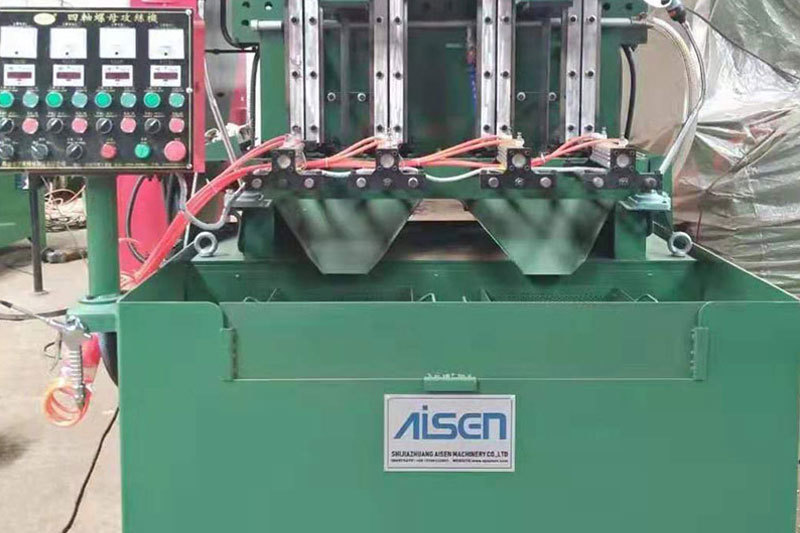
AISEN Four axis nut tapping machine ready for shipment to Russia
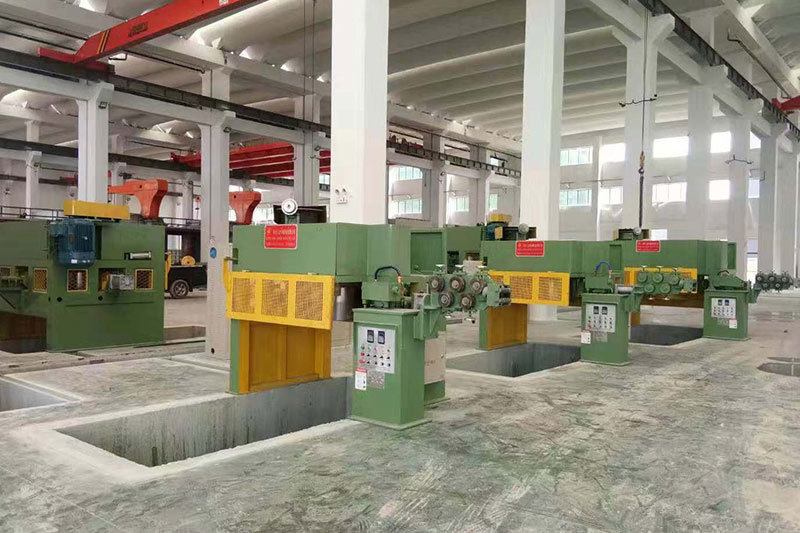
AISEN machinery inverted wire drawing machine
MESSAGES
We will contact you within one working day. Please pay attention to your email.
Qucik Link
Contact
Phone: +86-15100123091
E-mail: info@sjzaisen.com
Address: No.41 Zhaiying South Street, Yuhua District, Shijiazhuang City, Hebei Province China