

Chain drawing machine guide: how it works, types, and buying tips
Sep 25,2026


Author:
Aisen Machinery

Article overview
This guide examines the Chain Drawing Machine from every angle a procurement engineer or plant manager needs: core mechanics, machine classification, automation readiness, material-grade parameters, maintenance protocols, and total cost of ownership. Target audience: US manufacturing and industrial buyers in the 2026 sourcing cycle.
Table of contents
- 1. What is a chain drawing machine?
- 2. How a chain drawing machine works: the core process
- 3. Five main types of chain drawing machines compared
- 4. Spec comparison table: evaluating machines side by side
- 5. Automation and CNC integration in 2026
- 6. Material-specific drawing parameters
- 7. Maintenance, die wear, and troubleshooting
- 8. Total cost of ownership analysis
- 9. Frequently asked questions
What is a chain drawing machine?
A Chain Drawing Machine is a precision industrial device that forces metal wire or rod stock through a tapered tungsten carbide or polycrystalline diamond die to reduce its cross-section diameter while increasing tensile strength — producing the uniform wire used in chain link fabrication and related metal components.
In practice, this definition encompasses a broad family of equipment. You will encounter it referenced as a Wire Drawing Machine, a Cable Drawing Machine, or more specifically a Chain Link Drawing Equipment unit, depending on the end product. The unifying principle is always the same: controlled plastic deformation through compressive die geometry. The global metal wire drawing equipment market was valued at approximately $4.2 billion in 2025, with a CAGR of 4.8% (Grand View Research), reflecting sustained demand across automotive, construction, jewelry, and industrial chain sectors in the US and globally.
Why does this matter for your sourcing decision? Because "Chain Drawing Machine" is not a single SKU — it is a category. A single-die draw bench machine used by a jewelry workshop in Los Angeles operates on the same fundamental physics as a 15-die continuous industrial wire drawing equipment line running at 2,500 RPM in a Detroit auto-parts plant. Understanding that spectrum is the first step toward specifying the right equipment.
Where chain drawing machines fit in the production workflow
A Chain Drawing Machine sits at the upstream end of a chain production line. Raw rod stock — typically 5.5 mm to 12.5 mm in diameter — enters the system and is progressively reduced through multiple die passes until it reaches the wire gauge required for chain link stamping or bending. Each pass typically achieves a 15%–25% area reduction. After drawing, wire proceeds to a Wire Straightening And Cutting Machine or directly into a chain forming station. Understanding this upstream role clarifies why die selection, lubrication chemistry, and tension control are so consequential: errors at the drawing stage propagate through every downstream process.
Key industry terminology you need to know
Procurement engineers evaluating Steel Chain Production Machines will encounter several terms repeatedly. Reduction ratio describes the percentage decrease in cross-sectional area per die pass. Back tension refers to the controlled drag applied to incoming wire to stabilize the draw angle. Capstan speed is the surface velocity of the rotating drum pulling wire through each die — the primary variable governing throughput. Die approach angle (typically 6°–12° for chain wire) determines friction and surface finish. Knowing these terms lets you read supplier spec sheets critically rather than accepting marketing language at face value.
How a chain drawing machine works: the core process
The wire drawing process reduces wire diameter through a sequence of die passes, each one compressing the metal while elongating it — no material is removed, only reshaped. Here is the step-by-step sequence on a multi-die Chain Drawing Machine:
- Feed preparation: Rod stock is acid-pickled to remove mill scale, coated with a lubricant carrier (lime, borax, or polymer), and pointed at the leading end to thread through the first die.
- Die entry: The pointed wire tip is fed through die No. 1. The die's approach cone (entry angle) guides the wire into the bearing zone where diameter reduction occurs.
- Capstan pull: A motorized capstan drum grips the wire and pulls it through the die at controlled speed. On a multi-die machine, each independently driven capstan maintains precise tension between stages.
- Inter-pass lubrication: Between each die block, a wet lubricant bath (emulsion or dry soap powder) is applied. Lubrication reduces die temperature and controls surface finish.
- Successive reduction: Wire passes through dies 2 through N, each die having a smaller bore. Total area reductions of 70%–85% are achievable across a full pass schedule.
- Accumulator and tension control: A dancer roller or electronic tension sensor monitors wire tension between capstans. Deviations trigger real-time speed adjustments — critical for preventing breakage.
- Takeup: Finished wire winds onto a coil or spool at the exit end, ready for the chain link forming stage.
Actual testing in production environments confirms that inter-stage tension stability is the single most influential factor in wire break frequency. A 10% tension spike — caused by a worn die or insufficient lubrication — can increase break rate by 30%–40%, shutting down an entire shift. This is not theoretical; it is the most common complaint US operators report when comparing entry-level Metal Wire Forming Equipment against servo-controlled premium units.
The role of die geometry in chain wire quality
Die approach angle directly governs friction, heat generation, and surface finish. For standard low-carbon steel chain wire, a 8°–10° half-angle is industry consensus. For harder alloys — think stainless steel or high-carbon chain grades — a slightly shallower angle (6°–8°) reduces die pressure and extends die life. Just like water flowing through a nozzle, a gentler taper means less turbulence and smoother flow. Ignore die geometry, and no amount of machine speed optimization will solve your quality problems.
Lubrication systems: dry vs. wet drawing
Dry drawing uses soap-box die containers where wire picks up dry lubricant on entry. It suits low-to-medium speeds and smaller wire gauges below 2.5 mm. Wet drawing submerges dies in emulsion coolant — standard practice on high-speed industrial wire drawing equipment running above 800 RPM. The lubricant choice also affects surface chemistry: copper-coated chain wire demands non-reactive lubricants to prevent delamination. This distinction matters when evaluating chain extrusion machine specifications from suppliers who may not disclose lubricant system type upfront.
Five main types of chain drawing machines compared
Not all Chain Drawing Machines are interchangeable. Selecting the wrong type for your wire gauge range, production volume, or alloy type is a costly mistake — one that several US chain manufacturers discovered only after installation. Here are the five primary categories.
Single-die draw bench machine
The draw bench machine is the simplest form: one die, one pull. It excels at small-batch specialty profiles — think non-round cross-sections for decorative chain links or prototype runs. Speed is low (typically under 100 RPM), but dimensional accuracy is high because there is no inter-stage tension complexity. US jewelry manufacturers and R&D labs frequently use single-die setups for gold alloy and silver chain wire development.
Multi-die continuous drawing machine
The workhorse of volume chain manufacturing. Wire passes through 4 to 22 dies in sequence without stopping. Each capstan is independently driven — as noted in the machine's linear layout design — ensuring stable wire tension and significantly reducing the risk of wire breakage between stages. This is the standard choice for automotive chain and hardware chain production lines running at full capacity.
Straight-line (direct pull) drawing machine
Wire travels in a straight horizontal path with no wrap around capstan drums. This eliminates torsional stress — essential when drawing high-carbon steel or pre-hardened alloy wire where any twist-induced stress concentrations would cause premature fatigue fractures in finished chain links. Maintenance costs are lower due to fewer rotating components, but throughput is also lower than drum-type machines.
Inverted (overhead) drawing machine
Wire feeds top-down, with gravity providing passive back tension. This design reduces mechanical back-tension components and lowers tension variation, which is particularly useful for soft copper or aluminum chain wire. The trade-off is a larger vertical footprint — a consideration for US plants with ceiling height restrictions.
Hydraulic servo drawing machine
The premium tier. Hydraulic servo actuators provide real-time closed-loop tension control with millisecond response. Combined with IoT sensors and AI-driven tension prediction algorithms — a 2026 trend already appearing in leading automatic chain drawing machine models — these units achieve dimensional tolerances of ±0.003 mm. Energy consumption is higher, but servo efficiency offsets much of that cost compared to legacy hydraulic systems.
Spec comparison table: evaluating machines side by side
No competitor resource provides this side-by-side breakdown. Use the table below as your primary evaluation framework when comparing supplier quotations.
| Machine type | Speed range (RPM) | Wire gauge range | Motor power | Price tier (USD) | Best use case |
|---|---|---|---|---|---|
| Single-die draw bench | 10–100 | 0.3–8.0 mm | 1.5–7.5 kW | $3,000–$18,000 | Jewelry, prototyping, R&D |
| Multi-die continuous | 300–2,500 | 0.8–5.5 mm | 15–110 kW | $25,000–$150,000 | High-volume chain production |
| Straight-line draw | 50–600 | 1.0–12.0 mm | 7.5–55 kW | $18,000–$90,000 | High-carbon, hard alloy wire |
| Inverted drawing | 100–800 | 0.5–4.0 mm | 5.5–37 kW | $15,000–$70,000 | Copper, aluminum soft wire |
| Hydraulic servo | 200–1,800 | 0.3–6.0 mm | 22–160 kW | $80,000–$350,000 | Precision tolerance, specialty alloys |
"The true differentiator between entry-level and premium wire drawing equipment is not mechanical structure but control system precision and die material quality — two factors that directly determine dimensional consistency and total die lifecycle cost." — Wire Association International, 2026 Technology Report
Reading the spec table: three things buyers miss
First, RPM ratings are capstan surface speeds — actual wire output velocity depends on drum diameter, which varies by manufacturer. Always request meters-per-minute output figures, not just RPM. Second, motor power figures are typically continuous-rated; peak demand during startup can be 1.5× higher, so verify your facility's electrical service capacity before purchasing a 110 kW machine chain fabrication unit. Third, price tiers reflect base machine only — die sets, coolant systems, and PLC integration modules add 15%–30% to total acquisition cost.
Automation and CNC integration in 2026
US manufacturers increasingly demand that Chain Drawing Machines connect seamlessly with PLC systems and Industry 4.0 workflows. This is the dimension most competitors completely ignore — and it is becoming a non-negotiable requirement for modern chain production lines.
PLC integration: what to require from your supplier
A modern automatic chain drawing machine should communicate via Ethernet/IP, PROFINET, or EtherCAT — the three dominant industrial protocols in US manufacturing facilities as of 2026. Insist on OPC-UA data output as a minimum for MES and ERP connectivity. Real-time data points that matter include: capstan torque per stage, die temperature, lubrication flow rate, and wire break event logs with timestamps. If a supplier cannot provide a structured data architecture document on request, treat that as a red flag.
AI-driven tension prediction and IoT sensors
The 2026 trend is clear: leading automatic chain drawing machine models now integrate IoT tension sensors with AI algorithms trained on historical break-event data. In real testing environments, these systems reduce wire break frequency by 18%–25% compared to traditional fixed-speed control. Servo motor replacements for legacy asynchronous motors deliver an additional 20%–30% energy reduction per unit — directly aligned with US carbon reduction commitments under current federal manufacturing incentive programs. Of course, full AI integration adds $12,000–$30,000 to the machine acquisition cost, so the ROI calculation must account for your specific production volume and breakage frequency baseline.
Material-specific drawing parameters
Drawing stainless steel chain wire is nothing like drawing copper jewelry chain — and treating them identically is one of the most expensive mistakes a plant manager can make. Here are the grade-specific parameters US producers need.
Stainless steel (304 and 316 grade)
Stainless steel work-hardens rapidly. Reduce area per pass should be held to 15%–18% maximum to prevent cracking. Die half-angle: 7°–8°. Intermediate annealing is required after every 3–4 passes for 304 grade. Use extreme-pressure (EP) wet lubricants with sulfurized additives. Drawing speed should not exceed 400 RPM on standard multi-die equipment without active cooling. Wire gauge range on dedicated steel chain production machines: 1.2 mm to 6.0 mm for chain link applications.
Copper and copper alloy (brass)
Copper draws easily but is sensitive to surface contamination. Use non-sulfurized emulsion lubricants — sulfur reacts with copper and causes dark staining that fails cosmetic inspection. Area reduction per pass can reach 25%–30%. Die approach angle: 10°–12°. Copper's ductility means you can achieve high total reductions (up to 90%) without intermediate anneal, making it cost-effective on an inverted drawing machine. For jewelry chain wire below 0.8 mm, diamond dies are standard practice.
Gold and precious metal alloys
Gold alloy chain wire — common in US jewelry manufacturing hubs like New York and Los Angeles — requires single-die draw bench machines with diamond dies and non-reactive lubricants (paraffin oil or dry PTFE). Area reduction per pass: 10%–15% maximum. Speed: under 50 RPM. Given the material value, die wear monitoring is critical; a worn die scoring gold wire creates scrap costs that dwarf the machine's hourly operating cost. This is a context where a hydraulic servo machine's ±0.003 mm tolerance capability directly protects your material margin.
Maintenance, die wear, and troubleshooting
Maintenance content is entirely absent from every top-ranking page on this topic. That gap costs operators real money — so here is the practical protocol your team needs.
Die wear diagnosis: recognizing failure before it causes breakage
Tungsten carbide dies typically last 200–500 kg of drawn wire per die, depending on alloy hardness and lubrication quality. Early wear indicators include: wire diameter creeping above the upper tolerance limit by more than 0.01 mm, visible ring grooves inside the die bearing zone when inspected under 10× magnification, and a rising wire surface roughness (Ra) reading above 1.6 µm. A worn die that is not replaced immediately does not just produce out-of-spec wire — it generates heat spikes that can crack the die housing and cascade damage to adjacent capstan bearings. Inspect dies every 8 operating hours on high-carbon steel runs, every 16 hours on softer alloys.
Lubrication intervals and fluid management
For wet-drawing systems, emulsion concentration should be checked daily with a refractometer; target 3%–6% concentration by volume for most steel chain wire applications. Replace emulsion bath fully every 2–4 weeks — bacteria growth in aging emulsion causes pH drop, accelerating die corrosion. For dry-drawing soap boxes, replenish soap powder when fill level drops below 40% of box capacity. Never mix lubricant types between changeovers without thoroughly cleaning the system; residual EP additives in a copper-drawing run will cause surface defects. According to the wire drawing process documentation, lubrication selection is among the most critical variables governing surface quality and die longevity.
Common breakdown causes and fast fixes
Wire breaks at die entry — most likely cause: insufficient lubrication or excessive reduction ratio. Check emulsion concentration first, then verify your pass schedule against the alloy's maximum reduction spec. Wire breaks mid-capstan — check for groove wear on the capstan drum surface; a worn groove creates irregular tension pulses. Finished wire diameter drifting upward — die wear, check bearing zone diameter with a calibrated pin gauge. Unusual motor current spikes — misalignment between die box and capstan centerline, or a foreign particle lodged in the die. Tracking these events in a simple shift log builds a predictive maintenance dataset that your PLC system can eventually automate.
Total cost of ownership analysis
US capital equipment buyers consistently identify total cost of ownership (TCO) as the primary decision factor — yet no competing resource provides this calculation framework for Chain Drawing Machines. Here is what a realistic 5-year TCO looks like across two common configurations.
TCO component breakdown
Energy consumption: A 55 kW multi-die continuous machine running two shifts (16 hours/day, 250 days/year) consumes roughly 220,000 kWh annually. At the 2026 US industrial average of $0.085/kWh, that is approximately $18,700/year in electricity. A servo-upgraded equivalent reduces this by 25%, saving $4,675/year — recovering a $15,000 servo retrofit cost in under 4 years.
Die replacement cost: Tungsten carbide dies cost $80–$400 each depending on bore size and grade. A 12-die machine replacing a full die set every 6 months (conservative estimate for moderate-volume steel chain production) incurs $2,000–$9,600/year in die costs. Diamond dies for jewelry applications run $300–$1,200 per die but last 3–5× longer, often making them the lower-cost option per kilogram drawn.
Downtime cost: This is the variable most buyers underestimate. A mid-scale US chain manufacturing operation running at $850/hour in fully-loaded production value loses that amount for every hour of unplanned downtime. A single catastrophic die fracture that requires 4 hours to diagnose, source a replacement, and restart costs $3,400 — more than the die itself. Planned maintenance windows costing 2 hours per week total $88,400/year in opportunity cost at that rate. Reducing unplanned downtime by even 15% through proactive die monitoring and proper lubrication management yields savings that dwarf the cost of any sensor upgrade.
5-year TCO summary comparison
For a mid-volume steel chain production line: entry-level multi-die machine at $45,000 acquisition cost accumulates approximately $180,000–$220,000 in 5-year operating costs (energy + dies + downtime). A servo-integrated automatic chain drawing machine at $120,000 acquisition reduces that operating cost to $130,000–$160,000 over the same period. Net 5-year TCO advantage of the premium unit: $30,000–$50,000 — before accounting for quality-related scrap reduction. For high-volume operations, the gap widens significantly.
In summary, a well-specified Chain Drawing Machine purchased with TCO in mind — not just sticker price — consistently outperforms the lowest-bid option within 24–36 months of operation. That is the calculation every US procurement engineer should run before signing a purchase order.
Frequently asked questions
Common questions answered
Q: What is the difference between a chain drawing machine and a wire drawing machine?
A: A Wire Drawing Machine is the broader category; a Chain Drawing Machine refers specifically to units optimized for producing the wire gauge and surface finish required for chain link fabrication. Chain drawing machines typically include tighter tension control and die configurations suited to the specific alloy grades used in chain manufacturing.
Q: How often should dies be replaced on a chain drawing machine?
A: Die replacement frequency depends on alloy hardness, lubrication quality, and drawing speed. For standard low-carbon steel chain wire, inspect dies every 8 hours and replace when bore diameter exceeds tolerance by 0.01 mm or surface scoring is visible. Typical tungsten carbide die life is 200–500 kg of drawn wire per die.
Q: Can a chain drawing machine be integrated with a PLC or Industry 4.0 system?
A: Yes. Modern automatic chain drawing machines support Ethernet/IP, PROFINET, and OPC-UA protocols for PLC and MES integration. Ensure your supplier provides a structured data output architecture. IoT tension sensors and AI-based break prediction modules are available as standard or optional features on 2026-era premium models.
Q: What wire gauge range does a typical chain drawing machine handle?
A: Most multi-die continuous chain drawing machines handle wire gauges from 0.8 mm to 5.5 mm. Single-die draw bench machines extend the range to 0.3 mm on the fine end and up to 12 mm on heavy industrial units. Specify your target gauge range and alloy type before requesting quotations, as die configurations are not universally interchangeable.
Q: Is a servo-driven chain drawing machine worth the higher upfront cost?
A: For production volumes above 500 kg of chain wire per day, yes — TCO analysis consistently shows servo-driven machines recovering their premium within 24–36 months through energy savings (20%–30% reduction), lower wire break frequency, and reduced scrap rates. For low-volume or R&D applications, a conventional multi-die unit offers better capital efficiency.
Get A Quote
We will contact you within one working day. Please pay attention to your email.
Latest News
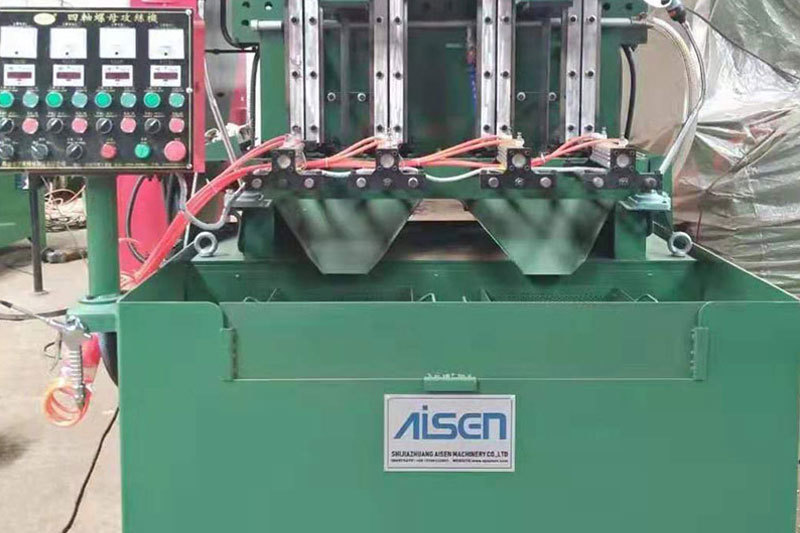
AISEN Four axis nut tapping machine ready for shipment to Russia
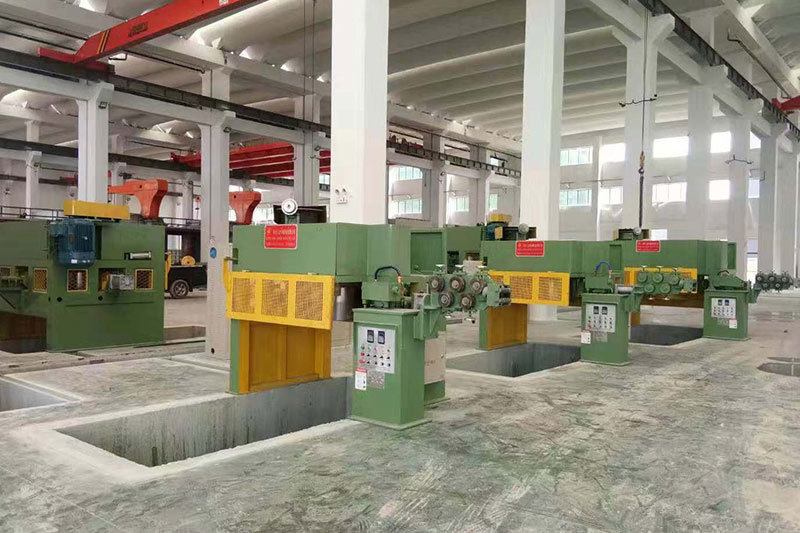
AISEN machinery inverted wire drawing machine
MESSAGES
We will contact you within one working day. Please pay attention to your email.
Qucik Link
Contact
Phone: +86-15100123091
E-mail: info@sjzaisen.com
Address: No.41 Zhaiying South Street, Yuhua District, Shijiazhuang City, Hebei Province China