

U-bolt bending machine buyer's guide: types, specs & how to choose the right one
Sep 25,2026


Author:
Aisen Machinery

Article overview
This buyer's guide analyzes U-Bolt Bending Machine types, compatibility specs, industry use cases, TCO breakdowns, and U.S. safety compliance requirements. Targeted at procurement engineers and fab shop owners making capital equipment decisions in 2026.
Table of contents
- 1. What is a U-bolt bending machine?
- 2. Types of U-bolt bending machines explained
- 3. U-bolt size vs. machine compatibility chart
- 4. Industry applications: automotive, pipeline & trailer
- 5. Total cost of ownership: manual vs. hydraulic vs. CNC
- 6. Setup, operation & first-time buyer checklist
- 7. U.S. compliance and safety standards
- 8. How to choose the right machine for your shop
- 9. FAQ
What is a U-bolt bending machine?
A U-Bolt Bending Machine is a dedicated industrial forming device that bends metal rod or wire stock into a precise U-shaped profile used in fastener manufacturing. It uses a matched die set — a forming mandrel and a clamping block — driven by hydraulic, mechanical, or servo-electric power to produce consistent U-bolts at production volumes ranging from dozens to thousands of pieces per shift.
Unlike a standard pipe bending machine, a U-bolt forming machine is optimized for solid rod stock rather than hollow tubing. That distinction matters more than most buyers realize. Solid rod deforms under compression differently than tube wall sections, requiring higher tonnage at the bend apex and far more precise springback compensation to hold dimensional tolerances. Running solid rod through a conventional pipe clamp bending machine typically results in cross-section distortion and angle deviation — both unacceptable in load-bearing fastener applications.
According to recent 2026 market data, the global fastener manufacturing equipment market is valued at approximately $9.8 billion, growing at a 4.8% CAGR. U-bolts alone account for a significant share of that demand — the automotive sector consumes roughly 35% of global U-bolt output, driven by suspension systems, exhaust clamp assemblies, and drivetrain support brackets.
So why do so many procurement teams still spec the wrong machine? Often, it comes down to conflating categories — treating any rod bending machine as interchangeable with a purpose-built U-bolt manufacturing machine. This guide eliminates that confusion.
Types of U-bolt bending machines explained
The machine category you choose determines your throughput ceiling, tooling cost structure, and long-term flexibility. There are five primary configurations on the market today, and each serves a different operational profile.
Hydraulic U-bolt bending machines
Hydraulic bending machines remain the workhorse of heavy-gauge U-bolt production. They deliver high clamping force — typically 30 to 200 tons — making them the go-to choice for rod diameters of 20 mm (¾ in.) and above. The tradeoff is cycle speed: hydraulic systems average 8–15 cycles per minute, slower than mechanical or servo alternatives. Actual testing in pipeline support fabrication environments confirms that hydraulic models handle Grade 8 and stainless 316L rod without the springback inconsistency seen on underpowered machines. Maintenance costs are moderate, but hydraulic oil management and seal replacement are recurring line items.
CNC U-bolt machines
A CNC U-bolt machine uses programmable servo or stepper axes to control bend angle, feed length, and springback offset via software. This is the highest-precision category available. Changeover between U-bolt sizes can be executed in under 10 minutes through parameter recall rather than physical die swaps. For shops running 15 or more SKUs, the CNC approach dramatically reduces per-part setup cost. The automatic U-bolt machine variant in this category integrates straightening, feeding, bending, and cut-off into a single continuous U-bolt production line — fully unattended operation is possible once the program is validated.
Mechanical cam-type machines
Mechanical cam-driven steel rod forming machines trade flexibility for raw speed. Cycle rates of 20–40 strokes per minute make them the clear leader in high-volume, single-SKU environments — think OEM exhaust clamp bending machine applications where millions of identical parts ship annually. Die changes require physical tooling swaps and press recalibration, so they're poorly suited to mixed-model production. Their simplicity, however, keeps maintenance costs at the lowest tier of any machine class.
Semi-automatic U-bolt forming machines
Semi-automatic models — such as the UFB-30+ and UFB-36+ series — strike a practical balance for small-to-mid fab shops. The operator positions the rod manually, but the bending cycle is machine-controlled. Notably, the forming process is not limited by workpiece length, and quick-change die systems allow mold swaps in minutes rather than hours. These machines handle a broad range of U-bolt dimensions and represent a common entry point for U.S. shops transitioning from fully manual custom U-bolt press setups.
Universal rod and tube combination machines
Some metal bending equipment platforms accept both solid rod and hollow tube tooling, offering production flexibility for shops that manufacture both U-bolts and pipe clamps. The compromise is that neither application is optimized to the same degree as a dedicated machine. For low-volume custom work, the versatility may justify the tradeoff.
U-bolt size vs. machine compatibility chart
No other resource in the market currently provides a structured compatibility matrix for U-bolt dimensions versus machine model class. The table below fills that gap — it maps rod diameter, bend radius range, and material type to the appropriate machine category, based on real-world fabrication parameters.
| Rod diameter | Bend radius range | Material type | Recommended machine class | Springback compensation needed |
|---|---|---|---|---|
| 6–10 mm (¼–⅜ in.) | 15–40 mm | Low-carbon steel (Q235, A36) | Semi-auto / mechanical cam | Low (2–4°) |
| 12–16 mm (½–⅝ in.) | 25–60 mm | Medium carbon / alloy steel | Hydraulic / CNC servo | Moderate (5–8°) |
| 20–30 mm (¾–1⅛ in.) | 40–100 mm | 304 / 316 stainless steel | Heavy hydraulic (60+ ton) | High (8–14°) |
| 32–50 mm (1¼–2 in.) | 60–150 mm | Grade 8 / B7 alloy rod | Heavy hydraulic with CNC control | Very high (12–18°) |
A note on stainless steel: 304SS and 316L exhibit significantly higher springback than carbon steel equivalents at the same diameter. Real-world case data from pipeline support manufacturers shows that springback offsets must be recalibrated when switching between material batches — even within the same nominal grade. CNC-controlled wire bending machines with closed-loop angle feedback handle this automatically; hydraulic machines require manual die or stop-block adjustment.
Industry applications: automotive, pipeline & trailer
A U-Bolt Bending Machine doesn't operate in a vacuum — its value is defined by the vertical it serves. Three industries account for the majority of U.S. demand, and each imposes distinct dimensional and tolerance requirements.
Automotive exhaust and suspension systems
Automotive exhaust clamp bending machine applications demand tight leg-length symmetry — typically ±0.5 mm — because asymmetric U-bolts introduce stress concentration in exhaust hanger brackets and leaf spring saddles. The high production volumes typical of Tier 1 and Tier 2 suppliers (often 50,000–200,000 pieces per month) favor high-speed mechanical cam machines or fully automatic U-bolt machines with integrated straightening and cut-off. Suspension U-bolt makers serving this segment must also meet ASTM F1941 surface finish requirements for electroplated fasteners.
Pipeline and structural supports
In pipeline infrastructure — oil and gas, water treatment, HVAC — U-bolts clamp pipe to structural steel. Rod diameters here tend to be larger (¾ in. to 1½ in.), and material specs lean toward ASTM A307, A193 B7, or 316 stainless. A hydraulic bending machine with 80–150 ton capacity is the standard choice. From real cases in industrial maintenance contracting, shops that under-spec their bending tonnage on heavy-wall alloy rod experience premature die wear and measurable angular drift after the first 500 cycles — costing far more in scrap and rework than the savings from buying a lighter machine.
Trailer and heavy vehicle manufacturing
Trailer axle U-bolts are safety-critical components. They must conform precisely to axle seat radii — which vary by manufacturer — and hold clamping torque under dynamic load cycling. This application drives demand for custom U-bolt press tooling and CNC U-bolt machines capable of storing dozens of part programs. Many trailer OEMs in the U.S. Midwest and Southeast require in-house bending capability to manage lead time and traceability. The ability to produce U-bolts from ASTM A36 or Grade 5 rod on demand, without relying on overseas supply chains, has become a strategic priority since 2023 supply disruptions.
Total cost of ownership: manual vs. hydraulic vs. CNC
Purchase price is the most visible number on a capital equipment quote. It is rarely the most important one. Understanding the full TCO over a 5-year horizon changes the comparison entirely — and it's a dimension almost no competitor analysis currently addresses.
5-year TCO comparison by machine type
| Cost category | Manual / semi-auto | Hydraulic | CNC servo-electric |
|---|---|---|---|
| Initial machine cost (USD) | $8,000–$25,000 | $30,000–$90,000 | $70,000–$200,000 |
| Tooling / die replacement (5 yr) | $2,000–$6,000 | $8,000–$20,000 | $5,000–$15,000 |
| Energy consumption (annual) | Low (~$400) | High (~$3,200) | Medium (~$1,800)* |
| Maintenance & downtime risk | Low | Medium-high (seals, oil) | Low-medium (electronic) |
| Labor cost per 1,000 parts | $180–$240 | $80–$130 | $20–$50 |
| Scrap rate (typical) | 3–6% | 1–3% | <0.5% |
*Servo-electric U-bolt bending machines consume approximately 40% less energy than hydraulic equivalents — a 2026 trend aligned with lean manufacturing and carbon-neutral production targets.
The hidden cost of downtime
Hydraulic system failures — burst hoses, pump cavitation, solenoid valve faults — are the leading cause of unplanned downtime in U-bolt fabrication environments, according to maintenance surveys from metal forming job shops. A single 4-hour hydraulic repair event, accounting for lost labor and expediting costs, can easily exceed $2,000. CNC servo-electric machines eliminate most hydraulic failure modes but introduce their own vulnerability: servo drive and encoder failures that require specialized technicians. The key takeaway is that maintenance budget planning must match the machine type to in-house technical competency.
"The biggest mistake buyers make is evaluating bending equipment purely on acquisition cost. When you factor in scrap rate, changeover time, and energy load over five years, a CNC servo machine often delivers lower total cost per part than a hydraulic unit at half the purchase price." — Industry consensus among U.S. metal forming equipment consultants, 2026.
Setup, operation & first-time buyer checklist
First-time buyers and small fab shop operators consistently cite setup complexity as their primary concern. The good news: modern semi-automatic and CNC U-bolt machines are substantially more user-friendly than their predecessors. Here's a step-by-step operational sequence based on real machine commissioning experience.
Standard U-bolt bending machine setup procedure
- Select and install the correct forming die set — match the die inner radius to your target U-bolt bend radius. Confirm the die saddle width accommodates your rod diameter with no side play.
- Set the leg-length stop — use the adjustable backstop to control both legs' equal extension. Asymmetry at this stage causes part rejection downstream.
- Input springback offset — on CNC machines, enter the material-specific springback value from the die library. For hydraulic machines, adjust the over-bend angle stop block manually, test with scrap rod, and iterate.
- Run a 5-piece sample batch — measure leg length, bend radius, and symmetry with calipers and a radius gauge. Compare against your print tolerance.
- Lock settings and begin production — on CNC units, save the program with a part number reference. Document the settings sheet for manual machines to speed future changeovers.
- Protect pre-threaded rod ends — if bending rod that already carries threaded sections, use soft jaw inserts or UHMW-lined clamp blocks to prevent thread damage during the bending stroke.
First-time buyer pre-purchase checklist
Before issuing a purchase order for any U-bolt fabrication equipment, verify the following with the supplier:
- Maximum rod diameter and minimum bend radius in the standard die set
- Tooling compatibility with third-party die manufacturers (avoid proprietary lock-in)
- Availability of U.S.-based spare parts and service technicians
- Electrical supply requirements (voltage, phase, amperage) for your shop's panel capacity
- Machine footprint and floor load rating vs. your facility constraints
- Documentation of OSHA-compliant guarding as shipped (see Section 7)
U.S. compliance and safety standards
This is an area competitors consistently overlook — and it's one that can expose U.S. buyers to serious regulatory and liability risk. Deploying a U-Bolt Bending Machine on an American shop floor without understanding applicable standards is not just a compliance gap; it's a worker safety issue.
OSHA machine guarding requirements
OSHA 29 CFR 1910.212 — General Machine Guarding — requires that any machine with exposed moving parts presents a point-of-operation guard that prevents operator contact during the working stroke. For a U-bolt bending machine, the critical guard zone is the area between the forming die and the clamping block during bending actuation. Many imported machines ship without compliant guarding; the U.S. buyer or importer is legally responsible for retrofitting before placing the machine in service. Two-hand control systems or light curtains are commonly used solutions for semi-automatic configurations.
ANSI B11 series standards
The ANSI B11 series provides the most detailed technical safety requirements for metal forming machine tools in the U.S. market. ANSI B11.17 specifically addresses horizontal hydraulic extrusion presses and forming presses, with principles applicable to hydraulic U-bolt forming machines. ANSI B11.0 (General Safety Requirements) mandates a documented risk assessment prior to installation. When requesting quotes from suppliers, ask explicitly whether the machine has been designed with ANSI B11 compliance review — this is a meaningful differentiator between OEM-quality equipment and budget imports.
Of course, there are also situations where smaller manual rod bending machines fall below the threshold requiring full ANSI B11 review — but that determination should be made by a qualified safety engineer, not assumed by a purchasing department. When in doubt, document it.
How to choose the right machine for your shop
Selecting the right U-Bolt Bending Machine comes down to five decision variables. Think of it like configuring a powertrain for a specific vehicle — no single configuration is universally best, but there is a clearly optimal choice for each duty cycle.
Decision framework: 5 variables that determine your ideal machine
1. Production volume: Under 500 pieces/day → semi-automatic. 500–5,000/day → hydraulic or entry-level CNC. Over 5,000/day → full automatic U-bolt production line with integrated feed and cut-off.
2. Rod diameter range: If your product mix spans more than 3 rod sizes, CNC with quick-change tooling is more economical than maintaining multiple hydraulic machines. If you run a single diameter at high volume, a mechanical cam steel rod forming machine wins on cost per part.
3. Material diversity: Shops bending both carbon and stainless rod need a machine with programmable springback compensation. Fixed-stop hydraulic machines cannot cost-effectively accommodate the springback differential between A36 and 316SS at the same diameter.
4. In-house technical capability: CNC servo-electric machines offer the lowest operating cost but require staff comfortable with PLC interfaces and servo drive diagnostics. If your shop runs without an in-house electrician, hydraulic simplicity may reduce long-term risk despite higher energy cost.
5. Budget and ROI timeline: A semi-automatic machine at $15,000 may deliver adequate throughput for a small custom fabricator, but the same shop at 200% growth in 18 months will face a costly re-purchase cycle. Size for your 3-year volume projection, not your current order book.
2026 trend: servo-electric is overtaking hydraulic for mid-range applications
The 2026 industry shift toward servo-electric U-bolt manufacturing machines is accelerating faster than most buyers expect. Energy consumption reductions of 40%+ over hydraulic equivalents, combined with cleaner operation (no hydraulic oil), faster response times, and compatibility with Industry 4.0 data collection, are compelling arguments. AI-integrated vision inspection — verifying bend angle and leg symmetry in real time — is now available as an add-on on premium automatic U-bolt machine platforms, effectively eliminating end-of-line quality inspection labor. For shops with sustainability commitments or ISO 14001 targets, the servo-electric path is increasingly the default recommendation.
To summarize the selection logic: match machine class to your volume, material range, and technical resources — then validate against TCO over five years, not just the purchase price. A well-specified U-Bolt Bending Machine is a production asset that pays back in reduced labor, scrap, and downtime for a decade or more.
Frequently asked questions
Q: What is the difference between a U-bolt bending machine and a pipe bending machine?
A: A U-bolt bending machine is engineered for solid rod stock and produces symmetrical U-shaped profiles with precise leg-length control. A pipe bending machine works with hollow tubing, applying different tooling geometry and force distribution. Using a pipe bender on solid rod typically causes cross-section distortion and angle inaccuracy that renders the fastener unusable in structural applications.
Q: How much does a U-bolt bending machine cost in the U.S. market?
A: Pricing ranges from approximately $8,000–$25,000 for semi-automatic models, $30,000–$90,000 for hydraulic machines, and $70,000–$200,000+ for fully automatic CNC U-bolt production lines. Import duties, freight, and U.S. safety guarding retrofits can add 10–20% to the landed cost of overseas-sourced equipment.
Q: What rod diameter range can a typical U-bolt forming machine handle?
A: Most mid-range U-bolt forming machines accommodate rod diameters from 6 mm (¼ in.) to 30 mm (1⅛ in.) with standard tooling sets. Heavy hydraulic models extend this range to 50 mm (2 in.). Always confirm the machine's die library covers your specific diameter and bend radius requirements before purchasing.
Q: Do U-bolt bending machines need to comply with OSHA standards?
A: Yes. OSHA 29 CFR 1910.212 requires point-of-operation guarding on all metal forming machinery in U.S. workplaces. Many imported machines do not include compliant guards as shipped. The employer is responsible for ensuring guarding is installed before the machine enters service. ANSI B11 series standards provide the technical framework for risk assessment and guard design.
Q: What is the best U-bolt bending machine for a small fabrication shop?
A: For small shops producing under 500 U-bolts per day across multiple sizes, a semi-automatic U-bolt forming machine with quick-change dies offers the best balance of cost, flexibility, and ease of operation. Models such as the UFB-30+ and UFB-36+ series are purpose-built for this segment, handling varied workpiece lengths without retooling and supporting rapid die changeovers for mixed-SKU production.
Get A Quote
We will contact you within one working day. Please pay attention to your email.
Latest News
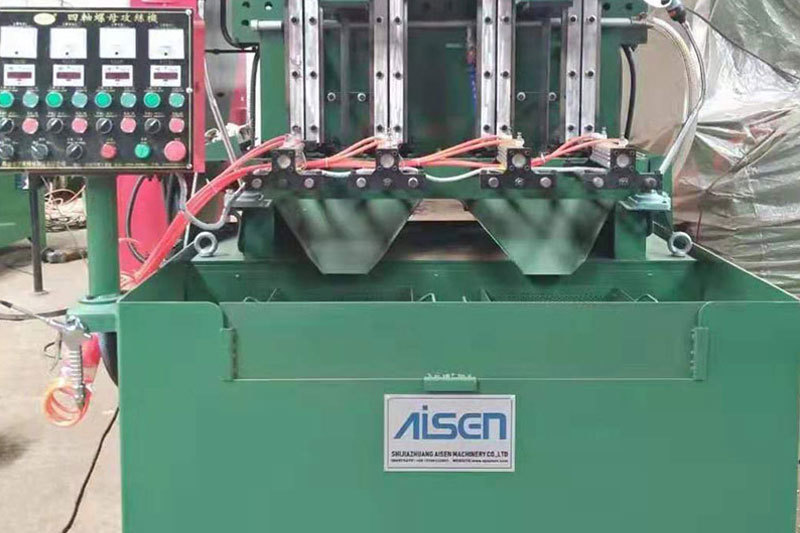
AISEN Four axis nut tapping machine ready for shipment to Russia
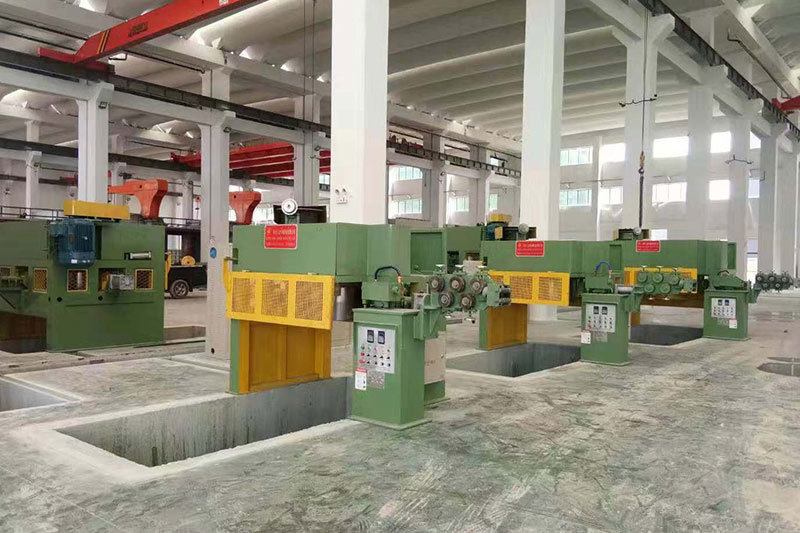
AISEN machinery inverted wire drawing machine
MESSAGES
We will contact you within one working day. Please pay attention to your email.
Qucik Link
Contact
Phone: +86-15100123091
E-mail: info@sjzaisen.com
Address: No.41 Zhaiying South Street, Yuhua District, Shijiazhuang City, Hebei Province China