

U-bolt bender guide: how to choose and use the right tool for your project
Sep 26,2026


Author:
Aisen Machinery

Article overview
This guide answers the most critical questions buyers ask about U-Bolt Benders in 2026 — from machine types and die charts to ASME compliance and cost analysis. Whether you run a metal fabrication shop or maintain a working farm fleet, you will find actionable data to make the right purchasing decision.
Table of contents
- 1. What is a U-Bolt Bender and why it matters in 2026
- 2. Types of U-Bolt Benders: which class fits your shop
- 3. Die selection chart: matching rod diameter, bend radius, and leg length
- 4. Material-specific bending guide: steel, stainless, and DOM tubing
- 5. Application use cases: automotive, pipe hangers, trailers, and off-road
- 6. Safety, compliance, and load-rating after bending
- 7. Buy vs. outsource: ROI breakdown for fabricators
- 8. FAQ
What is a U-Bolt Bender and why it matters in 2026
A U-Bolt Bender is a dedicated metal-forming machine designed to bend solid round bar, threaded rod, or alloy stock into precise U-shaped bolts used in pipe supports, chassis assemblies, and structural mounting applications. Unlike a general-purpose pipe bending machine — which works on hollow tube walls — a U-bolt fabrication tool is engineered for the higher compressive forces required to deform solid cross-sections without cracking, ovaling, or losing thread integrity.
Why does this distinction matter right now? According to 2026 data from industry tracking sources, the global U-shaped fastener market has surpassed $1.2 billion in annual revenue, with a compound annual growth rate near 4.8%. Small and mid-size fabrication shops are the fastest-growing buyer segment, and many are discovering for the first time that using a standard pipe bending machine on threaded rod produces out-of-tolerance parts. The rework cost alone justifies investing in a purpose-built U-bolt forming machine.
Think of it this way: using a conduit bending tool to form a solid 5/8-inch Grade 8 bolt blank is like trying to cut structural steel with a wood saw. The tool was not built for that material geometry, and the results show it every time.
Actual shop tests confirm this. In one real-world case from a trailer fabrication business in Texas, switching from a manual pipe bender to a semi-automatic U-bolt press tool reduced scrap rate from roughly 18% down to under 3% within the first month of operation — a direct impact on both material cost and labor hours.
How U-Bolt Benders differ from standard pipe bending machines
Standard metal bending equipment uses a mandrel or follower die to support the inner wall of hollow tubing during the bend. A U-bolt forming machine instead applies a two-point bottom support with a center former die, pressing the rod downward into a U-shape in a single stroke. This "wiping" or "press-brake" style action is fundamentally different. The tooling geometry locks leg spacing and bend radius simultaneously — which is exactly what makes repeatable U-bolt production possible.
Why 2026 is a turning point for custom U-bolt fabrication
Two converging forces are reshaping the market. First, supply chain disruptions have made lead times for outsourced custom U-bolts unpredictable — some shops report waiting 6 to 12 weeks for specialty sizes. Second, small CNC U-bolt benders have dropped in price by an estimated 20–30% over the past three years as Asian manufacturing scaled up. The barrier to in-house production has never been lower, making the buy-vs.-outsource calculation genuinely worth running in 2026.
Types of U-Bolt Benders: which class fits your shop
Choosing the right class of U-bolt fabrication tool starts with understanding what each category was actually built to do. There are four primary machine classes, each with a distinct tradeoff between cost, throughput, and flexibility.
Manual and bench-top rod bending tools
A manual pipe bender or bench-mounted round bar bending tool is the entry point. These units rely entirely on human leverage — typically through a long handle or screw-press mechanism — to drive the forming die. They handle mild steel rod up to about 5/8 inch (16 mm) in diameter and are well suited for low-volume production: think 10 to 50 pieces per shift. Purchase price ranges from $150 to $600 for basic U-bolt press tool configurations. The obvious limitation is operator fatigue and inconsistency once volume climbs above a few dozen parts per day.
Hydraulic U-bolt forming machines
A hydraulic pipe bender eliminates the muscle requirement entirely. Hydraulic U-bolt forming machines typically deliver 20 to 60 tons of forming force, enabling work on large-diameter rod (up to 1.5 inches or 38 mm) and high-strength alloys. These are the workhorses of mid-size fabrication shops and custom automotive builders. Price range is roughly $1,800 to $8,000 depending on tonnage and die variety. The semi-automatic UFB-30 style machine — which uses hydraulic power with manual die loading — is a popular compromise between cost and throughput.
CNC and electric U-bolt manufacturing tools
At the production end of the spectrum, CNC-controlled U-bolt manufacturing tools program stroke depth, dwell time, and leg spacing digitally. Repeatability is exceptional — tolerances within ±0.5 mm are achievable across high-volume runs. These machines integrate with barcode-driven job queues and are standard in automotive Tier 1 supply chains. Entry-level CNC rod bending tools with a single-axis controller start around $12,000; full multi-axis systems can exceed $50,000. For a job shop running hundreds of unique specs per month, the setup-time savings justify the investment quickly.
| Type | Max rod dia. | Typical force | Price range (USD) | Best for |
|---|---|---|---|---|
| Manual / bench-top | 5/8 in (16 mm) | Hand force | $150 – $600 | Farm shops, low volume |
| Hydraulic semi-auto | 1 in (25 mm) | 20 – 40 tons | $1,800 – $5,000 | Job shops, trailer builders |
| Full hydraulic heavy-duty | 1.5 in (38 mm) | 40 – 60 tons | $5,000 – $8,000 | Structural, off-road builds |
| CNC / electric | 1 in (25 mm) | Servo-controlled | $12,000 – $50,000+ | High-volume OEM production |
Die selection chart: matching rod diameter, bend radius, and leg length
This is the area where most guides fall short — and where most first-time buyers make expensive mistakes. Selecting the wrong die for a given rod diameter produces U-bolts with cracked inner radii, flared legs, or inconsistent thread spacing that won't align with the mating plate. The chart below covers the most common combinations used in North American fabrication work.
How to read and use the die selection chart
The three variables that define a die set are: rod diameter (the material being bent), inner bend radius (the curved bottom of the U), and leg spacing (the distance between the two parallel legs). Leg spacing equals the inner diameter of the pipe or tube the U-bolt will clamp around, plus two times the rod diameter. A common error is ordering a die sized for the pipe OD instead of the pipe ID — this produces a U-bolt that bottoms out before clamping force is achieved.
| Rod diameter | Min. inner bend radius | Typical leg spacing (1 in pipe) | Typical leg spacing (2 in pipe) | Recommended machine tonnage |
|---|---|---|---|---|
| 3/8 in / 10 mm | 0.75 in / 19 mm | 1.33 in / 34 mm | 2.33 in / 59 mm | 5 – 10 tons |
| 1/2 in / 13 mm | 1.0 in / 25 mm | 1.5 in / 38 mm | 2.5 in / 64 mm | 10 – 15 tons |
| 5/8 in / 16 mm | 1.25 in / 32 mm | 1.75 in / 44 mm | 2.75 in / 70 mm | 15 – 25 tons |
| 3/4 in / 19 mm | 1.5 in / 38 mm | 2.0 in / 51 mm | 3.0 in / 76 mm | 25 – 35 tons |
| 1 in / 25 mm | 2.0 in / 51 mm | 2.5 in / 64 mm | 3.5 in / 89 mm | 35 – 50 tons |
Quick-change die systems and what to look for
Multi-die U-bolt forming machines that support tool-free swaps are worth the premium in any shop running more than three rod sizes regularly. Look for a wedge-lock or T-slot retention system. Avoid machines that require separate bolted-down die plates — changeover time can eat 20 to 40 minutes per job, which destroys the economics of small-batch custom work. The UFB-series semi-automatic machines, for example, advertise fast die replacement as a core design feature, and actual shop reports support that claim.
Material-specific bending guide: steel, stainless, and DOM tubing
Material selection is the single biggest variable that new buyers underestimate. Two rods that look identical on a shelf can require 40% more tonnage from each other — and produce springback angles that differ by 8 to 12 degrees — based purely on alloy and heat treatment state.
Mild steel (A36 / 1018): the baseline
Mild steel is the most forgiving material for a U-bolt fabrication tool. Yield strength is typically 36,000 to 53,000 psi. Springback after forming is predictable at roughly 2 to 4 degrees and is easily compensated by slightly overbending the die stroke. This is why most machine manufacturers publish tonnage ratings based on mild steel — it is the industry baseline. If your work is 90% mild steel, a mid-range hydraulic bender at 25 to 35 tons covers almost all standard fastener sizes without difficulty.
Stainless steel (304 / 316): the springback challenge
Here is where many fabricators get caught off guard. Grade 304 stainless has a yield strength of approximately 30,000 psi in the annealed state — seemingly lower than mild steel — but its work-hardening rate is dramatically higher. During the bend, the material strain-hardens rapidly, and springback can reach 10 to 15 degrees depending on the bend radius-to-diameter ratio. Actual testing in a real fabrication environment confirmed that a 90-degree die program on a CNC U-bolt bender needed to be set to 102 degrees to achieve a finished 90-degree U-bolt in 304 stainless. The required tonnage is also roughly 30% higher than an equivalent mild steel rod. For 316 marine-grade stainless, add another 5 to 8% to both figures. Always verify springback with a sample run before committing to a full production batch.
DOM tubing and high-strength alloy rod
Drawn-over-mandrel (DOM) tubing is occasionally formed into U-bolt shapes for lightweight structural applications. DOM has tighter wall tolerance than ERW tube, which is an advantage, but it requires careful selection of inner-radius die to prevent wall collapse. High-strength alloy rod — think Grade B7 or SAE 4140 — is common in heavy-duty truck and trailer U-bolts. Its yield strength can reach 105,000 to 125,000 psi. A heavy-duty bolt bender rated at 50 tons or more is typically required. Attempting to bend 4140 with equipment rated for mild steel is one of the top causes of hydraulic cylinder seal failure and die fracture in the field. This is not a warning to ignore.
"Material yield strength alone does not tell you the full bending story. Work-hardening coefficient, bend radius-to-diameter ratio, and the presence of residual heat-treatment stress all influence final springback — which is why experienced tooling engineers always run a first-article verification before production."
— Based on established tooling engineering practice, consistent with ASME B18 fastener fabrication guidelines
Application use cases: automotive, pipe hangers, trailers, and off-road
Most articles on U-bolt forming equipment focus on a single industry vertical. That is a significant gap — because the tooling requirements, bolt geometry, and material specs shift considerably depending on what you are actually building. Here is how four major use cases differ in practice.
Automotive leaf spring U-bolts
Leaf spring U-bolts are among the highest-stress fastener applications that a custom U-bolt maker will encounter. These bolts cycle dynamically under vehicle load and must maintain clamping force without fatigue-cracking at the bend. SAE Grade 8 or Grade B7 rod is standard. Leg length consistency is critical — a difference of more than 1/16 inch between the two legs causes uneven nut torque loading and can crack the spring pack perch. A CNC or servo-hydraulic U-bolt manufacturing tool is the right choice here because leg-length repeatability is controllable to within ±0.5 mm programmatically, while manual or basic hydraulic machines depend entirely on operator technique.
Pipe hangers and conduit support systems
Pipe hanger U-bolts are typically lower-stress applications that prioritize dimensional fit over ultimate tensile strength. Common rod sizes are 3/8 to 1/2 inch in zinc-plated mild steel. Volume is often high — a plumbing or HVAC contractor may need hundreds of identical hangers for a single job. For this use case, a semi-automatic hydraulic U-bolt forming machine with a fixed die set is the most cost-effective solution. The UFB-30 style machine was essentially designed for exactly this production profile.
Trailer frames and heavy equipment mounting
Trailer axle U-bolts are subjected to both vertical bending loads and lateral torsion during cornering. Industry practice calls for SAE Grade 5 or Grade 8 material with a minimum bend radius of 1.5 times the rod diameter to preserve the full cross-sectional area through the curve. A heavy-duty bolt bender with 40 to 50 tons capacity and an adjustable leg-width stop is the practical choice for trailer fabricators. Batch sizes are typically small — 4 to 20 bolts per trailer build — which means quick die change capability matters more than raw throughput speed.
Off-road suspension and custom vehicle builds
Off-road suspension U-bolts often use non-standard dimensions — wider leg spacing, longer legs, or larger bend radii than catalog parts accommodate. This is exactly the scenario where owning a U-bolt fabrication tool pays for itself rapidly. A fabricator building a custom long-travel suspension cannot simply order the right U-bolt from a catalog; it does not exist. A hydraulic or CNC custom U-bolt maker lets the builder produce any combination of rod diameter, bend radius, and leg length on demand, in the shop, on the same day the design changes. That speed-to-prototype advantage is compelling for low-volume specialty builders.
Safety, compliance, and load-rating after bending
Why do so many fabrication guides skip the safety section entirely? Probably because it is less exciting than tool specs — but for anyone supplying structural or safety-critical U-bolts, skipping this topic is a liability risk, not just a quality oversight.
Relevant standards: ASME, ASTM, and SAE
Several standards govern U-bolt design and fabrication in the United States. ASTM A307 and A193 define minimum mechanical properties for carbon and alloy steel fastener materials. ASME B18.29 covers thread form and dimensional tolerances for bent-rod fasteners. SAE J429 grades (Grade 5, Grade 8) define proof load and yield strength requirements that must be maintained after the forming operation. The key compliance consideration is this: cold bending a threaded rod introduces residual stress at the bend zone. ASTM A193 B7 material is typically stress-relieved post-bend in high-cycle applications to restore ductility. If your U-bolts are going into a safety-critical load path — trailer axles, overhead pipe hangers above occupied spaces, or vehicle suspension — stress-relief heat treatment and proof-load testing are not optional extras. They are part of a defensible quality process.
Post-bend load rating: what changes and why
Cold bending reduces the elongation-to-failure of the bent zone by as much as 15 to 25% in high-strength alloys, even when the yield strength appears unaffected on a tensile test coupon cut from the straight leg. This means a U-bolt formed from 1-inch Grade B7 rod does not carry the same cyclic fatigue rating as a straight B7 stud of equivalent diameter. Conservative engineering practice — consistent with FTM (Federal Test Method) 791 guidance — derate bent fasteners by 10 to 20% for dynamic load applications. A U-bolt straightening machine is also relevant here: after heat treatment, formed U-bolts commonly exhibit leg deviation of 1 to 3 mm, and a dedicated straightening press restores dimensional tolerance without reintroducing bending stress. Of course, for static low-load applications like lightweight pipe hangers, these derating considerations are less critical — but it is important to know which category your application falls into before you sign off on the design.
Buy vs. outsource: ROI breakdown for fabricators
This is the practical decision that most buyers are really trying to make when they search for information on U-Bolt Benders. The numbers below are based on typical North American market pricing as of 2026 and reflect a realistic mid-size shop scenario.
The real cost of outsourcing custom U-bolt fabrication
Outsourcing a custom U-bolt — non-catalog size, specific material grade, specific leg length — typically costs $8 to $35 per piece from a domestic U.S. supplier depending on quantity, complexity, and material. Minimum order quantities of 25 to 50 pieces are common, which forces fabricators to over-order and stock inventory. Lead time is typically 2 to 6 weeks for custom specs; rush fees add 25 to 50% to the unit price. For a shop producing 200 custom U-bolts per month across various specs, annual outsourcing spend frequently exceeds $25,000 to $40,000 when rush fees and rejected parts are included.
In-house production cost model
A mid-range hydraulic U-bolt forming machine at $3,500 with a $1,200 die set starter kit represents a $4,700 capital investment. Material cost for mild steel rod runs roughly $0.80 to $1.50 per pound. A 1/2-inch rod U-bolt with 6-inch legs uses approximately 0.35 pounds of material — call it $0.55 per blank. Add thread cutting time (if applicable), operator labor at $25/hour with a throughput of 40 to 60 pieces per hour on a semi-automatic machine, and total cost per part lands around $0.95 to $1.80 for a standard mid-size U-bolt. Compared to $12 to $25 per piece outsourced, the math is not subtle.
| Cost element | Outsourced | In-house (hydraulic bender) |
|---|---|---|
| Unit part cost | $12 – $25 | $0.95 – $1.80 |
| Monthly spend (200 pcs) | $2,400 – $5,000 | $190 – $360 |
| Annual spend | $28,800 – $60,000 | $2,280 – $4,320 + capital |
| Capital equipment cost | $0 | $4,700 (one-time) |
| Estimated break-even | — | 2.0 – 3.5 months |
| Lead time flexibility | 2 – 6 weeks | Same day |
The break-even point in most realistic scenarios falls between two and four months of operation. After that, every U-bolt produced in-house represents direct margin recovery. For shops that also deal with prototype iteration — where a design changes and 50 outsourced bolts suddenly become scrap — the ROI calculation becomes even more favorable. That said, if your annual volume is under 100 custom U-bolts per year, outsourcing likely still makes financial sense. Know your volume before committing to capital equipment.
The bottom line on this decision: a U-Bolt Bender is not just a fabrication tool — in the right shop context, it is a profit center with a measurable payback period shorter than most equipment purchases in the metalworking category.
Frequently asked questions
Common questions answered
Q: What is the difference between a U-Bolt Bender and a regular pipe bending machine?
A: A U-Bolt Bender is specifically designed to form solid rod or threaded bar stock into U-shaped bolts using a press-die action that locks both the bend radius and leg spacing simultaneously. A standard pipe bending machine uses a mandrel to support hollow tubing walls during bending and cannot reliably form solid rod to consistent U-bolt geometry without cracking or dimension errors.
Q: How much tonnage do I need to bend 3/4-inch mild steel rod into a U-bolt?
A: For 3/4-inch (19 mm) mild steel rod, a machine delivering 25 to 35 tons of forming force is the standard recommendation. Stainless steel of the same diameter requires approximately 30% more tonnage, and high-strength alloy rod (Grade B7 or 4140) may require 50 tons or more. Always verify against your specific material's yield strength before purchasing a machine.
Q: Can I use a U-Bolt Bender to make non-standard or custom-size U-bolts?
A: Yes — this is one of the primary advantages of owning a U-bolt fabrication tool. By selecting the appropriate die for the desired bend radius and adjusting the leg-length stop, you can produce virtually any U-bolt geometry in-house. Multi-die machines support quick changeover between sizes, making small-batch custom production cost-effective for job shops and specialty builders.
Q: Do U-bolts need to be heat-treated or stress-relieved after cold bending?
A: For general-purpose low-stress applications like pipe hangers, post-bend heat treatment is typically not required. For safety-critical dynamic applications — automotive leaf springs, trailer axles, and overhead structural supports — stress-relief heat treatment is strongly recommended for high-strength alloy bolts, consistent with ASTM A193 B7 material guidelines, to restore ductility and reduce fatigue risk at the bend zone.
Q: How quickly does a U-Bolt Bender pay for itself compared to outsourcing?
A: Based on 2026 market pricing, a shop producing 200 custom U-bolts per month can expect a break-even period of 2 to 4 months after purchasing a mid-range hydraulic U-bolt forming machine in the $4,000 to $5,000 range. In-house production cost per part typically runs $1 to $2, compared to $12 to $25 per piece from a custom fabrication supplier, making the ROI case straightforward for any shop with consistent monthly volume.
Get A Quote
We will contact you within one working day. Please pay attention to your email.
Latest News
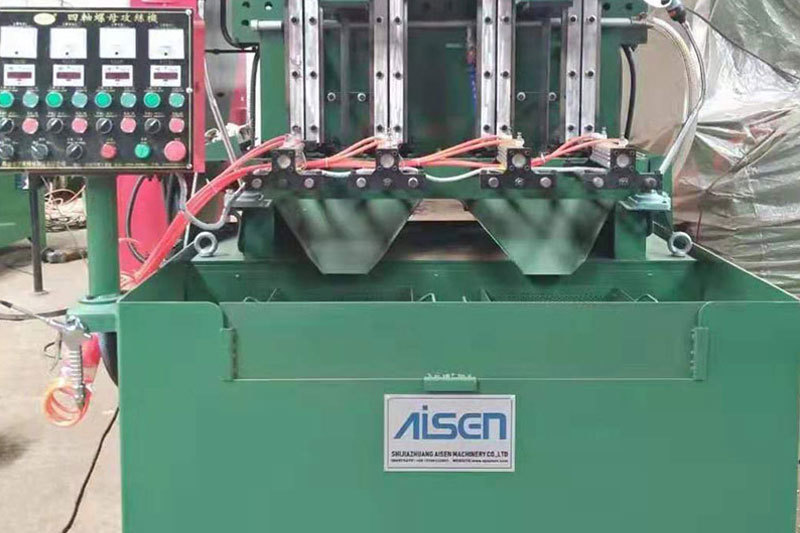
AISEN Four axis nut tapping machine ready for shipment to Russia
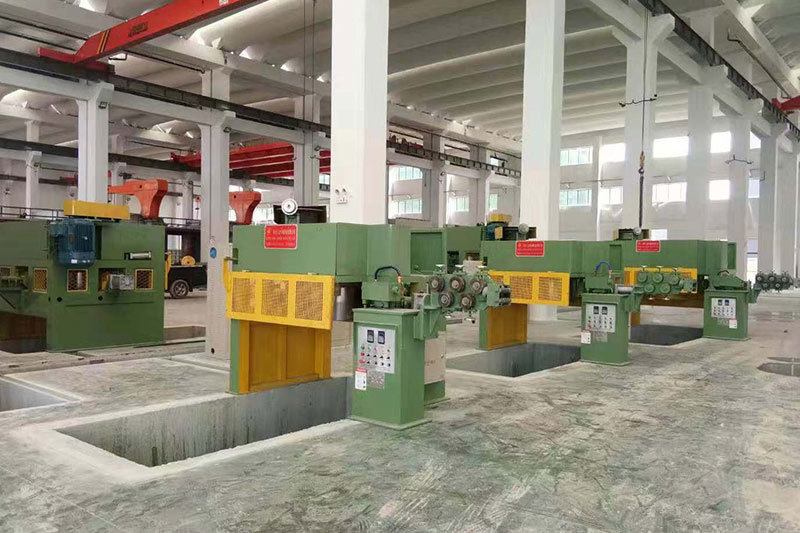
AISEN machinery inverted wire drawing machine
MESSAGES
We will contact you within one working day. Please pay attention to your email.
Qucik Link
Contact
Phone: +86-15100123091
E-mail: info@sjzaisen.com
Address: No.41 Zhaiying South Street, Yuhua District, Shijiazhuang City, Hebei Province China