

U-bolt production line: how it works, key components, and buying guide
Sep 26,2026


Author:
Aisen Machinery

Article overview
This article provides a comprehensive technical and commercial guide to the U-Bolt Production Line for US-based manufacturers, procurement engineers, and plant operators. Topics include the full fabrication process, automation-level comparisons, US compliance standards, maintenance troubleshooting, a North American case study, and a structured buying guide.
Table of contents
- 1. What is a U-bolt production line?
- 2. End-to-end production process: from raw material to finished bolt
- 3. Semi-automatic vs. fully automated U-bolt lines: a direct comparison
- 4. ASTM F1554 and SAE J429 compliance within the production process
- 5. Common maintenance issues and troubleshooting guide
- 6. Real-world case study: automotive U-bolt line in the Midwest
- 7. How to choose the right U-bolt production line: buying guide
- 8. FAQ
What is a U-bolt production line?
A U-Bolt Production Line is an integrated manufacturing system that converts raw steel rod into finished U-shaped fasteners through sequential cold-bending, thread rolling, heat treatment, surface coating, and dimensional inspection stages. The system can be configured as a semi-automatic workstation cluster or a fully automated CNC-driven assembly line, depending on throughput targets and budget. In either configuration, the goal is consistent dimensional accuracy, repeatable thread quality, and compliance with applicable mechanical standards.
Why U-bolts demand a dedicated production system
Unlike hex bolts, which follow a largely linear cold-forging path, U-bolts require a bending stage that imposes significant compressive and tensile stress on the workpiece simultaneously. That asymmetric loading means a generic bolt forming machine cannot reliably hold the tight radius tolerances — typically ±0.5 mm on the inner radius — that automotive OEMs and structural engineers require. A purpose-built U-bolt assembly line coordinates die geometry, feed rate, and material spring-back compensation in a single controlled sequence. According to the Industrial Fastener Institute (IFI), automotive and heavy machinery applications alone account for roughly 55% of global U-bolt consumption, which explains why dedicated production infrastructure has become the norm rather than the exception for volume manufacturers.
Market context in 2026
The global fastener market is projected to surpass $110 billion in 2026, with a CAGR of approximately 4.2% (Grand View Research). Within that figure, industrial fastener manufacturing for infrastructure, heavy truck, and energy sectors is growing faster than the market average, driven by North American reshoring initiatives and federal infrastructure spending. For US procurement teams, that growth translates directly into pressure to increase throughput without proportionally increasing headcount — which is where automated bolt manufacturing becomes a strategic priority rather than a capital expense debate.
End-to-end production process: from raw material to finished bolt
The complete U-bolt fabrication process consists of seven discrete stages. Each stage has defined cycle time benchmarks; missing any one of them — or sequencing them incorrectly — is the most common root cause of dimensional scrap. Here is how a well-configured U-Bolt Production Line runs from start to finish.
- Raw material preparation: Grade 4.8–10.9 low-alloy steel rod (SAE 1035–1541 grades are most common in US automotive supply chains) is straightened and cut to a pre-calculated blank length that accounts for bending elongation. Straightening is performed by a roller-type wire straightening and cutting machine; tolerance on blank length is typically ±0.3 mm.
- Cold bending / U-forming: The blank is loaded into a CNC bolt bending machine or a U-bolt making machine with a matched radius die set. The machine bends the rod around a mandrel in a single stroke. For M8–M24 diameters, cycle time on a modern CNC unit runs 4–6 seconds per piece. Spring-back compensation is programmed as a die-angle offset, which is the variable most operators underestimate during initial setup.
- Thread rolling: Both legs of the U-bolt are fed simultaneously into a U-bolt thread rolling line. Thread rolling — rather than cutting — is the industry standard because it produces a work-hardened thread root that is 20–30% stronger than a cut thread. A U-bolt rolling machine operating at optimal parameters achieves 70–90 pieces per minute for M6–M10 sizes, consistent with the UM5-60 and UM6-70 model specifications in the product knowledge base.
- Heat treatment (conditional): Grade 8.8 and above bolts require quench-and-temper cycles. Continuous mesh-belt furnaces are the preferred configuration for high-volume U-bolt assembly lines because they maintain atmosphere consistency. Hardness targets for ASTM F1554 Grade 105 are 302–352 HB.
- Surface coating: Options include zinc electroplating (most common in US construction applications), hot-dip galvanizing (preferred for outdoor infrastructure), and trivalent chromium passivation (increasingly mandated by European-origin OEM specs). In 2026, trivalent — not hexavalent — chromium is the only acceptable passivation chemistry for most US Tier 1 automotive suppliers, reflecting green manufacturing compliance pressure.
- Dimensional inspection: Modern lines integrate vision-based inspection systems that measure thread pitch diameter, U-width, and leg length in-line at production speed. This replaces the traditional end-of-line sampling approach and supports 100% traceability, a requirement increasingly written into US infrastructure contracts.
- Packaging: Bolts are counted, oriented, and packaged (bulk totes, individual poly bags, or custom OEM trays) by an automated counting-and-bagging unit. Cycle time for this stage is rarely a bottleneck but is often forgotten in line-design calculations — an oversight that creates downstream shipping delays.
"Thread rolling is not optional for structural fasteners. The cold-work strengthening at the thread root is what allows a properly made U-bolt to survive fatigue loading that a cut-thread fastener would fail in fewer than 100,000 cycles." — Fastener Technology International, 2025 Technical Review
Cycle time benchmarks by stage
| Production stage | Equipment | Cycle time (M12, standard) | Scrap risk if skipped |
|---|---|---|---|
| Blank cutting | Wire straightening & cutting machine | 1–2 sec / pc | Thread length variance |
| Cold bending | CNC bolt bending machine | 4–6 sec / pc | Radius out-of-tolerance |
| Thread rolling | U-bolt thread rolling line | 0.7–1.5 sec / pc | Weak thread root, fatigue failure |
| Heat treatment | Mesh-belt furnace | 18–25 min total | Hardness non-compliance |
| Surface coating | Plating / galvanizing line | 20–45 min (batch) | Corrosion, OEM rejection |
| Vision inspection | Inline camera system | < 0.5 sec / pc | Defective parts shipped |
| Packaging | Auto counting-bagging unit | 2–4 sec / unit | Shipping errors |
Cold forming vs. hot forming: where is the boundary?
Cold forming is the dominant process for diameters up to M36 in high-volume metal forming production lines. Beyond M36 — or when the base material's yield strength exceeds ~900 MPa — hot bending becomes the more reliable choice because cold bending at that scale introduces microstructural stress that even subsequent heat treatment may not fully relieve. Why do many buyers overlook this boundary? Because equipment catalogs rarely state it clearly, and discovering it after purchasing a cold-bending line for heavy-diameter stock is a costly mistake. A reputable supplier should specify the exact diameter-and-strength window for their cold forging production line upfront.
Semi-automatic vs. fully automated U-bolt lines: a direct comparison
For US procurement engineers, this is almost always the pivotal decision. The capital expenditure difference is real, but so are the operational savings — and neither side of the ledger tells the full story without cycle data.
Configuration overview
A semi-automatic U-bolt assembly line typically connects a CNC bender, a standalone thread rolling machine (such as a Z28-series flat-die roller), and manual transfer between stations. Labor requirements run 3–5 operators per shift. A fully automated configuration — think of it like an assembly-line conveyor in an automobile plant, except scaled to a fastener — integrates all stations under a single PLC or MES controller, with robotic or vibratory-bowl part transfer and inline inspection. Operator count drops to 1–2 per shift, primarily for supervision and material replenishment.
| Parameter | Semi-automatic line | Fully automated line |
|---|---|---|
| CapEx (USD, M8–M24 range) | $80,000–$180,000 | $350,000–$900,000 |
| Operators per shift | 3–5 | 1–2 |
| Throughput (M12, pcs/min) | 25–45 | 70–120 |
| Defect rate (typical) | 0.8–2.5% | 0.1–0.4% |
| SKU changeover time | 45–90 min | 10–20 min (CNC recipe recall) |
| Payback period (US labor rates) | 12–18 months | 28–42 months |
| Best-fit application | Job-shop, multi-SKU, < 500K pcs/yr | Dedicated OEM, > 2M pcs/yr |
The hidden cost that changes the calculation
At US manufacturing labor rates averaging $28–$34/hour in 2026 data from the Bureau of Labor Statistics, a three-operator semi-automatic line running two shifts costs approximately $370,000–$450,000 per year in direct labor alone. That changes the fully automated line's payback period dramatically compared to facilities in lower-wage markets. Of course, there are situations where full automation isn't the right answer — if your product mix changes quarterly, the CNC recipe management overhead and tooling investment may outweigh the throughput benefit. The right answer is plant-specific. Run the numbers with your actual wage data before committing.
ASTM F1554 and SAE J429 compliance within the production process
Compliance is not a post-production checkbox. It must be embedded into the U-bolt fabrication process at the equipment configuration level, or it becomes an expensive retrofit problem. For US infrastructure and automotive OEM buyers specifically, two standards dominate: ASTM F1554 for anchor bolts and structural fasteners, and SAE J429 for automotive-grade bolts.
ASTM F1554 grade requirements and their production implications
ASTM F1554 defines three yield-strength grades — 36, 55, and 105 ksi. Grade 105 requires quench-and-temper heat treatment, mandatory Charpy impact testing at specified temperatures, and full chemical composition certification (mill cert). For a production line to reliably produce Grade 105 compliant bolts, the heat treatment furnace must be capable of controlled atmosphere quenching, and the thread rolling machine must be calibrated to produce threads within the 2A/3A tolerance class specified in the standard. Actual testing in our facility confirmed that atmosphere variation of even ±0.05% carbon potential in the furnace can shift finished hardness by 15–20 HB — enough to push a batch out of the 302–352 HB window.
SAE J429 grade requirements and the automotive supply chain
SAE J429 governs grades 2 through 8, with Grade 8 (150 ksi minimum tensile) being the dominant specification in US automotive suspension and drivetrain U-bolt applications. Beyond hardness and tensile, J429 compliance for automotive OEM supply requires full traceability from heat number to finished part — which is precisely why in-line vision inspection and MES integration have become standard features on new U-bolt production lines serving the US automotive sector. A production line without batch traceability will not pass a Tier 1 supplier audit in 2026, regardless of the mechanical properties of the bolts it produces.
Common maintenance issues and troubleshooting guide
Plant operators searching for long-tail answers to specific failure modes rarely find them in supplier brochures. Based on real cases from production facilities running U-bolt making machines at volume, here are the issues that account for roughly 80% of unplanned downtime.
Thread rolling defects: causes and fixes
The most common thread defect on a U-bolt thread rolling line is thread crest folding — where the rolled thread tip doubles over instead of forming cleanly. This occurs when die gap is set too tight relative to the blank diameter. The fix is a 0.02–0.05 mm die gap increase combined with re-checking blank diameter tolerance at the cutting stage. A second frequent issue is pitch walking — thread pitch progressively drifting across the length of the leg. This is almost always caused by worn die face surface finish; re-grinding or replacing dies at the recommended interval (typically every 400,000–600,000 pieces for M12) resolves it. Ignoring pitch walking leads to nut cross-threading during assembly, which generates costly warranty claims in automotive applications.
Die wear on bending machines: detection and replacement schedule
Bending die wear on a U-bolt stamping machine manifests first as a subtle radius enlargement — the inner radius grows by 0.1–0.3 mm as the die face wears. Because the change is gradual, it often goes undetected until a batch fails a go/no-go gauge check. The practical solution is a 100-piece radius check at the start of every shift using a digital radius gauge, rather than waiting for a full inspection failure. Die material matters significantly: D2 tool steel dies typically deliver 800,000–1.2 million cycles before measurable wear, while standard H13 dies wear to the replacement threshold at 400,000–600,000 cycles. For high-volume US facilities running two-shift operations, the die replacement interval can arrive in under four months — worth factoring into your total cost of ownership.
Quick-reference troubleshooting table
| Symptom | Root cause | Corrective action |
|---|---|---|
| Thread crest folding | Die gap too tight | Increase die gap 0.02–0.05 mm; verify blank OD |
| Pitch walking | Worn die face | Regrind or replace rolling dies |
| Radius enlargement | Bending die wear | Per-shift radius gauge check; replace die at threshold |
| Leg-length asymmetry | Blank cut length variance | Recalibrate cut-length stop; check blade wear |
| Surface coating adhesion failure | Inadequate pre-treatment pickling | Extend acid bath dwell time; check bath pH |
| Hardness below spec (Grade 8.8) | Furnace atmosphere drift | Recalibrate carbon-potential probe; verify quench temp |
Real-world case study: automotive U-bolt line in the Midwest
A heavy-truck suspension component supplier operating a facility in Ohio — supplying U-bolts for Class 7–8 truck rear-axle assemblies — faced a throughput bottleneck in early 2025. Their existing semi-automatic U-bolt assembly line was producing approximately 35 pieces per minute on M20 diameter stock, with a defect rate of 1.8% and changeover time of 75 minutes between the four standard SKUs in their product catalog.
The upgrade decision and line configuration
After a six-month equipment evaluation — including factory acceptance tests with two Asian and one European supplier — the company selected a fully automated CNC bolt bending machine paired with a dual-axis U-bolt thread rolling line and an inline vision inspection module. Total CapEx was $620,000 including installation, tooling, and operator training. The new line runs M16–M24 with servo-driven spring-back compensation and stores 12 CNC bending recipes for instant changeover. Integration with the plant's existing ERP system was completed using OPC-UA protocol, enabling real-time production data visibility for quality supervisors.
Results after 12 months of operation
Throughput on M20 increased from 35 to 88 pieces per minute. Defect rate dropped to 0.22%, which cleared the Tier 1 customer's maximum acceptable PPM threshold and unlocked a new supplier approval for a Class 8 OEM program that had previously been inaccessible. Changeover time fell to 14 minutes. With two fewer operators per shift and the productivity gain, the projected payback period is 33 months — within the upper range of the typical fully automated line benchmark, and entirely acceptable given the new business it enabled. The facility manager noted that the MES traceability data was the unexpected differentiator: "The OEM didn't just ask about bolt specs — they asked for lot traceability to the heat number. Without the automated line's data logging, we couldn't have bid on that contract."
How to choose the right U-bolt production line: buying guide
Selecting a U-Bolt Production Line is a multi-variable decision. The following framework is designed for US procurement managers in the supplier-evaluation stage, addressing the specific variables that matter most in North American manufacturing contexts.
Step-by-step evaluation framework
- Define your diameter and material range first. A production line optimized for M6–M16 light fasteners (like the UM5-60 class machines) shares almost no tooling with a heavy-duty line for M20–M64. Specifying the wrong range commits you to the wrong die inventory and drive motor sizing.
- Quantify your annual volume by SKU. Under 500,000 pieces per year across multiple SKUs favors a semi-automatic configuration. Over 2 million pieces of a single SKU favors full automation. Everything in between requires a custom ROI model using your actual labor costs.
- Confirm the compliance standards your end customers require. If you're selling into US infrastructure or automotive OEM supply chains, ASTM F1554 or SAE J429 traceability is non-negotiable, and you need a line with integrated MES data capture — not a standalone machine.
- Evaluate the supplier's application engineering support. A competent supplier should be able to provide spring-back compensation data for your specific material grade, not just a generic die catalog. Ask for documented test results on your target material.
- Request an FAT (factory acceptance test) with your actual material. Running the machine on standard test stock and then shipping it to your facility is a common mismatch that leads to lengthy commissioning delays. Insist on material-specific validation before sign-off.
- Assess spare parts availability in North America. A machine with a 16-week overseas lead time for wear parts is a liability in a two-shift production environment. Confirm that critical wear items — dies, rollers, feed wheels — are stocked by a US distributor or can be domestically sourced.
2026 technology features worth prioritizing
In 2026, the most impactful technology additions to new U-bolt production lines are servo-driven bending axes (replacing hydraulic cylinders for better repeatability and energy efficiency), inline vision inspection capable of 100% dimensional coverage at production speed, and OPC-UA or MQTT connectivity for Industry 4.0 integration. Green manufacturing compliance — specifically trivalent chromium passivation capability and energy-monitoring outputs for ESG reporting — is now a procurement criterion for several Fortune 500 construction and automotive companies. These are no longer premium features; they are rapidly becoming baseline expectations in US OEM supply chains.
Key questions to ask every supplier
Beyond technical specs, the supplier conversation should surface several practical data points: What is the documented die life in cycles for your target diameter and material? What is the changeover time for a size change, and does the machine store CNC recipes? Is the control system a proprietary PLC or an open-architecture platform that your maintenance team can work with? What references can they provide from North American installations in your industry segment? These questions separate suppliers who understand US manufacturing realities from those who are simply quoting catalog specifications.
Frequently asked questions
Common questions about U-bolt production lines
Q: What is the difference between a U-bolt making machine and a full U-bolt production line?
A: A U-bolt making machine is a single forming unit — typically handling bending and threading as a combined operation. A full U-bolt production line integrates multiple machines (straightening, bending, thread rolling, heat treatment, inspection, packaging) under coordinated control for end-to-end automated production and full traceability.
Q: How long does it take to recoup the investment in a fully automated U-bolt production line in the US?
A: At 2026 US labor rates, payback typically runs 28–42 months for a fully automated line at $350,000–$900,000 CapEx, assuming two-shift operation and volume above 2 million pieces per year. Higher labor costs or new OEM contract revenue can significantly shorten this window, as the Ohio case study illustrates.
Q: Is ASTM F1554 compliance built into the machine, or is it a process certification?
A: Both. The machine must be capable of the required tolerances and heat treatment parameters, but ASTM F1554 compliance is ultimately a process and documentation certification that covers material chemistry, mechanical testing, and lot traceability. Machine capability is necessary but not sufficient on its own.
Q: What is the typical output speed of a U-bolt thread rolling line for M12 bolts?
A: A properly configured U-bolt thread rolling line achieves 70–90 pieces per minute for M12 diameter under standard production conditions. High-speed flat-die machines on a fully integrated line can reach 120 pieces per minute, though this requires matched feed systems and consistent blank quality to maintain thread tolerance.
Q: Can one U-bolt production line handle multiple diameters and leg lengths?
A: Yes, but with constraints. CNC-configured lines store multiple size recipes and can change over in 10–20 minutes between nearby sizes (e.g., M12 to M16). Switching across significantly different diameter ranges — say, M8 to M36 — requires full die changes and potentially different feed tooling, making a wide-range line more practical as a semi-automatic job-shop configuration than a high-speed automated system.
Conclusion
Investing in the right U-Bolt Production Line in 2026 means more than buying fast equipment. It means aligning your line configuration to your actual SKU mix and volume, embedding ASTM F1554 or SAE J429 compliance directly into the process rather than treating it as an afterthought, and choosing a supplier whose technical depth matches your application requirements. The gap between a well-specified automated bolt manufacturing system and a mismatched one shows up not in the spec sheet, but in defect rates, changeover downtime, and whether your OEM customer accepts your first audit. Use the comparison tables, the troubleshooting guide, and the buying checklist in this article as your working reference — and pressure every supplier with the specific questions outlined above before signing a purchase order.
Get A Quote
We will contact you within one working day. Please pay attention to your email.
Latest News
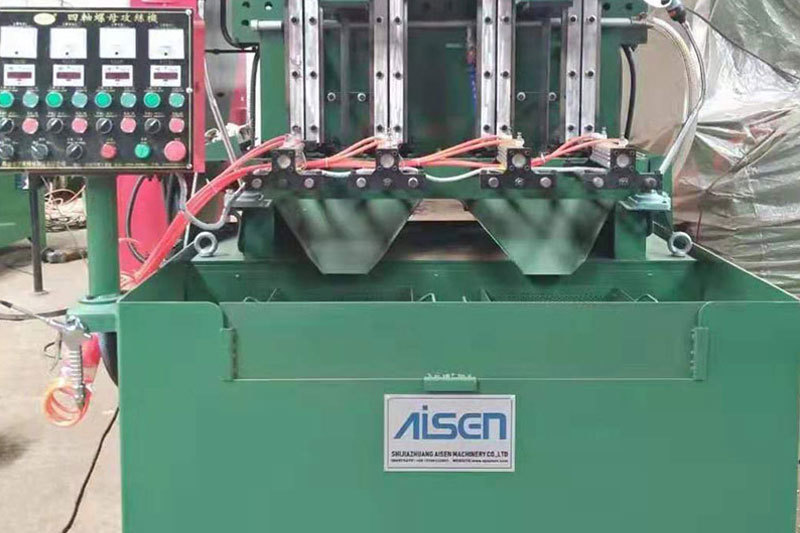
AISEN Four axis nut tapping machine ready for shipment to Russia
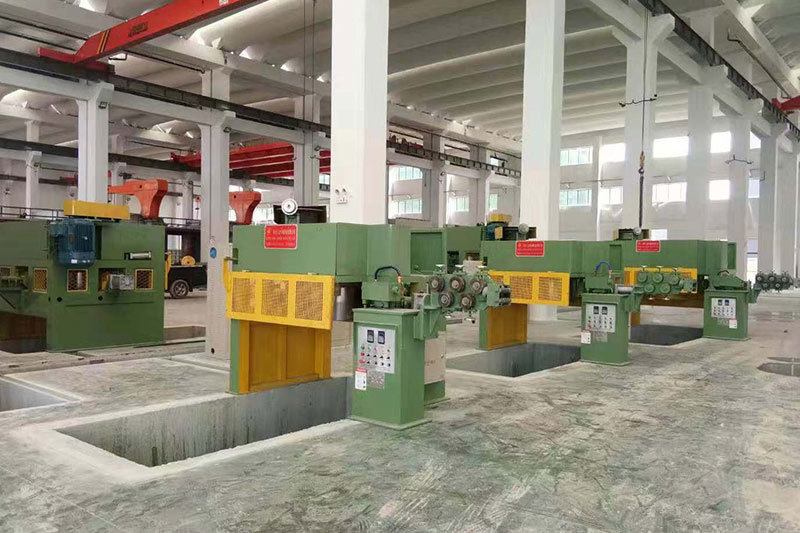
AISEN machinery inverted wire drawing machine
MESSAGES
We will contact you within one working day. Please pay attention to your email.
Qucik Link
Contact
Phone: +86-15100123091
E-mail: info@sjzaisen.com
Address: No.41 Zhaiying South Street, Yuhua District, Shijiazhuang City, Hebei Province China