

CNC pipe threading machine specifications: thread types, pipe sizes, and feed rates
Nov 11,2026


Author:
Aisen Machinery

CNC pipe threading machine specifications: thread types, pipe sizes, and feed rates
Article overview
This guide explains how a CNC pipe threading machine is specified for Indian workshops and oil and gas suppliers. It covers thread families, pipe size ranges, feed rate formulas, an operating routine, a worked case, and buying checks. The data tables can be verified against API, ASME, and IS documents.
Table of contents
- 1. What a CNC pipe threading machine does and where it is used
- 2. Thread types a CNC pipe threading machine can cut
- 3. Pipe sizes and machine capacity ranges
- 4. Feed rates, pitch, and cutting parameters
- 5. Step-by-step setup and operating procedure
- 6. Case example: threading line pipe in an Indian workshop
- 7. How to choose a CNC pipe threading machine and what to expect on price
- 8. Frequently asked questions
A CNC pipe threading machine is a computer-controlled lathe that cuts tapered or straight threads on pipe ends with programmed pitch and depth. Specifications such as thread type, pipe diameter, and feed rate decide whether it suits plumbing nipples or heavy oil country tubular goods. This 2026 guide walks through each variable for buyers and process engineers in India.
Indian demand comes from water and gas distribution, fire-fighting lines, fabrication, and oil field services. Why does a wrong feed setting ruin so many threads? Because pitch and spindle speed must stay locked together, and that is exactly what a CNC pipe threading machine automates.
What a CNC pipe threading machine does and where it is used
A CNC pipe threading machine automates the pipe threading process. It rotates the pipe, moves a threading tool along a programmed path, and repeats passes until the thread reaches full depth. It replaces manual die heads and hand-fed lathes wherever repeatable pitch and gauge accuracy matter. Typical users are pipe mills, fabrication shops, and oil field service yards.
A CNC pipe threading machine refers to a lathe-type or dedicated pipe end threading machine whose controller synchronises spindle rotation with axis motion. The operator loads a thread program and selects the insert. The controller then handles taper interpolation, multi-pass depth, and retraction. Many shops call the same equipment a CNC pipe threading lathe or CNC pipe lathe machine, and the terms are largely interchangeable.
How does a CNC pipe threading machine differ from a manual lathe?
The core difference is synchronisation. On a manual lathe, the operator engages a half-nut and watches a dial. On a CNC machine, a spindle encoder feeds the controller, which starts every pass at the same angular position. That makes the thread repeatable from the first pipe to the five-hundredth. In shop-floor practice, the saving shows up less in cutting time than in scrap and rework, because gauge failures drop once a program is proven. Of course, a skilled turner can still produce good threads by hand, but holding that consistency across shifts is harder.
Main machine types: pipe end, OCTG, and heavy duty lathes
Every CNC pipe threading machine falls into one of three broad families. A pipe end threading machine is a compact unit, often with a hollow spindle, for plumbing and conduit sizes. An oil country pipe threading machine, also called an OCTG threading machine, handles casing and tubing with long through-bores and API gauging needs. A heavy duty pipe threading lathe carries thick-wall, large-diameter pipe on rigid chucks and steady rests.
Think of them as a scooter, a pickup, and a truck. All move loads, yet none replaces the others. An automatic pipe threading machine adds loaders, powered chuck clamping, and coolant control, so one operator can tend several units.
Thread types a CNC pipe threading machine can cut
A CNC pipe threading machine can cut NPT, BSP, and API round and buttress threads, provided the controller, tooling, and gauges match each standard. Most pipe threads are tapered at 1:16 on diameter, so one program must move the X and Z axes together. For readers new to pitch, flank angle, and lead, these screw thread basics are a useful primer.
| Thread | Flank angle | Taper on diameter | Common TPI | Governing standard |
|---|---|---|---|---|
| NPT | 60° | 1:16 | 27 to 8 | ASME B1.20.1 |
| BSPT (R, Rc) | 55° | 1:16 | 28 to 11 | ISO 7-1, IS 554 |
| API round, casing | 60° | 1:16 | 8 | API 5B |
| API round, tubing | 60° | 1:16 | 10 (non-upset), 8 (EUE) | API 5B |
| API buttress, casing | 3° load, 10° stab | 1:16 (to 13⅜ in) | 5 | API 5B |
NPT and BSP tapered threads
An NPT BSP pipe threading machine is simply a CNC unit with both programs and insert geometries available. NPT uses a 60° form under ASME B1.20.1. BSPT uses a 55° Whitworth form under ISO 7-1, which India adopts through IS 554. Both taper at 1:16, a radial change of about 0.031 mm per mm of length.
Why can't you swap one for the other? Because flank angle and pitch differ, for instance 11.5 TPI versus 11 TPI at 1 inch, and a mismatched joint may seal poorly. A tapered thread cutting machine therefore needs separate inserts, and ideally separate holders, for each form.
API round and buttress threads for oil and gas pipes
An API pipe threading machine follows API Specification 5B. A CNC threading machine for oil and gas pipes typically cuts 8 round on casing, 10 round or 8 round EUE on tubing, and 5 TPI buttress on heavier casing strings. The buttress profile has asymmetric flanks, so the insert must match it.
API Specification 5B, published by the American Petroleum Institute, sets the requirements for threading, gauging, and inspecting casing, tubing, and line pipe threads. (Paraphrased from the scope of API Spec 5B.)
Always confirm the current edition in 2026, because tolerances and gauging practice are revised periodically. Premium proprietary connections are a separate matter. A standard CNC pipe threading machine cannot cut them without the licensor's profile data.
Pipe sizes and machine capacity ranges
The capacity of a CNC pipe threading machine rests on three numbers: maximum pipe outside diameter, spindle through-bore, and maximum thread length. Plumbing and gas work usually spans ⅛ inch to 4 inch nominal size. OCTG work extends well beyond that. In Indian purchasing, buyers often quote nominal bore (NB), but the machine bore must be matched to the actual OD.
Typical NPT and BSP size data
The table lists nominal outside diameters and threads per inch. For allowances and gauge values, consult published npt pipe thread dimensions and the standards themselves.
| Nominal size | Pipe OD (mm) | NPT TPI | NPT pitch (mm) | BSPT TPI | BSPT pitch (mm) |
|---|---|---|---|---|---|
| ½ in | 21.3 | 14 | 1.814 | 14 | 1.814 |
| ¾ in | 26.7 | 14 | 1.814 | 14 | 1.814 |
| 1 in | 33.4 | 11.5 | 2.209 | 11 | 2.309 |
| 1¼ in | 42.2 | 11.5 | 2.209 | 11 | 2.309 |
| 1½ in | 48.3 | 11.5 | 2.209 | 11 | 2.309 |
| 2 in | 60.3 | 11.5 | 2.209 | 11 | 2.309 |
| 2½ in | 73.0 | 8 | 3.175 | 11 | 2.309 |
| 3 in | 88.9 | 8 | 3.175 | 11 | 2.309 |
| 4 in | 114.3 | 8 | 3.175 | 11 | 2.309 |
Source basis: ASME B1.20.1 and ISO 7-1 size tables. Pitch in mm is calculated as 25.4 divided by TPI.
What pipe size range does a CNC pipe lathe machine handle?
It depends on the class. As an indicative planning guide, not a manufacturer specification, compact pipe end units suit roughly up to 4 inch. Mid-range CNC pipe lathe machine models cover tubing and small casing. A heavy duty pipe threading lathe with a large spindle bore serves casing and big line pipe. Request the spindle bore, chuck type, and maximum workpiece weight in writing.
Can a 12-metre pipe be threaded on a short-bed machine? Yes, if the spindle is a through-bore and the free end is supported, though sag and rigidity need checking. Overhang is the usual cause of chatter. Wall thickness matters too. A thin wall leaves little material under the thread root, so verify the pipe class (for example light, medium, or heavy under IS 1239) before any CNC pipe threading machine job begins.
Feed rates, pitch, and cutting parameters
On a CNC pipe threading machine, the feed per spindle revolution equals the thread lead, so feed is not a free choice. For a single-start thread, lead equals pitch, which is 25.4 divided by threads per inch. Only spindle speed, depth of cut, and pass count remain adjustable.
How is thread feed rate calculated?
Three formulas cover it. Feed per revolution (mm/rev) = 25.4 ÷ TPI. Table feed (mm/min) = spindle speed (rpm) × lead. Spindle speed n = (Vc × 1000) ÷ (π × D), where Vc is cutting speed in m/min and D is pipe OD in mm. The table gives leads and thread heights for common TPI values.
| TPI | Lead (mm/rev) | Thread height (mm) | Typical use |
|---|---|---|---|
| 27 | 0.941 | 0.753 (NPT) | NPT ⅛ in |
| 18 | 1.411 | 1.129 (NPT) | NPT ¼ to ⅜ in |
| 14 | 1.814 | 1.451 (NPT) | ½ to ¾ in NPT and BSPT |
| 11.5 | 2.209 | 1.767 (NPT) | NPT 1 to 2 in |
| 11 | 2.309 | 1.478 (BSPT, 0.64p) | BSPT 1 to 4 in |
| 10 | 2.540 | See API 5B | API tubing, 10 round |
| 8 | 3.175 | 2.540 (NPT) | NPT 2½ to 4 in; API 8 round |
| 5 | 5.080 | See API 5B | API buttress casing |
NPT height is 0.8p and BSPT height is about 0.64p. API forms follow the tables in API 5B.
Worked example for a 2 inch NPT thread
Take a 60.3 mm OD pipe at 11.5 TPI, so the lead is 2.209 mm. At an illustrative cutting speed of 60 m/min, n = 60,000 ÷ (π × 60.3) ≈ 317 rpm. Table feed is then 317 × 2.209 ≈ 700 mm/min. The 1.767 mm thread height is usually removed in 6 to 10 passes with decreasing depth, finishing with a light spring pass. On the taper, the diameter changes 1 mm for every 16 mm of length.
Cutting speed is no universal figure. It depends on insert grade, coolant, pipe grade, and rigidity, so treat 60 m/min as a starting point rather than a recommendation. Many shops begin lower on high-strength alloy tubing and adjust after a trial piece.
Pass strategy, inserts, and coolant
Constant-area infeed, where depth per pass shrinks as the cut widens, keeps chip load even and protects the insert. Full-profile inserts cut the complete form but suit only one pitch. Partial-profile inserts cover a pitch range and leave burrs to remove. Flood coolant lengthens tool life and improves finish, and a good CNC pipe threading machine monitors coolant flow before it starts the cycle.
Step-by-step setup and operating procedure
A reliable routine for a CNC pipe threading machine follows seven steps, from verifying the pipe to gauging the finished thread. Skipping one usually surfaces later as a failed ring gauge or a leaking joint.
Setup and production sequence
- Verify the pipe: check grade, OD, wall thickness, and end squareness, then cut and chamfer rough ends.
- Clamp the pipe in the chuck and support the free end with a steady rest or roller, keeping runout within the machine's stated limit.
- Select the thread program on the CNC pipe threading machine (NPT, BSPT, API round, or buttress) and enter pitch, taper, thread length, and start diameter.
- Fit the correct insert, set tool height to centre, and touch off X and Z on the pipe end.
- Run a dry cycle with the tool clear to confirm the path and the spindle-synchronised start.
- Cut a trial piece with coolant on, measure with a thread ring gauge, and adjust the X offset in small steps.
- Release for production, and re-gauge at set intervals and after every insert change.
What causes poor thread quality on a CNC pipe threading machine?
Torn or rough flanks usually signal wrong speed, a worn insert, or weak coolant flow. A ring gauge that sits too far past the reference face means the thread is cut too deep. One that stops short means it is undercut. Correct either with small X offsets, never with a big jump. Chatter normally traces back to overhang or loose clamping.
Double or cross threading points to lost synchronisation, so inspect the encoder and its coupling. Sometimes the pipe itself is the culprit. Ovality from the mill can make a perfect program look bad, which is why step one matters.
Case example: threading line pipe in an Indian workshop
In this case, a workshop moves 2 inch BSPT threading on IS 1239 medium-class pipe from a manual lathe to a CNC pipe threading machine, and the main outcome is repeatable gauge conformity. The scenario is a representative example built from standard values, not a named customer project.
Scenario and settings
Imagine a shop in an industrial cluster such as Pune or Rajkot supplying fire-fighting and gas piping. Orders mix 1 inch to 2 inch pipe, with BSPT threads for domestic projects and NPT threads for export jobs. The shop needs one NPT BSP pipe threading machine setup that switches forms in minutes.
Settings for 2 inch BSPT: OD 60.3 mm, 11 TPI, lead 2.309 mm, taper 1:16, illustrative spindle speed 317 rpm, and table feed of 317 × 2.309 ≈ 732 mm/min across about 8 passes. For NPT jobs, only the insert, the program, and the lead (2.209 mm) change.
Inspection and results
Quality control relies on gauges, not dimensions alone. Operators check the first piece and then periodic pieces with a ring gauge, record the standoff, and compensate for tool wear through offsets. The gains are qualitative: fewer rejected nipples, less dependence on one skilled turner, and a clear program record for audits. No universal cycle time or scrap figure exists, because both depend on pipe condition, insert life, and loading method. Run your own trial before committing.
Three lessons carry over to similar shops: standardise insert holders, keep gauges calibrated, and log insert life by pipe grade. A calibrated gauge is like a tailor's ruler. If it is wrong, every neat stitch is wrong too.
How to choose a CNC pipe threading machine and what to expect on price
Choose a CNC pipe threading machine by matching pipe OD range, thread standards, controller capability, and service support to your order mix. Price follows those choices. Quotes vary widely with size class and automation, so request itemised offers.
Specification checklist for buyers
- Pipe OD range and spindle through-bore, in mm
- Maximum thread length, pipe length, and weight support
- Thread programs included: NPT, BSPT, API round, and buttress
- Controller make, thread cycles, and taper interpolation
- Chuck type, clamping force, and steady rest
- Automation level, such as loaders or an automatic pipe threading machine configuration
- Coolant system, chip handling, and filtration
- Gauge set, commissioning, and operator training
How much does a CNC pipe threading machine cost in India?
Pipe threading machine price in India depends on spindle bore, rigidity, controller, and automation. Offers are usually quoted in ₹ lakh ex-works, with applicable GST, freight, and installation extra. No reliable public price list exists, so no figure is given here. Ranges differ enormously between a small pipe end threading machine and an oil country pipe threading machine.
When comparing a CNC pipe threading machine manufacturer in India with an overseas source, weigh spares availability, local commissioning, and response time. A pipe threading machine supplier India buyers trust will share reference installations and gauge test reports. Imported machines can offer value, though lead times, customs, and service travel add risk. Exporters such as Shijiazhuang Aisen Machinery supply thread rolling and cold heading equipment to customers in more than 20 countries, but for pipe-end threading, confirm the exact model and specification with any supplier before ordering.
Frequently asked questions
Q: What taper does a CNC pipe threading machine cut on NPT and BSPT threads?
A: Both NPT and BSPT use a 1:16 taper on diameter, equal to 3/4 inch per foot. The controller interpolates X and Z so the radius changes about 0.031 mm for every mm of thread length.
Q: How do you calculate feed rate for pipe threading?
A: Feed per revolution equals the lead, which is 25.4 divided by TPI for single-start threads. Multiply the lead by spindle rpm to get mm/min. For 11.5 TPI at 317 rpm, feed is about 700 mm/min.
Q: Can one CNC pipe threading machine cut both NPT and BSP threads?
A: Yes, if the controller holds both thread programs and you fit the matching insert. NPT is 60° and BSPT is 55°, so each needs its own insert geometry, and each thread must be checked with its own ring gauge.
Q: What affects pipe threading machine price in India?
A: Spindle bore, bed rigidity, controller, automation, and API capability drive price most. Buyers should also add GST, freight, installation, tooling, gauges, and training, then compare offers on a like-for-like specification sheet.
A well-specified CNC pipe threading machine links three numbers: the thread standard, the pipe OD and wall, and the lead that fixes the feed rate. Verify NPT, BSPT, and API forms against ASME B1.20.1, IS 554, and API 5B, and confirm bore and capacity in writing. Test a trial pipe before buying, and compare quotes on identical specifications. With those checks, a CNC pipe threading machine delivers consistent, gauge-ready threads for both water lines and oil field strings in 2026 and beyond.
PREVIOUS:
Get A Quote
We will contact you within one working day. Please pay attention to your email.
Latest News
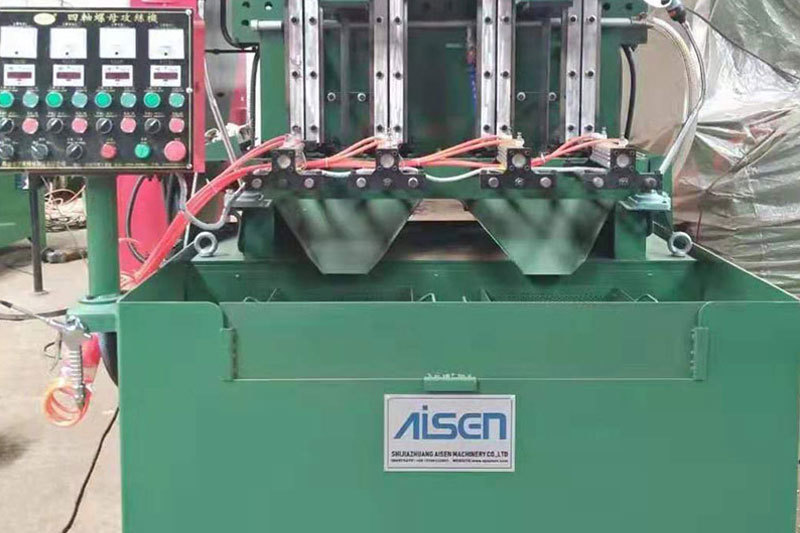
AISEN Four axis nut tapping machine ready for shipment to Russia
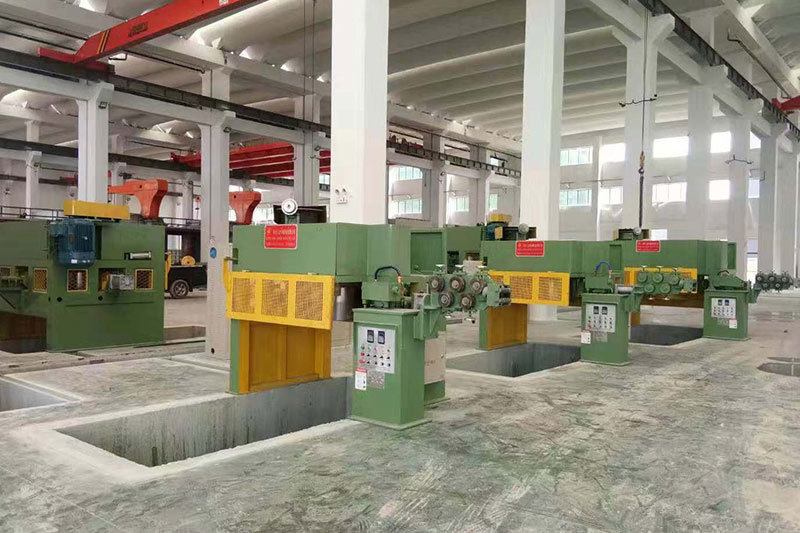
AISEN machinery inverted wire drawing machine
MESSAGES
We will contact you within one working day. Please pay attention to your email.
Qucik Link
Contact
Phone: +86-15100123091
E-mail: info@sjzaisen.com
Address: No.41 Zhaiying South Street, Yuhua District, Shijiazhuang City, Hebei Province China