

Flat die thread rolling machine noise and vibration: causes and solutions
Nov 11,2026


Author:
Aisen Machinery

Article overview
A Flat Die Thread Rolling Machine is a cold-forming machine that presses blanks between two hardened flat dies to roll threads. When it turns loud or shaky, the cause is usually worn dies, misaligned slides, loose foundations or weak lubrication, and most faults yield to a disciplined inspection routine. This 2026 guide explains how the noise arises, how to trace it, and which fixes suit Indian workshops, from bolt makers to self-tapping screw lines.
Table of contents
- 1. Why a flat die thread rolling machine makes noise and vibration
- 2. Main causes of noise and vibration in flat die machines
- 3. How to diagnose the source step by step
- 4. Solutions: setup, dies, lubrication and maintenance
- 5. Noise limits and operator safety in India
- 6. Choosing a quieter machine and supplier in India
- 7. Frequently asked questions
Why a flat die thread rolling machine makes noise and vibration
Noise and vibration in a Flat Die Thread Rolling Machine come from three places: die impact on the blank, the reciprocating slide that carries the moving die, and the drive train that powers both. Some sound is unavoidable. Trouble starts when it climbs above the machine's own baseline.
A Flat Die Thread Rolling Machine is a fastener manufacturing machine in which one fixed die and one reciprocating die squeeze a wire blank, displacing metal to form a thread without cutting. Because the thread rolling process works the metal cold, the grain flow follows the thread profile, which is why rolled threads are common on bolts and screws. The same force that strengthens the thread also loads the frame, bearings and gears on every stroke.
Think of the machine as a small forging press that never stops. Each stroke delivers a short, intense load, and any looseness is amplified like a rattling door in a strong wind. In typical shop-floor troubleshooting, the loudest machines are rarely "too powerful". They are loose, worn or poorly lubricated.
Where the sound and vibration originate
Die contact produces a sharp, repeating impact at the start and end of each rolling stroke. The slide and guideways add a rumble once clearances open up. The drive (motor, belt, flywheel, crankshaft and gearbox) contributes a lower-frequency hum. Machine types differ. A Reciprocating Flat Die Thread Rolling Machine is dominated by slide inertia. A Hydraulic Thread Rolling Machine adds pump and valve noise. An Automatic Thread Rolling Machine adds hopper, chute and feeder impacts. A Cold Forming Thread Rolling Machine running behind a heading line may also inherit trouble from inconsistent blanks.
Is some noise normal on a flat die thread rolling machine?
Yes. A steady, rhythmic sound that matches the stroke rate is normal on any Thread Rolling Machine. What is not normal is a new knock, a change in pitch, a visible shake of the frame, or sudden scatter in thread gauge readings. Why do so many plants miss early warnings? Usually because nobody recorded a baseline. Log sound level and vibration when the machine is new or freshly overhauled, then compare every month.
Main causes of noise and vibration in flat die machines
The most common causes are worn or chipped Thread Rolling Dies, die misalignment, loose or worn slide gibs, unbalanced rotating parts and inadequate lubrication. Poor blank quality and weak foundations make each of these worse.
Die-related causes
Thread Rolling Dies wear first at the entry edge, where the blank is first engaged. Once the profile rounds off, the blank slips, slaps and rattles instead of rolling cleanly. Mismatched die pairs, with different lengths or thread starts, create an uneven bite on every stroke. Loose die holders or clamping screws let the die move microscopically under load, which produces a sharp tick. Excessive pressure also chips the leading edge of the die. Dies are hard tool steel and brittle under shock, so a chipped fragment can cause a loud bang followed by sudden vibration. A Flat Thread Rolling Machine also demands near-perfect parallelism between die faces, and even a small error shows up as noise.
Mechanical and drive causes
Worn crankshaft or eccentric bearings, loose connecting-rod bushings and open slide gib clearances produce a dull knock at the stroke reversal point. Gear backlash and loose flywheel keys add a rattle that changes with load. Belt tension that is too low causes slapping, while too high accelerates bearing wear. Motor imbalance adds a steady hum. On a Hydraulic Thread Rolling Machine, air in the oil, a clogged suction strainer or a worn pump causes whining and pressure pulsation. Many maintenance teams chase die problems for days when the real culprit is a loose key or a tired bearing. Do they check the drive early enough? Often not.
Process and blank-related causes
Oversized blanks force the dies to displace more metal than the setting allows, so the whole machine labours. Uneven hardness, heavy burrs and inconsistent blank length have the same effect. Feed timing matters too: if the blank arrives late or rolls unevenly into the dies, the impact is harsh. On a Self Tapping Screw Thread Rolling Machine, hardened or case-treated blanks and sharp point geometry can raise rolling forces noticeably. Running above the recommended stroke rate for a given diameter also increases vibration, though the exact limit depends on the machine design and should be confirmed with the manufacturer.
Why do thread rolling dies crack or chip?
Dies crack mainly from shock overload, oversized or overly hard blanks, misalignment, poor heat treatment or running past their service life. Fatigue cracks start at the thread roots. Controlling blank size, alignment and replacement intervals reduces the risk, but no die lasts indefinitely.
How to diagnose the source step by step
Diagnose by isolating one variable at a time: run the machine empty, then with blanks, then under full load, and compare each condition with your recorded baseline. The point at which noise appears tells you which subsystem to inspect.
Step-by-step diagnostic procedure
- Isolate and lock out the machine before opening any guard, following your plant's lockout and tagout procedure.
- Check anchor bolts, die holder screws, gib locks and flywheel keys for looseness with a calibrated torque wrench.
- Inspect the dies for rounded entry edges, chips, cracks and uneven wear, and confirm the pair is matched.
- Measure slide clearance and die face parallelism with a dial indicator and feeler gauges.
- Run the machine empty and listen. A knock without blanks points to the slide, bearings or drive.
- Run with blanks at low stroke rate. If noise appears only now, suspect die setting, blank size or feed timing.
- Record sound level and vibration at the same measuring points each time, and note the findings in the machine log.
Use a handheld sound level meter, and a vibration meter if available. A mechanic's stethoscope is a cheap and effective alternative for locating bearing noise.
Symptom-to-cause reference
| Symptom | Likely cause | First check |
|---|---|---|
| Sharp tick at each stroke | Loose die or worn entry edge | Die clamps and die profile |
| Dull knock at stroke reversal | Worn bushing or open gib | Slide clearance |
| Rattle that varies with load | Gear backlash or loose key | Flywheel and gear train |
| Whine from hydraulic unit | Air in oil or worn pump | Oil level and suction strainer |
| Whole frame shakes | Loose anchors or weak foundation | Levelling and anchor bolts |
Case example: a rising knock on a bolt line
The following is an illustrative composite scenario, not a named customer. A workshop in an Indian fastener cluster such as Ludhiana or Rajkot ran a Bolt Thread Rolling Machine on M8 bolts. Over several weeks, operators noticed a rhythmic knock and slightly uneven pitch diameter readings. Instead of replacing the dies straight away, the maintenance team followed the steps above. The empty run was still noisy, which ruled out the blanks. Inspection showed loosened die holder screws and extra clearance in the slide gib. After re-torquing, replacing the gib strip and resetting the dies, the knock disappeared and gauge readings stabilised. Dies were not the main problem. A Flat Die Thread Rolling Machine often fails this way: small looseness first, big damage later.
Solutions: setup, dies, lubrication and maintenance
Most noise and vibration problems are solved by correct die setting, clean lubrication, tight mounting and a written maintenance routine. Replacing parts only helps if the root cause is fixed as well.
Die setting and alignment
Always fit matched die sets and keep working faces parallel. Align thread starts so the blank enters both dies at the correct phase. Raise rolling pressure gradually during setup instead of jumping straight to full depth. Track the count of pieces produced by each die set and replace it on a schedule, rather than waiting for the sound to change. Store spare dies in oil, separated by wooden or plastic spacers, so edges never knock together. For a Self Tapping Screw Thread Rolling Machine, check die pitch and thread angle against the screw specification every time you change over.
Lubrication and coolant
Use a rolling oil of the viscosity recommended by the machine builder, and make sure it reaches the die zone in a steady flow. Filter it. Metal fines in the oil act like sandpaper on the dies and slide. Grease slideways and bearings on a fixed interval. Hydraulic oil cleanliness matters on every Hydraulic Thread Rolling Machine, so replace filters on schedule and keep the reservoir topped up to avoid air ingestion. Poor lubrication sounds like a squeal or a dry rumble, and it usually shortens die life as well.
Foundation, mounting and isolation
Level the machine on a rigid concrete foundation and tighten anchor bolts to the specified torque. Where neighbouring equipment is sensitive, add anti-vibration pads or isolators rated for the machine's weight and dynamic load. Vibration severity can be assessed with guidance from the ISO 20816 series on mechanical vibration. Isolation does not remove vibration at the source, though. It only stops it travelling through the floor. Fix looseness first, then isolate.
Can vibration affect thread quality?
Yes. Excess vibration can cause chatter marks, inconsistent pitch diameter, torn thread crests and shorter die life. If go/no-go gauge rejections rise alongside noise, treat them as one problem and inspect the machine before adjusting the process.
A simple preventive maintenance routine
- Every shift: listen for changes, check oil flow, clear chips and fines.
- Weekly: check die clamps, belt tension and hydraulic oil level.
- Monthly: measure slide clearance, re-torque anchors and compare sound and vibration with the baseline.
- At each overhaul: inspect bearings, gears, keys and gib strips, and replace worn parts as a set.
Noise limits and operator safety in India
India's Noise Pollution (Regulation and Control) Rules, 2000, set ambient limits of 75 dB(A) by day and 70 dB(A) at night in industrial areas, while NIOSH recommends keeping worker exposure to 85 dBA over an eight-hour shift. A Flat Die Thread Rolling Machine should be assessed against both.
Ambient and occupational exposure limits
| Standard or zone | Day limit | Night limit |
|---|---|---|
| India CPCB: industrial area | 75 dB(A) | 70 dB(A) |
| India CPCB: commercial area | 65 dB(A) | 55 dB(A) |
| India CPCB: residential area | 55 dB(A) | 45 dB(A) |
| NIOSH recommended exposure limit (8-hour TWA) | 85 dBA | |
| OSHA permissible exposure limit (8-hour TWA) | 90 dBA | |
Under NIOSH's 3 dB exchange rate, permitted exposure time halves for every 3 dB increase:
| Sound level (dBA) | Maximum daily exposure (NIOSH) |
|---|---|
| 85 | 8 hours |
| 88 | 4 hours |
| 91 | 2 hours |
| 94 | 1 hour |
| 97 | 30 minutes |
| 100 | 15 minutes |
The U.S. National Institute for Occupational Safety and Health (NIOSH) recommends that workplace noise exposure be limited to 85 dBA as an 8-hour time-weighted average, using a 3 dB exchange rate. (Paraphrased from NIOSH criteria document guidance.)
Practical noise control measures
Engineering controls come before earplugs. Fix the source (loose parts, worn dies), add damping pads, fit acoustic enclosures around the die zone, and keep operators away from the loudest side of the machine. Hearing protection is the last layer, not the first. Rotate crews on very loud machines and arrange periodic audiometric checks through your occupational health provider. Applicable duties under the Factories Act, 1948 and state rules differ by location, so consult a qualified safety officer. The figures above are reference limits and do not guarantee that any given workplace is safe. Of course, a single reading near the machine says little about full-shift exposure, so measure over a representative period.
Choosing a quieter machine and supplier in India
A quieter Flat Die Thread Rolling Machine comes from rigid castings, accurate slide guidance, well-made dies and good after-sales support, not from price alone. Ask suppliers for specifications and test evidence before you buy.
Machine types and thread rolling vs thread cutting
The reciprocating design is the usual choice for high-volume bolts and screws. A Hydraulic Thread Rolling Machine offers smoother force control but adds pump noise. An Automatic Thread Rolling Machine adds feeders that improve output yet need their own impact-noise control. In the debate of Thread Rolling vs Thread Cutting, rolling produces threads without chips, with work-hardened surfaces and typically faster cycle times, which is why it dominates fastener plants. Thread cutting remains useful for low volumes, special profiles or parts that cannot withstand rolling forces. Neither method is silent. Cutting has its own tool noise, so compare real measurements rather than assumptions.
How much does a flat die thread rolling machine cost in India?
Flat Die Thread Rolling Machine Price India depends on die size, rolling capacity, motor rating, automation level and included tooling, so no honest single figure exists. Request itemised quotations in ₹, including GST, freight, installation and a spare-die set. Compare total cost of ownership, not just the ex-works number, because a cheaper Flat Thread Rolling Machine that vibrates will consume dies and downtime. Thread Rolling Machine Manufacturers in India and overseas suppliers both serve the market, so ask each for foundation drawings, lubrication guidance and references for similar wire diameters.
Working with a fastener equipment supplier
Shijiazhuang Aisen Machinery offers cold heading machines, thread rolling machines, wire drawing machines, hot forging machines and nut and bolt forming equipment, and states that its products have been sold to more than 20 countries. For a Screw Thread Rolling Machine or Cold Forming Thread Rolling Machine enquiry, send your wire diameter, thread standard, target output and electrical supply details, and confirm technical parameters, delivery terms and warranty directly in writing. Choosing complete Fastener Manufacturing Machine lines from one source also makes it easier to match blank quality to rolling conditions.
Frequently asked questions
Frequently asked questions
Q: What is the most common cause of vibration in a Flat Die Thread Rolling Machine?
A: Loose mounting and worn components are the most common causes, ahead of die faults. Check anchor bolts, die clamps, gib clearance and bearings first. Then inspect the dies for rounded edges or chips, and confirm the blank size matches the machine setting.
Q: How often should thread rolling dies be inspected?
A: Inspect dies visually every shift and measure thread gauge results at regular intervals. Replace each die set by piece count or when entry edges round off, chips appear or gauge rejections rise. The exact interval depends on material, diameter and lubrication.
Q: Does a hydraulic machine run quieter than a reciprocating machine?
A: Not automatically. A Hydraulic Thread Rolling Machine can deliver smoother force but adds pump and valve noise. A well-maintained Reciprocating Flat Die Thread Rolling Machine can be perfectly acceptable. Compare measured sound levels under load rather than machine type alone.
Q: What noise level is acceptable around a thread rolling machine in India?
A: CPCB rules set ambient limits of 75 dB(A) by day and 70 dB(A) at night in industrial areas. For workers, NIOSH recommends 85 dBA over eight hours. Confirm site-specific duties with a qualified safety officer.
In summary, noise and vibration on a Flat Die Thread Rolling Machine are signals, not just nuisances. Record a baseline, diagnose by isolating variables, fix looseness before replacing parts, maintain lubrication, and measure sound against Indian and international limits. Plants that treat these steps as routine protect thread quality, die life and operators alike. The Flat Die Thread Rolling Machine remains a core tool of modern fastener production, and a quiet, stable one is almost always a well-maintained one.
PREVIOUS:
Get A Quote
We will contact you within one working day. Please pay attention to your email.
Latest News
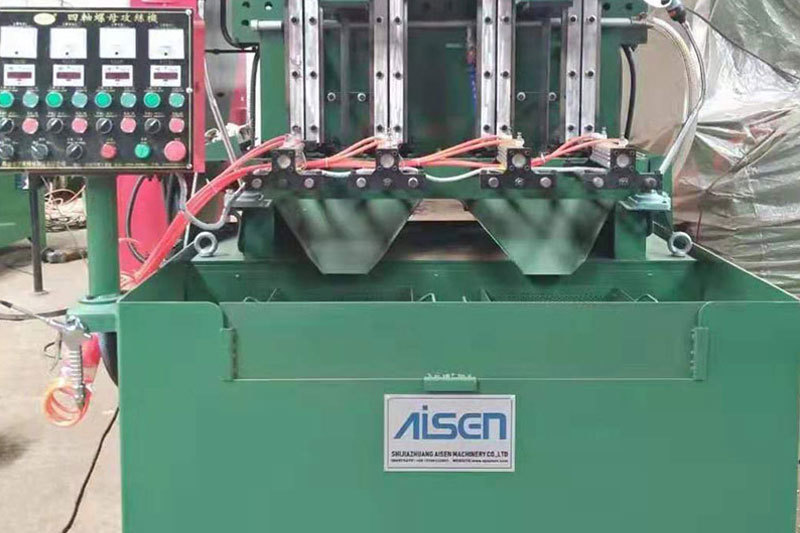
AISEN Four axis nut tapping machine ready for shipment to Russia
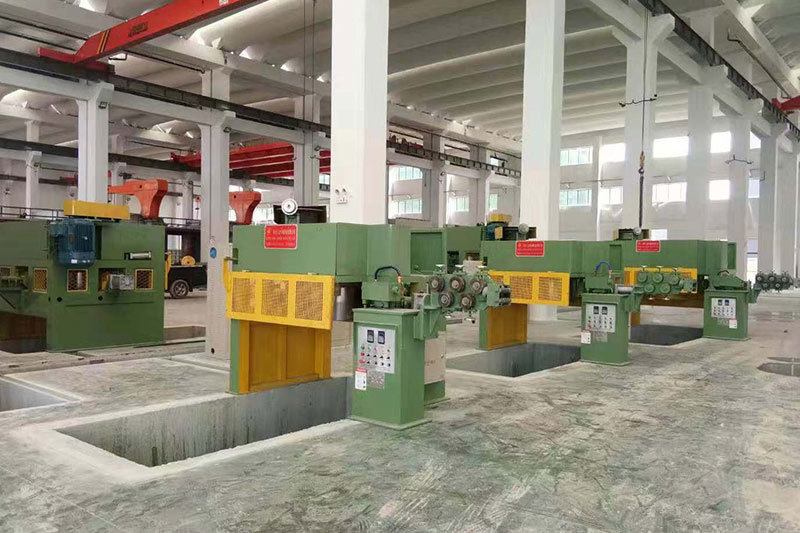
AISEN machinery inverted wire drawing machine
MESSAGES
We will contact you within one working day. Please pay attention to your email.
Qucik Link
Contact
Phone: +86-15100123091
E-mail: info@sjzaisen.com
Address: No.41 Zhaiying South Street, Yuhua District, Shijiazhuang City, Hebei Province China