

What is a steel bar shearing machine and how does it work?
Nov 10,2026


Author:
Aisen Machinery

What is a steel bar shearing machine and how does it work?
Article overview
This guide explains what a steel bar shearing machine is, how its blades and hydraulics cut rebar, and which type suits a Turkish rebar plant. It also covers what a machine costs to own and how to keep it safe. It is written for procurement engineers comparing quotations in 2026.
Table of contents
- 1. What is a steel bar shearing machine?
- 2. How does a steel bar shearing machine work?
- 3. Which type of steel bar shearing machine fits your plant?
- 4. What should Turkish buyers check before buying a steel bar shearing machine?
- 5. How much does a steel bar shearing machine cost to own?
- 6. How do you run and maintain a steel bar shearing machine safely?
- 7. Where is rebar processing machinery heading in 2026?
- 8. Frequently asked questions
A steel bar shearing machine is a hydraulic or mechanical machine that cuts rebar and round bar to length with a moving blade against a fixed blade, producing no chips. Turkish rebar plants, distributors and contractors use it every day for cut-to-length work, yet many buyers still compare machines by the number on the nameplate alone. This guide shows how a steel bar shearing machine works and which of five machine types matches your bar diameter and steel grade. It also covers what the machine really costs over its life and how to run it safely. Think of it as a checklist for people who must defend a purchase decision, not a brochure.
What is a steel bar shearing machine?
A steel bar shearing machine separates reinforcing bar by shear force rather than by abrasion or heat. Buyers also see it listed as a rebar shearing machine, steel bar cutting machine or rebar cutter machine. Turkish catalogues call it demir kesme makinesi.
A steel bar shearing machine refers to a machine tool in which a moving blade is forced past a fixed blade, so the bar yields plastically and then fractures along a narrow plane. No chips are produced and no steel is lost to a saw kerf. The principle is the same shearing process used on sheet and plate, scaled to round and ribbed sections.
Core components
A typical unit has a welded frame, a fixed blade, a moving blade holder and a drive, which is either a hydraulic cylinder or a crank. Around that sit a motor and pump set, a bar support table and a control box. Add a foot pedal or two-hand control and a fixed guard, and you have the safety-relevant picture. Blade gap, the clearance between the two cutting edges, is the most sensitive setting on the whole machine.
Why use a shear instead of a saw?
Shearing is fast and wastes no steel, but the cut end is slightly deformed. Saws give a squarer face at lower speed and with consumable saw blades. For lap-spliced reinforcement the deformation rarely matters; for threaded couplers it can. Is a squarer end worth a slower cycle? That depends on what happens to the bar next. Gas cutting is the third option, yet heat alters the steel near the cut, so it is generally avoided on structural rebar.
Typical users are rebar fabrication yards, precast plants, construction sites and steel distributors. Anyone turning 12 m stock bars into lengths for columns, beams, slabs and stirrups needs construction steel bar cutting equipment. The machine class they choose shapes labour, waste and lead time.
Which names do Turkish buyers search for?
Search behaviour in Turkey splits in two. Demir kesme makinesi means rebar cutter, while giyotin makas means a guillotine shear for plate, a different machine with different blade geometry. Mixing the two wastes quotation rounds. In this article, steel bar shearing machine means the bar-cutting type.
How does a steel bar shearing machine work?
A steel bar shearing machine clamps or supports the bar, drives the moving blade past the fixed blade with hydraulic or crank force, and the steel fractures along a thin shear plane within seconds. Think of kitchen scissors cutting a wire: the same two-blade action, with tens of tonnes of force behind it. For a 32 mm bar, a rough estimate is 804 mm² of cross-section multiplied by a shear strength of about 400 MPa, which gives roughly 32 tonnes-force.
Three variables govern the result: the shear strength of the bar, which rises with grade, the cross-section, and the blade gap. Force demand scales with area, so a 32 mm bar needs about four times the force of a 16 mm bar, because (32/16)² equals 4.
The cutting cycle step by step
- Set the machine on level ground, check the oil level and connect 400 V, 50 Hz three-phase power through a correctly sized cable.
- Feed the bar into the blade opening and align the cut mark with the fixed blade or a length stop.
- Press the foot pedal or two-hand control so the support or hold-down secures the bar.
- The cylinder or crank advances the moving blade. The bar deforms, then fractures.
- Release the control. The blade returns by hydraulic retraction or a return spring.
- Remove the offcut, check the end face for burr and slope, and repeat.
In practice, step 2 is where most length errors begin, because operators judge the mark by eye. A simple mechanical length stop removes that variable cheaply.
Hydraulic, mechanical and electric drives
A hydraulic rebar shear uses a pump and cylinder. It gives smooth force, overload protection through the relief valve and easy stroke adjustment. A mechanical shear stores energy in a flywheel and releases it through a crank; it cycles quickly but has a fixed stroke and less forgiving overload behaviour. An electric rebar cutter is usually a compact motor-driven or electro-hydraulic unit. A portable rebar cutting machine of this kind often handles 16–26 mm bars on single-phase supply.
Larger plants step further. An automatic rebar cutting machine or CNC rebar shear line feeds 12 m stock, measures length with an encoder and cuts to a programmed list. Reported throughput for such lines is around 50 tonnes per day. That is rebar processing machinery in the full sense, not just a blade and a motor.
Why does a bar sometimes get crushed instead of cut?
Usually the blade gap has opened or the edges have rounded. With more clearance, the bar is pinched and flattened before it fractures. Two other causes are common: a machine rated below the real bar strength, and a bar left unsupported so it lifts during the stroke. Replacing blades without resetting the gap is a classic mistake. Of course, a worn hose or low oil can also weaken the stroke, so check the hydraulics before blaming the steel.
Which type of steel bar shearing machine fits your plant?
Match the type to bar diameter, steel grade and daily tonnage. Portable units cover roughly 16–26 mm, fixed industrial machines 32–52 mm, and a CNC line becomes attractive when cutting lists repeat at volumes near 50 tonnes per day.
Five machine types compared
| Type | Typical capacity | Power supply | Best use | Main limit |
|---|---|---|---|---|
| Portable hydraulic | 16–26 mm | Single-phase, wheeled | Site work, small jobs | Small diameter, manual feed |
| Fixed industrial | 32–52 mm | 380/400 V three-phase | Workshops, distributors | Length depends on operator |
| Cut-and-bend (HKM) | Varies by model | Three-phase | Stirrup and bent-bar shops | Check cut and bend capacity separately |
| Guillotine (giyotin makas) | Plate 8–40 mm | Three-phase hydraulic | Plate cutting | Not designed for bar |
| CNC shear line | 12 m stock, about 50 t/day | Three-phase, PLC | High-volume cut lists | Highest investment, floor space |
Ranges are typical market figures; always confirm them against the supplier's datasheet.
Decision tree by diameter, grade and tonnage
Every reinforcing bar cutting machine in the table is a variation on one blade pair, so work through these questions in order:
- Fix the largest bar and its grade. B500C and S420 are stronger than mild steel, so ask at what tensile strength the capacity was rated.
- Convert length to weight with kg/m = 0.00617 × d² (d in mm). A 12 m Ø16 bar weighs about 18.96 kg.
- Estimate daily tonnage. At 50 t/day you would process roughly 2,640 such bars, which is where manual feeding stops making sense.
- Decide on mobility. If most cutting happens on site, choose a portable rebar cutting machine; otherwise choose a fixed hydraulic rebar shear.
- Add bending needs. If stirrups and bent bars follow every cut, evaluate a cut-and-bend machine.
As a rule of thumb, a fixed hydraulic unit is enough for most workshops until cutting lists become repetitive. Beyond that point, automation usually pays.
Case: when the label overstates the capacity
Afacan machinery service records describe a pattern worth knowing. Machines marketed as "24'lük" were often measured at about 4 mm below the stamped size, and motors listed at 3 kW were found at 2.2 kW. The related myth is that more millimetres always means a better machine. In reality, a correctly sized unit with a well-kept blade gap outperforms an oversized one that is neglected. The fix costs nothing: run an acceptance test with your own B500C bars at the maximum rated diameter, make 20 consecutive cuts, and read the motor nameplate yourself.
What should Turkish buyers check before buying a steel bar shearing machine?
Check four things: conformity documents, electrical fit on 400 V and 50 Hz, landed cost including duty and KDV, and spare-parts response time.
Market context in 2026
According to MarketsandMarkets, the Turkish machine tool market is worth about USD 2.04 billion in 2026 and should reach USD 2.44 billion by 2031, a CAGR of 2.6%. Demand is backed by steel output. TÇÜD and Worldsteel data put crude steel production at 19.8 million tonnes in the first half of 2026, up 8.1% year on year, with the full year expected to pass 40 million tonnes. More rebar leaving the mills means more demand for construction steel bar cutting equipment in yards and workshops.
Standards, voltage and customs
TS EN 10080 defines weldable reinforcing steel, so a machine is not "certified to" it. In practice, TS EN 10080 rebar cutting equipment means a machine whose rated capacity is stated for bars produced to that standard, such as B500C. The machine itself should carry a CE marking and a declaration under Machinery Directive 2006/42/EC, which Turkish machinery safety regulation mirrors. Some suppliers cite EN 693, a hydraulic press standard. Ask which harmonised standards the declaration lists for your exact model, and whether TSE documents exist.
Electrical fit matters more than most buyers expect. Specify 400 V, 50 Hz three-phase, and keep cable runs short or oversize the conductor, because voltage drop on long extension cables is a known cause of overheated motors. On customs, shearing machines usually fall under HS heading 8462. The duty rate depends on origin and trade agreements, so confirm it with your customs broker, and add KDV at the current rate.
Price, lead time and warranty: what to request
Reliable public benchmarks for steel bar shear price Turkey are scarce, because quotes depend on capacity, drive, Incoterm and exchange rate. Instead of comparing headline figures from rebar shearing machine for sale listings, request the same data set from every supplier.
| Item | Request in writing | Why it matters |
|---|---|---|
| Price | Itemised quote, Incoterm, currency, TL conversion date | Exchange rates change landed cost |
| Lead time | Production days plus shipping days | Avoids peak-season stoppage |
| Warranty | Duration, covered parts, exclusions | Blades and hoses are often excluded |
| MOQ | Units per order, spare-blade set | Shapes the first order |
| Packing | Crate size, weight, container type | Sea freight and crane planning |
| Spares | Blade, seal, hose, spring list with delivery days | Limits downtime |
Local manufacturer or import?
A rebar cutting machine manufacturer Turkey buyers can visit offers faster spare-parts response and Turkish-language service, while imports often reduce the upfront price. Domestic builders face pressure from low-priced imported equipment, so many are adding service density. Neither route is automatically better. Ask each supplier for the nearest service point and the delivery days for a blade set, and write the answer into the contract.
How much does a steel bar shearing machine cost to own?
Purchase price is often the smaller share of lifetime cost; blades, downtime and labour decide the payback. A cheap steel bar shearing machine that stops every peak season is rarely cheap.
Cost drivers worth measuring
| Driver | How to measure | Ask the supplier |
|---|---|---|
| Blade life | Cuts per edge before regrind; price per set | Rated cuts at maximum diameter |
| Energy per cut | Motor kW × cycle seconds ÷ 3,600 | Real motor nameplate |
| Hydraulic oil | Litres and change interval | Oil grade and hours |
| Downtime | Hours lost per month | Spare-part delivery days |
| Labour | Operators per shift, cuts per hour | Cycle time test |
Blade cost per cut equals the price per set divided by cuts per edge times usable edges. Energy is rarely the deciding line: a 4 kW motor on an assumed 5-second cycle uses about 0.0056 kWh per cut. Blades and stoppages dominate, so measure those first.
Worked payback example (illustrative)
The numbers below are hypothetical and show the method only; replace them with your own quotes. Payback in months equals machine price divided by monthly net saving. Suppose an automatic rebar cutting machine is quoted at 2,400,000 TL and removes labour and rework worth 120,000 TL a month, net of blades and energy. Payback is 20 months. If the real saving is only 80,000 TL, payback stretches to 30 months. Does that gap matter? Enormously, which is why you should measure your actual labour and rejection costs before signing.
How to verify cut quality against sawing
No neutral public dataset compares shear and saw end faces across machines, so build your own. Cut 20 samples of the same bar on each process. Measure end-face slope with a protractor or square, burr height with a caliper and cycle time with a stopwatch. Ask suppliers for a third-party test report or an unedited video of the same test, then accept the machine only against the recorded results.
How do you run and maintain a steel bar shearing machine safely?
Use fixed guards, a guarded point of operation, two-hand or pedal control with an emergency stop, hearing protection and a written maintenance plan. Most breakdowns of a steel bar shearing machine trace back to blade gap and hydraulics.
Guarding, noise and operator rules
The machine guarding safety guidance from OSHA is a useful checklist before commissioning.
OSHA's machine guarding requirements, paraphrased: guarding must protect the operator and nearby workers from hazards such as the point of operation, nip points, rotating parts, and flying chips or sparks.
On noise, EU Directive 2003/10/EC sets action values of 80 and 85 dB(A), and Turkish regulation follows the same levels. Request a measured sound level from the supplier and wear hearing protection wherever exposure reaches those values. Final safety decisions belong to your qualified safety officer; this article is general guidance only.
Maintenance schedule that prevents breakdowns
- Daily: check oil level, look for weeping hoses, test guards and the emergency stop, and clear scale from the blade area.
- Weekly: inspect blade edges, measure the gap, check bolt torque and lubricate the guides.
- Every 1,000–2,000 operating hours, or as the manual states: change hydraulic oil and filter, and inspect seals and the return spring.
Troubleshooting and blade sharpening
| Symptom | Likely cause | Action |
|---|---|---|
| Bar flattened, not cut | Open blade gap, dull edge | Reset gap, rotate or regrind blade |
| Weak or slow stroke | Low oil, air in system, worn seal | Top up, bleed, replace seals |
| Oil weeping | Hose or fitting failure | Replace hose, check fittings |
| Blade does not return | Fatigued return spring | Replace spring |
| Motor trips or overheats | Voltage drop, undersized cable | Shorten run, upsize cable |
Many shear blades have four usable edges. Rotate to a fresh edge first and regrind only when all edges are dull. Remove equal material from both blades so the gap stays within the manufacturer's tolerance. Grind with coolant, because overheating softens the edge and shortens blade life.
Where is rebar processing machinery heading in 2026?
Toward automation: robots, AI-assisted monitoring and CNC lines are replacing stand-alone portable cutters in larger plants.
Automation, CNC lines and the 2026 trade-fair signal
MAKTEK Eurasia 2026, running 28.09–03.10.2026, reported 1,049 exhibitors and 87,108 visitors, with robotics, AI and digitalisation as its main themes. Fibre lasers with ±0.03 mm accuracy are also replacing guillotines on thin sheet, though bar still depends on shearing. For a bar yard, the lesson is practical: a CNC rebar shear line removes measuring and marking errors and counts pieces for you.
Choosing a supplier for your specification
Send the same specification sheet to every shortlisted supplier: maximum diameter, grade, daily tonnage, power supply and delivery site. Shijiazhuang Aisen Machinery Co., Ltd. is one metalworking machinery manufacturer, building cold heading, thread rolling, wire drawing and hot forging equipment, and it reports sales to more than 20 countries. Its published range centres on fastener and wire processing, so confirm directly whether a rebar shear configuration is available before including it in a comparison. Treat any claim of capacity, certification or delivery as unproven until it appears in a written offer.
Conclusion. A steel bar shearing machine earns its place when it is sized to the real bar, kept at the right blade gap and bought with documents, spares and service in writing. Decide by diameter, B500C or S420 grade and tonnage; test the machine with your own bars; compare total cost, not the nameplate. Do that, and your next steel bar shearing machine will cut cleanly for years.
Frequently asked questions
Q: What is a steel bar shearing machine used for?
A: It cuts reinforcing bar and round bar to length for construction, precast and fabrication work. A moving blade passes a fixed blade and fractures the steel without chips, which makes it a fast, low-waste choice for cutting rebar to a list.
Q: How does a hydraulic rebar shear differ from a mechanical one?
A: A hydraulic rebar shear drives the blade with a pump and cylinder, giving smooth force, overload protection and adjustable stroke. A mechanical shear uses a flywheel and crank, cycles quickly but has a fixed stroke and less tolerance for overload.
Q: How much does a steel bar shearing machine cost in Turkey?
A: No reliable public price list exists. Cost depends on capacity, drive, Incoterm, exchange rate, duty and KDV. Request itemised written quotations with lead time and warranty from several suppliers, then compare them on the same specification.
Q: Which machine suits 32 mm B500C bars?
A: A fixed industrial hydraulic rebar shear in the 32–52 mm class on 380/400 V three-phase power is the usual fit. Ask at what tensile strength the capacity is rated, and run an acceptance test with your own bars before payment.
Q: How often should blades and hydraulic oil be serviced?
A: Check blade gap weekly and oil level daily. Oil change intervals commonly fall between 1,000 and 2,000 operating hours, but follow the manual. Rotate blade edges before regrinding, and replace blades once the bar starts to flatten.
Get A Quote
We will contact you within one working day. Please pay attention to your email.
Latest News
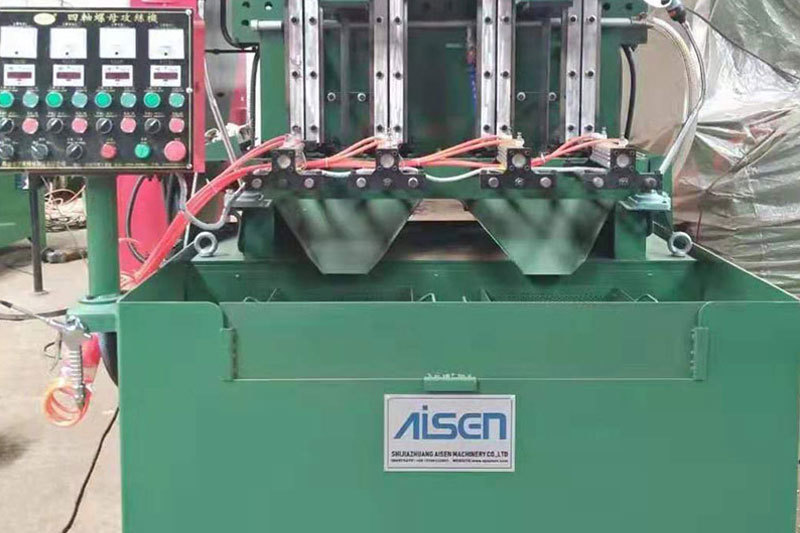
AISEN Four axis nut tapping machine ready for shipment to Russia
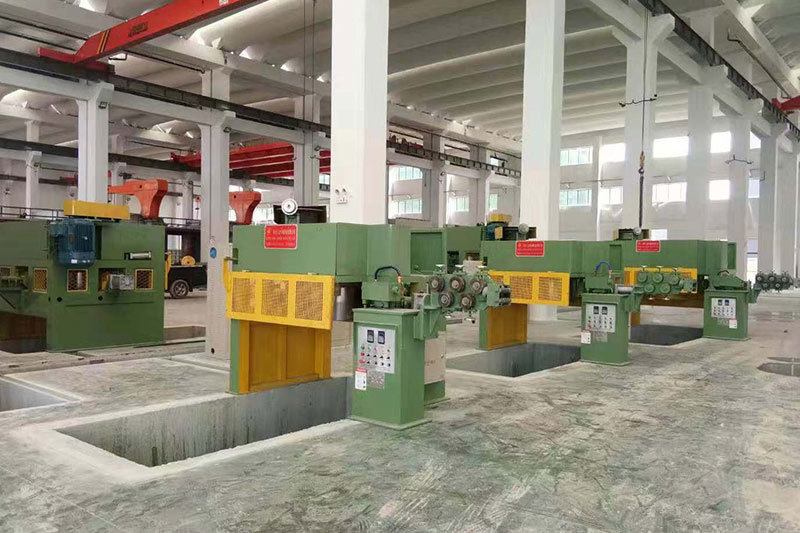
AISEN machinery inverted wire drawing machine
MESSAGES
We will contact you within one working day. Please pay attention to your email.
Qucik Link
Contact
Phone: +86-15100123091
E-mail: info@sjzaisen.com
Address: No.41 Zhaiying South Street, Yuhua District, Shijiazhuang City, Hebei Province China