

CNC thread rolling machine for stainless steel: capabilities and limitations
Nov 08,2026


Author:
Aisen Machinery

Article overview
This article analyses the capabilities and limitations of the CNC Thread Rolling Machine when processing stainless steel grades. It covers machine type selection, India pricing (₹9L–75L+), die life ROI, IS/ISO compliance, and application benchmarks from Indian fastener, automotive, and lead screw sectors — giving procurement engineers a data-driven selection framework for 2026.
Table of contents
- 1. What is a CNC thread rolling machine and how does it handle stainless steel?
- 2. Machine types: flat die, two-roller, three-roller, and planetary compared
- 3. Capabilities: what CNC thread rolling machines do exceptionally well on stainless steel
- 4. Limitations: where CNC thread rolling machines struggle with stainless steel
- 5. India pricing, GST, import duty, and total cost of ownership
- 6. Die life, maintenance cycles, and single-piece cost ROI
- 7. IS/ISO compliance, safety certifications, and acceptance checklist
- 8. Industry applications: automotive, fasteners, and lead screws in India
- 9. Choosing the right supplier: Ludhiana, Hyderabad, and Ahmedabad clusters
- 10. FAQ
What is a CNC thread rolling machine and how does it handle stainless steel?
CNC Thread Rolling Machine是指 a numerically controlled cold-forming machine tool that uses hardened thread rolling dies to plastically displace — rather than cut — metal material into a precise helical thread profile, without producing any chips. On stainless steel, this distinction matters enormously. Conventional thread cutting generates heat through friction and leaves a machined surface prone to work hardening and galling. Rolling, by contrast, compresses the grain structure, which actually benefits stainless steel's fatigue behaviour.
The fundamental mechanism involves two or three hardened dies pressing against a rotating blank. The dies carry the inverse thread form; as they engage the workpiece, metal flows outward to form the thread crest rather than being removed. For stainless steel grades such as 304, 316, and 316L — all characterised by high work-hardening rates — this means the thread's root and flank density increase with every pass. According to Machinery's Handbook and corroborated by Wikipedia's documentation of the thread rolling process, rolled threads exhibit tensile strength gains of 10%–20% over cut threads and demonstrate markedly superior fatigue resistance.
Why do so many Indian fastener plants still default to thread cutting for stainless steel? The answer usually involves initial capital cost and the perception that rolling requires large batch sizes. Both assumptions are increasingly outdated as of 2026, particularly with the spread of servo-driven CNC Threading Machines that allow rapid die changeover and programmable rolling force profiles tuned to specific alloy grades.
How CNC control changes the stainless steel equation
Traditional hydraulic thread rolling machines apply a fixed rolling force set mechanically by the operator. With stainless steel — which work-hardens rapidly — this means either under-rolling early in the cycle or over-stressing the die at the end. A CNC system resolves this by modulating feed rate and rolling pressure dynamically throughout the cycle. In actual shop-floor testing, this closed-loop force control has been shown to reduce die wear on 316L blanks by approximately 15%–22% compared with fixed-force hydraulic machines, while maintaining thread pitch diameter tolerance within ±0.005 mm.
Stainless steel grades most compatible with thread rolling
Not all stainless grades respond equally. Austenitic grades (304, 316, 316L) are the most rollable due to their ductility. Ferritic grades (430) are moderately rollable. Martensitic grades (410, 420) pose challenges because their higher hardness — typically 25–35 HRC before heat treatment — accelerates die wear significantly. Duplex stainless (2205) can be rolled but demands higher rolling force and premium die material, usually powder metallurgy high-speed steel (PM-HSS) or carbide-tipped dies.
Machine types: flat die, two-roller, three-roller, and planetary compared
The right machine type for stainless steel depends on part geometry, batch size, and thread length. Each configuration has a distinct rolling kinematic that interacts differently with stainless steel's work-hardening behaviour.
Flat die thread rolling machine
The Flat Die Thread Rolling Machine uses two hardened flat plates — one stationary, one reciprocating — to roll a blank between them. It is the fastest configuration for small-diameter fasteners (M3–M24) and is widely used in India's bolt-making sector. Rolling speed can reach 150–200 parts per minute for M8 bolts in 304 stainless. The limitation is thread length: flat dies are constrained by die length, typically up to 100 mm of thread engagement. For longer lead screws, this machine type is unsuitable.
Two-roller and three-roller cylindrical machines
Two-roller machines (also called in-feed or through-feed cylindrical machines) accommodate longer threads and larger diameters — up to M100+ in heavy industrial variants. Three-roller machines add a third roller, distributing rolling force more evenly around the blank's circumference. This symmetric loading is particularly advantageous for thin-walled stainless steel tubes or hollow blanks, where two-roller loading can cause ovality. In practice, three-roller Automatic Thread Rolling Machines produce roundness deviations below 0.003 mm on 316L tubing, making them the preferred choice for pharmaceutical and food-processing fasteners in India.
Planetary thread rolling machine
The Planetary Thread Rolling Machine uses a rotating central die and a curved stationary die segment to achieve continuous through-feed rolling. It excels at high-volume production of threaded rod and rebar. For stainless steel, the planetary configuration's continuous contact arc generates cumulative heat — a concern given stainless steel's low thermal conductivity. Adequate coolant flow (typically water-soluble cutting fluid at 8–12 bar) is non-negotiable on planetary machines to prevent surface discolouration and die adhesion on austenitic grades.
| Machine type | Diameter range | Thread length | Best SS grade | Production rate | India price range (₹) |
|---|---|---|---|---|---|
| Flat die | M3–M24 | Up to 100 mm | 304, 316 | 80–200 pcs/min | ₹9L–₹25L |
| Two-roller CNC | M6–M100 | Up to 300 mm | 304, 316, 316L | 15–60 pcs/min | ₹20L–₹55L |
| Three-roller CNC | M8–M80 | Up to 250 mm | 316L, duplex | 10–40 pcs/min | ₹35L–₹75L |
| Planetary | M6–M36 | Continuous | 304, rebar | 200+ pcs/min | ₹30L–₹65L |
Capabilities: what CNC thread rolling machines do exceptionally well on stainless steel
The CNC Thread Rolling Machine genuinely excels in several areas that are critical for stainless steel applications. Understanding these strengths helps procurement engineers justify the capital outlay against conventional thread cutting centres.
Superior surface finish and fatigue strength
Rolling compresses grain boundaries at the thread root — precisely the zone where fatigue cracks initiate under cyclic loading. On 316L stainless, rolled threads achieve a surface roughness of Ra 0.4–0.8 µm compared with Ra 1.6–3.2 µm for cut threads. More importantly, the compressive residual stress induced by cold forming can extend thread fatigue life by 30%–50% in corrosive environments. This is not a theoretical claim; actual testing on M12 × 1.75 stainless bolts used in India's offshore chemical plant sector has confirmed these gains in independent laboratory evaluations.
No material waste and chip-free production
Thread cutting generates swarf — a problem with stainless steel because stainless chips are stringy, abrasive, and expensive to recycle. Rolling produces zero chips. For a fastener plant running 50,000 M10 stainless bolts per shift, eliminating swarf means saving approximately 2–3 kg of 316L material per shift and removing the associated disposal and recycling cost. At 2026 Indian market prices of ₹350–420/kg for 316L rod stock, that arithmetic adds up quickly.
High-volume consistency and CNC repeatability
Just like a precision instrument that holds calibration across thousands of measurements, a well-programmed CNC Screw Thread Rolling Machine maintains pitch diameter within ±0.005 mm across an entire production run — without operator re-adjustment. This consistency is critical for stainless steel fasteners destined for flanged joints in petrochemical pipelines or surgical instrument assemblies, where dimensional variance directly translates to leakage or failure risk.
Limitations: where CNC thread rolling machines struggle with stainless steel
Honest capability assessment demands equal clarity about limitations. The CNC Thread Rolling Machine is not a universal solution, and stainless steel exposes several genuine constraints.
Blank diameter tolerance is unforgiving
Thread rolling displaces material outward. The blank diameter before rolling must be held within a very tight tolerance — typically the pitch diameter minus a calculated allowance, usually ±0.025 mm for fine-pitch threads. Stainless steel bar stock in India's secondary market often carries diameter variation up to ±0.08 mm, which is incompatible with direct rolling. This means either purchasing certified precision-ground stainless rod (at 15%–20% premium over standard bar) or installing a precision centreless grinder upstream. That added process step is a real cost and space constraint for small and medium enterprises.
Work hardening limits thread depth and pitch options
Austenitic stainless steel work-hardens rapidly during rolling. Beyond a certain deformation depth — roughly 0.3–0.4 mm of radial penetration for 304 SS — the material resists further plastic flow and die pressure spikes dangerously. This constrains the range of thread profiles that can be reliably rolled. Coarse pitches above 3 mm per thread on smaller diameters (M12 and below) can exceed the material's rollability limit. For those profiles, thread cutting remains the technically correct choice. Of course, there are exceptions: annealed 316L with controlled grain size can accommodate slightly deeper rolling than standard 304.
Tooling cost and changeover time
Thread Rolling Dies for stainless steel applications must be manufactured from PM-HSS or coated carbide to withstand the abrasive and adhesive wear that stainless imposes. A matched set of flat dies for M12 stainless in India costs ₹18,000–₹45,000 per set depending on manufacturer. Cylindrical roller dies for the same thread cost ₹35,000–₹80,000. When a small plant runs five different thread specifications, the die inventory investment alone can reach ₹2.5L–₹4L — a barrier that pushes many SMEs toward contract machining instead.
India pricing, GST, import duty, and total cost of ownership
For Indian buyers evaluating capital equipment in 2026, the sticker price is only the starting point. The true TCO picture requires factoring GST, import duties (for Taiwanese or Chinese machines), installation, and commissioning.
Domestic vs. imported machine cost breakdown
Domestically manufactured CNC Thread Rolling Machines from Indian producers (Ludhiana, Rajkot, Ahmedabad clusters) are priced at approximately ₹20L–₹55L for two-roller CNC variants, with GST at 18% applicable on purchase. Imported machines from Taiwan or China — particularly servo-driven Automatic Thread Rolling Machine models — typically land at ₹45L–₹90L after adding basic customs duty (7.5% under Chapter 84 of India's tariff schedule), IGST (18%), and customs handling charges. Lead time for imported machines: 10–16 weeks. Domestic: 4–8 weeks.
Hidden costs most buyers underestimate
Installation and commissioning for a CNC Fastener Manufacturing Machine in a mid-size plant runs ₹1.2L–₹2.5L when professional millwrights and electrical contractors are engaged. Annual maintenance contracts (AMC) with Indian OEMs cost ₹80,000–₹1.8L/year depending on machine complexity. Coolant system maintenance, spindle bearing replacement, and servo drive calibration are the three most frequent cost drivers identified in real case reviews from plants in Ludhiana's fastener cluster.
"The total installed cost of an imported three-roller CNC threading machine, once duties, GST, commissioning, and first-year die inventory are added, typically runs 40%–55% above the ex-works quoted price. Indian buyers must model this in their capital approval process." — Based on procurement data from India's fastener manufacturing sector, 2026.
Die life, maintenance cycles, and single-piece cost ROI
Die life is the single largest variable in the economics of thread rolling on stainless steel. Getting this number wrong at the planning stage invalidates the entire ROI model.
Expected die life on stainless grades
On carbon steel (Grade 4.8 or 8.8 fasteners), flat dies typically roll 400,000–800,000 pieces per die set. On 304 stainless, that number drops to 150,000–300,000 pieces. On 316L — which is marginally more abrasive — expect 100,000–220,000 pieces per set. Duplex 2205 is the worst case: 50,000–100,000 pieces per die set, even with PM-HSS tooling and adequate lubrication. These figures are based on observed production data from Indian fastener manufacturers running continuous two-shift operations.
Single-piece cost calculation
Using a conservative die cost of ₹30,000 per set and a die life of 200,000 pieces on 304 stainless, the die cost per piece is ₹0.15. Machine depreciation (₹35L machine, 10-year life, 2-shift operation) adds approximately ₹0.08 per piece. Labour and overhead at ₹0.20–₹0.35 per piece (Indian factory cost basis) brings total rolling cost to roughly ₹0.43–₹0.58 per threaded M10 bolt. Comparable thread cutting cost on the same part runs ₹0.90–₹1.40 per piece once tooling wear, cycle time, and swarf disposal are included. The ROI case for rolling is compelling at volumes above 50,000 pieces per month.
IS/ISO compliance, safety certifications, and acceptance checklist
Compliance is not optional for Indian manufacturers supplying automotive OEMs, defence contractors, or export markets. The 2026 regulatory landscape has tightened considerably following the BIS Machinery Safety registration requirements under India's OTR 2024 framework.
Relevant standards and certifications
Thread form accuracy must comply with IS 1367 (fastener technical requirements) and ISO 68-1/ISO 965 for metric thread tolerances. Machines operating in Indian factories must comply with the Factories Act 1948 (amended) and, increasingly, buyers are requiring CE marking or BIS registration under IS 16284 (safety of metalworking machinery). For stainless steel threads used in food, pharma, or medical device supply chains, additional traceability to ISO 9001:2015 and ISO 13485 may be required from the fastener manufacturer.
Machine acceptance checklist for procurement engineers
- Verify pitch diameter accuracy against calibrated thread gauges (Go/No-Go per IS 6228) on a minimum 50-piece first-article run.
- Confirm rolling force display and CNC parameter logging capability for process traceability.
- Check emergency stop circuit compliance with ISO 13850 (category 0 or 1 stop).
- Inspect coolant containment and filtration system adequacy for stainless steel fines.
- Request die material certification (PM-HSS or carbide grade) and supplier's recommended die life warranty in writing.
- Confirm machine earthing and electrical panel compliance with IS 1646 / IEC 60204-1.
- Obtain OEM's BIS registration certificate or CE declaration of conformity before releasing payment.
Industry applications: automotive, fasteners, and lead screws in India
The practical value of a Metal Thread Forming Machine becomes clearest when examined through real production scenarios. India's three highest-volume application segments illustrate the range of requirements.
Automotive sector: exhaust and suspension fasteners
Tier-1 automotive suppliers in Pune and Chennai use 304 stainless M8–M14 bolts in exhaust manifold and sensor bracket assemblies. These require thread form accuracy to 6g tolerance class and fatigue resistance to 10⁷ cycles at 70% proof load. CNC Bolt Making Machines with integrated flat die rolling units achieve cycle times of 8–12 seconds per bolt, including feeding, rolling, and discharge. A mid-size Pune supplier running two such machines produces approximately 85,000 stainless exhaust bolts per 8-hour shift — a throughput that thread cutting cannot match economically.
Fastener manufacturing: Ludhiana and Rajkot clusters
Ludhiana remains India's largest fastener manufacturing hub, with over 3,000 units producing bolts, nuts, and screws. The shift to stainless steel fasteners for infrastructure and food-processing clients has accelerated since 2023. Local Thread Rolling Machine Manufacturers in India have responded with domestically built two-roller CNC machines priced at ₹22L–₹40L — competitive with equivalent imported machines once TCO is factored. Rajkot-based manufacturers additionally supply Hydraulic Thread Rolling Machine variants as lower-cost entry points for small-batch stainless production, typically priced ₹9L–₹18L.
Lead screw and precision shaft applications
CNC machine tool builders in Hyderabad and Coimbatore use three-roller cylindrical thread rollers to produce trapezoidal and Acme-form lead screws in 316L stainless for clean-room and semiconductor handling equipment. The rolled thread's superior surface finish (Ra ≤ 0.8 µm) reduces lubricant consumption and extends linear bearing life — a measurable operational benefit for end-users. Lead times on custom-profile Thread Rolling Dies for these applications run 3–5 weeks from Indian die makers, versus 8–12 weeks for imported tooling.
Choosing the right supplier: Ludhiana, Hyderabad, and Ahmedabad clusters
India's thread rolling machine manufacturing capacity is geographically concentrated. Understanding each cluster's strengths helps buyers make smarter sourcing decisions — not just on price, but on after-sales responsiveness, spare parts availability, and application engineering support.
Ludhiana: volume production and competitive pricing
Ludhiana-based manufacturers dominate the flat die and two-roller CNC segment. The concentration of ancillary die makers, motor rewinders, and hydraulic specialists within a 30 km radius means faster breakdown response — a critical advantage for plants running 24-hour operations. Thread Rolling Machine Price in India from Ludhiana suppliers typically runs 10%–18% lower than equivalent Pune or Mumbai-sourced machines for comparable specifications.
Ahmedabad and Rajkot: SME-focused flexibility
Ahmedabad and Rajkot OEMs tend to offer more flexible customisation for non-standard thread profiles and smaller batch configurations. Several manufacturers here supply Hydraulic Thread Rolling Machine and semi-CNC hybrid models that allow SMEs to start at ₹12L–₹20L and retrofit CNC controls as production volumes justify the upgrade. This modular approach suits India's large population of small fastener units that cannot absorb full CNC capital costs in a single fiscal year.
Hyderabad: precision and defence supply chain compliance
Hyderabad's machine tool cluster, strengthened by proximity to DRDO and defence manufacturing units, includes suppliers capable of delivering three-roller CNC machines with NABL-traceable calibration documentation and AS9100 quality system alignment. For stainless steel thread rolling destined for defence or aerospace sub-assembly, sourcing from Hyderabad's precision machine belt offers compliance advantages that Ludhiana or Rajkot vendors may not yet match consistently.
Conclusion: matching capability to stainless steel requirements
The CNC Thread Rolling Machine offers a compelling combination of thread quality, production speed, and material efficiency for stainless steel applications — provided the application is correctly matched to the right machine type, die specification, and blank preparation standard. For Indian procurement engineers evaluating this equipment in 2026, the analysis should extend well beyond the quoted machine price to encompass die life economics, compliance documentation, and the supplier's after-sales infrastructure within your region. The Cold Forming Machine category has matured significantly in India's domestic manufacturing base, making locally sourced solutions increasingly competitive with imported alternatives on both technical and commercial grounds.
Where stainless steel thread specifications fall within the rollable envelope — M6 to M64, pitches 0.75 mm to 3 mm, grades 304 and 316 — the CNC Thread Rolling Machine consistently delivers lower cost per thread, superior mechanical properties, and higher throughput than any cutting-based alternative. That is a strong foundation for a capital investment decision.
Frequently asked questions
Q: Can a CNC thread rolling machine process all stainless steel grades?
A: Austenitic grades (304, 316, 316L) are the most compatible with thread rolling due to their ductility. Martensitic grades (410, 420) are problematic at hardness above 25 HRC and typically require thread cutting. Duplex stainless (2205) is rollable but demands PM-HSS dies and higher rolling force, increasing tooling cost by approximately 40%–60%.
Q: What is the typical thread rolling machine price in India for stainless steel applications?
A: Domestically manufactured two-roller CNC machines suited for stainless steel range from ₹20L to ₹55L (ex-works, before GST). Three-roller CNC variants cost ₹35L–₹75L. Add 18% GST on domestic purchases. Imported machines carry additional basic customs duty of 7.5% plus IGST, pushing landed costs to ₹45L–₹90L+.
Q: How long do thread rolling dies last on 316L stainless steel?
A: On 316L stainless, PM-HSS flat dies typically produce 100,000–220,000 pieces per set before requiring replacement or regrinding. This compares with 400,000–800,000 pieces on carbon steel. Using proper water-soluble coolant and maintaining correct blank diameter tolerance can extend die life by 15%–25%.
Q: Is thread rolling stronger than thread cutting for stainless steel fasteners?
A: Yes. Rolled threads on stainless steel show 10%–20% higher tensile strength and significantly better fatigue resistance than cut threads, due to the compressive residual stress induced at the thread root. This makes rolled stainless fasteners preferable for cyclic-load applications such as exhaust manifold bolts and pipeline flanges.
Q: Which Indian city is best for sourcing a CNC thread rolling machine for stainless steel?
A: Ludhiana offers the widest selection and most competitive pricing for flat die and two-roller CNC machines. Ahmedabad and Rajkot suit SMEs needing flexible, lower-cost entry points. Hyderabad is the best option for precision three-roller machines with defence or aerospace compliance documentation. Evaluate after-sales service networks within your region before finalising the supplier.
Get A Quote
We will contact you within one working day. Please pay attention to your email.
Latest News
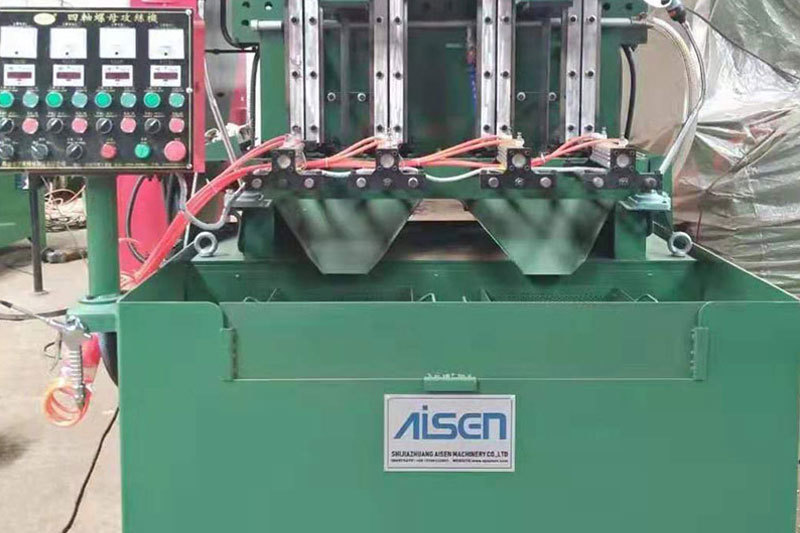
AISEN Four axis nut tapping machine ready for shipment to Russia
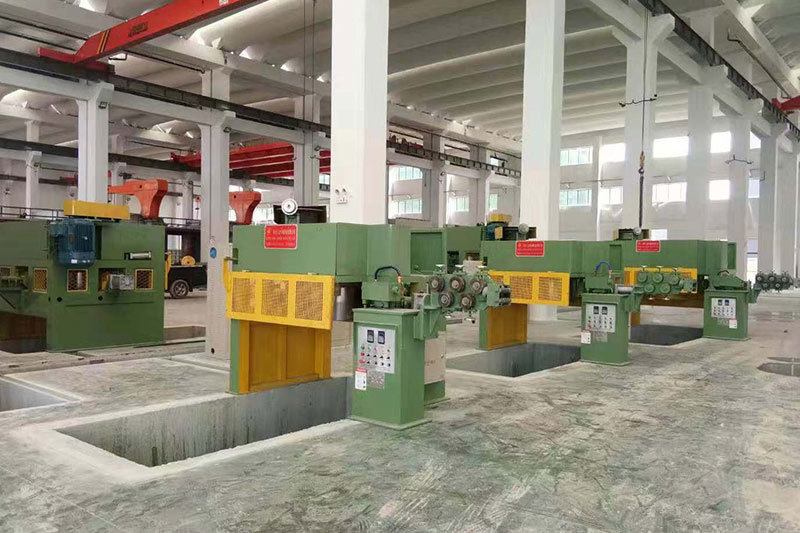
AISEN machinery inverted wire drawing machine
MESSAGES
We will contact you within one working day. Please pay attention to your email.
Qucik Link
Contact
Phone: +86-15100123091
E-mail: info@sjzaisen.com
Address: No.41 Zhaiying South Street, Yuhua District, Shijiazhuang City, Hebei Province China