

Multiple-capstan wire drawing machine: a complete buyer's guide
Nov 07,2026


Author:
Aisen Machinery

Article overview
This complete buyer's guide examines the multiple-capstan wire drawing machine from every angle relevant to industrial purchasing: machine architecture, type classification, parameter benchmarks, a head-to-head comparison table, a structured selection process, and the 2026 trends reshaping procurement decisions in Argentina. Read sequentially for a full picture, or jump directly to the section that matches your current decision stage.
Table of contents
- 1. What is a multiple-capstan wire drawing machine?
- 2. Main types of multiple-capstan wire drawing machines
- 3. Key technical parameters you must evaluate
- 4. Specification comparison: machine types side by side
- 5. How to select the right machine for your operation
- 6. Common buying mistakes and how to avoid them
- 7. 2026 market trends affecting Argentine buyers
- 8. FAQ
What is a multiple-capstan wire drawing machine?
A multiple-capstan wire drawing machine is a cold-forming system in which metal wire passes sequentially through a series of progressively smaller dies, with each die stage driven by a dedicated rotating capstan (drawing block) that pulls the wire and accumulates the reduction. The result is controlled, continuous diameter reduction — from a thick rod down to fine wire — in a single, uninterrupted production pass.
The term "capstan" here refers to the powered drum that grips and advances the wire between die stages. Each capstan runs at a precisely calculated speed, slightly faster than the previous one, to compensate for the increase in wire length as the cross-section shrinks. This coordination is what separates a true multi-block wire drawing system from a simple single-pass bench.
Why does this architecture matter for buyers? Because the number of capstans determines the total achievable reduction ratio in one run, the product range the machine can handle, and ultimately the cost per kilogram of finished wire. According to industry consensus, a single drawing pass typically reduces cross-sectional area by 15–25% for fine wire and up to 45% for coarser wire; a multi-pass sequence stacked across 10–20 capstans can achieve cumulative reductions exceeding 90% without intermediate annealing — provided material ductility allows it.
This is not merely an incremental improvement over single-die equipment. It is a fundamentally different production philosophy: continuous, high-throughput, and scalable. For Argentine cable manufacturers and steel rope producers operating under cost pressure from imported finished wire, owning a capable continuous wire drawing equipment line can be the difference between competitive margins and dependence on foreign supply chains.
How does a multiple-capstan wire drawing machine differ from a single-capstan machine?
A single-capstan machine performs one reduction pass per machine cycle. It is simpler, lower cost, and appropriate for small-batch or large-diameter work. A multiple-capstan wire drawing machine — also called a tandem wire drawing machine or multi-pass wire drawing machine — chains many of these reduction stages in series under one integrated control system. The practical outcome is dramatically higher output speed (finishing speeds of 600–2,500 m/min are common on copper fine-wire lines), lower unit energy consumption per kilogram, and far tighter dimensional tolerances because the wire never leaves a controlled tension environment between passes.
What materials can be processed?
The machine architecture is material-agnostic in principle. In Argentine industrial practice, the most common applications are copper wire drawing (for electrical cable manufacturing), low-carbon steel wire drawing (for mesh, springs, and fasteners), and stainless or galvanized steel wire for rope and construction products. Each material demands a specific die sequence, lubrication strategy, and capstan surface treatment — but the underlying multi-block wire drawing system logic remains identical.
Main types of multiple-capstan wire drawing machines
Not all multiple-capstan configurations are equivalent. The machine type must match the wire material, target diameter range, and production volume — choosing incorrectly wastes capital and creates chronic process headaches.
Sliding (accumulating) vs. non-slip straight-line systems
In a sliding-type (also called accumulating-type) machine, a small amount of wire slippage between the capstan surface and the wire is intentional and necessary. The capstan speed ratio between consecutive blocks is set slightly higher than the theoretical elongation requires, and the excess is absorbed by controlled slip. This design tolerates minor die-sequence imbalances and is well suited to steel wire drawing processes where the wire can tolerate surface contact. The tradeoff is surface marking risk on highly polished or coated wire.
A non-slip straight-line (or direct-drive) system maintains precise speed synchronization through electronic tension control — typically dancer rolls or load cells feeding back to individual servo or vector-drive motors. There is no intentional slip. This is the standard for copper wire drawing machines producing fine wire for electrical applications, where any surface damage is unacceptable. The control sophistication required is higher, as is the initial cost.
Wet drawing vs. dry drawing configurations
Wet drawing machines submerge the die box and capstan zone in liquid lubricant — typically an emulsion or drawing soap solution. This is essential for fine copper wire below approximately 0.5 mm, where heat generation per unit area is severe. The wire drawing lubricant system in wet machines is a critical subsystem; lubricant chemistry, filtration, and temperature control directly affect die life and surface quality.
Dry drawing machines use powdered or paste lubricants applied before each die. They are more common in steel wire drawing processes for medium to large diameters. Maintenance is simpler, but die temperatures are higher and speed ceilings are lower than in comparable wet systems.
Inline annealing vs. non-annealing lines
Some multiple-capstan lines integrate a continuous annealing furnace — electrical resistance or induction — immediately after the final drawing block. This restores ductility to work-hardened wire without a separate offline heat treatment step. For soft copper cable conductors, inline annealing is essentially non-negotiable. For hard-drawn steel wire products (springs, PC strand), it is intentionally omitted. The presence or absence of this module doubles as a product-range signal: a machine spec sheet showing inline annealing almost always targets copper or aluminum rather than high-carbon steel.
Key technical parameters you must evaluate
When comparing quotations for a multiple-capstan wire drawing machine, the specification sheet can be intimidating. Experienced buyers know that five parameters determine 80% of the machine's fitness for purpose — everything else is secondary until these are confirmed.
Number of drawing passes and die sequence
The number of capstans (passes) directly limits the total reduction ratio achievable in one run. A 13-pass copper fine-wire machine can typically reduce 8 mm rod to 0.1 mm wire. The wire drawing die sequence — the schedule of inlet and outlet diameters across all dies — must be engineered to stay within safe per-pass reduction limits (15–25% area reduction per pass for most copper alloys). Machines sold without a recommended die schedule are a red flag; reputable suppliers provide this as standard documentation.
Capstan diameter and speed range
Capstan diameter affects both the minimum bend radius the wire must negotiate (critical for brittle alloys) and the surface speed achievable. Larger capstans run more slowly in rpm for the same linear speed, which reduces wear. The finishing speed range — expressed in m/min at the last block — is the headline productivity figure. For context, a mid-tier industrial copper wire drawing machine targeting 0.2 mm output will typically specify a maximum finishing speed of 1,200–1,800 m/min.
Motor power and drive architecture
Total installed power (kW) is a rough throughput proxy, but the drive architecture matters more. Modern wire tensioning and drawing machines use individual AC vector drives or servo motors per capstan, with closed-loop tension feedback. This allows real-time speed trim without manual intervention — essential for maintaining consistent wire diameter when transitioning between coils. Older machines with mechanical gearbox-linked capstans are cheaper but inflexible; they cannot compensate for rod-to-rod material variation without operator adjustment.
Lubricant system capacity and type compatibility
The wire drawing lubricant system is not an afterthought. Tank volume, pump flow rate, filtration micron rating, and cooling capacity must match the machine's thermal load at full speed. A system sized for intermittent operation will overheat lubricant during three-shift production, dramatically shortening die life and degrading surface quality. Always request the lubricant system specification separately — it is frequently undersized on budget-tier machines.
Specification comparison: machine types side by side
The table below consolidates typical specification ranges across the four most common multiple-capstan configurations encountered in Argentine industrial wire manufacturing. Values are based on 2026 industry experience data and represent mid-tier production machines, not laboratory or pilot-scale equipment.
| Parameter | Wet copper fine-wire (non-slip) | Dry steel medium-wire (sliding) | Multi-wire parallel (steel) | Inline-anneal copper |
|---|---|---|---|---|
| Number of passes | 13–25 | 7–13 | 6–10 per wire | 13–22 |
| Inlet diameter (mm) | 1.0–8.0 | 2.5–12.0 | 2.0–8.0 | 1.0–8.0 |
| Outlet diameter (mm) | 0.05–0.5 | 0.8–3.5 | 1.0–3.0 | 0.08–0.6 |
| Max finishing speed (m/min) | 1,200–2,500 | 300–800 | 150–400 | 800–2,000 |
| Lubricant system | Wet emulsion, recirculating | Dry powder / paste | Dry or emulsion | Wet emulsion, recirculating |
| Inline annealing | Optional | No | No | Yes (standard) |
| Typical installed power (kW) | 45–200 | 30–110 | 55–180 | 60–250 |
| Primary application | Electrical cable conductors | Springs, mesh, fasteners | Steel rope, nail wire | Soft-drawn cable cores |
"The selection of drawing pass sequence is as much a metallurgical decision as a mechanical one. Exceeding safe per-pass reduction limits does not simply reduce die life — it fundamentally alters the wire's microstructure and mechanical properties in ways that no downstream process can fully correct." — Industry consensus among wire drawing process engineers, 2026 technical review.
How to select the right machine for your operation
Selecting a multiple-capstan wire drawing machine is not a single decision — it is a structured process. Skipping steps leads to either an oversized investment or a machine that cannot meet product tolerances. Here is the sequence that experienced Argentine wire manufacturers follow:
- Define your product range first. List every wire diameter, alloy, and temper specification your customers require today, plus a realistic 3-year growth scenario. This determines the required inlet/outlet range and whether inline annealing is mandatory.
- Calculate your required throughput. Convert annual tonnage targets to kg/hour, then to m/min at the target finished diameter. This sets the minimum capstan speed specification.
- Choose the drawing mode. Wet or dry? Sliding or non-slip? This decision flows directly from material type and surface quality requirements — not from cost preference.
- Specify the drive architecture. For any new purchase above a pilot scale, insist on individual variable-frequency or servo drives per capstan with closed-loop tension control. The energy and flexibility benefits over the machine's 15–20-year life far exceed the initial premium.
- Evaluate the lubricant and cooling system independently. Request pump curves, tank volume calculations, and filter specifications matched to your production hours per day. This is where many budget machines reveal hidden limitations.
- Assess spare parts availability in Argentina. With import regulations and foreign exchange constraints a persistent reality, any machine whose critical wear parts — dies, capstan liners, drive boards — must be imported with multi-month lead times represents an operational risk. Prioritize suppliers with regional spare parts stock or local technical partners.
- Demand a witnessed factory acceptance test (FAT). Run the machine at full speed with your material and your die schedule before shipment. Surface quality, dimensional tolerance, and wire break frequency at speed are impossible to verify from a spec sheet alone.
What output speed should you target?
This question comes up in almost every evaluation. The honest answer: more speed is not always better. A copper wire drawing machine running at 2,000 m/min with a 95% uptime is worth far more than one rated at 2,500 m/min that breaks wire 15 times per shift due to marginal die alignment or lubricant temperature control. For Argentine operations running two or three shifts, a conservative speed target with reliable process control will consistently outperform a high-speed headline specification attached to marginal mechanical quality.
New equipment vs. refurbished lines: what makes sense in 2026?
The 2026 Argentine market presents an unusual dynamic. Import cost pressures and foreign exchange uncertainty have driven renewed interest in second-hand equipment refurbishment, particularly European machines from the 1990s and 2000s that were mechanically overbuilt. A refurbished multi-block wire drawing system with new drives, dies, and lubricant system can deliver 70–80% of a new machine's capability at 40–50% of the capital cost. The risk is in what you cannot see: capstan bearing wear, frame fatigue, and control system obsolescence. Any refurbished purchase must include a detailed mechanical inspection report and a minimum 12-month parts warranty from the refurbisher.
Common buying mistakes and how to avoid them
Even experienced procurement teams make predictable mistakes when purchasing industrial wire drawing machinery. Recognizing these patterns in advance is straightforward. Actually avoiding them under price pressure is harder — but the financial consequences of getting it wrong are severe enough to warrant the discipline.
Mistake 1: maximizing per-pass reduction to minimize machine cost
The logic seems sound: fewer capstans means lower purchase price. So why not push each die to its maximum reduction limit? Because material ductility is the actual constraint, not machine cost. Copper, low-carbon steel, and specialty alloys all have defined limits on work hardening before intermediate annealing is required. Exceeding those limits causes wire breakage, internal cracking, and surface defects that contaminate the entire production batch. The rule of thumb — 15–25% area reduction per pass for copper, 20–35% for mild steel — exists because it has been validated across decades of industrial wire drawing processes. Deviating from it to save capital expenditure is a false economy.
Mistake 2: treating capstan count as the primary efficiency metric
More capstans do not automatically mean higher efficiency. This is perhaps the most persistent misunderstanding in wire drawing equipment procurement. A 20-block machine with poorly matched speed ratios between consecutive capstans will experience chronic wire slippage, surface marking, and wire breaks — performing worse in practice than a well-tuned 13-block system. The efficiency of a multiple-capstan wire drawing machine comes from the precision of speed synchronization and die sequence engineering, not from maximizing block count. Suppliers who lead with capstan count without discussing slip ratios and die schedules deserve scrutiny.
Of course, there are situations where a higher block count is genuinely necessary — extremely fine wire, very hard alloys, or ultra-tight diameter tolerances can require more incremental reduction steps. The point is that capstan count must follow the metallurgical requirement, not marketing ambition.
Mistake 3: ignoring local after-sales infrastructure
For Argentine buyers specifically, this is the mistake with the highest long-term cost. A wire reduction machine purchased from a supplier with no local technical presence means that every die alignment issue, drive fault, or lubricant system problem requires either flying in a technician or waiting for email support across time zones. In a three-shift production environment, unplanned downtime measured in days rather than hours can erase months of cost savings from the original purchase price differential.
2026 market trends affecting Argentine buyers
The global wire drawing machinery market in 2026 is being shaped by two converging forces: energy cost pressure and regional supply chain reconfiguration. For Argentine manufacturers, both trends create real purchasing opportunities — if understood correctly.
Direct-drive motors and energy efficiency upgrades
Traditional multiple-capstan wire drawing machines used gearbox-linked motor systems that consumed significant energy in mechanical transmission losses. The 2026 trend is a shift to permanent-magnet direct-drive motors per capstan, eliminating the gearbox entirely. According to recent engineering reviews, this architecture reduces drive-train energy consumption by 12–18% per machine at equivalent throughput. For Argentine operations facing rising industrial electricity tariffs, this upgrade — available both on new machines and as a retrofit — has a payback period of 2–4 years depending on production hours.
Import substitution and local system integration
Alacero 2026 data indicates that Latin America continues to import over 40% of its steel wire products consumption, with Argentina particularly exposed given its relatively limited domestic rod production. This creates a structural incentive for local wire manufacturers to invest in drawing capacity that reduces dependence on finished wire imports. The practical implication for machine buyers: machines that can be maintained, adapted, and expanded locally — using locally sourced dies, standard electrical components, and Spanish-language PLC interfaces — command a real operational premium over technically superior but locally unsupported alternatives. Think of it like choosing between a European sports car and a robust workhorse with a nationwide dealer network: the second option wins every time in an environment where the nearest authorized service center is 11,000 km away.
Rising demand for multi-material flexibility
Argentine cable manufacturers increasingly need to switch between copper, aluminum, and coated steel wire on the same line to respond to market demand shifts. This is pushing demand for drawing block machines with quick-change die cassettes, modular capstan assemblies, and software-configurable speed ratio programs. A machine purchased in 2026 without this flexibility may be commercially limited within five years as product mix requirements evolve.
FAQ
Q: What is the typical service life of a multiple-capstan wire drawing machine?
A: With regular preventive maintenance — capstan resurfacing, die replacement, lubrication system service, and drive calibration — a well-built multiple-capstan wire drawing machine has a productive service life of 15 to 25 years. Mechanical frames typically outlast electrical components; control system upgrades at the 10–12 year mark are common and cost-effective.
Q: How many drawing passes does a copper fine-wire machine typically require?
A: A copper fine-wire machine reducing 8 mm rod to 0.1 mm wire typically requires 20–25 passes. Each pass reduces the cross-sectional area by roughly 15–22%. Fewer passes are possible only by increasing per-pass reduction, which risks exceeding copper's work-hardening limit and causing wire breaks or internal defects.
Q: Can the same machine process both copper and steel wire?
A: In principle yes, but with significant modification. Copper and steel require different die materials (polycrystalline diamond vs. tungsten carbide), different lubricant chemistry, and different capstan surface coatings. A machine optimized for copper fine wire will not perform reliably on steel without substantial reconfiguration — and vice versa. Multi-material capability requires purpose-built modularity from the design stage.
Q: What are the main causes of wire breakage on a multi-pass drawing line?
A: The four most common causes are: incorrect die sequence (excessive per-pass reduction), mismatched capstan speed ratios causing wire tension spikes, degraded or contaminated lubricant causing die heating, and poor-quality input rod with internal seams or inclusions. Systematic wire break logging by position on the machine is the fastest diagnostic tool to isolate the root cause.
Q: How should Argentine buyers evaluate spare parts availability before purchasing?
A: Request a full bill of materials for all wear parts and ask the supplier to confirm which items are stocked in Argentina or the MERCOSUR region. For critical items — drawing dies, capstan liners, drive inverter boards — insist on a minimum local stock commitment in the purchase contract. Machines sold with two-year parts warranties backed by regional inventory significantly reduce operational risk in the Argentine import environment.
Summary
A multiple-capstan wire drawing machine is a high-commitment capital investment — one where the difference between a well-matched purchase and a poor one is measured in years of production efficiency and maintenance cost. The key takeaways from this guide: define your product range before specifying the machine, let metallurgical requirements drive capstan count and die sequence design, treat the lubricant system as a primary subsystem rather than an accessory, and in the Argentine context, weight after-sales infrastructure and spare parts availability as heavily as technical specifications. The 2026 trends toward direct-drive efficiency and local system integration reinforce these priorities. A machine that runs reliably for 20 years with locally sourced support will consistently outperform a technically superior alternative that depends on imported expertise and hard-to-source components.
Get A Quote
We will contact you within one working day. Please pay attention to your email.
Latest News
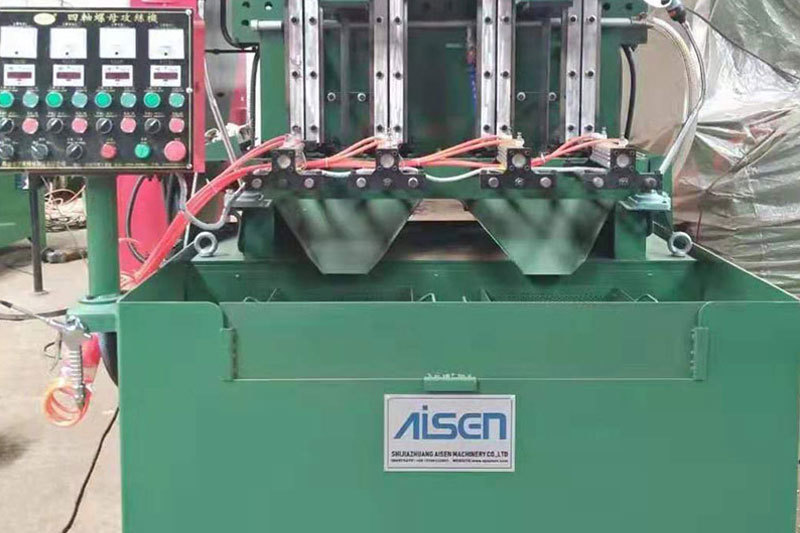
AISEN Four axis nut tapping machine ready for shipment to Russia
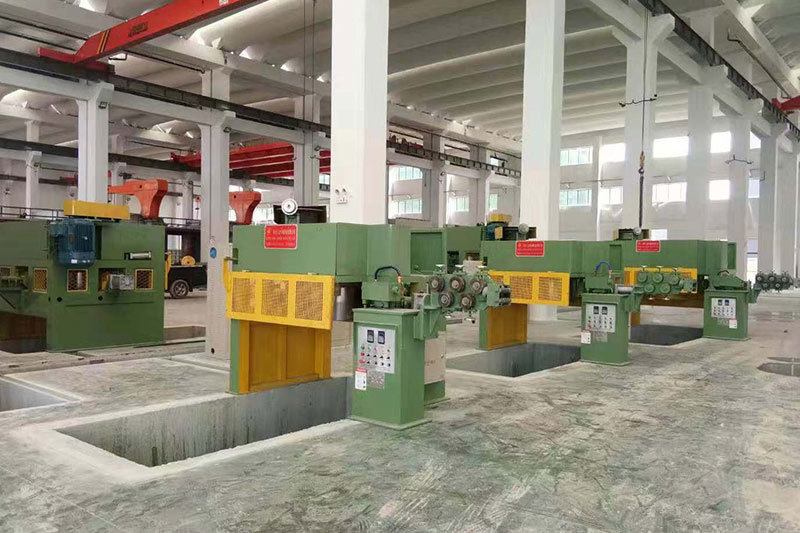
AISEN machinery inverted wire drawing machine
MESSAGES
We will contact you within one working day. Please pay attention to your email.
Qucik Link
Contact
Phone: +86-15100123091
E-mail: info@sjzaisen.com
Address: No.41 Zhaiying South Street, Yuhua District, Shijiazhuang City, Hebei Province China