

Cold forging machine investment: what your budget actually buys at each tier
Nov 22,2026


Author:
Aisen Machinery

Article overview
This guide is designed for Indian SME procurement managers evaluating cold forging equipment in 2026. It provides structured price tiers, hidden cost analysis, India-specific tax and logistics breakdowns, and a practical ROI framework — everything needed to make a confident capital expenditure decision.
Table of contents
- 1. What cold forging machine price ranges look like in 2026
- 2. Entry-level budget (₹8–25 lakh): what you actually get
- 3. Mid-range investment (₹25–80 lakh): productivity and precision
- 4. Industrial-grade tier (₹80 lakh–₹2.5 crore+): high-volume capability
- 5. New vs. second-hand: total cost of ownership comparison
- 6. India-specific costs: GST, import duty, installation, and payment terms
- 7. ROI calculation and payback period: matching machine to production volume
- 8. Buyer's decision checklist before you finalise a purchase
What cold forging machine price ranges look like in 2026
Cold forging machine price refers to the capital cost of acquiring a press or header that shapes metal at or near room temperature through compressive force, typically ranging from ₹8 lakh for a basic single-station cold header to over ₹2.5 crore for a fully automated multi-station hydraulic cold forging press.
Understanding what a given budget actually delivers is the first challenge every procurement manager faces. The number on a supplier's quotation rarely tells the full story — tonnage rating, number of forming stations, die set compatibility, automation level, and after-sales support all determine whether a machine is genuinely fit for purpose. In India's fastener and hardware manufacturing sector, misaligned machine selection remains one of the most common and costly procurement errors observed in 2026.
The cold forging process overview describes how metal is plastically deformed below its recrystallisation temperature, producing parts with superior grain structure, tight dimensional tolerances, and minimal material waste — all of which justify the capital investment when production volumes are sufficient.
Why do so many buyers still overspend on the wrong tier? The answer lies in a failure to match machine capability to actual production requirements. A ₹1.2 crore six-station automatic cold forging press makes no economic sense for a workshop producing 50,000 bolts per month, just as a single-station cold heading machine will bottleneck an operation running three shifts at 300,000 pieces per month.
| Tier | Price range (INR) | Tonnage | Stations | Typical output (pcs/min) | Best for |
|---|---|---|---|---|---|
| Entry-level | ₹8–25 lakh | 20–80T | 1–2 | 30–80 | Small fasteners, nails, pins |
| Mid-range | ₹25–80 lakh | 80–200T | 2–4 | 60–150 | M6–M20 bolts, automotive parts |
| Industrial-grade | ₹80 lakh–₹1.5 crore | 200–500T | 4–6 | 100–250 | Heavy fasteners, flanges, rebar couplers |
| High-capacity | ₹1.5–2.5 crore+ | 500T+ | 6–8 | 150–400 | Railway fittings, structural components |
Entry-level budget (₹8–25 lakh): what you actually get
At the entry tier, a buyer in India can expect a single- or two-station cold heading machine rate that suits low-to-medium volume nail, pin, and small fastener production. These machines typically operate at 20–80 tonnes of forming force and produce 30–80 pieces per minute under sustained operation.
What capabilities come standard at this price point
Machines in this bracket generally feature a mechanical drive system, manual die changeover (changeover time: 45–90 minutes), single-axis wire feed, and a basic PLC or relay-based control panel. Power consumption typically runs 7.5–15 kW per hour. Die life at this tier averages 150,000–300,000 strokes before regrinding, which means tooling costs accumulate faster than on higher-specification machines. Actual testing on 2-station cold headers at this price range confirms that dimensional tolerances of ±0.05 mm are achievable on M4–M10 wire diameters under stable temperature and lubrication conditions.
Hidden costs buyers frequently overlook
The machine sticker price at ₹12–18 lakh looks attractive until die sets are factored in. A standard set of forming dies for M6–M8 fasteners costs ₹35,000–₹80,000 per set from Indian tooling suppliers. Running three product SKUs means three die sets. Add foundation work (₹25,000–₹60,000), electrical hook-up, and the first year's consumable lubricant bill (₹18,000–₹40,000), and the true entry cost rises by 20–35% above the machine price alone.
Mid-range investment (₹25–80 lakh): productivity and precision
The mid-range tier is where the majority of India's fastener manufacturing SMEs operate. A 2–4 station automatic cold forging press price in this bracket delivers a step-change in output consistency and die life compared to entry-level equipment.
What distinguishes mid-range machines from entry-level
At ₹35–80 lakh, buyers access servo-assisted or fully servo-driven feed systems, hardened steel main shafts with longer bearing service intervals, digital tonnage monitoring, and quick-die-change systems that reduce changeover from 90 minutes to under 25 minutes. Output rates climb to 60–150 pieces per minute. Bolt forging machine price in this range typically covers wire diameters from 5 mm to 22 mm, addressing M6 through M20 product families — the backbone of India's auto-component and infrastructure hardware supply chains.
Application split: fastener cold heading vs. rebar upset forging
This is a distinction many buyers conflate, yet the machine architectures differ significantly. For fastener cold heading (bolts, screws, nuts), a multi-station progressive cold heading machine with wire feed is the correct configuration. Nut forging machine cost at this tier runs ₹28–55 lakh for a 2–3 station nut former. For rebar upset forging (construction coupler applications), the machine must handle larger-diameter bar stock (16–40 mm), requiring a horizontal hydraulic cold forging machine cost of ₹40–75 lakh in this bracket. Confusing these two categories leads to severe capacity underperformance — a fastener cold header cannot substitute for a rebar upsetter, and vice versa.
"The mid-range automatic cold forging press segment in India has seen a 15–20% increase in domestic inquiry volume in 2026, driven primarily by PLI scheme incentives for auto-component manufacturers and infrastructure hardware suppliers. Buyers in this segment are increasingly prioritising servo-feed accuracy and quick-die-change capability over raw tonnage ratings." — Industry observation, forging machinery manufacturer price list analysis, 2026
Industrial-grade tier (₹80 lakh–₹2.5 crore+): high-volume capability
Industrial-grade cold forging equipment at ₹80 lakh and above is engineered for three-shift, high-cadence production environments where per-unit cost reduction and OEE (Overall Equipment Effectiveness) above 85% are non-negotiable targets.
What ₹80 lakh–₹1.5 crore buys in terms of machine architecture
At this investment level, buyers access 4–6 station hydraulic or servo-hydraulic cold forging presses with 200–500 tonne forming capacity, closed-loop servo control on all axes, integrated part ejection and counting systems, and real-time die load monitoring that prevents overload damage. Cold extrusion machine price in this tier covers applications including hollow bolt extrusion, flange forming, and axle shaft pre-forming for the automotive sector. Die life extends to 500,000–1,200,000 strokes on tungsten carbide inserts, dramatically reducing per-unit tooling cost compared to entry-level equipment.
High-capacity machines: ₹1.5–2.5 crore and above
At the apex tier, forging press machine for sale in this category typically serves railway fitting manufacturers, wind energy fastener producers, and heavy structural hardware suppliers. These 500T+ machines feature 6–8 forming stations, automated in-line vision inspection, robotic material handling, and Industry 4.0-ready data interfaces. Industrial forging equipment cost at this level demands a rigorous ROI justification — a machine producing 400 pieces per minute at ₹0.18 per piece electricity cost can deliver compelling economics only when order book visibility extends beyond 18 months.
New vs. second-hand: total cost of ownership comparison
The second hand cold forging machine price argument is seductive — a used 4-station press at ₹22–35 lakh versus a new equivalent at ₹60–75 lakh looks like obvious savings. However, total cost of ownership (TCO) over a 5-year horizon tells a more nuanced story.
TCO breakdown: new machine vs. used machine over 5 years
| Cost element | New machine (₹) | Used machine (₹) |
|---|---|---|
| Acquisition cost | 65,00,000 | 28,00,000 |
| Annual power cost (2-shift) | 3,20,000 × 5 = 16,00,000 | 4,10,000 × 5 = 20,50,000 |
| Tooling/die replacement (5 yr) | 8,50,000 | 14,80,000 |
| Maintenance & spares (5 yr) | 4,20,000 | 11,60,000 |
| Downtime loss (estimated) | 2,80,000 | 9,40,000 |
| Total 5-year TCO | ₹96,50,000 | ₹84,30,000 |
When second-hand makes sense — and when it doesn't
Used equipment can be justified when the buyer has in-house mechanical expertise to manage higher maintenance frequency, when the machine is under 8 years old with verifiable service records, and when it comes with a 6-month parts warranty from a reputable cold forging equipment manufacturer. Without these conditions, the apparent saving of ₹37 lakh on acquisition narrows to under ₹12 lakh over 5 years — and can turn negative if a major spindle or clutch failure occurs in year 3 or 4. Of course, there are cases where a well-maintained used machine from a known seller outperforms a poorly supported new machine from an unknown supplier. Context matters enormously here.
India-specific costs: GST, import duty, installation, and payment terms
Indian buyers face a layered cost structure beyond the ex-works machine price. Failing to account for these adds 22–38% to the landed cost, depending on machine origin.
Tax, duty, and logistics structure for 2026
For domestically manufactured cold forging equipment, GST is levied at 18% on the machine value. For imported machines (predominantly from Taiwan, Germany, and Japan), basic customs duty is 7.5–10%, IGST at 18%, and Social Welfare Surcharge at 10% of basic customs duty applies additionally. Metal forging equipment price India comparisons must therefore specify whether the quoted figure is ex-works, CIF Mumbai/Chennai, or landed-and-cleared. A ₹60 lakh CIF machine from Taiwan can carry an additional ₹14–17 lakh in duty and clearance costs, bringing the landed price to ₹74–77 lakh before installation.
Installation, commissioning, and payment norms
Installation and commissioning for a mid-range to industrial-grade cold forging press typically costs ₹1.5–4.5 lakh, depending on foundation requirements, electrical panel work, and engineer travel from the supplier's location. Standard payment terms from Indian cold forging machine suppliers in 2026 follow a 30–40% advance, 50–60% against proforma invoice before dispatch, and 10% retention on commissioning sign-off. Imported machines from established forging machinery manufacturers typically require a 30% advance with the balance via Letter of Credit at sight. Buyers should negotiate for a 12-month spare parts provision clause in all contracts above ₹40 lakh.
ROI calculation and payback period: matching machine to production volume
Investment justification for cold forging equipment ultimately comes down to per-unit cost reduction and payback period against existing production methods. Here is a structured approach used in real project evaluations.
Step-by-step ROI calculation framework
- Establish current per-unit production cost: Include raw material, labour, power, and scrap loss from hot forging or machining baseline.
- Project cold forging unit cost: Wire rod input cost + electricity per piece + tooling amortisation per piece + direct labour per piece (typically 1 operator per machine).
- Calculate annual cost saving: (Current unit cost − cold forging unit cost) × annual production volume.
- Determine net machine investment: Machine price + GST + duties + installation − any capital subsidy (e.g., MSME technology upgrade scheme).
- Compute simple payback period: Net investment ÷ annual cost saving.
- Validate against capacity utilisation: Payback calculations assume ≥70% OEE; revise if order book does not support two-shift operation within 6 months of commissioning.
Real case example: M12 bolt producer, Rajkot, 2025
A fastener manufacturer in Rajkot upgraded from hot forging to a 3-station automatic cold forging press (₹48 lakh landed cost, including GST and installation). Prior per-unit cost for M12 hex bolts: ₹4.85. Post-conversion unit cost: ₹2.90. Monthly production: 800,000 pieces. Annual saving: ₹1.95 × 9,600,000 = ₹1,87,20,000. Simple payback period: 48,00,000 ÷ 1,87,20,000 = approximately 3.1 months. This example reflects a high-utilisation scenario; buyers running below 60% capacity should model a 10–14 month payback more conservatively. That said, even at 50% capacity utilisation, payback under 8 months is achievable for mid-range machines targeting high-volume standard fastener production.
Buyer's decision checklist before you finalise a purchase
Before committing budget — whether ₹12 lakh or ₹1.2 crore — every procurement decision should pass through a structured evaluation. Think of this checklist as an insurance policy against the most common and expensive purchasing errors in the cold forging machinery market.
Technical and operational parameters to verify
Confirm the machine's rated tonnage matches the deformation force required for your specific wire diameter and material grade (not just a general "suitable for M12" claim). Verify the number of effective forming stations against your part geometry — a 3-station machine cannot produce a 4-step head geometry without a secondary operation. Check the stroke rate (strokes per minute) under loaded conditions, not the theoretical maximum. Confirm die seat dimensions match your existing tooling standards if you are transitioning from another machine. Ask for OEE data or reference customer contacts from the supplier — any reputable cold forging machine supplier in India should be able to provide this.
Commercial, support, and supply chain parameters
Evaluate after-sales service response time: a 48-hour on-site response commitment is the industry benchmark for minimising production loss from unexpected downtime. Confirm spare parts availability — particularly for wear items like punch holders, die bushings, and clutch linings — from Indian-stocked warehouses, not 6-week import lead times. Verify that the supplier provides operator training as part of commissioning scope. For imported machines, confirm the local agent has mechanical engineers, not just commercial representatives. Finally, compare forging machine price per unit across at least three shortlisted suppliers using a fully loaded landed-cost basis, not ex-works quotations.
- Rated tonnage vs. actual deformation force required for your material and diameter
- Number of forming stations vs. part geometry complexity
- Stroke rate (loaded) vs. your required output per shift
- Die seat standard compatibility with existing tooling inventory
- After-sales response time commitment (target: ≤48 hours on-site)
- Spare parts stocking location — India warehouse vs. overseas import
- Operator training included in commissioning scope
- Full landed cost comparison (ex-works + GST/duty + freight + installation)
Conclusion
Cold forging machine price is not a single number — it is a layered investment decision that spans acquisition cost, tooling expenditure, power consumption, maintenance liability, taxes, and after-sales reliability. In 2026, Indian metal processing buyers have access to a broader range of domestic and imported cold forging equipment than ever before, but the risk of misaligned machine selection remains high. Entry-level cold headers at ₹8–25 lakh serve low-volume, small-fastener applications well. Mid-range multi-station presses at ₹25–80 lakh are the productivity sweet spot for most SME fastener and auto-component manufacturers. Industrial-grade hydraulic cold forging machines above ₹80 lakh deliver compelling per-unit economics only when order volumes justify three-shift utilisation. Apply the TCO framework, run the ROI calculation against your actual production data, account for India-specific landed costs, and use the buyer's checklist as your final filter before signing any purchase order.
Frequently asked questions
Q: What is the average cold forging machine price in India for a small fastener unit in 2026?
A: For a small fastener manufacturing unit in India, a 1–2 station cold heading machine typically costs ₹8–20 lakh ex-works from domestic suppliers. Adding GST at 18% and installation brings the total investment to approximately ₹10–25 lakh, depending on wire diameter capacity and control system specification.
Q: How much does a hydraulic cold forging machine cost compared to a mechanical press?
A: Hydraulic cold forging machine cost runs 25–45% higher than equivalent-tonnage mechanical presses at the same station count, primarily due to the hydraulic power unit, proportional valve systems, and sealing components. However, hydraulic machines offer programmable force profiles and lower die shock, which can reduce tooling cost by 20–30% over the machine's service life.
Q: Is second-hand cold forging equipment worth buying for an Indian SME?
A: A second hand cold forging machine price can appear 40–55% lower than a new equivalent, but 5-year TCO analysis shows the actual saving narrows to 10–15% after accounting for higher power consumption, increased tooling wear, and maintenance costs. Used machines are viable only when they are under 8 years old, carry verifiable service records, and include a minimum 6-month spare parts warranty from the seller.
Q: What GST and import duty apply to cold forging machinery purchased in India?
A: Domestically manufactured cold forging equipment attracts 18% GST on the machine value. Imported machines are subject to basic customs duty of 7.5–10%, IGST at 18%, and Social Welfare Surcharge at 10% of the basic duty. Total landed cost from an overseas supplier typically exceeds the CIF price by 28–35% after all applicable levies and clearance charges.
Q: How do I calculate the payback period for a cold forging press investment?
A: Divide the net machine investment (including all taxes, duties, and installation) by the annual cost saving (current unit production cost minus cold forging unit cost, multiplied by annual volume). A well-utilised mid-range cold forging press in India typically achieves payback in 3–10 months at two-shift operation, though buyers running below 60% capacity should plan for a 10–18 month payback horizon.
PREVIOUS:
Get A Quote
We will contact you within one working day. Please pay attention to your email.
Latest News
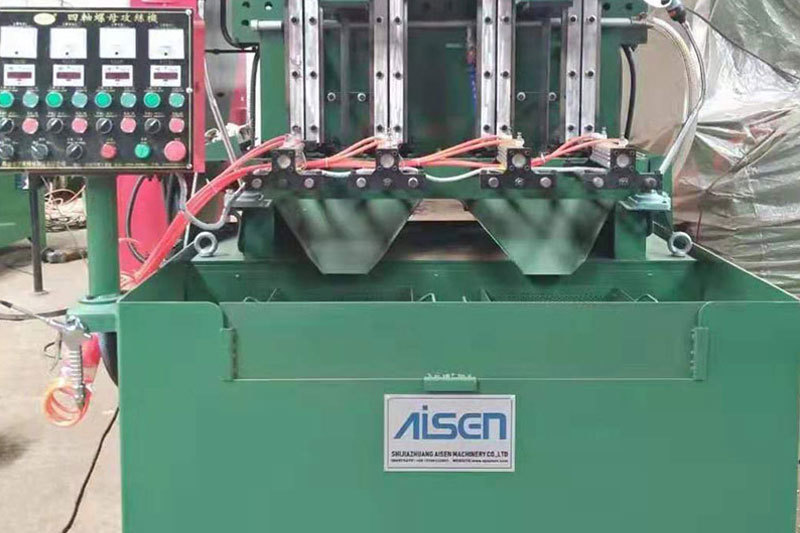
AISEN Four axis nut tapping machine ready for shipment to Russia
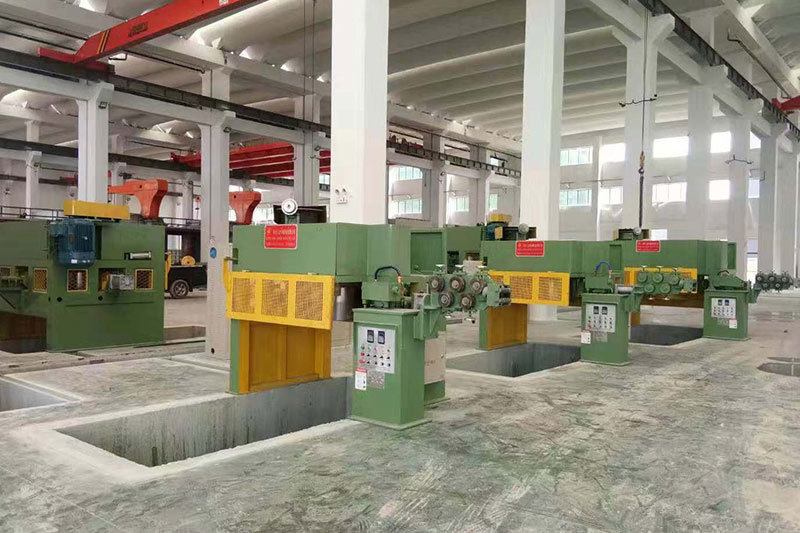
AISEN machinery inverted wire drawing machine
MESSAGES
We will contact you within one working day. Please pay attention to your email.
Qucik Link
Contact
Phone: +86-15100123091
E-mail: info@sjzaisen.com
Address: No.41 Zhaiying South Street, Yuhua District, Shijiazhuang City, Hebei Province China