

Cold forging press machine price factors: what drives cost in 2026
Nov 19,2026


Author:
Aisen Machinery

Article overview
This guide explains every factor that drives cold forging press machine costs in 2026 — from machine type and tonnage to tooling, US compliance, import duties, and total cost of ownership. Target audience: manufacturing and procurement engineers in the US market at the research and vendor comparison stage.
Table of contents
- 1. What is a cold forging press machine and why does price vary so widely?
- 2. Machine type and drive system: the biggest price fork in the road
- 3. Tonnage selection: how to calculate what you actually need
- 4. Tooling, die life, and hidden maintenance costs
- 5. US compliance, safety standards, and import tariffs in 2026
- 6. Total cost of ownership: energy, labor, and ROI analysis
- 7. Material compatibility and defect risk: what affects your true cost
- 8. Frequently asked questions
What is a cold forging press machine and why does price vary so widely?
A cold forging press machine is industrial metal forming equipment that uses high-tonnage mechanical or hydraulic force to shape wire rod or bar stock in precision dies at or near room temperature, producing near-net-shape, high-strength components without the need for external heat. The defining characteristic is that deformation occurs below the metal's recrystallization temperature, which increases surface hardness through work hardening and delivers dimensional tolerances that rival machined parts — often at a fraction of the per-piece cost in high-volume runs.
So why can two machines described as "cold forging presses" carry price tags that differ by 500% or more? The answer lies in a combination of factors that buyers frequently underestimate: drive system architecture, rated tonnage, the number of forming stations, control sophistication, compliance readiness for the US market, and the total tooling ecosystem required to run production. Each of those variables compounds the others.
According to recent 2026 market data, the global cold forging equipment market is valued at approximately $1.5 billion and is projected to reach $2.3 billion by 2033 at a CAGR of 6.3% (Persistence Market Research). In the US alone, the broader forging industry generates over $15 billion in annual sales and supports roughly 35,000 jobs across 38 states (Forging Industry Association). That scale means procurement engineers are operating in a buyer's market for information — but a surprisingly opaque one for pricing.
Why do so many buyers still end up over- or under-buying? Often because they anchor on machine purchase price alone and ignore downstream costs. The sections below address each cost driver in sequence, starting with the choice that shapes everything else: machine type.
Machine type and drive system: the biggest price fork in the road
The drive system of a cold forging press machine is the single largest determinant of its base price — and it also defines your operating cost profile for the machine's entire service life. There are five main categories active in the 2026 US market.
Mechanical vs. hydraulic: core trade-offs
Mechanical forging presses (crank or knuckle-joint designs) are typically the most cost-efficient entry point. A single-station mechanical cold forging press in the 100–300 ton range from an established forging machinery manufacturer generally lists between $80,000 and $250,000 FOB. Their strengths are high strokes per minute (up to 120+ SPM for fastener-class work), simple maintenance, and low energy cost per stroke. The limitation is a fixed stroke profile — once the crank geometry is set, you have limited flexibility to adjust ram speed mid-stroke.
Hydraulic forging presses offer full programmable stroke control and are preferred for complex cold extrusion press work, deeper draws, and materials that require carefully managed deformation rates. That flexibility comes at a price premium of roughly 30–60% over comparable-tonnage mechanical units, plus higher energy consumption and more complex hydraulic circuit maintenance.
Servo-driven presses and multi-station cold heading machines
Servo direct-drive presses represent the 2026 premium tier. By replacing the flywheel and clutch-brake system with a large-torque servo motor, these machines deliver programmable ram motion with energy recovery on the upstroke. Industry testing by multiple forging machinery manufacturers has shown 20–35% energy savings versus equivalent mechanical units at similar production rates. The trade-off: capital cost runs 2× to 3× a comparable mechanical press, and the servo drive and controller require specialized technicians for maintenance.
Multi-station cold heading machines — the workhorse of fastener and automotive small-part production — occupy their own pricing tier. A 4- to 6-die cold heading machine capable of producing M6–M16 bolts at 200+ parts per minute typically lists between $180,000 and $600,000, depending on wire diameter capacity, number of stations, and automation integration.
| Machine type | Typical tonnage range | Price range (USD, FOB) | Strokes per minute | Best for |
|---|---|---|---|---|
| Mechanical (crank/knuckle) | 60–800 ton | $80,000–$350,000 | 40–120 SPM | High-volume fasteners, simple shapes |
| Hydraulic forging press | 100–2,000 ton | $150,000–$900,000 | 8–40 SPM | Cold extrusion, complex geometries |
| Servo direct-drive press | 80–600 ton | $220,000–$1,100,000 | 20–90 SPM (programmable) | Precision forging, energy efficiency |
| Multi-station cold heading machine | Per-die: 30–150 ton | $180,000–$600,000 | 100–400 PPM | Fasteners, automotive small parts |
| Cold extrusion press (dedicated) | 200–1,500 ton | $200,000–$750,000 | 5–25 SPM | Shafts, pins, structural components |
Tonnage selection: how to calculate what you actually need
Underspecifying tonnage is the most expensive mistake a buyer can make — it means scrapped parts, die cracking, and ultimately a second machine purchase. Overspecifying wastes capital and raises your energy cost per piece permanently. Getting this right before you request a forging press for sale quote is non-negotiable.
The tonnage estimation formula
A widely used industry approximation for cold forging process tonnage is:
Required tonnage (tons) = Flow stress (ksi) × Projected area (in²) × Constraint factor
For practical US-market use: flow stress for cold-worked low-carbon steel is typically 80–120 ksi; for 304 stainless, 120–180 ksi; for 6061 aluminum, 30–55 ksi. The constraint factor ranges from 3 (open upsetting) to 5–7 (closed die forging press with high lateral constraint). A worked example:
- Part: M12 hex bolt head, projected area ≈ 0.28 in²
- Material: medium-carbon steel, flow stress = 100 ksi
- Operation: closed die upsetting, constraint factor = 5
- Required tonnage = 100 × 0.28 × 5 = 140 tons
- Apply 20% safety margin → specify minimum 168 tons; select a 200-ton machine
Always verify this estimate against the die design and lubrication system (phosphate + soap coating for steel is standard in the cold forging process). Actual press requirements can deviate 15–25% from theoretical values based on billet prep quality and die geometry tolerances.
Matching stations to part complexity
Single-station presses work for straightforward upsetting operations. The moment your part requires two or more sequential deformations — say, a pre-form followed by final heading — you're looking at a multi-station industrial forging machine. Each additional station adds roughly $40,000–$80,000 to the base machine cost and complicates your tooling budget proportionally. For new product introductions, factor in a 10–16 week die fabrication and validation lead time before first production parts.
Tooling, die life, and hidden maintenance costs
Tooling is where many buyers get a rude awakening. The machine purchase price is only the beginning — die sets for a precision forging machine can add $15,000 to $120,000 per part family, and that investment repeats every time a die set reaches end of life.
Die life expectations by material and load
For cold forging equipment running low-carbon steel at moderate loads, well-made tool steel dies (D2, M2, or carbide inserts for the most wear-intensive punch faces) typically achieve 150,000 to 500,000 hits before requiring regrind or replacement. Running stainless steel or high-alloy materials cuts that figure dramatically — expect 50,000–120,000 hits in many stainless applications. Aluminum, by contrast, is relatively gentle on tooling and can yield 500,000+ hits with proper lubrication.
"Die failure is rarely sudden — it's the result of accumulated micro-fatigue from inadequate lubrication, misalignment, or running above the rated load threshold. Predictive maintenance programs that monitor press load signatures in real time can extend die service life by 20–40%." — Industry consensus among forging machinery manufacturers and tooling engineers, 2026
Maintenance schedule and consumable cost
A realistic annual maintenance budget for a mid-range cold forging press machine (200–400 ton mechanical) running two shifts includes: die regrind/replacement ($30,000–$80,000), lubricant and phosphating chemicals ($8,000–$20,000), clutch and brake wear parts ($5,000–$15,000), and hydraulic seals or servo drive inspections as applicable. Add 10–15% of machine purchase price per year as a general maintenance reserve for older units. Servo-driven presses generally reduce mechanical wear items but shift cost toward electronics and software support contracts.
US compliance, safety standards, and import tariffs in 2026
This is the area most online content on cold forging equipment ignores entirely — and it can add 8–20% to your total landed cost if not planned for upfront.
OSHA, ANSI, and NFPA requirements
Any cold forging press machine installed in a US facility must comply with OSHA 29 CFR 1910.212 (general machine guarding), which mandates point-of-operation guards appropriate to the press type and stroke characteristics. Beyond the federal baseline, ANSI B11.1 (mechanical power presses) and ANSI B11.19 (safeguarding) set performance criteria for guards, two-hand controls, light curtains, and presence-sensing devices. For electrical systems, NFPA 79 (electrical standard for industrial machinery) governs panel design, grounding, and disconnect requirements — particularly relevant when integrating imported machines into US facility electrical infrastructure running at 480V/60Hz (versus the 380V/50Hz common in Asian manufacturing).
Compliance retrofits on imported metal forming equipment — adding ANSI-compliant guards, rewiring for NFPA 79, and installing UL-listed control components — typically cost $12,000–$45,000 per machine depending on the level of modification required. Budget for this before the machine ships, not after it arrives on your floor.
Section 301 tariffs and import lead times
As of 2026, cold forging and metal forming equipment imported from China remains subject to Section 301 tariffs. Depending on HTS classification, applicable rates range from 7.5% to 25% of the declared machine value — a significant line item on a $300,000 press. Ocean freight from East Asia to a US West Coast port adds $8,000–$18,000, with transit times of 25–40 days. Installation, commissioning, and operator training by the OEM's technicians typically add $10,000–$30,000 and require scheduling 4–10 weeks in advance. Spare parts availability and response time from an overseas forging machinery manufacturer is a critical but often underweighted factor: for US operations, a 3–5 day local spare parts response is the practical benchmark that minimizes downtime risk.
For detailed background on the cold forging process and its materials science foundations, the Wikipedia entry on forging provides a solid technical primer.
Total cost of ownership: energy, labor, and ROI analysis
Price on a quotation sheet is a starting point, not a decision point. For any industrial forging machine acquisition, the 5-year total cost of ownership (TCO) is the number that actually determines profitability.
Energy consumption benchmarks
A 200-ton mechanical forging press running at 80 SPM consumes approximately 22–35 kW in continuous production. At the US industrial average electricity rate of around $0.085/kWh and two-shift operation (4,000 hours/year), that translates to roughly $7,500–$12,000 per year in electricity alone. A hydraulic forging press of similar capacity draws 45–65 kW under load — nearly double. A servo-driven equivalent comes in at 15–25 kW with energy recovery, making the energy case for servo drives compelling over a 7–10 year machine life despite higher upfront cost.
ROI calculation framework
The table below illustrates a simplified 5-year TCO comparison for three machine types producing the same fastener part at 200,000 units/month. Actual figures vary by application — treat these as directional benchmarks.
| Cost element | Mechanical press | Hydraulic press | Servo press |
|---|---|---|---|
| Machine purchase price | $180,000 | $280,000 | $420,000 |
| Tariff + freight + install | $52,000 | $68,000 | $75,000 |
| 5-year energy cost | $48,000 | $90,000 | $32,000 |
| 5-year maintenance + tooling | $220,000 | $265,000 | $195,000 |
| 5-year TCO | $500,000 | $703,000 | $722,000 |
| Cost per 1,000 parts (5yr) | $41.70 | $58.60 | $60.20 |
Of course, there are situations where this arithmetic inverts. If your part mix requires frequent changeovers, the servo press's quick-change capability and programmable profiles can reduce setup scrap and downtime enough to close the TCO gap — or reverse it entirely. Context matters enormously.
For engineers who want to explore the academic and engineering literature on force requirements and material behavior, the cold forging engineering overview on ScienceDirect offers peer-reviewed references across process variables.
Material compatibility and defect risk: what affects your true cost
Not all materials behave the same under cold forging conditions — and choosing the wrong machine parameters for your material is a direct path to cracked billets, folded flash, and scrapped production runs. These defects don't just waste material; they damage dies and consume press capacity.
Material-by-material guide
Low-carbon and medium-carbon steels (1008, 1018, 1035) are the standard feedstock for cold heading machines and cold extrusion presses. They respond well to phosphate-soap lubrication and tolerate high reduction ratios (up to 70% area reduction per pass in favorable geometries). Alloy steels (4140, 4340) are formable but demand tighter billet prep tolerances and typically limit reduction ratios to 40–55% before intermediate annealing is required.
Aluminum alloys — 1100, 6061, 2024 — are increasingly important in 2026 as EV lightweighting drives demand for aluminum cold forged structural components. Their lower flow stress reduces required tonnage, but aluminum's tendency to adhere to dies makes lubrication selection critical. Zinc stearate or dedicated aluminum forging lubricants are standard. Die surface treatments (TiN, TiAlN PVD coatings) are worth the additional $1,500–$4,000 per die set in aluminum applications.
Stainless steel (304, 316, 17-4 PH) is the most demanding cold forging feedstock. Its high work-hardening rate means flow stress rises sharply with deformation, tonnage requirements can exceed initial estimates by 30–50%, and die wear rates are aggressive. For stainless production, budget for shorter die life and higher lubrication costs — and ensure your press tonnage estimate includes a minimum 25% safety margin above the calculated figure.
Common defects and how to prevent them
Three defects account for the majority of cold forging scrap in US production environments:
- Surface cracking (chevron cracking): Caused by excessive tensile stress during extrusion, often from too aggressive a reduction ratio or insufficient lubrication. Remedy: reduce per-pass reduction, verify billet spheroidize anneal quality.
- Folding: Occurs when forging metal forming equipment flash or excess material from an earlier operation folds into the final surface. Remedy: adjust billet volume to die cavity volume ratio, verify pre-form die geometry.
- Die fill insufficiency: Underfilled corners or radii, usually indicating tonnage shortfall, lubricant breakdown at pressure, or die wear past serviceable limits. Remedy: verify actual press load with a strain gauge measurement; replace worn punch or die insert.
It's worth noting — and this is an industry misconception that costs manufacturers real money — that cold forging does not eliminate the need for pre-treatment. Spheroidize annealing of steel billets followed by phosphate conversion coating and soap lubricant application is mandatory for most steel cold forging operations. Skipping or shortcutting this step to reduce cycle time is one of the fastest ways to destroy tooling and produce scrap.
Frequently asked questions
Q: What is the typical price range for a cold forging press machine in the US market in 2026?
A: Entry-level mechanical cold forging presses start around $80,000–$150,000 FOB for 60–150 ton units. Mid-range hydraulic and multi-station machines run $200,000–$600,000. Servo-driven precision forging machines and large-tonnage closed die forging presses can exceed $1 million. Add 25–35% for tariffs, freight, compliance retrofits, and installation to arrive at your true landed cost.
Q: How do I calculate the tonnage I need for my cold forging application?
A: Use the formula: Required tonnage = Flow stress (ksi) × Projected area (in²) × Constraint factor (3–7 depending on die confinement). Then apply a 20% safety margin and round up to the next standard machine tonnage. For stainless steel, use a 25–30% safety margin due to rapid work hardening. Always verify with your tooling supplier before finalizing the machine specification.
Q: What US safety standards must a cold forging press machine comply with?
A: At minimum: OSHA 29 CFR 1910.212 for machine guarding, ANSI B11.1 for mechanical power presses, ANSI B11.19 for safeguarding performance, and NFPA 79 for industrial machine electrical systems. Imported machines often require guard modifications and electrical rework for US compliance. Budget $12,000–$45,000 for retrofits and factor this into your total acquisition cost.
Q: How long do cold forging dies last, and how much does replacement cost?
A: Die life depends heavily on material and load. For low-carbon steel at normal loads: 150,000–500,000 hits. For stainless steel: 50,000–120,000 hits. For aluminum: 500,000+. Replacement die sets typically cost $15,000–$120,000 per part family depending on complexity. Carbide inserts and PVD-coated punches extend life significantly and are cost-effective for high-volume runs.
Q: Is cold forging always cheaper than CNC machining?
A: Not always — and this is one of the most common misconceptions. Cold forging delivers superior per-piece economics at high volumes (typically 50,000+ parts per year per part number), where tooling cost can be fully amortized. For small batches or prototype runs, the die fabrication investment ($15,000–$120,000) makes CNC machining considerably more cost-effective. Always evaluate break-even volume before committing to cold forging tooling.
Selecting the right cold forging press machine in 2026 is ultimately a systems decision — not a catalog selection. Machine type, tonnage, tooling ecosystem, US compliance readiness, import cost structure, and 5-year TCO all interact. The buyers who get the best outcomes are those who build a detailed cost model before the first RFQ, involve their tooling supplier in machine specification, and treat compliance and local service as first-tier selection criteria rather than afterthoughts. The data in this guide provides the framework; the final specification should always be validated against your specific part geometry, material, and production volume requirements.
PREVIOUS:
Get A Quote
We will contact you within one working day. Please pay attention to your email.
Latest News
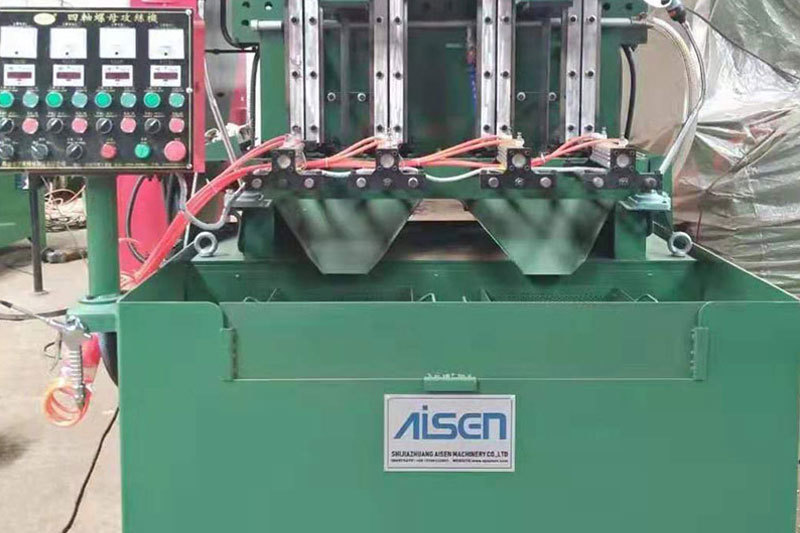
AISEN Four axis nut tapping machine ready for shipment to Russia
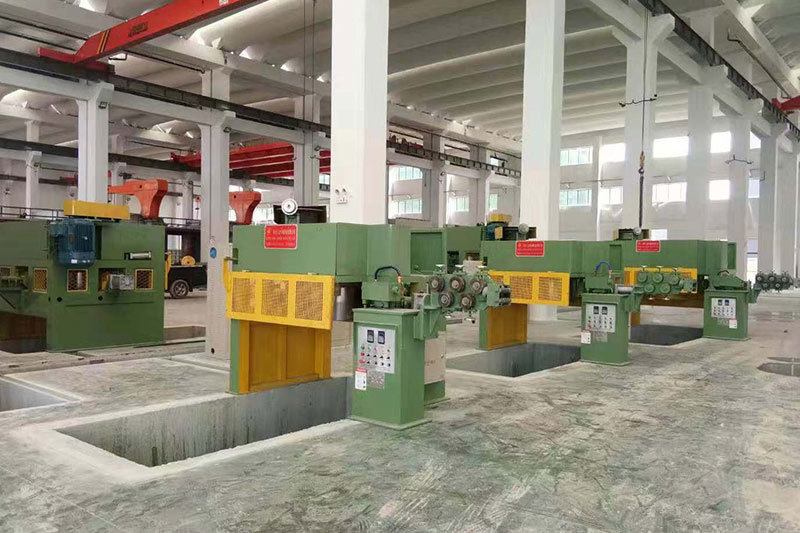
AISEN machinery inverted wire drawing machine
MESSAGES
We will contact you within one working day. Please pay attention to your email.
Qucik Link
Contact
Phone: +86-15100123091
E-mail: info@sjzaisen.com
Address: No.41 Zhaiying South Street, Yuhua District, Shijiazhuang City, Hebei Province China