

Copper wire drawing machine: how it works and what to check
Nov 06,2026


Author:
Aisen Machinery

Copper wire drawing is a cold reduction process: rod is pulled through a series of dies, each marginally smaller than the last, until the wire reaches the gauge the customer ordered. Wire drawing equipment is the full set of machinery that makes this happen — pay-off, drawing line, dies, lubrication circuit, capstans, annealer and spooler, matched so the wire leaves straight, bright and in tolerance. Most buyers get the machine right and the system wrong. What follows is how the process really works, and what to check before you commit ₹20 lakh or ₹2 crore.
Article overview
A buyer-focused walkthrough of copper wire drawing for Indian manufacturers: process mechanics, configuration choice, indicative rupee pricing, energy per tonne, maintenance routines and the pre-purchase checks that separate a machine that pays back in three years from one that eats margin for a decade.
Table of contents
- 1. What a copper wire drawing machine actually does
- 2. How the drawing process runs, step by step
- 3. Dry or wet, single or multi: choosing the right configuration
- 4. What to check before you sign a purchase order
- 5. What wire drawing equipment costs in India in 2026
- 6. Installation, maintenance and the fault-finding list
- 7. New, second hand or imported: the 2026 buying decision
What a copper wire drawing machine actually does
A copper wire drawing machine pulls annealed copper rod through a die smaller than the rod, so the metal is squeezed down and stretched longer. Nothing is machined off. The reduction generates intense heat at the die contact, and every design decision on the machine — capstan cooling, lubricant flow, speed control, annealing — exists to manage that heat without tearing the wire surface. That single sentence explains 80% of the arguments engineers have with suppliers.
The basic mechanics of reduction
Copper rod typically arrives at 8 mm from a continuous cast rod mill. Each pass takes roughly 18–25% area reduction on fine wire and up to 30% on coarse rod; push harder and you invite centre-line cracking, die pick-up and a wire that fails later in the customer's insulation line. A workable schedule from 8 mm to 0.5 mm usually needs 12 to 16 passes, depending on how the capstans are laid out.
Die geometry matters as much as the machine frame. Approach angle, bearing length and back relief decide how much pulling force you need; a bearing worn by a few microns changes diameter and surface finish together. On slip-type machines the capstans run faster than the wire, and that slip is the heat source most buyers never measure. Non-slip straight-line machines run wire at capstan speed with dancers or accumulators between passes — faster, kinder to the surface, and noticeably more expensive. The underlying mechanics are well covered in the standard wire drawing process literature, and worth reading before you argue about speeds.
Why copper behaves differently from steel
Copper work-hardens fast. Pull it past roughly 40% cumulative reduction and it stops behaving like soft copper — conductivity slips, elongation drops, and the customer's bunching or enamelling line notices immediately. That is precisely why an inline annealing wire drawing machine exists: it recrystallises the wire after the final pass or between passes so the spool arrives soft and bright. A conventional steel wire drawing line often tolerates more cold work before an inter-anneal becomes unavoidable.
Then there is heat management. Copper conducts heat away from the die zone so efficiently that the wire itself carries it into the spooler, the dancer and the lubricant tank. On a 24-wire fine drawing installation we monitored, an 8°C rise in emulsion temperature alone was enough to push break rates up within a shift. So why do so many Indian mills still test lubricant concentration once a week and check temperature never?
How the drawing process runs, step by step
The sequence is fixed: pay-off, pre-cleaning, drawing through successive dies, annealing if the specification demands it, cooling, diameter gauging, and spooling under controlled tension. Get the order right and the machine behaves; skip a stage and the symptom shows up three steps later, which is what makes fault-finding so confusing on the shop floor.
From 8 mm rod to 0.2 mm wire: the sequence
- Pay-off and cleaning: rod unwinds from a coil stand; mechanical descaling or a chemical dip removes oxide before the first die.
- First-pass breakdown: the bull block or coarse capstan takes the largest reduction, where pulling force is highest.
- Intermediate drawing: successive dies with lubricant flooding each one; tension between capstans must stay balanced.
- Fine drawing: smaller dies, higher speed, tighter temperature control, usually synthetic diamond tooling.
- Inline annealing: resistance or induction heating plus quench recrystallises the wire and restores elongation.
- Cooling and drying: air wipe and cooling tunnel remove moisture so the spool does not spot or oxidise.
- Gauging and spooling: laser diameter measurement, break detection, then winding at controlled tension.
What happens inside the die?
The wire enters a bell-shaped entry, is compressed through the approach cone, sized in the bearing land, and relaxes through the back relief. Contact pressure in the approach zone is extreme, and the lubricant film — not the metal — is what prevents welding between wire and die. A wire drawing die is therefore a consumable with a predictable life, and it fails faster when lubricant pH, concentration or filtration drift.
A broader engineering wire drawing overview confirms the same relationship between die pressure, friction and surface integrity. In practice, tungsten carbide dies handle coarse and intermediate passes, while synthetic diamond dominates fine wire. Expect carbide dies to run several hundred tonnes between re-polishes on clean rod, and diamond dies to deliver tens to hundreds of kilograms per wire size depending on filtration and speed. Treat those as planning ranges, not guarantees — your rod supplier changes them.
Dry or wet, single or multi: choosing the right configuration
Choose wet for anything below roughly 1.6 mm, dry for coarse and intermediate sizes, multi-wire when your monthly volume justifies the tooling complexity, and bull block when the job is heavy breakdown. Configuration follows wire size and tonnage — not the showroom. Buyers who reverse that order end up with an oversized machine running at half speed.
Dry wire drawing machine vs wet wire drawing machine
A dry wire drawing machine draws through individual die boxes with dry soap or low-viscosity lubricant, and it suits rod breakdown and intermediate sizes where heat can dissipate and the operator can see each pass. A wet wire drawing machine submerges the dies and capstans in emulsion, giving superior cooling and surface finish at high speed — mandatory for fine wire and for anything feeding an enamelling line. Capital cost is comparable at the small end and diverges sharply once you add filtration, cooling towers and emulsion management.
Where bull block and multi-wire machines fit
A bull block wire drawing machine — one large water-cooled capstan with a single die — is still the most forgiving way to break down 8 mm rod, and second-hand units are everywhere in Gujarat and Tamil Nadu. A multi-wire drawing machine splits the same output across 8, 16 or 24 wires running in parallel; output per square metre of floor goes up dramatically, but so does the discipline required in lubricant filtration and die management. A fine wire drawing machine with inline annealing closes the loop for sizes down to 0.05 mm.
| Configuration | Typical size range | Line speed | Energy (kWh/t) | Indicative price (INR) |
|---|---|---|---|---|
| Bull block, single die | 8.0 – 3.0 mm | 2–5 m/s | 45–70 | ₹6 – 15 lakh |
| Dry intermediate, 6–10 die | 3.0 – 0.8 mm | 8–18 m/s | 70–110 | ₹12 – 28 lakh |
| Wet multi-wire, 16-wire | 1.6 – 0.2 mm | 20–30 m/s | 95–145 | ₹28 – 55 lakh |
| Fine wire + inline annealing | 0.4 – 0.05 mm | 25–35 m/s | 260–400 | ₹45 lakh – 1.2 crore |
Figures are indicative 2026 ex-works bands collected from Indian dealer and importer quotations, excluding GST, installation and spooler options. Energy figures assume 8 mm ETP rod input and vary with reduction schedule.
What to check before you sign a purchase order
Verify output on your own rod, with your own die schedule, for a full shift — then check lubricant temperature, break count and spool-to-spool diameter variation. A machine demonstrated on premium rod at 60% speed tells you almost nothing about what it will do on a Monday morning in your plant.
Nameplate output vs real output
Most suppliers quote maximum mechanical speed multiplied by a theoretical cross-section. Real output is lower, and the gap is where margins disappear. Ask for tonnes per shift at a stated wire size, not metres per second. Ask what the machine does when ambient hits 42°C in a Nagpur summer — cooling capacity, not motor rating, is usually the binding constraint. And ask how the supplier defines availability, because a machine down for die changes is not producing.
The three things buyers under-specify: die, lubricant and annealing
Die inventory is quoted as an accessory rather than a cost line, yet a full die set for a 16-wire wet line can run several lakh rupees and re-polishing cycles set your real unit cost. Lubricant is treated as an afterthought until the first emulsion rancidity problem shuts the line. And annealing is routinely dropped to hit a price target, then added back later at higher cost. Specify all three in the enquiry — a supplier who resists that conversation is telling you something useful.
"Die wear is not a consumable problem, it is a process-control problem. A die that fails early is usually reporting bad lubricant concentration, a rough rod surface or insufficient cooling — not a bad die." — a view repeated by die application engineers and mill managers across the Indian wire industry.
What wire drawing equipment costs in India in 2026
Budget ₹6–15 lakh for a bull block, ₹12–28 lakh for a dry intermediate line, ₹28–55 lakh for a 16-wire wet machine and ₹45 lakh to ₹1.2 crore for a fine wire line with inline annealing. Those are the numbers for the machine. Your actual project cost will be 25–40% higher once you add foundation work, cooling, spoolers and the die set.
Price bands by machine type
The widely searched question — wire drawing machine price in India — has no single answer, because a 24-wire machine and a single-die bull block share a category name and nothing else. Imported metal wire drawing equipment from China typically lands 20–30% below European equivalents before duty, and 15–25% below comparable Indian builds on sophisticated wet lines. On standard dry machines, Indian manufacturers are now broadly price-competitive with imports once you load freight, duty and commissioning.
The costs that never appear in the quotation
Take a mid-size plant buying a ₹35 lakh wet line. Over five years, electricity at 120 kWh per tonne on 900 tonnes a year, at ₹8.20 per unit, is roughly ₹44 lakh — more than the machine. Die and re-polishing costs, spooler downtime and one unscheduled week of lost production usually add another ₹15–25 lakh. This is where payback is won or lost.
| Cost head | 5-year estimate | Share of total |
|---|---|---|
| Machine capital (₹35 lakh) | ₹35 lakh | ~30% |
| Electricity at 120 kWh/t | ₹44 lakh | ~38% |
| Dies, lubricant, spares | ₹14 lakh | ~12% |
| Downtime and rework | ₹12 lakh | ~10% |
| Labour and maintenance | ₹11 lakh | ~10% |
Installation, maintenance and the fault-finding list
Get the foundation, alignment and lubricant circuit right in week one, and the next five years are quiet. Rush commissioning and you will chase the same defects for months. A drawing line is like a staircase: every step must be the same height, and one wrong riser trips everyone walking up it.
Daily and weekly checks that pay for themselves
- Emulsion concentration, pH and temperature — twice a shift, logged, not estimated.
- Die box flow and filter differential pressure — daily; a clogged filter is a break waiting to happen.
- Capstan wear grooves and guide alignment — weekly; grooves change tension silently.
- Annealer contact wheel and atmosphere — weekly; it decides surface brightness.
- Spool tension and traverse — daily; bad winding becomes a customer complaint.
When the wire keeps breaking: a short diagnostic list
Breaks at the die usually mean lubricant failure or a chipped bearing. Breaks between capstans point to tension mismatch or a worn groove. Breaks inside the annealer suggest contact-wheel arcing or insufficient quench. Breaks at the spooler are almost always traverse or tension control. Record where the break happens for a week and the pattern will name the culprit before any service engineer arrives.
New, second hand or imported: the 2026 buying decision
Buy new Indian for standard sizes and fast spares; buy imported when the specification genuinely exceeds local capability; consider second hand only with a documented inspection and a spares plan. The 2026 market rewards buyers who price the whole lifecycle, not the invoice.
India-made vs imported equipment
Indian wire manufacturing machinery has closed much of the gap on dry machines and mid-range wet lines, and the service advantage is real: a spare die box in three days beats a container in eleven weeks. Chinese suppliers win on fine-wire automation and price; German and Italian builders still lead on inline annealing control and data integration. Factor duty, freight, commissioning support and the true cost of a breakdown before comparing quotations. Mainstream wire drawing equipment literature is blunt about this: uptime, not purchase price, decides profitability.
What to verify before buying a second hand wire drawing machine
On a second hand wire drawing machine, measure capstan runout, inspect die box bores for corrosion, run it loaded for two hours and watch the annealer. Ask for the maintenance log and the original drawing schedule. A used machine with good mechanicals and obsolete controls can still be a bargain — retrofit a VFD and a modern break detector and you have a line that competes. A used machine with a worn gearbox is a project, not a purchase.
One Bengaluru cable-component maker we worked with replaced a 20-year-old dry line with a 12-wire wet machine and a proper filtration skid. Their own production logs showed break rates down by roughly a third and surface rejections falling from about 4% to under 1.5% within two quarters; energy per tonne dropped around 18%. Those are their numbers from their logs, not a controlled trial — but the direction matches what most retrofits of this kind deliver. India's cable demand, with the market estimated near USD 23 billion in 2026 and growing at almost 9.4% a year to 2032, keeps justifying that kind of capital.
For 2026, the differentiators are unglamorous: laser diameter gauging, break detection, connected dashboards that let one operator watch four lines, IE5 motors with VFDs, and annealing control tight enough to hold elongation within a narrow band. Automation is no longer a luxury item on a new line — it is what makes the labour maths work.
My honest advice after walking through dozens of these plants: decide your wire sizes and monthly tonnage first, then let the configuration follow. Wire drawing equipment bought to a specification beats wire drawing equipment bought to a budget, every time — and the gap shows up in year three, not year one.
Frequently asked questions
Q: What is the difference between dry and wet copper wire drawing?
A: Dry machines draw through individually lubricated die boxes and suit rod breakdown and intermediate sizes above roughly 0.8 mm. Wet machines submerge dies and capstans in emulsion, giving better cooling and surface finish, which is essential below 1.6 mm and for wire feeding an enamelling line.
Q: What does a copper wire drawing machine cost in India?
A: Indicatively, ₹6–15 lakh for a bull block, ₹12–28 lakh for a dry intermediate line, ₹28–55 lakh for a 16-wire wet machine, and ₹45 lakh to ₹1.2 crore for fine wire with inline annealing, ex-works and before GST. Always confirm with a written quotation.
Q: How much power does wire drawing consume per tonne?
A: Coarse bull block drawing typically uses 45–70 kWh per tonne, wet multi-wire lines 95–145 kWh per tonne, and fine wire with inline annealing 260–400 kWh per tonne. Actual figures depend on rod input, reduction schedule and motor efficiency.
Q: Is a second hand wire drawing machine worth buying?
A: Yes, if capstan runout is within tolerance, die box bores are clean and it runs loaded for two hours without annealing faults. Budget for controls retrofit and verify spare part availability before committing, since gearbox wear is expensive to reverse.
PREVIOUS:
Get A Quote
We will contact you within one working day. Please pay attention to your email.
Latest News
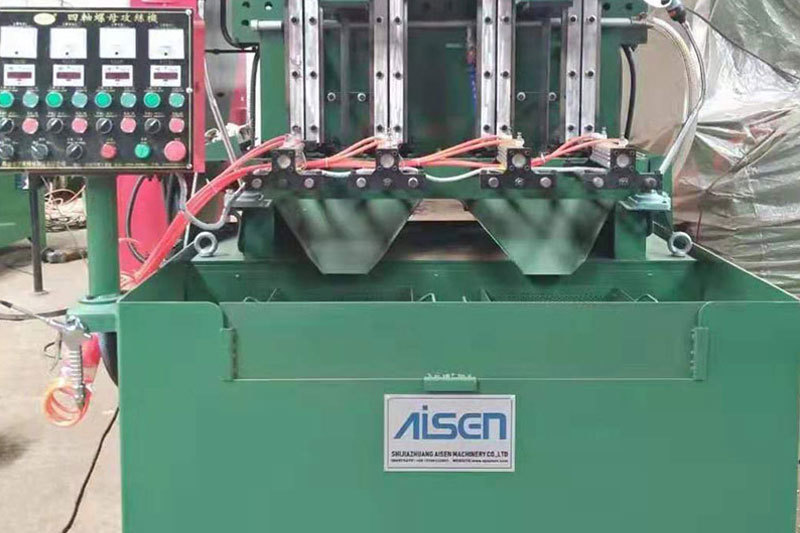
AISEN Four axis nut tapping machine ready for shipment to Russia
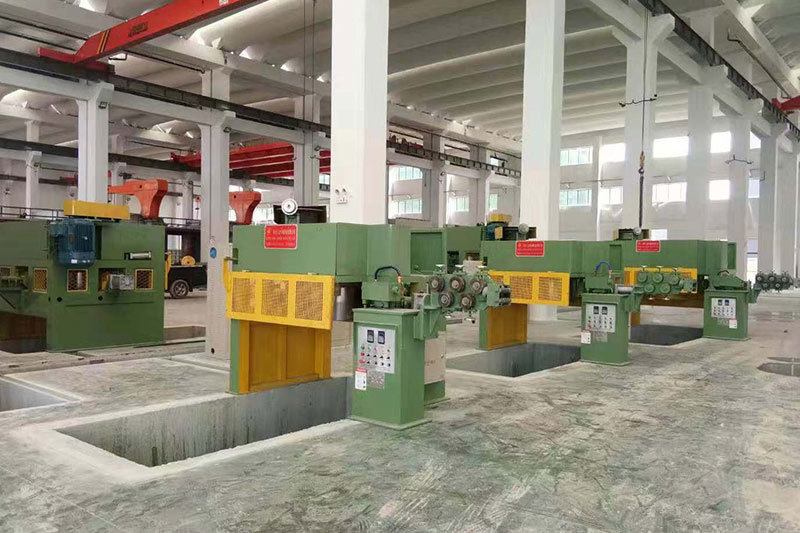
AISEN machinery inverted wire drawing machine
MESSAGES
We will contact you within one working day. Please pay attention to your email.
Qucik Link
Contact
Phone: +86-15100123091
E-mail: info@sjzaisen.com
Address: No.41 Zhaiying South Street, Yuhua District, Shijiazhuang City, Hebei Province China