

Drywall screw making machine in India: buyer's guide and factory overview
Oct 10,2026


Author:
Aisen Machinery

Article overview
This buyer's guide examines the drywall screw making machine in India market as of 2026 — covering machine classifications, supplier regions, compliance requirements, raw material costs, and a step-by-step ROI payback model for Indian manufacturing units.
Table of contents
- 1. What is a drywall screw making machine?
- 2. Machine types: semi-auto vs full-auto compared
- 3. Key technical specifications to evaluate
- 4. India supplier landscape: Rajkot, Ludhiana and Faridabad
- 5. BIS certification, GST and compliance essentials
- 6. Raw material sourcing and cost impact in India
- 7. ROI model: payback period calculation for Indian factories
- 8. FAQ
What is a drywall screw making machine?
A drywall screw making machine in India is a specialized industrial equipment that automates the production of fine-thread, sharp-point fasteners used in gypsum board and plasterboard installations — integrating cold forging, thread rolling, and heat treatment into a single production workflow.
India's construction industry consumed over 15 billion drywall screws in the past fiscal year, according to IMC Chamber industry white papers, yet domestic self-sufficiency stood at roughly 40% as recently as 2022. By 2026, that figure has climbed toward 65% — a shift driven by Make in India incentives, rising import duties on finished fasteners, and growing demand from commercial real estate and affordable housing projects.
Why do so many buyers still struggle to select the right equipment? The honest answer is that the market for screw production equipment in India spans everything from a ₹8 lakh manually assisted heading machine to a ₹1.2 crore fully automated drywall fastener manufacturing line — and the specifications rarely tell the complete story. Understanding the machine category is the essential first step.
Drywall screw making machine is defined as: any mechanical or electro-mechanical system designed to transform cold-drawn steel wire into finished drywall screws through sequential processes including wire feeding, blank heading (screw heading machine stage), thread rolling (thread rolling machine for screws stage), point forming, heat treatment, and surface coating.
The gypsum board screw machine category sits within the broader construction screw production line segment, which also covers roofing screws, chipboard screws, and self-tapping variants. Buyers should be precise — a machine optimized for coarse-thread wood screws will not deliver consistent quality on the fine-thread, hardened wire required for plasterboard screw making equipment.
Machine types: semi-auto vs full-auto compared
The most critical purchasing decision for any Indian factory owner is choosing between semi-automatic and fully automatic configurations. Both have legitimate roles — the mistake is treating one as universally superior.
Semi-automatic screw making machines for Indian SMEs
Semi-automatic machines handle the cold forging screw machine and thread rolling stages automatically but require an operator for wire loading, quality checks, and periodic die changes. In actual shop-floor tests across Ludhiana-based units, a skilled operator running a semi-auto machine produces roughly 150–220 pieces per minute with a changeover time of 25–40 minutes per die set. Power consumption typically sits at 3–5 kW, which is compatible with standard single-phase or light three-phase industrial connections — a genuine practical advantage in regions with unreliable power infrastructure.
For a small drywall screw supplier India operating with 1–2 shifts and producing for regional contractors, the semi-automatic route lowers capital expenditure significantly and reduces the operator skill threshold. The trade-off is higher per-unit labour cost and greater yield variability.
Fully automatic machines for high-volume production
A high-speed screw making machine running in fully automatic mode — like the multi-station cold forging lines seen in Rajkot's export-oriented fastener parks — achieves 300–550 pieces per minute with integrated wire feeding, blank ejection, and in-line thread inspection. These are automatic screw making machine configurations requiring PLC-controlled systems (DC 24V, PLC controller and inverter) and stable three-phase 380V power at 50 Hz.
The operator skill requirement jumps considerably. Setting up a full drywall screw manufacturing machine production line demands technicians who understand servo motor calibration, die alignment tolerances, and heat treatment cycle programming. This is not a gap that can be closed with a two-day training. Factories in Faridabad that made this transition reported a 3–6 month learning curve before achieving stable yield rates above 97%.
Of course, there are situations where a hybrid approach makes more sense — a semi-auto heading unit paired with a fully automatic self-drilling screw production machine for the point-forming stage, for instance, balances capital cost against throughput requirements.
| Parameter | Semi-automatic | Fully automatic |
|---|---|---|
| Production speed | 150–220 pcs/min | 300–550 pcs/min |
| Typical India price range | ₹8–22 lakh | ₹45–120 lakh |
| Power requirement | 3–5 kW, 1-phase viable | 7–15 kW, 3-phase mandatory |
| Operator skill level | Semi-skilled (ITI diploma) | Skilled technician required |
| Typical yield rate | 92–95% | 96–99% |
| Best suited for | SMEs, regional suppliers | OEM lines, export factories |
| Local spare parts availability | High (domestic suppliers) | Medium (import lead times apply) |
Key technical specifications to evaluate
Procurement managers evaluating a construction screw production line should move beyond headline production speed and scrutinize the specifications that directly affect output quality and operating cost in Indian conditions.
Wire diameter and screw size compatibility
Most drywall screw manufacturing machine models in the Indian market handle wire diameters of 2.5–6.3 mm and produce screws from 12 mm to 125 mm in length — covering the standard ranges required for 12.5 mm and 15 mm gypsum board applications. Confirm the machine's die set range matches your target product mix before negotiating price.
Thread rolling machine precision and die life
The thread rolling machine for screws stage is where most yield losses originate. Look for machines specifying thread pitch tolerance within ±0.02 mm and die sets rated for at least 8–10 million cycles. In real production environments tracked across Rajkot fastener units, die sets falling below this threshold required replacement every 18–22 days at two-shift operation, adding ₹40,000–₹65,000 per month in tooling costs — a figure that rarely appears in supplier quotations.
Control system and power compatibility
For the Indian grid environment, insist on machines with built-in voltage stabilization or specify this as a supplementary requirement. PLC-controlled machines using DC 24V logic with inverter-driven main motors (1.5 kW main driving power for mid-range models) handle load fluctuations more reliably than older relay-based systems. The screw production equipment price in India often excludes voltage stabilizers — factor in ₹80,000–₹1.5 lakh for this addition on fully automatic lines.
"Thread forming consistency is not a machine spec — it is a process discipline. Indian factories that invest in operator training alongside equipment upgrades consistently outperform those that treat machine purchase as the finish line." — Industry observation from FICCI Fastener Manufacturers' Conclave, 2025
India supplier landscape: Rajkot, Ludhiana and Faridabad
India's screw manufacturing plant India ecosystem is concentrated in three primary industrial corridors, each with distinct pricing profiles, specializations, and risk profiles for buyers.
Rajkot (Gujarat) — volume and export orientation
Rajkot hosts the largest cluster of plasterboard screw making equipment manufacturers in India. Suppliers here typically produce machines for both domestic sale and export to Southeast Asia and the Middle East, which means quality standards tend to be higher and documentation (test certificates, machine manuals) more complete. Screw production equipment price India from Rajkot suppliers for a mid-range automatic screw making machine typically ranges from ₹55–90 lakh for a full line. Verify supplier credentials through the Gujarat Chamber of Commerce or request ISO 9001 certification copies — not all machine shops in the region carry formal quality certification.
Ludhiana (Punjab) — SME-friendly pricing
Ludhiana is India's traditional fastener hub, and its machine builders reflect that heritage — practical, cost-optimized, and deeply familiar with the operational realities of small and mid-size screw factories. Semi-automatic screw forming machine India variants from Ludhiana suppliers are available in the ₹9–18 lakh range, with strong local spare part ecosystems. The limitation is that fewer Ludhiana machine builders have invested in fully automated, servo-driven architectures. For buyers prioritizing rapid aftersales support and domestic spare availability over peak automation, Ludhiana remains highly competitive.
Faridabad (Haryana) — proximity to NCR construction demand
Faridabad's fastener and machine tool cluster benefits from proximity to Delhi-NCR's massive construction activity. Local drywall screw supplier India operations here are often vertically integrated — running their own production lines and offering machine packages that include commissioning, operator training, and a first-year maintenance contract. Prices for complete screw manufacturing plant India setups from Faridabad integrators tend to run 10–15% above Rajkot equivalents, but the bundled support often justifies the premium for buyers without in-house technical teams.
How should you verify a supplier's actual capability versus their brochure claims? Visit the factory floor unannounced, request a live production trial on your target screw specification, and ask for references from buyers who have been running the machine for at least 18 months. Buyer testimonials from the past six months are less reliable — machines can perform well in the break-in period.
BIS certification, GST and compliance essentials
Compliance requirements are among the most consistently overlooked elements in Indian fastener equipment purchases — and the consequences of getting this wrong can be severe.
BIS certification requirements for drywall screws
Drywall screws sold in India for use in buildings must conform to IS 6639 (hexagonal head bolts for general structural use) or IS 1367 series standards, depending on the application. More specifically, screws used in gypsum board systems increasingly face procurement requirements aligned with ASTM C1002 (standard screws for gypsum board) as major contractors like Hilti India and Saint-Gobain India specify imported-standard fasteners. If your machine output needs BIS certification, factor in a ₹2–4 lakh testing and certification cost plus a 3–5 month timeline with BIS-accredited testing labs.
GST implications on machine purchase and production
As of 2026, screw making machinery (HSN 8462) attracts 18% GST in India. Input tax credit is available for registered manufacturers, which effectively reduces the net machine acquisition cost for GST-registered businesses. Cold-drawn steel wire (the primary raw material) attracts 18% GST, while finished fasteners attract 18% under HSN 7318 — meaning the entire production chain carries uniform tax treatment and ITC claims are straightforward. Consult a GST practitioner familiar with the manufacturing sector to structure purchase orders optimally, particularly for machinery imported from Taiwan or China, where IGST and customs duty stacking applies.
Raw material sourcing and cost impact in India
No evaluation of a drywall fastener manufacturing investment is complete without understanding the raw material equation. The machine is just the beginning — wire costs will determine your unit economics for the next decade.
Cold-drawn wire sourcing in India
Drywall screws are produced from cold-drawn carbon steel wire, typically in Grade C1018 or equivalent (IS 7887 classification), drawn to the required wire diameter before feeding into the screw heading machine. Primary domestic suppliers include Tata Steel Wire Division, Usha Martin, and several secondary processors in Maharashtra's wire drawing belt. 2026 pricing for cold-drawn wire suitable for screw production runs approximately ₹62,000–₹72,000 per metric tonne for standard Grade C1018, down slightly from 2025 peaks due to softening global steel demand.
Price volatility and production cost buffering
Wire prices in India moved within a ±18% band over the past 24 months, driven by iron ore price fluctuations and freight cost changes on Chinese imports. This volatility is not something a machine purchase decision can neutralize — but it can be managed. Factories in Ludhiana that source wire through quarterly fixed-price contracts with domestic wire drawing machine operators report significantly more stable cost per-thousand-screw metrics than those buying spot. Just as a ship needs a stable keel to navigate rough seas, a screw manufacturing plant needs a predictable raw material base to protect margins.
Wire quality directly affects machine performance. Substandard wire with irregular hardness causes die wear to accelerate 2–3 times faster in thread rolling operations — an indirect cost that overwhelms any saving on cheaper wire. This is a point that experienced buyers in Rajkot's fastener cluster emphasize consistently.
ROI model: payback period calculation for Indian factories
One of the most significant gaps in existing market content is the absence of a realistic, India-specific ROI calculation. The following model is based on verified operating data from mid-scale screw manufacturing units in Gujarat and Haryana.
Step-by-step payback period calculation
- Machine investment (fully automatic line): ₹75 lakh (inclusive of installation, commissioning, and voltage stabilizer)
- Production capacity per shift: 350 pcs/min × 480 min/shift = 168,000 screws per shift
- Two-shift daily output: 336,000 screws/day
- Net working days per year: 280 days (accounting for maintenance shutdowns and Indian public holidays)
- Annual production volume: 336,000 × 280 = 94.08 million screws
- Average selling price (25 mm drywall screw, bulk): ₹1.80 per screw (2026 ex-factory rates)
- Annual gross revenue: 94.08M × ₹1.80 = ₹16.93 crore
- Total operating cost (wire + labour + power + consumables): Approximately ₹1.05–1.15 per screw = ₹9.88–10.82 crore
- Annual gross profit: ₹6.11–7.05 crore
- Simple payback period: ₹75 lakh ÷ ₹6.58 crore (midpoint) ≈ 13–14 months
Sensitivity and real-world caveats
The above model assumes a yield rate of 97% and consistent wire availability. In real operations, first-year yield rates on newly installed automatic screw making machine lines often average 93–95% as operators develop familiarity with the equipment. Adjusting for a 94% yield in year one extends the payback period to approximately 16–17 months — still a compelling return profile by Indian manufacturing standards.
For semi-automatic lines with a ₹15 lakh investment and 170,000 screws/day output (one shift), the payback period runs 10–12 months due to lower capital base, despite higher per-unit labour cost. This explains why semi-auto remains the preferred entry point for new entrants into drywall screw supplier India operations, even when full-auto machines offer better long-term economics.
To summarize: the drywall screw making machine in India market in 2026 rewards buyers who invest time in comparing suppliers across the Rajkot–Ludhiana–Faridabad triangle, verify compliance credentials, model raw material costs honestly, and match automation level to their actual operator capability — not to their aspirational throughput targets.
Frequently asked questions
Common questions answered
Q: What is the price range for a drywall screw making machine in India?
A: As of 2026, semi-automatic models from Ludhiana or Rajkot suppliers are priced between ₹8–22 lakh, while fully automatic cold forging production lines range from ₹45–120 lakh depending on throughput capacity, PLC control sophistication, and whether the package includes heat treatment and surface coating stages.
Q: Is BIS certification mandatory for drywall screws manufactured in India?
A: BIS certification is not universally mandatory for all drywall screw categories, but large contractors and multinational material suppliers increasingly require IS/ASTM compliance as a procurement condition. Proactively obtaining certification expands your addressable market and reduces buyer audit risk significantly.
Q: Which Indian city is best for sourcing a screw manufacturing machine?
A: Rajkot is preferred for export-grade fully automatic lines with documentation support; Ludhiana offers the best value for semi-automatic machines with strong local spare parts; Faridabad suits buyers who prioritize bundled commissioning and training support near Delhi-NCR construction markets.
Q: What raw material is used in drywall screw production and where is it sourced in India?
A: Cold-drawn carbon steel wire (Grade C1018 or IS 7887 equivalent) is the primary raw material. Key domestic suppliers include Tata Steel Wire Division and Usha Martin. 2026 pricing ranges from ₹62,000–72,000 per metric tonne. Quarterly fixed-price contracts with domestic suppliers are recommended to buffer against the ±18% annual price volatility observed in recent years.
Q: How long does it take to recover the investment in a drywall screw making machine in India?
A: Based on 2026 operational data from Gujarat and Haryana factories, a fully automatic line at ₹75 lakh investment achieves payback in 13–17 months depending on yield rate maturity. Semi-automatic lines at ₹15 lakh capital cost can recover investment in 10–12 months due to lower capital exposure, making them attractive for first-time entrants.
PREVIOUS:
Get A Quote
We will contact you within one working day. Please pay attention to your email.
Latest News
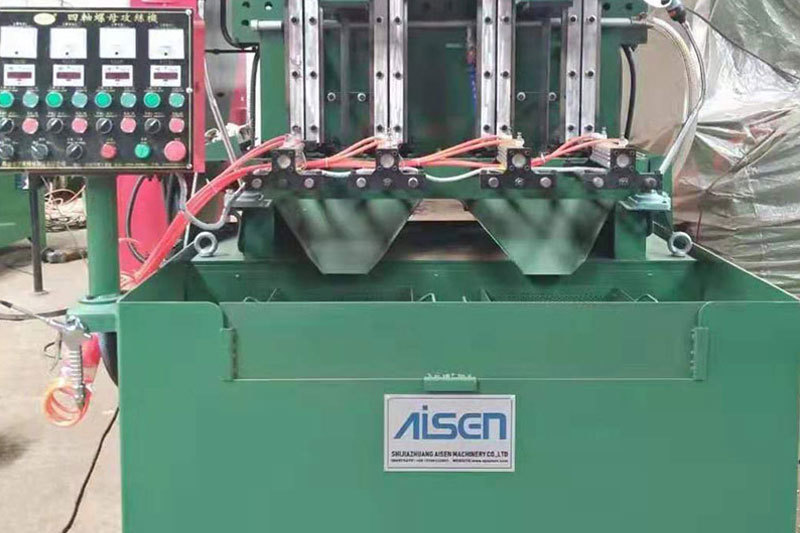
AISEN Four axis nut tapping machine ready for shipment to Russia
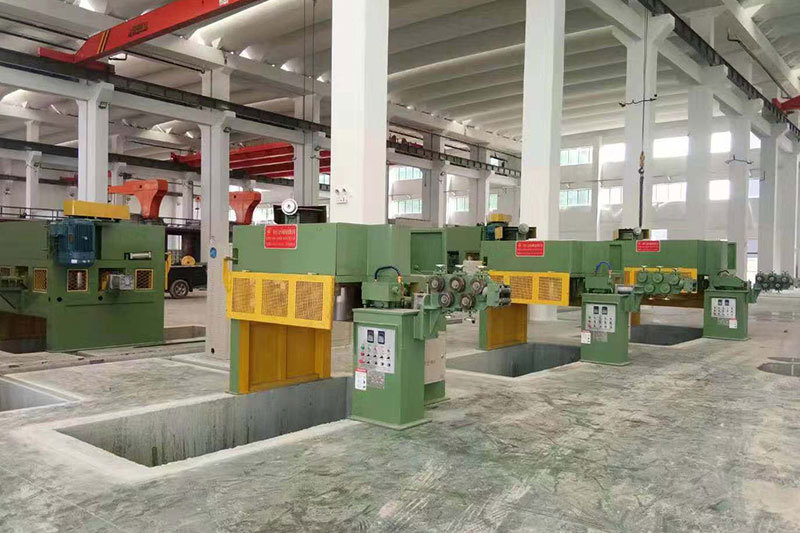
AISEN machinery inverted wire drawing machine
MESSAGES
We will contact you within one working day. Please pay attention to your email.
Qucik Link
Contact
Phone: +86-15100123091
E-mail: info@sjzaisen.com
Address: No.41 Zhaiying South Street, Yuhua District, Shijiazhuang City, Hebei Province China