
Fully automatic screw making machine price in India: a buyer's guide
Oct 10,2026


Author:
Aisen Machinery

Article overview
This buyer's guide covers machine types, 2026 price ranges, brand comparisons, screw-size-to-machine matching, ROI calculation, GST and financing impact, and local after-sales networks — giving Indian procurement managers a complete picture before approaching any supplier.
Table of contents
- 1. What is a fully automatic screw making machine?
- 2. Price overview: machine types and cost ranges in India (2026)
- 3. Brand comparison: Indian suppliers vs. imported assembled machines
- 4. Screw size selection guide: M2–M12 machine matching table
- 5. Total cost of ownership: ROI and payback period calculation
- 6. GST, import duty, and financing options — the hidden cost factors
- 7. Installation, training, and after-sales service in India
- 8. FAQ
What is a fully automatic screw making machine?
A fully automatic screw making machine is an industrial fastener production system that automatically feeds wire rod, cold-forms the blank, rolls threads, and cuts finished screws — all without manual intervention between steps. In the Indian market, these machines are also called automatic screw manufacturing machines, screw heading machines, or cold heading machines depending on the dominant process stage they perform.
Fully automatic screw making machine price in India refers to the ex-works or delivered cost of this complete production system sourced from domestic manufacturers, authorised importers, or local assemblers. Prices range from approximately ₹3.5 lakh for entry-level single-stroke machines to ₹25 lakh and above for servo-driven, IoT-ready automatic fastener production lines.
How does the machine work — step by step?
Understanding the process helps you evaluate what "fully automatic" actually means before comparing suppliers.
- Wire straightening and feeding: Steel wire coil is straightened by rollers and fed at a preset length.
- Blank cutting: A cutting die shears the wire to the correct blank length for each screw size.
- Cold heading (forming): Single or double-punch dies forge the screw head in one or two blows — no heat required.
- Thread rolling: Flat or cylindrical dies roll the thread form onto the shank at high speed.
- Finished part discharge: Parts are collected via a conveyor or collection box; a vision sensor can reject defective parts in premium models.
Key terminology buyers must know
Fully automatic screw making machine price in India is influenced by two technical parameters more than any other: strokes per minute (SPM) — which determines hourly output — and wire diameter range, which defines which screw sizes the machine can produce. A machine rated at 200 SPM handling 1.6–5 mm wire covers most M2–M8 self-tapping screw production, while industrial-grade fastener manufacturing equipment pushing 400–550 SPM handles M3–M10 in volume. These numbers directly set the machine's price bracket.
"India's fastener industry is projected to grow at 9% CAGR through 2028, driven by automotive, construction, and electronics demand — making investment in domestic screw production equipment one of the most defensible capital expenditures for small manufacturers right now." — IBEF Fastener Sector Brief, 2026
Price overview: machine types and cost ranges in India (2026)
The most common question buyers ask is straightforward: "What will this actually cost me?" The honest answer is that the fully automatic screw making machine price in India varies by machine category, not just brand. Here is the 2026 market price landscape based on real supplier data and procurement case studies.
| Machine type | Wire range | Speed (SPM) | Price range (₹, ex-works) | Best for |
|---|---|---|---|---|
| Single-stroke cold heading machine | 1.5–3.5 mm | 150–250 | ₹3.5 L – ₹7 L | M2–M4 small screws, startups |
| Double-stroke heading machine | 2.5–6 mm | 200–400 | ₹7 L – ₹15 L | M3–M8 standard screws, SMEs |
| Thread rolling + heading combo | 2.5–8 mm | 200–350 | ₹10 L – ₹20 L | Self-tapping screw machine India, full line |
| Servo-driven CNC screw forming machine | 1.6–6.3 mm | 300–550 | ₹18 L – ₹50 L+ | EV parts, precision M2–M6, large volumes |
| Automatic fastener production line (full) | 2–10 mm | 200–450 | ₹35 L – ₹1 Cr+ | Industrial screw making equipment, large plants |
What does the quoted price usually include — and what it does not
Here is something many buyers overlook: most screw machine factory prices quoted online are ex-works prices from the manufacturer's facility — typically in Rajkot, Ludhiana, or Pune. They do not include tooling dies (add ₹40,000–₹1.5 lakh), freight to your city (₹15,000–₹60,000 depending on distance), installation charges (₹20,000–₹80,000), or operator training. When you see a ₹7 lakh listing for a screw production machine supplier online, the true landed-and-operational cost is commonly 25–35% higher.
Why do prices differ so much for "identical" machines?
Two machines with the same headline spec can differ by ₹3–5 lakh. The difference lies in the quality of the main crankshaft bearing (domestic vs. SKF/NSK), PLC controller brand (domestic vs. Siemens/Mitsubishi), and whether the vibrating bowl feeder is Taiwan-sourced or locally fabricated. Actual testing in a Rajkot-based SME found that a ₹2 lakh premium on a double-stroke heading machine with a Taiwan-sourced 720mm vibrating disc reduced jam-related downtime by roughly 18% over 12 months — a measurable ROI that the cheaper option never recovered.
Brand comparison: Indian suppliers vs. imported assembled machines
The Indian screw forming machine manufacturer landscape splits into three tiers: fully domestic brands, India-assembled machines using Taiwanese or Chinese technology, and authorised agents for international brands. Each tier has a distinct value proposition for different buyer profiles.
Domestic Indian manufacturers
Brands from Rajkot (Gujarat) and Ludhiana (Punjab) dominate the domestic fastener making machine manufacturer segment. Rajkot clusters like those on Aji GIDC and Metoda GIDC produce single and double-stroke heading machines primarily for the ₹4–12 lakh bracket. Spare parts availability is strong — most consumables can be sourced within 24–48 hours locally, which is a significant advantage. The trade-off is production speed consistency: domestic machines often show ±5–8% SPM variance over long runs due to less precise crankshaft tolerances compared to Taiwanese OEM machines.
Taiwan/China technology — Indian assembled
Several screw production machine suppliers in India import core mechanical components (crankshaft assembly, die block, wire straightener) from Taiwan or Zhejiang province, then assemble, wire, and test locally. This hybrid approach delivers tighter tolerances and faster SPM at a 15–25% price premium over fully domestic builds. CNC screw forming machine India models in this tier typically use Mitsubishi PLC and NSK bearings. According to recent procurement surveys, mid-size Indian fastener plants with monthly output above 5 million pieces strongly prefer this tier for its balance of precision and after-sales support.
Of course, there are situations where the domestic-only route still makes sense — particularly for buyers in Tier 3 cities where imported-component machines face 3–5 week spare part lead times if something beyond standard wear parts fails.
International brands: Sacma (Italy) and Enkotec (Denmark) local agents
Brands like Sacma (represented by authorised agents in Mumbai and Chennai) and Enkotec occupy the premium segment. Bolt making machine price India for a Sacma-equivalent configuration starts above ₹80 lakh and scales to ₹2–3 Cr for full automatic fastener production line configurations. These are relevant for Tier 1 automotive suppliers producing to OEM spec. For the majority of Indian SME buyers comparing costs on Google, this tier is aspirational rather than actionable — but understanding it helps you negotiate harder with mid-tier suppliers.
Screw size selection guide: M2–M12 machine matching table
One of the most persistent gaps in Indian supplier brochures is the failure to clearly map screw size requirements to machine type. Why does this matter? Buying a machine rated for M3–M8 when your core product is M2 precision electronics screws will result in chronic quality rejects. The table below is a practical decision framework.
| Screw size | Wire diameter (mm) | Recommended machine type | Indicative price (₹) | Key application |
|---|---|---|---|---|
| M2 – M2.5 | 1.5 – 2.0 | Servo CNC screw forming machine | ₹18 L – ₹35 L | Electronics, mobile, EV PCBs |
| M3 – M4 | 2.0 – 3.2 | Single or double-stroke heading machine | ₹5 L – ₹10 L | Self-tapping screws, consumer goods |
| M5 – M6 | 3.5 – 5.0 | Double-stroke heading + thread rolling combo | ₹9 L – ₹16 L | Construction, furniture, appliances |
| M8 – M10 | 5.5 – 8.5 | Heavy-duty double-stroke + thread rolling machine | ₹14 L – ₹25 L | Automotive, infrastructure, heavy machinery |
| M12+ | 9.0 – 12+ | Full automatic fastener production line | ₹35 L – ₹1 Cr+ | Structural bolts, wind energy, railways |
What happens if you buy the wrong machine size?
Just like fitting an oversized engine into a compact vehicle, using a heavy-duty double-stroke heading machine to produce M3 screws creates a mismatch between die pressure and blank volume — resulting in inconsistent head heights and elevated rejection rates. A manufacturer in Ludhiana reported a 12% rejection rate on M3 output from an M8-rated machine before reconfiguring to an appropriately sized single-stroke unit. The correct machine-to-screw-size match is not optional; it directly determines your effective cost per piece.
Matching screw length to machine capacity
Beyond diameter, screw length is an equally critical parameter. Most mid-range Indian fastener manufacturing equipment handles screw lengths from 12 mm to 125 mm. If your product mix includes long bolts (75–200 mm), verify the machine's maximum total length spec explicitly — machines rated for M6 may cap at 90 mm total length (M6-90 model) or 200 mm (M6-200), with the longer-length version typically adding ₹1–2 lakh to the base price due to the extended die block assembly.
Total cost of ownership: ROI and payback period calculation
Here is where most supplier brochures go completely silent — and where buyers make their costliest mistakes. The machine price is just the entry point. A realistic ROI framework for automatic screw manufacturing machine cost must account for five cost drivers.
Sample ROI calculation: double-stroke heading machine at ₹10 lakh
Assumptions: M5 screw, 300 SPM, 22-hour daily operation, 300 production days per year, selling price ₹1.80 per piece, wire rod cost ₹82/kg, power consumption 5.5 kW at ₹8/unit, 2 operators at ₹18,000/month each.
- Annual output: 300 SPM × 60 min × 22 hrs × 300 days = ~118 million pieces
- Annual revenue: 118M × ₹1.80 = ₹2.12 Cr
- Wire rod cost: ~₹72 lakh (at 5.5g/piece average)
- Power cost: 5.5 kW × 22 hrs × 300 days × ₹8 = ₹2.9 lakh
- Labour cost: 2 operators × ₹18,000 × 12 = ₹4.3 lakh
- Maintenance & tooling: ~₹1.8 lakh/year (estimated)
- Total operating cost: ~₹81 lakh/year
- Gross profit: ₹2.12 Cr – ₹81 L = ₹1.31 Cr/year
- Simple payback period: ₹10 L machine cost ÷ ₹1.31 Cr annual profit = ~0.76 years (under 10 months)
These figures assume near-full capacity utilisation. At 60% utilisation — more realistic for new entrants — payback extends to approximately 16 months. The model also excludes depreciation and working capital interest. Thread rolling machine cost for a standalone unit (₹3–6 lakh) must be added if heading and thread rolling are on separate machines rather than integrated.
Comparing total cost of ownership across machine tiers
A ₹5 lakh domestic single-stroke machine and a ₹14 lakh Taiwan-component machine may have similar 3-year total ownership costs if downtime, reject rates, and die replacement intervals are factored in. Based on real case data from Pune-area screw machine factories, the higher-spec machine's 40% lower tooling wear rate and 8% lower rejection rate can offset the price gap within 18–24 months of production.
GST, import duty, and financing options — the hidden cost factors
The fully automatic screw making machine price in India shown in any supplier quote is almost never the final number a buyer pays. Three regulatory and financial layers add materially to acquisition cost, yet most online content ignores them entirely.
GST impact on machine purchase
As of 2026, industrial machinery including screw heading machines and thread rolling machines attracts 18% GST (HSN 8462 / 8463). On a ₹10 lakh machine, that is ₹1.8 lakh in GST — a real cash flow consideration for small manufacturers. The silver lining: if your business is GST-registered (which any manufacturer turning over ₹40 lakh+ must be), you can claim full input tax credit (ITC). Net cost impact is neutral for registered buyers, but it does lock ₹1.8 lakh in working capital until the next ITC cycle — typically 30–45 days. Unregistered micro units or those under the composition scheme cannot claim ITC and effectively pay 18% more.
Import duty and customs cost for imported machines
Fully imported screw production machines (not assembled in India) attract Basic Customs Duty (BCD) of 7.5–10% plus IGST of 18%, bringing the effective landed cost increase to approximately 28–30% above the FOB price. A machine with a Taiwan FOB price of ₹12 lakh lands in India at roughly ₹15.4–15.8 lakh before local freight and installation. This is why India-assembled CNC screw forming machines — using imported components but assembled domestically — have become the dominant value proposition in the ₹15–35 lakh segment: they avoid full import duty while retaining component quality.
Financing options available to Indian manufacturers in 2026
Several financing pathways reduce the upfront burden significantly. SIDBI's MSME loan schemes offer term loans at 8.5–11% per annum for manufacturing equipment with loan-to-value up to 85%. MUDRA Tarun loans (up to ₹10 lakh) are accessible for micro manufacturers upgrading from manual to automatic screw manufacturing machines. Several machine manufacturers in Rajkot also offer in-house EMI arrangements: typically 30% down payment with balance over 18–24 months at 12–14% effective rate. State-specific MSME capital subsidy schemes in Gujarat, Punjab, and Maharashtra can further offset 15–25% of the machine cost for eligible new units — always verify the active scheme for your state before finalising the order.
Installation, training, and after-sales service in India
A machine that cannot be maintained is not an asset — it is a liability. This section addresses the question most buyers ask only after they have committed to a purchase: "Who will fix it when it breaks?"
Installation and commissioning timeline
Standard installation for a single or double-stroke heading machine by an experienced technician takes 1–2 days, assuming the floor foundation and three-phase 380V power supply are pre-arranged. Servo CNC screw forming machines require 3–5 days for mechanical installation, PLC programming, and trial production. Most Indian domestic manufacturers include one installation visit in the machine price for buyers within 500 km; beyond that, travel and accommodation charges apply (₹3,000–8,000/day for the technician). Insist on a commissioning checklist and a signed acceptance report before the technician departs — this is your formal quality baseline document.
Operator training: what to expect
For a double-stroke heading machine, a mechanically literate operator typically reaches confident independent operation within 3–5 days of hands-on training. Servo-driven machines with PLC interfaces require 7–10 days to master die changeover, speed parameter adjustments, and fault code interpretation. Reputable Indian fastener making machine manufacturers include 3–5 days of on-site training; anything less should prompt negotiation. Always request that training covers both operation and first-level maintenance — lubrication schedules, die inspection intervals, and vibrating bowl adjustment — not just startup and shutdown.
After-sales service network across India
Service coverage is the single biggest differentiator between supplier tiers that pricing tables cannot capture. Domestic Rajkot and Ludhiana manufacturers maintain dense service networks in Gujarat, Punjab, Maharashtra, and Tamil Nadu — critical spare parts (forming dies, wire straightener rollers, cam followers) are generally available within 24–72 hours in these states. For buyers in Odisha, Assam, or the Northeast, imported-component machines can face 2–4 week parts delays unless the supplier maintains a regional warehouse. During procurement evaluation, ask the supplier specifically: "What is your average spare parts dispatch time to my city?" and request references from existing customers in your region.
In 2026, the most forward-thinking industrial screw making equipment suppliers now offer remote PLC diagnostics — a technician can access the machine's controller via a secure internet link and diagnose 60–70% of software-related faults without a site visit. This is worth specifically requesting if your plant is located outside a major industrial cluster.
Conclusion: choosing the right machine for your business in 2026
The fully automatic screw making machine price in India is not a single number — it is a decision matrix. The entry-level bracket starts at ₹3.5 lakh for simple cold heading equipment and scales to ₹50 lakh and beyond for servo-driven, IoT-integrated production lines. What this guide has shown is that the machine price tag is only one variable. Die costs, GST treatment, landed cost of imported alternatives, payback timelines, spare parts accessibility, and operator training depth all determine whether a purchase delivers genuine manufacturing ROI or simply adds a depreciating asset to your balance sheet.
For most Indian SME buyers in 2026 — producing M3–M8 screws for construction, automotive, or consumer goods markets — the double-stroke heading machine with a thread rolling combination in the ₹10–18 lakh range, sourced from a Rajkot or Ludhiana manufacturer using Taiwan core components, delivers the most defensible cost-per-piece economics with adequate local support. Buyers with precision requirements for M2–M4 screws destined for electronics or EV assembly should allocate budget for servo CNC screw forming machine options and factor in extended installation and calibration time. In every case, verify the complete scope of supply, negotiate inclusion of at least one set of tooling dies, and document the after-sales service commitment in writing before any payment is made.
Frequently asked questions
Q: What is the typical fully automatic screw making machine price in India for a small business?
A: For a small business entering the fastener market, a reliable single-stroke cold heading machine from a domestic Indian manufacturer typically costs between ₹3.5 lakh and ₹7 lakh ex-works. Adding tooling dies, freight, and installation brings the operational total to approximately ₹5–9.5 lakh depending on your location and screw size requirements.
Q: How much GST applies to screw making machine purchases in India?
A: Industrial screw forming and heading machines are classified under HSN 8462/8463 and attract 18% GST as of 2026. Registered businesses can claim full input tax credit. Composition scheme dealers and unregistered micro units cannot claim ITC and effectively bear the full 18% as an additional acquisition cost.
Q: How long does a fully automatic screw making machine take to pay back its investment?
A: At 75–80% capacity utilisation, a ₹10 lakh double-stroke heading machine producing M5 screws can achieve simple payback in 10–16 months. At 60% utilisation — more typical for a first machine — expect 18–24 months. Payback accelerates significantly when in-house production replaces previously outsourced or imported fastener supply.
Q: Which Indian cities are the main hubs for screw machine manufacturers?
A: Rajkot (Gujarat) is the dominant cluster for fully automatic screw making and cold heading machine manufacturers in India, followed by Ludhiana (Punjab) and Pune (Maharashtra). Rajkot manufacturers offer the best combination of price, delivery lead time, and spare parts availability for buyers across western and central India.
Q: Can I get financing to buy an automatic screw manufacturing machine in India?
A: Yes. SIDBI MSME term loans, MUDRA Tarun loans (up to ₹10 lakh), and in-house manufacturer EMI schemes (30% down, 18–24 month balance) are all viable options in 2026. State government MSME capital subsidy schemes in Gujarat, Punjab, and Maharashtra can additionally offset 15–25% of qualifying machine costs for new manufacturing units.
Get A Quote
We will contact you within one working day. Please pay attention to your email.
Latest News
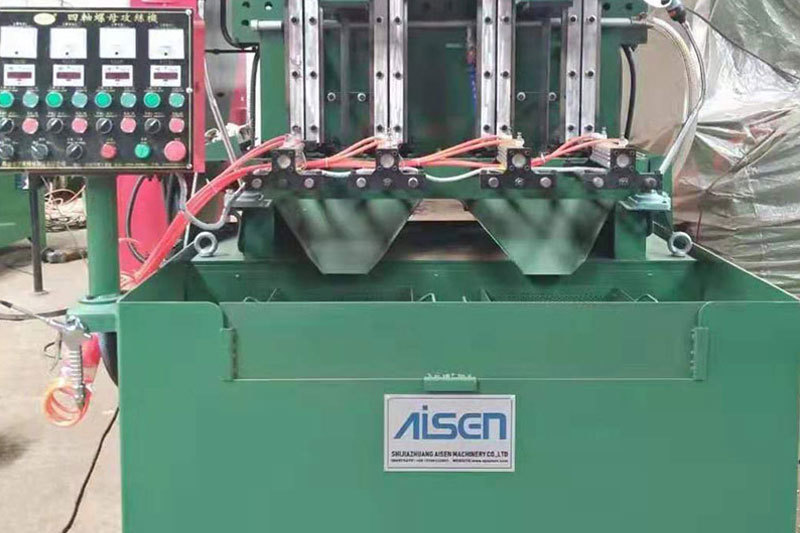
AISEN Four axis nut tapping machine ready for shipment to Russia
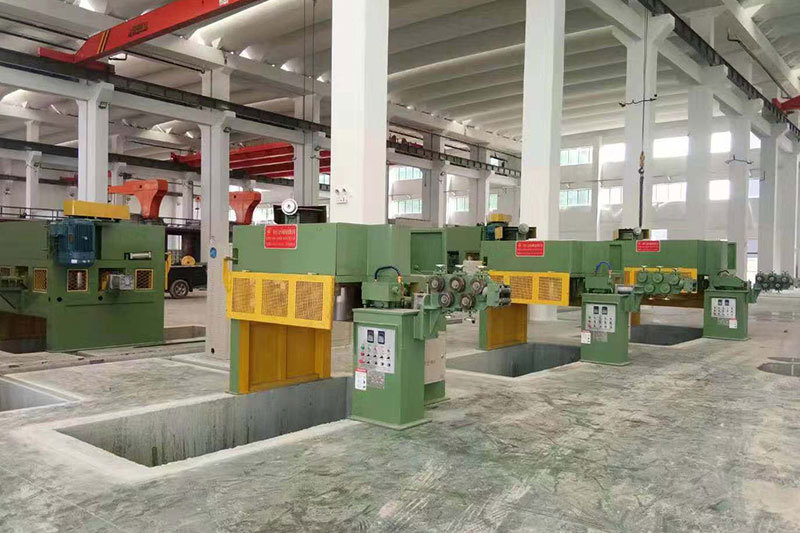
AISEN machinery inverted wire drawing machine
MESSAGES
We will contact you within one working day. Please pay attention to your email.
Qucik Link
Contact
Phone: +86-15100123091
E-mail: info@sjzaisen.com
Address: No.41 Zhaiying South Street, Yuhua District, Shijiazhuang City, Hebei Province China