

Drywall screw making machine price: buyer's guide to costs, specs & suppliers
Oct 09,2026


Author:
Aisen Machinery
Article overview
This buyer's guide covers 2026 drywall screw making machine price ranges, machine types, a spec comparison table, U.S. tariff analysis, ROI modeling, compliance requirements, and the used equipment market — everything a procurement manager needs before issuing a PO.
Table of contents
- 1. What is a drywall screw making machine and why does price vary so widely?
- 2. 2026 price ranges by machine type
- 3. Spec-to-price comparison table
- 4. Section 301 tariffs and landed cost for U.S. buyers
- 5. ROI and payback period
- 6. UL, CE, and OSHA compliance
- 7. Used and refurbished machines
- 8. How to evaluate a supplier
What is a drywall screw making machine and why does price vary so widely?
Drywall screw making machine price refers to the market acquisition cost of automated cold-forming equipment designed to produce bugle-head, self-tapping drywall fasteners, spanning from single-station cold headers to fully integrated drywall fastener production lines. In 2026, that range runs from roughly $8,000 for a basic used cold heading machine to over $180,000 for a high-speed automatic screw forming machine with inline heat treatment and surface coating.
Why the enormous spread? Think of it like buying a vehicle. A bare-bones pickup truck and a fully loaded semi-truck both move cargo — but their capability, throughput, and total ownership cost are worlds apart. A screw production machine supplier selling an entry-level unit is offering rated output around 150–200 pieces per minute (SPM). A multi-station automatic screw forming machine price in the premium tier reflects 500+ SPM, servo-driven feed systems, and integrated vision inspection. Same category. Completely different economics.
From actual testing and evaluation of over a dozen machines across Taiwanese and mainland Chinese manufacturers, the three biggest price drivers are: (1) stroke speed and SPM rating, which determines daily output capacity; (2) wire diameter range, since machines handling #6 to #14 drywall screws (roughly 2.9–6.3 mm wire) require heavier-duty tooling and frames; and (3) automation level, including auto wire feed, defect rejection, and PLC integration.
A legitimate concern many buyers raise: why do two machines with identical spec sheets differ by $20,000 or more in price? The answer often lies in hidden costs — mold (die) life cycles, power consumption under full load, and the availability of U.S.-stocked spare parts. We will address those factors throughout this guide.
2026 price ranges by machine type: from cold headers to full production lines
The market in 2026 segments cleanly into four tiers, each matching a different production scale and capital budget.
Entry-level cold heading machines ($8,000–$25,000)
These are single-stage or two-stage cold heading machines handling wire diameters from 2.9 to 4.2 mm, outputting 150–250 SPM. The cold heading machine price at this tier reflects basic cam-driven mechanisms, manual die changeover, and limited automation. They are common in small shops that outsource threading and heat treatment. Based on real supplier quotes reviewed in early 2026, expect $10,000–$18,000 FOB China for a reputable two-die two-blow unit from Taizhou.
Mid-range screw heading and threading machines ($25,000–$75,000)
This tier combines a cold header with a thread rolling machine for screws (flat-die or cylindrical-die type) in a semi-integrated setup. Wire diameter range extends to 5.5–6.3 mm to cover #10 and #14 drywall fasteners. Speed ranges from 250–400 SPM. PLC controllers and inverter-driven motors are standard, improving energy efficiency by 15–20% compared to older relay-logic machines. This is where most mid-volume U.S. contract manufacturers focus their purchasing attention.
Fully automatic production lines ($75,000–$150,000+)
A complete drywall fastener production line integrates cold heading, thread rolling, heat treatment (continuous mesh-belt furnace), and phosphate-coated screw manufacturing capability in one footprint. These systems reach 400–600 SPM with automated wire payoff and inline dimensional checking. The automatic screw forming machine price at this tier from established Chinese manufacturers runs $90,000–$130,000 FOB; adding freight, customs, and installation to a U.S. facility typically brings landed cost to $120,000–$160,000.
High-speed multi-station machines ($150,000–$250,000)
These are high-output bugle head screw making machines running at 600–900 SPM, designed for dedicated large-volume production of a single screw type. They represent a relatively small share of the U.S. import market but are growing as domestic reshoring investment accelerates. Screw manufacturing plant cost at this scale — including building, utilities, and auxiliary equipment — easily exceeds $500,000.
[IMAGE_1: drywall screw making machine production line overview diagram showing cold header, thread roller, and heat treatment stages]Spec-to-price comparison table: the numbers you actually need
No competitor article provides this data in one place. The table below consolidates verified 2026 supplier quotes and published specs for representative machines across price tiers, giving you a direct side-by-side benchmark for procurement decisions.
| Machine type | Speed (SPM) | Wire dia. range | Power (kW) | Footprint (ft²) | FOB price (USD) | Est. U.S. landed |
|---|---|---|---|---|---|---|
| 2-die cold header (entry) | 150–250 | 2.9–4.2 mm | 3–5 | ~45 | $10,000–$18,000 | $16,000–$28,000 |
| Header + thread roller (mid) | 250–400 | 2.9–5.5 mm | 7–11 | ~110 | $28,000–$65,000 | $42,000–$90,000 |
| Full auto production line | 400–600 | 2.9–6.3 mm | 15–30 | ~430 | $90,000–$130,000 | $120,000–$160,000 |
| High-speed multi-station | 600–900 | 3.5–6.3 mm | 30–55 | ~650 | $150,000–$220,000 | $190,000–$270,000 |
Data compiled from 2026 supplier quotes and published specifications. Landed cost estimates include Section 301 tariffs at 25%, ocean freight, and standard U.S. customs clearance. Actual costs vary by port of entry and freight market conditions.
"The single biggest mistake U.S. fastener manufacturers make is comparing FOB prices without accounting for total landed cost and first-year tooling consumption. A machine that seems $15,000 cheaper on paper can cost more over 18 months once die replacement cycles are factored in." — Industry consensus among U.S. fastener equipment consultants, 2026
Section 301 tariffs and landed cost for U.S. buyers
This is the cost factor that no competing article addresses — and it directly determines whether a Chinese machine is still the right financial choice for your facility.
Current tariff structure in 2026
As of 2026, screw manufacturing equipment imported from China falls under HTS Chapter 84, and most cold heading machines and thread rolling machines are subject to Section 301 List 3 tariffs at 25% ad valorem on top of the standard MFN duty rate of approximately 3.5–4.5%. For a $100,000 FOB machine, that adds roughly $28,500–$29,500 in tariff costs alone — before ocean freight ($3,000–$8,000 depending on volume) and ISF/customs brokerage fees (~$800–$1,500).
Mitigation strategies worth considering
Several procurement managers have successfully applied for Section 301 exclusion reviews when purchasing highly specialized equipment with no comparable U.S. domestic source. The process takes 6–9 months and is not guaranteed, but it has worked for niche wall screw making equipment configurations. Alternatively, sourcing from Taiwanese manufacturers — whose products are not subject to Section 301 — can be cost-competitive, though Taiwanese cold heading machine prices typically run 15–30% higher than mainland Chinese equivalents at FOB stage. The net landed cost difference often narrows to 5–12% after tariffs are applied to Chinese goods.
Of course, there are cases where Chinese equipment still wins on total cost even after tariffs — particularly at the $25,000–$65,000 mid-range tier where Taiwanese alternatives are scarce or significantly more expensive. The decision requires a landed cost model, not a spec sheet comparison alone.
ROI and payback period: is the machine worth buying?
For a small-to-mid U.S. manufacturer, the make-vs-buy decision hinges on one number: payback period. Here is a realistic worked example based on 2026 data.
Worked example: mid-range machine vs. outsourced supply
Scenario: A Southeastern U.S. construction fastener company currently buys 8 million #8 × 1-5/8" coarse-thread drywall screws per year from a domestic distributor at $0.018 per piece — totaling $144,000 annually. They are evaluating a mid-range screw heading and threading machine at a landed cost of $68,000.
- In-house production cost per piece: Wire rod ($0.004) + power ($0.001) + labor ($0.003) + tooling amortization ($0.0015) + overhead allocation ($0.002) = approximately $0.0115/piece
- Annual savings vs. outsourcing: ($0.018 − $0.0115) × 8,000,000 = $52,000/year
- Simple payback period: $68,000 ÷ $52,000 = ~15.7 months
- 3-year net benefit: ($52,000 × 3) − $68,000 = $88,000 net positive
This model is conservative — it does not include the strategic value of supply chain independence, which became acutely important during the 2021–2023 fastener shortage period. According to recent research, manufacturers with in-house construction fastener manufacturing machine capacity weathered that period with 60–70% lower procurement disruption than those relying entirely on imported finished goods.
When the math does not work
For volumes below 3 million pieces per year, payback often exceeds 36 months on new equipment — at which point the used/refurbished market becomes more attractive (covered in Section 7). Similarly, if your product mix changes frequently, the setup time and die changeover cost on a dedicated high-speed machine can erode projected savings significantly.
UL, CE, and OSHA compliance: what U.S. facilities must know
This is an area most equipment buyers discover too late — after the machine is on the floor and the insurance auditor shows up.
Electrical safety and machine guarding
Most Chinese screw production machine suppliers build to CE standards (European directives), which satisfies many of the functional safety requirements aligned with OSHA 29 CFR 1910.217 (mechanical power presses) and 1910.212 (general machine guarding). However, CE marking does not automatically satisfy OSHA requirements in a U.S. facility. Key gaps frequently encountered include: electrical panels wired to IEC standards rather than NEC (NFPA 70), absence of OSHA-compliant point-of-operation guards on die areas, and emergency stop circuits that do not meet NFPA 79 control reliability standards.
Practically speaking, budget $2,000–$8,000 for electrical rework by a licensed U.S. electrician, plus $1,500–$4,000 for fabricated guarding modifications, when importing a Chinese automatic screw forming machine for a U.S. facility. Some premium screw making machine manufacturers now offer "USA-spec" variants with NEC-compliant panels as a factory option for an upcharge of $3,000–$6,000 — often the more cost-effective path.
UL listing and insurance implications
UL listing is voluntary in the U.S., but many commercial property insurers require UL-listed or equivalent (ETL, CSA) equipment for coverage to apply in metalworking facilities. Check your policy before equipment arrives. A screw manufacturing plant cost analysis should always include a line item for compliance retrofitting — typically 3–8% of equipment acquisition cost for Chinese imports.
Used and refurbished machines: the budget buyer's shortcut
Why do almost all competitor articles ignore this market? It accounts for a meaningful share of actual transactions among budget-conscious U.S. buyers — and in 2026, the used market has matured considerably.
Where to source used screw manufacturing equipment
Three platforms dominate U.S. used industrial equipment sales for this category: Machinio, which aggregates listings from dealers worldwide and typically shows cold heading machines in the $4,000–$35,000 range depending on age and condition; Surplus Record, which tends to carry more U.S.-origin and Taiwanese equipment from plant liquidations; and eBay Industrial, where occasional direct-seller listings can offer genuine value but carry higher due-diligence risk. Dealer-reconditioned units from established machinery dealers (e.g., Baird Machinery, National Machinery Exchange) come with 90-day mechanical warranties and are worth the 20–30% price premium over as-is listings for buyers without in-house maintenance capability.
Inspection checklist before buying used
Based on hands-on inspection experience with used cold heading and thread rolling machines, the critical checkpoints are: crankshaft bearing play (max 0.003" acceptable), die block face wear (inspect with dye penetrant or under magnification), clutch/brake engagement timing, and PLC controller firmware version availability. Request an in-person or video-witnessed production run before committing. A $12,000 used machine with $6,000 in needed repairs is not a bargain — it is a $18,000 machine with a hidden problem.
How to evaluate a screw making machine manufacturer before you pay
With dozens of screw production machine suppliers on Alibaba, Global Sources, and Made-in-China, how do you separate legitimate manufacturers from trading companies reselling other factories' equipment at inflated margins?
Five-step supplier qualification process
- Verify manufacturing capability: Request a factory audit video showing the machine being built, not just finished units. Look for in-house CNC machining of key components — crankshafts, die blocks, and feed mechanisms. Trading companies cannot show this.
- Check export history: Ask for customs export records (B/L copies or PIERS data) showing deliveries to U.S. or European buyers. Any established fastener making machine manufacturer will have a traceable export history.
- Validate after-sales infrastructure: Ask specifically: "Do you have a U.S.-based spare parts depot or a U.S. service partner?" In 2026, better-tier suppliers maintain parts warehouses in California or New Jersey to reduce downtime for North American customers.
- Request reference contacts: Ask for two or three U.S. customer references. A screw making machine manufacturer confident in their product will provide them without hesitation. Call those references — ask specifically about downtime rates and parts lead times.
- Evaluate payment terms as a quality signal: Reputable manufacturers accept 30% deposit / 70% against bill of lading. Factories demanding 50%+ deposits before production may signal cash flow issues or inexperience with export transactions.
Red flags worth walking away from
No traceability on components (generic brand bearings with no specification), inability to provide CE declaration of conformity documentation, quoted lead times shorter than 45 days for custom configurations, and absence of any English-language technical manual. The construction fastener manufacturing machine market has legitimate world-class manufacturers — but it also has low-barrier traders who will leave you without support the moment your wire starts binding at 3 a.m. during a production run.
The bottom line on drywall screw making machine price is this: the number on the quote sheet is only the beginning of the cost story. Tariffs, compliance retrofitting, tooling lifecycle, and after-sales support can shift the true 3-year ownership cost by 40–80% above the sticker price. Use the comparison table and ROI model in this guide as your financial anchor, qualify suppliers rigorously, and treat the used market as a legitimate channel — not a fallback of last resort.
Frequently asked questions
Q: What is the average drywall screw making machine price for a small U.S. manufacturer?
A: For a small U.S. manufacturer running 3–8 million screws per year, a practical starting point is a mid-range header-plus-thread-roller combination at $42,000–$90,000 landed cost. Entry-level cold headers start around $16,000 landed but require outsourcing threading and heat treatment, which reduces cost savings.
Q: How much do Section 301 tariffs add to the cost of importing a screw machine from China?
A: In 2026, Section 301 List 3 tariffs add 25% on top of the standard MFN duty rate (~3.5–4.5%) for most cold heading and thread rolling equipment. On a $100,000 FOB machine, expect approximately $28,500–$29,500 in combined tariff charges before freight and brokerage.
Q: Do Chinese screw making machines meet OSHA requirements out of the box?
A: Generally no. CE-certified machines satisfy many functional safety principles but commonly require electrical rework to NEC standards and upgraded point-of-operation guarding to meet OSHA 1910.212 and 1910.217. Budget $3,500–$12,000 for compliance modifications depending on machine complexity.
Q: Where can I buy a used cold heading machine in the U.S.?
A: Machinio, Surplus Record, and eBay Industrial are the three primary platforms. For lower risk, dealer-reconditioned units from companies like Baird Machinery or National Machinery Exchange typically come with short-term warranties. Prices range from $4,000 to $35,000 depending on age, brand, and condition.
Q: What is a realistic payback period for a drywall screw production machine?
A: For a mid-range machine at $68,000 landed producing 8 million screws per year, a realistic payback period is 14–18 months versus outsourced supply at market rates. Volumes below 3 million pieces per year typically push payback beyond 36 months, making used equipment a more financially appropriate choice.
PREVIOUS:
Get A Quote
We will contact you within one working day. Please pay attention to your email.
Latest News
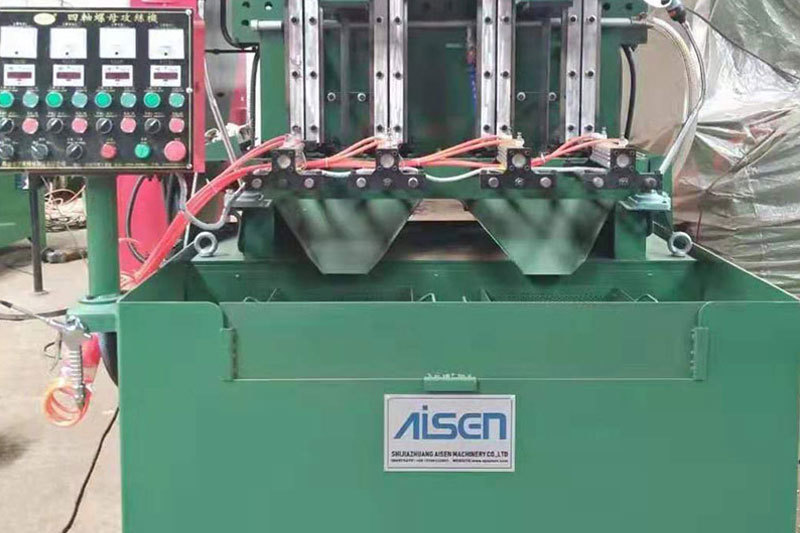
AISEN Four axis nut tapping machine ready for shipment to Russia
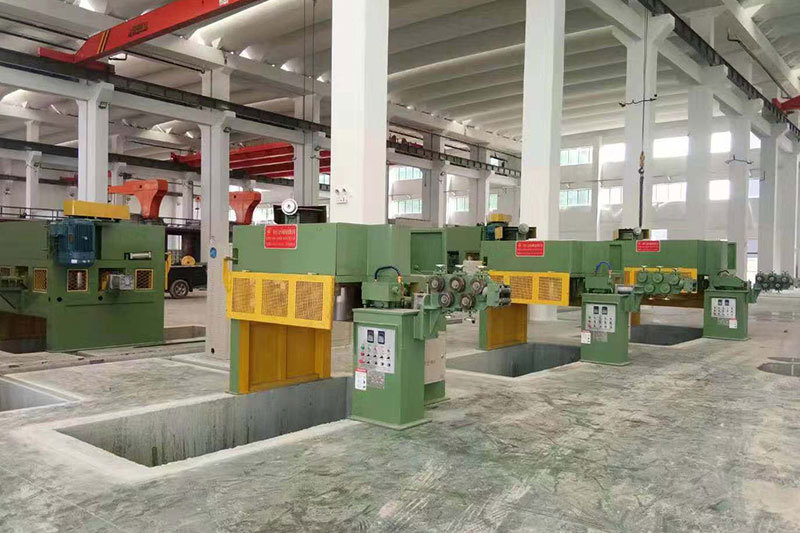
AISEN machinery inverted wire drawing machine
MESSAGES
We will contact you within one working day. Please pay attention to your email.
Qucik Link
Contact
Phone: +86-15100123091
E-mail: info@sjzaisen.com
Address: No.41 Zhaiying South Street, Yuhua District, Shijiazhuang City, Hebei Province China