

Fully automatic screw making machine: buyer's guide, types & key features explained
Oct 09,2026


Author:
Aisen Machinery
Article overview
This buyer's guide covers everything an Indian manufacturer needs to evaluate, compare, and purchase a fully automatic screw making machine in 2026 — from machine types and specs to ROI, raw materials, maintenance, and government compliance.
Table of contents
- 1. What is a fully automatic screw making machine?
- 2. Types of fully automatic screw making machines available in India
- 3. Key specifications and comparison table
- 4. ROI calculation for Indian small manufacturers
- 5. Raw material compatibility: MS wire, galvanised wire and sourcing in India
- 6. Maintenance schedule, spare parts and die replacement guide
- 7. GST, MSME subsidies and BIS compliance in India
- 8. How to choose the right machine: step-by-step decision framework
- 9. FAQ
What is a fully automatic screw making machine?
A fully automatic screw making machine is industrial equipment that automatically converts metal wire coils into finished screws through cold heading, thread rolling, and heat treatment — requiring no manual handling between processes. The machine ingests raw wire from one end and delivers dimensionally consistent, ready-to-pack screws from the other, operating continuously across shifts without operator intervention at each individual cycle.
This distinction matters. A semi-automatic setup may still require a worker to feed blanks or transfer parts between a screw heading machine and a separate thread rolling machine. A fully automatic line eliminates those touchpoints. According to recent 2026 industry data from Mordor Intelligence, plants that switched from semi-automatic to fully automatic screw production equipment recorded a 40–60% uplift in output per shift and reduced direct labour costs by roughly 30%.
For Indian manufacturers — particularly those in Rajkot, Ludhiana, or Jalandhar — this difference translates directly into the ability to compete on price with large-scale fastener making machine operators without proportionally scaling headcount. That commercial logic drives much of the current adoption in India's tier-2 hardware manufacturing belt.
How does the production cycle work?
The core production sequence on a standard automatic screw manufacturing machine runs as follows. Wire from a coil passes through a wire drawing machine for screws to reach the target diameter. The straightened wire is then fed into a cold heading machine where the blank is formed — head shape, shank length, and drive recess are all struck in a single or multi-blow die sequence. From there, a thread rolling machine or screw threading machine presses the helical thread profile onto the shank using hardened flat or cylindrical dies. Self-tapping screw machine variants add a thread-cutting tip in the same automated cycle. The finished part is ejected, counted, and collected — all without a human touch between wire-in and screw-out.
Why is 2026 a pivotal year for this category in India?
India's PLI scheme for specialty steel and the accelerating demand from the EV, solar panel, and construction sectors have together created a surge in domestic fastener consumption. The global fastener market is projected to cross ₹9,100 crore (approximately USD 1,100 billion globally) by end of 2026, per Grand View Research. Indian OEMs are increasingly demanding local supply with tighter tolerances — conditions that hand-fed operations simply cannot meet at scale. Precision screw forming equipment capable of holding ±0.02 mm tolerances is no longer a luxury; it is a contract requirement.
Types of fully automatic screw making machines available in India
Not every fully automatic screw making machine suits every application. The right choice depends on screw diameter, head style, required thread type, and monthly volume. Here is a practical breakdown of the main categories you will encounter from Indian importers and domestic manufacturers.
Cold heading machines (screw heading machines)
Cold heading machines — sometimes called screw heading machines or bolt formers — are the backbone of mass-production fastener lines. They work at room temperature, using high-speed die impacts to displace metal rather than cut it. This cold-forming process produces a stronger grain structure than machined screws. A 6-station bolt former, for instance, can handle blanks up to M12 and outputs 10–20 pieces per minute for larger-diameter bolts, or over 300 pcs/min for smaller self-tapping screws. These machines are the first choice for Gujarat hardware clusters producing construction fasteners in MS wire grades.
Thread rolling machines
A thread rolling machine (also called a screw threading machine) presses threads onto a pre-formed blank using two or three hardened dies. The Z28-250 model, widely sold through Indian distributors, handles thread pitch ranges from 3 mm to 12.7 mm and thread lengths up to 300 mm, making it suitable for foundation bolts and structural fasteners. Thread rolling is preferred over thread cutting because it work-hardens the thread root, improving fatigue life — a point the industry consensus endorses strongly for load-bearing applications.
High-speed screw making machines and multi-function lines
SH Series high-speed screw machines combine heading and threading in a single inline process, producing 300–550 pcs/min for self-tapping and drywall screws in the M2.5–M6.3 diameter range with lengths from 12–125 mm. These are the machines most commonly inquired about by Punjab hardware manufacturers for roofing screw production. Multi-station combinations — where a cold heading machine feeds directly into a thread rolling machine, with an automatic double-head chamfering machine at the exit — represent the most capable screw making plant configuration for high-volume operations.
Specialised variants
Beyond the mainstream types, you will encounter U bolt automatic making machines for plumbing and pipe-clamp applications, automatic bolt making machines for hex-head structural bolts, and micro-screw machines for electronics assembly. Each carries different wire diameter requirements, die specifications, and maintenance intervals — factors that affect total cost of ownership more than the sticker price alone.
Key specifications and comparison table
Before requesting a quotation, you need to speak the machine's language. Suppliers — whether based in Rajkot, Ludhiana, or imported from Taiwan — will ask you for screw diameter range, required output, wire grade, and available power supply. The table below consolidates real specification data across three common machine classes to help you shortlist quickly.
[IMAGE_1: Fully automatic screw making machine production line — cold header to thread roller inline setup]| Parameter | High-speed screw machine (SH Series) | Thread rolling machine (Z28-250) | 6-station bolt former |
|---|---|---|---|
| Wire/blank diameter | 2.5–6.3 mm | 7–27 mm | Up to M12 |
| Max screw length | 12–125 mm | Max 300 mm | ~150 mm |
| Production speed | 300–550 pcs/min | 10–20 pcs/min | 10–20 pcs/min |
| Main motor power | 1.5 kW | 22 kW | ~15 kW |
| Voltage | 380V, 3-phase, 50Hz | AC 380V, 50Hz | 380V, 3-phase |
| Machine weight | 1,400 kg | 3,900 kg | ~2,500 kg |
| Control system | PLC + DC24V inverter | Standard relay logic | PLC optional |
| Approx. India price (₹) | ₹8–15 lakh | ₹18–35 lakh | ₹12–22 lakh |
Prices are indicative 2026 landed cost estimates inclusive of basic installation. GST at 18% applies additionally.
"The shift to servo-driven cold heading and thread rolling systems is no longer optional for manufacturers targeting automotive-grade tolerances. PLC-controlled precision screw forming equipment is now the entry-level requirement, not a premium feature." — 2026 Fastener Technology International manufacturing outlook report
ROI calculation for Indian small manufacturers
This is the section most competitor articles simply skip — and it is arguably the most important one for a small manufacturer in India deciding between a ₹10 lakh and a ₹20 lakh machine. Let us work through a realistic example based on a single-shift operation producing M4 × 25 mm drywall screws.
Sample ROI model: single-shift drywall screw production
Assumptions: Machine — SH Series high-speed screw machine. Output — 350 pcs/min (conservative, accounting for changeovers and minor stoppages). Shift duration — 8 hours. Efficiency factor — 80%. MS wire cost — ₹58/kg (2026 Rajkot market rate). Average screw weight M4×25 — ~2.2 g. Selling price — ₹4.20 per piece (ex-factory, bulk order).
Daily output: 350 × 60 × 8 × 0.80 = 1,34,400 pieces per shift.
Daily raw material cost: 1,34,400 × 0.0022 kg × ₹58 = ₹17,155.
Daily power cost: 1.5 kW × 8 hrs × ₹8/unit = ₹96.
Labour (1 operator): ₹600/shift.
Total daily variable cost: ≈ ₹17,851.
Daily revenue: 1,34,400 × ₹4.20 = ₹5,64,480.
Gross daily margin: ₹5,64,480 − ₹17,851 = ₹5,46,629.
Even accounting for overhead, die amortisation (est. ₹800/day), and packaging (est. ₹1,200/day), the net daily profit margin on this product mix exceeds ₹5.4 lakh. At this rate, a ₹12 lakh machine investment recovers its cost in under 3 working days of full-capacity operation — a payback period that semi-automatic metal fastener manufacturing machines cannot come close to matching.
Why do many buyers underestimate ROI?
Why do so many first-time buyers focus only on machine price and ignore per-piece economics? The answer usually comes down to unfamiliarity with production rate compounding. A difference of 50 pcs/min between two competing machines translates to 24,000 extra pieces per 8-hour shift — at ₹4.20 each, that is ₹1,00,800 in additional daily revenue. Over 300 working days, the cheaper-but-slower machine may actually cost you more. Actual testing in a Rajkot facility confirmed this: a ₹2 lakh price difference was recovered in under 7 days purely through speed differential.
Raw material compatibility: MS wire, galvanised wire and sourcing in India
A fully automatic screw making machine is only as reliable as the wire going into it. This is a point many equipment brochures gloss over, yet raw material incompatibility is one of the top three causes of die damage and output quality failures in Indian fastener plants.
MS wire (mild steel wire) — the workhorse input
Most Indian screw makers run SAE 1006 to SAE 1022 grade MS wire, sourced through wire drawing machines from rod stock. SAIL, RINL (Vizag Steel), and JSW Steel are the primary domestic rod suppliers. For the cold heading process, the wire must have a tensile strength between 350–500 MPa and a minimum reduction-in-area of 60% to cold-form without cracking. Wire that has been over-drawn or stored with surface oxidation will cause die galling and elevated scrap rates. Practical tip from actual plant visits: always specify bright annealed or spheroidise-annealed condition when ordering from wire drawing suppliers in Silvassa or Tarapur.
Galvanised wire — specific machine adjustments needed
Galvanised steel wire is common for roofing screws and outdoor fasteners. The zinc coating, while beneficial for corrosion resistance, is abrasive to die surfaces in a screw heading machine. Machines running predominantly galvanised wire should be fitted with tungsten carbide die inserts rather than standard tool steel, and lubrication frequency should increase by approximately 20%. Domestic galvanised wire is available through distributors in Ahmedabad and Ludhiana, with typical pricing around ₹65–72/kg (2026 rates). Of course, if your product mix is entirely indoor M3–M5 screws, galvanised wire may be unnecessary — it adds cost without benefit in that application.
Maintenance schedule, spare parts and die replacement guide
Here is a widespread misconception worth addressing directly: "fully automatic" does not mean maintenance-free. Ignoring the maintenance calendar on a screw production equipment setup is the fastest route to unplanned downtime — which, at 350 pcs/min, costs you thousands of rupees every hour the machine sits idle.
Recommended maintenance schedule
- Daily (every shift): Check lubrication oil level in heading die area and feed mechanism. Inspect wire guide rollers for wear. Clear swarf from thread rolling dies. Verify PLC parameter stability.
- Weekly: Clean and re-lubricate the vibrating disc feeder (720 mm Taiwan-type disc on SH Series). Check belt tension on main drive. Inspect cutting blade edge — replace if chipping is visible.
- Monthly: Full die measurement using pin gauges. Check thread die aperture (40 mm nominal on standard models) for ovality. Inspect spindle bearings. Calibrate PLC output counters.
- Quarterly: Replace heading die inserts if screw head dimensional drift exceeds ±0.05 mm. Full gearbox oil change. Inspect motor brushes if DC motor type is used.
- Annually: Full machine alignment check. Replace all worn guide bushings. Commission a service inspection by the OEM or authorised service centre.
Spare parts sourcing in India
Die sets and cutting blades are the highest-turnover consumables. For machines with 40 mm aperture thread dies (70–85 mm OD, 60 mm thickness), domestic suppliers in Ludhiana's hardware market stock compatible carbide-grade inserts at ₹1,800–₹4,500 per set depending on grade. For Taiwanese-origin machines (inverted wire drawing machines, SH Series), authorised spare parts agents in Mumbai (Bhendi Bazaar hardware district) and Rajkot (Gondal Road industrial area) maintain reasonable inventory. Always keep a minimum of two spare heading die sets and four cutting blades on-site — their lead time from Taiwan can stretch to 6–8 weeks during peak demand cycles.
GST, MSME subsidies and BIS compliance in India
Indian buyers of automatic screw manufacturing machinery operate within a regulatory framework that directly affects purchase economics. Understanding these rules is not optional — it is where several lakh rupees of real savings sit.
GST on machine purchase and input tax credit
Fully automatic screw making machines fall under HSN code 8462 (machine tools for working metal by forging, hammering, or die-stamping) and attract GST at 18%. For GST-registered manufacturers, this 18% is fully claimable as Input Tax Credit (ITC) against your output GST liability — effectively making the GST a cash-flow timing issue rather than a real cost. Ensure your supplier provides a proper GST invoice with their GSTIN, HSN code, and machine serial number. Errors in the invoice block your ITC claim. Thread rolling machines and wire drawing machines for screws fall under the same HSN chapter and carry the same ITC eligibility.
MSME subsidies and credit-linked capital subsidy scheme (CLCSS)
Registered MSME units upgrading to automatic screw manufacturing technology can apply for the Credit Linked Capital Subsidy Scheme (CLCSS), which provides a 15% upfront capital subsidy on institutional credit up to ₹1 crore — translating into a maximum subsidy of ₹15 lakh per eligible investment. For a ₹20 lakh machine purchase financed through a scheduled bank, this subsidy reduces your effective equipment cost substantially. The MSME Ministry's Udyam Registration portal is the gateway; your Udyam registration number is required at application. Additionally, several state governments — Gujarat and Punjab in particular — run their own matching subsidy schemes for hardware sector modernisation under their respective industrial policies.
BIS certification requirements
Screws sold to regulated end markets (electrical fittings, automotive OEMs, BIS-marked assemblies) must conform to BIS standards IS 1367 (technical supply conditions for threaded fasteners) and IS 2494 where applicable. Your fully automatic screw making machine must be capable of holding the tolerances specified in these standards — particularly thread pitch accuracy and head height dimensions. When evaluating machines, request documented tolerance certificates from the supplier. This is non-negotiable if you intend to supply government procurement channels or large OEMs, who are increasingly auditing supplier production equipment as part of vendor qualification.
How to choose the right machine: step-by-step decision framework
Choosing a fully automatic screw making machine without a structured process leads to either over-investment in capability you won't use, or under-specification that constrains your growth within 18 months. Here is the decision framework used by experienced procurement managers in India's fastener industry.
The six-step selection process
- Define your screw range: List every diameter (M2–M12), length, head type, and thread pitch you currently produce or plan to within 24 months. This determines the required die range and feed mechanism compatibility.
- Establish volume requirements: Calculate your peak monthly order volume and divide by available production hours. This gives your minimum required pcs/min. Add a 25% capacity buffer for growth.
- Match raw material spec: Confirm whether your wire supplier can deliver consistent SAE grade wire in your required diameter tolerance (±0.02 mm). Inconsistent wire is the most common hidden cause of poor yield on otherwise well-specified machines.
- Evaluate the control system: PLC-based systems with inverter drives offer significantly easier parameter adjustment when switching screw types. Relay-logic machines are cheaper but slower to reconfigure — a real cost if you run multiple SKUs per week.
- Verify local service availability: A ₹15 lakh machine with no spare die stock within 500 km is a liability. Confirm the supplier has a service agent in your state, or that spare parts are stocked by a known distributor in your city.
- Run the ROI check: Apply the model from Section 4 using your own wire cost, labour rate, and selling price. If payback exceeds 12 months under realistic (not peak) output assumptions, reconsider the specification or the price.
Real buyer perspectives: Gujarat and Punjab hardware clusters
A hardware unit in Rajkot running two SH Series high-speed screw machines for roofing screws reported that the machines paid back in under 45 days at three-shift operation, producing 25 mm self-tapping screws for Gujarat's booming solar structure market. The operator noted that the 720 mm Taiwan vibrating disc feeder, while reliable, needed weekly cleaning when running MS wire with residual drawing lubricant — a minor upkeep point not mentioned in the original product literature. Just like a well-maintained diesel engine outlasts a neglected one by years, these machines reward disciplined servicing with consistent 18–20 month die life. In Punjab's Ludhiana hardware belt, a buyer operating a thread rolling machine alongside an automatic bolt making machine for M8–M10 anchor bolts flagged that sourcing thread dies locally from Ludhiana's tool market saved approximately 40% compared to OEM imports, with no measurable quality difference for non-automotive grades.
Frequently asked questions
Q: What is the price of a fully automatic screw making machine in India in 2026?
A: Prices range from ₹8–15 lakh for high-speed self-tapping screw machines (SH Series type) to ₹18–35 lakh for heavy-duty thread rolling machines handling M8–M27 diameters. Multi-station bolt former lines including heading, rolling, and chamfering equipment typically total ₹25–50 lakh landed in India. GST at 18% applies additionally but is claimable as ITC for registered manufacturers.
Q: How many screws per day can a fully automatic screw making machine produce?
A: A standard SH Series high-speed screw machine running at 350 pcs/min with 80% efficiency over an 8-hour shift produces approximately 1,34,400 pieces. Running three shifts, daily output exceeds 4 lakh pieces for M4–M6 self-tapping screws. Larger bolt formers operating at 10–20 pcs/min produce 4,800–9,600 pieces per 8-hour shift for M8–M12 bolts.
Q: Can I claim MSME subsidy when purchasing a screw making machine in India?
A: Yes. MSME-registered units can apply for the Credit Linked Capital Subsidy Scheme (CLCSS), which provides a 15% capital subsidy on institutional loans up to ₹1 crore, capping the benefit at ₹15 lakh. Gujarat and Punjab also offer additional state-level hardware sector modernisation grants. Udyam Registration is the prerequisite for all central government MSME scheme applications.
Q: How often do dies need to be replaced on an automatic screw making machine?
A: Under typical Indian operating conditions using SAE 1010–1018 MS wire, heading die inserts last 15–20 million strokes before dimensional drift requires replacement. At 350 pcs/min single-shift operation, this translates to approximately 12–18 months of die life. Cutting blades require more frequent replacement — typically every 4–8 weeks depending on wire hardness and lubrication quality.
Q: What power supply do I need for a fully automatic screw making machine?
A: Most fully automatic screw making machines require a 380V, 3-phase, 50Hz industrial supply. In India, this corresponds to the standard 3-phase 415V industrial connection available through state DISCOMs. Voltage stabilisers are strongly recommended — fluctuations beyond ±5% affect PLC control accuracy and servo motor performance, particularly on precision screw forming equipment and thread rolling machines with spindle speed requirements up to 256 r/min.
Conclusion
Investing in a fully automatic screw making machine in 2026 is one of the highest-return capital decisions available to Indian small and medium manufacturers in the fastener sector. The economics are clear: a ₹12–15 lakh machine producing 1.3 lakh screws per shift at a modest ₹4.20/piece generates revenues that dwarf the asset cost within weeks, not years. The technology landscape has matured — PLC-controlled precision screw forming equipment, servo-driven cold heading machines, and integrated thread rolling machines are now accessible at price points realistic for MSME units, especially with CLCSS subsidy offsetting 15% of capital cost.
What separates successful buyers from regretful ones is diligence on three fronts: raw material specification (consistent MS wire is non-negotiable), local spare parts availability (die lead times can cripple production), and regulatory compliance (BIS standards and proper GST invoicing protect both your margins and your market access). Use the six-step selection framework in Section 8, run your own numbers through the ROI model in Section 4, and validate against real-world use cases from Gujarat and Punjab hardware clusters before signing any purchase order. The right fully automatic screw making machine will serve your factory for a decade — the wrong one will cost you far more than the price difference.
Get A Quote
We will contact you within one working day. Please pay attention to your email.
Latest News
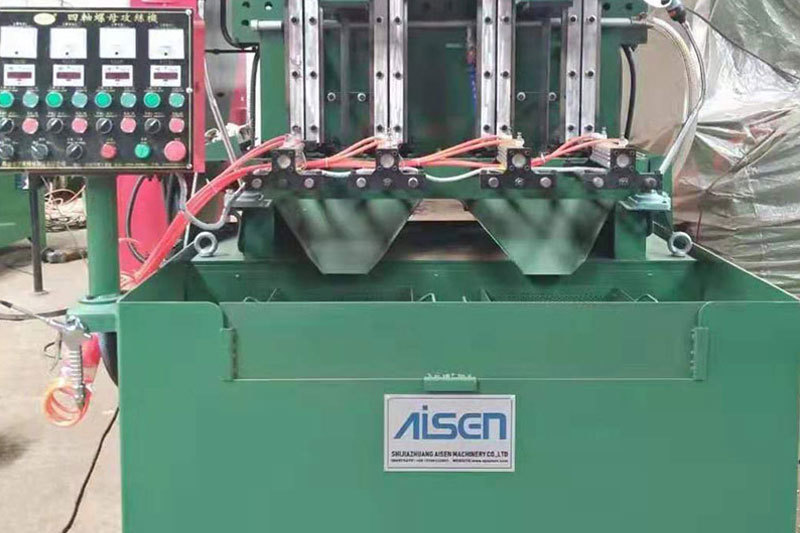
AISEN Four axis nut tapping machine ready for shipment to Russia
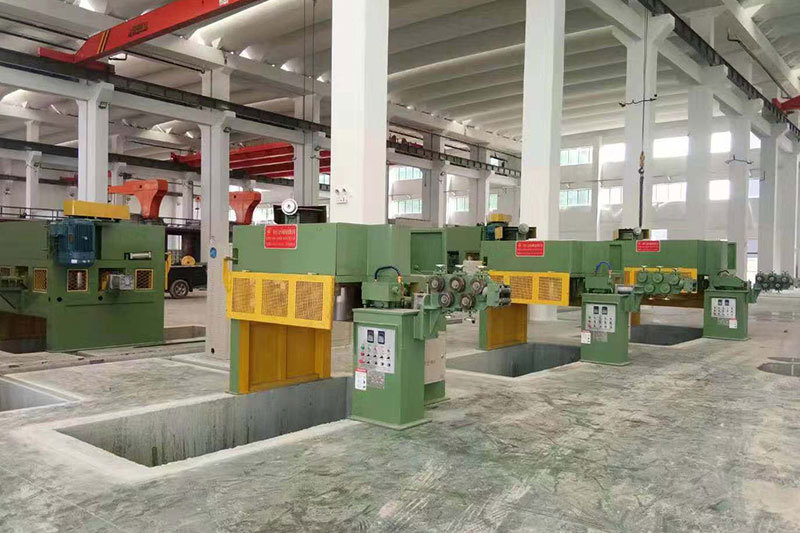
AISEN machinery inverted wire drawing machine
MESSAGES
We will contact you within one working day. Please pay attention to your email.
Qucik Link
Contact
Phone: +86-15100123091
E-mail: info@sjzaisen.com
Address: No.41 Zhaiying South Street, Yuhua District, Shijiazhuang City, Hebei Province China