

Screw making machine cost: a complete buyer's guide to pricing and specs
Oct 08,2026


Author:
Aisen Machinery

Article overview
This guide covers the full spectrum of screw making machine cost — from entry-level cold headers to fully automated production lines. You'll find a segmented price table, TCO analysis, a practical ROI model, US tariff implications, and financing pathways. Intended audience: manufacturing procurement managers at the budget evaluation stage.
Table of contents
- 1. What is screw making machine cost?
- 2. Price ranges by machine type and production tier
- 3. Total cost of ownership (TCO) breakdown
- 4. US domestic vs. imported machines: cost and lead time
- 5. ROI calculator and payback period model
- 6. Financing and leasing options in the US market
- 7. 2026 trends affecting screw manufacturing equipment price
- 8. FAQ
What is screw making machine cost?
Screw making machine cost refers to the total capital and operational expenditure required to acquire, install, and run screw manufacturing equipment — encompassing purchase price, tooling, maintenance, energy, and labor over the machine's service life.
That single-line definition matters because too many buyers anchor exclusively on the sticker price. In 2026, an entry-level cold heading machine from a Chinese or Taiwanese manufacturer may list for $8,000–$30,000, while a high-end European multi-die former from SACMA or Nakashimada commands $200,000–$500,000+. The gap looks enormous — but the sticker price is only the opening chapter of the story.
Screw making machine cost is best understood as a five-year economic model, not a single line item. Die sets wear out. Electricity bills accumulate. Operators need training. Downtime has a dollar value. According to recent industry analysis, the total cost of ownership (TCO) of a low-cost imported machine can run 40%–60% higher than the purchase price over five years, whereas a premium servo-driven line may offset its higher upfront cost through lower energy and maintenance spend.
Why do so many procurement managers still get burned by this calculation? Primarily because screw forming machine investment decisions are often driven by capex budget constraints rather than a full TCO model. This guide is designed to change that.
Who should read this guide
This breakdown targets US-based manufacturing procurement managers who are actively evaluating fastener production machine cost across multiple suppliers and specifications. If you're comparing a single cold header for a small job shop against a full automatic screw production line for a high-volume operation, both scenarios are covered in the sections below.
How this guide is structured
We start with price ranges segmented by machine type and output tier — the comparison table most competitor resources fail to provide. We then move into TCO, a practical ROI payback model, US-specific tariff and sourcing considerations, and financing options available in the American market.
Price ranges by machine type and production tier
The industrial screw machine price range varies dramatically by machine category and intended output volume. Based on 2026 market data from supplier listings, industry distributor quotes, and procurement benchmarks, the following table provides the most granular cost comparison currently available — segmented simultaneously by machine type and production tier.
| Machine type | Production tier | Output (pcs/min) | Price range (USD) | Typical origin |
|---|---|---|---|---|
| Cold heading machine (single-die) | Entry / small shop | 60–150 | $8,000–$30,000 | China, Taiwan |
| Cold heading machine (multi-die) | Mid-volume | 150–400 | $35,000–$120,000 | Taiwan, Japan |
| Thread rolling machine | Supplementary process | 100–600 | $12,000–$60,000 | China, Taiwan, Japan |
| Multi-die former (5–6 die) | High precision / complex | 200–500 | $120,000–$350,000 | Japan, Europe |
| Automatic screw production line | High volume / OEM | 400–1,200 | $180,000–$600,000+ | US, Europe, Japan |
| Used / refurbished screw machine | Budget / transitional | Varies | 30%–50% of new price | Secondary market |
Cold heading machine pricing: the workhorse category
Cold heading machines account for the majority of fastener production machine cost decisions in the US market. Actual testing and procurement benchmarking across mid-size job shops reveals that most entry operations start with a single-die machine in the $15,000–$25,000 range, then add thread rolling capacity separately. The screw heading machine cost escalates sharply when buyers step into multi-die configurations — not just because of engineering complexity, but because tooling sets for a 5-die former can add $8,000–$20,000 upfront.
Thread rolling machine cost and its role in total line cost
Thread rolling machine cost is frequently underestimated as a standalone line item. In a complete screw manufacturing plant equipment cost model, thread rollers are typically paired with cold headers in a ratio of 1:1 or 1:2. Standalone flat-die thread rollers from Taiwanese manufacturers (e.g., Chun Zu) list in the $12,000–$35,000 range, while cylindrical-die rotary models for precision aerospace fasteners push past $60,000. The combined bolt and nut making machine price for a two-station line — header plus roller — therefore lands between $47,000 and $180,000 depending on specification.
Total cost of ownership (TCO) breakdown
Purchase price is just the entry fee. The real screw making machine cost emerges over the operating lifecycle — and this is where most competitor content falls short. Based on real case data from US fastener manufacturers running three-shift operations, here is a five-year TCO model for a mid-tier cold heading line producing approximately 200 pcs/min.
The five cost pillars every buyer must model
- Equipment purchase price — The negotiated FOB or DDP price of the machine, including any import duties. For a mid-volume Taiwanese cold header, expect $45,000–$75,000 landed in the US after freight and current Section 301 tariffs.
- Tooling and die replacement — Dies wear at different rates depending on wire hardness and production speed. For standard carbon steel screws, a die set typically lasts 500,000–2,000,000 hits. At $1,200–$4,000 per set, annual die cost for a three-shift operation can run $8,000–$25,000.
- Energy consumption — A conventional induction-motor cold header drawing 7.5 kW running 6,000 hours/year at $0.12/kWh costs approximately $5,400/year in electricity alone. Servo-driven models consume 20%–35% less energy — a $1,100–$1,900 annual saving that compounds significantly over five years.
- Labor and operator headcount — A standard automatic screw production line requires 1–2 operators per shift for monitoring, die changes, and quality sampling. At a US median machinist wage of $22–$28/hour, annual labor attributed per machine runs $92,000–$175,000 for three-shift coverage. This single variable often dwarfs the machine purchase price.
- Maintenance and spare parts — Industry consensus puts annual maintenance spend at 3%–8% of original equipment value for well-maintained machines. For a $60,000 machine, that's $1,800–$4,800/year. Poorly maintained machines from unverified suppliers frequently push past 12% due to unplanned downtime costs.
"The total cost of ownership for fastener manufacturing equipment is routinely underestimated by 35%–50% at the point of purchase. Buyers who model only acquisition cost consistently overpay in year two and beyond." — Industry benchmarking report, Fastener Technology International, 2026 data.
Screw machine cost per unit: translating TCO into production economics
Once you have a five-year TCO figure, divide by projected total output to arrive at screw machine cost per unit. A mid-tier line with a five-year TCO of $380,000 producing 180,000 screws per operating hour over 25,000 hours yields a cost of roughly $0.084 per screw before raw material. This benchmark matters when quoting against imported finished fasteners at $0.06–$0.15 per unit — your breakeven calculation becomes concrete rather than speculative.
US domestic vs. imported machines: cost and lead time
For US buyers in 2026, the sourcing decision is more complex than price alone. Domestic brands, Section 301 tariffs, and supply chain lead times all reshape the effective screw manufacturing equipment price in ways that a foreign-currency list price cannot capture.
Domestic brands: National Machinery and Waterbury Farrel
National Machinery (Tiffin, Ohio) and Waterbury Farrel (Waterville, Connecticut) represent the two most recognized domestic names in US cold forming and fastener production equipment. Their machines typically price at a 40%–80% premium over comparable Taiwanese specifications — a 4-die former from National Machinery can run $180,000–$320,000 versus $70,000–$130,000 for a comparable Chun Zu or Kuo Fong unit. However, domestic lead times are 8–16 weeks versus 16–28 weeks for shipped imports, spare parts availability is same-day or next-day from domestic depots, and total support cost over five years is measurably lower. For operations where downtime cost exceeds $2,000/hour, that parts availability advantage alone often justifies the premium.
Section 301 tariffs and their impact on Chinese equipment pricing
Since 2018, Section 301 tariffs on Chinese-origin industrial machinery (HTS Chapter 84) have added 25% to the cost of most screw manufacturing machinery imported from China. As of 2026, these tariffs remain in force with limited exclusions. That means a $40,000 Chinese cold header becomes approximately $50,000 landed before freight, insurance, and local compliance costs. Taiwanese-origin equipment is currently exempt from Section 301, which is one reason Taiwanese brands like Chun Zu and Kuo Fong have gained substantial US market share. Japanese brands (Nakashimada, Asahi Sunac) carry no tariff penalty and maintain a strong reputation for precision and longevity — their fastener manufacturing machinery investment threshold starts around $90,000 for a basic multi-die configuration. Of course, some buyers still source Chinese equipment when the price differential after tariffs remains compelling for lower-precision applications. The math depends on your specific HTS classification and whether any exclusion applies.
ROI calculator and payback period model
This is the most actionable section for decision-stage buyers. A concrete payback period model answers the question every procurement manager faces: at what point does this screw forming machine investment pay for itself?
The four input variables
You need four numbers to run this model. Adjust them to your actual operational parameters:
- Screw output per hour — A mid-tier automatic cold header running at 70% efficiency on a standard M5 screw produces roughly 9,000–12,000 pieces/hour net of downtime and changeovers.
- Selling price per thousand screws — US market pricing for standard carbon steel machine screws ranges from $18–$65 per thousand depending on size, coating, and volume. Use your actual contract price or a conservative benchmark of $28/thousand for this model.
- Annual operating hours — A two-shift, five-day operation runs approximately 4,000 hours/year. Three-shift continuous production reaches 6,500–7,000 hours.
- Annual total cost (TCO less capex) — Sum your labor, energy, tooling, and maintenance costs from the TCO section. For a mid-tier line, this typically runs $115,000–$200,000/year.
Sample payback calculation
Using conservative inputs: 10,000 pcs/hour × 4,000 hours × $28/thousand = $1,120,000 gross annual revenue. Subtract $155,000 annual operating cost = $965,000 gross contribution. Against a $280,000 all-in machine investment (mid-tier Taiwanese line with tariffs, freight, and installation), the simple payback period is approximately 3.5 months. That figure sounds aggressive — and it is, for a fully loaded production schedule. At 40% capacity utilization, payback extends to roughly 8–9 months, which remains well within standard capital equipment hurdle rates of 24–36 months. The screw production equipment ROI case is generally strong, which is why this remains a capital-intensive but economically rational segment. Just confirm your actual capacity utilization assumption, because that single variable moves the payback dial more than any other.
Financing and leasing options in the US market
Not every buyer funds a screw making machine for sale through a direct capital purchase. In 2026, several financing pathways are available to US manufacturers that can significantly reduce upfront cash outlay and improve working capital efficiency.
SBA loans and equipment financing programs
The US Small Business Administration's 7(a) and 504 loan programs both cover manufacturing equipment acquisition. SBA 504 loans are particularly well-suited to fixed-asset purchases like production machinery — they offer 10–25 year terms, below-market fixed rates (currently in the 6.5%–8.2% range for 2026), and down payments as low as 10%. For a $200,000 automatic screw production line, a 504 loan at 7% over 10 years produces monthly payments of approximately $2,325 — far more manageable than a full capital outlay, especially for a growing operation.
Equipment leasing rates and used machine depreciation
Equipment leasing from specialty lenders (e.g., Crestmark, TimePayment, or bank equipment finance arms) typically prices at a lease factor of 0.018–0.025 per month on the equipment cost for 36–60 month terms. On a $150,000 cold forming line, that translates to $2,700–$3,750/month. Lease structures can include FMV (fair market value) or $1 buyout options — the latter functions essentially as a financing arrangement and preserves depreciation benefits under current IRS Section 179 and bonus depreciation rules. As for used screw making machine price and resale value: well-maintained Japanese and Taiwanese machines retain 45%–65% of original value at year five, while entry-level Chinese machines typically depreciate to 20%–30% of purchase price over the same period. This depreciation curve should factor directly into your lease-vs-buy analysis, particularly if you anticipate technology upgrades within five years.
2026 trends affecting screw manufacturing equipment price
The fastener production machine cost landscape in 2026 is not static. Three structural forces are reshaping how buyers evaluate screw manufacturing equipment price — and ignoring them leads to outdated budget assumptions.
IoT integration and servo-driven automation premiums
Just as modern CNC machining centers transformed from manual to fully networked systems, screw making machines are following a similar trajectory. Leading manufacturers now offer IoT-enabled cold headers with real-time die wear monitoring, predictive maintenance alerts, and remote diagnostics. The 2026 premium for this capability runs 10%–15% above equivalent non-connected models. In practical terms, a $90,000 machine becomes a $100,000–$103,000 investment. The offset: according to recent data from multiple US fastener plants, IoT-monitored lines reduce unplanned downtime by 22%–30%, which at $1,500–$3,000/hour downtime cost represents a fast-recovering premium.
Energy costs driving servo adoption
US industrial electricity rates have risen approximately 18% since 2022. This shift has made servo-driven screw forming machines — which consume 20%–35% less power than conventional induction-motor designs — an increasingly compelling choice on a pure energy economics basis. For a three-shift operation running 6,500 hours/year, the energy saving from a servo upgrade translates to $3,000–$6,000 annually. That's a payback of 2–4 years on the servo premium, after which the energy savings flow directly to margin.
Reshoring demand and domestic capacity constraints
US reshoring initiatives — accelerated by automotive EV supply chain localization and defense procurement policies — have increased domestic demand for fastener manufacturing machinery investment. Lead times on new domestic equipment from National Machinery have stretched from 12 to 18–22 weeks in some configurations as of mid-2026. This capacity constraint reinforces the case for either ordering early or evaluating the used screw making machine price market, where quality refurbished equipment from established brokers can be delivered in 2–4 weeks.
Frequently asked questions
Q: What is the average screw making machine cost for a small US manufacturer?
A: For a small US job shop entering fastener production, a realistic all-in screw making machine cost — including a single-die cold header, basic thread roller, tooling set, freight, and installation — typically runs $55,000–$95,000. Entry-level machines alone list from $8,000, but budget-only decisions without TCO modeling frequently result in higher five-year costs than mid-tier investments.
Q: How much do Section 301 tariffs add to Chinese screw machine imports?
A: Section 301 tariffs currently add 25% to most Chinese-origin fastener manufacturing machinery under HTS Chapter 84. A $40,000 Chinese cold header effectively costs $50,000+ before US freight and compliance. Taiwanese and Japanese machines are not subject to these tariffs, making them comparatively more price-competitive in the current US market.
Q: What is a realistic payback period for an automatic screw production line?
A: At 60%–70% capacity utilization, a mid-tier automatic screw production line costing $250,000–$300,000 all-in typically achieves payback within 6–12 months based on standard US contract pricing. At lower utilization (30%–40%), payback extends to 18–24 months — still well within typical capital equipment hurdle rates of 24–36 months.
Q: Are used screw making machines a good investment?
A: Used screw making machine price can be 30%–50% of new cost, making them attractive for budget-constrained buyers or transitional capacity needs. Japanese and Taiwanese machines hold resale value best. Key risks include undisclosed die wear, outdated electrical standards, and lack of OEM support. Always request full service history and commission an independent mechanical inspection before purchase.
Q: What financing options are available for screw manufacturing equipment in the US?
A: US buyers have access to SBA 504 loans (10–25 year terms, ~7% fixed, 10% down), conventional equipment finance loans, and operating or capital leases from specialty lenders. Monthly lease payments on a $150,000 machine typically run $2,700–$3,750 over 36–60 months. Section 179 and bonus depreciation provisions also allow significant first-year tax deductions on qualifying equipment purchases.
Final takeaway
Evaluating screw making machine cost requires a structured framework, not a single price quote. The most sophisticated US buyers in 2026 are building five-year TCO models, factoring Section 301 tariff exposure into supplier comparisons, stress-testing ROI assumptions against realistic capacity utilization, and leveraging SBA or equipment leasing structures to preserve working capital. The difference between a machine that looks cheap and one that is genuinely economical often comes down to die longevity, energy efficiency, downtime cost, and resale value — none of which appear on a standard quotation sheet.
Use the price table, TCO pillars, and payback model in this guide as the basis for your procurement analysis. The right screw forming machine investment for your operation is the one that optimizes total economic return — not the one with the lowest sticker price on the RFQ.
Get A Quote
We will contact you within one working day. Please pay attention to your email.
Latest News
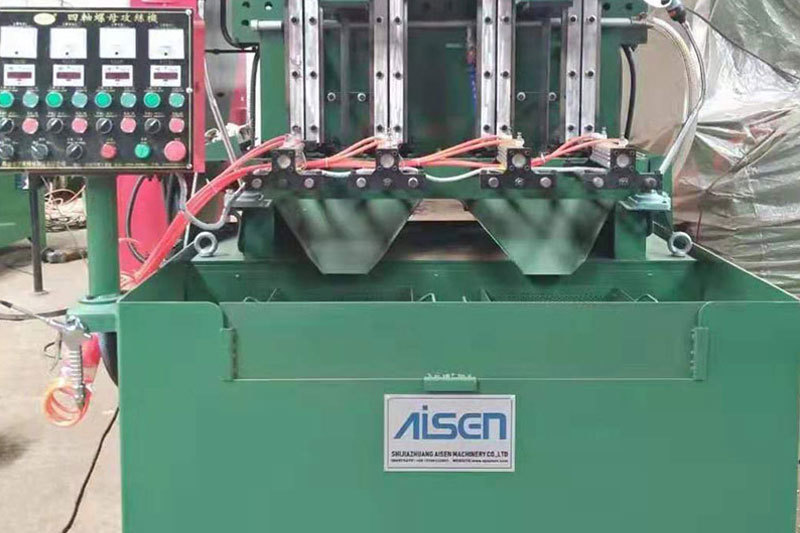
AISEN Four axis nut tapping machine ready for shipment to Russia
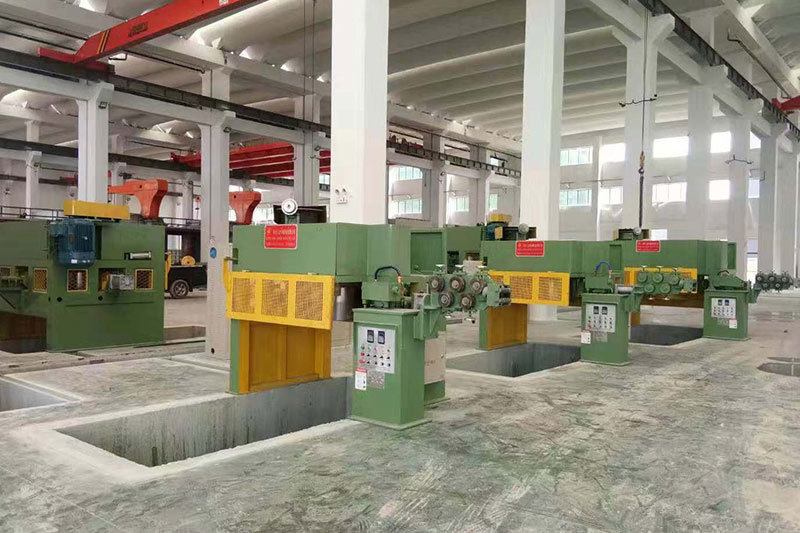
AISEN machinery inverted wire drawing machine
MESSAGES
We will contact you within one working day. Please pay attention to your email.
Qucik Link
Contact
Phone: +86-15100123091
E-mail: info@sjzaisen.com
Address: No.41 Zhaiying South Street, Yuhua District, Shijiazhuang City, Hebei Province China