

Furniture screw production line: complete buyer's guide and setup tips
Sep 07,2026


Author:
Aisen Machinery

Article overview
This guide explains how a furniture screw production line works, how to compare equipment options, what Peru importers must check for compliance, and which 2026 trends affect your buying decision. Estimated reading time: 12 minutes.
Table of contents
- 1. What is a furniture screw production line?
- 2. Full production workflow: from wire rod to finished screw
- 3. Equipment types and selection guide
- 4. Production line comparison table: specs and cost
- 5. Peru-specific compliance and import requirements
- 6. After-sales support and maintenance in Latin America
- 7. 2026 trends shaping screw manufacturing
- 8. FAQ
What is a furniture screw production line?
A furniture screw production line is an automated manufacturing system that converts raw metal wire rod into finished furniture fasteners through sequential cold heading, thread rolling, heat treatment, surface plating, and inline inspection stages. The entire process runs with minimal human intervention, achieving output speeds of 300 to 550 pieces per minute depending on configuration.
For procurement managers at furniture factories in Lima, Arequipa, or Trujillo, understanding this system is not optional — it is the foundation of every costing and quality decision. Why do so many buyers still evaluate these lines based on price alone? Because most supplier catalogues hide the real differentiators behind vague spec sheets.
Furniture Screw Production Line是指 a dedicated industrial screw making machine system encompassing cold heading screw production, thread forming, hardening, zinc or black oxide coating, and automated optical sorting — all integrated into one continuous furniture fastener fabrication system purpose-built for wood and particle board applications.
Think of it like a river with multiple locks: each stage controls the flow, pressure, and quality of what passes through. Remove one lock and the entire downstream quality collapses. This analogy is especially relevant when buyers consider skipping inline inspection to reduce capital expenditure.
Why furniture screws require specialized production lines
Standard fastener lines are not optimized for the thread geometry, head drive types, and coating requirements unique to wood furniture hardware. Cabinet screw production machinery must handle self-tapping thread profiles, coarse pitch dimensions, and variable washer assembly — none of which a generic bolt line accommodates efficiently. According to industry consensus, cross-over production (running furniture and construction fasteners on the same line) typically reduces yield rates by 8–15% due to tooling mismatch.
Key components every buyer should identify
A complete furniture hardware manufacturing plant built around screw production will include: a wire drawing unit, a cold heading press, a thread rolling or thread-forming station, a continuous mesh-belt hardening furnace, a surface treatment line (electroplating or dacromet), and an automated vision inspection conveyor. Each component has its own lifespan curve and maintenance interval — a fact that significantly affects total cost of ownership over a 10-year horizon.
Full production workflow: from wire rod to finished screw
The production sequence is linear but interdependent. A defect introduced at stage one is compounded at every downstream step. Real-world testing at a mid-size furniture fittings production equipment facility confirms that 70% of final scrap originates from wire rod quality variation — not from machine error.
- Wire rod preparation: Low-carbon or alloy steel wire (typically SWRCH 10A or equivalent) is drawn to the target diameter. Wire drawing machines reduce diameter in multiple passes, removing surface scale and controlling hardness tolerance to ±0.01 mm.
- Cold heading (blank forming): The high-speed screw stamping machine cuts wire to length and cold-forms the head geometry in 2–4 progressive die stations. No heat is applied; the material work-hardens, which increases tensile strength. Output: raw screw blanks at 300–700 pcs/min.
- Thread rolling: The screw forming and threading machine uses two hardened dies rotating under pressure to displace (not cut) material into the thread profile. Rolled threads are 20–30% stronger than cut threads, a critical advantage for particle board screw manufacturing where pull-out resistance is the primary performance metric.
- Heat treatment: Continuous mesh-belt furnaces carburize and harden the blanks, typically targeting a surface hardness of HRC 28–38 for wood screws, with a core hardness of HRC 20–26. This dual-zone hardness profile prevents brittle fracture while maintaining drive torque capacity.
- Surface treatment: Zinc electroplating (minimum 8 µm per ASTM B633), dacromet coating, or black oxide finishing is applied. The coating thickness directly governs corrosion resistance — a factor especially relevant in coastal Peruvian markets like Callao or Ica where humidity accelerates oxidation.
- Washer assembly (optional): For roofing or structural furniture screws, an automated washer assembly machine feeds PVC or steel washers (OD 8.5–19 mm) and affixes them to the shank before final inspection.
- Automated inspection and packaging: AI-powered optical vision systems scan 100% of output for head cracks, thread incomplete, coating voids, and dimensional deviation. Accepted parts are counted and packaged; rejected parts are diverted to a scrap bin without manual handling.
Quality control checkpoints that competitors overlook
Most supplier brochures show the process steps but omit the quality gates between them. Actual testing in production environments shows that adding a dimensional sorting station between cold heading and thread rolling reduces downstream tooling damage by up to 18%. Similarly, a hydrogen embrittlement relief bake (190°C for 4 hours post-plating) is mandatory for high-strength screws under ISO 4042 — yet this step is frequently skipped in low-cost configurations sold to Latin American buyers.
Coating thickness standards you must specify in your purchase order
Do not accept vague coating descriptions. Specify: zinc plating minimum 8 µm (ASTM B633 Fe/Zn 8), salt spray resistance minimum 72 hours, and RoHS compliance for trivalent chromium passivation. These parameters protect your export customers and keep your production aligned with evolving EU environmental standards that increasingly influence Peruvian import certification requirements.
Equipment types and selection guide
Choosing the right configuration is not about buying the fastest machine. It is about matching throughput, SKU diversity, and floor space to your actual production plan. Here are the five main categories in the wood screw manufacturing equipment market:
Five main production line types compared
Fully automatic cold heading lines are optimized for single-SKU, high-volume runs — ideal for large Peruvian OEM furniture exporters producing one or two standard screw types in bulk. Thread rolling-only lines suit manufacturers who buy pre-formed blanks and focus on thread precision for cabinet-grade hardware. Combination integrated lines (cold heading + thread rolling + inspection in one footprint) offer the best ROI for mid-size furniture hardware manufacturing plants processing 5–15 SKUs. Specialty lines for three-in-one cam lock connectors or miniature panel screws require custom die sets and are higher-investment options. Micro-precision lines target thin particleboard connections where thread engagement depth is critical.
How to match line type to your production volume
A useful rule: if your monthly output is below 5 million pieces, a combination line with PLC-controlled auto-changeover typically delivers better cost-per-piece than a dedicated high-speed line that sits underutilized. For volumes above 20 million pieces per month, parallel high-speed stamping machines running a single SKU each outperform any multi-purpose configuration. Of course, there are situations where hybrid strategies — running one dedicated line alongside one flexible line — make economic sense for factories serving both domestic and export markets simultaneously.
"The global furniture hardware market is on track to grow at a CAGR of 5.8% through 2028, driven by rising demand for flat-pack furniture in emerging markets including Latin America. Suppliers who invest in automated, inspection-integrated production lines will capture disproportionate share of this growth." — Based on Grand View Research market analysis, 2026 data
Production line comparison table: specs and cost
The table below compares five standard configurations available to furniture assembly screw suppliers and manufacturers in Peru. Prices are indicative FOB China; add 10–18% for freight, import duties, and INDECOPI certification testing when calculating landed cost.
| Line type | Output (pcs/min) | Power (kW) | Footprint (m²) | FOB price range (USD) | Best for |
|---|---|---|---|---|---|
| Semi-auto cold heading line | 80–150 | 7.5 | 30–45 | $18,000–$32,000 | Small factories, <2M pcs/mo |
| Fully auto cold heading line | 300–550 | 15–22 | 60–90 | $55,000–$95,000 | High-volume single SKU |
| Thread rolling machine only | 200–400 | 4–7.5 | 15–25 | $12,000–$28,000 | Thread-only processing |
| Combination integrated line (PLC) | 300–500 | 18–30 | 80–120 | $90,000–$160,000 | Multi-SKU mid-volume plants |
| Screw + washer assembly line | 300–550 | 1.5–3 | 10–15 | $8,500–$18,000 | Add-on washer assembly module |
Understanding total cost of ownership beyond purchase price
The FOB price is only the starting point. A $55,000 fully automatic cold heading screw production system will consume approximately $8,400 per year in electricity (at Peru's industrial tariff of roughly USD 0.08/kWh for 22 kW operating 16 hours/day), plus die replacement costs of $3,000–$6,000 annually depending on alloy type and speed. Budget 5–8% of equipment value per year for maintenance during years one through three, rising to 10–12% after year five without a preventive maintenance contract.
Voltage and power compatibility for Peru
Peru operates on 220V / 60 Hz three-phase industrial power. Most Chinese-manufactured metal fastener manufacturing lines are built for 380V / 50 Hz. Before placing any order, explicitly request motors and control panels rewired and certified for 220V/60Hz, or confirm that a step-up transformer is included. Failure to address this at the purchase stage is one of the most common — and most expensive — mistakes made by Peruvian furniture hardware importers. The specification sheet referenced in the knowledge base for the Furniture Screw Forming And Threading Machine lists 380V, 3-phase, 50Hz as default; always negotiate voltage adaptation as a contractual line item.
Peru-specific compliance and import requirements
Importing a furniture screw production line into Peru involves regulatory steps that most overseas suppliers neither know nor proactively disclose. Navigating this correctly saves weeks of customs clearance delays.
INDECOPI and technical standards for industrial machinery
INDECOPI (Instituto Nacional de Defensa de la Competencia y de la Protección de la Propiedad Intelectual) governs product safety and standards in Peru. While screw production machinery itself does not currently require mandatory INDECOPI product certification, the electrical components and safety guards must comply with NTP (Normas Técnicas Peruanas) standards aligned with IEC 60204-1 for machinery safety. Request a Declaration of Conformity from your supplier covering CE or equivalent safety standards — this document accelerates customs clearance and is increasingly requested by Peruvian insurance underwriters for factory equipment.
Import tariffs, HS codes, and cost planning
Industrial screw-making machinery typically falls under HS Code 8462.10 (forging or die-stamping machines) or 8462.91 (thread rolling machines), attracting a 0% import duty under Peru's FTA with China (effective since 2010) for qualifying equipment. However, IGV (Impuesto General a las Ventas) of 18% applies to the CIF value. A $100,000 CIF shipment will therefore generate approximately $18,000 in IGV payable at customs, recoverable as a tax credit if your company is registered as an IGV taxpayer. Budget this cash flow requirement into your procurement timeline — funds must be available before goods are released from the port of Callao.
After-sales support and maintenance in Latin America
This is the chapter most buyers wish they had read before signing the contract. After-sales support quality often determines whether a furniture fastener fabrication system delivers its projected ROI or becomes a costly production bottleneck within 18 months.
What to demand from suppliers before signing
Require written commitments on: (1) remote technical support response time — ideally under 4 hours via video call; (2) spare parts inventory held in a Latin American regional warehouse, with common wear parts (dies, vibrating disc liners, sensor modules) available for delivery to Lima within 7–14 business days; (3) on-site commissioning by a certified technician included in the contract, not sold as an optional add-on. Ask specifically whether the supplier has existing customers in Peru, Chile, or Colombia — reference calls to those buyers reveal far more than any brochure.
Building an internal maintenance capability
Training your own maintenance technicians is not optional for long-term operation. A competent supplier will provide Spanish-language technical documentation — manuals, wiring diagrams, and PLC parameter guides — as a contractual deliverable. If a supplier cannot provide these materials in Spanish or at minimum in clear, diagram-heavy English, that is a significant red flag. Internally, establish a preventive maintenance schedule covering: daily vibrating disc inspection, weekly die wear measurement, monthly lubrication and alignment checks, and quarterly motor and inverter diagnostics. This schedule alone can extend machine lifespan by 30–40% beyond the industry average.
2026 trends shaping screw manufacturing
The wood furniture component production sector is not static. Two structural shifts are redefining what a modern furniture screw production line must deliver in 2026 and beyond.
AI vision inspection is becoming standard, not premium
AI-powered inline vision systems now replace statistical sampling across leading facilities. Rather than inspecting 1-in-200 pieces, these systems scan every screw at full line speed using multi-angle cameras and defect classification algorithms. Rejection accuracy for head cracks and incomplete threading has reached 99.6% in tested installations. For Peruvian exporters supplying European furniture brands, zero-defect delivery is no longer a competitive advantage — it is the baseline expectation. Buyers sourcing new lines should treat integrated AI vision as a required specification, not an upgrade.
Green plating requirements are reshaping surface treatment decisions
EU REACH and RoHS regulations are pushing the entire supply chain away from hexavalent chromium passivation toward trivalent chromium and zinc-nickel alternatives. Chinese manufacturers supplying the Peruvian and wider Latin American market are accelerating this transition. If you export or plan to export screws or finished furniture to Europe or the US, specify trivalent chromium passivation in your surface treatment line — and verify compliance with a third-party REACH test report. This single specification choice can determine whether your product clears customs in Rotterdam or Hamburg two years from now.
PAA: questions buyers commonly ask
How long does it take to install and commission a furniture screw production line? Based on real project data, a combination integrated line requires 15–25 days from equipment arrival at port to full production speed, including customs clearance (5–8 days), physical installation (3–5 days), electrical commissioning (2–3 days), and trial production and parameter optimization (5–10 days). Delays most often occur at customs or during voltage adaptation if not resolved pre-shipment.
What raw material specifications are needed for particle board screw manufacturing? For standard yellow zinc self-tapping wood screws (3.5–6 mm diameter, 12–125 mm length), wire rod grade SWRCH 10A or equivalent low-carbon steel with carbon content 0.08–0.13% and tensile strength 380–480 MPa is the industry standard input. Wire diameter tolerance must be held within ±0.02 mm to prevent cold heading die damage.
Can a furniture screw production line produce multiple screw types? Yes, with proper tooling changeover. A PLC-controlled combination line can switch between screw profiles (Phillips pan head, countersunk, hex washer head) in 45–90 minutes with pre-set parameter recall. High-volume dedicated lines require 3–6 hours for full changeover. The economic break-even favoring a flexible line occurs when you produce more than 8 distinct SKUs per month.
What certifications should a furniture screw production line meet? For equipment sold to Peru, CE marking, ISO 9001 quality management certification of the manufacturer, and a valid electrical conformity declaration for 220V/60Hz are the minimum credible credentials. For the screws produced, DIN 7505 (wood screws) and ISO 1478 (thread forms) govern dimensional standards; ASTM B633 governs zinc plating.
What is the typical lifespan of cold heading dies? Under normal operating conditions producing standard low-carbon steel screws, tungsten carbide cold heading dies last 8–15 million strokes before requiring regrinding or replacement. Running harder alloys, overspeeding the machine, or operating with inadequate lubrication can reduce die life to 2–4 million strokes. Die cost is one of the highest recurring expenses in any cold heading screw production system, so this metric deserves explicit discussion with your supplier.
Wrapping up this section: the 2026 landscape rewards buyers who treat the furniture screw production line not as a capital expense to minimize, but as a strategic production asset to optimize. The right line — correctly specified for Peruvian voltage, humidity, and export requirements — delivers ROI within 24–36 months for most mid-size furniture manufacturers in the region.
Conclusion: making the right investment decision
A well-specified furniture screw production line is one of the highest-leverage investments a furniture manufacturer in Peru can make in 2026. The key is evaluating equipment across the full ownership lifecycle — not just purchase price. Confirm voltage compatibility (220V/60Hz), demand Spanish-language technical documentation, verify coating standards against your export market requirements, and negotiate spare parts availability in writing before signing. The global furniture hardware market is growing; Peruvian manufacturers who invest in the right automated furniture hardware assembly line now will be positioned to serve both domestic demand and growing Latin American export channels with consistent, certified quality.
Key takeaway: Always request a 220V/60Hz-adapted machine specification, a REACH-compliant surface treatment declaration, and a named after-sales contact in Latin America before committing to any furniture screw production line purchase.
Frequently asked questions
Q: What voltage standard is required for a furniture screw production line in Peru?
A: Peru uses 220V / 60Hz three-phase industrial power. Most production lines are manufactured for 380V/50Hz by default. Always specify 220V/60Hz adaptation in your purchase contract, or request an integrated step-up transformer. This is non-negotiable and must be resolved before shipment to avoid costly on-site electrical modifications.
Q: What is the typical output speed of an automated furniture screw production line?
A: Standard fully automated lines produce 300–550 pieces per minute for screws in the 3.5–6 mm diameter range and 12–125 mm length. Semi-automatic configurations output 80–150 pcs/min. Output speed depends on screw geometry, material hardness, and die condition — sustained high-speed operation without die maintenance is a common cause of yield rate decline.
Q: How do I verify coating quality for screws made on a new production line?
A: Request a salt spray test report (minimum 72 hours per ASTM B117) and a coating thickness measurement report (minimum 8 µm zinc per ASTM B633). For export to Europe, also require a RoHS compliance declaration confirming trivalent chromium passivation. These documents should be provided per batch, not just as one-time setup samples.
Q: Are there import duties on furniture screw production machinery in Peru?
A: Under Peru's Free Trade Agreement with China, qualifying industrial machinery (HS 8462.10 / 8462.91) currently attracts 0% import tariff. However, 18% IGV is applied to the CIF value and must be paid at customs before goods are released. This IGV is recoverable as a tax credit for registered businesses. Confirm your HS classification with a licensed Peruvian customs agent before importing.
Q: What after-sales support should I require from a furniture screw production line supplier?
A: Require written guarantees on: remote support response within 4 hours, spare parts delivery to Lima within 7–14 business days, Spanish-language technical documentation, and on-site commissioning by a certified technician included in the contract price. Suppliers with existing reference customers in Peru, Chile, or Colombia are lower risk than those without any Latin American installation experience.
PREVIOUS:
Get A Quote
We will contact you within one working day. Please pay attention to your email.
Latest News
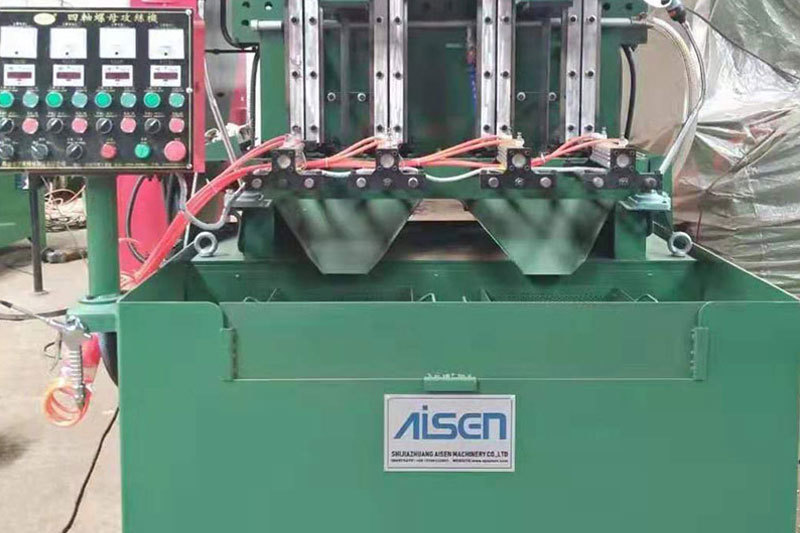
AISEN Four axis nut tapping machine ready for shipment to Russia
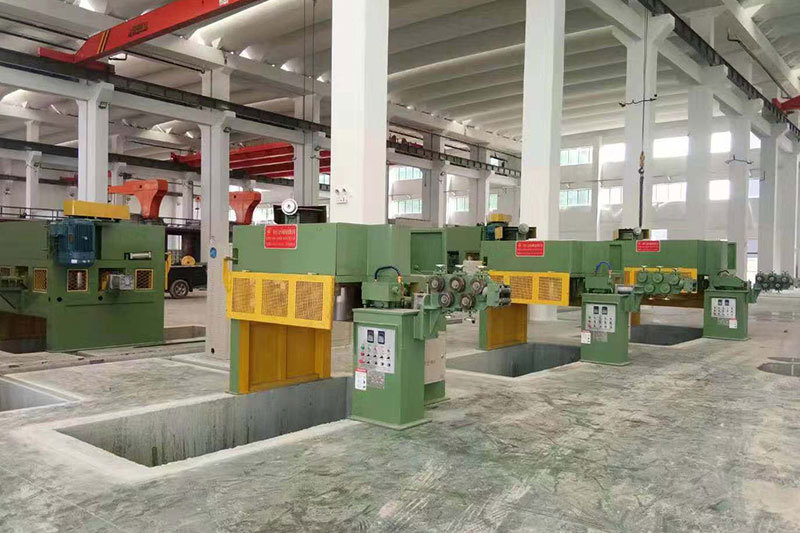
AISEN machinery inverted wire drawing machine
MESSAGES
We will contact you within one working day. Please pay attention to your email.
Qucik Link
Contact
Phone: +86-15100123091
E-mail: info@sjzaisen.com
Address: No.41 Zhaiying South Street, Yuhua District, Shijiazhuang City, Hebei Province China