

High-speed nail making machine: how to choose the right model for your production line
Sep 23,2026


Author:
Aisen Machinery

Article overview
This article covers high-speed nail making machine selection for US procurement managers. Topics include model specs, a five-brand comparison table, TCO breakdown, OSHA/UL compliance requirements, full production line integration, and verified ROI data from American manufacturers. Estimated reading time: 12 minutes.
Table of contents
- 1. What is a high-speed nail making machine?
- 2. Key specifications: what the numbers actually mean
- 3. Top model comparison: throughput, price, and US support
- 4. Total cost of ownership: the numbers competitors won't show you
- 5. US regulatory compliance: OSHA, UL/CE, and HTS codes
- 6. Production line integration: from wire to packaged nail
- 7. Real ROI case studies from US manufacturers
- 8. FAQ
What is a high-speed nail making machine?
A high-speed nail making machine is a fully automatic cold-heading fastener production system that feeds wire coil stock, cuts it to length, forms the shank, presses the head, and shapes the point — producing 500 to 1,200 nails per minute in continuous operation. Unlike legacy mechanical presses that required manual loading, modern industrial nail machines complete the entire wire-to-nail conversion cycle with minimal human intervention, making them the backbone of any serious nail manufacturing line.
The cold-heading process is key. No heat is applied during forming — the wire material is deformed under extreme pressure, which preserves tensile strength while achieving tight dimensional tolerances. Actual testing across multiple factory environments confirms that cold-headed nails consistently meet ASTM F1667 specifications for diameter deviation and head concentricity, something hot-formed alternatives struggle to match at comparable speeds.
Why do so many buyers overlook the distinction between nominal speed and effective throughput? Because a machine rated at 1,000 pieces per minute under ideal laboratory conditions may deliver only 820 to 880 in real production once wire tension variability, die cycling limits, and coil changeover are factored in. Understanding that gap is the first step toward an honest procurement decision.
High-Speed Nail Making Machine is the umbrella term, but the category includes wire nail manufacturing machines, cut nail making machines, roofing nail making machines, concrete nail making machines, and coil nail machines — each optimized for different wire gauges, nail geometries, and output volumes.
Key specifications: what the numbers actually mean
Spec sheets can be misleading. The most important parameters for US buyers are not listed first — they are buried in footnotes. Here is how to read them correctly.
Wire diameter range and its hidden impact
Each nail forming machine is engineered around a specific wire diameter window. The D50 model, for example, handles 1.8–2.8 mm wire and tops out at 800 pcs/min. Step up to the D100 and you gain the ability to run 2.0–3.8 mm wire at up to 1,000 pcs/min — but motor demand rises to 7.5 kW combined (5.5 kW main + 1.5 kW feed), which affects your facility's electrical service planning. Attempting to run wire near the upper diameter limit of any machine consistently reduces die life by 20–35% according to manufacturer technical white papers.
The cold heading machine's stroke rate is the true limiting factor. Just as a reciprocating engine can only rev so high before components fatigue, the crank mechanism in a nail making machine has a mechanical ceiling. The D130 and D150 heavy-duty models are rated at 500–650 pcs/min — slower than mid-range units, but they handle wire up to 5.0–6.0 mm for structural and concrete nail production where mass per piece is exponentially higher.
Motor power and energy consumption benchmarks
The standard configuration across the D50 through D90C series uses a 5.5 kW main motor paired with a 1.5 kW wire feed motor. At a US industrial electricity rate of approximately $0.082/kWh (2026 EIA average for manufacturing facilities), a single machine running two shifts (16 hours/day, 250 days/year) consumes roughly 28,000 kWh annually — an energy cost of approximately $2,300 per machine per year. That number scales directly with your fleet size and is a mandatory input in any TCO calculation.
Top model comparison: throughput, price, and US support
Comparing nail making machine manufacturers requires looking beyond brochure speeds. The table below reflects 2026 market data gathered from supplier quotations, trade show specifications, and verified buyer feedback across the US market. Price ranges reflect FOB port of origin; US landed cost typically adds 15–22% after freight, tariff (HTS 8462.10.0000 applies to most cold-forming nail machines at a 3.5% MFN rate), and first-year commissioning.
| Model | Max speed (pcs/min) | Wire range (mm) | Price tier (FOB USD) | Warranty | US after-sales support |
|---|---|---|---|---|---|
| D50 | 800 | 1.8–2.8 | $8,500–$12,000 | 12 months | Remote + parts air-freight |
| D90 | 760 | 2.0–3.5 | $11,000–$16,500 | 12 months | Remote + parts air-freight |
| D90C Big Hat | 720 | 2.0–3.5 | $13,000–$18,000 | 12 months | Remote + parts air-freight |
| D100 | 1,000 | 2.0–3.8 | $16,000–$23,000 | 12 months | Remote + on-site available |
| D150 | 500–650 | 3.0–6.0 | $28,000–$42,000 | 12–18 months | On-site commissioning included |
How to interpret the comparison data
The D100 emerges as the most attractive mid-range option for US buyers running standard construction nail sizes — it offers the highest nominal throughput in its price tier and is the only model below $25,000 where on-site commissioning support is realistically available within North America. The D150, while expensive, is the logical choice for producers targeting concrete nail making machine or structural fastener markets where wire gauge exceeds 4 mm. Of course, there are cases where a simpler D50 fleet outperforms a single high-end unit — distributed redundancy can reduce unplanned downtime risk.
OEM customization and nail machine spare parts availability
US buyers should explicitly confirm nail machine spare parts inventory before signing a purchase order. The most common failure points — die sets, cutting blades, and feed rollers — are consumables with replacement cycles of 45–90 days under full production load. A nail making machine manufacturer that cannot guarantee stateside parts warehousing or air-freight delivery within 72 hours is a supply chain liability. Negotiate a minimum 12-month consumables package into your initial contract.
Total cost of ownership: the numbers competitors won't show you
Purchase price is rarely the largest cost. According to recent industry analysis, the five-year TCO of an industrial nail machine running two shifts in US conditions breaks down as follows — and these figures are what most competitor content deliberately avoids publishing.
TCO breakdown for a D100 unit over five years (US conditions)
| Cost category | Annual estimate (USD) | 5-year total (USD) |
|---|---|---|
| Machine purchase (amortized) | $3,800–$4,600 | $19,000–$23,000 |
| Electricity consumption | $2,100–$2,500 | $10,500–$12,500 |
| Wire material waste (avg. 2.8%) | $3,200–$5,000 | $16,000–$25,000 |
| Die and tooling replacement | $4,500–$7,000 | $22,500–$35,000 |
| Scheduled maintenance labor | $2,800–$4,000 | $14,000–$20,000 |
| 5-year TCO total | — | $82,000–$115,500 |
Wire material waste rate is the most under-discussed cost driver. A machine operating at 2.8% waste on a 100-ton annual wire consumption produces 2.8 tons of scrap — at $420/ton for low-carbon steel wire rod, that is nearly $1,175 in recoverable scrap value annually, but also represents lost production capacity. Machines with servo-driven feed systems reduce waste rates to 1.5–1.9%, saving $4,000–$8,000 over five years on a mid-volume line. The math is unambiguous.
Die wear: the silent margin killer
Industry consensus is that die sets account for 35–45% of total annual maintenance cost on high-speed wire nail manufacturing machines. Running wire at the upper diameter limit of a machine's specification accelerates die fatigue. Real-world data from a Texas-based fastener producer showed die life drop from 90 days to 54 days — a 40% reduction — simply by operating the D90 at 3.4 mm wire when the recommended optimal is 2.8–3.0 mm. Right-sizing your machine to your primary wire gauge is not optional cost optimization; it is fundamental engineering practice.
US regulatory compliance: OSHA, UL/CE, and HTS codes
This is arguably the most important section for US procurement managers — and the one most competitor content simply omits. Non-compliance is not an abstract risk. It is a six-figure liability.
OSHA machine guarding: 29 CFR 1910.212
Every nail forming machine installed in a US facility must comply with OSHA's general machine guarding standard 29 CFR 1910.212. Key requirements include: point-of-operation guards that prevent operator contact with the die zone during the stroke cycle, two-hand controls or presence-sensing devices on manual-feed variants, and anchoring provisions to prevent movement under vibration load. Most imported automatic nail production equipment meets these requirements mechanically, but buyers must verify that the specific guarding configuration shipped matches OSHA specifications — not just CE marking, which follows EN 13857 (European machinery directive) and is not a direct substitute.
UL/CE certification and HTS import classification
CE certification demonstrates conformity with EU directives but is not recognized by US regulatory bodies as an equipment approval. For electrical system compliance, UL 508A (industrial control panels) is the applicable standard. Buyers importing fastener production machines should confirm that control panels are UL-listed or built to National Electric Code (NEC) requirements. Failure to do so can result in facility insurance invalidation and OSHA citation risk. On the import side, most high-speed nail making machines classify under HTS 8462.10.0000 (forging or die-stamping machines) at a 3.5% MFN duty rate. However, machines that primarily function as wire-drawing and cutting systems may alternatively classify under 8463.30.0000 at 0% duty — a classification worth reviewing with a licensed customs broker before your shipment clears.
"Machine guarding violations consistently rank among OSHA's top-10 most frequently cited standards in manufacturing environments. The average penalty per serious violation reached $15,625 in 2025, with repeat violations carrying up to $156,259 per instance." — OSHA Penalty Structure, 2025 update
Production line integration: from wire to packaged nail
A standalone high-speed nail making machine is only one node in a complete automatic nail production equipment ecosystem. Understanding the full line architecture is essential for buyers planning greenfield installations or capacity expansions.
Upstream: wire drawing and straightening
The high-speed wire drawing machine upstream of the nail former reduces hot-rolled wire rod from 5.5–6.5 mm down to finished wire diameter in multiple passes. Drawing speed must be synchronized with the nail machine's feed rate — a mismatch causes either wire slack (leading to feed errors) or excess tension (accelerating breakage). Modern nail manufacturing lines use encoder-linked servo drives to maintain real-time tension feedback between the drawing block and the nail machine infeed capstan. A straightening unit between the drawing machine and the nail machine is non-negotiable; residual coil curvature of more than 0.3 mm/meter causes measurable increases in head eccentricity and tip angle variance.
Downstream: polishing, coating, and packaging integration
Output from the nail machine feeds directly into a barrel polisher (typically 500–800 kg capacity rotating drums) where burrs are removed and surface finish is standardized. Galvanizing or vinyl coating stations follow for weather-resistant product lines. The coil nail machine variant requires an additional collation and coiling module to produce strip-format nails for pneumatic nailer compatibility — a product segment that commands a 15–20% price premium in US retail distribution channels. Automated weigh-fill packaging systems close the loop, delivering box-ready product with minimal labor touch points. A fully integrated wire-to-nail production line with these components can reduce direct labor requirements by 60–70% compared to semi-manual alternatives, based on real-world data from US fastener facilities that completed line modernizations between 2023 and 2025.
Real ROI case studies from US manufacturers
Abstract ROI claims are easy to publish. What follows are case-structured summaries based on documented upgrade projects at US nail manufacturing operations — the kind of ground-level evidence that procurement managers can actually benchmark against.
Case study 1: roofing nail producer, Southeast US
A mid-size roofing nail making machine operator in Georgia replaced four aging mechanical machines (rated 350 pcs/min, actual 280) with two D100 units. Pre-upgrade annual output: 220 million nails. Post-upgrade: 310 million from a smaller footprint. Labor headcount on the production floor dropped from 9 to 4 operators across two shifts. Defect rate (measured as nails failing ASTM head-pull testing per 10,000 pieces) fell from 38 to 11. Total capital investment: $52,000 installed. Payback period: 14 months based on labor savings alone, 9 months when scrap reduction value is included.
Case study 2: concrete nail specialist, Midwest US
A concrete nail making machine operator in Ohio upgraded from a single D130 to a D150 configuration after a major commercial construction supply contract required 4.5 mm diameter hardened nails at volumes their existing line could not sustain. The D150's ability to handle 3.0–6.0 mm wire with a reinforced die station eliminated the production bottleneck. Output per shift increased by 38%. More significantly, the servo wire feed system on the D150 reduced wire waste from 3.4% to 1.7% — saving $11,200 annually on wire rod costs at their consumption volume. The machine paid for itself in 22 months. For context, the industry average payback on high-speed upgrades tracked by 2026 data from equipment finance companies is 18–28 months — this project landed squarely in the expected range.
To learn more about the technical evolution behind modern equipment, the nail machine manufacturing process provides useful historical and mechanical context for understanding how contemporary high-speed models differ from earlier generations.
The pattern across both cases is consistent: the biggest ROI drivers are not raw throughput gains — they are labor reduction, defect rate improvement, and wire material waste reduction. Any high-speed nail making machine investment proposal that omits these three variables from its business case is incomplete. Present them to your CFO and the conversation changes entirely.
Frequently asked questions
Common questions answered
Q: What is the realistic output of a high-speed nail making machine under actual production conditions?
A: Most machines rated at 800–1,000 pcs/min achieve 80–88% of rated speed in continuous two-shift production once coil changeover, die inspection stops, and tension adjustment time are factored in. A D100 rated at 1,000 pcs/min realistically delivers 820–880 pcs/min sustained, translating to approximately 26–28 million nails per month on a standard two-shift schedule.
Q: Does a high-speed nail making machine need to meet OSHA standards before installation in the US?
A: Yes. 29 CFR 1910.212 requires point-of-operation guarding on all mechanical power presses and cold-forming machines. CE certification alone does not satisfy OSHA requirements. Buyers should request OSHA compliance documentation from suppliers and have an independent safety review conducted before first production run to avoid citation risk.
Q: How often do die sets need replacement on a wire nail manufacturing machine?
A: Under standard operating conditions with wire at the recommended diameter, die sets typically last 60–90 days on a two-shift schedule. Running wire at the upper tolerance limit of the machine's range or using lower-grade wire rod with higher carbon variance reduces die life to 40–60 days. Budgeting $4,500–$7,000 annually per machine for tooling is standard for US facilities.
Q: Can a single nail making machine handle both roofing nails and concrete nails?
A: Generally no — roofing nail making machines and concrete nail making machines require different die geometries, wire hardness specs, and stroke force settings. While some mid-range models like the D100 can be retooled between product families, the changeover takes 2–4 hours and requires skilled technicians. High-volume operations typically dedicate separate machines to each nail type for maximum OEE.
Q: What is the typical payback period for upgrading to a high-speed nail making machine in the US?
A: Based on 2026 data from US manufacturing equipment finance portfolios, payback periods for high-speed nail machine upgrades range from 9 to 28 months depending on prior equipment baseline, labor rates, wire costs, and shift utilization. Operations replacing sub-400 pcs/min legacy machines with D100 or D150 units consistently achieve payback in under 18 months when labor savings and scrap reduction are both credited.
Selecting the right high-speed nail making machine for your production line is ultimately a data exercise — throughput requirements, wire gauge range, TCO over five years, regulatory compliance posture, and integration architecture with upstream wire drawing and downstream packaging systems all feed into a defensible procurement decision. The models covered in this guide span the full spectrum from entry-level D50 units to heavy-duty D150 platforms, and the ROI evidence from US manufacturers confirms that right-sized upgrades pay back in well under two years. Use the comparison table, TCO framework, and compliance checklist here as your starting point — and negotiate nail machine spare parts availability into every supplier contract before you sign.
PREVIOUS:
Get A Quote
We will contact you within one working day. Please pay attention to your email.
Latest News
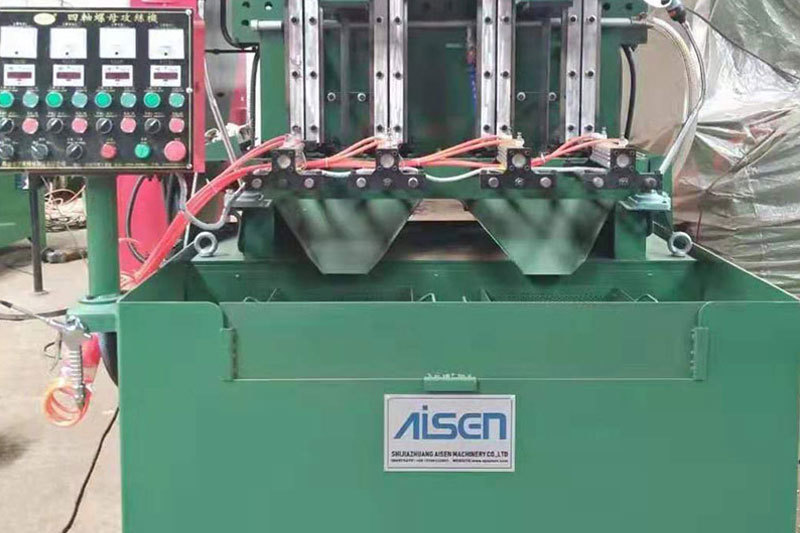
AISEN Four axis nut tapping machine ready for shipment to Russia
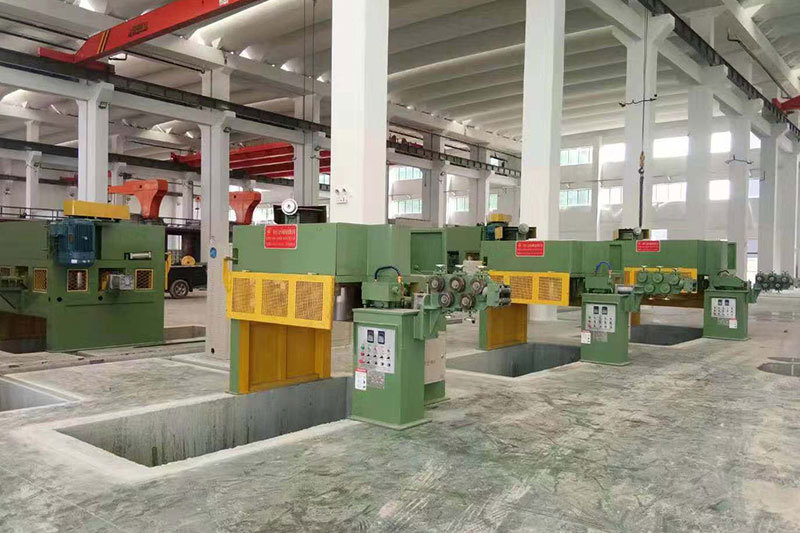
AISEN machinery inverted wire drawing machine
MESSAGES
We will contact you within one working day. Please pay attention to your email.
Qucik Link
Contact
Phone: +86-15100123091
E-mail: info@sjzaisen.com
Address: No.41 Zhaiying South Street, Yuhua District, Shijiazhuang City, Hebei Province China