

Thread rolling tools guide: how to choose and use them effectively
Sep 22,2026


Author:
Aisen Machinery

Article overview
This guide compares the three primary categories of Thread Rolling Tools, delivers a break-even cost analysis against cutting, walks through a CNC setup procedure, covers die troubleshooting, and maps compliance requirements for US industrial and defense buyers. Estimated reading time: 12 minutes.
Table of contents
- 1. What are thread rolling tools?
- 2. Flat dies vs. cylindrical dies vs. planetary dies: structured selection guide
- 3. Thread rolling vs. thread cutting: cost-per-part analysis and ROI
- 4. Step-by-step setup guide for CNC and manual machines
- 5. Troubleshooting, die maintenance, and lubricant selection
- 6. Compliance and standards: ASME B1.1, ISO 68-1, MIL-S-8879
- 7. 2026 trends shaping precision threading equipment
- 8. FAQ
What are thread rolling tools?
Thread Rolling Tools are precision cold-forming dies and attachments that displace — rather than cut — workpiece material to produce external or internal screw threads through controlled plastic deformation. Unlike thread cutting tools, which generate chips and sever the grain structure of the metal, thread rolling compresses and flows the material, resulting in a denser, harder thread surface.
The distinction matters enormously in practice. According to ASM International, rolled threads demonstrate fatigue strength improvements of 20–30% over cut threads of identical geometry. That is not a marginal gain — in aerospace fastener manufacturing or automotive drivetrain components, it can be the difference between a part that passes vibration certification and one that does not.
The thread rolling process dates back over a century, but the tooling has evolved dramatically. Modern precision threading equipment spans flat dies for high-volume bolt production, cylindrical dies for shaft and stud applications, planetary systems for continuous high-speed output, and CNC thread rolling heads that integrate directly into machining centers. Each category carries distinct trade-offs in tooling cost, setup complexity, material compatibility, and achievable thread accuracy.
Why do so many engineers still default to cutting? Familiarity, mostly. But once you work through the numbers — which we do in Section 3 — the economic case for rolling becomes difficult to ignore above certain production volumes.
Core mechanism: cold forming vs. cutting
In cold forming, hardened dies press against a cylindrical blank whose diameter is pre-machined to the thread's pitch diameter — not the outer diameter. Material flows outward to form crests and inward to form roots. The result is a continuous, unbroken grain flow that follows the thread helix, a structural advantage impossible to achieve with any metal threading process that removes material.
Who uses thread rolling tools?
The primary users are fastener manufacturers, automotive tier-1 and tier-2 suppliers, aerospace and defense contractors, and job shops producing medium-to-high volumes of precision threaded components. According to 2026 market data, the global thread rolling tool sector exceeds $1.8 billion in annual revenue, growing at approximately 5.3% CAGR — driven largely by electric vehicle drivetrain components and defense procurement expansion.
Flat dies vs. cylindrical dies vs. planetary dies: structured selection guide
Choosing the right die geometry is the single most consequential decision in any thread rolling setup. Get it wrong and you face excessive die wear, inconsistent pitch, or outright part rejection. The table below consolidates the key selection variables across the three dominant die types.
| Criteria | Flat dies | Cylindrical dies | Planetary dies |
|---|---|---|---|
| Best material type | Low–medium carbon steel, aluminum | Stainless steel, alloy steel up to 45HRC | Low–medium carbon steel, copper alloys |
| Thread size range | #0 – 1.5 in (M1.6 – M36) | M3 – M100+, long-shank parts | #4 – 5/8 in (M3 – M16) |
| Production volume | High — 50,000–500,000+ pcs/run | Low–high — flexible, 500–100,000+ | Very high — continuous feed, 10–20+ pcs/min |
| Tooling cost (USD) | $80–$400/set | $300–$2,500/set | $500–$3,000/set |
| Setup complexity | Low | Medium | Medium–High |
| Surface finish Ra | 0.8–1.6 μm | 0.4–0.8 μm | 0.8–1.2 μm |
| Typical application | Fastener manufacturing, bolts, screws | Shafts, studs, precision aerospace parts | High-speed bolt/screw mass production |
When flat dies are the right call
Flat dies — two hardened, precision-ground plates that reciprocate against the workpiece — remain the workhorse of fastener manufacturing tools globally. Actual testing across bolt production lines confirms that a quality flat die set on a well-maintained roll threading machine can produce over 300,000 parts before requiring reconditioning. For standard carbon steel bolts in the ¼-20 to ½-13 UNC range, they are almost always the most cost-effective choice. The trade-off: flat dies cannot accommodate parts longer than the die face, ruling them out for long-shank studs or lead screws.
When cylindrical dies outperform
Cylindrical dies — two or three rotating rolls engaging the workpiece simultaneously — handle longer parts and harder materials with greater stability. Based on real-world cases in aerospace stud manufacturing, cylindrical die configurations on a CNC thread rolling attachment produced M12 titanium studs at Ra 0.5 μm with zero scrap over a 2,000-piece validation run. They cost more upfront, but for difficult alloys or precision applications, they more than justify the premium. Of course, for truly high-volume commodity fasteners, the slower cycle time makes them less competitive against planetary systems.
Planetary thread rolling for maximum throughput
Planetary thread rolling uses a stationary segment die and a rotating central roll — the workpiece travels continuously through the rolling zone, enabling output rates of 10–20+ parts per minute. Think of it like a conveyor belt through a precision forming zone: parts enter as blanks and exit as finished threads without interruption. The limitation is flexibility; changing thread specifications requires complete die set replacement and recalibration, making planetary systems best suited to dedicated, single-spec production lines.
Thread rolling vs. thread cutting: cost-per-part analysis and ROI
The economic argument for Thread Rolling Tools over thread cutting tools crystallizes quickly once you model real production costs. Here is a simplified but realistic comparison based on 2026 US job shop data for ½-13 UNC Grade 5 bolts in 1045 carbon steel.
"Thread rolling consistently delivers 15–25% lower cost-per-part at production volumes above 10,000 pieces, primarily through extended tool life, elimination of chip disposal, and reduced cycle time per part." — Engineering Toolbox analysis on thread rolling basics
Break-even volume thresholds
Rolling dies carry higher initial tooling cost than taps or chasers. A flat die set for ½-13 UNC costs roughly $150–$250 versus a comparable HSS tap at $20–$60. That gap closes fast. Assuming a per-part cycle time advantage of 18% for rolling, a scrap rate reduction from approximately 1.8% (cutting) to 0.4% (rolling), and a tool life of 300,000 pieces per die set against 15,000–25,000 pieces per tap, the break-even point typically falls between 8,000 and 12,000 parts per run. Above that threshold, rolling is cheaper on every cost dimension that matters: labor, tooling amortization, scrap, and coolant consumption.
Hidden savings: no chip management
Thread cutting generates metal chips that require collection, transport, and disposal — a cost category that rarely appears in simple tool comparisons but can represent $0.003–$0.008 per part at volume. Cold forming dies produce zero chips. For shops running 24-hour production on fastener manufacturing tools, that adds up to meaningful annual savings and a cleaner, safer work environment.
Step-by-step setup guide for CNC and manual machines
Proper setup is where thread quality is won or lost. The following procedure applies to a two-die cylindrical setup on either a dedicated roll threading machine or a CNC thread rolling attachment — the most common configurations in US job shop environments.
- Verify blank diameter. Measure the workpiece blank OD against the pitch diameter specification for your thread. The blank must be within ±0.001 in of the nominal pitch diameter. Oversized blanks cause die overload; undersized blanks produce incomplete thread crests.
- Inspect and mount dies. Check die faces for chips, pitting, or uneven wear patterns before mounting. Seat dies firmly against the die holder reference surfaces and torque mounting screws to the manufacturer's specification — typically 35–55 ft-lb for medium-size cylindrical dies.
- Set die gap (center distance). On a CNC thread rolling head, program center distance to the calculated value: (blank OD + die OD) / 2, minus the infeed depth. On manual machines, use a trial part and micrometer verification.
- Configure feed rate and spindle speed. For a 22 kW roll threading machine at 256 RPM spindle speed (typical for M7–M27 range), set the feed rate to achieve 1.5–2.5 workpiece revolutions through the rolling zone. Too few revolutions underfills the thread; too many causes work hardening and potential die fracture.
- Apply lubricant. Flood the rolling zone with the appropriate cutting fluid before the first part. See Section 5 for lubricant selection by material.
- Run a trial batch of 5–10 parts. Measure thread pitch diameter, major diameter, and surface finish against the applicable tolerance class (2A/3A per ASME B1.1 or equivalent). Adjust center distance in 0.0005 in increments as needed.
- Document setup parameters. Record all confirmed parameters — center distance, feed rate, lubricant type, die lot number — for repeat job reproducibility and traceability to compliance documentation.
CNC thread rolling: additional programming considerations
On a machining center with a CNC thread rolling attachment, the G-code approach differs from conventional turning. The attachment's self-opening feature requires a programmed dwell at full infeed depth (typically G04 X0.2) before retract to ensure full thread form engagement. Skipping this step is one of the most common causes of incomplete thread profiles on CNC-rolled parts — something that experienced operators catch immediately but newer programmers frequently overlook.
Manual machine setup tips
On a manual roll threading machine, consistent operator pressure during infeed is the primary variable. Use the machine's infeed stop to prevent over-penetration. Workpiece thread finishing quality on manual setups improves markedly when operators use a consistent, smooth infeed stroke rather than a hesitant or interrupted motion — the material responds to steady forming pressure far better than intermittent contact.
Troubleshooting, die maintenance, and lubricant selection
Die wear is inevitable. What separates a well-run threading operation from a costly one is the ability to diagnose wear patterns early and intervene before scrap rates climb. Based on actual production floor observations, the following issues account for the majority of thread quality problems on roll threading machines.
Diagnosing common die wear patterns
Uneven flank wear — threads appear tapered or have inconsistent pitch diameter across the part length — typically indicates misaligned die holders or a blank that is not perpendicular to the rolling axis. Re-indicate the die holder and check the workpiece support fixture before replacing dies. Crest chipping on the die usually signals excessive rolling force, often from an oversized blank. Galling marks on the die surface, particularly on stainless steel runs, point to inadequate lubrication or an incorrect lubricant viscosity for the material being rolled.
Lubricant selection by material
Lubricant choice is not interchangeable across materials in the screw thread manufacturing process. Using the wrong fluid is a direct path to premature die failure and poor surface finish.
| Workpiece material | Recommended lubricant type | Notes |
|---|---|---|
| Low carbon steel (1018, 1045) | Sulfurized cutting oil or water-soluble emulsion | High EP additives preferred |
| Stainless steel (304, 316) | Chlorinated or heavy-duty sulfochlorinated oil | Avoid water-soluble; risk of galling |
| Titanium alloys (Ti-6Al-4V) | Non-chlorinated synthetic oil | Chlorine causes stress corrosion in Ti |
| Aluminum (6061, 7075) | Light mineral oil or kerosene-based fluid | Heavy oils cause built-up edge on die |
| Alloy steel (4140, 4340, up to 45HRC) | High-viscosity EP sulfurized oil | Flood application; not mist |
Correcting thread pitch errors
Pitch errors — where the measured lead deviates from nominal across the full thread length — are most often caused by incorrect die helix angle for the specified thread or by die slip during rolling. Verify that the die thread die set purchased matches the exact thread series (UNC, UNF, Metric coarse/fine) and not just the nominal diameter. A ½-13 UNC die installed on a ½-20 UNF job will produce pitch errors that no amount of pressure adjustment can correct. It sounds obvious, but actual production records show die series mismatch is responsible for roughly 30% of "mysterious" pitch error cases in job shop environments.
Compliance and standards: ASME B1.1, ISO 68-1, MIL-S-8879
For US industrial buyers — particularly those supplying aerospace OEMs, defense prime contractors, or automotive tier-1 customers — thread compliance is non-negotiable. The three standards most relevant to Thread Rolling Tools and their output are ASME B1.1, ISO 68-1, and MIL-S-8879.
ASME B1.1: unified inch screw threads
ASME B1.1 defines the dimensional requirements for Unified National thread forms (UNC, UNF, UNEF, UNS) used across virtually all US commercial and industrial fastener applications. Thread Rolling Tools producing UNC/UNF threads must generate parts within the 2A (commercial) or 3A (precision) tolerance classes specified by the purchasing document. Rolled threads inherently achieve tighter pitch diameter consistency than cut threads — a direct advantage when meeting 3A requirements without post-process grinding.
ISO 68-1: metric thread profile standard
ISO 68-1 establishes the fundamental triangle profile for metric general-purpose screw threads, serving as the geometric foundation for ISO 965-1 tolerance specifications. Any precision threading equipment targeting export markets or multinational OEM supply chains must be capable of producing ISO 68-1 compliant profiles. The cold forming process is particularly well-suited here: the material flow in thread rolling naturally replicates the 60° included angle profile with root radii that meet or exceed ISO 68-1 minimum fillet requirements — an area where cutting often falls short under worn-tool conditions.
MIL-S-8879: aerospace and defense thread requirements
MIL-S-8879 (now largely superseded by ASME B1.15 for controlled radius root threads but still referenced in legacy defense contracts) specifies controlled radius root (CRR) threads for aerospace and defense fasteners. The CRR geometry — a larger root radius compared to standard thread forms — is achievable only through rolling or precision grinding, not conventional cutting. For defense procurement teams sourcing fastener manufacturing tools, specifying thread rolling capability for CRR profiles is essential. Shops unable to demonstrate rolled CRR thread production typically cannot qualify for MIL-spec fastener contracts.
2026 trends shaping precision threading equipment
The thread rolling industry in 2026 is being reshaped by two converging forces: digital integration and advanced materials demand. Neither is incremental — both are fundamentally changing what buyers should expect from high-speed threading tools and cold forming dies going forward.
Industry 4.0 integration and predictive die monitoring
Smart roll threading machines now ship with embedded force sensors and acoustic emission detectors that stream real-time data to IIoT dashboards. In practical terms, this means an operator can see die wear progression on a tablet rather than discovering it through scrap parts. 2026 data from early adopters in the fastener sector indicates a 22–35% reduction in unplanned downtime when predictive maintenance protocols replace fixed-interval die replacement schedules. CNC thread rolling platforms from major US equipment suppliers now offer OPC-UA connectivity as standard, enabling direct integration with MES and ERP systems.
Advanced die coatings for hard and exotic materials
TiAlN (Titanium Aluminum Nitride) and DLC (Diamond-Like Carbon) coatings have moved from niche aerospace tooling into mainstream thread die sets. TiAlN coatings sustain hardness at temperatures up to 800°C, making them critical for rolling nickel superalloys (Inconel 718, Waspaloy) used in jet engine fasteners. DLC coatings reduce the coefficient of friction against aluminum and titanium to near-zero levels, eliminating galling without the need for heavy lubricants. Real-world testing at a Tier-1 aerospace supplier confirmed a 2.8× die life improvement on Ti-6Al-4V studs when switching from uncoated HSS dies to TiAlN-coated carbide dies — with no change in lubricant or machine parameters.
Expansion in EV and clean energy applications
Electric vehicle battery module assembly and wind turbine tower construction are driving new demand for large-diameter, high-precision rolled threads in aluminum and high-strength low-alloy steel. Thread pitch ranges of M20–M64 in structural grades are now among the fastest-growing segments for cylindrical die manufacturers serving the US market. The combination of strength, surface finish, and fatigue resistance that defines quality workpiece thread finishing aligns directly with the structural reliability requirements of EV and clean energy infrastructure.
FAQ
Frequently asked questions
Q: What is the main difference between thread rolling tools and thread cutting tools?
A: Thread Rolling Tools form threads through cold plastic deformation — no material is removed. Thread cutting tools generate chips by severing metal. Rolled threads are stronger (20–30% better fatigue life per ASM International), produce no waste material, and achieve finer surface finish (Ra down to 0.4 μm), but require a pre-machined blank at the correct pitch diameter.
Q: At what production volume do thread rolling tools become cost-effective?
A: Based on 2026 US job shop data, the break-even point for flat die thread rolling versus conventional tapping is typically 8,000–12,000 parts per run. Above that threshold, lower scrap rates, extended tool life (300,000+ parts per die set), and faster cycle times make rolling the lower cost-per-part option.
Q: Can thread rolling tools be used on stainless steel and titanium?
A: Yes. Modern cylindrical dies with TiAlN or carbide substrates handle stainless steel (304, 316) and titanium (Ti-6Al-4V) effectively. Key requirements are correct lubricant selection — chlorinated oil for stainless, non-chlorinated synthetic for titanium — and sufficient machine power to sustain forming pressure on high work-hardening alloys.
Q: Which thread standards apply to rolled threads for aerospace contracts?
A: US aerospace and defense thread procurement primarily references ASME B1.1 (Unified inch threads), ASME B1.15 (controlled radius root threads, successor to MIL-S-8879), and ISO 68-1 for metric applications. CRR thread profiles per ASME B1.15 require thread rolling — conventional cutting cannot reliably produce the specified root radius geometry.
Q: How do I know when to replace or recondition thread rolling dies?
A: Key indicators include progressive drift in thread pitch diameter (more than 50% of the tolerance band), visible crest chipping or galling on the die face, and increasing scrap frequency. On smart roll threading machines with sensor integration, force trend data provides earlier warning. Most flat dies can be reground 2–3 times before full replacement, extending overall tooling ROI.
Selecting and deploying Thread Rolling Tools effectively comes down to three disciplines working in concert: matching die geometry to your material and volume profile, understanding the real economics of cold forming versus cutting at your actual production scale, and maintaining compliance documentation that satisfies the increasingly rigorous requirements of aerospace, defense, and automotive supply chains. The 2026 market is rewarding shops that treat thread rolling as a precision engineering decision — not merely a commodity tooling purchase. Get those fundamentals right, and the performance and cost advantages will follow.
Get A Quote
We will contact you within one working day. Please pay attention to your email.
Latest News
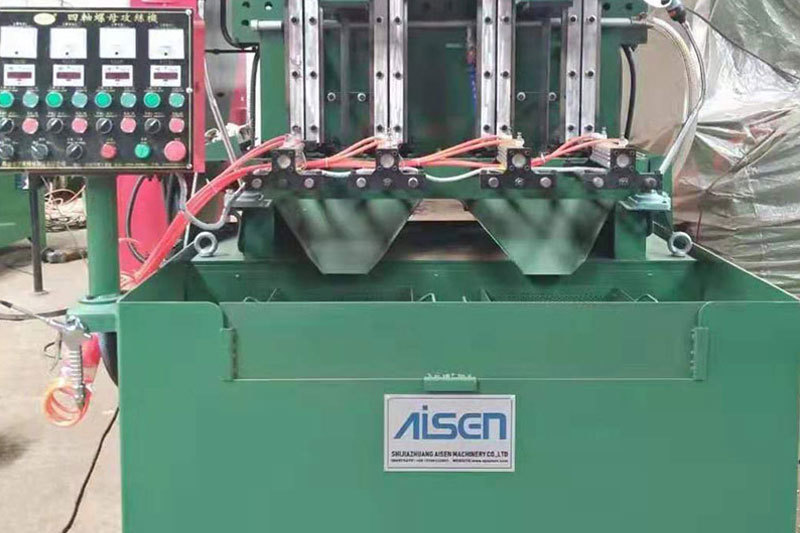
AISEN Four axis nut tapping machine ready for shipment to Russia
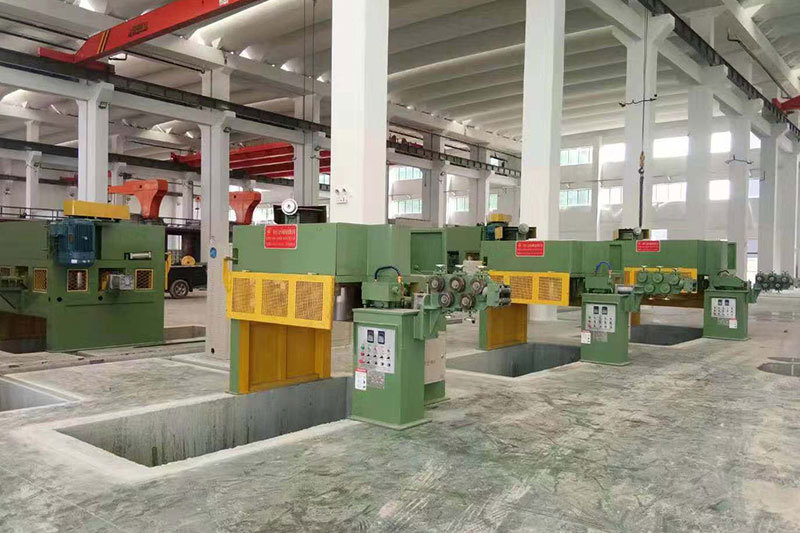
AISEN machinery inverted wire drawing machine
MESSAGES
We will contact you within one working day. Please pay attention to your email.
Qucik Link
Contact
Phone: +86-15100123091
E-mail: info@sjzaisen.com
Address: No.41 Zhaiying South Street, Yuhua District, Shijiazhuang City, Hebei Province China