

J bolt making machine: how to choose and use one effectively
Oct 16,2026


Author:
Aisen Machinery

Article overview
This guide provides a comprehensive, 2026-updated reference for procurement managers and factory owners evaluating a j bolt making machine purchase in India. It covers machine types, INR cost models, process technology, BIS compliance, local maintenance realities, and infrastructure use cases — filling the gaps left by most competitor articles.
Table of contents
- 1. What is a j bolt making machine?
- 2. Types of j bolt making machines: which one fits your production need?
- 3. Complete cost analysis for Indian manufacturers
- 4. Cold forging vs hot forging: which process produces better J bolts?
- 5. IS 1367 compliance and quality testing for J bolts in India
- 6. Common faults and maintenance in Indian operating conditions
- 7. Application scenarios: J bolt usage in India's infrastructure projects
- 8. FAQ
What is a j bolt making machine?
A j bolt making machine is a dedicated fastener manufacturing system that continuously converts wire rod into finished J-shaped anchor bolts through automated feeding, cutting, cold forging, thread rolling, and bending operations — all in a single production sequence. Unlike general-purpose bending equipment, a true J bolt fabrication machine integrates multiple forming stages so that the hook geometry, shank length, and thread specification are produced simultaneously to consistent tolerances.
Why do so many buyers confuse a basic bolt bending machine with a full anchor bolt forming equipment setup? The answer lies in how J bolts are specified. A J-type anchor bolt must meet precise dimensional requirements for the hook radius, straight shank, and threaded end — meaning a simple bender that only curves the rod is not enough. The machine must also perform cold heading to form the bolt tip and thread rolling to cut the pitch. Treating these as separate processes wastes floor space, adds labor cost, and introduces dimensional inconsistency.
In practical terms, a modern automatic bolt forming machine for J bolt production operates at 40–120 pieces per minute depending on wire diameter, and handles material from M6 through M36. According to 2026 data from the Indian fastener manufacturing sector, demand for foundation bolt machines capable of producing J and L-type anchor bolts has grown by roughly 18% year-on-year, driven by large-scale infrastructure investment under national construction programs.
The core value proposition is simple: one integrated J bolt manufacturing machine replaces three or four standalone machines, cuts labor requirements by 40–60%, and delivers batch-to-batch consistency that manual or semi-manual processes cannot match.
Types of j bolt making machines: which one fits your production need?
Selecting the right machine starts with understanding that the anchor bolt production line market in 2026 offers at least five distinct machine architectures — each with a different balance of output speed, capital cost, flexibility, and skill requirement. Getting this choice wrong is expensive. A factory that buys a high-speed multi-station cold former for 500 pieces per day of mixed custom orders will spend more time on die changeovers than on actual production.
Full-automatic CNC bolt bending machine
This is the flagship category of J bolt fabrication machine technology in 2026. A servo-driven CNC system controls every axis of movement — feed length, bend angle, cut position — and stores up to several hundred product recipes in memory. Switching from M12 to M20 takes minutes, not hours. Output ranges from 60 to 120 pcs/min for standard sizes. The trade-off is price: expect ₹18–₹35 lakh for a quality imported unit, or ₹12–₹22 lakh for a domestically assembled equivalent. This category suits factories producing more than 50,000 bolts per shift with multiple size variants.
Semi-automatic hydraulic forming machine
A hydraulic press machine paired with a fixed bending die and manual loading is the workhorse of India's small-to-medium fastener shops. These machines handle wire diameters from M8 to M30 reliably, produce 20–45 pcs/min, and cost ₹3.5–₹8 lakh. They are forgiving of voltage fluctuations — a genuine daily reality in many Indian industrial estates — because hydraulic systems tolerate brief power instability better than servo electronics. The limitation is dimensional repeatability over long runs: operator fatigue introduces variation after four to five hours.
Multi-station cold former (combined heading + bending)
The multi-station threaded bolt production machine integrates heading, trimming, thread rolling, and bending into one transfer-die sequence. This is the highest-efficiency configuration — essentially an anchor bolt production line compressed into one cabinet. Output for M10–M16 J bolts reaches 80–100 pcs/min. However, die sets for each size cost ₹80,000–₹2,00,000, and the machine itself starts at ₹25 lakh. For Indian manufacturers supplying large infrastructure contractors on long-term purchase orders, the economics are compelling. For a general-purpose shop, the die inventory cost makes it impractical.
Single-station J type bolt press machine
The simplest category: a dedicated hook bolt forming machine with a fixed die, single-axis bending, and manual thread insertion. Capacity is 15–30 pcs/min, price is ₹1.5–₹3.5 lakh, and complexity is low enough that any mechanic can maintain it. This suits micro-enterprises producing one or two standard J bolt sizes in volumes under 5,000 pieces per day. Thread rolling must be done on a separate Z28-series thread rolling machine, adding a process step.
Servo-driven smart forming machine
The newest entrant in fastener manufacturing equipment for 2026 combines servo motors on all axes with PLC-based parameter storage, IoT connectivity for remote diagnostics, and automatic springback compensation algorithms. Energy consumption is 20–30% lower than equivalent hydraulic models. Indian adoption is still early-stage, concentrated among Tier-1 suppliers to automotive and power transmission projects. Price range: ₹28–₹50 lakh.
| Machine type | Size range | Output (pcs/min) | Price range (₹ lakh) | Best for |
|---|---|---|---|---|
| Full-auto CNC | M6–M30 | 60–120 | 12–35 | High-volume, multi-size factory |
| Semi-auto hydraulic | M8–M30 | 20–45 | 3.5–8 | SME, voltage-unstable zones |
| Multi-station cold former | M10–M24 | 80–100 | 25–45 | Long-run single-spec orders |
| Single-station press | M6–M20 | 15–30 | 1.5–3.5 | Micro workshop, fixed spec |
| Servo smart machine | M6–M36 | 50–110 | 28–50 | Tier-1 supplier, IoT-ready plant |
Complete cost analysis for Indian manufacturers
The machine price tag is only one component of what you actually pay. Indian SME manufacturers frequently underestimate total cost of ownership (TCO) when evaluating anchor bolt forming equipment, which leads to budget overruns within the first year of operation. Real numbers matter here.
Capital and operating cost breakdown
Based on actual case data from manufacturing units in Rajkot, Ludhiana, and Pune in 2026, a mid-range semi-automatic steel bolt making machine (M10–M24 range, ~35 pcs/min) carries the following annual cost profile:
- Machine purchase (amortized over 7 years): ₹85,000–₹1,20,000/year
- Electricity (7.5 kW motor, 2-shift operation, ₹8/unit): ₹2,40,000–₹3,20,000/year
- Operator wages (1–2 persons): ₹3,00,000–₹5,00,000/year
- Die and tooling replacement (15–25% of machine cost/year): ₹75,000–₹1,50,000/year
- Preventive maintenance and consumables: ₹40,000–₹80,000/year
- Total annual operating cost: approximately ₹7.4–₹11.7 lakh
At a selling price of ₹18–₹28 per finished M12 J bolt (2026 market rate for IS 1367 Grade 4.6 material), a machine producing 35 pcs/min across two shifts generates roughly 33,600 bolts per day — translating to ₹5.5–₹9.4 lakh/month in revenue. Payback period for a ₹5–₹6 lakh hydraulic machine sits at 8–14 months under these assumptions.
Die cost: the most underestimated line item
Industry consensus is clear on this point: die and tooling wear accounts for 15–25% of the total machine lifetime cost. A complete die set for one J bolt size on a multi-station cold former costs ₹80,000–₹2,00,000. High-speed production accelerates wear — at 80 pcs/min, a standard die set may need replacement after 800,000–1,200,000 cycles. When comparing suppliers, always ask for the cost and lead time of replacement die sets, not just the headline machine price.
Cold forging vs hot forging: which process produces better J bolts?
The process choice between cold forging and hot forging is arguably the most consequential technical decision when specifying a J bolt making machine — yet it is rarely explained clearly by equipment sellers. Here is the unambiguous answer: cold forging produces dimensionally superior J bolts for sizes up to M24, while hot forging remains necessary for M27 and above, or for high-alloy steels that cannot be cold-worked.
Cold forging advantages for J bolt production
Cold forging — working wire rod at room temperature through progressive die stations — produces a refined grain structure that increases tensile strength by 15–30% compared to the base material. Surface finish is consistently Ra 1.6–3.2 µm without secondary operations. Dimensional tolerance on hook radius holds at ±0.3 mm across a production run of 50,000 pieces. Energy consumption is significantly lower because no heating furnace is required. In 2026, the dominant automatic bolt forming machine configurations in India are cold-forming systems for this reason.
The limitation? Carbon steel wire above 0.45% carbon and diameters exceeding M24 develop micro-cracking in the hook zone under cold-forming forces. This is not a machine fault — it is a materials science boundary.
When hot forging is the correct choice
For M27–M36 foundation bolts — common in heavy industrial structures, bridge pier anchor systems, and transmission tower bases — hot forging at 950–1,150°C eliminates the cold-work cracking risk. The material flows into the die without residual stress. The trade-off is a more complex production setup: an induction heating or gas furnace station must be integrated upstream of the construction bolt machine, adding ₹4–₹10 lakh to the line cost and requiring heat treatment certifications for the finished bolt.
"Cold-forged anchor bolts consistently outperform hot-forged equivalents in fatigue life testing for the M8–M24 range, primarily due to work-hardening effects that raise the surface hardness by 20–40 HB without any heat treatment. For infrastructure procurement, specifying the process in the purchase order is as important as specifying the grade." — Findings from a 2026 industry technical review, Indian Fastener Manufacturers Association.
IS 1367 compliance and quality testing for J bolts in India
Every J bolt produced for Indian infrastructure projects must comply with IS 1367 (BIS standard for threaded fasteners), covering mechanical properties, dimensional tolerances, and material traceability. Producing non-compliant bolts exposes the manufacturer to rejection, liability, and loss of contractor approval.
Key IS 1367 requirements for J-type anchor bolts
- Material grade declaration: IS 1367 Part 3 specifies property classes 4.6, 8.8, and 10.9. Most civil infrastructure J bolts use Grade 4.6 (mild steel) or 8.8 (medium carbon alloy).
- Thread tolerancing: Metric threads must conform to IS 1367 Part 2 — 6g tolerance class for external threads is standard.
- Tensile and proof load testing: Minimum tensile strength for Grade 4.6 is 400 MPa; proof load is 225 MPa. Third-party testing is required for government project supply.
- Bend test on hook zone: The J-bend must sustain a 180° wrap-around test without visible cracking — a direct quality gate that catches cold-forging parameter errors.
- Surface finish and coating: Hot-dip galvanizing to IS 1573 is mandatory for outdoor structural applications. Electroplating alone does not meet the specification.
In-line quality checks on the machine
A well-configured J bolt manufacturing machine should enable at least three in-process quality checks: (1) a go/no-go gauge check on hook radius after the bending station, (2) a thread gauge check post-rolling, and (3) a weight-per-piece check to detect wire diameter variation. Actual testing reveals that without these in-line checks, scrap rates in continuous production can reach 3–7%. With them, scrap typically drops below 1%.
Common faults and maintenance in Indian operating conditions
India's manufacturing environment presents specific challenges that machine manuals written for European or East Asian conditions often ignore. High ambient temperature (35–48°C in summer), humidity in coastal industrial zones, and voltage fluctuations of ±15% from nominal are daily realities. A j bolt making machine that performs flawlessly in a temperature-controlled Chinese factory may develop chronic faults in a Bhiwadi or Coimbatore shed within six months if these factors are not addressed proactively.
Most common failure modes and remedies
Hydraulic oil overheating: In ambient temperatures above 40°C, standard ISO VG 46 hydraulic oil degrades faster, causing seal failure and pressure drop. Remedy: install an oil cooler unit (₹15,000–₹40,000), switch to ISO VG 68 in summer months, and change oil every 1,000 operating hours instead of the standard 2,000-hour interval.
PLC and servo drive faults from voltage spikes: Servo-driven construction bolt machines are the most vulnerable. A stabilizer (servo voltage stabilizer, 20–30 kVA, ₹25,000–₹60,000) upstream of the machine panel is not optional in zones with poor grid quality — it is essential capital expenditure.
Die wear acceleration: High-dust environments cause abrasive contamination in the die cavity. Remedy: seal the die station with a rubber skirt, increase lubrication frequency from every 4 hours to every 2 hours, and inspect die surfaces every 200,000 cycles rather than 500,000.
Recommended maintenance schedule and spare parts
Based on operating data from anchor bolt production lines running in India's industrial clusters, the following preventive schedule is realistic:
- Daily: Clean die cavity, check lubrication level, verify thread gauge on 10 random pieces
- Weekly: Inspect feed roller surfaces, tighten all fasteners on the bending arm, check hydraulic pressure gauge readings
- Monthly: Replace forming lubricant, inspect wire guide bushings, check electrical terminal tightness in control panel
- Quarterly: Full hydraulic oil analysis, die surface dimensional check, motor bearing inspection
Critical spare parts to stock locally — because import lead times of 6–12 weeks are commercially disruptive: forming dies (at least one full set per active size), wire feed rollers, hydraulic seals kit, and PLC backup module if running a CNC machine. Of course, in some cases local engineering workshops in industrial hubs like Rajkot can fabricate forming dies at 40–60% of OEM price — quality varies, but for non-critical sizes it is a workable option.
Application scenarios: J bolt usage in India's infrastructure projects
Understanding where J bolts are actually used — and in what quantities — gives manufacturers a clearer picture of demand patterns and the specification requirements their anchor bolt production line must meet.
Industrial shed and factory construction
Pre-engineered building (PEB) structures — which dominate new industrial construction across India's DMIC corridor and state industrial zones — use J-type foundation bolts extensively for column base plates. A standard 5,000 m² PEB factory shed requires 800–1,400 M20 or M24 J bolts of 400–600 mm total length. With thousands of such structures being built annually under PM GatiShakti and state industrial policy schemes, this segment alone represents consistent large-order demand for construction bolt machine operators capable of producing IS 1367-compliant M20–M24 bolts.
Transmission towers and power infrastructure
India's ongoing grid expansion — adding over 60 GW of transmission capacity through 2026 — uses M24–M36 J anchor bolts for transmission tower base legs. A single 220 kV double-circuit tower requires 24–32 foundation bolts. Just the towers commissioned in a 500 km transmission line represent roughly 8,000–12,000 heavy J bolts. Supplying this segment demands either a hot-forging-capable steel bolt making machine for M27+ sizes or a high-force cold former rated for the larger diameters.
Bridge and flyover construction
J-type anchor bolts fix railing post base plates, sign gantry foundations, and bearing pedestal hold-downs on road bridges. Typical specifications are M16–M20, Grade 8.8, hot-dip galvanized. A single flyover project in an urban road widening program consumes 2,000–5,000 such bolts. The specification scrutiny is high — third-party test certificates referencing IS 1367 are a contract requirement.
Just as a supply chain is only as strong as its weakest link, a J bolt manufacturing machine producing dimensionally inconsistent output will cost the manufacturer far more in rejected batches and lost contracts than any capital savings made at the time of purchase.
Choosing the right j bolt making machine: a quick decision framework
Before finalizing any anchor bolt forming equipment purchase, run through this structured checklist. It consolidates the key decision variables covered in this guide into an actionable sequence.
- Define your size range: M6–M20 only → single-station or semi-auto hydraulic. M6–M30 mixed → full-auto CNC. M27–M36 heavy → add hot-forging capability.
- Estimate daily volume: Under 5,000 pcs/day → semi-auto or single-station. 5,000–30,000 → CNC or multi-station. Above 30,000 → multi-station cold former or servo machine.
- Assess power supply quality: Unstable grid → prioritize hydraulic over servo, budget for voltage stabilizer.
- Calculate TCO, not just machine price: Include die sets, energy, labor, maintenance over 5 years before comparing quotes.
- Verify IS 1367 compliance capability: Confirm the machine can hold ±0.3 mm hook radius tolerance and that the supplier provides die calibration data.
- Check local spare parts availability: Prefer suppliers with service agents in your state or adjacent industrial hub.
In summary, the right j bolt making machine for an Indian manufacturer is not necessarily the most expensive or the most automated — it is the one that matches your actual production volume, handles your wire diameter range, survives your operating environment, and delivers IS-compliant output at a verifiable TCO that supports profitability within 12–18 months.
Frequently asked questions
Q: What is the average price of a j bolt making machine in India in 2026?
A: Prices range from ₹1.5 lakh for a basic single-station J type bolt press machine to ₹50 lakh for a servo-driven CNC anchor bolt forming machine. Most Indian SMEs operate on mid-range semi-automatic hydraulic models costing ₹3.5–₹8 lakh, which offer the best balance of capability and voltage tolerance for local conditions.
Q: Can one machine produce both J bolts and U bolts?
A: Some CNC bent bolt making machines with programmable bending axes can produce both J and U profiles by changing the die and adjusting the bend-angle parameter. However, dedicated U bolt automatic making machines — such as the UM-series models — are optimized for U-geometry and typically deliver higher output for that specific profile than a general-purpose machine.
Q: Is IS 1367 certification mandatory for all J bolt production in India?
A: IS 1367 compliance is mandatory for J bolts supplied to government infrastructure projects, public sector contractors, and most large private EPC firms. Smaller commercial projects may not enforce it contractually, but producing to IS 1367 standard is best practice and reduces liability exposure significantly.
Q: How often do forming dies need replacement on a j bolt making machine?
A: Under typical Indian operating conditions with carbon steel wire, forming dies last 800,000–1,500,000 cycles before dimensional accuracy degrades beyond tolerance. At 60 pcs/min on a two-shift operation, that means roughly every 4–8 months. Die cost is 15–25% of total machine lifetime cost and must be factored into any TCO calculation.
Q: What wire material grades can a standard j bolt fabrication machine process?
A: Most automatic bolt forming machines handle low-carbon steel wire (SAE 1006–1018) and medium-carbon wire (SAE 1035–1045) without modification. Stainless steel (SS 304/316) and alloy steel require upgraded die materials (carbide-tipped) and reduced forming speeds. Always confirm material compatibility with the machine supplier before purchasing, particularly for corrosion-resistant anchor bolt applications in coastal infrastructure zones.
PREVIOUS:
Get A Quote
We will contact you within one working day. Please pay attention to your email.
Latest News
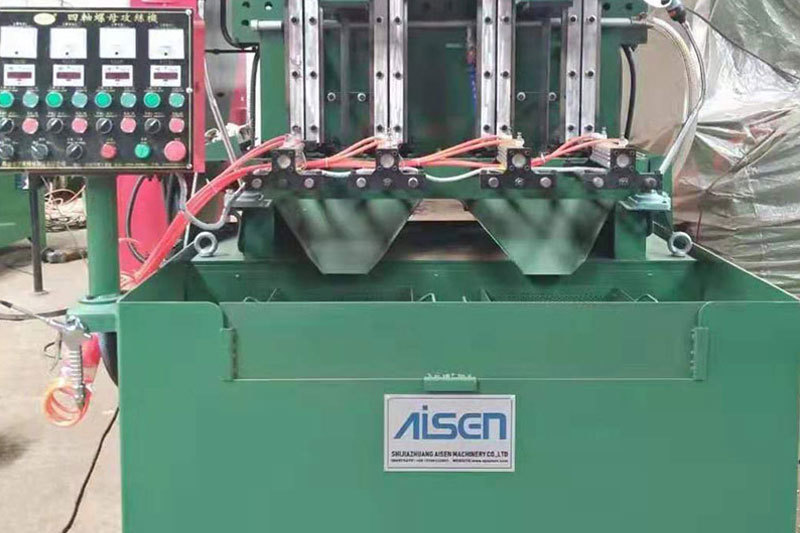
AISEN Four axis nut tapping machine ready for shipment to Russia
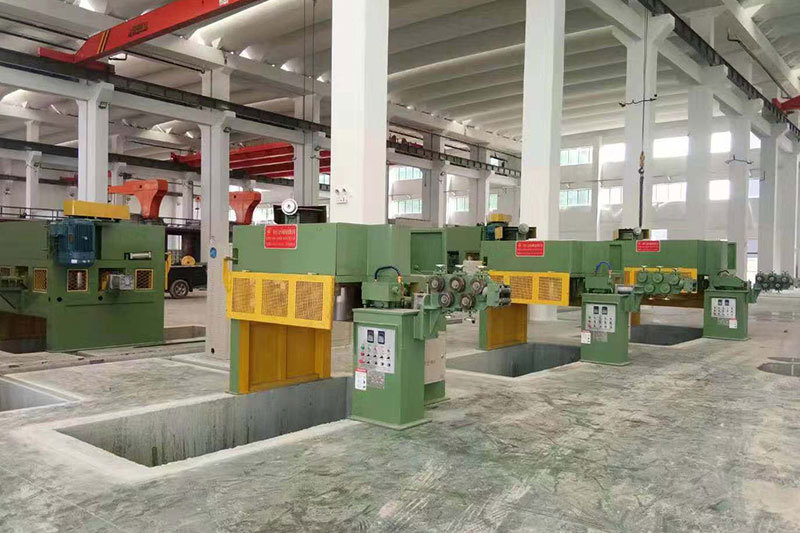
AISEN machinery inverted wire drawing machine
MESSAGES
We will contact you within one working day. Please pay attention to your email.
Qucik Link
Contact
Phone: +86-15100123091
E-mail: info@sjzaisen.com
Address: No.41 Zhaiying South Street, Yuhua District, Shijiazhuang City, Hebei Province China