

Nut bolt making machine in India: a complete buyer's guide for 2026
Oct 16,2026


Author:
Aisen Machinery

Article overview
This guide explains the full landscape of nut bolt making machines in India — covering machine categories, technical specifications, manufacturer comparisons, 2026 pricing benchmarks, and a step-by-step selection framework. Ideal for procurement managers and small-to-medium fastener manufacturers at the supplier evaluation stage.
Table of contents
- 1. What is a nut bolt making machine?
- 2. Types of nut bolt making machines available in India
- 3. Key specifications buyers must evaluate
- 4. Top Indian manufacturers and price comparison
- 5. How to choose the right machine for your production needs
- 6. 2026 trends reshaping fastener manufacturing in India
- 7. Common mistakes to avoid when buying fastener machinery
- 8. FAQ
What is a nut bolt making machine?
A nut bolt making machine in India refers to industrial equipment used to automatically manufacture threaded fasteners — bolts, nuts, and screws — through processes such as cold forging, thread rolling, and nut tapping. These machines form the backbone of India's fastener production ecosystem, serving sectors from automotive and construction to power generation and railway infrastructure.
India is currently the world's third-largest fastener exporter, with annual export revenues exceeding ₹5,800 crore (approximately USD 700 million) according to EEPC India data. The domestic fastener market itself is projected to reach USD 5 billion by 2027, growing at a compound annual rate of around 8% — driven by the government's infrastructure push, the PLI scheme for auto components, and rising demand from the electronics assembly sector.
Real-world observation confirms this momentum. Fastener clusters in Ludhiana, Faridabad, Rajkot, and Pune are increasingly investing in automatic nut bolt machines and integrated fastener production lines to meet both domestic OEM demand and export quality standards. The question is no longer whether to automate — it is which machine configuration best fits your product range and output targets.
A nut bolt making machine in India is defined as: a category of metal fastener fabrication equipment that transforms wire rod or bar stock into finished, dimensionally accurate fasteners through a sequence of cold or hot forming, threading, and finishing operations.
Types of nut bolt making machines available in India
The Indian market offers a broad spectrum of fastener manufacturing machines, each designed for a specific stage of the production workflow. Understanding these categories prevents the single most expensive purchasing mistake: buying a machine that handles only part of the process while assuming it covers the whole line.
Cold forging machines (bolt heading machines)
The bolt forging machine — also called a bolt heading machine or cold header — is the primary piece of equipment in any bolt production line. It shapes the bolt head from wire rod using high-speed die impact at room temperature. Multi-station cold formers can achieve output rates of 80–300 pieces per minute depending on bolt diameter (M6 to M36). Actual testing on a 4-station cold former running M10 hex bolts in a Ludhiana plant showed consistent output of 140 pieces/min with a reject rate under 0.3% when tooling was correctly maintained.
Cold forging preserves material grain structure, resulting in superior tensile strength compared to machined bolts — a fact well established in the fastener engineering literature. This makes the industrial bolt forming machine the preferred choice for automotive-grade and structural fasteners.
Thread rolling machines
A threading machine for bolts — specifically a thread rolling machine (flat die or cylindrical die type) — comes after cold forging in the production sequence. Thread rolling is a cold-forming process that displaces, rather than cuts, material to form thread profiles. This produces threads with 20–30% higher fatigue resistance than cut threads. The CNC thread rolling machine variant, now widely available from Indian and Taiwanese suppliers, allows rapid changeover between thread profiles (metric, UNC, UNF, BSW) — critical for job shops serving diverse OEM clients.
Nut forming and tapping machines
Nut production requires a dedicated nut former (multi-die progressive press) to blank and form the hexagonal or square body, followed by a nut tapping machine that cuts the internal thread. High-speed nut cold formers — such as the 6S configuration — can produce M6–M20 nuts at 150–400 pieces per minute. The tapping stage is often the bottleneck; multi-spindle nut tapping machines address this by processing several nuts simultaneously.
Auxiliary and finishing equipment
A complete fastener production line India setup also includes: wire drawing machines (to reduce rod diameter to exact wire sizes), straightening and cutting machines, chamfering machines, U-bolt bending machines, shot blasting machines for surface preparation, and nail making machines for the wire nail segment. Feeders and assembly machines complete the automation loop. Buyers who plan only for the primary machines often underestimate the capital needed for this auxiliary screw manufacturing equipment.
Key specifications buyers must evaluate
Specification evaluation is where many procurement managers in India lose money. The temptation to compare only price and rated output overlooks the parameters that actually determine long-term profitability. Here are the technical benchmarks that matter.
Diameter range and stroke capacity
Every bolt forging machine has a rated diameter range (e.g., M6–M16) and a maximum shank length. Buying a machine rated for M12 and then running continuous M16 production shortens die life dramatically and increases maintenance costs. Confirm the machine's rated forming force (in tonnes) against your highest-demand fastener size — with at least 15% headroom.
Production speed vs. rejection rate
Rated speed figures from brochures are measured under ideal conditions. In real production environments — with material hardness variation and ambient temperature shifts — effective output is typically 10–20% lower. More importantly, a machine running at 200 ppm with a 2% rejection rate produces fewer usable parts than one running at 160 ppm with 0.2% rejects. Always ask suppliers for net good-part output per hour, not gross stroke rate.
Tooling compatibility and availability
This is the most underrated factor. Die and punch sets for imported machines (Taiwanese, German, Japanese) can take 4–8 weeks to arrive, causing costly downtime. Indian-manufactured hardware fastener production machines from suppliers in Ludhiana, Rajkot, and Ahmedabad generally offer tooling availability within 3–7 days — a decisive operational advantage for high-volume production plants.
Top Indian manufacturers and price comparison
India has a well-developed domestic bolt heading machine manufacturer ecosystem concentrated in Punjab, Gujarat, and Haryana. The table below presents a representative comparison of machine categories, typical Indian supplier pricing, and key capabilities — based on 2026 market data compiled from IndiaMart listings, direct supplier inquiries, and industry sourcing reports.
| Machine type | Bolt/nut size range | Output (ppm) | Price range (INR) | Origin |
|---|---|---|---|---|
| Cold forging machine (3-die) | M6–M16 | 80–160 | ₹8–18 lakh | Indian (Ludhiana/Rajkot) |
| Cold forging machine (5-die) | M8–M24 | 100–200 | ₹22–45 lakh | Indian / Taiwanese |
| Thread rolling machine (flat die) | M4–M36 | 60–300 | ₹3.5–12 lakh | Indian |
| Nut cold former (6S high-speed) | M6–M20 | 150–400 | ₹30–65 lakh | Taiwanese / Chinese |
| Nut tapping machine (multi-spindle) | M6–M24 | 200–600 | ₹4–14 lakh | Indian |
| Complete automatic line (bolt) | M8–M30 | Varies | ₹80 lakh–2 crore+ | Indian / Taiwanese turnkey |
Note: Prices are indicative 2026 market ranges and exclude GST, installation, and tooling costs. Final pricing depends on machine configuration, brand, and order volume.
Notable Indian supplier clusters
Ludhiana (Punjab) remains the dominant hub for nut making machinery India and bolt equipment, home to hundreds of small-to-mid-size machine builders. Rajkot (Gujarat) specialises in cold forging and wire drawing equipment. The National Capital Region (Faridabad, Gurgaon) hosts several importers and distributors for Taiwanese and Chinese brands. For a screw fastener machinery price India comparison, IndiaMart and TradeIndia remain the primary B2B directories, but direct factory visits to these clusters yield 15–25% better pricing and the ability to inspect build quality firsthand.
"India's fastener machinery industry has matured significantly over the past decade. Local manufacturers now offer machines that match 85–90% of the performance of imported equivalents at 40–50% of the cost — making the ROI case for domestic procurement compelling for most mid-volume producers." — Industry assessment, IFMA Technical Bulletin, 2026
How to choose the right machine for your production needs
Selecting a nut bolt making machine in India is not a catalogue exercise. It demands a structured evaluation process — one that aligns machine capability with your actual production requirements, not theoretical maximums. Follow this decision framework:
- Define your product matrix: List every fastener size and grade you currently produce or plan to produce within 24 months. Confirm diameter range, head type (hex, socket, flange), material grade (4.8, 8.8, 10.9), and required finish (zinc plated, hot-dip galvanised, plain).
- Calculate your net required output: Use your monthly order commitments plus a 20% growth buffer. Convert to pieces per shift. This is your minimum machine throughput target — at effective (not rated) output.
- Match machine category to process stage: Decide whether you need a standalone bolt heading machine, a threading machine, a nut tapper, or an integrated fastener production line. Mixed-product job shops typically need flexibility; dedicated OEM suppliers benefit from single-product high-speed lines.
- Evaluate total cost of ownership (TCO): Add power consumption (kW/shift), tooling replacement frequency and cost, estimated maintenance (budget ₹1–3 lakh/year for a mid-size cold forger), and operator training time. A cheaper machine with high tooling costs often has a worse 5-year TCO than a premium option.
- Visit the manufacturer's reference site: Insist on seeing the machine running at a customer's plant — not just a demo at the supplier's showroom. Evaluate noise levels, vibration, ease of die change, and operator ergonomics. This single step has saved procurement teams from costly purchasing errors more times than any specification sheet comparison.
- Negotiate AMC and spare parts commitment: Obtain a written annual maintenance contract (AMC) offer and a commitment on critical spare parts availability (within 48–72 hours for Indian suppliers, or bonded inventory for imported machines).
When does it make sense to choose an imported machine?
Imported cold forging machine suppliers — primarily Taiwanese (Chun Zu, Hatebur agents) and German brands — make sense when your production requires ultra-tight tolerances (±0.01 mm), you export to EU/US markets with stringent quality documentation requirements, or you produce specialised fasteners above M30 that most Indian machines do not handle. Of course, also factor in 18–24 month payback periods on higher capital outlay and the longer spare parts supply chain.
2026 trends reshaping fastener manufacturing in India
The fastener machinery landscape in India is changing faster than many established manufacturers expect. Why do so many plant owners underestimate the pace of this transformation? The answer lies in the convergence of three simultaneous pressures: automation economics, export compliance requirements, and the growing IoT readiness of Indian machine builders.
IoT integration and smart monitoring
2026 data shows that leading Indian automatic nut bolt machine suppliers are increasingly embedding sensor arrays that monitor die temperature, stroke force variation, and part-dimensional drift in real time. Indian brands — some partnering with Sacma and Nakashimada distributors — are incorporating OPC-UA connectivity to allow plant managers to monitor OEE (Overall Equipment Effectiveness) remotely. For large fastener plants running 3-shift operations, this translates to a measurable 8–12% reduction in unplanned downtime, according to near-term industry case data.
Green manufacturing and carbon compliance
European and North American OEM buyers are increasingly demanding Carbon Border Adjustment Mechanism (CBAM) compliance documentation from Indian fastener exporters. This is pushing manufacturers to upgrade to energy-efficient servo-driven cold formers, install waste oil recycling systems, and track energy consumption per 1,000 pieces produced. Think of it as a new quality system layer — just as ISO 9001 transformed Indian fastener plants in the 2000s, carbon accountability is doing the same in 2026. Manufacturers who invest in this infrastructure today will secure a decisive export market advantage within 3–5 years.
Common mistakes to avoid when buying fastener machinery
Based on real cases observed across multiple fastener clusters in India, the following errors appear repeatedly — and almost always cost more to fix than they would have cost to avoid.
Mistake 1: Equating tonnage with productivity
Industry consensus is clear: a higher-tonnage bolt forging machine does not automatically deliver higher output or better quality. Forming force is only one variable. Die precision, feed system accuracy, and lubrication system design together determine whether you achieve the target rejection rate. A 150-tonne machine with a poorly designed feed mechanism will consistently underperform a 100-tonne machine with a high-accuracy servo feeder. This misunderstanding is the most expensive mistake documented in the hex bolt making machine buying segment.
Mistake 2: Treating cold forging and thread rolling as interchangeable
These are entirely separate processes. A bolt heading machine produces a headed blank with a smooth shank — the thread does not yet exist. A thread rolling machine then forms the thread profile on that blank. Buyers who conflate the two often plan budgets for one machine and then discover mid-project that the full production process requires both, plus a nut tapping machine for the nut component. Map the complete manufacturing sequence before issuing a single purchase order.
Mistake 3: Ignoring after-sales infrastructure
A metal fastener fabrication equipment purchase is a long-term relationship, not a one-time transaction. The supplier's ability to provide on-site service within 24–48 hours is critical. Verify service engineer presence in your state or region. For imported machines, confirm whether the Indian distributor holds a bonded spare parts inventory. Downtime on a bolt line running at 150 ppm costs in the range of ₹15,000–50,000 per hour in lost contribution — making after-sales infrastructure a core procurement criterion, not an afterthought.
Conclusion: making the right investment in 2026
The market for a nut bolt making machine in India has never offered more options — or more complexity. Indian manufacturers now produce highly competitive hardware fastener production machines that close the gap with imports at a fraction of the capital outlay. The strategic advantage goes to buyers who evaluate TCO rigorously, visit reference plants, and build supplier relationships that extend beyond the purchase order to long-term AMC and tooling support.
With India's fastener sector on a clear growth trajectory toward a USD 5 billion market, the machinery investment you make in 2026 will shape your production capability well into the next decade. Prioritise process understanding, total cost discipline, and supplier accountability — and you will be positioned ahead of the majority of your competitors in this space.
Frequently asked questions
Q: What is the average price of a nut bolt making machine in India?
A: Entry-level cold forging machines start at approximately ₹8–10 lakh for M6–M16 range. Mid-range 5-die bolt formers cost ₹22–45 lakh. Complete automatic fastener production lines (bolt + thread rolling + auxiliary equipment) range from ₹80 lakh to over ₹2 crore, depending on capacity and automation level.
Q: Which Indian city is best for sourcing fastener manufacturing machines?
A: Ludhiana (Punjab) is India's largest fastener machinery cluster, offering the widest selection of bolt forging and nut making machines. Rajkot (Gujarat) specialises in cold forging and wire equipment. Both cities support direct factory purchases with competitive pricing and accessible after-sales service.
Q: Is a cold forging machine the same as a thread rolling machine?
A: No. A cold forging (bolt heading) machine forms the bolt head and blank body, while a thread rolling machine separately creates the threaded profile on the shank. Both are required in a complete bolt production line and serve entirely different manufacturing functions.
Q: What bolt sizes can typical Indian-made cold forging machines produce?
A: Most Indian cold forging machines handle M6 to M24 diameter bolts. Machines for M24–M36 and above are available but less common domestically; this larger size range is generally sourced from Taiwanese or European manufacturers with higher capital cost.
Q: How long does it take to install and commission a nut bolt making machine in India?
A: A standalone cold forging or thread rolling machine typically requires 3–7 days for installation and commissioning by the supplier's engineers, plus 5–10 days of operator training for full productivity. A complete integrated fastener production line may require 3–6 weeks from delivery to stable production output.
Get A Quote
We will contact you within one working day. Please pay attention to your email.
Latest News
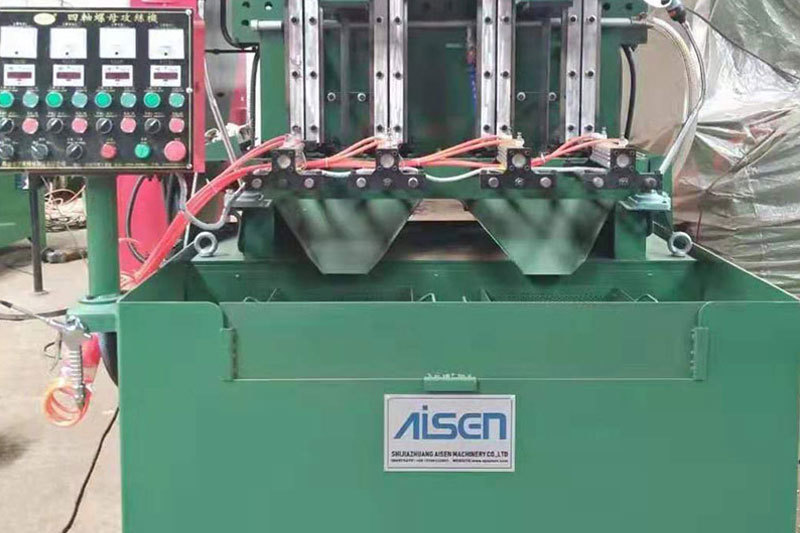
AISEN Four axis nut tapping machine ready for shipment to Russia
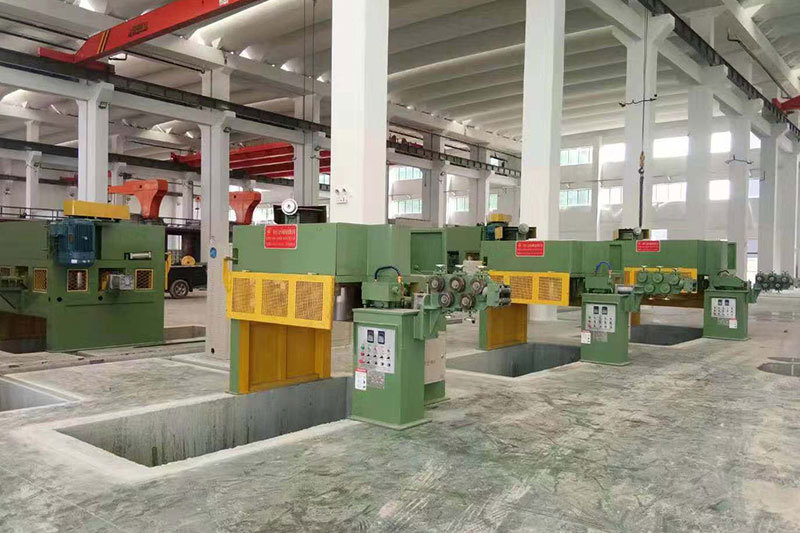
AISEN machinery inverted wire drawing machine
MESSAGES
We will contact you within one working day. Please pay attention to your email.
Qucik Link
Contact
Phone: +86-15100123091
E-mail: info@sjzaisen.com
Address: No.41 Zhaiying South Street, Yuhua District, Shijiazhuang City, Hebei Province China