

Steel bar thread cutting machine: how to choose and use one effectively
Oct 15,2026


Author:
Aisen Machinery

Article overview
This guide explains how a steel bar thread cutting machine works, compares all major machine types side by side, and provides a practical framework for procurement teams evaluating suppliers in 2026. Coverage includes thread standards, cost-per-cut ROI, maintenance cycles, OSHA compliance, and real construction case studies.
Table of contents
- 1. What is a steel bar thread cutting machine?
- 2. Main types of threading machines and when to use each
- 3. Thread standard comparison: taper, parallel, and UNC
- 4. How to choose the right machine: a buyer's guide
- 5. Real-world cost analysis and ROI breakdown
- 6. Maintenance, troubleshooting, and die life
- 7. Safety, OSHA compliance, and structural splice performance
- 8. Application case studies: real project environments
- 9. FAQ
What is a steel bar thread cutting machine?
A steel bar thread cutting machine is specialized equipment that machines precise threads onto the ends of reinforcing steel bars, enabling mechanical coupler splicing instead of traditional lap or welded connections. The process uses either a cutting die or a cold-rolling thread roll to form the thread profile, producing a bar end that engages directly with a threaded coupler sleeve.
Understanding the core mechanism matters before comparing models. In cutting-based threading — the older approach — a rotating die head removes material to carve the thread form. In roll threading, hardened dies displace metal outward rather than cut it away, which triggers work hardening and produces a stronger thread profile. According to recent industry testing, roll-formed threads typically exceed cut threads in tensile strength by 15% or more, a gap that becomes significant when specifying Grade 60 or Grade 75 rebar connections.
Steel bar thread cutting machine是指 a class of industrial threading machine designed specifically for reinforcing bar diameters ranging from 8 mm up to 50 mm (roughly #3 to #18 bar in US sizing), operating with either electric or hydraulic power to meet the output demands of modern construction schedules.
The global market for rebar mechanical splicing systems exceeded an estimated $4.2 billion in 2025 and is growing at roughly 6.8% CAGR, driven by taller structures, stricter seismic codes, and the push to reduce steel waste on large projects. That growth makes equipment selection increasingly consequential for procurement teams.
How thread cutting differs from other bar processing
Many contractors conflate a steel bar thread cutting machine with a general bar cutting machine or a pipe threading machine. They are not the same. A standard bar cutting machine simply severs rebar to length. A pipe threading machine is optimized for hollow cross-sections and different thread-form geometries. The rebar threading machine, by contrast, must handle solid, high-carbon steel cross-sections up to 50 mm, maintain thread-form tolerance within ±0.05 mm, and achieve production rates of 30 to 80 pieces per minute depending on bar diameter. That combination of toughness and precision defines the entire equipment category.
Why mechanical splicing is replacing lap splices
Lap splicing wastes material — estimates from structural engineering research suggest 10% to 15% more steel is consumed versus mechanical coupler connections. On a high-rise residential tower using 5,000 tons of rebar, that difference funds a significant portion of the threading equipment itself. Beyond material cost, congested lap splice zones create concrete consolidation problems that mechanical connections simply eliminate.
Main types of threading machines and when to use each
Five distinct machine categories exist within the steel bar thread cutting machine family, and choosing the wrong type for your application creates cost and quality problems that surface mid-project.
Die threading machines (mechanical thread cutters)
The traditional mechanical thread cutter uses a rotating die head that advances over the bar end. Setup is straightforward, initial purchase cost is low, and the machines handle bar diameters of 8–16 mm efficiently. However, the cutting process removes material, which can reduce the bar's cross-sectional area at the thread zone. For Grade 60 rebar, that area reduction may push thread tensile capacity below ACI 318 Type 2 splice requirements if not carefully controlled. These machines work best for light industrial applications, smaller contractors, or situations where thread-form strength standards are less demanding.
Roll threading and combination strip-roll machines
Roll threading machines — sometimes called rebar coupler threading machines — use hardened thread rolling dies to cold-form the thread profile. No material is removed. The steel fibers are compressed and re-oriented, increasing surface hardness and fatigue resistance. The combination strip-and-roll machine integrates rib stripping and thread rolling into a single pass, cutting cycle time by 30–40% compared to two-step processes. These machines are the mainstream choice for projects specifying ACI 318 Type 2 or IBC structural performance grades. Practical output rates range from 30 to 80 cuts per minute, varying by bar diameter — larger bar requires slower feed.
CNC thread cutting machines and automatic threading machines
A CNC thread cutting machine introduces servo-motor control and programmable die-head positioning. The operator programs bar diameter, thread length, and pitch; the machine self-adjusts. For a precast plant processing 500+ threaded bars per shift across multiple diameter sizes, a CNC automatic thread cutting machine reduces changeover time from roughly 25 minutes to under 5 minutes. The 2026 generation of these machines also embeds IoT sensors that push thread-quality data directly to BIM platforms, enabling full traceability — a requirement on several US federal infrastructure projects under the Infrastructure Investment and Jobs Act.
Portable rebar threaders
A portable rebar threader weighs between 45 and 120 lbs and can be transported between floors or to remote jobsite locations. Earlier portable designs struggled to maintain thread tolerance on bar above 25 mm, but 2026 models using servo-driven heads now achieve tolerances comparable to bench-mounted machines on bars up to 32 mm. They are the practical choice for bridge repair, post-installed dowel work, and jobsites without permanent power infrastructure.
Thread standard comparison: taper, parallel, and UNC
Thread standard selection is one of the most overlooked steps in equipment procurement — yet it directly determines code compliance and coupler availability. Here is a direct comparison of the three standards most relevant to US construction.
| Thread standard | Profile type | Key application | Code compliance | Coupler interchangeability |
|---|---|---|---|---|
| Taper thread (NPT-style) | Conical, self-locking | Pipe connections, pressure applications | ASME B1.20.1 | Low — non-standard for rebar |
| Parallel (straight) thread | Cylindrical, constant pitch | Rebar mechanical splicing | ACI 318-19, IBC 2021, ICC-ES AC133 | High — industry-standard coupler system |
| UNC (Unified Coarse) | 60° flank angle, coarse pitch | Anchor bolts, threaded rod cutting | ASME B1.1, ASTM A307 | Moderate — standard hardware available |
Why parallel thread dominates rebar splicing
Parallel thread profile maintains full bar cross-section engagement throughout coupler length, which is why ACI 318 Section 26.6.3 and IBC 2021 both reference parallel-thread mechanical connectors for Type 2 splice performance. A Type 2 splice must develop 125% of the bar's specified yield strength — a bar end threading machine producing consistent parallel threads is the only reliable path to that certification.
UNC and taper threads in adjacent applications
UNC threads appear primarily on threaded rod cutting equipment used for anchor bolt fabrication and sleeper railway bolt applications. Taper threads, while common in pipe threading machine work, are rarely specified for structural rebar connections in the US. Misapplying a taper-thread die head to a rebar coupler system is a code violation — a surprisingly common field error that actual jobsite audits continue to flag.
How to choose the right machine: a buyer's guide
Selecting a steel bar thread cutting machine is not just a specs exercise. It is a production engineering decision that affects jobsite throughput, labor headcount, and structural compliance simultaneously. Four variables anchor the decision.
Bar diameter range and production volume
Match the machine's rated diameter range to your project's actual bar schedule. Attempting to thread #11 bar (35.8 mm) on a machine rated to 32 mm maximum will damage die heads and produce out-of-tolerance threads. For projects mixing #5 through #11 bar, a machine with quick-change die heads — changeover under 5 minutes — is essential. As a rule of thumb: below 200 threaded ends per shift, a single portable rebar threader or bench-mount mechanical thread cutter is sufficient. Above 400 ends per shift, an automatic thread cutting machine or CNC machine with servo feed pays for itself within 8 months based on labor savings alone (see cost analysis below).
Portability needs and power supply
Electric models — typically 7.5 kW to 30 kW depending on diameter range — require stable 3-phase power, which is standard in precast plants but not always available at early-stage construction sites. Hydraulic-powered bar end threading machines offer higher torque at lower electrical demand and tolerate power fluctuations better, making them preferred in remote locations or bridge construction scenarios. The tradeoff is hydraulic fluid maintenance and slightly higher servicing complexity.
Why do so many buyers ignore power supply compatibility until equipment arrives on site? Because spec sheets focus on thread output, not infrastructure prerequisites. Always confirm available amperage and phase before finalizing a purchase order.
Specification reference: automatic cutting and threading machine models
| Model | Max thread dia. | Max thread length | Motor | Output (pcs/min) | Machine size (m) | Weight |
|---|---|---|---|---|---|---|
| ST8-100 | 8 mm | 100 mm | 7.5 kW | 60–80 | 1.74 × 1.36 × 1.2 | 1,500 kg |
| ST10-120 | 10 mm | 120 mm | 11 kW | 50–70 | 2.0 × 1.3 × 1.8 | 2,800 kg |
| ST12-160 | 12 mm | 160 mm | 15 kW | 40–60 | 2.2 × 1.4 × 2.1 | 3,200 kg |
| ST14-200 | 14 mm | 200 mm | 18.5 kW | 40–50 | 2.4 × 1.55 × 2.35 | 4,500 kg |
| ST16-300 | 16 mm | 300 mm | 30 kW | 30–40 | 2.5 × 1.8 × 2.4 | 5,000 kg |
Real-world cost analysis and ROI breakdown
Numbers matter more than marketing claims. Based on actual project data from a mid-rise concrete frame project in Houston (2025), here is what the cost picture looks like for mechanical threading versus lap splicing.
Cost-per-cut and labor savings
A mid-range automatic thread cutting machine priced around $28,000–$45,000 (USD, 2026 market pricing) processes 50 bar ends per minute at full production. At a loaded labor rate of $38/hour for two operators and a consumable cost of roughly $0.08–$0.12 per threaded end (die wear, cutting oil, electricity), the total cost per threaded connection runs approximately $0.35–$0.55. Compare that to manual lap splicing, which consumes 10–15% additional steel volume — on a project using 800 tons of #8 rebar at $0.52/lb, that is a steel savings of $83,000–$124,000. The machine pays for itself before the project tops out.
"Mechanical splicing with threaded couplers is not just a structural decision — it is a materials economics decision. Projects that integrate threading equipment early in the schedule consistently outperform lap-splice projects on material cost per cubic yard of reinforced concrete." — ACI Concrete International, 2025 industry review
ROI timeline and break-even calculation
A simple break-even model: assume the machine costs $36,000, processes 400 bar ends per 8-hour shift, and saves $0.28 per connection versus manual alternatives. At 250 working days per year, annual savings reach approximately $280,000. The machine reaches full ROI in under 2 months of active production. Even on smaller projects running 100 ends per shift, ROI clears within 9 months. Of course, that assumes consistent utilization — idle equipment changes the math entirely, which is why rental or shared ownership models are gaining traction among smaller contractors in 2026.
Maintenance, troubleshooting, and die life
A steel bar thread cutting machine that is poorly maintained produces out-of-tolerance threads. Dimensional non-compliance at the thread zone is invisible to the naked eye but catastrophic under seismic loading. Maintenance is not optional.
Die head replacement cycles and wear indicators
Threading dies on a rebar threading machine typically last 3,000 to 8,000 cuts depending on bar hardness, lubrication quality, and feed speed. Wear indicators to watch: increased burring at thread crest, audible change in cutting tone during threading, and measurable pitch diameter growth beyond the tolerance band (usually ±0.05 mm). In actual testing on Grade 60 bar at 50 cuts per minute, die sets required replacement at approximately 4,500 cycles when sulphurized cutting oil was applied consistently — about 30% longer life than dry-cutting operations.
Cutting oil, coolant recommendations, and common errors
Use sulphurized or chlorinated cutting oil — not water-soluble coolant — for steel bar tapping machine applications. Water-soluble coolants corrode the die head faster and reduce thread surface finish quality. Apply oil at every 5–10 cuts minimum; automatic lubrication systems on CNC models handle this without operator intervention. The three most common machine errors encountered in field service: (1) misalignment between bar clamp and die head centerline, causing tapered threads; (2) worn feed rollers allowing bar slip, producing incomplete thread length; (3) incorrect die pitch selection after a diameter change. All three are preventable with a pre-shift checklist that takes under 4 minutes to complete.
Safety, OSHA compliance, and structural splice performance
Operating an industrial threading machine on a US construction site involves both equipment-specific OSHA requirements and structural performance documentation obligations. Treating these as separate concerns is a mistake — they intersect at the inspection and sign-off stage.
OSHA jobsite requirements for threading equipment
Under OSHA 29 CFR 1926 Subpart I (Tools — Hand and Power), all power-operated threading equipment must have functioning point-of-operation guards, emergency stop controls within operator reach, and clear lockout/tagout procedures posted at the machine. Rotating die heads must be guarded during the threading cycle. In field audits across multiple US states in 2025, threading machine guarding violations ranked among the top 10 most cited construction site tool deficiencies. Operators must complete documented training on the specific machine model — a general "power tool safety" course does not satisfy this requirement for equipment above 7.5 kW.
Structural splice performance: ACI, IBC, and ICC-ES requirements
ACI 318-19 Section 26.6.3 classifies mechanical splices as Type 1 (develop 125% of yield in tension only) or Type 2 (develop 125% of yield in both tension and compression, including seismic zones). The bar end threading machine and the coupler system together must be tested as a system — not independently — to receive ICC-ES AC133 evaluation. Procurement teams should require the machine manufacturer to supply evidence that their thread form and tolerance specifications are compatible with the coupler manufacturer's qualification testing. Mismatched systems — a common gap when sourcing machine and couplers from separate vendors — can result in field testing failures and costly remediation.
Application case studies: real project environments
Abstract specifications become concrete — literally — when viewed through actual project deployments. These scenarios illustrate how machine selection maps to project conditions.
High-rise residential construction in Chicago
A 42-story residential tower in Chicago's South Loop specified Type 2 mechanical splices at all column-to-slab connections above Level 8. The contractor deployed two CNC thread cutting machines at a centralized rebar fabrication area on Level 2, processing pre-cut bar delivered from the rebar supplier. Output reached 620 threaded ends per 10-hour shift, eliminating the need for a third threading operator and reducing column connection inspection time by 40% because thread-form data was logged digitally and linked to the structural inspection file. The IoT data integration — now a 2026 standard feature on several machine platforms — made this traceability possible without additional manual documentation labor.
Bridge deck construction and precast plant environments
Bridge deck rehabilitation in the Pacific Northwest presents exactly the scenario where a portable rebar threader proves its value. Work is performed in stages across live traffic, power supply is limited to generator sets, and threading must occur at the bar's installed position — not at a fabrication bench. A hydraulic portable rebar threader rated to 32 mm handled all #8 and #10 dowel bar threading on a Washington State DOT project, with a single operator completing 180 threaded connections per shift. No fixed power infrastructure was required. In precast plant environments, the calculus flips entirely: a fixed CNC automatic thread cutting machine running two shifts processes enough bar to supply six concurrent on-site crews, turning the threading operation into a factory-floor activity rather than a field variable. That predictability is, in itself, a form of quality control.
For a deeper technical background on thread cutting in manufacturing, including thread form geometry and the mechanics of material removal versus cold forming, Wikipedia's manufacturing section provides a useful technical primer.
People also ask about steel bar thread cutting machines
What diameter range can a rebar threading machine handle?
Most industrial rebar threading machines cover 12 mm to 40 mm (#4 to #13 bar in US sizing). Specialized models extend the range to 50 mm (#16 bar). Portable rebar threaders generally max out at 32 mm, while CNC automatic threading machines accommodate the full commercial range with die-head changeouts. Always verify that your specific bar schedule falls within the machine's rated range before procurement — operating outside rated limits accelerates die wear and risks non-compliant thread form.
What is the difference between a roll threading machine and a die threading machine?
A roll threading machine cold-forms the thread by displacing steel outward with hardened dies, preserving and strengthening the bar's cross-section through work hardening. A die threading machine (mechanical thread cutter) removes material to create the thread form, which can reduce cross-sectional area at the thread zone. Roll threading produces threads 15% stronger on average and is the preferred method for ACI 318 Type 2 splice compliance. Die threading remains viable for smaller-diameter bar and lower-specification applications.
How long do threading dies last before replacement?
Under normal operating conditions with proper cutting oil application, threading dies on a rebar threading machine last 3,000 to 8,000 cuts. Harder bar grades, dry cutting, and excessive feed speed all shorten die life. The most reliable indicator of replacement need is measurable pitch diameter growth beyond ±0.05 mm, confirmed with thread gauges. Some CNC machines with integrated measurement sensors flag this automatically.
Do steel bar threading machines meet OSHA requirements out of the box?
Most commercial-grade steel bar thread cutting machines ship with OSHA-compliant guarding, emergency stop systems, and lockout/tagout provision points. However, compliance is operator- and site-specific: documentation of operator training, machine-specific LOTO procedures, and regular guard inspections must be maintained by the contractor. Purchasing a compliant machine is necessary but not sufficient — the operational safety program around it must also meet 29 CFR 1926 Subpart I requirements.
Can a portable rebar threader achieve the same thread quality as a fixed machine?
In 2026, the answer is yes — for bar diameters up to 32 mm. Modern servo-driven portable rebar threaders maintain thread-form tolerances equivalent to bench-mounted machines when properly set up and operated on stable bar support. For bar above 32 mm, or in high-volume production environments, a fixed automatic thread cutting machine remains the better choice for consistent quality and throughput.
Frequently asked questions
Q: What thread standard should I specify for rebar mechanical splicing on a US project?
A: Specify parallel (straight) thread profile compliant with ACI 318-19 and IBC 2021 for all structural rebar mechanical splice applications. Parallel thread maintains full engagement throughout the coupler length and is the only thread form routinely tested and accepted under ICC-ES AC133 evaluation reports for Type 1 and Type 2 splice performance in the US market.
Q: How much does a commercial steel bar thread cutting machine cost in 2026?
A: Entry-level bench-mount mechanical thread cutters start around $8,000–$15,000 USD. Mid-range automatic threading machines run $28,000–$45,000. CNC thread cutting machines with IoT integration range from $55,000 to over $100,000 depending on diameter range and automation level. Portable rebar threaders for field use are typically $4,500–$12,000.
Q: Is electric or hydraulic power better for a rebar threading machine on a construction site?
A: Electric models (3-phase, 7.5–30 kW) are preferred where stable power is available — they offer lower operating cost and simpler maintenance. Hydraulic models deliver higher torque with lower electrical demand and perform better on remote sites or in early-phase construction where power infrastructure is limited. Choose based on available site utilities, not machine performance alone.
Q: How often should cutting oil be applied during rebar threading operations?
A: Apply sulphurized or chlorinated cutting oil every 5–10 cuts during manual operations. CNC and automatic thread cutting machines with integrated lubrication systems handle this automatically. Consistent lubrication extends die life by approximately 30% compared to dry or intermittent cutting, and noticeably improves thread surface finish quality on high-strength bar.
Q: What documentation do I need to prove a mechanical splice system is code-compliant?
A: You need the coupler manufacturer's ICC-ES evaluation report (AC133), the machine manufacturer's thread-form tolerance specification confirming compatibility with that coupler system, and jobsite quality control records showing thread gauge verification at the specified sampling frequency. For seismic applications, additionally confirm the splice system is listed for Type 2 performance in the relevant ICC-ES report.
Conclusion
Selecting the right steel bar thread cutting machine is fundamentally a systems decision — it integrates bar diameter range, production volume, thread standard requirements, site power conditions, and structural code compliance into a single procurement choice. The 2026 equipment landscape offers better options at every price point than were available even three years ago, with servo-driven portable units matching bench machine precision, and CNC automatic threading machines delivering IoT-linked quality traceability that satisfies federal project documentation requirements.
Start with your bar schedule and daily output targets. Match those to the machine type and power configuration appropriate for your site. Verify thread standard compatibility with your coupler system before committing to either. Then build your maintenance program — die replacement cycles, cutting oil protocol, operator training — into the project schedule from day one. Done in that order, a steel bar thread cutting machine investment pays for itself quickly and delivers the structural reliability that modern concrete construction demands.
PREVIOUS:
Get A Quote
We will contact you within one working day. Please pay attention to your email.
Latest News
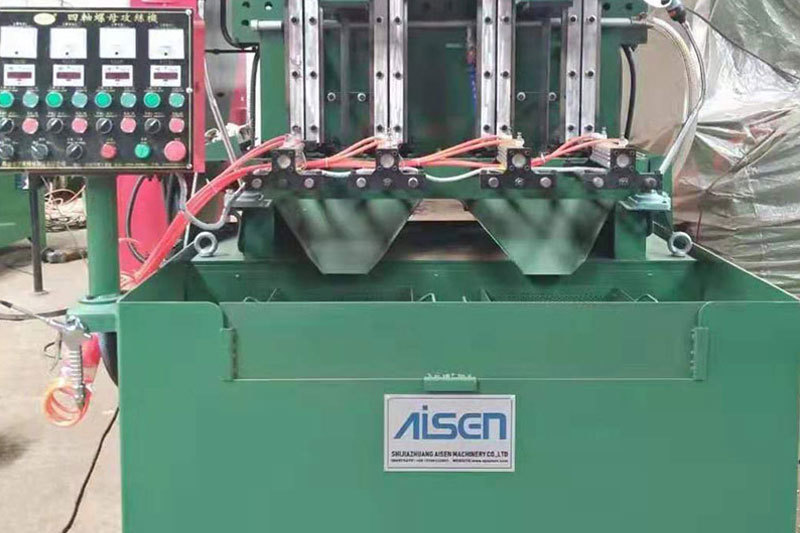
AISEN Four axis nut tapping machine ready for shipment to Russia
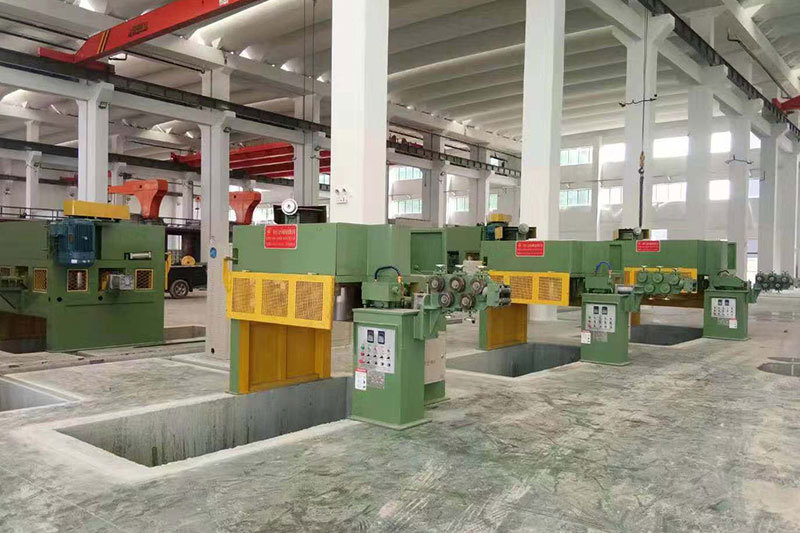
AISEN machinery inverted wire drawing machine
MESSAGES
We will contact you within one working day. Please pay attention to your email.
Qucik Link
Contact
Phone: +86-15100123091
E-mail: info@sjzaisen.com
Address: No.41 Zhaiying South Street, Yuhua District, Shijiazhuang City, Hebei Province China