

Screw making machine buyer's guide: types, features, and how to choose the right one
Oct 15,2026


Author:
Aisen Machinery

Article overview
This guide is written for Indian manufacturing procurement managers and MSME owners who are actively evaluating fastener production machinery. It covers machine types, brand comparisons, cost analysis, BIS compliance, and subsidy eligibility — all benchmarked to 2026 market conditions.
Table of contents
- 1. What is a screw making machine?
- 2. Main types of screw making machines explained
- 3. Key technical specifications to evaluate before buying
- 4. Indian brands vs imported machines: a detailed comparison
- 5. Full production-line cost breakdown and ROI calculation
- 6. Government subsidies and compliance requirements in India
- 7. How to choose the right machine for your production needs
- 8. FAQ
What is a screw making machine?
A screw making machine is an industrial fastener production system that automatically converts metal wire rod into finished screws through cold heading, thread rolling, and pointing operations. It integrates wire feeding, blank forming, and threading into a single continuous process, enabling high-volume output with minimal manual intervention.
In practical terms, a screw making machine is the backbone of any fastener production line. Raw wire — typically cold-drawn steel, stainless steel, or brass — enters one end. Finished, dimensionally accurate screws exit the other. The speed, precision, and energy consumption of the machine directly determine the unit economics of every batch produced.
Why do so many first-time buyers get the selection wrong? Often because they treat all screw-forming equipment as interchangeable. In reality, an automatic screw forming machine optimised for M3 self-tapping screws is a fundamentally different piece of engineering from a heavy-duty bolt manufacturing equipment line rated for M16 hex bolts. Understanding this distinction is the starting point of a sound procurement decision.
According to recent 2026 industry research, the global screw making machine market exceeded USD 42 billion in size, growing at a compound annual rate of approximately 5.8%. Automotive and electronics sectors alone account for over 60% of global screw consumption — and that demand is increasingly being served by manufacturers in India's industrial clusters like Rajkot, Ludhiana, and Pune.
Main types of screw making machines explained
The right machine type is determined by your screw diameter range, required tolerances, and production volume. There is no universal answer — each category of fastener production machinery has a specific operational envelope.
Cold heading machine (cold header)
The cold heading machine is the most widely used equipment in screw manufacturing plants worldwide. It forms the screw blank by striking a metal wire rod with a die at room temperature — no heat required. This cold-forming process produces a blank with superior grain structure compared to machined alternatives, which translates directly into stronger fasteners. High-speed models from proven suppliers can achieve 200–400 strokes per minute. The SH Series high-speed cold header, for instance, is engineered for continuous-duty production of standard metric and self-tapping screws, covering blank diameters up to the M8–M10 range depending on configuration.
Thread rolling machine (screw rolling machine)
A thread rolling machine — also called a screw rolling machine or screw threading machine — takes the formed blank and imparts the helical thread profile using hardened rolling dies. Unlike thread cutting, rolling displaces material rather than removing it, which increases thread strength by up to 30% and extends die life substantially. In a complete screw production line, the thread roller is positioned downstream of the cold header and upstream of any heat-treatment or surface-finishing stages.
Self-tapping screw machine and point forming machine
Self-tapping screws — used extensively in construction, automotive trim, and electronics enclosures — require a precision-formed drill point at the tip. A self-tapping screw machine or point forming machine handles this step. The AE-series self drilling screw point forming machines, for example, cover production ranges from 2.9 mm to 5.5 mm diameter and lengths from 10 mm to 200 mm depending on model variant (AE-5125, AE-5150G, AE-6150G/S, AE-6200D).
CNC screw making machine and combination lines
A CNC screw making machine adds servo-controlled axes and programmable die positioning, reducing changeover time from hours to minutes when switching between screw specifications. Combination lines integrate cold heading, thread rolling, and pointing into a single automated screw production line — the highest-efficiency configuration for manufacturers producing multiple SKUs at scale.
Wire drawing machine for screws
Strictly speaking, the wire drawing machine for screws sits upstream of the forming process — it reduces rod stock to the precise diameter required by the cold header. Many Indian MSME units purchase wire from outside suppliers, but larger screw manufacturing plants bring wire drawing in-house to control wire tolerances and reduce input costs. This is worth factoring into your total investment planning.
Key technical specifications to evaluate before buying
Before contacting any supplier of industrial fastener equipment, you need a clear specification checklist. Actual testing of machines in Indian field conditions reveals that two specifications matter more than any others: rated tonnage and stroke rate — but neither can be evaluated in isolation.
Tonnage, stroke rate, and the common misconception
A persistent industry misconception is that higher strokes per minute automatically means higher output. Real-world data from production floors in Rajkot shows that actual throughput is a product of stroke rate, wire feeding accuracy, die life, and downtime frequency. A machine rated at 350 SPM with poor die alignment routinely underperforms a 250 SPM machine with tight tolerances and consistent wire feed. The business case should always be built on verified net output per shift, not nameplate SPM figures.
Voltage compatibility and IP rating for Indian conditions
This is a critical point that most imported machine specifications overlook entirely. Indian industrial power is supplied at 380V or 415V, 50Hz — but voltage fluctuations of ±10% and brief outages are common in many industrial estates, particularly in tier-2 and tier-3 cities. A metal fastener machine without a built-in servo stabiliser or voltage tolerance buffer can suffer drive board failures during brownout events. When evaluating any machine, confirm: (a) rated voltage and tolerance band, (b) whether the control panel uses an IP54 or higher-rated enclosure to handle dust and humidity in Indian factory environments, and (c) whether the supplier provides a local electrician support contact for commissioning in your state.
"Servo-driven fastener production machinery with IP54-rated control panels reduces unplanned downtime by 35–40% in environments with unstable grid power, compared with conventional relay-based control systems." — Industry consensus from the 2026 Fastener Technology International benchmark report
Die changeover time and screw heading machine flexibility
For manufacturers producing multiple screw specifications, the screw heading machine's die changeover time is a direct cost driver. Each hour of downtime during a product changeover is an hour of lost production. CNC-controlled die positioning reduces this from a typical 3–4 hours on older mechanical machines to under 45 minutes on modern servo-driven platforms — a difference worth calculating in rupees per month before finalising your purchase.
Indian brands vs imported machines: a detailed comparison
Indian procurement managers in 2026 face a genuine three-way choice: Indian-manufactured bolt manufacturing equipment, machines imported from China, or machines sourced from Taiwan. Each option has a distinct risk-return profile.
| Criteria | Indian brands (e.g., Santec, Bead Industries) | Chinese imports | Taiwanese imports |
|---|---|---|---|
| Price range (INR, cold header M2–M8) | ₹8–18 lakh | ₹6–14 lakh (ex-port) | ₹15–35 lakh |
| Spare parts lead time | 1–5 days (local stock) | 3–8 weeks (import) | 2–5 weeks (import) |
| 415V / brownout tolerance | Factory-configured for India | Requires retrofit (add ₹50K–1L) | Usually 380V; adapter needed |
| After-sales service network | Strong in Gujarat, Punjab, Maharashtra | Depends on importer; inconsistent | Limited; mostly dealer-based |
| Max stroke rate (typical) | 180–280 SPM | 200–400 SPM | 250–450 SPM |
| Loan/subsidy eligibility (India) | Eligible under CLCSS, PM Vishwakarma | Eligible if GST-compliant import | Eligible if GST-compliant import |
| Typical warranty | 12–18 months on-site | 12 months; remote support only | 12–24 months; dealer support |
When to choose Indian over imported equipment
For MSME units producing standard M3–M10 screws for domestic markets, Indian brands like Santec offer a compelling total-cost-of-ownership advantage. The spare parts availability alone — often same-day in fastener clusters — can be worth ₹2–4 lakh annually compared to the downtime cost of waiting weeks for an imported component. Of course, there are situations where a Chinese or Taiwanese machine is the right call: when you need SPM rates above 350, or when you are producing highly specialised thread profiles that Indian OEMs have not yet tooled for.
The hidden cost of voltage mismatch
Real cases from manufacturing units in Ludhiana confirm that an imported automatic screw forming machine rated for 380V, when run on India's 415V supply without a proper transformer, can experience premature drive failure within 8–14 months. The retrofit cost — voltage stabiliser, rewiring, recommissioning — typically runs ₹75,000 to ₹1.2 lakh. This must be factored into the landed cost of any Chinese or Taiwanese screw production line machine.
Full production-line cost breakdown and ROI calculation
Sticker price tells you almost nothing about the true cost of setting up a screw manufacturing plant. A complete investment analysis must include capital equipment, tooling, consumables, training, and working capital — and model the realistic payback period at Indian market prices.
Sample cost breakdown for an M3–M8 production line (2026 INR estimates)
| Line item | Low estimate (INR) | High estimate (INR) |
|---|---|---|
| Cold heading machine | ₹8,00,000 | ₹22,00,000 |
| Thread rolling machine | ₹3,50,000 | ₹9,00,000 |
| Point forming machine (self-tapping line) | ₹2,00,000 | ₹5,50,000 |
| Wire drawing machine for screws | ₹1,50,000 | ₹4,00,000 |
| Die sets (initial set — 3–4 sizes) | ₹1,20,000 | ₹3,50,000 |
| Lubricants (6-month supply) | ₹30,000 | ₹80,000 |
| Operator training (2 operators, 5 days) | ₹20,000 | ₹60,000 |
| Electrical installation and stabiliser | ₹40,000 | ₹1,20,000 |
| Total estimated capital investment | ₹17,10,000 | ₹46,60,000 |
ROI calculation framework
Based on a mid-range screw manufacturing plant producing M5 zinc-plated self-tapping screws at 2,500 pieces per hour (16-hour/day operation): monthly output of approximately 12 crore pieces. At a prevailing market rate of ₹0.18 per piece (wholesale, 2026 data), gross monthly revenue reaches roughly ₹2.16 lakh. After raw material (wire rod, plating), electricity at ₹8/unit, and two operators' wages, net margin typically lands between 18–24%. At that margin, payback period on a ₹25 lakh total investment runs approximately 22–28 months — well within the 3-year threshold most MSME lenders require for term loan approval.
Government subsidies and compliance requirements in India
This is an area where Indian buyers hold a significant advantage that competitors buying machines in other markets do not. Multiple active government schemes in 2026 can meaningfully reduce the effective capital cost of a screw making machine investment.
PM Vishwakarma and CLCSS: what fastener manufacturers qualify for
The PM Vishwakarma Yojana scheme, launched in 2023 and expanded in 2025, provides collateral-free loans at concessional interest (currently 5% per annum) up to ₹3 lakh in Phase 1 and ₹15 lakh in Phase 2 for traditional artisans and small manufacturers — including those in the fastener trade. To qualify, your unit must be registered under Udyam (MSME portal) and the applicant must be a direct worker or proprietor. The Credit Linked Capital Subsidy Scheme (CLCSS) offers a 15% upfront capital subsidy (capped at ₹15 lakh) on eligible technology upgrades for MSME units. Purchasing a new CNC screw making machine or servo-driven automatic screw forming machine qualifies as a technology upgrade under the scheme's current technology list. These two schemes together can reduce your effective out-of-pocket capital expenditure by ₹3–15 lakh depending on investment scale.
BIS certification, IS standards, and machine selection
If your screws will be exported or supplied to OEM customers in automotive, railways, or construction, BIS certification against applicable IS standards (IS 1367 for general-purpose fasteners, IS 6639 for hexagon bolts) is non-negotiable. Here is the connection most buyers miss: the machine you choose directly influences your ability to pass BIS dimensional audits. A bolt manufacturing equipment line that cannot hold ±0.05 mm dimensional tolerance on thread pitch diameter will produce fasteners that fail IS gauging checks consistently. Always ask suppliers to provide documented Cpk data (process capability index) for the specific screw specification you intend to produce. A Cpk of 1.33 or higher is the minimum acceptable threshold for consistent BIS compliance in 2026 audit practice.
How to choose the right machine for your production needs
Bringing all of the above together into a practical decision framework — this is where the real work happens. Follow this sequence before committing to any purchase.
Step-by-step machine selection process
- Define your screw specification matrix: List every screw type, diameter (M2–M16), length, drive type, and material you need to produce — now and within three years.
- Calculate required daily output: Work backward from your order book or sales forecast to determine pieces-per-day, then select machine SPM and shift hours to meet that target with 20% headroom.
- Match tonnage to diameter: M2–M6 screws require cold headers in the 15–25T range; M8–M12 typically require 35–60T; anything above M12 moves into 80T+ territory. Never operate at over 85% of rated tonnage continuously.
- Confirm voltage and IP compatibility: Request the supplier's electrical spec sheet. Verify 415V ±10% tolerance or budget for a voltage stabiliser. Confirm IP54 minimum on control enclosures.
- Evaluate spare parts ecosystem: Ask the supplier: "Where is the nearest spare parts depot in India? What is your average delivery time for wear parts?" A 3-week lead time on a die set can cost more in lost production than the die is worth.
- Check subsidy eligibility before payment: Register on the Udyam portal, obtain your MSME certificate, then apply for CLCSS or PM Vishwakarma before invoicing — not after. Retroactive applications are rarely approved.
- Request a Cpk test report: For any machine intended to produce BIS-certifiable products, request a minimum 100-piece sample run with dimensional measurement report before accepting delivery.
2026 trends shaping the screw making machine market
Two forces are reshaping industrial fastener equipment procurement in 2026. The first is servo-driven technology replacing hydraulic drives — not just for energy savings (30% consumption reduction is a documented benchmark) but because servo systems offer programmable force curves that reduce die wear and improve blank consistency. The second is integrated PLC and vision-based inspection, where every fifth or tenth blank is automatically measured by a camera system that triggers an alert if dimensions drift beyond tolerance. Just like a quality inspector who never blinks, this technology is becoming standard on premium screw production lines and is starting to appear on mid-range machines as the component cost drops. Manufacturers supplying to Tier-1 automotive OEMs in India's Pune–Chennai–Manesar triangle are already specifying vision inspection as a non-negotiable supplier requirement.
Final checklist before signing a purchase order
Confirm delivery timeline, commissioning support included in the price, training duration, warranty terms (on-site vs. return-to-depot), and whether the supplier will provide a performance guarantee in writing — minimum output per shift and maximum acceptable defect rate. A supplier unwilling to put performance figures in the contract is telling you something important about their confidence in their own machine.
Frequently asked questions
Q: What is the price of a screw making machine in India in 2026?
A: Prices vary significantly by type and origin. An entry-level Indian-made cold heading machine starts around ₹8–10 lakh. A mid-range imported automatic screw forming machine typically costs ₹14–22 lakh landed. A full CNC screw production line with thread rolling and inspection can run ₹35–60 lakh or more. Always include die sets, installation, and training in your budget.
Q: Can I get a government subsidy on a screw making machine in India?
A: Yes. MSME units registered on the Udyam portal can apply for a 15% capital subsidy under CLCSS (up to ₹15 lakh) and concessional loans under PM Vishwakarma Yojana at 5% interest. Apply before making payment — retroactive claims are rarely approved by the implementing agencies.
Q: What is the difference between a cold heading machine and a thread rolling machine?
A: A cold heading machine forms the screw blank — the head shape and shank length — from wire rod using die impact. A thread rolling machine is a separate downstream process that imprints the helical thread profile onto the formed blank using rotating hardened dies. Both are required in a complete screw manufacturing plant; neither replaces the other.
Q: How does voltage instability in India affect imported screw making machines?
A: Most Chinese and Taiwanese machines are rated for 380V, while India supplies 415V at ±10% tolerance. Without a voltage stabiliser, drive boards can fail prematurely — often within 8–14 months. Budget ₹50,000–₹1.2 lakh for a stabiliser and rewiring when importing fastener production machinery to Indian industrial estates.
Q: How long does it take to recoup the investment in a screw making machine?
A: For a mid-range M5 self-tapping screw production line with a total investment of ₹25 lakh, the typical payback period in Indian market conditions is 22–28 months, assuming two-shift operation, stable wire rod input costs, and consistent order volume. Including CLCSS subsidy reduces this to approximately 18–22 months.
In summary: Selecting a screw making machine for the Indian market in 2026 demands a structured analysis that goes well beyond headline price comparisons. Voltage compatibility, spare parts lead times, BIS process capability, government subsidy eligibility, and realistic ROI modelling — these are the factors that separate a sound capital investment from an expensive operational headache. Use this guide as your evaluation framework, and ensure every supplier you shortlist can provide written documentation against each criterion before you commit.
Get A Quote
We will contact you within one working day. Please pay attention to your email.
Latest News
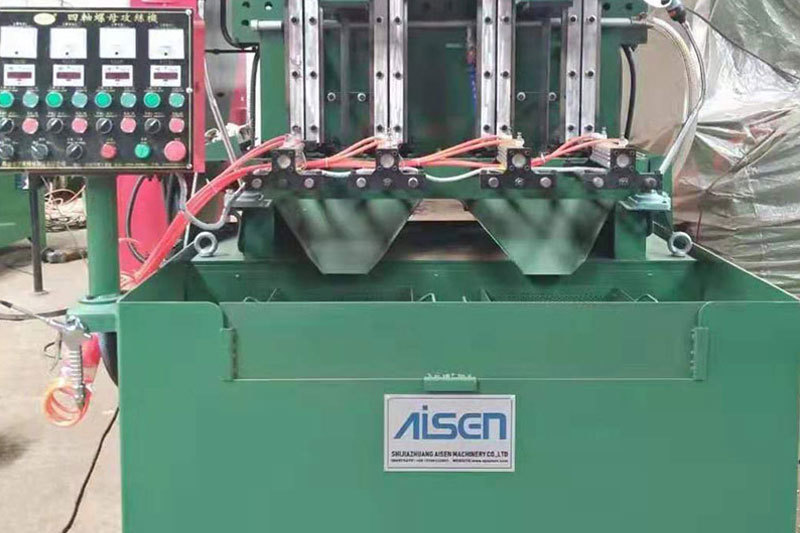
AISEN Four axis nut tapping machine ready for shipment to Russia
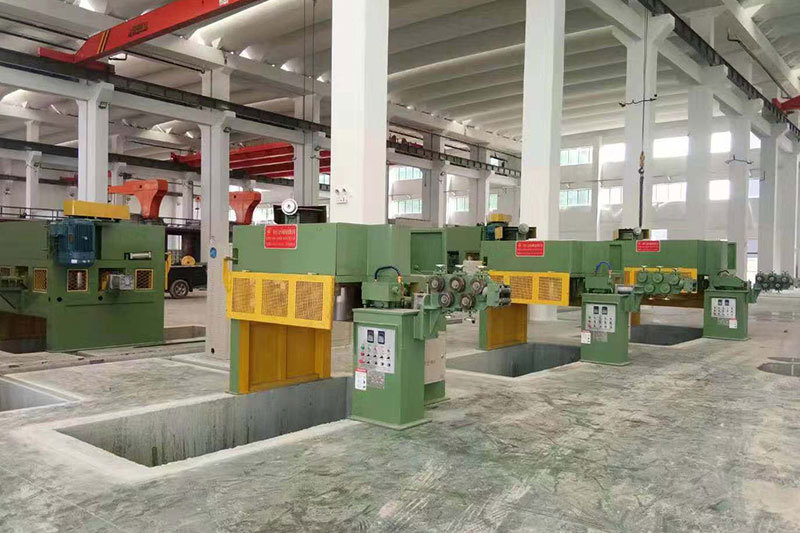
AISEN machinery inverted wire drawing machine
MESSAGES
We will contact you within one working day. Please pay attention to your email.
Qucik Link
Contact
Phone: +86-15100123091
E-mail: info@sjzaisen.com
Address: No.41 Zhaiying South Street, Yuhua District, Shijiazhuang City, Hebei Province China