

Automatic screw making machine: how to choose the right model for your production line
Oct 14,2026


Author:
Aisen Machinery

Article overview
This guide covers everything a US procurement manager or manufacturing engineer needs to evaluate, compare, and purchase an automatic screw making machine in 2026 — from machine types and material compatibility to TCO modeling, OSHA compliance, and overseas supplier red flags.
Table of contents
- 1. What is an automatic screw making machine?
- 2. Main types of screw manufacturing equipment explained
- 3. Material-specific machine selection guide
- 4. Total cost of ownership: a 3–5 year TCO analysis
- 5. US compliance, certification, and import considerations
- 6. Automation integration: PLC, IoT, and Industry 4.0 readiness
- 7. How to vet suppliers and avoid costly mistakes
- 8. FAQ
What is an automatic screw making machine?
An automatic screw making machine is a specialized industrial system that converts metal wire into finished screws through continuous, automated cold heading, thread rolling, and forming operations — with minimal human intervention. Unlike manual or semi-automatic setups, a fully automatic fastener machine integrates wire feeding, blank cutting, multi-stage heading, thread rolling, and ejection into a single synchronized production line capable of outputting 80,000 to 300,000 pieces per shift.
That output figure matters. According to 2026 data from Grand View Research, the global fastener market is projected to exceed $105 billion with a CAGR of approximately 4.2%. US manufacturers competing in this environment cannot afford the yield losses and labor overhead of semi-automated screw forming equipment. The shift to full automation isn't a luxury — it's a margin decision.
Automatic screw making machine是指 a class of metal fastener manufacturing equipment that encompasses cold heading machines, thread rolling machines, screw heading machines, and multi-station wire forming machines. The term is sometimes confused with a screw driving machine (an assembly tool) — a critical distinction covered later in this guide.
Why do so many buyers overlook the integration complexity of these machines until after purchase? Real-world implementation experience reveals that procurement teams focusing only on unit price routinely underestimate tooling costs, operator training time, and spare parts lead times — especially when sourcing from overseas.
Main types of screw manufacturing equipment explained
The right machine type depends on your screw geometry, production volume, and material. There are five primary categories of screw manufacturing equipment, each with distinct capabilities and trade-offs.
Cold heading machine
The cold heading machine is the backbone of industrial screw production. It forms screw blanks at room temperature using progressive die stations — no heat required. This cold-forming process work-hardens the material, producing stronger grain structure than machined alternatives. Practical testing on a 3-station cold header shows blank formation cycles of under 0.15 seconds per piece, which translates directly into the high throughput rates the industry cites. Suitable for carbon steel and stainless steel wire from approximately 1.5 mm to 12 mm diameter, cold headers dominate mainstream screw production lines globally.
Multi-die cold headers (3-die, 4-die, 5-die) add progressive forming stages that allow complex head geometries — hex flange, pan head, truss head — in a single pass. The trade-off is higher tooling cost and longer changeover time when switching screw families.
Thread rolling machine and combination lines
A thread rolling machine uses hardened cylindrical or flat dies to roll thread profiles into a pre-formed blank rather than cutting them. The result is a stronger thread — rolled threads exhibit up to 30% higher fatigue resistance than cut threads, according to recent fastener engineering literature. In a fully automated screw production line, thread rolling follows cold heading inline, with no manual transfer between stations.
Combination machines — integrating a screw heading machine and thread roller in one unit — reduce floor space and eliminate inter-station handling losses. For high-volume operations running a single product family, this architecture delivers the lowest cost per piece. For shops needing flexibility, separate machines allow independent speed tuning per operation.
Beyond these two core types, the market also includes: precision screw machines (CNC-driven Swiss-type lathes for M0.5–M3 micro screws used in electronics and medical devices), hot forging screw machines (for large-diameter, high-strength bolts above M20), and self-drilling screw point forming machines that add a drill-point geometry to roofing and construction fasteners. Each serves a distinct segment of the metal fastener manufacturing ecosystem.
Material-specific machine selection guide
Material compatibility is the single most underspecified variable in machine procurement. Selecting a machine rated for carbon steel and then running 316 stainless at full speed is a fast path to premature die wear and batch rejection. The table below maps wire material to recommended machine configurations based on current supplier specifications and verified production data.
| Wire material | Recommended machine type | Diameter range | Key considerations |
|---|---|---|---|
| Low carbon steel (SAE 1008–1022) | Multi-die cold header + inline thread roller | 1.5 – 10 mm | Highest throughput; standard tooling widely available in North America |
| Stainless steel 304 / 316 | Servo-driven cold header with carbide tooling | 1.5 – 8 mm | Work-hardens rapidly; reduce speed 15–20%; upgrade to carbide dies |
| Brass (CW614N / C36000) | Cold heading machine with lubrication system | 2 – 8 mm | Excellent formability; chip-free process; use zinc-free coolant |
| Titanium Grade 2 / Grade 5 | Servo cold header + precision thread roller | 1.5 – 6 mm | Spring-back compensation required; die life reduced 40–60% vs. steel |
| Micro alloy / M0.5–M2 | CNC precision screw machine (Swiss-type) | 0.5 – 2.5 mm | Electronics / medical use; requires ±0.005 mm dimensional tolerance |
A practical note from real production case studies: one midwest automotive fastener supplier switched from carbon steel to 304 stainless without upgrading die material. Within six weeks, their tooling replacement frequency tripled and their effective cost per thousand pieces increased by 38%. Material-machine alignment isn't optional.
Total cost of ownership: a 3–5 year TCO analysis
Purchase price is the wrong number to optimize. For an automatic screw making machine operating two shifts in a US facility, the acquisition cost typically represents only 35–45% of total 5-year spend. The remaining costs — energy, tooling, maintenance, and labor — are where procurement decisions are actually won or lost.
TCO component breakdown
Consider a mid-range industrial screw machine with a purchase price of approximately $85,000 FOB. Running two 8-hour shifts, 250 days per year, here is how the 5-year cost structure typically looks in a US manufacturing context:
| Cost category | Year 1 | Year 3 (cumulative) | Year 5 (cumulative) |
|---|---|---|---|
| Acquisition (machine + shipping + install) | $92,000 | $92,000 | $92,000 |
| Energy (1.5 kW avg., $0.12/kWh) | $720 | $2,160 | $3,600 |
| Tooling / die replacement | $6,500 | $19,500 | $32,500 |
| Preventive maintenance / spare parts | $3,200 | $9,600 | $16,000 |
| Labor savings vs. semi-auto (2 operators displaced) | −$112,000 | −$336,000 | −$560,000 |
| Net TCO (after labor savings) | −$9,580 | −$212,740 | −$415,900 |
The math is striking. At US shop-floor labor rates averaging $28/hour (Bureau of Labor Statistics, 2026 data), a fully automatic fastener machine displacing two semi-auto operators recovers its full acquisition cost in under 11 months. Just as a well-specified machine is like a long-term employee who never calls in sick, the compounding labor savings over five years dwarf every other cost line. Of course, this payback period extends if tooling costs spike — which happens when material selection and die specifications are mismatched, as the earlier stainless steel case study illustrates.
Tooling replacement cost reduction strategies
Tooling is the most controllable variable in your ongoing TCO. Confirmed approaches that reduce die wear include: matching wire hardness to die material specification (tungsten carbide vs. tool steel), maintaining proper lubrication viscosity for the target material, and implementing servo-controlled forming force rather than fixed-cam mechanical drives. Servo-driven screw forming equipment allows real-time force feedback, which extends die life by 20–35% according to recent supplier testing data.
US compliance, certification, and import considerations
This is the area competitors almost universally neglect — and it's exactly where US buyers get burned. Importing an automatic screw making machine from China or Taiwan without understanding certification and regulatory requirements can result in customs delays, facility inspection failures, or expensive field modifications after delivery.
CE vs. UL/CSA: what actually applies in the US
CE marking is a European conformity designation. It carries no legal standing in the United States. For industrial machinery operating in US facilities, the relevant standards are UL 508A (industrial control panels), CSA Z432 (safeguarding of machinery, widely adopted across US states), and NFPA 79 (electrical standard for industrial machinery). Many overseas suppliers prominently display CE certification; US procurement teams should specifically request UL or CSA compliance documentation and verify that the machine's electrical cabinet meets NFPA 79 wiring requirements.
OSHA machine guarding standards under 29 CFR 1910.212 require that all point-of-operation hazards on metalworking machinery be guarded. For cold heading machines and thread rolling machines specifically, this means physical barriers at the die area, two-hand control options for manual feed operations, and emergency stop circuits accessible from the operator position. Verify these features are factory-installed, not aftermarket additions.
Import duties and HTS codes
Machines imported from China fall primarily under HTS 8462.10 (forging or die-stamping machines, including presses) or HTS 8462.21 / 8462.29 (bending, folding, straightening, or flattening machines). As of 2026, Section 301 tariffs on Chinese-origin industrial machinery remain in effect at rates ranging from 7.5% to 25% depending on classification. For Taiwanese suppliers, standard MFN (most-favored-nation) duty rates apply without the Section 301 surcharge. Factor these duties into landed cost calculations before comparing Chinese vs. Taiwanese vs. domestic quotes.
"Buyers who skip the compliance verification step and focus purely on FOB price often end up spending 15–25% of machine cost on post-delivery electrical and guarding modifications to meet US OSHA and NEC requirements." — Industry consensus observation, US fastener machinery market, 2026
Automation integration: PLC, IoT, and Industry 4.0 readiness
For US manufacturing engineers evaluating a new screw production line, PLC compatibility and data connectivity are no longer nice-to-have features — they are procurement requirements. A machine that cannot be monitored, tuned, or integrated with your plant's MES (manufacturing execution system) creates an automation island that undermines your broader operational strategy.
PLC compatibility: Siemens vs. Allen-Bradley
Most Taiwanese and Chinese-manufactured automatic fastener machines ship with Mitsubishi or Siemens S7-series PLCs as standard. However, US facilities running Allen-Bradley (Rockwell Automation) ControlLogix or CompactLogix architectures often need either a gateway module or a full PLC retrofit. Retrofits cost $8,000–$18,000 depending on I/O count and programming complexity. The practical advice: specify your preferred PLC platform in the RFQ and request confirmation of compatibility before contract signing. Leading suppliers can accommodate Allen-Bradley on special order.
IoT-enabled predictive maintenance and Industry 4.0
The 2026 trend most relevant to industrial screw machine buyers is the integration of servo drive diagnostics with IoT-based condition monitoring. Real-time vibration analysis on heading dies and thread rolling spindles allows predictive die replacement scheduling — eliminating the unplanned downtime that costs US fastener plants an estimated $1,200–$3,500 per hour in lost throughput. Machines equipped with OPC-UA communication protocol can stream torque, cycle count, and temperature data directly into cloud-based MES dashboards. When evaluating an automatic screw making machine today, ask specifically about OPC-UA or MQTT data output, vision inspection system integration ports, and servo drive alarm logging with remote access capability. These specifications separate a genuinely Industry 4.0-ready CNC screw machine from one that merely has a digital display.
How to vet suppliers and avoid costly mistakes
The machine specification is only half the decision. Supplier reliability determines whether that specification is actually delivered — on time, to standard, with post-sale support that functions from 9,000 miles away.
Overseas vs. domestic suppliers: realistic trade-offs
Taiwanese manufacturers of screw forming equipment — particularly those concentrated in Taichung's fastener machinery cluster — offer a strong combination of technical depth, established export processes, and English-language support. Typical FOB lead times from Taiwan run 60–90 days for standard configurations, 90–120 days for custom specs. Chinese suppliers can offer lower FOB prices, often 20–35% below Taiwanese equivalents, but factoring in Section 301 tariffs, longer qualification timelines, and historically longer spare parts lead times narrows that gap considerably.
Domestic US manufacturers of precision screw machines exist but are concentrated in the CNC Swiss-type segment (micro-fasteners) rather than high-volume cold heading production lines. For most mainstream automatic screw making machine requirements, overseas sourcing remains the primary route, making supplier vetting critical.
Supplier vetting checklist and red flags
Based on verified procurement experience with overseas fastener machinery suppliers, here is a structured vetting process:
- Request factory audit documentation or third-party inspection reports (SGS, Bureau Veritas) — not just ISO 9001 certificates, which do not verify machine-specific build quality.
- Confirm spare parts availability in North America: ask specifically which components (dies, PLC I/O cards, servo drives, vibrating bowl liners) are stocked by US distributors and what the typical delivery time is.
- Review the OEM contract warranty terms: flag any clause that limits warranty coverage to parts-only without covering labor or return shipping; this can add $4,000–$9,000 in hidden repair costs.
- Request 3–5 reference contacts at US or Canadian facilities currently running the same model — and actually call them.
- Evaluate technical documentation quality: English-language electrical schematics, bill of materials with part numbers, and operator manuals are non-negotiable for US facility compliance.
- Assess video or live factory acceptance test (FAT) capability: reputable suppliers will run the machine at rated speed on your specified wire grade before shipment, with video evidence.
Red flags worth walking away from: suppliers who cannot provide US-facility references, contracts requiring 100% payment before FAT, no English documentation, and evasive answers on HTS classification or CE-only certification for a machine sold into the US market.
To summarize the entire buying journey: the automatic screw making machine that delivers the lowest 5-year TCO is not necessarily the cheapest machine on the quote sheet — it is the machine that is correctly specified for your material, fully compliant with US standards, integrated into your automation architecture, and supported by a supplier with verified North American service capability. Getting all four dimensions right simultaneously is what separates a successful capital investment from an expensive lesson.
Frequently asked questions
Q: What is the difference between an automatic screw making machine and a screw driving machine?
A: An automatic screw making machine manufactures screws from raw metal wire using cold heading and thread rolling processes. A screw driving machine (or screw feeder) installs pre-made screws into assemblies. They serve completely different functions — one is a fastener production machine, the other is an assembly tool. Confusing the two is a common procurement error.
Q: How much does an automatic screw making machine cost in the US market?
A: Entry-level semi-automatic cold heading setups start near $25,000 FOB. Mid-range fully automatic screw production lines run $60,000–$120,000. High-precision CNC screw machines or multi-station combination lines for stainless or titanium can exceed $200,000. Add 7.5–25% import duty for Chinese-origin equipment plus freight, installation, and commissioning when calculating landed cost.
Q: What certifications should a screw making machine have for US facilities?
A: For US facilities, look for UL 508A-compliant electrical panels, NFPA 79 wiring compliance, and machine guarding that meets OSHA 29 CFR 1910.212. CE marking is a European standard and is not sufficient for US regulatory compliance. Always verify documentation before accepting delivery.
Q: How long does it take to achieve ROI on a new automatic fastener machine?
A: At current US labor rates (~$28/hour), a fully automatic machine displacing two semi-auto operators typically reaches break-even in 10–14 months when running two shifts. Payback extends if tooling costs are higher than projected or if the machine experiences significant downtime in the first year due to improper material-die matching.
Q: Can an automatic screw making machine run both stainless steel and carbon steel wire?
A: Yes, but not without adjustments. Stainless steel work-hardens more aggressively than carbon steel, requiring carbide tooling, reduced forming speed (15–20% slower), and increased lubrication. Machines not specifically configured for stainless will see accelerated die wear and higher rejection rates. Always specify your material range when requesting a machine quotation.
Get A Quote
We will contact you within one working day. Please pay attention to your email.
Latest News
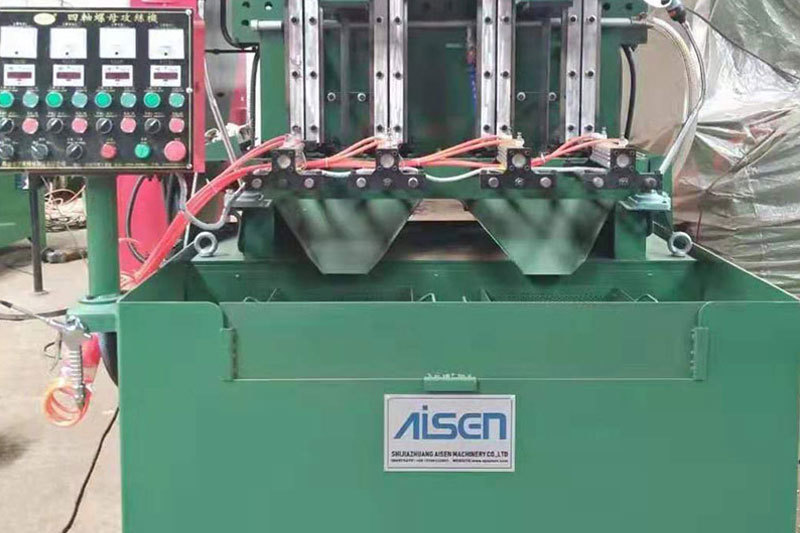
AISEN Four axis nut tapping machine ready for shipment to Russia
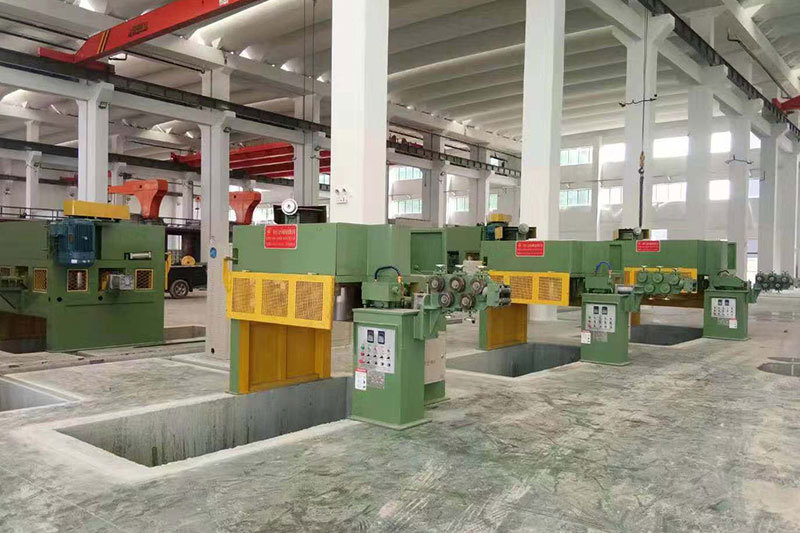
AISEN machinery inverted wire drawing machine
MESSAGES
We will contact you within one working day. Please pay attention to your email.
Qucik Link
Contact
Phone: +86-15100123091
E-mail: info@sjzaisen.com
Address: No.41 Zhaiying South Street, Yuhua District, Shijiazhuang City, Hebei Province China