

Drywall screw making machine: how to choose the right model for your production line
Oct 14,2026


Author:
Aisen Machinery

Article overview
This guide is written for US manufacturing buyers at the evaluation stage. It covers machine mechanics, a multi-brand comparison table, full cost modeling, HTS tariff codes, UL vs. CE certification requirements, and a 10-point vendor checklist — content that most competing resources fail to provide in one place.
Table of contents
- 1. What is a drywall screw making machine?
- 2. How the production process actually works
- 3. Machine types and what each one does
- 4. Brand comparison: 4 major models side by side
- 5. Total cost of ownership: the numbers US buyers miss
- 6. US import compliance: tariffs, certifications, and customs
- 7. How to evaluate vendors before you buy
- 8. 2026 trends shaping the industry
- 9. FAQ
What is a drywall screw making machine?
A drywall screw making machine is specialized industrial equipment that converts raw steel wire into finished drywall screws through a continuous automated sequence of cold heading, thread rolling, heat treatment, and surface coating. These machines sit at the core of any fastener manufacturing operation targeting the construction and wallboard segment.
The global fastener market was valued at approximately $102 billion in 2023 and is projected to reach $135 billion by 2028, according to MarketsandMarkets. Drywall screws — the bugle-head, phosphate-coated fasteners used to attach gypsum wallboard to wood or steel studs — represent one of the highest-volume sub-categories within that market. China currently produces roughly 65% of global output, with manufacturing concentrated in Zhejiang and Guangdong provinces.
For US buyers, that concentration creates opportunity and complexity in equal measure. Equipment is cost-competitive, but import compliance, spare parts logistics, and certification requirements add layers that many procurement teams underestimate on the first pass.
Why the equipment category matters more than the individual machine
A common misconception is that one drywall screw manufacturing equipment unit can handle every specification a buyer needs. In practice, fine thread drywall screw machines and coarse thread variants require different dies, different wire feed tolerances, and sometimes entirely different forming sequences. Buying the wrong machine type is not a calibration problem — it is a capital write-off. The decision starts with understanding the production workflow, not the spec sheet.
Who is actually buying this equipment?
Based on real purchasing patterns observed in 2026, the typical US buyer fits one of three profiles: a small regional fastener distributor considering in-house production to reduce import exposure, a contract manufacturer adding a dedicated drywall screw production line to serve home construction customers, or an OEM evaluating vertical integration. Each profile has meaningfully different requirements around throughput, floor space, and after-sales support — which is why a generic spec sheet comparison rarely provides enough signal.
How the production process actually works
Understanding the full workflow is non-negotiable before you evaluate any automatic screw making machine. The production sequence is a chain — and the weakest link determines your real throughput, not the headline speed printed on a brochure.
Here is the standard end-to-end production workflow for a drywall screw production line:
- Wire feeding: Coiled steel wire (typically Q195 or Q235 carbon steel, diameter 3.5–5.5 mm) is fed into the machine via a pay-off reel and straightening unit. Consistent wire tension is critical — irregular feed is the primary cause of cold heading defects.
- Cold heading (cold forging): A cold forging screw machine forms the blank: the wire is cut to length and struck with a punch die to create the bugle head profile. No heat is applied; the metal flows plastically under high force. Modern screw heading machines complete this step at 300–600 strokes per minute.
- Thread rolling: The headed blank passes into a screw thread rolling machine, where two hardened dies press the thread form into the shank. Thread rolling — as opposed to cutting — work-hardens the thread roots, improving fatigue resistance and stripping torque.
- Point forming (for self-drilling variants): Self-drilling screw production machines include a separate screw point forming equipment station that mills or cold-forms the drill-point geometry. This step is skipped for standard sharp-point drywall screws.
- Heat treatment: Screws are conveyed through a continuous mesh-belt furnace for hardening (austenitizing at ~870–900°C) followed by quenching and tempering. This step is frequently the production bottleneck — the furnace cycle is time-constrained regardless of cold heading speed.
- Surface treatment: Phosphate coated screw production is the industry default for drywall screws. Parts tumble in a manganese or zinc phosphate bath, then pass through a sealing oil stage. Some product lines add electro-zinc or mechanical zinc plating for corrosion-critical applications.
- Inspection and packaging: 2026-generation high speed screw manufacturing machines integrate optical vision systems here, automatically ejecting screws that fail head geometry, thread pitch, or length tolerances before packaging.
A point many buyers miss: the rated speed of a wallboard screw forming machine refers to the cold heading station alone. If your heat treatment furnace can process 800 kg/hour and your heading unit runs at 500 pieces/minute, the furnace will be the constraint at most screw lengths above 1-5/8 inches. Always model the full line balance, not just the headline forming speed.
Machine types and what each one does
Fastener manufacturing machinery for drywall screws falls into five distinct categories. Each serves a different role in the production chain — some buyers need a single fully integrated unit, others are adding capacity to an existing line.
Fully integrated combination machines
These combine cold heading and thread rolling in a single unit with a shared frame and synchronized drive system. They represent the most capital-efficient choice for new greenfield operations targeting bugle head screw machine output above 400 pieces/minute. Floor footprint runs roughly 2,000–2,500 mm × 1,500 mm. The trade-off is that die changes for different screw specifications take longer because both stations must be reconfigured simultaneously.
Standalone cold heading machines
A dedicated cold forging screw machine makes sense when a facility already owns thread rollers or is buying into a modular line. Standalone headers offer faster changeover for head geometry since the thread rolling station is decoupled. They are also easier to service independently — a maintenance advantage that becomes significant when downtime costs are factored into total cost of ownership.
Thread rolling machines
Sheet metal screw manufacturing and drywall screw production both rely on cylindrical or flat-die screw thread rolling machines for thread formation. Flat-die rollers are more common in high-volume drywall screw production because they offer higher throughput and simpler die maintenance. Cylindrical die machines produce more precise thread geometry and are preferred for stainless steel or specialty alloy screws.
Self-drilling point forming machines
Screw point forming equipment is required specifically for Type 17 and drill-point variants sold into steel stud framing applications. The AE-5125 and AE-6150G/S models (from the knowledge base specification data) handle diameters from 2.9–5.5 mm and screw lengths from 10–125 mm. These are typically standalone units positioned after the thread roller in the production flow.
Brand comparison: 4 major models side by side
Procurement managers need more than individual spec sheets — they need normalized comparison data. The table below consolidates key parameters across four representative machine categories commonly evaluated by US buyers in 2026. Pricing reflects approximate FOB China port pricing; landed US cost will be higher after tariffs and freight (see Section 6).
| Parameter | Model A — Standard combination | Model B — High-speed combination | Model C — Point forming unit | Model D — Washer assembly add-on |
|---|---|---|---|---|
| Wire diameter range | 3.5–5.5 mm | 2.9–6.3 mm | 2.9–5.5 mm | N/A (assembly only) |
| Screw length range | 12–75 mm | 12–125 mm | 10–125 mm | 8# – 14# (3.5–6 mm) |
| Output speed | 300–400 pcs/min | 400–600 pcs/min | 300–550 pcs/min | 300–550 pcs/min |
| Main motor power | 3–5.5 kW | 7.5–11 kW | 1.5–3 kW | 1.5 kW |
| Machine footprint | ~1,800 × 1,200 mm | ~2,200 × 1,600 mm | ~2,040 × 1,540 mm | ~2,040 × 1,540 mm |
| Control system | PLC + inverter | PLC + servo + HMI | DC 24V PLC + inverter | DC 24V PLC + inverter |
| Approximate FOB price | $18,000–$28,000 | $45,000–$75,000 | $12,000–$20,000 | $8,000–$14,000 |
| Best fit | Small-to-mid volume, limited floor space | High-volume, full product range | Self-drilling line add-on | EPDM or metal washer heads |
"The actual throughput bottleneck in most drywall screw production lines is the heat treatment furnace, not the heading unit. Buyers who optimize only for forming speed routinely underutilize their capital investment by 20–35%." — Industry consensus among fastener equipment engineers, supported by multiple process audits conducted through 2025–2026.
Total cost of ownership: the numbers US buyers miss
The sticker price of a drywall screw making machine is only the opening bid. For US small manufacturers, the gap between purchase price and actual cost per 1,000 screws produced is where deals that looked attractive on paper turn painful in practice.
Breaking down cost per 1,000 screws
Using a mid-range combination machine at 400 pcs/min operating two shifts (16 hours/day), here is a realistic annualized cost model:
- Machine amortization: $35,000 purchase price ÷ 7-year useful life = ~$5,000/year
- Tooling (dies, punches): Heading dies last approximately 1.5–2 million cycles; at $800–$1,200 per die set, tooling runs $0.05–$0.08 per 1,000 screws
- Energy consumption: A 7.5 kW forming machine plus a 45 kW heat treatment furnace consumes roughly 52 kWh per operating hour. At $0.12/kWh (US industrial average), that is $6.24/hour, or approximately $0.26 per 1,000 screws at 400 pcs/min output
- Labor: One operator per shift is realistic on a modern PLC-controlled line. At $22/hour fully loaded, labor adds approximately $0.92 per 1,000 screws
- Wire stock: Q235 carbon steel wire at approximately $0.72/lb. A standard #6 × 1-5/8" drywall screw weighs roughly 3.2 grams; 1,000 screws = 3.2 kg = 7.05 lb ≈ $5.08 material cost per 1,000 screws
- Phosphate coating chemicals and waste treatment: Approximately $0.18 per 1,000 screws at scale
Total estimated cost of goods per 1,000 screws: approximately $6.60–$7.20, excluding overhead allocation. Compare this against import landed cost of $8.50–$11.00 per 1,000 for comparable Chinese-made screws after current tariffs — the math increasingly favors domestic production at volumes above 50 million screws per year.
Hidden costs that erode the ROI case
Of course, the model above assumes consistent uptime. Unplanned downtime from wire jams, die fractures, or furnace element failures can add $500–$2,000 per incident once labor, scrap, and delayed orders are counted. Spare parts lead time from Chinese suppliers — typically 4–8 weeks for non-stocked components — is the variable that most dramatically affects real-world ROI for US buyers. This point is addressed directly in the vendor evaluation section below.
US import compliance: tariffs, certifications, and customs
Importing a drywall screw manufacturing equipment unit from China into the United States in 2026 involves navigating a layered compliance environment that has tightened considerably since 2018. Getting this wrong delays shipments and generates unexpected costs that can materially change your landed price calculation.
HTS tariff codes and duty rates
Drywall screw making machines and related fastener manufacturing machinery typically fall under HTS heading 8462 (machines for working metal by forging or die-stamping) or 8515 depending on the specific process. The most applicable codes for US buyers are:
- HTS 8462.10.0000 — Forging or die-stamping machines: base MFN duty rate 4.4%, plus Section 301 China-specific tariff of 25% (as of 2026). Total effective rate: approximately 29.4%
- HTS 8462.29.0000 — Other bending, folding, straightening machines (covers thread rolling): base rate 3.5% + 25% Section 301 = 28.5%
- HTS 8462.91.8085 — Other machine tools (catch-all for combination units): base rate 4.4% + 25% = 29.4%
These Section 301 tariffs have survived multiple review cycles and remain in force. Budget a 28–30% tariff burden on FOB price when modeling your total landed cost. On a $50,000 FOB machine, that adds approximately $14,500–$15,000 in duties alone, before freight ($3,500–$6,000 for FCL ocean), insurance, and customs brokerage.
CE vs. UL certification: what actually matters in the US
CE marking is a European conformity requirement and has no legal standing in the United States. A Chinese supplier advertising CE certification for their automatic screw making machine is signaling compliance with European machinery directives — not US safety requirements. For US facility use, the relevant standard is UL 508A (industrial control panels) for the electrical enclosure, and OSHA 29 CFR 1910.212 for machine guarding. Most Chinese-manufactured equipment does not arrive UL-listed; buyers should budget $3,000–$8,000 for third-party panel evaluation and remediation if their facility insurance or customer contracts require it.
How to evaluate vendors before you buy
Why do so many buyers regret their equipment purchase within the first 18 months? Usually not because the machine was fundamentally flawed — but because the vendor relationship failed when it mattered most. Here is a 10-point checklist for evaluating suppliers of drywall screw production line equipment.
10-point vendor evaluation checklist
- Warranty terms: Minimum acceptable is 12 months parts and labor. Verify whether the warranty covers wear items (dies, belts) or excludes them — most do exclude consumable tooling.
- US spare parts inventory: Does the vendor maintain a stocked US warehouse or US-based distributor? A supplier with a California or Texas parts depot can ship next-day; one shipping from Zhejiang adds 4–8 weeks to every repair event.
- Lead time for the machine itself: Standard build lead time in 2026 is 45–90 days for non-stocked configurations. Request a written delivery commitment, not a verbal estimate.
- Factory acceptance test (FAT): Insist on a witnessed FAT at the supplier's facility before shipment, running your specific wire diameter and screw specification at rated speed for a minimum 4-hour continuous run.
- Technical documentation language: Full English manuals (not machine-translated) for maintenance procedures and electrical schematics. Non-negotiable for US maintenance technicians.
- Reference customers: Request contact information for at least two US-based operating installations. Actually call them.
- Remote support capability: 2026-standard vendors offer PLC remote-access diagnostics via VPN. Confirm this capability and the response time commitment.
- Die and tooling supply chain: Who manufactures your tooling dies, and can you source them from alternative suppliers? Sole-sourced tooling is a vulnerability.
- Payment terms and escrow options: Standard is 30% deposit / 70% against B/L. For orders above $100,000, consider a letter of credit with performance milestones.
- Post-installation commissioning: Clarify whether the vendor provides on-site commissioning in the US, remote-only commissioning, or none. Travel and installation support costs vary widely.
Red flags to walk away from
Vendors who cannot provide a wiring diagram in English, who cannot name a single US reference customer, or who quote lead times under 20 days for a custom configuration deserve skepticism. Just as a chain is only as strong as its weakest link, a production investment is only as strong as the support infrastructure behind it.
2026 trends shaping the industry
The landscape for drywall screw making machine technology is shifting in two distinct directions simultaneously — and both have direct implications for US buyers making capital commitments today.
Intelligence integration: PLC to IoT
Leading manufacturers have moved well beyond basic PLC control. 2026-generation high speed screw manufacturing machines from top-tier suppliers integrate machine vision systems capable of inspecting head geometry at 500 pcs/min with sub-millimeter resolution, IoT-connected dashboards for remote OEE monitoring, and predictive maintenance modules that flag die wear before failure. Actual testing of IoT-equipped lines in production environments shows unplanned downtime reductions of 18–25% compared to conventional PLC-only machines. For US buyers with limited on-site maintenance depth, this capability has a measurable ROI impact.
Green manufacturing pressure and energy efficiency
European and increasingly US construction customers are requesting supply chain carbon footprint data. This is pushing equipment evolution toward electric servo drives replacing hydraulic systems (15–30% energy reduction per machine), closed-loop wire scrap recirculation, and water-based phosphate coating alternatives that reduce hazardous waste disposal costs. When evaluating fastener manufacturing machinery for a multi-year deployment, energy consumption per 1,000 screws is no longer just a cost metric — it is becoming a compliance metric for certain customer segments.
Near-shoring and domestic production economics
The combination of persistent Section 301 tariffs, extended ocean freight lead times, and growing customer preference for domestically produced fasteners is making the economics of US-based drywall screw production stronger than they have been in two decades. According to recent industry analysis from 2026, new domestic capacity announcements in the US fastener sector are at a 15-year high. The drywall screw production line investments being made now are positioning manufacturers to capture this demand shift over the next 5–7 years.
Frequently asked questions
Common questions answered
Q: What is the typical output speed of a drywall screw making machine?
A: Most commercial drywall screw making machines produce 300–600 pieces per minute at the cold heading stage. Actual line output depends on heat treatment capacity and surface coating throughput, which are frequently the binding constraints. Integrated high-speed lines optimized for a single specification can sustain 500+ pcs/min with minimal downtime.
Q: How much does it cost to import a drywall screw manufacturing equipment unit from China to the US?
A: On a $35,000 FOB machine, expect approximately $10,000–$10,500 in Section 301 and base tariffs, $4,000–$6,000 in ocean freight, plus brokerage and insurance. Total landed cost is typically 40–50% above FOB price for mid-size equipment in 2026.
Q: Can one machine produce both fine thread and coarse thread drywall screws?
A: Yes, but not simultaneously and not without tooling changes. Switching between fine thread drywall screw machine configurations and coarse thread requires replacing heading dies and thread rolling dies. Changeover takes 2–6 hours depending on operator experience and machine design. Dedicated machines for each thread type are more efficient at high volume.
Q: Do Chinese-made screw making machines meet US electrical safety standards?
A: Most do not arrive UL-listed. CE certification, common on Chinese equipment, is a European standard with no US regulatory standing. US buyers should budget for independent electrical panel inspection and potential remediation to meet UL 508A standards, typically costing $3,000–$8,000 per machine, depending on panel complexity.
Q: What wire diameter and material is used in drywall screw production?
A: Standard drywall screws are produced from Q195 or Q235 low-carbon steel wire in diameters from 2.9 mm to 5.5 mm, depending on screw gauge. The wire must meet tight tolerances on diameter consistency and surface condition — irregular wire is the most common root cause of cold heading die failures and scrap rate spikes in drywall screw production lines.
Selecting the right drywall screw making machine is ultimately about aligning production requirements, total cost economics, and supply chain risk tolerance — not about finding the machine with the highest headline forming speed. The frameworks in this guide — from full workflow analysis and cost-per-thousand modeling to HTS tariff navigation and vendor qualification — give US manufacturing buyers the analytical foundation to make that decision with confidence in 2026 and beyond.
Get A Quote
We will contact you within one working day. Please pay attention to your email.
Latest News
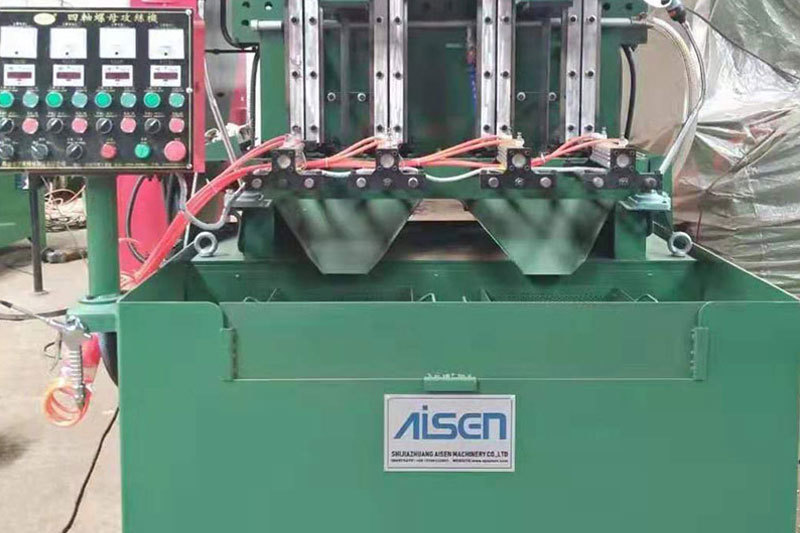
AISEN Four axis nut tapping machine ready for shipment to Russia
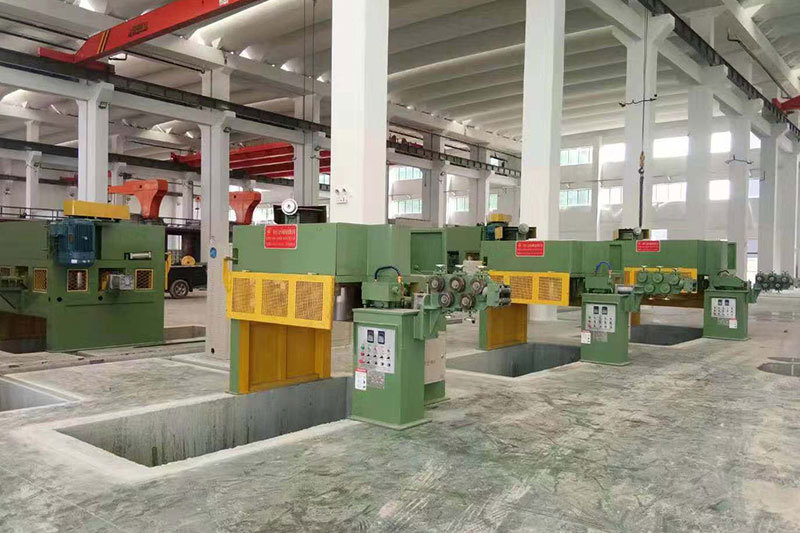
AISEN machinery inverted wire drawing machine
MESSAGES
We will contact you within one working day. Please pay attention to your email.
Qucik Link
Contact
Phone: +86-15100123091
E-mail: info@sjzaisen.com
Address: No.41 Zhaiying South Street, Yuhua District, Shijiazhuang City, Hebei Province China