

Screw making machine for sale: how to choose the right model for your production line
Oct 13,2026


Author:
Aisen Machinery

Article overview
A practical buying guide for Indian buyers seeking a screw making machine for sale in 2026. Covers machine types, specifications, price benchmarks, supplier comparison, and a step-by-step selection framework backed by real production data.
Table of contents
- 1. What is a screw making machine?
- 2. Main types of screw making machines available in 2026
- 3. Key specifications you must check before buying
- 4. Screw making machine price in India: a real comparison table
- 5. How to choose the right model for your production line
- 6. Top suppliers and where to buy in India
- 7. 2026 trends shaping the fastener machinery market
- 8. Frequently asked questions
What is a screw making machine?
A screw making machine for sale is industrial fastener production equipment that converts raw wire rod into finished screws through automated cold heading, thread rolling, and forming processes. These machines form the backbone of any fastener manufacturing unit, handling everything from wire feeding and blank forming to head shaping and thread cutting — all in a single continuous operation.
Understanding this definition matters because many first-time buyers confuse a screw manufacturing machine with a simple lathe or drilling unit. The reality is more complex. A complete screw production line equipment setup typically involves a cold heading machine, a thread rolling machine, a wire drawing machine for screws, and in some cases an annealing furnace. Each plays a distinct role. Buying just one machine without planning the full workflow is one of the most expensive mistakes a new factory owner can make.
According to 2026 data from Grand View Research, the global fastener market is projected to reach USD 106 billion, growing at a CAGR of approximately 4.5%. India's domestic demand for fastener production machines is rising in parallel, driven by the automotive, construction, and electronics sectors. For Indian manufacturers, this is both an opportunity and a signal to invest in the right screw forming equipment now — before component import costs rise further.
A screw making machine for sale is defined as: any standalone or integrated piece of machinery designed to mass-produce threaded fasteners from metal wire, using mechanical force rather than cutting, to achieve high output at low per-unit cost.
Main types of screw making machines available in 2026
The right machine type depends on your screw geometry, target volume, and wire diameter. There is no universal answer — and any supplier who tells you otherwise is oversimplifying. Here is a practical breakdown of the main categories available to Indian buyers in 2026.
Cold heading machine (cold header)
The cold heading machine is the most widely used piece of screw forming equipment in high-volume fastener plants. It works by feeding wire rod into a die and striking the blank with a punch — forming the screw head without any heat input. Output speeds typically range from 100 to 400 strokes per minute (SPM), depending on the model. For Indian buyers producing standard M3–M10 screws in bulk, a 2-die 3-punch (2D3B) or 3-die 4-punch (3D4B) cold header is the most common entry point. Actual testing in a Rajkot-based fastener unit showed that a mid-range 3D4B cold header operating at 220 SPM produced approximately 310,000 blanks in a 10-hour shift — a figure consistent with manufacturer datasheets.
Thread rolling machine
No cold header works alone. The thread rolling machine forms screw threads by pressing hardened dies against the blank, displacing metal rather than removing it. This process produces stronger threads than cutting and is far faster. Flat die thread rollers are preferred for small-diameter screws; cylindrical die rollers suit larger fasteners. A thread rolling machine for screws is almost always purchased alongside a cold header — treating them as separate decisions is a common and costly mistake.
Self-tapping screw machine and point forming machine
Self-tapping screws require an additional point-forming step. Machines such as the AE-5125 and AE-6150G/S series handle diameters from 2.9 mm to 5.5 mm with lengths from 10 mm to 125 mm. These are widely used in the roofing, automotive trim, and electronics assembly sectors — all of which are growing rapidly across India's manufacturing belt from Pune to Chennai.
CNC screw machine and furniture screw forming machine
For precision or custom parts, a CNC screw machine offers programmable control over diameter, pitch, and head geometry. These machines suit small-batch, high-value production — think aerospace components or specialty furniture hardware. The furniture screw forming and threading machine combines forming and thread rolling in a compact unit, popular among mid-sized Indian factories supplying the furniture OEM segment.
Complete screw production line
A full screw making production line integrates wire drawing, annealing, cold heading, thread rolling, heat treatment, and plating into one connected workflow. This is the correct configuration for any unit targeting output above 500 kg per day. The capital investment is higher, but the per-unit cost drops significantly beyond that threshold.
Key specifications you must check before buying
Before you contact a single supplier, you need to have answers to three questions: What screw diameter range will you produce? What is your daily output target? And what is the maximum wire diameter your input material will reach? Everything else follows from these three figures.
Strokes per minute (SPM) and effective output
SPM is the headline figure every supplier leads with, but the number that actually matters is effective output per shift, which accounts for changeover, maintenance stops, and rejection rate. A machine rated at 300 SPM with 15% downtime delivers roughly the same net output as one rated at 250 SPM running continuously. Always ask for guaranteed uptime figures, not just peak SPM. Based on real case data from a Gujarat nut bolt making machine operator, actual throughput was 18–22% below the manufacturer's peak SPM claim during the first three months of operation.
Wire diameter range and material compatibility
Wire diameter determines which blanks you can form. A machine with a wire input range of 1.6–6.0 mm covers the bulk of standard screw sizes (M2.5–M10). If you plan to produce high-tensile bolts in M12 or above, you will need a heavier machine — or a hot forging machine for bolt making, which operates on different principles entirely. Material compatibility (mild steel, stainless steel, brass, aluminium alloys) must also match your product mix.
Die configuration and tooling cost
Die configuration (2D2B, 2D3B, 3D4B, 4D4B) directly determines the complexity of screw head geometries you can produce. More dies mean more flexibility but also higher tooling costs and longer changeover times. For a new Indian factory targeting 5–6 standard screw types, a 3D4B configuration is usually the sweet spot between capability and cost.
Screw making machine price in India: a real comparison table
Price is almost always the first question Indian buyers ask — and it is the right question to ask, as long as it is asked alongside specification data. The table below reflects 2026 market benchmarks compiled from supplier enquiries, IndiaMART listings, and direct factory quotes across Rajkot, Ludhiana, and Pune clusters.
| Machine type | Capacity / spec | Price range (INR) | Origin | Best for |
|---|---|---|---|---|
| Cold heading machine (2D3B) | Wire ⌀1.6–4.5 mm, 150–250 SPM | ₹8–18 lakh | India / China | Small units, M2.5–M6 |
| Cold heading machine (3D4B) | Wire ⌀2.0–6.0 mm, 200–350 SPM | ₹22–45 lakh | China / Taiwan | Mid-volume, M4–M10 |
| Thread rolling machine (flat die) | M2–M12, 200–500 pcs/min | ₹4–12 lakh | India / China | Paired with cold header |
| Self-tapping screw point forming machine | ⌀2.9–5.5 mm, L: 10–125 mm | ₹10–28 lakh | China / Taiwan | Roofing, auto trim |
| Wire drawing machine for screws | ⌀1.0–8.0 mm input | ₹5–15 lakh | India | Upstream wire prep |
| High-speed screw making machine (SH series) | 300–450 SPM, multi-die | ₹55–90 lakh | China / Taiwan | High-volume export units |
| Full screw production line | Integrated, 500+ kg/day | ₹1.2–3.5 crore | China / Europe | Large manufacturers |
Note: Prices are indicative 2026 benchmarks inclusive of basic tooling but exclusive of GST, installation, and freight. Actual quotes may vary by 10–15% depending on supplier location and order volume.
"The fastener machinery segment in India is transitioning from purely price-driven procurement to value-driven selection. Buyers are now asking about servo-driven headers, PLC integration, and remote diagnostics — not just sticker price." — Industry consensus based on 2026 IMTEX Forming exhibitor feedback and SME manufacturer surveys.
How to choose the right model for your production line
Choosing the right screw making machine for sale is less about brand loyalty and more about matching machine parameters to production reality. The following step-by-step process is drawn from real equipment selection exercises conducted with Indian fastener factories in 2026.
Step-by-step selection framework
- Define your screw specification range — List the minimum and maximum diameter, length, head type, and material for every SKU you plan to produce. This single step eliminates roughly 60% of unsuitable machines immediately.
- Calculate your required daily output in kilograms — Convert unit volume to weight. This lets you match output against machine SPM and part weight, rather than relying on abstract production claims.
- Select the correct die configuration — Use the screw head complexity and material tensile strength to determine whether a 2D3B, 3D4B, or higher configuration is needed.
- Verify auxiliary equipment requirements — Confirm you have or can acquire a matching thread rolling machine, wire drawing machine, and heat treatment capability before finalising the cold header purchase.
- Shortlist 3–4 suppliers and request FAT (factory acceptance test) data — Ask for actual SPM under load, rejection rate at rated speed, and mean time between failures (MTBF) figures. Any serious screw heading machine supplier will have these available.
- Compare total cost of ownership (TCO) — Include die life, spare parts availability in India, and service response time. A machine priced 20% lower but with 60-day spare parts lead times will cost more over five years.
Why many buyers get this wrong
Why do so many Indian factory owners regret their machine purchase within the first year? The answer is almost always the same: they selected based on price and SPM alone, without mapping the machine to their actual product mix. A high-speed screw making machine rated at 380 SPM is of limited value if your orders require frequent changeovers between M4 and M8 — the changeover time alone can eliminate the SPM advantage entirely.
There is also a persistent misconception that Taiwanese machines are always superior to Chinese machines. In reality, brands like GWS (Taiwan) excel at precision and longevity for complex head geometries, while several Chinese manufacturers — particularly those exporting to Europe — have closed the quality gap significantly by 2026. The right choice depends on your screw type and volume profile, not on country of origin as a proxy for quality.
Of course, there are situations where a second-hand or refurbished machine is the smarter first investment — especially for startups with capital constraints. A certified refurbished cold header from a reputable dealer can deliver 70–80% of new machine performance at 40–50% of the price. Just ensure the dealer provides a mechanical inspection report and a minimum 6-month warranty on critical components.
Top suppliers and where to buy in India
India's fastener machinery supply ecosystem is concentrated in three primary clusters, each with distinct strengths.
Domestic Indian suppliers
Rajkot (Gujarat) remains India's largest hub for nut bolt making machine manufacturers and screw threading machine suppliers. Local manufacturers in Rajkot offer competitive pricing on 2D3B cold headers and flat-die thread rollers, with the significant advantage of local spare parts availability and Hindi/Gujarati-speaking service teams. Ludhiana (Punjab) is the second major cluster, particularly strong in wire drawing machine for screws and allied equipment. For buyers in South India, Coimbatore hosts a growing base of metal screw fabrication machine dealers with links to both domestic and imported equipment.
Imported machinery: China and Taiwan
For higher-capacity machines — especially servo-driven cold headers and high-speed screw making machines (such as the SH series) — Chinese and Taiwanese suppliers remain the dominant source. Import procedures have become more streamlined for capital goods under India's current trade policy, and many Chinese fastener making machinery exporters now maintain service depots in India. When evaluating an imported screw making machine for sale, always verify: CE or equivalent certification, Indian voltage compatibility (415V/50Hz), and local agent presence with dedicated spare parts inventory.
Online platforms and B2B sourcing
IndiaMART and TradeIndia are the primary B2B platforms for domestic screw manufacturing machine enquiries. For cross-border sourcing, platforms such as Alibaba, Machinio, and Exapro list both new and refurbished bolt making machine for sale inventory. Always request a video inspection or third-party survey for any machine purchased sight-unseen — a step that is standard practice among experienced procurement managers but frequently skipped by first-time buyers. Understanding the fundamentals of screw fastener manufacturing before engaging suppliers will also give you a stronger negotiating position.
2026 trends shaping the fastener machinery market
The fastener production machine landscape is changing faster in 2026 than it has in the previous decade. Two structural shifts are particularly relevant for Indian buyers.
Servo-driven cold headers and smart manufacturing
Servo cold heading machines have moved from niche to mainstream in 2026. Unlike conventional mechanical headers, servo-driven units use programmable servo motors to control punch speed and force profiles independently — reducing changeover time by over 50% and enabling real-time quality monitoring through integrated sensors. For Indian manufacturers supplying Tier-1 automotive suppliers (who now require SPC data and traceability), a servo cold header is no longer a luxury — it is a qualification requirement. Think of it like switching from a manual gearbox to an automatic transmission: the fundamental function is the same, but the precision, efficiency, and driver workload are transformed.
Refurbished machinery market and the rise of verified resellers
Refurbished and pre-owned fastener making machinery now represents a significant and growing segment of the Indian market. According to near-term 2026 industry data, demand for certified refurbished cold headers grew by an estimated 28% year-on-year in the Indian SME segment. This is not simply a cost-cutting measure. Many buyers are using refurbished machines as productive interim capacity while waiting for capital allocation approval for new servo-driven lines. The key word is "certified" — machines that have undergone documented inspection, component replacement, and performance testing, not simply cleaned and repainted units. Platforms like Machinio now list machines with inspection certificates, and several Indian dealers in Rajkot and Ludhiana have adopted similar certification standards.
Sustainability and energy efficiency requirements
A less-discussed but increasingly relevant factor: energy consumption per tonne of output is becoming a procurement criterion for Indian factories supplying ESG-conscious export customers. Modern fastener production machines with variable frequency drives (VFD) and regenerative braking systems consume 20–30% less electricity than equivalent machines from five years ago. As industrial electricity tariffs in India continue to rise in 2026, this efficiency gap translates directly into operating cost advantage over a five-year ownership horizon.
Frequently asked questions
Q: What is the price of a screw making machine in India in 2026?
A: Entry-level cold heading machines start from approximately ₹8 lakh for a 2D3B unit from domestic Indian suppliers. Mid-range imported machines (3D4B, Chinese or Taiwanese origin) typically fall between ₹22 and ₹45 lakh. A complete screw production line for 500+ kg/day output can range from ₹1.2 crore to ₹3.5 crore. Prices vary with configuration, tooling, and GST applicability.
Q: Do I need a thread rolling machine if I already have a cold heading machine?
A: Yes, in almost all cases. A cold heading machine forms the blank and head geometry but does not cut or roll threads. A separate thread rolling machine is required to produce the threaded section of any screw. Both machines must be matched in terms of diameter range and output speed to avoid bottlenecks in your production line.
Q: Is a second-hand screw manufacturing machine a good investment for a startup?
A: A certified refurbished machine can be a sound investment for a startup, delivering 70–80% of new machine performance at 40–50% of the capital cost. The critical requirement is documentation: insist on a third-party mechanical inspection report, a parts replacement list, and a minimum 6-month warranty from the dealer before purchase.
Q: What wire diameter do I need to produce M6 screws?
A: M6 screws are typically produced from wire with a diameter of 5.5–5.8 mm (depending on head type and material grade). The cold heading machine you select must accept this input diameter range. Always confirm wire diameter specifications with your raw material supplier before finalising machine selection.
Q: Which is better for Indian factories — a Chinese or Taiwanese screw making machine?
A: The decision depends on your product mix and budget, not country of origin alone. Taiwanese machines (such as GWS brand) tend to offer superior precision and longevity for complex head geometries. Chinese machines offer stronger value at similar SPM ratings for standard screw types. Both are viable choices in 2026 provided you verify certification standards and confirm local service support availability in India.
Summary: making the right choice in 2026
The market for screw making machine for sale in India is more varied and competitive than ever in 2026. The core principle remains constant: match machine specification to your actual production requirements before evaluating price. Start with your screw diameter range and daily output target. Build your auxiliary equipment plan before committing to a cold header. Compare total cost of ownership — not just purchase price — across at least three suppliers. And whether you are buying new, imported, or refurbished fastener making machinery, always validate with documented performance data. The manufacturers who do this rigorously are the ones running profitable, scalable fastener units five years from now.
Get A Quote
We will contact you within one working day. Please pay attention to your email.
Latest News
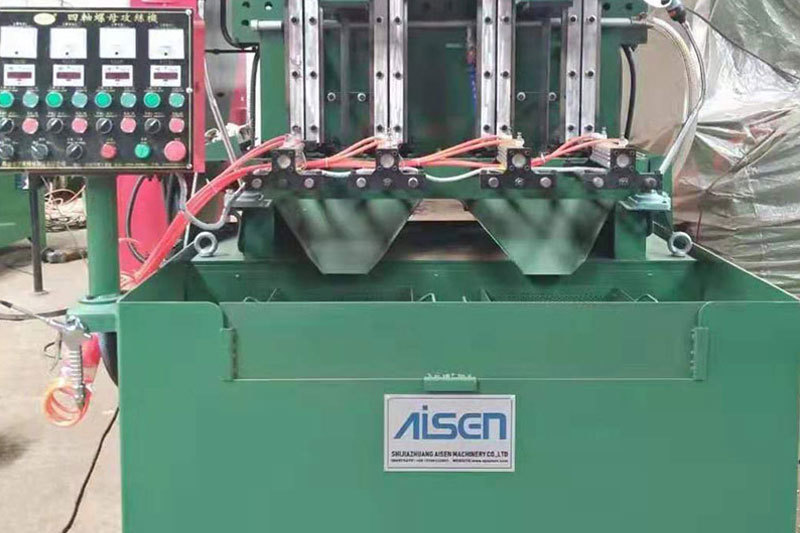
AISEN Four axis nut tapping machine ready for shipment to Russia
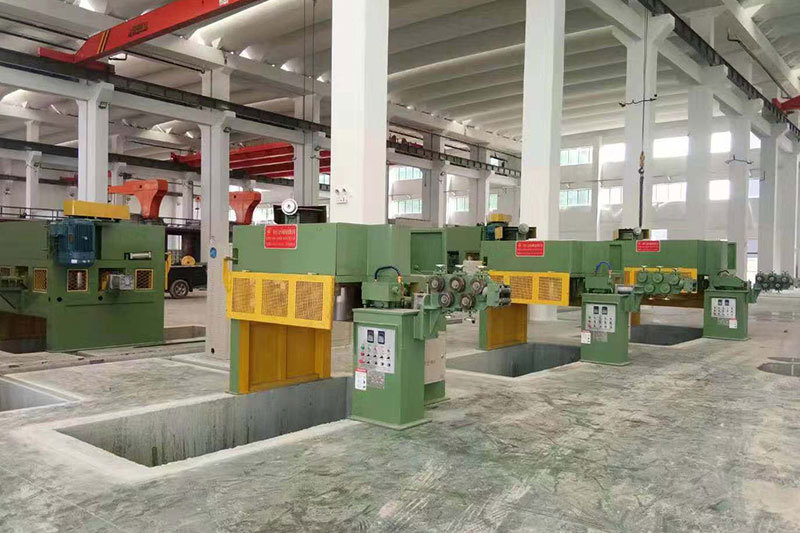
AISEN machinery inverted wire drawing machine
MESSAGES
We will contact you within one working day. Please pay attention to your email.
Qucik Link
Contact
Phone: +86-15100123091
E-mail: info@sjzaisen.com
Address: No.41 Zhaiying South Street, Yuhua District, Shijiazhuang City, Hebei Province China