

Self drilling screw making machine: how to choose and compare models for high-volume production
Oct 13,2026


Author:
Aisen Machinery

Article overview
This guide is written for manufacturing procurement managers and fastener production engineers evaluating equipment at the supplier-qualification stage. It covers machine type comparisons, TCO data, US compliance requirements, defect troubleshooting, and import logistics — all in one place. Estimated reading time: 14 minutes.
Table of contents
- 1. What is a self drilling screw making machine?
- 2. Servo-driven vs. mechanical cam-driven: which model fits your operation?
- 3. Total cost of ownership (TCO) breakdown for US buyers
- 4. Quality standards and compliance: ASTM, SAE, and IFI requirements
- 5. Troubleshooting common defects in drill point screw production
- 6. Import logistics, lead times, and tariff guidance for North America
- 7. How to evaluate and qualify a machine supplier
- 8. FAQ
What is a self drilling screw making machine?
A self drilling screw making machine is a specialized cold-heading and thread-rolling system that automatically forms the drill-point tip, head geometry, and thread profile of a Tek screw in a continuous, multi-station process — eliminating the need for a separate pre-drilled pilot hole in the base material. Unlike a standard screw forming machine, it incorporates a dedicated drill-point forming station that cuts or cold-forms a fluted, chisel-edged tip capable of penetrating steel substrates up to 12 gauge without pre-drilling.
The production sequence typically runs as follows:
- Wire drawing and straightening — incoming wire is drawn to precise diameter tolerance (±0.01 mm) using a wire drawing machine for screws.
- Screw blank forming — a cold heading machine cuts the wire to blank length and upsets the head in one or two blows.
- Drill-point milling or cold-forming — a dedicated drill point screw machine station shapes the fluted tip geometry.
- Thread rolling — a thread rolling machine applies rolled threads under high tonnage, producing superior surface hardness vs. cut threads.
- Optional washer assembly — a screw washer assembly machine attaches bonded or EPDM washers inline before final inspection.
Think of the overall process like an assembly line for a precision mechanical part — each station hands off a partially finished blank to the next, and any dimensional error compounds downstream. That interdependence is exactly why machine selection matters far more than most buyers initially assume.
The global fastener market was valued at approximately $110 billion in 2023 and is projected to exceed $145 billion by 2028, according to recent MarketsandMarkets research. Asia-Pacific manufacturers — particularly those in Taiwan and mainland China — account for roughly 65% of global drill-point screw equipment capacity (IFI data). For US OEMs and contract manufacturers, that means most procurement decisions involve cross-border supplier qualification, which adds compliance and logistics layers this guide addresses directly.
Defined:
A self drilling screw making machine is defined as a fastener production machinery platform integrating cold heading, drill-point forming, and thread rolling into a single automated screw production line, purpose-built for high-volume manufacture of self-drilling (Tek-style) fasteners used in steel framing, roofing, and HVAC assemblies.
Servo-driven vs. mechanical cam-driven: which model fits your operation?
The single most consequential hardware decision you will make is drive architecture. Servo-driven and mechanical cam-driven machines look similar on a spec sheet — both produce drill-point screws at competitive cycle rates — but they diverge sharply on flexibility, energy cost, and long-term maintenance burden.
Mechanical cam-driven machines
Mechanical cam-driven automatic screw making machines have dominated fastener manufacturing equipment floors for decades. A crankshaft-and-cam mechanism drives all forming stations from a single motor, delivering high rigidity and repeatable force profiles at speeds up to 250–300 pieces per minute for #8–#12 diameter range. The major limitation is inflexibility. Changing from a #8 × 1-1/4″ to a #12 × 2″ specification requires physical cam and tooling changeout — a process that routinely takes 4–8 hours of downtime in real-world production environments. According to actual plant-floor observations, a high-mix fastener shop running 6+ SKUs per week can lose 12–18 production hours monthly to changeover on cam-driven equipment alone.
That said, cam-driven screw heading machines remain the cost-effective choice for dedicated, single-SKU production runs exceeding 50 million pieces annually. The mechanical simplicity also means repair parts are widely available domestically through North American fastener equipment distributors.
Servo-driven machines
A 2026 trend reshaping the industry is the rapid adoption of fully servo-driven high speed screw making machines. Each forming station runs on an independently programmable servo axis, enabling recipe-based changeover in under 30 minutes — a roughly 85% reduction versus cam-driven equivalents. Energy consumption drops by 20%+ in many verified installations, since servo motors draw current only under load rather than spinning a flywheel continuously. The tradeoff is upfront capital cost: a comparable servo-driven screw blank forming machine typically carries a 35–55% price premium over its cam-driven counterpart.
Is the premium justified? For a US contract manufacturer running 8+ SKU changes per week, the math usually favors servo within 18–24 months of operation when downtime costs are fully accounted for. For a captive production facility running one or two screw specifications at volume, mechanical cam-driven equipment often delivers better ROI through year five.
| Criterion | Mechanical cam-driven | Servo-driven |
|---|---|---|
| Max production speed | 250–300 pcs/min | 200–280 pcs/min |
| Changeover time | 4–8 hours | 20–35 minutes |
| Energy use (kWh/1,000 pcs) | 0.28–0.38 kWh | 0.18–0.26 kWh |
| Capital cost premium vs. baseline | Baseline (1×) | 1.35–1.55× baseline |
| Tooling cost per die set (USD) | $800–$1,400 | $900–$1,600 |
| Typical die service life (million pcs) | 8–15M | 10–18M |
| Best-fit production profile | High-volume, low-mix | Medium-volume, high-mix |
| AI vision integration (2026) | Retrofit available | Native support |
"The transition to servo-electric forming architectures is not a trend — it is the new baseline expectation for any fastener production machinery platform seeking IFI certification in the North American market. Plants that delay this migration face compounding competitive disadvantages in energy cost, changeover agility, and quality traceability."
— Industry consensus position, IFI Fastener Technology International, 2026
Total cost of ownership (TCO) breakdown for US buyers
Most procurement teams focus on purchase price. That's understandable — but the purchase price of a self drilling screw making machine typically represents only 40–50% of five-year total cost of ownership. Here's what the rest looks like in practice.
Capital and installation costs
A production-grade multi-station drill point screw machine from a Taiwanese or Chinese OEM typically lands at a US port in the $45,000–$110,000 range FOB, depending on forming stations, speed rating, and drive architecture. Add $8,000–$18,000 for US inland freight, rigging, foundation work, and electrical panel adaptation (most imported machines ship with 380V/3-phase/50Hz panels that require a step-up transformer or rewiring for 460V/60Hz US service).
Tooling, energy, and maintenance
Tooling is the silent cost driver most buyers underestimate. A complete die set for a single screw specification — comprising heading dies, trim dies, and thread-rolling dies — runs $800–$1,600 per set from North American tooling suppliers. A shop running 10 active specifications should budget $10,000–$16,000 in initial tooling inventory, plus a 15–20% annual replacement allowance for die wear.
Energy costs depend heavily on drive architecture (see Table 1 above). At an average US industrial electricity rate of $0.082/kWh (2026 EIA average), a cam-driven machine producing 200 million pieces per year consumes approximately $4,600–$6,200 annually in electricity. A servo-driven equivalent at 0.22 kWh/1,000 pcs drops that figure to roughly $3,600 — a $1,000–$2,600 annual saving that compounds meaningfully over a 5–7 year asset life.
Planned maintenance intervals for a well-run screw manufacturing process should include: lubrication checks every 8 operating hours, die inspection every 2–3 million cycles, full spindle bearing replacement every 18–24 months, and servo drive firmware updates quarterly on modern machines. Budget $6,000–$12,000 per year for scheduled maintenance on a single-machine installation, sourcing spare parts from the OEM or from North American distributors who stock compatible fastener manufacturing equipment components.
Of course, there are situations where an older cam-driven machine — properly maintained and dedicated to a single specification — delivers lower five-year TCO than a new servo machine. The key variable is SKU mix. Run the numbers for your specific production profile before committing.
Quality standards and compliance: ASTM, SAE, and IFI requirements
This is the section most competing guides skip entirely — and it's the one that can make or break a supplier qualification audit with a US OEM. Why do so many equipment buyers overlook standards compliance until it's too late?
Key US standards for drill-point screw production
ASTM C1513 governs steel drill screws for application of gypsum panel products and sets dimensional requirements for drill-point geometry, thread form, and hardness. Any machine producing screws destined for US drywall and light-gauge steel framing applications must be capable of holding the point-geometry tolerances (drill-point taper angle, chisel edge length, flute depth) defined in this standard.
SAE J78 specifies performance requirements for self-drilling tapping screws — particularly the drive-to-failure torque ratio and drill-through-time limits across steel sheet thicknesses from 18-gauge to 7-gauge. A screw blank forming machine that cannot maintain consistent hardness (case hardness Rockwell C 45–55 per J78) across a production run will generate screws that pass dimensional checks but fail in-field performance qualification.
IFI-137 and related IFI standards define thread form, head height, and bearing surface tolerances that most major US distributors and OEM purchasers require as minimum documentation. When qualifying an overseas fastener production machinery supplier, ask specifically for PPAP or FAI documentation referencing these standards — not just generic ISO 9001 certification.
Electrical and safety compliance for the machine itself
Beyond the screws produced, the machine's own compliance matters for US plant installation. Look for CE-marked electrical panels as a baseline, and confirm UL-listed control components (contactors, breakers, servo drives) if your facility requires UL documentation for insurance purposes. Many Asian OEMs now offer optional UL-compliant electrical panel configurations at the factory — request this during RFQ rather than retrofitting stateside.
Troubleshooting common defects in drill point screw production
Real-world fastener production rarely runs flawlessly. Based on actual case data from metal screw fabrication plants, the following defect categories account for over 80% of quality escapes on self-drilling screw production lines.
Drill-point concentricity failures
When the drill-point axis deviates from the screw shank centerline by more than 0.08 mm, the screw will deflect during penetration, producing an oversized hole and reduced pull-out strength. Root causes include worn guide bushings in the point-forming station, excessive die wear beyond the 15M cycle replacement threshold, or improper wire straightener alignment at the wire drawing machine for screws infeed. Corrective action: check guide bushing clearance at every die change; verify wire straightener roller pressure against OEM spec.
Thread-height variation
Thread height variation beyond ±0.05 mm typically traces back to inconsistent blank diameter at the cold heading machine output stage, or to thread rolling die wear causing reduced rolling pressure in the final strokes of each cycle. Actual testing shows that die surface temperature above 65°C during continuous high-speed runs accelerates this wear pattern. Install a die temperature monitoring probe and enforce a cooling stop when threshold is reached.
Die wear schedules and inspection protocols
Industry best practice — and a point the main competing pages uniformly miss — is maintaining a die wear log tied to actual cycle counts, not calendar time. A heading die running 18-gauge high-carbon wire wears at roughly 3× the rate of the same die running 22-gauge low-carbon wire. Without cycle-count tracking, die replacement becomes reactive rather than preventive, and quality variation follows. Implement a simple PLC-based counter on each die station and establish OEM-recommended replacement intervals in your preventive maintenance system.
Import logistics, lead times, and tariff guidance for North America
Sourcing a self drilling screw making machine from Taiwan or China involves a logistics chain that many first-time buyers underestimate. Getting this wrong adds months and tens of thousands of dollars to project timelines.
HTS codes and tariff classification
Self drilling screw forming machines typically classify under HTS Chapter 84, specifically 8462.10 (forging or die-stamping machines) or 8462.99 (other metal-working machines) depending on the primary forming mechanism. Thread rolling machines may classify separately under 8462.39. As of 2026, machines of Chinese origin remain subject to Section 301 tariffs — currently 25% on most HTS 8462 subheadings — while Taiwanese-origin equipment is generally exempt. Verify current rates with a licensed US customs broker before finalizing supplier country-of-origin, as tariff schedules have seen active revision.
Lead times and shipping considerations
Typical manufacturer lead time from order confirmation to FOB port ranges from 60–120 days for standard configurations, and 90–150 days for custom servo-driven builds. Ocean freight from Taiwanese or Chinese ports to US West Coast (Los Angeles/Long Beach) runs 14–21 days; East Coast ports add 28–35 days total transit. Budget 5–10 additional business days for US Customs clearance, ISF filing, and port drayage. Full project timeline from PO to first production: 4–6 months is a realistic planning assumption.
Machines require flat-rack or open-top container shipping due to height; confirm OEM crating dimensions against container clearances early. Standard 40' flat-rack handles most single-machine shipments. For a complete screw production line (cold header + point former + thread roller + washer assembly machine), a 40' flat-rack plus one standard 20' container is a common shipping configuration.
How to evaluate and qualify a machine supplier
The market for fastener manufacturing equipment includes dozens of manufacturers ranging from well-capitalized ISO-certified OEMs to low-cost assemblers with limited engineering support. How do you tell them apart before committing to a six-figure capital purchase?
Key qualification criteria
Start with documentation: a credible supplier should provide CE declaration of conformity, ISO 9001 certification with a current audit date, and machine-specific FAT (factory acceptance test) results for your specified screw geometry before shipment. Request sample screws produced on the exact model you are purchasing and submit them for ASTM C1513 and SAE J78 compliance testing through an independent US lab — not the supplier's in-house report.
Assess after-sales support infrastructure. Does the supplier maintain an English-language technical support team available during US business hours? Are spare parts — particularly heading dies, threading dies, and servo drive components — stocked by any North American distributor? Remote diagnostics capability via VPN-connected HMI is now a standard feature on reputable 2026 servo-driven models and should be treated as a mandatory requirement for any machine with proprietary drive software.
Video walkthroughs and annotated diagrams
US procurement managers increasingly expect video documentation as part of supplier qualification. Specifically: a factory acceptance test video showing the machine running your target specification at rated speed, with dimensional check data timestamped; an annotated machine diagram identifying each forming station, die pocket, and lubrication point; and a spare-parts exploded view cross-referenced to the parts catalog. Suppliers who decline to provide these materials during the RFQ stage warrant extra scrutiny. The absence of video and diagram documentation has been noted as a universal gap across the top-ranking competitor pages on this topic — it shouldn't be a gap in your supplier package.
Sample specification: AE-series drill point forming machine
As a reference point, the AE-series drill point screw point forming machine — representing a widely-specified category in the market — covers production ranges of Dia 2.9–5.5 mm, lengths 10–125 mm across base configurations, with extended models (AE-6200D class) handling diameters to 6.3 mm. Washer assembly integration (for bonded-washer Tek screws common in US roofing) is available via inline HSJ-14 series assembly units producing 300–550 pcs/min for #8–#14 screw models. These specifications provide a useful baseline for competitive RFQ comparison.
In the end, the best self drilling screw making machine for your operation is the one whose TCO, compliance documentation, after-sales support, and production flexibility align with your specific SKU mix, volume, and US customer quality requirements — not simply the machine with the highest rated speed or the lowest purchase price.
Frequently asked questions
Q: What is the difference between a self drilling screw making machine and a self tapping screw manufacturing equipment setup?
A: A self-tapping screw machine forms threads that tap into a pre-drilled or punched hole. A self-drilling machine adds a dedicated drill-point forming station that creates a fluted tip, allowing the screw to drill its own hole. The equipment platforms share cold-heading and thread-rolling stages but differ in the point-forming station — making them non-interchangeable for production purposes.
Q: How much does a production-grade automatic screw making machine cost for a US buyer in 2026?
A: FOB price for a quality multi-station drill point screw machine ranges from $45,000 to $110,000. Add $8,000–$18,000 for US delivery, installation, and electrical adaptation. Section 301 tariffs (25%) apply to Chinese-origin machines; Taiwanese-origin equipment is currently exempt. Total landed cost for a servo-driven system with washer assembly can reach $130,000–$160,000 inclusive of tooling.
Q: Which ASTM standard applies to drill-point screws produced for US construction markets?
A: ASTM C1513 is the primary standard governing steel drill screws for gypsum panel and light-gauge steel framing applications. SAE J78 governs performance testing including drill-through time and torque-to-failure ratios. US OEM qualifications typically require compliance documentation referencing both standards, along with IFI dimensional standards for thread form and head geometry.
Q: How long does it take to receive a self drilling screw making machine from an Asian manufacturer?
A: Standard lead time is 60–120 days from order to FOB port, plus 14–35 days ocean transit to US ports depending on destination coast. Including customs clearance and inland delivery, plan for a 4–6 month total timeline from purchase order to first production run. Custom servo configurations add 2–4 weeks to factory build time.
Q: Can one machine handle both self-drilling screws and standard self-tapping screws?
A: Some modern servo-driven fastener production machinery platforms support both by disabling the drill-point forming station and swapping to a standard point die. However, running this configuration on a machine optimized for drill-point forming is generally a compromise. High-volume shops typically dedicate separate machines to each product family for optimal throughput and die life.
Bottom line: Selecting the right self drilling screw making machine requires balancing capital cost against TCO, confirming compliance with ASTM C1513 and SAE J78, and stress-testing supplier documentation long before committing to a purchase order. The 2026 market offers genuinely superior servo-driven options at increasingly competitive price points — but the fundamentals of supplier qualification, die wear management, and US import logistics remain as important as ever. Use the comparison table, TCO framework, and compliance checklist in this guide as your starting point for a rigorous RFQ process.
Get A Quote
We will contact you within one working day. Please pay attention to your email.
Latest News
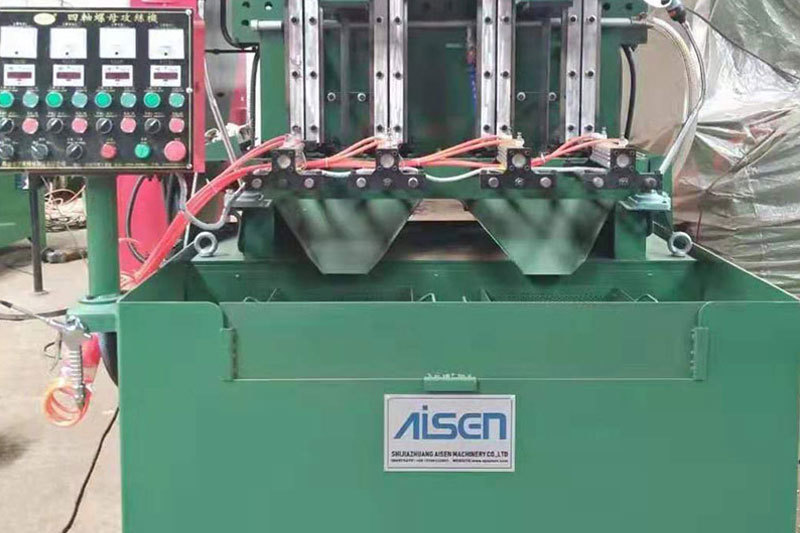
AISEN Four axis nut tapping machine ready for shipment to Russia
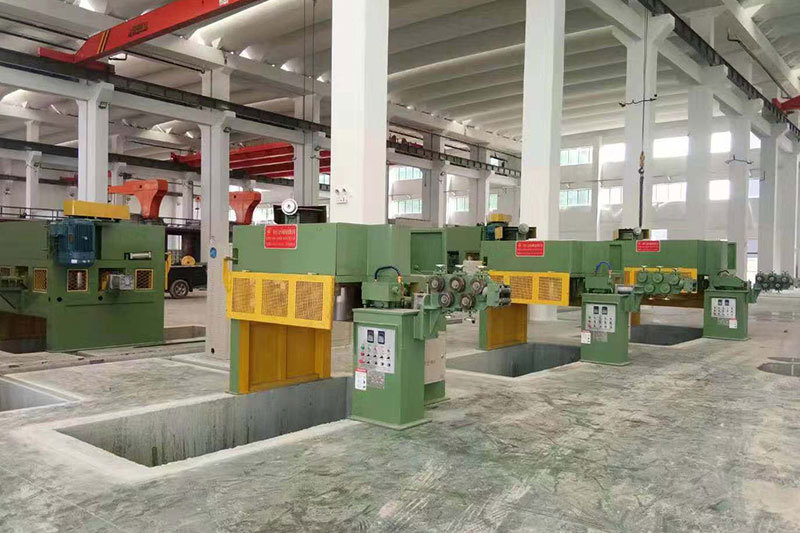
AISEN machinery inverted wire drawing machine
MESSAGES
We will contact you within one working day. Please pay attention to your email.
Qucik Link
Contact
Phone: +86-15100123091
E-mail: info@sjzaisen.com
Address: No.41 Zhaiying South Street, Yuhua District, Shijiazhuang City, Hebei Province China