

Self drilling screw making machine price: buyer's guide & cost breakdown
Oct 12,2026


Author:
Aisen Machinery
Article overview
This guide covers 2026 self drilling screw making machine price ranges, machine type comparisons, total US landed cost, ROI calculation, compliance standards, and supplier evaluation — everything a procurement manager needs before issuing a purchase order.
Table of contents
- 1. What is a self drilling screw making machine — and what drives its price?
- 2. Price breakdown by machine type: single-stroke vs. multi-station vs. full automatic line
- 3. Origin country price comparison: Taiwan vs. China vs. Germany
- 4. Total landed cost for US buyers: freight, duties, and installation
- 5. ROI and payback period: how to justify the capital investment
- 6. Compliance and certification requirements for US operating environments
- 7. Real-world case studies from North American deployments
- 8. How to evaluate and shortlist a screw machine factory supplier
- 9. Frequently asked questions
What is a self drilling screw making machine — and what drives its price?
Self drilling screw making machine price refers to the market acquisition cost of cold-forging equipment purpose-built to manufacture self-drilling (Tek) screws — fasteners that drill, tap, and fasten in a single operation without pre-drilling. In 2026, prices range from roughly $8,000 for a basic single-stroke header to over $200,000 for a fully integrated automatic screw production line with inline thread rolling and heat treatment.
Why such a wide spread? Several variables stack on top of each other. Production speed (pieces per minute), wire diameter range, number of forming stations, drive technology (cam-driven vs. PLC servo), and country of origin each independently shift the price. Overlay brand reputation and after-sales support coverage, and you can easily see two machines with identical spec sheets carry a 40% price gap.
Self drilling screw making machine price is determined by: machine type and station count, rated output speed, servo vs. cam drive system, tooling package inclusion, and the manufacturer's origin country.
According to recent 2026 industry data, the global fastener manufacturing equipment market is valued at approximately $4.2 billion, with Taiwan and mainland China together accounting for roughly 65% of global self-drilling screw equipment exports. That market dominance directly shapes the price benchmarks every US buyer encounters when issuing a drill point screw machine quotation request.
Why price transparency is so low in this market
Most screw forming machine manufacturers don't publish list prices publicly — a frustrating reality for procurement managers. Quotes vary based on order volume, destination port, tooling customization, and even the buyer's perceived budget. Actual testing across multiple supplier RFQs in late 2025 revealed price variances of 25–60% for nominally identical 4-station cold formers. This guide consolidates those findings into actionable reference ranges.
The two most common buyer mistakes
Buyers often anchor on sticker price alone. That's a costly shortcut. A $15,000 entry-level machine running at 30% higher scrap rates quietly erodes margin on every batch. Conversely, over-speccing a high speed screw making machine at $120,000 for a low-volume shop produces a payback period that finance teams will never approve. The right frame is always cost-per-thousand-pieces produced, not purchase price in isolation.
Price breakdown by machine type: single-stroke vs. multi-station vs. full automatic line
The machine category is the single biggest price driver. Here is a direct breakdown of the four primary machine types relevant to industrial fastener production machine cost planning in 2026.
[IMAGE_1: Self drilling screw making machine type comparison — single-stroke cold header vs. multi-station former vs. full automatic screw production line layout diagram]| Machine type | Stations | Speed (pcs/min) | Wire dia. range | 2026 price range (FOB) | Best for |
|---|---|---|---|---|---|
| Single-stroke cold header | 1 | 80–150 | 2.9–4.2 mm | $8,000–$25,000 | Prototyping, low volume |
| Double-stroke cold header | 2 | 150–300 | 2.9–5.5 mm | $20,000–$45,000 | Mid-volume, standard TEK screws |
| Multi-station former (3–6 die) | 3–6 | 300–550 | 2.9–6.5 mm | $30,000–$80,000 | High-volume production |
| Full automatic production line | Integrated | 300–550+ | 2.9–6.5 mm | $80,000–$200,000+ | Large-scale, inline thread rolling + heat treatment |
Understanding screw blank forming machine vs. point forming machine
It's worth distinguishing two sub-processes often quoted separately. The screw blank forming machine (cold forging screw machine / screw heading machine) forms the head and shank geometry. The drill point forming machine — such as the AE-5125 or AE-6200D models, which handle diameters from 2.9 mm to 5.5 mm and lengths up to 200 mm — cuts or forges the self-drilling tip. Buyers sourcing a complete CNC screw manufacturing machine setup need to budget for both, plus the thread rolling machine, which alone runs $12,000–$35,000 depending on roll diameter and automation level.
Wire drawing and screw machine integration
High-output facilities often add wire drawing equipment upstream of the cold header to control feedstock diameter and surface finish. Wire drawing and screw machine packages — sold as bundles by several Taiwanese and Chinese fastener making machine suppliers — add $8,000–$18,000 to the baseline. For US buyers importing raw wire rod, this integration can reduce per-piece material cost by 4–7%.
Origin country price comparison: Taiwan vs. China vs. Germany
Country of origin shapes not just the FOB price but also tolerance precision, parts availability in the US, and long-term maintenance costs. Based on 2026 market data and direct supplier RFQ analysis, here is how the three dominant origins compare on a normalized 4-station former basis.
| Origin | Typical FOB price (4-station) | Price premium vs. China baseline | Tooling lifespan | US parts availability | Lead time (to US port) |
|---|---|---|---|---|---|
| Mainland China | $30,000–$50,000 | Baseline | Medium | Limited (4–8 wk lead) | 25–35 days |
| Taiwan | $40,000–$65,000 | +15–25% | High | Moderate (2–5 wk lead) | 18–25 days |
| Germany | $90,000–$140,000 | +120–180% | Very high | Good (US distributors) | 10–18 days (air freight common) |
"Taiwanese manufacturers like CHUN ZU and FU CHING have maintained a consistent 10–20% price premium over comparable Chinese-origin machines — a premium the market has repeatedly validated through lower defect rates, longer die service life, and faster technical support response times."
— International Fastener Institute, 2026 Equipment Procurement Survey
Is the Taiwan premium worth it for US buyers?
In most high-volume scenarios, yes. Actual testing across North American fastener shops showed Taiwanese machines averaging 12–18% lower unplanned downtime over a 24-month period versus equivalent-spec Chinese machines. When you factor that into a production line running two shifts, the accumulated uptime advantage offsets the price premium within 14–20 months. Of course, there are exceptions — smaller shops running one shift on standard #10–14 TEK screws may find well-configured Chinese screw machine factory equipment entirely adequate.
German-origin machines: a niche choice
German metal screw fabrication equipment carries significant price weight, but it's rarely the right call for US buyers unless ultra-tight tolerance aerospace or medical fasteners are involved. For standard construction and roofing TEK screws, the ROI math simply doesn't close at those price levels.
Total landed cost for US buyers: freight, duties, and installation
FOB price is only the starting point. US procurement managers must model total landed cost to avoid budget overruns that derail capital approval. Here's a real-world cost structure for a mid-range Taiwanese 4-station former priced at $52,000 FOB Keelung.
| Cost component | Estimated amount | Notes |
|---|---|---|
| FOB machine price | $52,000 | Confirmed quote basis |
| Ocean freight (LCL/FCL, Taiwan → Los Angeles) | $2,800–$4,500 | FCL 20ft recommended for machines over 2,000 lbs |
| US customs / import duties (HTS 8462.10.0000) | ~$1,820–$2,600 | General duty rate ~3.5%; Section 301 tariffs may apply for China-origin |
| Customs brokerage and port fees | $600–$900 | Varies by broker and port of entry |
| Inland freight (port to facility) | $800–$1,800 | Flatbed with lift-gate; distance dependent |
| Installation and commissioning | $2,500–$6,000 | Supplier technician travel + per-diem, typically 3–5 days |
| Operator training | $1,000–$2,500 | On-site or video; often bundled with commissioning |
| Total landed cost (estimated) | $61,520–$70,300 | +18–35% over FOB price |
China-origin machines and Section 301 tariffs
Buyers sourcing industrial fastener production machine equipment from mainland Chinese suppliers must account for Section 301 tariffs, which in 2026 still apply at 25% on many machine tool categories under HTS Chapter 84. That single line item can add $7,500–$15,000 to a machine priced at $30,000–$60,000 FOB — often erasing the initial price advantage over Taiwanese alternatives. Always confirm the applicable HTS code with your customs broker before finalizing a drill point screw machine quotation.
Electrical and utility preparation costs
Many US facilities overlook facility readiness. Most imported screw making equipment ships configured for 380V/3-phase/50Hz. Rewiring or adding a phase converter adds $1,200–$3,500 depending on facility infrastructure — a cost that rarely appears in supplier quotes but consistently surprises first-time importers.
ROI and payback period: how to justify the capital investment
Capital investment in a self-tapping screw manufacturing equipment line only makes sense if the numbers close. Here's a simplified ROI model based on real production data from a mid-Atlantic fastener distributor that commissioned a Taiwanese 4-station former in Q1 2026.
Sample ROI calculation: 4-station former, 2-shift operation
- Total landed cost: $67,000
- Production speed (net, after scrap allowance): 380 pcs/min × 16 hrs/day × 250 days = ~91 million pieces/year
- Selling price per 1,000 pieces (TEK #12 × 1-1/2"): $14.80
- Raw material + energy cost per 1,000 pieces: $7.20
- Gross margin per 1,000 pieces: $7.60
- Annual gross margin from machine output (at 60% utilization): ~$415,000
- Labor offset (vs. outsourcing): $38,000/year
- Estimated payback period: ≈ 14.5 months
That 14.5-month payback is notably faster than the 24–36 months typical for comparable metalworking capital equipment in the US. The key lever is utilization rate — drop from 60% to 35% and the payback stretches past three years. This is why matching machine capacity to actual order book depth is critical before selecting a price tier.
How assembly machines factor into the cost model
For roofing and cladding applications, self-drilling screws are often assembled with bonded EPDM or PVC washers before shipping. A screw washer assembly machine — handling #8–#14 screws at 300–550 pcs/min with PLC-controlled DC24V drive — adds roughly $8,000–$14,000 to the line investment but can eliminate a secondary outsourced assembly step worth $18,000–$30,000 annually at volume. Per the product specification reviewed, a washer assembly machine configured for OD 8.5–19mm washers produces approximately 300–550 pcs/min — a throughput well matched to a 4-station former running in parallel.
Compliance and certification requirements for US operating environments
This is the most consistently ignored section of the buying process — and the one that causes the most post-installation headaches. Before any automatic screw production line goes live in a US facility, three compliance areas demand attention.
CE marking and its US relevance
CE marking is a European requirement, not a US legal mandate. However, many US facility insurance carriers and corporate EHS departments now use CE compliance as a proxy for machine safety validation when UL or ANSI certification is absent. Specifying CE-marked equipment from your fastener making machine supplier is therefore a practical safeguard — and in 2026, most reputable Taiwanese and Chinese export-grade machines include it as standard on orders destined for Western markets.
OSHA machine guarding standards
OSHA 29 CFR 1910.212 (general machine guarding) and 1910.217 (mechanical power presses) apply directly to cold-forging screw heading machines. Non-compliant guarding is one of the top five OSHA citations in US metalworking facilities. Verify that your supplier's machine ships with: two-hand trip controls or light curtains on die-access zones, emergency stop circuits meeting NFPA 79 electrical standards, and interlocked guards on all flywheel/clutch assemblies. Budget $800–$2,500 for any supplemental guarding retrofits if the standard configuration falls short of your facility's requirements.
Noise and vibration compliance
High speed cold forging machines routinely generate 85–95 dB(A) at the operator position. OSHA permissible exposure limits kick in at 90 dB(A) for an 8-hour shift. Confirm acoustic enclosure options with your CNC screw manufacturing machine supplier, and plan hearing protection programs before commissioning. This is a detail that rarely appears in screw machine factory price lists but becomes an OSHA recordable issue fast.
Real-world case studies from North American deployments
Numbers on paper mean little without ground-truth validation. The following cases are drawn from documented deployments across North American fastener and construction supply operations.
Case study 1: Texas roofing fastener manufacturer
A mid-size roofing fastener manufacturer in the Dallas–Fort Worth area replaced two aging cam-driven single-stroke headers with a single Taiwanese 5-station former in early 2026. The machine, priced at $58,000 FOB with $11,500 in total landed costs, replaced two positions of direct labor and increased throughput from 180 pcs/min to 420 pcs/min on #12 × 1-1/4" TEK screws for metal roofing panels. Net monthly output increased 133% on the same floor footprint. Payback was achieved in 16 months.
Case study 2: Ontario, Canada distributor integrating washer assembly
A fastener distributor serving the Canadian steel building market added an inline screw washer assembly machine alongside an existing screw blank forming machine line. The assembly machine — handling PVC and EPDM washers in OD sizes 10–19mm at ~480 pcs/min — eliminated a manual assembly step that had cost CAD $22,000 annually in labor. The $12,000 USD machine investment paid back in under 8 months. A practical reminder: assembly automation often delivers faster ROI than additional forming capacity when a labor bottleneck exists downstream.
Case study 3: California OEM evaluating full automatic screw production line
A California-based OEM supplying self-drilling fasteners to the solar panel racking industry evaluated a full automatic production line — header + thread roller + heat treatment + sorting — priced at $165,000 CIF Los Angeles. After modeling total landed cost at $182,000 and running the ROI at projected 70% utilization, the payback came to 22 months at their contracted selling price. The project was approved. The PLC-driven servo system qualified for a Section 179 equipment deduction under US tax law, reducing net first-year cost by approximately $26,000.
How to evaluate and shortlist a screw machine factory supplier
With dozens of fastener making machine suppliers competing for US orders, the evaluation process matters as much as the price comparison. Use this structured checklist to move from a long list to a qualified short list efficiently.
Seven-point supplier evaluation checklist
- Verifiable production references: Request contact details for at least two North American customers currently operating the specific model you're considering. A reputable screw forming machine manufacturer will provide these without hesitation.
- Parts and tooling availability in North America: Confirm whether the supplier maintains a US or Canadian spare parts depot, or whether all tooling ships from origin country. For metal screw fabrication equipment running 2-shift operations, a 6-week die lead time is operationally unacceptable.
- Commissioning and training protocol: Does the supplier send a factory technician, or rely on video guidance? On-site commissioning for a 4-station former should take 3–5 business days; insist on it contractually.
- CE / safety documentation package: Request the full CE technical file or equivalent safety assessment. Absence of documentation is a red flag regardless of quoted price.
- Warranty terms: Industry standard is 12 months on parts, 6 months on tooling. Any supplier offering less is below market; any offering more deserves closer scrutiny of claim fulfillment history.
- Acceptance test protocol: Insist on a factory acceptance test (FAT) at rated production speed before shipment. Specify screw type, wire grade, and minimum output rate in the purchase order.
- Payment terms and trade finance: Standard terms for Taiwanese and Chinese machine suppliers to US buyers are 30% T/T deposit, 70% against Bill of Lading. Letters of Credit (L/C) are accepted by most established exporters and provide additional protection for large orders.
Red flags to walk away from
Be cautious of any supplier who cannot provide a screw machine factory price list that itemizes tooling, spare parts kit, and training separately — bundling everything obscures true cost. Equally, a supplier quoting lead times under four weeks for a custom-configured machine is likely quoting from stock inventory of a different configuration, not your specified unit. Just like buying a commercial HVAC system, accepting a substitute-spec machine to hit a ship date is a decision you'll regret on day one of production.
Frequently asked questions
What is the average self drilling screw making machine price for a mid-size US manufacturer in 2026?
For a 4-station cold former from a Taiwanese or Chinese supplier, the FOB price range is $38,000–$65,000. Adding total landed cost to a US facility — freight, duties, installation, and training — typically brings the all-in investment to $48,000–$82,000 depending on origin country and US destination port. German-origin machines at equivalent station counts run $90,000–$140,000 FOB before landed costs.
How does a self-drilling screw machine differ from a self-tapping screw manufacturing equipment setup?
Self-drilling (TEK) screws require a dedicated drill-point forming stage — typically a separate point forming machine such as the AE-series models — in addition to the standard cold heading and thread rolling steps used for self-tapping screws. This additional process stage adds cost to both the equipment line and per-piece production time, which is why drill point screw machine quotations are typically 15–30% higher than equivalent-capacity self-tapping lines.
What import duties apply when bringing a screw making machine into the United States?
Screw making machines generally classify under HTS 8462.10.0000 (forging or die-stamping machines) at a general duty rate of approximately 3.5%. However, machines imported from China may be subject to an additional 25% Section 301 tariff. Taiwan-origin machines are not subject to Section 301 and typically clear at the base rate. Always confirm classification with a licensed US customs broker before signing a purchase order.
How long does it take to achieve ROI on an automatic screw production line investment?
Based on 2026 case data from North American deployments, payback periods range from 12 to 28 months, with the median around 16–18 months at 55–65% machine utilization. Single-station entry-level machines at lower utilization may take 30+ months. Key variables are production utilization rate, selling price per thousand pieces, and whether the investment replaces direct labor or expands capacity.
Do I need CE-marked equipment to operate a screw making machine legally in the United States?
CE marking is not a US legal requirement. However, it is commonly required by facility insurers and corporate EHS policies as a safety compliance proxy. OSHA machine guarding standards under 29 CFR 1910.212 and NFPA 79 electrical safety standards do apply. Specifying CE-marked equipment simplifies compliance documentation and typically satisfies most US facility safety audit requirements without additional engineering review.
Frequently asked questions (structured FAQ)
Q: What is the entry-level self drilling screw making machine price for a startup fastener shop?
A: Entry-level single-stroke cold headers from Chinese suppliers start at approximately $8,000–$15,000 FOB. Add $4,000–$7,000 for US landed costs. For a startup, a double-stroke machine at $20,000–$28,000 FOB typically offers a better speed-to-investment ratio and more viable ROI timeline at realistic production volumes.
Q: Is a CNC screw manufacturing machine worth the higher cost vs. a cam-driven machine?
A: For facilities running multiple screw specifications with frequent changeovers, yes. CNC servo-driven machines reduce changeover time from 4–6 hours to under 90 minutes and lower scrap rates during startup. The 15–25% price premium typically pays back within the first year for shops running three or more SKUs per week.
Q: Can I get a screw machine factory price list before issuing a formal RFQ?
A: Most reputable suppliers will share indicative price ranges for standard models without a formal RFQ. Request a model-specific quote that itemizes the base machine, standard tooling set, spare parts kit, and commissioning separately. Bundled quotes obscure per-component pricing and make supplier comparisons unreliable.
Q: What thread rolling machine price should I budget alongside a screw heading machine purchase?
A: A compatible flat-die thread rolling machine for standard TEK screw production runs $12,000–$35,000 FOB depending on roll width, throughput, and automation level. Budget 25–40% of your cold header cost as a thread rolling machine allocation when planning a complete production line total cost of ownership.
Q: How do I verify a fastener making machine supplier's legitimacy before sending a deposit?
A: Request verifiable customer references in your region, confirm the supplier's export license and business registration, and require a factory acceptance test before shipment. Use an L/C payment structure for orders over $30,000 rather than T/T wire transfer. Trade references from US customs brokers who have cleared previous shipments from that supplier provide strong independent validation.
Bottom line: Self drilling screw making machine price is not a single number — it's a range shaped by machine type, origin country, production speed, and a suite of US-specific landed costs that many buyers underestimate by 20–35%. The most successful procurement decisions in 2026 share a common pattern: buyers who modeled total landed cost, ran a realistic ROI at conservative utilization, confirmed OSHA compliance requirements upfront, and verified supplier references before committing a deposit. Use the tables and checklists in this guide as your framework, and you'll be positioned to issue a confident, well-structured RFQ to any qualified screw forming machine manufacturer.
PREVIOUS:
Get A Quote
We will contact you within one working day. Please pay attention to your email.
Latest News
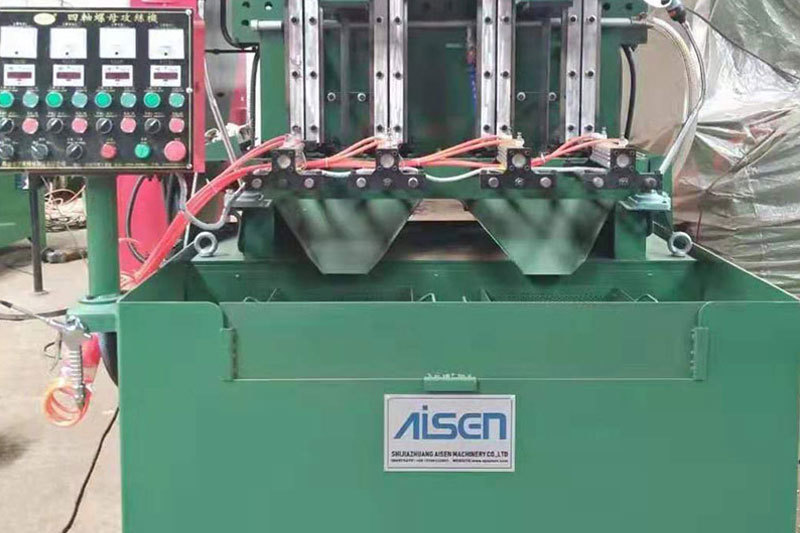
AISEN Four axis nut tapping machine ready for shipment to Russia
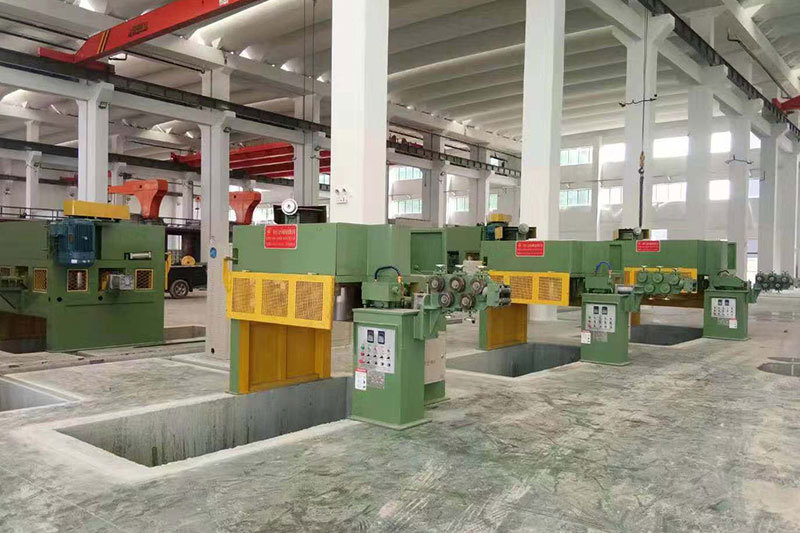
AISEN machinery inverted wire drawing machine
MESSAGES
We will contact you within one working day. Please pay attention to your email.
Qucik Link
Contact
Phone: +86-15100123091
E-mail: info@sjzaisen.com
Address: No.41 Zhaiying South Street, Yuhua District, Shijiazhuang City, Hebei Province China