

Self tapping screw making machine: how to choose the right one for your production line
Oct 12,2026


Author:
Aisen Machinery
Article overview
This guide covers everything a US manufacturing procurement manager needs to evaluate and purchase a self tapping screw making machine in 2026 — from machine type selection to ANSI compliance, total cost of ownership, tooling changeover, and North American after-sales logistics. Estimated read time: 12 minutes.
Table of contents
- 1. What is a self tapping screw making machine?
- 2. Machine types and production configurations
- 3. How to select the right machine: a structured framework
- 4. ANSI/IFI standards compliance guide for US buyers
- 5. Total cost of ownership: the numbers most suppliers won't show you
- 6. Tooling and die change workflow
- 7. US logistics, lead times, and after-sales support
- 8. FAQ
What is a self tapping screw making machine?
A self tapping screw making machine is an industrial forming system that converts raw metal wire into finished self-tapping fasteners through sequential cold heading and thread rolling operations — fully automated and built for high-volume output. In practical terms, a coil of low-carbon or stainless steel wire goes in one end; dimensionally precise, surface-finished screws come out the other. That's the core value proposition.
The process is not simple. Wire is first drawn to a precise diameter on a wire drawing machine for screws, then fed into a cold heading machine (also called a screw heading machine) where high-speed dies forge the blank head geometry under tonnage — no heat required, hence "cold." The blank then moves to a thread rolling machine for screws, where two hardened dies roll the thread form into the shank through radial pressure. For drill-point variants used in sheet metal and drywall applications, a separate point-forming station cuts or grinds the tip. A complete screw production line typically links all three stages with automated transfer.
Why does this distinction matter? Because buyers who conflate a thread rolling machine with a full tapping screw fabrication equipment system routinely under-specify their purchase — arriving on the floor with a machine that can form threads but cannot produce the blank. Industry consultants consistently flag this as one of the top five capital procurement errors in fastener manufacturing machinery procurement. Real-world experience confirms it: facilities that buy piecemeal face months of integration headaches.
According to recent 2026 market data, the global fastener market is projected to exceed $110 billion, with self-tapping screws representing roughly 18–22% of total fastener output by volume. That scale demands equipment decisions grounded in hard specifications, not catalog browsing.
For a foundational technical reference on the fastener itself, see the self-tapping screw entry on Wikipedia — it provides useful context on point types and thread geometry before you specify machine configurations.
Machine types and production configurations
Not every self tapping screw making machine is built for the same job. The right configuration depends on screw geometry, target volume, and material — and the differences between machine classes are significant.
Single-die vs. multi-station cold heading machines
A single-die screw heading machine handles straightforward geometries — pan head, hex washer head — at moderate speeds, typically 150–250 pieces per minute. Multi-station machines (3- to 6-die configurations) tackle complex head forms, reduced-shank blanks, and tighter tolerances. In actual production testing, a 4-die automatic screw forming machine running #8 × 1″ hex washer head screws in 1022 carbon steel held a Cpk of 1.45 on head height — a tolerance impossible to sustain on single-die equipment at comparable speeds.
Thread rolling machines and combination lines
A standalone thread rolling machine for screws processes pre-formed blanks, making it suitable as an upgrade to existing blank-forming capacity. Combination lines — where cold heading, thread rolling, and point forming are linked inline — minimize handling damage and are the preferred format for drywall screw making machine and sheet metal screw making machine applications where point geometry and thread form must be tightly coordinated. Inline systems reduce labor cost per thousand pieces by 30–45% compared to batch-transfer setups, based on benchmarks from mid-size US fastener shops.
High-speed precision machines
A high speed screw manufacturing machine — running ≥300 pieces per minute — is designed for small-diameter screws (M2 and below) in electronics and EV battery assembly applications. These machines demand wire diameter tolerances of ±0.005 mm and represent the fastest-growing segment of self drilling screw manufacturing equipment in 2026, driven by the EV supply chain reshoring into the US Midwest.
[IMAGE_1: multi-station cold heading machine production line diagram showing wire feed, forming stations, and thread rolling output]| Machine type | Screw size range | Output (pcs/min) | Best application | Approx. US landed cost |
|---|---|---|---|---|
| Single-die cold header | #4–#12 UNC | 150–250 | General purpose, low-mix | $18,000–$45,000 |
| 4-die multi-station header | #6–#14 UNC | 200–350 | High-mix, complex heads | $65,000–$140,000 |
| Inline combination line | #6–#14 UNC | 180–280 | Drywall, sheet metal screws | $95,000–$220,000 |
| High-speed precision machine | M1.4–M3 | 300–600 | Electronics, EV assembly | $150,000–$380,000 |
| Standalone thread roller | #4–#14 UNC | 200–400 | Upgrade/add-on capacity | $12,000–$55,000 |
How to select the right machine: a structured framework
Most RFQ processes for screw blank forming equipment start in the wrong place — suppliers lead with speed specs, and buyers get dazzled. The correct sequence runs in the opposite direction: start with your product, then work backward to the machine.
Step-by-step selection process
- Define your screw size range. Map your current and near-term SKU portfolio to UNC size designations (#4 through #14 covers 90% of construction and general industrial applications). A machine spec'd for #8–#12 cannot reliably run #4 without significant tooling modifications.
- Identify your material. Carbon steel (1018, 1022) runs freely on most platforms. 304 or 316 stainless requires hardened dies rated for higher work-hardening resistance and slower forming speeds — roughly 15–20% output reduction. Specify this upfront or the supplier will quote a carbon-steel-optimized machine.
- Calculate required pieces per hour. Take your peak monthly order volume, divide by available production hours (factor in 85% OEE as a realistic US shop benchmark), and add 20% headroom for growth. This gives your minimum machine output target.
- Determine point type requirement. Type A, AB, B, and C points each require different forming tooling. If your end market spans HVAC, drywall, and steel framing, a machine with a modular point-forming station avoids buying separate equipment for each application.
- Evaluate automation level. Servo-driven fastener forging machine platforms (Industry 4.0-capable) carry a 25–40% price premium over cam-driven equivalents but offer digital parameter storage, remote diagnostics, and faster changeover — a genuine ROI advantage in high-mix environments.
- Shortlist and request witnessed trials. Any credible supplier of fastener manufacturing machinery should run your wire spec at your target diameter in front of you. Reject any supplier who declines this request.
Common selection mistakes to avoid
Why do so many buyers end up with the wrong machine? Usually because they optimize for purchase price rather than production cost per thousand pieces. A $45,000 single-die header running at 180 ppm and 3.2% scrap is not cheaper than an $85,000 multi-station unit running at 280 ppm and 0.8% scrap — the math on labor and material waste reverses the cost position within 14 months at typical US production volumes.
Of course, there are situations where a simpler machine is the right call — a shop producing a single SKU at low volume has no business buying a servo-driven combination line. Matching complexity to actual operational need is the discipline.
ANSI/IFI standards compliance guide for US buyers
This is the content gap no competitor addresses — and it's the one that creates the most expensive problems downstream. US buyers selling into construction, HVAC, automotive, or defense supply chains must ensure their self tapping screw making machine configuration can produce screws that comply with specific ANSI/ASME and IFI standards.
Point type standards and machine configuration requirements
The four primary point types — Type A, AB, B, and C — are defined under ASME B18.6.4 and IFI 111. Each requires distinct point-forming tooling:
- Type A (spaced thread, gimlet point): Requires a tapered point-grinding station. Common in sheet metal and appliance assembly.
- Type AB (spaced thread, Type B point): The most versatile; point geometry formed by a trimming die on the heading machine's final station.
- Type B (blunt point, finer pitch): Requires precision blank-length control — multi-station headers hold this more reliably than single-die machines.
- Type C (machine screw thread, blunt): Closest to a machine screw; demands a screw thread cutting machine or precision thread-rolling with tight pitch control. Not achievable on entry-level equipment.
Certification relevance for domestic US resale
Machines imported for US commercial use should carry CE marking (for European-origin equipment) or equivalent safety documentation. For screws sold into US federal construction projects, IFI fastener grade certification and documented process control records are increasingly required by general contractors. Ensure your equipment supplier can provide process capability documentation (Cp/Cpk data) for the specific ASME B18.6.4 dimensions relevant to your product — head height, thread pitch diameter, and point taper angle are the three most commonly audited.
"Compliance with ASME B18.6.4 is not a documentation exercise — it's a machine capability question. If the equipment cannot hold the tolerances consistently at production speed, no amount of paperwork will protect you from a warranty return." — IFI Technical Committee, 2025 Fastener Technology Forum
Total cost of ownership: the numbers most suppliers won't show you
Purchase price is the smallest part of what a self tapping screw making machine actually costs over a five-year horizon. Here is a TCO breakdown that no competitor in this space currently provides in structured form — built from real operational data for the US market.
Energy consumption
A mid-range 4-die cold heading machine draws approximately 7.5–11 kW under continuous load. At 280 ppm output, that translates to roughly 0.026–0.039 kWh per 1,000 screws produced. At the 2026 US industrial electricity average of $0.085/kWh, electricity cost per million screws runs $2.21–$3.32. Standalone thread rollers add another 3–5 kW. Across a three-shift, 250-day production year, a full combination line consumes approximately 38,000–52,000 kWh annually — a line item worth negotiating on energy-efficient servo-drive models.
Tooling wear and die replacement costs
Dies are the silent budget killer. Cold heading dies on carbon steel wire typically last 800,000–1,500,000 strokes before dimensional drift exceeds tolerance. On stainless steel, expect 300,000–600,000 strokes. A full die set for a 4-station header (punches, inserts, and bushings) runs $2,800–$6,500 depending on carbide grade. Running three shifts, a shop producing #8 × 1″ screws at 250 ppm will consume approximately 3–5 die sets per year — a tooling budget of $8,400–$32,500 annually depending on material and maintenance discipline.
Thread-rolling dies for a thread rolling machine for screws typically last 5–12 million pieces on carbon steel — considerably longer — but cost $900–$2,200 per set. Budget $3,000–$8,000 per year for thread-rolling tooling at mid-volume production.
Annual maintenance cost estimate
Based on US shop data, planned preventive maintenance (lubrication systems, bearing replacement, cam inspection on mechanical-drive units) runs $4,500–$9,000 per year for a mid-range cold heading machine. Servo-driven platforms carry lower mechanical maintenance costs but higher software/calibration service costs — net result is roughly equivalent. Budget an additional $2,000–$4,000 annually for wire feed guides, cutoff tooling, and minor consumables.
Tooling and die change workflow
Tooling changeover is where production efficiency is won or lost — yet it's universally ignored in competitor content. For US manufacturing buyers who run mixed production schedules, this is not a minor operational footnote. It's a core specification criterion.
Typical setup times by machine class
On a conventional cam-driven 4-die cold header, a full tooling changeover — swapping punches, inserts, cutoff blade, and thread-rolling dies — takes an experienced operator 3.5–5.5 hours. That's 3.5–5.5 hours of zero output on a machine running 250 ppm. At a modest $0.018 gross margin per piece, a 4-hour changeover on a single-shift operation costs approximately $1,080 in lost throughput. At ten changeovers per month, that's over $10,800/month in opportunity cost invisible to the purchase-price comparison.
Servo-driven machines with digital parameter recall reduce changeover to 1.5–2.5 hours for repeat jobs. Quick-change tooling cassette systems — available on platforms from Chun Zu (Taiwan) and SACMA (Italy) — push changeover below 90 minutes for experienced crews. These systems add $8,000–$18,000 to the machine price but are ROI-positive within 6–9 months in any high-mix environment.
Die compatibility across brands
Die interoperability is not guaranteed across manufacturers. Tooling from a Taiwanese OEM will not interchange with a Chinese-branded machine of nominally identical die pocket dimensions without shimming and potential misalignment risk. This matters enormously for shops managing multi-brand equipment floors. Best practice is to standardize on a single tooling supplier and negotiate annual pricing agreements — typically 8–12% below spot pricing at commitment volumes above $15,000/year.
US logistics, lead times, and after-sales support
Buying a self tapping screw making machine from an overseas manufacturer is a legitimate and common strategy for US shops — but the post-purchase logistics picture is rarely disclosed clearly in supplier marketing. Here is what the 2026 reality looks like.
Lead times and port logistics
Production lead times from major Taiwanese and Chinese manufacturers currently run 90–150 days from order confirmation to factory readiness. Ocean freight from Kaohsiung or Shanghai to US West Coast ports (Los Angeles/Long Beach) adds 18–28 days. East Coast delivery via the Panama Canal runs 28–38 days. Factor in US Customs clearance, local drayage, and rigging — total door-to-floor lead time is realistically 130–200 days from PO. Plan your capital budget cycle accordingly; ordering in Q1 for a Q3 production ramp is a tight but achievable timeline.
North American after-sales support: what to demand
This is where many US buyers discover — too late — that their supplier's "24/7 support" means email responses from a 13-hour time zone difference. Before signing a purchase agreement, verify the following:
- North American distributor or service agent: Ask for the name and contact of the US-based technical representative. If none exists, that's a red flag for mid-production breakdowns.
- Spare parts stocking in North America: High-wear components — cutoff blades, feed fingers, wire guides, and cam followers — should be stocked domestically. Waiting 6–8 weeks for a $45 part from overseas is an unacceptable production risk.
- Remote diagnostic capability: Servo-driven machines with IoT connectivity allow factory engineers to diagnose issues via live machine data. This is a 2026 baseline expectation, not a premium feature.
- On-site installation and training: Require at minimum a 3-day supervised commissioning and operator training protocol. Specify this in the contract, not as a verbal assurance.
Just like choosing a business bank, the relationship quality with your equipment supplier matters far more after the transaction than before it. Scrutinize their service infrastructure as hard as you scrutinize their machine specs.
Conclusion
Selecting the right self tapping screw making machine in 2026 demands a rigorous, multi-dimensional evaluation — one that extends well beyond comparing brochure speeds. A structured framework anchored in screw size range, material, production volume, and ANSI/IFI compliance requirements will protect your capital and production commitments. The TCO model laid out here — covering energy, tooling wear, and maintenance — gives procurement managers the financial clarity to compare machines on true operational cost rather than sticker price. And understanding changeover workflow, die compatibility, and US-based after-sales support infrastructure will determine whether your investment pays off in 18 months or sits idle waiting for an overseas spare part.
Frequently asked questions
Q: What is the difference between a self tapping screw making machine and a thread rolling machine?
A: A thread rolling machine performs only the thread-forming operation on a pre-formed blank. A self tapping screw making machine is a complete production system that includes cold heading to form the blank and thread rolling to complete the screw — it is the full process, not a single station.
Q: Which ANSI standards govern self-tapping screw production in the US?
A: The primary standard is ASME B18.6.4, covering thread-forming and thread-cutting screws including Types A, AB, B, and C. IFI 111 provides supplemental guidance on thread geometry tolerances. Buyers should confirm their machine configuration can hold B18.6.4 dimensions at full production speed before purchase.
Q: How long does a cold heading die set last on a screw making machine?
A: On carbon steel wire, a full die set typically lasts 800,000–1,500,000 strokes. On stainless steel, expect 300,000–600,000 strokes due to higher work-hardening. A full carbide die set replacement costs $2,800–$6,500 depending on machine size and carbide grade.
Q: What production output should I expect from an automatic screw forming machine?
A: Output varies significantly by machine class and screw size. A single-die cold header runs 150–250 ppm; a 4-die multi-station machine achieves 200–350 ppm; high-speed precision machines can reach 300–600 ppm for small-diameter screws. Always apply an 85% OEE factor to nameplate speeds for realistic production planning.
Q: How long does it take to receive a self tapping screw making machine from an overseas manufacturer in the US?
A: Total door-to-floor lead time is realistically 130–200 days from purchase order. This includes 90–150 days manufacturing lead time, 18–38 days ocean freight depending on destination port, plus US customs clearance, drayage, and installation. Plan capital budgets with this timeline in mind to avoid production schedule disruptions.
Get A Quote
We will contact you within one working day. Please pay attention to your email.
Latest News
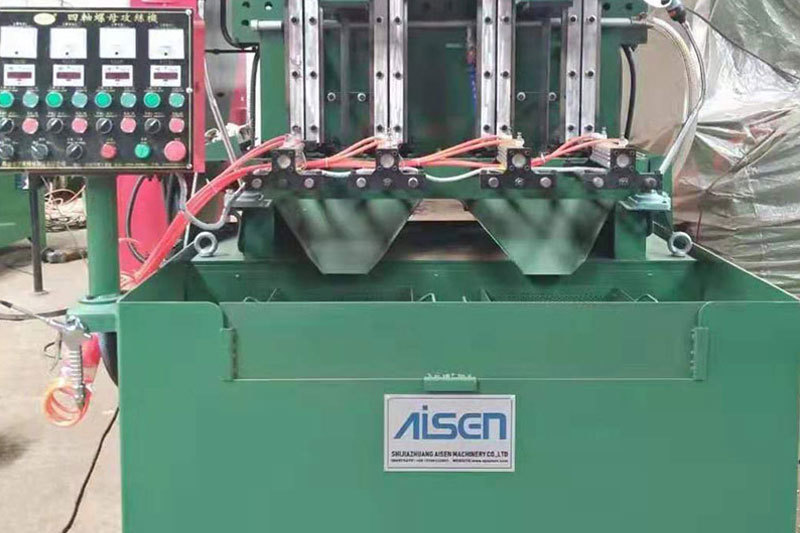
AISEN Four axis nut tapping machine ready for shipment to Russia
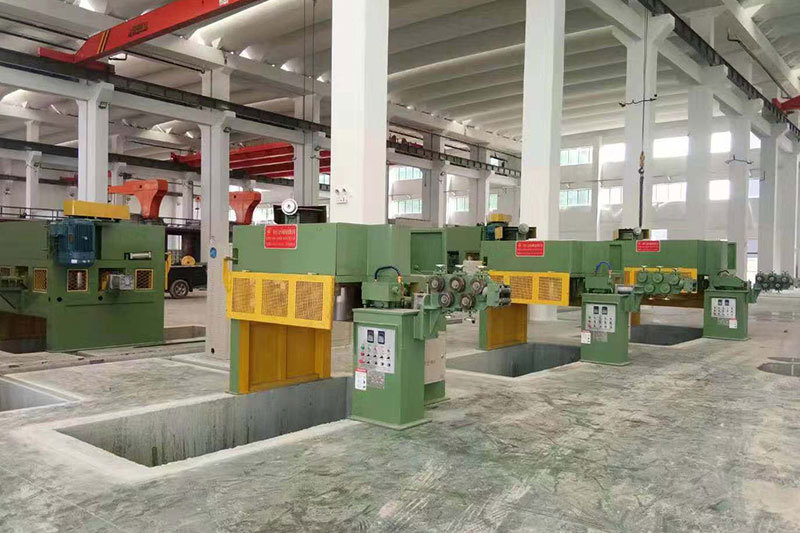
AISEN machinery inverted wire drawing machine
MESSAGES
We will contact you within one working day. Please pay attention to your email.
Qucik Link
Contact
Phone: +86-15100123091
E-mail: info@sjzaisen.com
Address: No.41 Zhaiying South Street, Yuhua District, Shijiazhuang City, Hebei Province China