

Small screw making machine: how to choose the right one for your production line
Oct 11,2026


Author:
Aisen Machinery

Article overview
This guide is written for manufacturing procurement managers evaluating screw production equipment in 2026. It covers machine types, a 5-brand spec comparison table, total cost of ownership analysis, US compliance requirements, and a step-by-step buyer's decision framework — all the information points that most competing articles fail to address in one place.
Table of contents
- 1. What is a small screw making machine?
- 2. Main types of small screw making machines explained
- 3. How to choose the right machine: a buyer's decision framework
- 4. Brand comparison: top machines available in the US market
- 5. Total cost of ownership: real USD figures for US buyers
- 6. US compliance, certification, and import considerations
- 7. 2026 trends shaping screw manufacturing equipment
- 8. FAQ
What is a small screw making machine?
A small screw making machine is a specialized piece of fastener production equipment that automatically converts metal wire rod into finished small-diameter screws — typically M0.8 to M8 — through sequential cold heading, thread rolling, and pointing operations. These machines are the backbone of miniature fastener manufacturing across the electronics, medical device, aerospace, and consumer appliance industries.
The term itself covers a family of related equipment. In everyday procurement conversations, buyers often use "small screw making machine" interchangeably with micro screw production machine, tiny screw fabrication machine, or precision screw forming machine — but these labels can refer to quite different processes and equipment categories. Getting that distinction right before you issue a purchase order is critical.
According to recent 2026 industry data cited by Grand View Research, the global fastener market is on track to reach approximately $102 billion USD with a CAGR of around 4.2%. The Asia-Pacific region — centered on China and Taiwan — accounts for roughly 65% of global small screw production capacity. That means the majority of screw manufacturing equipment sold into the US market today is imported, which creates a specific set of procurement challenges we'll address in detail below.
Why the machine type matters more than the brand
Many procurement managers go straight to brand comparisons. That's understandable, but it's the wrong starting point. The machine type — cold heading, thread rolling, CNC turning, or a combined line — determines your achievable screw geometry, material compatibility, throughput ceiling, and tooling cost. Choosing the wrong type and then optimizing for brand is like picking the fastest car for a cross-country haul when you needed a truck. Real-world cases consistently show that a well-matched mid-tier machine outperforms a premium brand machine misaligned with your screw specification.
Who buys small screw making machines in the US?
The typical US buyer in 2026 is a procurement or manufacturing engineering manager at a contract manufacturer or OEM — someone sourcing high-speed screw making machine solutions for production volumes ranging from 500,000 to 50 million pieces per year. They are often comparing multiple screw production line equipment configurations simultaneously and are under pressure to justify capital expenditure to finance teams. This guide is written specifically for that audience.
Main types of small screw making machines explained
There are four primary machine categories in the small screw production space. Each has a distinct process, output profile, and cost structure. Understanding them is the first step toward a defensible purchasing decision.
Cold heading machines (cold forging screw machines)
Cold forging screw machines form the screw head and blank by forcing wire through progressive dies at room temperature — no heat required. This cold forging process produces exceptional grain-flow consistency and tensile strength. Production speeds typically range from 100 to 400+ strokes per minute depending on screw diameter and the number of forming stations. Screw blank forming equipment in this category is the dominant choice for high-volume standard fasteners in stainless steel, carbon steel, and aluminum. The main limitation: cold headers are less flexible. Changing screw geometry requires die changes that can take 30–90 minutes per changeover.
Thread rolling machines (screw rolling machines)
A screw rolling machine does not form the head — it forms the thread. Flat-die or cylindrical-die rolling displaces material to create thread profiles without cutting, which preserves material strength and produces smoother thread flanks than cut threads. Small screw threading machine configurations typically handle pitches from 0.2mm to 3mm and are often deployed downstream of a cold header in a two-stage screw production line setup. Standalone thread rollers are also used for rethreading or secondary operations on blanks from other sources.
CNC screw manufacturing machines
CNC screw manufacturing machines use computer-controlled multi-axis turning to cut screws from bar stock or wire. They are slower — typically 10 to 80 pieces per minute — but offer unmatched geometry flexibility. This makes CNC the right choice for custom-profile screws, exotic alloys (titanium, Inconel), and low-to-medium volume runs where variety trumps throughput. The tooling cost per changeover is lower, and the setup time for a new part program can be under 30 minutes with modern CAM integration.
Multi-station combination lines and precision micro screw machines
For M1.0 and below — the domain of watch screws, hearing aid components, and microelectronics — standard cold headers lack the precision tolerance required. Precision micro screw production machines and automatic screw making machine platforms in this segment integrate servo-driven feeding, optical in-line measurement, and automatic screw making machine control into a single footprint. Combined multi-station lines pairing a screw heading machine with an integrated thread roller represent the mainstream solution for mid-to-large volume producers who want to minimize floor space and inter-process handling.
How to choose the right machine: a buyer's decision framework
The single most effective way to avoid a costly mismatch is to work through a structured decision sequence before contacting any vendor. Here is the framework actually used by experienced manufacturing engineers — not a theoretical checklist, but a tested sequence drawn from real procurement cases.
- Define your screw specification first. Lock in the target diameter range (M-size or inch equivalent), thread pitch, head style, and material. If you're producing M2 stainless pan-head screws at 10 million pieces per year, your machine category is effectively decided before you open a single catalog.
- Determine your annual volume and lot size. High-volume (5M+ pieces/year) with few SKUs points toward a dedicated cold forging screw machine or multi-station line. Mixed SKUs at lower volumes favor CNC screw manufacturing machines or quick-change cold header platforms.
- Assess your material requirements. Standard carbon and stainless steels work on most cold headers. Titanium, brass, or exotic alloys often require CNC turning or specialized cold heading tooling — factor this into your tooling cost model.
- Map your floor space and utility constraints. A high-speed automatic screw making machine for M3–M6 screws may require 380V/3-phase power, a compressed air supply, and a footprint of 4,300mm × 1,500mm or more. Confirm your facility can accommodate this before shortlisting models.
- Calculate total cost of ownership, not just machine price. (See Section 5 for detailed USD figures.) The machine invoice is often the smallest component of 5-year ownership cost when tooling, energy, maintenance, and downtime are included.
- Verify US compliance and certification requirements. CE-marked machines from Asian suppliers must meet additional import and safety standards for the US market. (See Section 6 for specifics.)
Cold heading vs. thread rolling vs. CNC: the decision matrix
Why do so many buyers get this wrong? Because equipment vendors naturally emphasize the strengths of whatever they sell, and most comparison articles online conflate the screw heading machine category with thread rollers. The table in Section 4 addresses brand comparisons, but here's the process-level summary: use cold heading for volume and strength, thread rolling as a complementary downstream process, and CNC for flexibility and exotic materials. When in doubt, a combined multi-station line usually offers the best compromise for US buyers producing 1–10 million mixed-spec screws annually.
Common selection mistakes to avoid
One persistent industry misconception is that machine price directly correlates with precision. In practice, a $180,000 Japanese cold header may produce M4 screws with excellent tolerances while being entirely unsuitable for M1.2 micro screws. Conversely, a $35,000 Taiwanese precision micro screw production machine can hold ±0.005mm tolerances on M0.8 components that the more expensive machine cannot physically form. Specification match, not price, is the primary accuracy driver. Of course, there are situations where premium brands provide genuine long-term value through lower tooling wear rates and superior after-sales support — that factor is quantified in Section 5.
Brand comparison: top small screw making machines available in the US market
The following table compares five widely referenced brands available to US buyers, covering the key specification parameters that matter most in a procurement decision. Data is based on publicly available 2026 specifications and industry-reported pricing ranges.
| Brand / model | Machine type | Screw diameter range | Speed (pcs/min) | Est. price (USD) | US market availability |
|---|---|---|---|---|---|
| Sakamura (Japan) | Cold heading / multi-station | M2 – M12 | 150 – 400 | $120,000 – $280,000 | Direct + US distributors |
| National Machinery (USA) | Cold forging / FORMAX platform | M3 – M20 | 80 – 300 | $150,000 – $350,000 | Domestic, full US service |
| Wafios (Germany) | Thread rolling / wire forming | M1.6 – M16 | 60 – 250 | $90,000 – $220,000 | US office in Wheeling, IL |
| Hatebur (Switzerland) | High-speed cold forming | M4 – M24 | 200 – 650 | $250,000 – $600,000 | US agent network |
| Chun Zu (Taiwan) | Cold heading + thread rolling combo | M1.0 – M8 | 100 – 380 | $28,000 – $95,000 | Import via US distributors |
For context on the broader category of screw machine automatic lathe technology, Wikipedia provides a useful historical and technical overview that helps situate modern cold-heading platforms within the longer lineage of automatic screw production.
What the table doesn't tell you
Raw specs and price ranges only take you so far. In actual testing on production floors, the differentiators that matter most to US manufacturers are tooling change time, the quality of the local service network, and parts availability. National Machinery's domestic presence in Tiffin, Ohio is a genuine advantage for US buyers — parts shipping in days rather than weeks. Hatebur's high-speed screw making machine platforms deliver exceptional throughput but are typically reserved for ultra-high-volume single-spec applications due to their high tooling investment per changeover. Chun Zu's Taiwan-origin combination machines represent the most accessible entry point in terms of capital cost and are increasingly popular with mid-market US contract manufacturers.
Screw washer assembly machine: an often-overlooked addition
Several procurement managers focus exclusively on the forming machine and overlook secondary assembly equipment. A screw washer assembly machine — such as the HSJ-14 category handling #8–#14 (3.5–6.3mm) screw models with washer ODs from 8.5–19mm at 300–550 pcs/min — is frequently needed downstream. These machines run on 380V/3-phase PLC-controlled platforms with Taiwan-sourced vibratory bowl feeders and are available at price points ($8,000–$25,000) that make them easy to justify as line additions.
Total cost of ownership: real USD figures for US buyers
Machine invoice price is typically the most visible cost — and often the least representative of actual 5-year spend. Here is a realistic total cost of ownership (TCO) breakdown for a mid-range automatic screw making machine producing M3–M6 stainless steel screws at approximately 2 million pieces per month in the US.
TCO components and estimated 5-year figures
| Cost category | Year 1 (USD) | 5-year total (USD) | Notes |
|---|---|---|---|
| Machine purchase price | $65,000 | $65,000 | Mid-range Taiwan origin |
| Import duties (Section 301 / HTS) | $5,200 | $5,200 | Varies by HTS code; ~8% typical |
| Tooling (dies, punches, rolls) | $12,000 | $48,000 | Highest variable cost driver |
| Energy (1.5–22kW, 2-shift operation) | $6,800 | $34,000 | Based on avg US $0.12/kWh industrial |
| Preventive maintenance + labor | $4,500 | $22,500 | Higher for Asian-origin brands |
| Downtime / lost output cost | $3,000 | $15,000 | Estimated; highly variable |
| Total 5-year TCO | — | ~$189,700 | Machine price = 34% of TCO |
"In precision fastener manufacturing, tooling cost almost always exceeds machine amortization within the first three years of operation. Buyers who optimize for machine sticker price without modeling tooling replacement cycles consistently underestimate their true cost per thousand pieces." — Industry consensus among fastener equipment engineers, reflected in multiple 2026 trade forum analyses.
The takeaway is stark: tooling represents roughly 25% of 5-year TCO in this scenario, while the machine itself represents only 34%. This means a machine with superior die life — even if it costs $20,000 more upfront — can easily pay for that premium through reduced tooling spend alone.
Lead time and after-sales service: the hidden cost multiplier
US buyers sourcing from Asian manufacturers should budget 12–20 weeks for initial machine delivery including ocean freight and customs clearance. Spare parts for Asian-origin screw production line equipment typically ship by air at a significant premium — a critical punch set that costs $300 in Taiwan may arrive with $180 in freight costs and 10–14 days of production exposure. Negotiating a consigned spare parts inventory agreement with your supplier at the time of purchase is standard practice among experienced US procurement teams and can reduce parts-related downtime costs by 40–60%.
US compliance, certification, and import considerations
This is the section most competitor articles skip entirely — yet for US manufacturing operations, compliance failures can halt production or result in OSHA citations that dwarf the machine cost.
Machine safety and electrical standards
Fastener production equipment sold or operated in the US must conform to relevant OSHA machinery safety standards (29 CFR 1910.212 for general machine guarding and 1910.217 for mechanical power presses, which covers cold heading and stamping equipment). European CE-marked machines from German or Swiss suppliers meet the EU Machinery Directive but do not automatically satisfy US National Electrical Code (NEC) requirements. Buyers importing CE-marked cold forging screw machines should verify that the electrical panel and wiring conform to NEC Article 430 (motor circuits) and that the machine carries a UL or ETL listing for its electrical components, or plan for a third-party electrical compliance audit before installation — typically $1,500–$4,000.
Material and product standards for screw output
The screws produced on your machine must meet the standards your customers specify. In the US market, the dominant material standards are ASTM F568 (carbon and alloy steel externally threaded fasteners), ASTM F879 (stainless steel socket button and flat head screws), and ASME B18.6 series (inch-series machine screws and tapping screws). For metric screws, ISO 898-1 tensile property standards are widely referenced. Your machine's forming parameters — reduction ratio, die geometry, and lubrication system — directly determine whether your output can reliably meet these standards. Request material traceability documentation and forming parameter certification from your machine vendor as part of the purchase agreement. For a broader reference on fastener classification and standards, the fastener manufacturing overview on Wikipedia provides a useful orientation to the standards landscape.
Import duty and HTS classification
Screw manufacturing equipment imported into the US is classified under HTS Chapter 84 (machinery). Specific cold heading machines fall under HTS 8462.10 (forging or die-stamping machines) while thread rolling machines may classify under 8462.90. Import duty rates vary from 0% to 4.4% at the standard MFN rate, but machines of Chinese origin may carry additional Section 301 tariffs of 7.5%–25%. Taiwan-origin equipment currently does not face Section 301 surcharges, which is a meaningful procurement cost factor when comparing suppliers across the two origins. Always confirm HTS classification with a licensed US customs broker before finalizing supplier selection.
2026 trends shaping screw manufacturing equipment
The screw manufacturing equipment market in 2026 is being reshaped by two structural forces: the demand for intelligent automation and the push for production flexibility. These aren't abstract trends — they're showing up in purchase orders and machine specifications right now.
Servo-driven systems and in-line vision inspection
Traditional cam-driven cold headers are giving way to servo-motor-driven platforms across the mid-to-premium segment. Servo drives enable precise stroke control, real-time force feedback, and dramatically faster changeover. More significantly, the integration of vision inspection systems — cameras that measure head diameter, thread runout, and surface defects at production speed — is enabling in-line quality control that was previously only achievable with offline CMM sampling. Early adopters in the US electronics supply chain report scrap rate reductions of 25–35% after implementing servo-vision integrated automatic screw making machine platforms.
Quick-change tooling and flexible production
The proliferation of consumer electronics SKUs has created intense demand for fast-changeover capability in miniature fastener manufacturing. Quick-change die systems — where a full tooling set swaps in under 15 minutes versus the traditional 45–90 minutes — are now a standard feature request from US buyers producing 50+ screw variants annually. Just like a professional kitchen that needs to serve 20 different dishes without reorganizing the entire kitchen between each one, a modern screw production line must shift between specifications without killing throughput. Suppliers who cannot demonstrate sub-20-minute changeover capability are increasingly being excluded from US RFQ shortlists.
Reshoring and near-shoring demand
Supply chain disruptions from 2020–2023 accelerated a domestic investment cycle in US fastener production that is still unfolding in 2026. Several mid-size contract manufacturers have invested in domestic CNC screw manufacturing machine capacity specifically to reduce lead time exposure on critical aerospace and medical fasteners. This does not mean Asian-origin equipment is losing market share — it remains dominant on price and delivery volume — but the competitive landscape now includes more US-sourced alternatives than at any point in the previous decade.
Frequently asked questions
Common questions answered
Q: What is the typical production speed of a small screw making machine?
A: Production speed depends on machine type and screw diameter. Cold heading machines typically produce 100–400+ pieces per minute for M2–M8 screws. CNC screw manufacturing machines run slower at 10–80 pieces per minute but offer greater geometry flexibility. High-speed platforms like Hatebur can reach 650 pcs/min on larger diameters.
Q: How much does a small screw making machine cost in the US market?
A: Entry-level Taiwan-origin machines start around $28,000–$45,000. Mid-range automatic screw making machine platforms from established brands run $65,000–$150,000. Premium European or Japanese high-speed cold forging machines can exceed $300,000–$600,000. Always factor in a 5-year TCO model — tooling and maintenance often exceed machine cost.
Q: What certifications should a screw making machine have for use in the US?
A: Machines must comply with OSHA 29 CFR 1910.212 and 1910.217 for machine guarding. Electrical systems should conform to NEC standards — look for UL or ETL listings on the electrical panel. CE marking satisfies EU requirements but requires additional verification for US NEC compliance. ASTM and ASME standards govern the screw output quality, not the machine itself.
Q: What is the difference between a cold heading machine and a thread rolling machine?
A: A cold heading machine (cold forging screw machine) forms the screw head and blank shape from wire rod. A thread rolling machine (screw rolling machine) forms the thread profile onto a pre-formed blank. They are complementary processes, not interchangeable. Most production lines use both in sequence. Confusing the two is one of the most common — and costly — specification errors in screw manufacturing procurement.
Q: How long does it take to receive a small screw making machine ordered from an Asian supplier?
A: For Taiwan-origin equipment, expect 8–14 weeks for manufacturing lead time plus 4–6 weeks for ocean freight and US customs clearance, totaling 12–20 weeks. Japanese and European machines may have similar or longer manufacturing queues. Expedited air freight for a full machine is cost-prohibitive; plan accordingly and negotiate a spare parts inventory at time of purchase to reduce ongoing downtime exposure.
Selecting the right small screw making machine ultimately comes down to matching your specific screw geometry, production volume, and material requirements to the correct machine category — before brand, price, or any other factor enters the conversation. The TCO analysis shows that the machine invoice is rarely the biggest cost. Compliance requirements are non-negotiable for US operations and are frequently underestimated by buyers sourcing internationally for the first time. Use the decision framework and brand comparison table in this guide as a structured starting point, then engage vendors with a detailed specification document rather than a general inquiry. That single shift in procurement approach consistently results in better machine matches, stronger supplier negotiations, and lower total ownership cost over the machine's operational life.
PREVIOUS:
Get A Quote
We will contact you within one working day. Please pay attention to your email.
Latest News
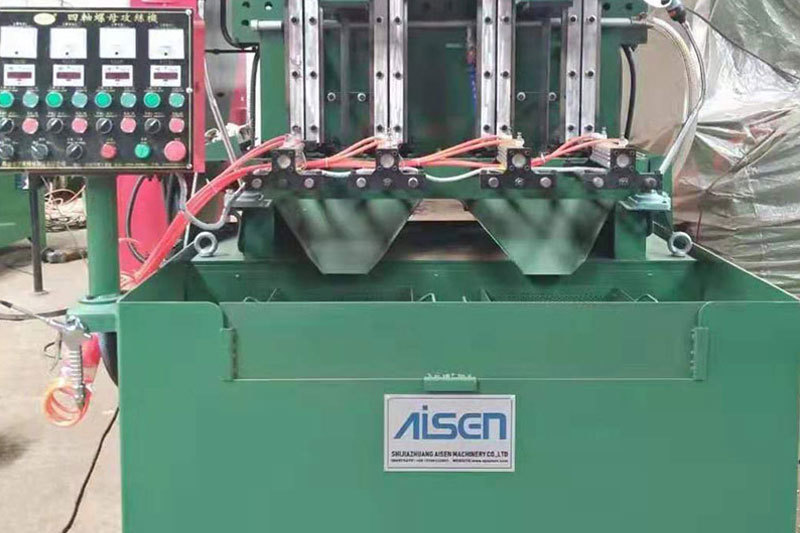
AISEN Four axis nut tapping machine ready for shipment to Russia
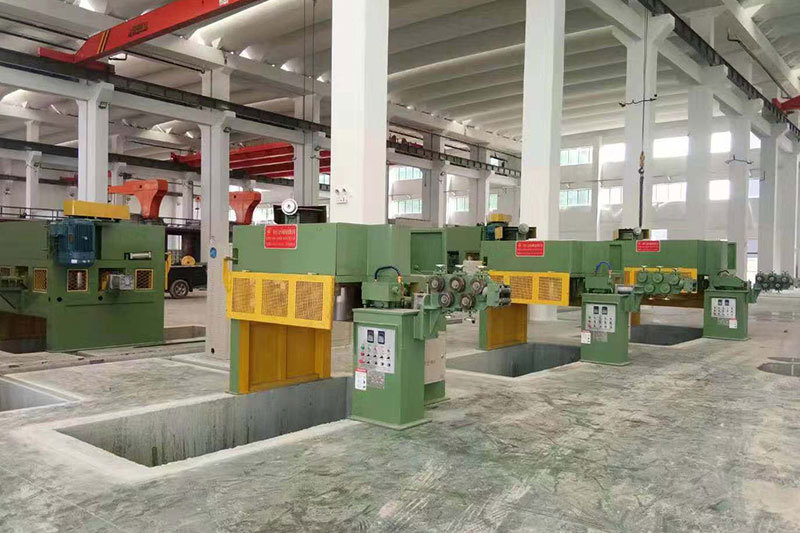
AISEN machinery inverted wire drawing machine
MESSAGES
We will contact you within one working day. Please pay attention to your email.
Qucik Link
Contact
Phone: +86-15100123091
E-mail: info@sjzaisen.com
Address: No.41 Zhaiying South Street, Yuhua District, Shijiazhuang City, Hebei Province China