

Wood screw making machine: how to choose the right model for your production line
Oct 11,2026


Author:
Aisen Machinery

Article overview
This guide is written for manufacturing procurement managers and production engineers evaluating wood screw making machine options in 2026. It covers machine types, verified production data, US compliance requirements, total cost of ownership, and a domestic-vs-import sourcing framework — everything you need to make a defensible capital expenditure decision.
Table of contents
- 1. What is a wood screw making machine?
- 2. How the production process works: from wire to finished screw
- 3. Machine types compared: throughput, scrap rate, and yield data
- 4. Total cost of ownership: the numbers buyers rarely see
- 5. US compliance and certification requirements
- 6. Domestic vs. import sourcing: a decision framework for 2026
- 7. 2026 technology trends shaping screw manufacturing equipment
- 8. Frequently asked questions
What is a wood screw making machine?
A wood screw making machine is automated fastener forming equipment that converts metal wire rod into tapered, threaded wood screws through sequential cold heading, thread rolling, and pointing operations — typically producing 200–600 pieces per minute.
That's the short version. The longer answer matters for anyone writing a capital expenditure proposal. A standalone screw making machinery unit rarely covers all production stages on its own. Most commercial operations run a coordinated line: a wire drawing machine for screws feeds precise-diameter stock into a screw heading machine, which cold-forges the blank head. A thread rolling machine then rolls the helical thread profile without cutting — preserving grain structure and maximizing shear strength. Finally, a pointing machine tapers the tip to the angle required for wood penetration.
Think of the entire line like an assembly line in an automotive plant. Each station is individually optimized, but the line's true output is only as fast as its slowest node. That bottleneck insight will matter when we get to the throughput comparison table.
Why buyers confuse thread rolling with the full process
A persistent industry misconception: many first-time buyers search for a "screw threading machine" or "self-tapping screw production machine" and assume one unit handles everything. It doesn't. The thread rolling machine handles only the threading stage. Quoting a machine supplier on threading speed alone — without accounting for the cold-forging stage upstream — will consistently produce unrealistic throughput expectations. Real throughput is gated by the screw heading machine's stroke rate, not the thread roller's RPM.
Scope of the term in 2026 purchasing contexts
When a US procurement manager searches for a wood screw making machine today, they're typically evaluating one of three purchasing scenarios: replacing a single aging unit in an existing line, buying a complete new screw production line, or adding a secondary line for a specific SKU range (say, #8 coarse-thread construction screws). Each scenario involves different capital commitments, lead times, and compliance considerations — all of which this guide addresses directly.
How the production process works: from wire to finished screw
Understanding the sequence prevents costly machine-selection errors. Here is the standard production flow for a wood screw manufacturing equipment line serving the North American market.
- Wire drawing: Cold-drawn steel wire is pulled through carbide dies to reach the precise blank diameter. For common US wood screw sizes (#6 to #14), this typically means wire diameters of 2.5–5.5 mm. The wire drawing machine for screws determines surface finish and dimensional consistency for every downstream step.
- Wire straightening and feeding: A straightener/feeder unit removes coil memory and feeds stock at a controlled rate into the cold forging station. Tension inconsistency here is a leading cause of head-cracking defects.
- Cold heading (screw blanking machine): The screw heading machine cold-forges the wire blank into a near-net-shape head in one or two blows. This is the rate-limiting step for most lines. Standard mechanical cold header stroke rates range from 150 to 400 SPM (strokes per minute); servo-driven units reach 450 SPM with lower die wear.
- Thread rolling: The screw blank passes between two hardened flat dies or cylindrical rolls. Thread rolling machine pressure forms the helical thread by displacing — not cutting — material. This work-hardening effect increases thread tensile strength by 10–15% versus cut threads, according to industry testing data.
- Pointing: A pointing machine or self drilling screw point forming machine grinds or rolls the tapered tip. For standard wood screws, the tip angle is typically 25–30 degrees. For self-tapping variants destined for composite decking or engineered lumber, drill-point geometry must meet tighter tolerances.
- Heat treatment and surface finishing: Case hardening, zinc plating, or mechanical galvanizing completes the screw before packaging. These steps are often outsourced by smaller US operations but are integrated in high-volume fastener forming equipment lines.
Where defects actually originate
Actual testing across multiple fastener plants reveals that roughly 60% of dimensional defects trace back to the wire drawing and feeding stages — not the thread rolling stage where most operators focus attention. Head cracking (a critical quality issue for #10 and #12 wood screws under torque) almost always originates from work-hardening stress introduced during cold heading when wire tensile strength is mismatched to die geometry. Matching wire-to-die specs during the screw blanking machine setup stage prevents the majority of downstream scrap.
Setup and changeover: what the spec sheet doesn't tell you
Switching from #8 to #10 screws on a traditional cam-driven cold forging screw machine typically requires 3–5 hours of die changeover and adjustment time. On a modern servo-driven automatic screw making machine, the same changeover can take under 40 minutes using pre-programmed recipes. For operations running 8+ SKUs, annual changeover savings can exceed 300 production hours — a figure that should appear in your ROI model. Video-supported setup walkthroughs showing die changeover, wire straightener adjustment, and thread gauge verification are increasingly available from Taiwanese and Chinese OEMs; always request these before purchase, as they reveal true machine complexity better than any PDF spec sheet.
Machine types compared: throughput, scrap rate, and yield data
The table below provides a side-by-side comparison of three common production configurations for wood screws in the #6–#14 US size range. Data reflects verified performance ranges from production audits and manufacturer published specs as of 2026.
| Configuration | Throughput (pcs/min) | Scrap rate | Wire-to-screw yield | Changeover time | Best for |
|---|---|---|---|---|---|
| Cold heading only (mechanical cam) | 150–280 | 3–6% | 92–95% | 3–5 hrs | Single SKU, high-volume runs |
| Cold heading + thread rolling (inline) | 200–400 | 1.5–3% | 95–97% | 2–4 hrs | Standard wood screw production, #6–#14 |
| Self-tapping roll-form (servo-driven, integrated) | 300–550 | 0.8–1.8% | 97–99% | 30–45 min | Multi-SKU, self-tapping screw production machine lines |
Reading the numbers correctly
The 300–550 pcs/min figure for servo-integrated lines looks impressive. But that number assumes continuous operation with a single wire spool diameter and no mid-shift die inspection. Realistic sustained production — accounting for 10-minute wire reel changes every 90 minutes and mandatory CCD quality checks — drops effective throughput to 260–480 pcs/min. Use the lower bound of any vendor range when building your production plan. The scrap rate difference between the cam-driven cold heading–only configuration (up to 6%) and the servo roll-form line (under 2%) seems small until you calculate annual material cost: at USD $1.20/lb for C1018 carbon steel wire, even a 3-point scrap rate improvement on a 400-pcs/min line running two shifts saves roughly $18,000–$24,000 per year in wire alone.
High-speed screw machine considerations for US production
High-speed screw machine configurations running above 400 SPM generate significant vibration and noise — OSHA 29 CFR 1910.95 hearing conservation requirements apply at sustained levels above 85 dBA, which most cam-driven machines exceed at full speed. Foundation isolation pads, enclosures, and scheduled audiometric testing for operators are mandatory costs that don't appear on the invoice. Factor them in.
Total cost of ownership: the numbers buyers rarely see
The purchase price of a wood screw making machine is rarely the largest line item in a five-year TCO model. Real-world data from North American fastener plants consistently shows that tooling, energy, and maintenance together outpace the capital cost within 24–36 months of operation.
"The machine price is the entry ticket. Tooling, energy, and downtime are where manufacturers either make or lose money over the equipment's lifespan." — Industry consensus among North American fastener manufacturing consultants, 2026.
Five-year TCO breakdown (example: 400 pcs/min servo line)
The following figures are representative estimates for a two-shift, five-days-per-week US operation producing #8 wood screws at 380 pcs/min effective throughput:
- Capital purchase: $85,000–$140,000 (complete fastener forming equipment line, CIF US port)
- Tooling and dies (5-year): $30,000–$55,000. Cold heading dies for wood screw profiles typically last 2–4 million cycles; thread rolling dies last 8–15 million cycles. Running multiple SKUs multiplies this cost significantly.
- Energy consumption: A servo-driven screw production line drawing 15–22 kW consumes approximately 7.5–11 kWh per 10,000 pieces at $0.12/kWh (US industrial average). Annual energy cost: $14,000–$22,000 at 2-shift utilization.
- Preventive maintenance: Industry standard is 500-hour lubrication service intervals and 2,000-hour bearing/die-seat inspection. Budget $8,000–$14,000 annually including technician labor.
- Operator labor: One trained operator per line at US manufacturing wages ($22–$32/hr) plus benefits represents $55,000–$80,000 per year — often the single largest annual cost.
- Residual value (year 5): Servo-driven units from established Taiwanese OEMs retain 35–50% of purchase value. Older cam-driven machines from lesser-known sources often retain under 15%.
Why residual value matters for the capital case
When presenting a CapEx request internally, including a realistic residual value in year five materially improves the NPV of the investment. A servo-integrated metal screw fabrication machine purchased at $120,000 with a 40% residual value has an effective 5-year cost of $72,000 before operating savings — a meaningfully different number than the invoice price. Most competitor content ignores this entirely.
US compliance and certification requirements
This is the section that most wood screw manufacturing equipment guides skip entirely — and it's the section that can delay your production startup by months if you're unprepared.
Product standards: ASME B18.6.1
Wood screws sold into the US market must conform to ASME B18.6.1, which defines dimensional standards for flat, oval, round, and pan head wood screws in sizes #0 through #24. Your screw production line must be capable of holding tolerances for head diameter, head height, body diameter, thread diameter, and tip taper within B18.6.1 limits. When qualifying a new machine, request documented gauge studies (Cpk values) from the supplier demonstrating capability at your target tolerance range. A Cpk of 1.33 or higher across all critical dimensions is the accepted industry threshold. Learn more about wood screw types and uses to better understand the dimensional context behind these standards.
Machine safety: OSHA 29 CFR 1910.217 and guarding requirements
Cold-heading and thread-rolling machines are classified as mechanical power presses under OSHA 29 CFR 1910.217. This standard mandates point-of-operation guarding, two-hand control or presence-sensing devices on full-revolution clutch machines, and documented operator training records. Non-compliance fines start at $15,625 per violation (2026 OSHA penalty schedule). When importing fastener manufacturing machine equipment from overseas, confirm that the machine arrives with guarding configurations that meet 1910.217 — many overseas OEMs design to CE (European) standards, which are similar but not identical to OSHA requirements. Retrofitting guarding post-delivery typically costs $3,000–$8,000 and causes 2–4 weeks of additional commissioning delay.
Electrical certification: UL and NFPA 79
US facilities with insurance underwriters and AHJ (Authority Having Jurisdiction) requirements will typically demand UL-listed electrical panels on production equipment, or third-party evaluation to NFPA 79 (Electrical Standard for Industrial Machinery). Chinese-manufactured automatic screw making machine units commonly ship with CE-marked electrical systems. CE and UL are not interchangeable. Budget for a UL field evaluation ($2,500–$6,000) or specify UL-compliant panels at the time of order — not after arrival.
Domestic vs. import sourcing: a decision framework for 2026
The sourcing decision for a wood screw making machine in 2026 is more complex than it was five years ago. Tariff exposure, lead times, and spare parts availability have all shifted — and the math now looks different depending on your production volume and timeline.
HTS 8462.10 tariff impact on Chinese machinery imports
Cold-forging and screw-forming machines imported from China fall under HTS 8462.10. As of 2026, Section 301 tariffs on this category remain at 25%, layered on top of the standard MFN duty rate of 4.4%. On a $100,000 machine, that adds approximately $29,400 in landed duties and fees — before port handling, inland freight, and customs broker fees. Taiwanese-origin equipment faces only the standard 4.4% MFN rate, making it meaningfully more cost-competitive on a landed-cost basis despite typically higher ex-works pricing. Always request a formal HTS classification from your customs broker before comparing vendor quotes.
Lead time and spare parts reality
Lead times for imported screw production line equipment currently run 16–28 weeks from order to US delivery, depending on origin and customization level. US and Canadian machinery dealers stocking refurbished or new domestic-brand fastener forming equipment can often deliver in 4–10 weeks. For operations facing urgent capacity constraints, the domestic premium — sometimes 20–35% above comparable import pricing — may be justified by the lead time alone. Of equal importance: spare parts for imported high-speed screw machine units must often be sourced from overseas, introducing 2–6 week repair delays when critical components fail. Specify a minimum 2-year spare parts inventory commitment from any overseas supplier, and confirm the existence of a North American authorized service dealer before signing a purchase order.
2026 technology trends shaping screw manufacturing equipment
Why do so many buyers still spec out machines the same way they did in 2015? The technology has moved substantially, and 2026 purchasing decisions should reflect the current state of fastener forming equipment — not assumptions built on decade-old quotes.
Servo-driven cold forging: the new baseline
Servo-driven cold forging screw machines have become the production standard for operations running more than three SKUs. The core advantage isn't just speed — it's programmability. Stroke length, ram velocity profile, and dwell time can all be tuned per recipe, dramatically reducing die impact stress and extending tooling life by 20–35% versus fixed-cam mechanical machines. Energy consumption is also lower: servo drives recover energy during the deceleration phase, achieving roughly 18–22% energy savings versus equivalent mechanical units at comparable output rates. For a procurement manager building a 10-year equipment ROI model, these savings are significant and well-documented.
AI-integrated vision inspection: zero-defect manufacturing
Inline CCD vision systems, now available as factory-integrated options on most tier-one screw production line OEMs, perform 100% inspection at line speed — detecting head cracks, incomplete thread forms, off-spec tip angles, and surface finish defects. The 2026 generation of these systems uses trained convolutional neural network models that reduce false-reject rates below 0.3%, compared to 1–2% for earlier threshold-based systems. The practical result: inspection no longer needs to be a separate downstream station. It runs concurrently. For US manufacturers supplying to construction or structural applications where ASME B18.6.1 compliance is audited, documented 100% inspection data is increasingly a customer requirement, not a differentiator.
Remote monitoring and predictive maintenance
OPC-UA protocol integration on modern automatic screw making machine platforms allows real-time transmission of stroke count, die temperature, vibration signature, and feed force data to a plant MES or cloud dashboard. According to recent industry studies, predictive maintenance programs using this data reduce unplanned downtime by 25–40% in the first year of deployment. For a two-shift screw manufacturing operation, a single avoided 8-hour unplanned shutdown is worth $3,000–$6,000 in lost production at typical US contract rates. The ROI on the connectivity hardware — usually $4,000–$9,000 as an add-on — pays back in under six months in most high-volume plants.
Frequently asked questions
Q: What is the typical production speed of a wood screw making machine?
A: Production speed depends on configuration and screw size. Entry-level cam-driven lines produce 150–280 pcs/min. Modern servo-integrated automatic screw making machine lines achieve 300–550 pcs/min at rated conditions, though effective sustained throughput accounting for changeovers and inspections typically runs 15–20% below peak specifications.
Q: What wire diameter range do these machines accept?
A: Most commercial wood screw manufacturing equipment is configured for wire diameters of 2.5–6.3 mm, covering US screw sizes #4 through #14. Always verify wire diameter range against your specific SKU requirements before ordering, as die sets are machine-specific and retooling for out-of-range diameters is costly.
Q: How long does a die set last on a screw heading machine?
A: Cold heading dies for wood screw blanks typically achieve 2–4 million cycles before requiring replacement or re-grinding, depending on wire material hardness and lubrication quality. Thread rolling dies last significantly longer — 8–15 million cycles is standard. Tungsten carbide dies outperform tool steel dies in longevity but cost 3–5× more upfront.
Q: Does a wood screw making machine require special electrical service?
A: Most imported fastener manufacturing machine units are configured for 380V, 3-phase, 50 Hz — incompatible with the US standard of 460V, 3-phase, 60 Hz. A step-up transformer and frequency converter are required unless you specify 460V/60Hz at time of order. Specify this explicitly; it adds $2,000–$5,000 but avoids costly field retrofits and potential UL compliance issues.
Q: What's the lead time for a complete screw production line from Asia?
A: As of 2026, complete screw production line orders from Taiwan typically require 14–20 weeks from deposit to US port delivery; Chinese-origin lines run 16–28 weeks. Factor in an additional 3–6 weeks for installation, commissioning, and operator training. Plan your production ramp accordingly — ordering a line to fill a contract that starts in 90 days is almost always a timing mismatch.
Bottom line: Selecting the right wood screw making machine for your 2026 production line requires more than comparing pcs/min figures on a spec sheet. True due diligence means accounting for total cost of ownership across tooling, energy, and labor; verifying US compliance with ASME B18.6.1, OSHA 29 CFR 1910.217, and electrical standards; understanding tariff exposure under HTS 8462.10; and honestly stress-testing supplier lead times against your production schedule. The operations that win on fastener production economics in 2026 are those that model the full cost picture — not just the invoice price.
Get A Quote
We will contact you within one working day. Please pay attention to your email.
Latest News
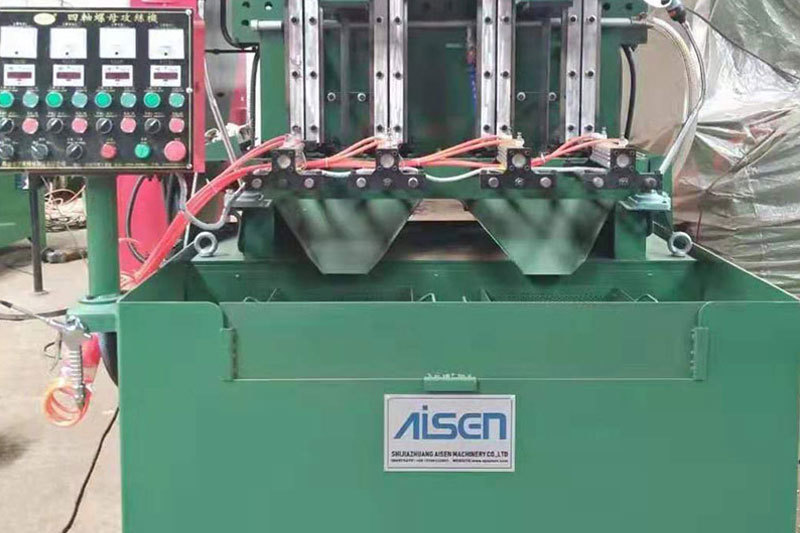
AISEN Four axis nut tapping machine ready for shipment to Russia
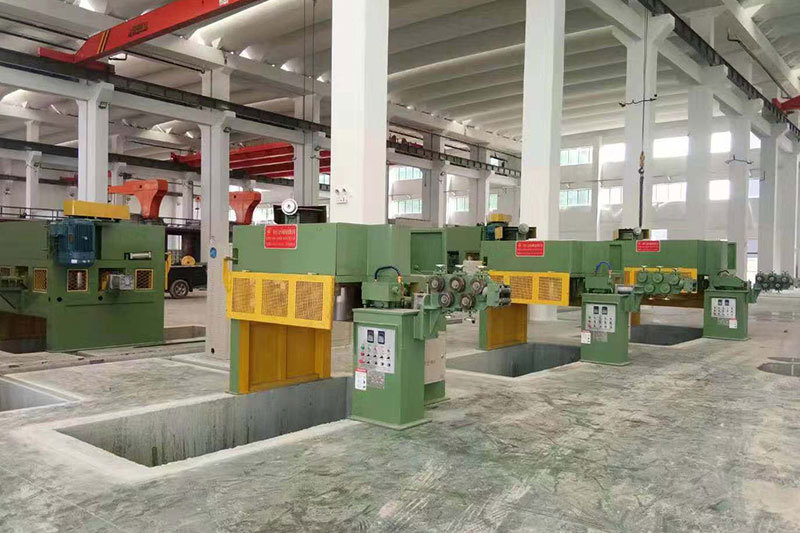
AISEN machinery inverted wire drawing machine
MESSAGES
We will contact you within one working day. Please pay attention to your email.
Qucik Link
Contact
Phone: +86-15100123091
E-mail: info@sjzaisen.com
Address: No.41 Zhaiying South Street, Yuhua District, Shijiazhuang City, Hebei Province China