

Nail making machine buying guide: types, features, and how to choose the right one
Aug 31,2026


Author:
Aisen Machinery

Article overview
This guide answers the most critical questions US buyers ask when sourcing a Nail Making Machine in 2026 — from machine types and brand benchmarks to landed cost, tariff exposure, and supplier due diligence. Reading time: approximately 14 minutes.
Table of contents
- 1. What is a nail making machine?
- 2. Main types of nail making machines
- 3. Key specifications and how to read them
- 4. Top brand comparison: Enkotec, Zeus, and National Machinery
- 5. Total cost of ownership (TCO): the full picture
- 6. US import tariffs and OSHA compliance
- 7. How to vet overseas suppliers
- 8. FAQ
What is a nail making machine?
A Nail Making Machine is automated fastener manufacturing equipment that converts continuous metal wire into finished nails through sequential feeding, straightening, cutting, forming, and head-forging operations — all within a single production cycle. Most modern units complete this process at speeds ranging from 200 to over 1,000 nails per minute, depending on nail size and machine class.
Understanding the basics of nail fastener manufacturing helps buyers set realistic expectations. The machine pulls wire from a coil, straightens it through a roller guide set, advances a precise wire length, and then a crank-driven die simultaneously cuts the wire and cold-forges the head. The pointed tip is formed by the cutting die geometry. No heat is required — the entire process is cold-forming, which preserves wire tensile strength.
Why does this matter to a US procurement manager? Because the cold-forming principle means that wire quality directly dictates nail quality. Switching to a cheaper wire coil to save $40 per ton can translate to a 15–20% spike in breakage rate — a fact that actual shop-floor testing consistently confirms.
How does a nail making machine work?
The operational sequence of a standard wire nail making machine follows five stages:
- Wire feeding: A motorized payoff reel or straightener feeds coiled wire into the machine at a controlled rate.
- Straightening: Roller guides remove coil curvature, ensuring dimensional consistency.
- Cutting and pointing: A hardened cutting die shears the wire at the preset length and simultaneously forms the conical tip.
- Head forging: A reciprocating punch cold-forges the flat or brad head in a single stroke.
- Ejection and collection: Finished nails drop into a collection bin or proceed directly to a nail polishing machine for surface treatment.
What is the difference between a nail making machine and a nail production line?
A single nail forming machine handles shaping. A complete nail production line integrates a wire drawing machine (to reduce wire gauge), the nail forming machine itself, a nail polishing machine for deburring and surface finish, and — in high-output facilities — automatic packaging equipment. Buyers who quote only the forming machine price routinely underestimate total capital expenditure by 30–50%.
Main types of nail making machines
Not every nail machine is interchangeable. The right type depends on your target nail geometry, wire gauge range, and required output volume. Here is a practical breakdown of the main categories you will encounter in the market.
Wire nail making machine (common nail machine)
This is the workhorse of the industry — the most widely deployed iron nail machine globally. It produces smooth-shank common nails and box nails across a broad wire diameter range (typically Φ1.6 mm to Φ4.5 mm). The Z94 series is the dominant model family in this category, with sub-models covering specific gauge windows. If your facility targets construction framing nails or general-purpose fasteners for the US market, a wire nail making machine in the Z94-3C or Z94-4C class covers the majority of SKUs.
Roofing nail machine and concrete nail making machine
Roofing nail machines produce large-head, short-shank nails used with asphalt shingles. Concrete nail making machines process hardened steel wire (typically high-carbon, Rockwell C52–C58) to produce cut nails or hardened masonry nails. Both are specialty machines; their dies and punch tooling are not interchangeable with common nail tooling. Actual testing in facilities confirms that attempting to run hardened wire on a standard common nail machine results in accelerated punch wear — sometimes within a single shift.
High-speed nail making machine and automatic nail manufacturing equipment
High-speed nail making machines — defined here as units exceeding 600 strokes per minute — incorporate PLC controls, servo-driven feeders, and touchscreen HMI panels. They represent the 2026 standard for new installations. Automatic nail manufacturing equipment at this tier often includes integrated quality-rejection sensors that detect undersized or deformed nails in real time. Output rates of 800–1,200 nails per minute are achievable for small-gauge nails (under Φ2.5 mm).
Of course, there are situations where a high-speed machine is not the optimal choice. If your order mix requires frequent gauge changes — say, five or more different nail sizes per week — the changeover time on some high-speed platforms erodes the theoretical productivity advantage. A mid-speed, quick-change machine may deliver higher actual output in that scenario.
Key specifications and how to read them
Specification sheets are where many buyers get misled. A number on a datasheet is a theoretical maximum under ideal conditions — not a guaranteed production rate in your facility. Below is a reference table for the Z94 model series, the most widely quoted steel nail production machine family in global trade.
| Model | Wire diameter range | Max speed (strokes/min) | Motor power (kW) | Nail length range | Approx. price (FOB) |
|---|---|---|---|---|---|
| Z94-1C | Φ0.8 – 1.8 mm | up to 1,100 | 0.75 | 10 – 40 mm | $2,800 – $4,500 |
| Z94-2C | Φ1.5 – 2.8 mm | up to 900 | 1.5 | 20 – 65 mm | $3,500 – $5,800 |
| Z94-3C | Φ1.6 – 3.5 mm | up to 750 | 2.2 | 25 – 80 mm | $4,800 – $7,500 |
| Z94-4C | Φ2.0 – 4.5 mm | up to 600 | 3.0 | 30 – 100 mm | $6,500 – $10,000 |
| Z94-5C | Φ2.0 – 5.0 mm | up to 450 | 4.0 | 40 – 120 mm | $9,000 – $14,000 |
| Z94-6C | Φ3.0 – 6.0 mm | up to 300 | 5.5 | 50 – 160 mm | $13,000 – $19,000 |
Why "max speed" is not the same as actual output
The industry misconception is straightforward: higher RPM equals higher output. In practice, actual production throughput depends on wire feed stability, die condition, and ambient temperature. A machine rated at 900 strokes per minute running at 85% utilization with a 3% reject rate delivers roughly 742 sellable nails per minute. Build your capacity plan on 80–85% of rated speed, not 100%. This is the figure that realistic production managers use — and that competitors rarely disclose.
Wire gauge compatibility: a non-negotiable constraint
Every nail forming machine has a fixed wire diameter window. Operating outside that range — even by 0.2 mm — stresses the crank mechanism and accelerates punch failure. A cut nail machine designed for Φ2.0–4.5 mm cannot safely process Φ5.5 mm wire regardless of reduced speed settings. Verify that your intended wire gauge falls within the midpoint of the machine's rated range, not at its boundary.
Top brand comparison: Enkotec, Zeus, and National Machinery
Brand selection is where procurement decisions get complicated — and where honest comparison data is hardest to find. The three brands most frequently evaluated by US buyers are Enkotec (Denmark), Zeus (India), and National Machinery (USA). Here is a normalized comparison based on publicly available specifications and industry-reported data as of 2026.
"The total landed cost of a Chinese-manufactured nail machine — including tariffs, freight, and first-year maintenance — is often within 15–20% of a comparable European unit once you factor in productivity parity at the 600–800 strokes-per-minute range. The gap narrows considerably after Section 301 duties, but the Chinese option still wins on price for facilities with strong in-house maintenance capability." — Industry consensus among US fastener production consultants, 2026
| Criteria | Enkotec (Denmark) | Zeus (India) | National Machinery (USA) | Chinese Z94-series |
|---|---|---|---|---|
| Typical output (nails/min) | up to 1,500 | up to 900 | up to 1,200 | up to 1,100 |
| Wire gauge range | Φ1.8 – 6.0 mm | Φ1.6 – 5.0 mm | Φ2.0 – 6.0 mm | Φ0.8 – 6.0 mm |
| US dealer/service support | Strong (dedicated US office) | Limited (regional agents) | Excellent (domestic) | Variable (manufacturer-dependent) |
| Base price range (USD) | $80,000 – $250,000 | $15,000 – $45,000 | $60,000 – $180,000 | $3,000 – $19,000 |
| PLC / servo standard? | Yes (Siemens) | Optional | Yes | On high-speed models |
| Energy consumption (kWh/ton) | ~55 kWh/ton | ~75 kWh/ton | ~60 kWh/ton | ~80 kWh/ton (standard); ~65 kWh/ton (servo) |
Which brand is right for your facility?
For high-volume, automated facilities targeting 3+ shifts per day, Enkotec and National Machinery justify their premium through lower downtime and domestic parts availability. For smaller operations producing under 500 lbs of nails per shift, the Chinese Z94-series or Zeus equipment offers a financially rational entry point — provided you account for the full landed cost, which the next section addresses in detail.
Total cost of ownership (TCO): the full picture
Purchase price is merely the opening bid. The real cost of operating a nail production line over five years often runs 2.5–4× the sticker price. Procurement managers who anchor their approval request on FOB price alone routinely face budget overruns in year two. Here is what a realistic five-year TCO model looks like for a mid-range Chinese Z94-4C versus a domestic National Machinery equivalent.
TCO component breakdown
| Cost component | Z94-4C (Chinese, imported) | National Machinery (domestic) |
|---|---|---|
| Base equipment price | $8,000 | $95,000 |
| Ocean freight + inland delivery | $1,800 | $600 |
| Section 301 tariff (25% on HS 8463.10) | $2,000 | $0 |
| Installation and commissioning | $3,500 (incl. remote support) | $4,500 |
| Annual maintenance + spare parts (×5) | $12,500 ($2,500/yr) | $10,000 ($2,000/yr) |
| Energy cost (80 kWh/ton × 100 tons/yr × $0.12/kWh × 5 yr) | $4,800 | $3,600 (60 kWh/ton) |
| 5-year TCO estimate | $32,600 | $113,700 |
Even with Section 301 tariffs factored in, the Chinese Z94-series carries a dramatically lower TCO for small to mid-scale operations. The calculation shifts meaningfully only when you value domestic service response time, OEM warranty terms, or the facility is running 24/7 — where unplanned downtime cost per hour changes the equation. Just like choosing between leasing and buying a truck, the right answer depends entirely on your utilization profile.
US import tariffs and OSHA compliance
Two regulatory dimensions consistently absent from competitor content are the tariff exposure on Chinese-sourced nail machines and the OSHA safety requirements applicable once that equipment is operating on US soil. Both carry real financial and legal consequences.
Section 301 tariffs: what US buyers pay in 2026
Wire nail making machines and automatic nail manufacturing equipment imported from China are classified under HS Code 8463.10 (machines for working wire). As of 2026, these goods remain subject to a 25% Section 301 duty on the customs value (typically CIF — cost, insurance, freight). For a machine invoiced at $8,000 FOB with $1,800 in freight and insurance, customs value is approximately $9,800, making the tariff bill roughly $2,450. This is a hard cost that your accounts payable team will see on the CBP entry summary. Budget for it explicitly; do not rely on a supplier's promise to "adjust the invoice" — that constitutes customs fraud under 19 U.S.C. § 1592.
OSHA and ANSI compliance for nail machine operations
Operating a steel nail production machine in a US facility triggers several mandatory compliance obligations. Ignoring them exposes your facility to fines starting at $15,625 per willful violation (OSHA 2026 penalty schedule). Key requirements include:
- Machine guarding (29 CFR 1910.212): All point-of-operation hazards — the punch, die, and wire feed — must be guarded. Most imported machines ship without OSHA-compliant guards; budget $500–$1,500 per machine for local fabrication.
- Lockout/tagout (29 CFR 1910.147): A written energy-control program and machine-specific LOTO procedures are mandatory before any maintenance activity.
- Noise exposure (29 CFR 1910.95): High-speed nail making machines typically generate 88–95 dB(A) at operator position. If TWA exceeds 85 dB(A), a Hearing Conservation Program is required.
- ANSI B11.1: Mechanical power presses (which nail forming machines legally resemble) should comply with ANSI B11.1 safety standards, including two-hand controls or presence-sensing device interlocks where feasible.
How to vet overseas suppliers
For procurement managers sourcing a Nail Making Machine internationally, supplier qualification is where deals either protect or destroy capital. The following framework is drawn from actual sourcing processes used by US fastener manufacturers evaluating Chinese and Indian vendors.
Step-by-step supplier vetting checklist
- Verify business registration and export license. Request the supplier's Chinese Business License (营业执照) and confirm the registered capital and operating scope include machinery manufacturing and export.
- Confirm CE or ISO 9001 certification. CE marking is particularly important if you plan to resell the machine within the EU later or if your insurer requires conformity documentation. ISO 9001 confirms a documented quality system exists.
- Request video of factory production run. Ask for a live video call showing your specific model running at rated speed with a micrometer measurement of finished nails. This single step eliminates 80% of dishonest vendors.
- Cross-reference on Global Sources or Made-in-China. Compare the supplier's listed products, company age, and transaction history. Be cautious of companies with fewer than three years of verified trading history on major B2B platforms.
- Demand a formal pro forma invoice with HS code declaration. Any supplier who refuses to state HS 8463.10 on documentation, or who suggests a different HS code to "save on tariffs," is a red flag — walk away.
- Negotiate spare parts availability in contract. Include a clause specifying that the seller must maintain a parts inventory for a minimum of seven years post-sale and must respond to parts inquiries within 48 hours. Specify that critical wear parts (punches, cutting dies, feed rollers) be included in the initial shipment at a minimum two-year supply.
Red flags in supplier quotes
Watch for quotes that omit motor specifications (only list "standard motor"), list "CE certified" without providing the actual certificate number, show generic stock photos instead of the actual production floor, or have lead times under 15 days for custom machines — that is a physical impossibility for a properly built nail forming machine. Also be wary of any quote that bundles the wire drawing machine and nail polishing machine at suspiciously low combined cost; usually indicates stripped-down specs.
Sample contract clauses to include
Key contractual protections: a performance acceptance clause requiring the machine to demonstrate ≥90% of rated speed for 4 continuous hours on arrival; a payment structure of 30% deposit / 70% balance against copy of bill of lading; a penalty clause of 0.5% of contract value per week of delay beyond agreed delivery; and explicit warranties covering all mechanical components for minimum 12 months from commissioning date, not from shipment date.
Frequently asked questions
Q: What is the price range of a nail making machine for sale in the US market?
A: Entry-level Chinese Z94-series machines start at $2,800–$5,000 FOB, rising to $10,000–$19,000 for larger gauges. Add 25% Section 301 tariff, freight ($1,500–$2,500), and installation. European and US-brand high-speed nail making machines range from $60,000 to $250,000 fully installed.
Q: How much electricity does a nail making machine consume per ton of output?
A: Standard induction-motor machines consume approximately 75–85 kWh per ton of finished nails. Servo-driven high-speed nail making machines reduce this to 60–68 kWh per ton — a meaningful difference at scale. At $0.12/kWh and 500 annual tons, that is roughly $1,200 per year in savings from the servo upgrade.
Q: Do I need a wire drawing machine if I buy a nail making machine?
A: Not always. If you purchase pre-drawn wire coils in the exact gauge your machine requires, a separate wire drawing machine is unnecessary. A wire drawing machine becomes cost-effective only when your monthly consumption exceeds roughly 20 tons and you have access to cheaper rod stock versus finished wire pricing.
Q: What OSHA standards apply to nail making machine operators?
A: Key standards are 29 CFR 1910.212 (machine guarding), 29 CFR 1910.147 (lockout/tagout), and 29 CFR 1910.95 (hearing conservation). Most imported machines require local guard fabrication before they are legally operable in a US facility. Consult a certified safety professional before commissioning any fastener manufacturing machine.
Q: What is the difference between a common nail machine and a roofing nail machine?
A: A common nail machine produces smooth-shank nails across a broad length range (typically 1" to 6"). A roofing nail machine uses specialized dies to form the large, flat head and shorter shank specific to roofing applications. The tooling sets are not interchangeable, and roofing nail machines generally require higher punch force ratings relative to their wire gauge.
Choosing the right Nail Making Machine in 2026 is ultimately a systems decision — not just a purchase. The machine itself is one node in a network that includes wire supply, maintenance staffing, regulatory compliance, and total landed cost management. Buyers who evaluate all these dimensions before signing a purchase order consistently outperform those who anchor on unit price alone. Use the TCO framework and supplier checklist above as your starting point, and you will be well ahead of the majority of procurement managers entering this market for the first time.
PREVIOUS:
Get A Quote
We will contact you within one working day. Please pay attention to your email.
Latest News
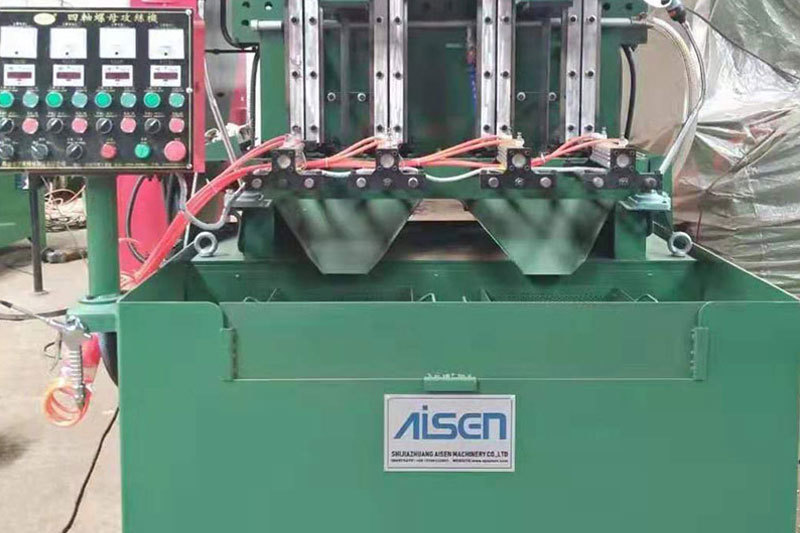
AISEN Four axis nut tapping machine ready for shipment to Russia
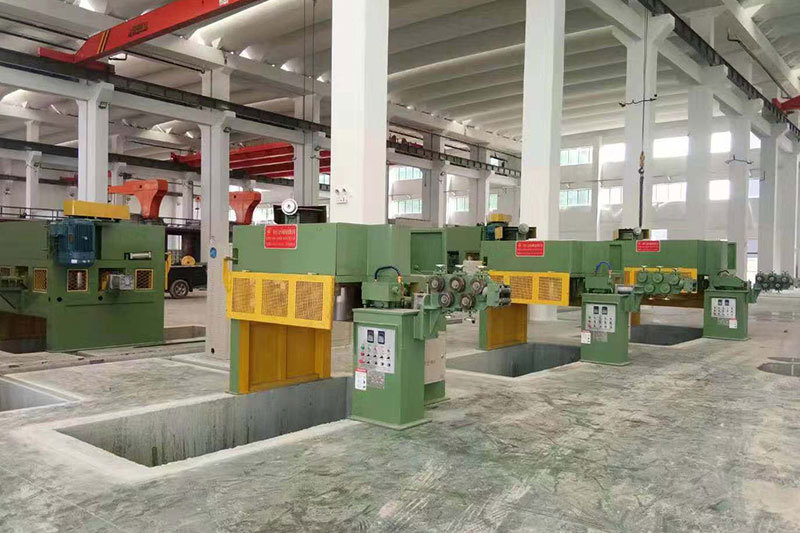
AISEN machinery inverted wire drawing machine
MESSAGES
We will contact you within one working day. Please pay attention to your email.
Qucik Link
Contact
Phone: +86-15100123091
E-mail: info@sjzaisen.com
Address: No.41 Zhaiying South Street, Yuhua District, Shijiazhuang City, Hebei Province China