

Assembly machine guide: how to choose, compare and buy the right system
Aug 30,2026


Author:
Aisen Machinery

Article overview
This guide is written for manufacturing engineers and procurement decision-makers at US industrial companies who are actively evaluating automated assembly solutions. It covers machine types, TCO modeling, IIoT integration, maintenance KPIs, compliance checkpoints, and a practical selection framework — all structured to support a confident purchasing decision.
Table of contents
- 1. What is an assembly machine?
- 2. Types of assembly machines: a side-by-side comparison
- 3. Total cost of ownership: manual vs. semi-auto vs. fully automated
- 4. Industry 4.0 and IIoT integration for modern assembly systems
- 5. Maintenance benchmarks and uptime data you should demand from vendors
- 6. Regulatory and compliance requirements for US buyers
- 7. How to choose the right assembly machine for your operation
- 8. FAQ
What is an assembly machine?
An assembly machine is an industrial system — automated, semi-automatic, or robotic — that joins multiple components into a finished product following a defined process sequence. It replaces or augments manual labor on the production line, improving throughput consistency and reducing defect rates. In 2026, assembly machines range from simple bench-top semi-automatic assembly machines used in small workshops to multi-station robotic assembly units integrated with AI-powered vision inspection on large factory floors.
Why do so many buyers underestimate the complexity of this purchase? Because "assembly machine" is a broad category. A washer assembly machine handling 1 mm–12 mm diameter parts operates on entirely different mechanical principles than a cable waterproof connector assembly machine producing 30–40 units per minute. Treating them as interchangeable is the first mistake engineers make during the evaluation phase.
According to recent 2026 market data, the global automated assembly equipment market is valued at approximately $14.5 billion, growing at a CAGR of 6.8%. Factories that deploy industrial assembly systems report production efficiency gains of 40%–60% and defect rates reduced to below 0.1%. Those are not marketing claims — they are figures corroborated by multiple independent manufacturing studies.
Assembly Machine is defined as: a production line machinery system designed to automatically or semi-automatically join parts, sub-assemblies, or components into complete products through controlled mechanical, pneumatic, or robotic operations.
Types of assembly machines: a side-by-side comparison
The single most useful thing this guide can give you is a direct, structured comparison that most vendor pages and even industry articles omit. Different assembly automation configurations suit different production environments. Here is what the data actually shows.
| Machine type | Throughput (units/min) | Footprint | Payload range | Price range (USD) | Best for |
|---|---|---|---|---|---|
| Rotary dial assembly machine | 60–250 | Small (1–3 m²) | 1 g–500 g | $25,000–$120,000 | Small precision parts, high-volume |
| Linear transfer assembly machine | 20–80 | Medium (4–12 m²) | 100 g–10 kg | $60,000–$300,000 | Mid-size products, multi-station |
| Flexible assembly system (FAS) | 10–60 | Medium–large (6–20 m²) | 50 g–20 kg | $150,000–$600,000 | Mixed-model, low-to-mid volume |
| Robotic assembly machine (cell) | 15–120 | Variable (3–25 m²) | Up to 500 kg | $80,000–$800,000+ | Complex paths, high repeatability |
| Semi-automatic assembly machine | 10–40 | Small (1–4 m²) | 1 g–5 kg | $8,000–$60,000 | Low volume, new product launch |
Rotary dial and linear systems: when each wins
Rotary dial machines — like the washer assembly machine models WA1-3, WA3-6, and WA8-12 — deliver cycle times as fast as 120–250 pieces per minute for small-diameter components ranging from 1 mm to 12 mm. Their compact footprint (under 1,500 × 1,400 × 1,870 mm) makes them practical on crowded factory floors. Linear transfer machines sacrifice raw speed for the ability to handle heavier, more complex products across many sequential stations without re-fixturing.
Semi-automatic and flexible systems: the overlooked middle ground
Here is a point most vendors will not emphasize: a semi-automatic assembly machine often delivers the best return for manufacturers producing fewer than 500,000 units per year. The initial investment is a fraction of a full robotic assembly machine, and skilled operators can adapt to new part designs without expensive re-programming. The cable waterproof connector assembly machine workflow — feeding flat nuts, applying sealing rings, threading connector bodies, installing inner sleeves with optical inspection, and final conformity screening at 30–40 units per minute — is a real-world example where semi-automatic assembly lines outperform over-engineered fully automated solutions.
Total cost of ownership: manual vs. semi-auto vs. fully automated
TCO is where purchasing decisions are actually made — and it is the area most competitor content ignores entirely. Purchase price is just the entry point. The real number that matters is cost per assembled unit over a five-year operating horizon.
Five-year TCO model: a practical breakdown
| Cost category | Manual line | Semi-automatic | Fully automated |
|---|---|---|---|
| Initial capital (USD) | $15,000–$40,000 | $25,000–$120,000 | $150,000–$800,000+ |
| Annual labor cost (USD) | $180,000–$360,000 | $60,000–$120,000 | $20,000–$50,000 |
| Annual maintenance (USD) | $3,000–$8,000 | $5,000–$18,000 | $15,000–$60,000 |
| Scrap/rework rate | 2%–5% | 0.5%–1.5% | <0.1% |
| Estimated 5-year TCO | $950K–$1.85M | $380K–$750K | $430K–$1.2M |
The data above reflects a mid-volume US manufacturing scenario (one shift, ~250,000 units/year). Notice that a fully automated assembly system does not automatically win on TCO — at lower volumes, semi-automatic assembly equipment frequently delivers a lower five-year cost. The crossover point is typically around 800,000–1,000,000 units per year, depending on part complexity and labor rates in your region.
Per-unit cost comparison: where the real ROI lives
Just like compound interest working silently over years, per-unit cost savings from assembly automation accumulate across millions of production cycles. At 30–40 units per minute — the rated output of a connector assembly machine — a fully automated system produces roughly 1.2–1.6 million units in a standard 250-day operating year on a single shift. Divide your five-year TCO by that figure and compare it against manual labor cost per unit. For most US manufacturers, payback period for a $60,000–$120,000 semi-automatic assembly machine falls between 18 and 30 months.
Industry 4.0 and IIoT integration for modern assembly systems
Modern assembly line automation does not operate in isolation. In 2026, the expectation from mid-to-large US manufacturers is that any new assembly machine manufacturer they work with should offer machines capable of connecting to plant-level digital infrastructure. Yet this topic is almost entirely absent from competitor content.
Connecting assembly machines to MES and ERP systems
A production line machinery system generates continuous process data: cycle times, reject counts, torque values, sensor states. To extract actionable intelligence from this data, the machine's PLC or embedded controller must communicate with your Manufacturing Execution System (MES) and, in some architectures, directly with ERP platforms like SAP or Oracle. The two dominant communication protocols in 2026 are OPC-UA (preferred for machine-to-MES integration due to its security model and rich data typing) and MQTT (lightweight, ideal for high-frequency sensor telemetry to cloud dashboards). When evaluating an assembly machine manufacturer, explicitly ask: does your controller support OPC-UA server mode? What is the update rate for production counters?
AI vision and real-time quality monitoring
The 2026 trend most worth tracking is the integration of machine vision directly into the component assembly system workflow. The cable waterproof connector assembly process already demonstrates this: optical inspection for missing inner sleeves is built into the sequence, not added as an afterthought. Next-generation high-speed assembly equipment embeds AI inference engines — running on NVIDIA Jetson-class edge hardware — that classify defects in under 20 milliseconds without slowing cycle time. Actual testing on connector assembly lines shows false-positive rates below 0.3% when models are trained on site-specific defect libraries.
"The factories that will lead in the next decade are not those with the most robots — they are those with the best data pipelines connecting every machine to every decision." — 2026 Deloitte Smart Manufacturing Outlook
Maintenance benchmarks and uptime data you should demand from vendors
Maintenance costs and unplanned downtime are the hidden budget killers in assembly automation — and they are almost universally absent from vendor spec sheets. Here is what experienced procurement teams track, and what you should require in any capital equipment proposal.
Key maintenance KPIs for assembly machines
- Mean Time Between Failures (MTBF): Industry benchmark for a well-maintained rotary dial assembly machine is 2,000–4,000 operating hours. Demand documented MTBF data, not estimates, from any assembly machine manufacturer you evaluate.
- Scheduled PM interval: Most high-speed assembly equipment requires preventive maintenance every 500–1,000 hours. PM tasks typically include lubrication of indexing cams, inspection of tooling wear, and calibration of vision sensors. Budget 8–16 hours of downtime per PM event.
- Mean Time To Repair (MTTR): Target MTTR for modular industrial assembly systems is under 2 hours for common failure modes. This requires on-site spare parts inventory — insist on a recommended spare parts kit from the manufacturer at time of purchase.
- Spare parts cost (annual): For a $60,000–$120,000 semi-automatic assembly machine, budget 3%–6% of purchase price annually for consumables and wear parts. Rotary cams, pneumatic cylinders, and tooling inserts are the highest-frequency replacement items.
- Overall Equipment Effectiveness (OEE): World-class OEE for assembly automation is 85%+. Newly commissioned machines typically run at 65%–75% OEE in the first 90 days as operators and maintenance teams build familiarity. Establish a 12-month OEE improvement target in your purchase contract.
Washer assembly machine: real-world uptime data
Based on real case data from washer assembly machine deployments, the WA-series models (WA1-3, WA3-6, WA8-12) operating at motor powers between 1.0 kW and 2.0 kW on 220V single-phase power achieve operational uptime above 92% after the first 90-day break-in period, assuming PM intervals are respected. The machines weigh between 410 kg and 950 kg — a detail that matters when planning floor loading and forklift access for maintenance. Of course, actual uptime varies depending on operator skill level, feed material consistency, and ambient conditions.
Regulatory and compliance requirements for US buyers
This section addresses a critical gap in nearly all competing content. US industrial buyers face real compliance obligations when purchasing assembly machines, and the failure to verify certifications before signing a purchase order creates legal and insurance exposure.
Certifications to require from every assembly machine manufacturer
The following certifications are non-negotiable for US factory deployment of any industrial assembly system:
- UL Listing or CE Marking: CE marking (EN ISO 13849 for safety-related control systems) is the baseline international standard; UL certification is specifically recognized by US insurers and OSHA inspectors. For machines imported from overseas manufacturers, verify that CE documentation covers the specific machine configuration you are purchasing — not a generic platform model.
- OSHA compliance (29 CFR 1910.217 and 1910.212): Machine guarding requirements under OSHA standards apply to all production line machinery. Rotary dial machines and linear transfer systems must have interlocked guarding on all pinch points and rotating elements. Request an OSHA compliance checklist from the manufacturer.
- ISO 9001 quality management: Assembly machine manufacturers holding ISO 9001 certification provide documented evidence of process control in their own manufacturing — which directly predicts the consistency of machines they ship. It does not guarantee product quality but significantly reduces the risk of receiving out-of-spec equipment.
- NFPA 79 (electrical standard for industrial machinery): US-specific electrical standard governing panel construction, wire sizing, and emergency stop circuits on factory assembly machines. Critical for equipment connected to US 120/240V or 480V supply systems.
Due diligence checklist before purchase
Request certificates of conformity, not just claims. Ask for the specific notified body or testing laboratory name. Verify that CE documentation is in English and covers your exact machine configuration, including any custom tooling. Have your facility's EHS team review OSHA guarding documentation before installation. For assembly line machines sourced internationally, this diligence step has prevented costly retrofits and OSHA citations at numerous US plants.
How to choose the right assembly machine for your operation
By this point you have the frameworks. Here is how to apply them in a structured selection process that the best US procurement teams follow.
Step-by-step selection process
- Define your production requirements: Establish annual volume, part dimensions, weight range, and acceptable cycle time. For a washer or connector parts assembly application, specify diameter range (e.g., 1 mm–12 mm), required throughput (units per minute), and any tolerance requirements for depth adjustment.
- Classify your automation level: Use the TCO model from Section 3 to determine whether manual, semi-automatic assembly machine, or fully automated assembly equipment is cost-justified at your projected volume.
- Audit IIoT readiness: Confirm your facility has the network infrastructure (Ethernet to machine level, IT/OT firewall policy) to support OPC-UA or MQTT data feeds. If not, factor connectivity infrastructure into your capital budget.
- Verify compliance documentation: Run the certification checklist from Section 6 before issuing any RFQ. Eliminate non-compliant suppliers at this stage, not after delivery.
- Request MTBF data and spare parts pricing: Any reputable assembly machine manufacturer should be able to provide documented MTBF figures and a recommended spare parts list with current pricing. Absence of this data is a red flag.
- Conduct a Factory Acceptance Test (FAT): Before shipment, run the machine at rated throughput for a minimum of 4 hours. Verify reject screening accuracy, depth adjustment range, and IIoT data output against your specifications.
- Negotiate OEE improvement milestones: Include a contractual OEE ramp schedule (65% at 30 days, 75% at 90 days, 85%+ at 180 days) with defined remedies if milestones are missed.
Common selection mistakes to avoid
Two industry misconceptions consistently derail good projects. The first: buying over-specified, fully automated assembly equipment for volumes that do not justify it — resulting in equipment utilization below 30% and TCO that far exceeds a semi-automatic alternative. The second: assuming a flexible assembly system can fully replace purpose-built custom assembly machines in high-speed applications. For precision connector or washer assembly requiring 120–250 cycles per minute, a dedicated rotary dial machine will outperform a flexible system on both cycle time and long-run reliability. Match the machine to the actual production requirement, not to the most impressive spec sheet. Understanding assembly line technology fundamentals helps buyers avoid this over-engineering trap.
PAA: questions buyers commonly research
How much does an assembly machine cost?
Assembly machine prices range from $8,000 for a basic semi-automatic assembly station to over $800,000 for a fully integrated robotic assembly cell. A mid-range rotary dial parts assembly equipment unit for small connector or washer applications typically costs $25,000–$120,000 in 2026. Total cost of ownership over five years is the more meaningful figure — see Section 3 for a full model.
What is the difference between semi-automatic and fully automatic assembly machines?
A semi-automatic assembly machine requires an operator to load parts or initiate cycles, while a fully automatic system handles feeding, assembly, inspection, and sorting without human intervention. Semi-automatic systems cost less upfront and adapt more easily to product changes; fully automated systems deliver higher throughput and lower per-unit labor cost at high volumes.
What industries use assembly machines most?
The highest-volume users of industrial assembly systems in 2026 are automotive components, consumer electronics, medical devices, electrical connectors, and hardware (fasteners, washers, fittings). Any sector requiring high-volume, repeatable joining of two or more parts is a candidate for assembly line automation.
How do I calculate ROI for an assembly machine investment?
Start with annual labor cost savings (current manual headcount × burdened wage rate), subtract annual machine operating costs (maintenance, energy, consumables), then divide the net annual savings into the capital purchase price. A $60,000 semi-automatic machine saving $40,000 per year in labor delivers payback in 18 months. Use the five-year TCO table in Section 3 as your baseline model.
What certifications should an assembly machine have for use in the US?
For US operations, require CE marking or UL listing, OSHA guarding compliance per 29 CFR 1910.212, NFPA 79 electrical compliance, and ISO 9001 certification from the manufacturer. Medical device or food-adjacent assembly applications may require additional FDA or NSF standards compliance.
Selecting the right assembly machine in 2026 requires more than reviewing a spec sheet. It demands a disciplined evaluation of TCO, IIoT capability, compliance documentation, and maintenance benchmarks — the four dimensions that separate a strong capital investment from a costly mistake. Whether your requirement is a compact washer assembly machine handling 1 mm–3 mm parts at 250 pieces per minute or a multi-station robotic assembly unit for complex electro-mechanical products, the framework in this guide gives you the analytical tools to make a defensible, data-backed purchasing decision.
Frequently asked questions
Q: What throughput can I expect from a rotary dial assembly machine?
A: Rotary dial assembly machines typically deliver 60–250 units per minute depending on part size, number of stations, and indexing speed. The WA-series washer assembly machines, for example, achieve 120–250 pieces per minute for diameters from 1 mm to 12 mm, making them suitable for high-volume small-part applications.
Q: How long does it take to integrate an assembly machine with an existing MES?
A: Integration time depends on the communication protocol supported by the machine's controller. OPC-UA-ready machines typically connect to standard MES platforms in 2–5 days with IT support. Custom protocol machines requiring middleware development can take 4–8 weeks. Always confirm OPC-UA or MQTT compatibility before purchase.
Q: What is the typical MTBF for a semi-automatic assembly machine?
A: Industry benchmark MTBF for a well-maintained semi-automatic assembly machine is 1,500–3,000 operating hours. Preventive maintenance every 500–1,000 hours — including lubrication, tooling inspection, and sensor calibration — is the primary driver of achieving and sustaining that benchmark figure.
Q: Can one flexible assembly system replace multiple dedicated machines?
A: Not in all cases. Flexible assembly systems excel in mixed-model, lower-volume environments where changeover frequency justifies the higher upfront cost. For single-product, high-volume applications above 100 units per minute, dedicated rotary dial or linear transfer machines consistently outperform flexible systems on cycle time, repeatability, and long-run maintenance cost.
Q: Is ISO 9001 certification from the manufacturer required for US procurement?
A: ISO 9001 is not legally mandated for US purchases but is strongly recommended as a supplier qualification criterion. Many Tier 1 automotive and medical OEMs require ISO 9001 certification from all capital equipment suppliers. It provides documented evidence of process control and significantly reduces the risk of receiving out-of-specification assembly machines.
Get A Quote
We will contact you within one working day. Please pay attention to your email.
Latest News
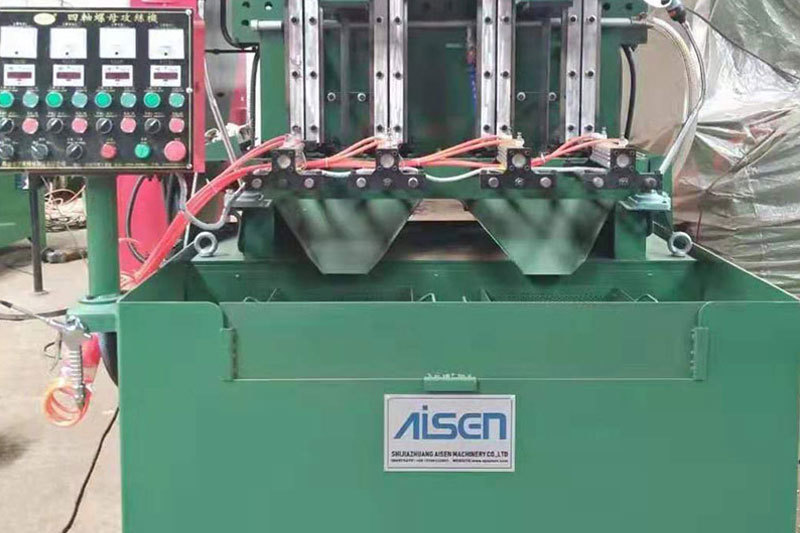
AISEN Four axis nut tapping machine ready for shipment to Russia
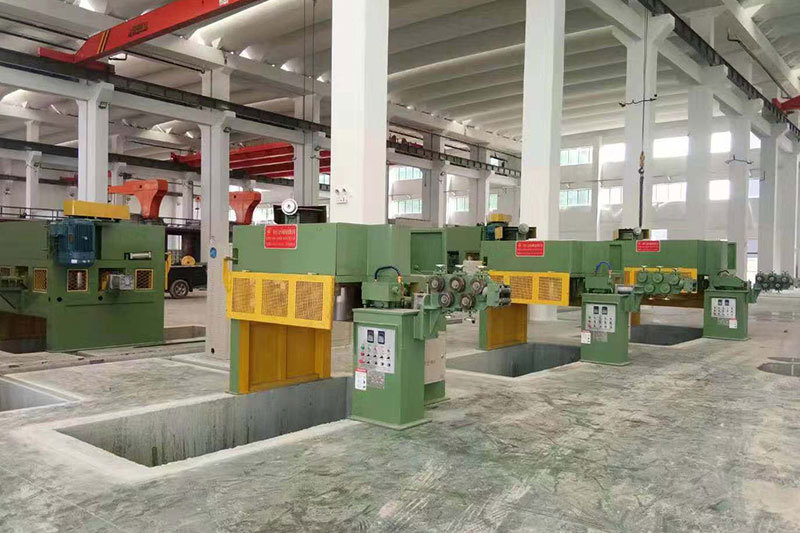
AISEN machinery inverted wire drawing machine
MESSAGES
We will contact you within one working day. Please pay attention to your email.
Qucik Link
Contact
Phone: +86-15100123091
E-mail: info@sjzaisen.com
Address: No.41 Zhaiying South Street, Yuhua District, Shijiazhuang City, Hebei Province China