

New vs used hydraulic capstan wire drawing machine: pros, cons, and cost analysis
Nov 12,2026


Author:
Aisen Machinery

Article overview
This guide compares new and used hydraulic capstan wire drawing machines across performance, cost, and after-sales dimensions. It is written for equipment engineers and procurement managers in Argentina's wire and metal-processing sector who are in the early stages of machine selection.
Table of contents
- 1. What is a hydraulic capstan wire drawing machine?
- 2. New hydraulic capstan wire drawing machine: pros and cons
- 3. Used hydraulic capstan wire drawing machine: pros and cons
- 4. Full cost analysis: new vs used
- 5. Key buying factors for Argentine manufacturers
- 6. How to evaluate a used machine before purchase
- 7. After-sales support and spare parts: the hidden decision factor
- 8. FAQ
What is a hydraulic capstan wire drawing machine?
A Hydraulic Capstan Wire Drawing Machine is a metal wire reduction system that uses hydraulic tension control and a rotating capstan drum to progressively pull wire rod through a series of hardened dies, reducing its diameter with precision. Unlike purely mechanical or pneumatic alternatives, the hydraulic actuation allows smooth, stepless speed adjustment and consistent tension across the entire drawing pass sequence — a critical advantage when processing copper, steel, or aluminium wire at high throughput.
The capstan itself acts as the traction element: wire wraps around the drum multiple times, and the hydraulic drive system regulates both rotational speed and back-tension simultaneously. This design is at the core of most continuous wire drawing lines used in fastener manufacturing, cable manufacturing machines, and specialty steel wire drawing equipment worldwide.
In practical terms, a single hydraulic capstan unit can handle wire rod diameters typically ranging from 1.2 mm to 12 mm input, delivering finished wire down to 0.3 mm depending on die configuration. Drawing speed control systems on modern units reach up to 25 m/s, though most industrial setups run between 8–18 m/s for consistent quality. Understanding this baseline matters because it directly shapes the cost and performance comparisons between new and used equipment explored in this article.
How does the hydraulic system differ from mechanical tension control?
Mechanical tension control relies on fixed gear ratios and dancer arms, which introduces lag and limits response time. Hydraulic wire pulling machines eliminate that lag: the fluid circuit responds in milliseconds to load changes, reducing wire breakage rates by 15–30% in real production environments compared to mechanical predecessors. This is not theoretical — multiple fastener plants using capstan drawing machines for wire production report measurably lower scrap rates after switching from mechanical to hydraulic actuation.
Where is this machine used in Argentina?
The wire drawing machine Argentina market centres on three industrial clusters: Greater Buenos Aires (fastener and hardware manufacturers), Córdoba (automotive parts suppliers), and Santa Fe (agricultural wire and fencing producers). Demand for both copper wire drawing machines and steel wire drawing equipment has grown steadily through 2025–2026, driven by infrastructure spending and domestic cable manufacturing expansion. For buyers in these clusters, the new-vs-used question is especially acute because import duties on new equipment affect total landed cost significantly.
New hydraulic capstan wire drawing machine: pros and cons
Buying new delivers the clearest performance guarantee — but it also carries the highest initial outlay. Here is an honest look at both sides.
Advantages of purchasing new equipment
A brand-new industrial wire drawing system ships with factory-calibrated hydraulic circuits, unused wire drawing dies and capstans, and full OEM documentation. The drawing speed control system is tuned to spec, and the wire tensioning and drawing unit has zero accumulated wear. In practical terms, this translates to:
- Predictable uptime during the first 3–5 years of operation
- Manufacturer warranty covering hydraulic components, control boards, and structural elements
- Compatibility with current electrical standards (e.g., 380 V / 50 Hz three-phase supply in Argentina)
- Access to the latest energy-efficiency designs — 2026 models typically consume 12–18% less power per tonne of drawn wire than units manufactured before 2018
- Easier integration into a continuous wire drawing line with modern PLC-based automation
Beyond performance, new equipment arrives with traceable quality records. Manufacturers supplying hydraulic wire drawing equipment to global markets document every pressure test, load cycle, and dimensional inspection — a traceability chain that matters for ISO-compliant wire production facilities.
Disadvantages and limitations of new machines
The primary drawback is capital exposure. A new hydraulic drum wire drawer with mid-range capacity (input wire rod 6.5 mm, output 1.0–3.0 mm, drawing speed up to 15 m/s) is priced in the USD 35,000–80,000 range FOB, before shipping, import duties, and installation. For Argentine buyers, import tariffs on industrial machinery and the currency exchange environment can push effective landed cost 25–40% above the FOB price.
Lead time is another friction point. Standard production and delivery for a new metal wire reduction machine typically runs 60–120 days. If a production line is down or a capacity expansion is urgent, that timeline is a genuine operational constraint — one that a used machine on local inventory can bypass entirely.
Used hydraulic capstan wire drawing machine: pros and cons
The used-equipment market for hydraulic wire drawing equipment is active and legitimate — provided buyers know exactly what to inspect. The appeal is straightforward: 30–60% lower acquisition cost for a machine that may still have decades of serviceable life remaining.
Advantages of buying used
Cost is the headline, but it is not the only benefit. A well-maintained wire rod to wire machine that has run 8,000–12,000 hours on copper or mild steel has already proven its mechanical reliability under real production loads. Weak points — seal failures, bearing wear, die holder misalignment — have typically been identified and corrected by the previous operator. This "infant mortality" risk has already been absorbed.
Availability is another genuine advantage. Used hydraulic wire drawing equipment occasionally surfaces on the Argentine secondary market through plant closures, upgrades, or capacity restructuring. Acquiring one locally eliminates import logistics entirely, reducing total procurement time to weeks rather than months.
Disadvantages and risks of used equipment
Why do so many buyers regret used-machine purchases? Because hidden wear in a hydraulic system is invisible on casual inspection. Cylinder bore scoring, micro-cracks in the capstan drum, and degraded hydraulic fluid viscosity do not show up in a visual walkthrough. If the previous owner ran the machine at over-pressure — say, 15–20% above rated hydraulic pressure to compensate for worn dies — internal component life is significantly shortened even if the machine "looks fine."
Spare parts compatibility is a second risk area. Older hydraulic wire pulling machines may use discontinued valve blocks, proprietary seals, or non-standard die holder dimensions that are expensive or slow to source. This is especially relevant in Argentina, where the import pipeline for mechanical components can stretch 60–90 days. A machine that breaks down mid-production and waits three months for a seal kit is not a bargain at any acquisition price.
Full cost analysis: new vs used
Total cost of ownership (TCO) over a 10-year horizon tells a more complete story than the purchase price alone. The table below aggregates typical figures for a mid-capacity hydraulic capstan wire drawing machine in the Argentine market, based on 2026 industry data.
| Cost category | New machine (USD) | Used machine (USD) |
|---|---|---|
| Acquisition price (FOB/local) | 45,000 – 80,000 | 15,000 – 35,000 |
| Import duties + freight (est.) | 8,000 – 20,000 | 0 – 8,000 |
| Installation and commissioning | 2,000 – 5,000 | 2,500 – 7,000 |
| Year 1–3 maintenance | 1,500 – 3,000 | 4,000 – 10,000 |
| Year 4–10 maintenance | 5,000 – 12,000 | 9,000 – 22,000 |
| Energy cost differential (10 yr) | Baseline | +3,000 – 8,000 |
| Estimated 10-year TCO | 61,500 – 120,000 | 33,500 – 90,000 |
Note: Figures represent estimated ranges for mid-capacity hydraulic wire drawing equipment in the Argentine market, 2026. Actual costs vary by machine specification, supplier, and operating conditions.
The overlap in TCO ranges is not an error — it reflects the high variance in used-machine condition. A well-maintained used machine from a reputable plant can land at the low end of the used range and genuinely undercut new TCO. A poorly maintained unit can easily match or exceed new TCO within five years. This is why condition assessment (covered in Section 6) is not optional.
"Total cost of ownership analysis consistently shows that the acquisition price represents only 40–60% of the lifetime cost of industrial wire drawing equipment. Maintenance frequency, energy consumption, and downtime costs are the variables that separate a smart purchase from an expensive mistake." — Industry consensus among wire drawing equipment engineers, as reflected in multiple 2025–2026 manufacturing sector procurement reviews.
Break-even timeline
For a plant running two production shifts (approximately 4,000 hours/year), a new machine typically reaches break-even versus a used unit at year 4–6, once accumulated maintenance savings and lower downtime costs are factored in. Plants running single-shift operations extend that break-even to year 7–9 — at which point the residual value advantage of new equipment also begins to diminish. Knowing your actual utilisation rate before committing is therefore essential.
Key buying factors for Argentine manufacturers
Argentina's industrial procurement environment introduces specific variables that do not appear in generic buying guides. These deserve direct attention.
Import regulations and currency considerations
As of 2026, industrial machinery imports into Argentina are subject to tariffs that vary by HS code classification. Hydraulic wire drawing equipment typically falls under categories attracting 6–14% import duty, plus applicable statistical fees and VAT. Currency exchange controls — while subject to ongoing regulatory change — have historically added effective cost for buyers purchasing in USD. Sourcing from a supplier with established export documentation for the Argentine market reduces customs processing risk substantially.
Local technical support and training availability
This factor is underweighted by most procurement teams and overweighted only after the first major breakdown. A continuous wire drawing line that stops production costs an Argentine wire plant an estimated ARS 180,000–400,000 per day in lost throughput (2026 reference range). A supplier who can dispatch a technician within 72 hours — or provide remote diagnostic access to the drawing speed control system — is worth a price premium that most TCO models fail to capture adequately.
How to evaluate a used machine before purchase
Skipping a structured pre-purchase inspection is the single most common cause of used-machine regret. The following procedure reflects standard due diligence for hydraulic wire drawing equipment acquisition.
- Request full maintenance logs: Verify hydraulic fluid change intervals, seal replacement records, and any pressure-relief valve adjustments. Gaps in the log are a warning signal.
- Conduct a hydraulic pressure test: Run the machine at rated load and measure system pressure stability. Acceptable variance is ±3% from rated pressure. Greater variance indicates worn pump or valve components.
- Inspect the capstan drum surface: Look for grooving, pitting, or surface hardness inconsistencies. A scored drum accelerates die wear and compromises wire diameter tolerance.
- Check die holder alignment: Misalignment of even 0.05 mm in the wire drawing die and capstan assembly introduces eccentric wire, which causes product rejection downstream.
- Run a full-speed production trial: At least 30 minutes of continuous drawing at rated speed. Monitor heat generation in hydraulic motor and control cabinet. Abnormal heat indicates overloaded or degraded components.
- Verify spare parts availability: Cross-reference hydraulic valve model numbers and seal dimensions against current supplier catalogues before purchase — not after.
- Assess electrical panel condition: Verify that the drawing speed control system PLC or relay logic is functional, documented, and compatible with local 50 Hz supply.
Of course, there are situations where a full production trial is not possible — for example, when purchasing through a liquidation sale or from a plant that has already ceased operations. In those cases, an independent mechanical inspection by a qualified hydraulic systems engineer is non-negotiable.
What documentation should a seller provide?
At minimum: original manufacturer's manual (including hydraulic circuit diagrams), service history records, previous production data (wire grades drawn, typical speeds), and a current inventory of on-hand spare parts included in the sale. Any seller unable to provide hydraulic circuit diagrams is effectively asking you to operate a machine blind — a risk no production manager should accept regardless of price.
After-sales support and spare parts: the hidden decision factor
Ask experienced procurement engineers in Argentina's wire manufacturing sector what they would do differently, and a clear pattern emerges: they underestimated after-sales support. This section addresses what to demand — and what to verify — before signing any purchase agreement for a Hydraulic Capstan Wire Drawing Machine.
What after-sales commitment looks like in practice
A credible supplier of hydraulic wire drawing equipment provides more than a machine — they deliver a service framework. This includes: written warranty terms (minimum 12 months on new equipment covering hydraulic components and structural defects), a committed spare-parts response time (ideally under 15 business days for Argentina), remote technical support via video or telemetry, and operator training in both machine operation and first-level maintenance. Suppliers whose equipment has been exported to 20+ countries typically maintain multi-region spare-parts logistics — a meaningful advantage for Argentine buyers who cannot afford extended import delays.
Comparing supplier commitments: new vs used scenarios
Just as a new machine does not automatically guarantee good support, a used machine does not automatically lack it. Some OEMs offer refurbishment programmes where older wire rod to wire machines are remanufactured to current specification, retested to factory standards, and sold with a limited warranty. This hybrid category — sometimes called certified-reconditioned hydraulic wire drawing equipment — occupies a compelling middle ground: acquisition cost 20–35% below new, with more predictable maintenance behaviour than a straight used purchase. It is worth specifically asking any supplier whether this option exists for the capacity range you need.
Ultimately, the right choice between new and used is not a universal answer — it is a function of your production volume, budget horizon, risk tolerance, and the specific after-sales ecosystem available from your supplier. What is universal is the need to evaluate all three dimensions — acquisition cost, TCO, and support quality — before making the commitment. A hydraulic capstan wire drawing machine is a 10–15 year asset. The supplier relationship you enter at purchase will shape your production reliability for all of those years.
FAQ
Q: What is the average lifespan of a hydraulic capstan wire drawing machine?
A: A well-maintained unit typically operates for 15–25 years. Lifespan depends heavily on maintenance discipline, wire grades processed, and operating speed. Hydraulic seals and die holders are wear items replaced every 2–5 years; the structural frame and capstan drum generally last the full machine life under normal conditions.
Q: Can a used hydraulic wire drawing machine be upgraded with modern controls?
A: Yes, in most cases. Retrofitting a modern PLC-based drawing speed control system to an older mechanical or early-hydraulic machine is a proven practice. Cost ranges from USD 3,000–12,000 depending on control complexity. This can extend a used machine's productive life by 8–10 years and significantly improve wire quality consistency.
Q: What wire materials can a hydraulic capstan machine process?
A: Most hydraulic capstan wire drawing machines are designed to process copper, low-carbon steel, stainless steel, and aluminium wire. The critical variable is die material selection and hydraulic pressure range. High-carbon steel and specialty alloys require machines rated for higher drawing forces and appropriate die geometry — always confirm material compatibility with the supplier before purchase.
Q: How long does it take to import a new wire drawing machine into Argentina?
A: Total lead time — from order confirmation to operational installation — typically runs 90–150 days for new equipment shipped from Asia or Europe. This includes 60–90 days production and sea freight, plus 15–30 days for Argentine customs clearance and inland transport. Buyers with urgent capacity needs often consider locally available used equipment to bridge the gap.
Q: Is certified-reconditioned wire drawing equipment a reliable option?
A: When offered by an OEM or authorised reconditioning facility with documented test reports, certified-reconditioned hydraulic wire drawing equipment is a sound option. The key requirement is verifying that hydraulic seals, die holders, and control systems have been replaced or recertified — not merely cleaned and repainted. Always request a post-reconditioning test report before accepting delivery.
PREVIOUS:
Get A Quote
We will contact you within one working day. Please pay attention to your email.
Latest News
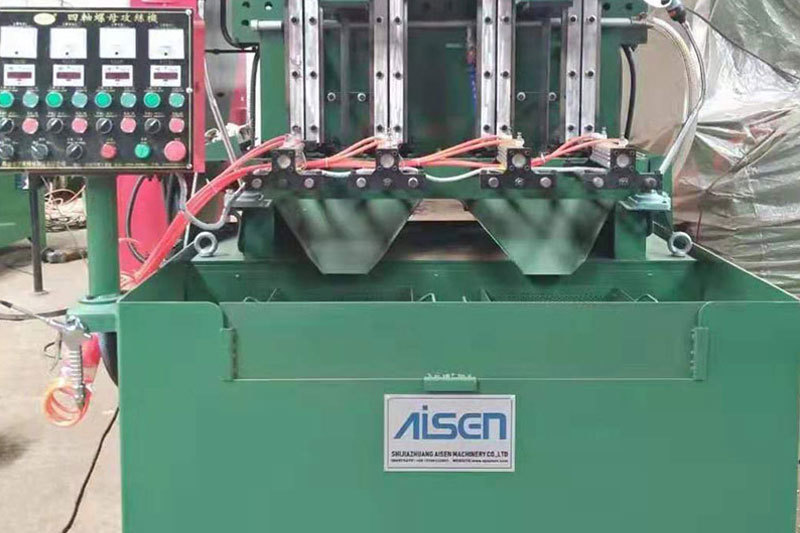
AISEN Four axis nut tapping machine ready for shipment to Russia
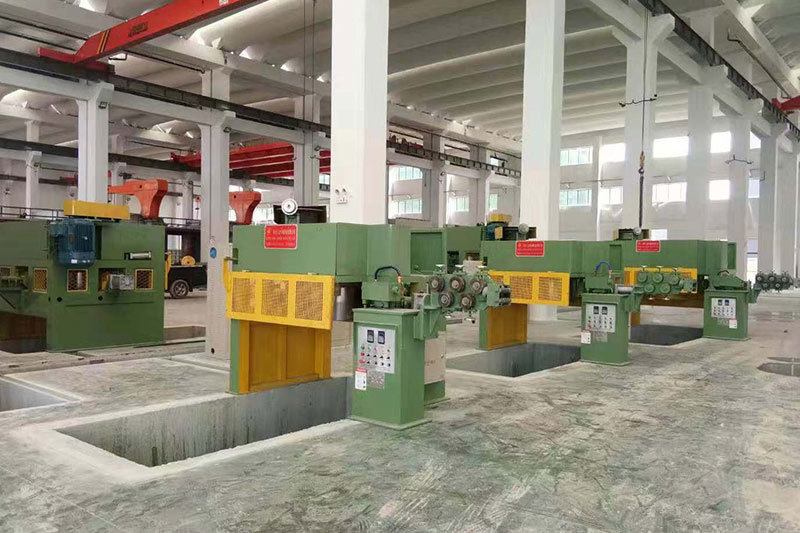
AISEN machinery inverted wire drawing machine
MESSAGES
We will contact you within one working day. Please pay attention to your email.
Qucik Link
Contact
Phone: +86-15100123091
E-mail: info@sjzaisen.com
Address: No.41 Zhaiying South Street, Yuhua District, Shijiazhuang City, Hebei Province China