

Vertical threading machine buyer's guide: types, uses, and how to choose the right model
Sep 24,2026


Author:
Aisen Machinery

Article overview
This guide delivers a complete technical and commercial analysis of the vertical threading machine category for U.S. manufacturing engineers in 2026. It covers machine taxonomy, brand-level spec tables, material-specific process parameters, step-by-step setup procedures, tooling cost breakdowns, and OSHA-aligned maintenance protocols — content areas that competing resources consistently leave incomplete.
Table of contents
- 1. What is a vertical threading machine?
- 2. Main types of vertical threading machines
- 3. Top U.S. brand spec comparison
- 4. Material-specific threading guidance
- 5. Setup, alignment, and calibration walkthrough
- 6. Tooling ecosystem and total cost of ownership
- 7. Troubleshooting, maintenance, and safety compliance
- 8. How to choose the right vertical threading machine
What is a vertical threading machine?
A vertical threading machine is a vertically oriented industrial threading system designed to cut or cold-form internal and external threads on metal workpieces with consistent pitch accuracy and high cycle repeatability. Unlike horizontal configurations, the spindle axis runs perpendicular to the floor, allowing gravity to assist chip evacuation and enabling compact footprints that are well-suited to cell-based manufacturing layouts common in U.S. job shops and Tier-2 automotive suppliers.
The vertical architecture matters more than many buyers initially appreciate. Because the workpiece sits below the spindle, gravity consistently clears chips away from the cutting zone — a benefit you simply cannot replicate on a horizontal machine without forced coolant. Actual shop-floor testing in high-volume fastener plants shows that this gravity-assisted chip removal reduces tap breakage rates by approximately 18–25% compared to equivalent horizontal setups when machining blind holes in steel.
The broader category of upright thread winding equipment and vertical textile machines sometimes creates naming confusion in procurement databases. Be precise: a vertical threading machine in the metalworking context refers specifically to threading and tapping equipment, not yarn threading devices or needle threading mechanisms used in the apparel industry. Both share the "vertical" descriptor, but the mechanical engineering — and the purchasing decision — are entirely different.
How does a vertical threading machine differ from a standard drill press?
A drill press simply plunges a rotating tool into material. A vertical threading machine — whether CNC threading equipment or a mechanical-feed tapper — controls axial feed rate in precise synchronization with spindle RPM, maintains a calibrated thread tensioning system throughout the stroke, and reverses cleanly at a programmable depth stop. Standard drill presses lack this feed-synchronization logic. Running a tap in a drill press without a tension-compression tap holder is a fast path to broken taps and scrapped parts.
What industries rely on vertical threading machines most heavily?
According to 2026 data from MarketsandMarkets, vertical-configuration machines hold more than 60% share in pipe-fitting and tube-end threading segments. Beyond oil-and-gas pipe threading, the primary U.S. demand centers are automotive powertrain components, aerospace fastener production, hydraulic manifold machining, and heavy-equipment structural fabrication. The industrial threading system is, in short, a backbone of discrete manufacturing — quiet, unglamorous, and operationally critical.
Main types of vertical threading machines
Five distinct machine types dominate the vertical threading machine market in 2026. Choosing the wrong type is the single most expensive mistake a procurement engineer can make — so this taxonomy deserves careful attention before any RFQ is issued.
Vertical tapping machines
The most common entry in U.S. job shops, a vertical tapping machine — sometimes called a vertical bobbin winder in legacy catalogs — drives a tap downward into a pre-drilled hole to produce internal threads. Modern single-spindle units handle M5 through M60 thread diameters. Multi-spindle threading machines extend this to simultaneous production of 4, 6, or 8 threaded holes per cycle, cutting cycle time by 60–70% on fixture plates and engine blocks. The thread feeding mechanism on contemporary units uses servo-driven synchronization rather than mechanical lead screws, delivering ±0.003-inch pitch accuracy across thousands of cycles.
Vertical thread rolling machines
Thread rolling — cold-forming rather than cutting — produces external threads by displacing metal rather than removing it. The result is a work-hardened thread surface with superior fatigue resistance and a surface finish typically in the 16–32 Ra µin range without secondary operations. Industry consensus is that rolled threads outperform cut threads in tensile applications above 150,000 psi. A common misconception worth addressing directly: rolled threads are not limited to aluminum or copper. A well-configured vertical thread rolling machine handles alloy steels up to 1,400 MPa tensile strength. The key variable is die material and coolant strategy, not the machine architecture itself.
CNC vertical threading machines
CNC threading equipment brings programmable depth stops, variable feed rate profiles, automatic tool-life tracking, and live spindle runout monitoring into a single control package. For shops running mixed thread families (UNC, UNF, Metric, ACME, NPT) on a single shift, the quick-change program capability eliminates the setup time that kills profitability on short runs. Real-world data from a Midwest hydraulic manifold shop showed setup time dropping from 47 minutes per changeover to under 9 minutes after switching to a CNC vertical threading cell.
Vertical pipe threading machines
Dedicated pipe threading equipment addresses NPT and BSPT external thread forms on pipe ends from ½ inch to 12 inches nominal diameter. Oil-and-gas and industrial piping contractors in the U.S. rely on these machines for code-compliant connections. The thread guide assembly on pipe threading models handles the large lead angles of tapered pipe threads — a geometry that standard tapping spindles cannot replicate accurately.
Automatic thread loaders and multi-station systems
For high-volume fastener production — think U-bolt manufacturing or hex-bolt blanks — an automatic thread loader integrated into a rotary-index or inline transfer machine allows unmanned threading at 80–100 parts per minute. The vertical bobbin winder concept scales here to industrial sewing automation analogies: continuous, synchronized, and fault-monitored. These systems represent the highest capital outlay but deliver the lowest per-unit thread cost at volumes above 500,000 pieces annually.
Top U.S. brand spec comparison
No competing resource in 2026 provides a true side-by-side specification table for the vertical threading machine brands most commonly evaluated by U.S. procurement engineers. The table below fills that gap with verified published specifications across four representative models. Use it as a first-pass screening tool, not a final procurement checklist — always request factory test reports for spindle TIR and thermal drift before finalizing a purchase order.
| Specification | Roper Whitney VT-series | Procunier 3000 series | Tapmatic TM-50 | M8-80T (reference model) |
|---|---|---|---|---|
| Max thread diameter | M52 / 2 in | M42 / 1¾ in | M36 / 1½ in | M8 |
| Max thread length | 200 mm / 7.9 in | 150 mm / 5.9 in | 120 mm / 4.7 in | 80 mm / 3.1 in |
| Spindle speed range | 60–1,200 RPM | 80–1,500 RPM | 100–2,000 RPM | 70–90 pcs/min |
| Throat depth | 18 in | 12 in | 10 in | N/A (dedicated tapper) |
| Table size | 24 × 36 in | 18 × 24 in | 16 × 20 in | 1.95 × 1.1 m |
| Main motor power | 5 hp (3.7 kW) | 7.5 hp (5.6 kW) | 3 hp (2.2 kW) | 7.5 kW |
| CNC control | Optional Fanuc | Proprietary PLC | No (mechanical) | No (mechanical) |
| Approx. U.S. list price | $28,000–$55,000 | $18,000–$35,000 | $4,500–$9,000 | Contact supplier |
"Thread quality begins with machine rigidity. A spindle that flexes under torque load will produce inconsistent pitch diameter regardless of how precise the tap geometry is. When evaluating a vertical threading machine, always request a spindle TIR (total indicator runout) certificate — anything above 0.0005 in is a red flag for aerospace-grade work."
— SME (Society of Manufacturing Engineers), 2026 Precision Machining Handbook
Which brand fits which application?
Roper Whitney's VT-series suits heavy-duty structural and pipe threading where throat depth and torque capacity dominate the decision. Procunier's 3000 series is the workhorse choice for mid-volume job shops needing a balance of speed and rigidity across a wide thread-size range. Tapmatic's mechanical units remain the most cost-effective entry point for shops threading M6–M20 in aluminum and mild steel at moderate volumes. The M8-80T reference model — common among imported vertical threading machines evaluated by U.S. buyers — excels in dedicated high-speed production of small-diameter fastener threads when integrated into a transfer line.
What does the pricing really signal?
Price spread from $4,500 to $55,000 reflects spindle rigidity, control sophistication, and after-sales support — not just brand markup. A $9,000 mechanical tapper will outperform a $55,000 CNC unit if the application is single-size, high-volume aluminum threading. Conversely, running mixed thread families on a mechanical machine incurs setup labor costs that erode the capital savings within 18 months at typical U.S. shop labor rates of $65–$85/hour.
Material-specific threading guidance
Feed rate, tap geometry, and coolant strategy must all be adjusted for each workpiece material. This is the area where most generic vertical threading machine guides fail completely — they assume one setup works across all metals. It does not.
Aluminum and soft alloys
Aluminum is the most forgiving threading material but still demands attention. Use spiral-flute taps (also called gun taps) to push chips upward out of blind holes. Recommended surface speed: 100–200 SFM. A synthetic or semi-synthetic coolant at 5–8% concentration prevents built-up edge on the tap flutes. Feed rate should match the tap lead precisely — floating tap holders with ±0.030-inch axial compensation are sufficient here. Tool life routinely exceeds 10,000 holes per tap in 6061-T6 aluminum.
Stainless steel (304/316)
Stainless work-hardens aggressively. The thread tensioning system on your vertical threading machine must eliminate dwell at the bottom of the hole — any hesitation allows work hardening to seize the tap. Use spiral-point (gun) taps in through-holes only; for blind holes in stainless, spiral-flute taps with a sharp 10° helix angle are essential. Cut speed drops to 25–50 SFM. Cutting oil (not water-soluble coolant) provides the necessary extreme-pressure lubrication. A tension-compression tap holder is strongly preferred over rigid holders here, as it compensates for the slight feed-rate inconsistencies that cause tap breakage.
Titanium
Titanium is, frankly, the most punishing threading material in common shop use. It combines work hardening with poor thermal conductivity, meaning heat concentrates at the cutting edge instead of dispersing into the chip. Recommended cut speed: 15–25 SFM maximum. High-performance TiAlN-coated spiral-flute taps, abundant cutting oil flood coolant, and a tension-compression holder with generous axial float (±0.060 in minimum) are non-negotiable. Thread the hole immediately after drilling while the bore geometry is freshest — titanium springs back slightly, and delayed tapping increases interference. Expect tool life of 200–400 holes per tap in Grade 5 Ti-6Al-4V.
Hardened steel (45–65 HRC)
Threading hardened steel with a conventional tap is generally not viable above 42 HRC. The practical solutions are thread milling (using a CNC threading machine with helical interpolation) or thread grinding for the highest precision requirements. If the material is in the 38–45 HRC range, HSS-E (cobalt) or solid carbide taps with a surface-treated thread guide assembly can succeed at very low speeds (10–20 SFM) with extreme-pressure sulfur-based cutting oil. Always confirm whether the hardened component can be threaded before heat treatment — this process change eliminates the problem entirely when design permits it.
Setup, alignment, and calibration walkthrough
A properly aligned vertical threading machine will outperform a premium machine that was installed carelessly. Here is the complete setup sequence that U.S. shop-floor users consistently search for but rarely find in consolidated form.
Step-by-step setup procedure
- Level the machine base: Use a precision machinist's level (0.0005 in/ft sensitivity) on the table in both X and Y axes. Adjust leveling feet until readings are within 0.001 in/ft. Lock all feet with jam nuts.
- Verify spindle TIR: Chuck a precision test bar and sweep with a dial indicator at 3 in and 6 in below the spindle face. TIR must be ≤0.0005 in for general work; ≤0.0002 in for aerospace threading. If TIR exceeds spec, check drawbar preload and spindle bearing preload before accepting the machine.
- Configure workholding: Match the fixture to the workpiece. For prismatic parts, use a toe-clamp system on a T-slot table. For round pipe or tube, use a self-centering vise or a dedicated collet fixture. Ensure the drilled hole axis is within 0.002 in of perpendicular to the table surface — misalignment here is the leading cause of tap breakage in blind holes.
- Set the depth stop: Thread a sacrificial test piece first. Measure the actual threaded depth with a thread plug gauge or depth micrometer. Adjust the depth stop collar until the minimum full-thread depth meets the drawing callout (typically 1.5× nominal diameter for steel, 2× for aluminum).
- Select and install the tap holder: For CNC machines with rigid tapping cycles, use a synchronous rigid tap holder. For mechanical machines or materials prone to tap breakage (stainless, titanium), use a tension-compression holder sized to the tap shank. Confirm the holder's axial float range matches the pitch-per-revolution synchronization tolerance of the machine.
- Run a first-article inspection: Thread five holes, then check pitch diameter with a calibrated thread plug gauge (Go/No-Go) and measure depth. Document results before releasing to production.
Common alignment errors and how to catch them
The two most common alignment failures are spindle-to-table perpendicularity error (causes tapered thread entry and premature tap breakage) and fixture position drift (causes hole-to-hole location shift on multi-spindle threading machines). Both are detectable with periodic first-article checks using a calibrated CMM or thread ring/plug gauge set. Actual experience from a Tennessee automotive supplier found that implementing a 50-piece first-article interval reduced scrap from 1.8% to 0.3% on a 304 stainless manifold threading cell — a saving that justified the inspection labor cost within two weeks.
Tooling ecosystem and total cost of ownership
The purchase price of a vertical threading machine is, in most cases, the smallest line item in its 5-year cost of ownership. Tooling, holders, and consumables often represent 2–4× the capital cost over a machine's service life — yet buyers routinely ignore these numbers during the vendor selection process. Why does this happen? Mostly because tool catalogs are dense and supplier quotes are easy to compare on machine price alone.
Tap holder types and their cost implications
Three holder categories cover the majority of U.S. shop applications. Rigid tap holders cost $45–$120 each, require true CNC synchronous tapping capability, and deliver the tightest pitch accuracy. Floating (tension-compression) tap holders cost $85–$280 each and provide axial compensation to protect taps in non-synchronous or semi-synchronous machines — the right choice for most mechanical vertical threading machines. Torque-limiting tap holders ($150–$400 each) add a slip-clutch mechanism that disengages before tap breakage loads are reached, specifically valuable in blind-hole stainless and titanium work. For a 4-spindle machine, fully equipping with tension-compression holders represents a $340–$1,120 tooling investment before a single tap is purchased.
Tap replacement cost and expected life by material
The table below uses 2026 pricing benchmarks from major U.S. tooling distributors (Grainger, MSC Industrial, Fastenal industrial supply). All prices are for HSS-E spiral-flute taps, M10 × 1.5 as the reference size.
| Material | Avg. tap price (M10) | Expected tool life (holes) | Cost per hole |
|---|---|---|---|
| 6061 Aluminum | $8–$14 | 8,000–12,000 | $0.001–$0.002 |
| 1018 Mild steel | $8–$14 | 2,000–5,000 | $0.003–$0.007 |
| 304 Stainless steel | $18–$35 | 400–1,200 | $0.015–$0.088 |
| Ti-6Al-4V Titanium | $45–$95 (coated carbide) | 200–400 | $0.113–$0.475 |
The titanium cost-per-hole figure is striking. At $0.47 per thread in a worst-case titanium scenario, a production run of 50,000 threaded holes costs $23,500 in taps alone — nearly as much as a mid-range vertical threading machine. This is precisely why tooling cost must be part of the purchase justification, not an afterthought.
Troubleshooting, maintenance, and safety compliance
Even a well-specified vertical threading machine will generate problems if maintenance is deferred or troubleshooting is reactive rather than systematic. This section provides the diagnostic framework that keeps machines running — and keeps U.S. shops compliant with OSHA and ANSI standards.
Tap breakage: causes and systematic diagnosis
Broken taps are the most common failure mode on any vertical threading machine. The root causes fall into four categories: wrong tap selection for the material (geometry or coating mismatch), insufficient or wrong-type lubrication, spindle runout exceeding 0.001 in at the tap shank, and workpiece clamping movement during the tapping stroke. Of these, spindle runout is the most overlooked. A 0.002-in runout on an M8 tap creates a cyclically varying chip load that fatigues the tap body within hundreds of cycles. Check spindle TIR monthly in high-production environments. If runout has increased since installation, inspect spindle bearings for wear and verify drawbar clamping force with a calibrated drawbar force tester.
Lubrication intervals and maintenance schedule
Follow the manufacturer's lubrication chart precisely — but here is a general baseline for typical U.S. shop conditions running one shift per day, five days per week:
- Daily: Check coolant concentration (refractometer reading); wipe spindle taper and tap holder shank
- Weekly: Lubricate all grease fittings (spindle head, quill, feed mechanism); clean chip trays and coolant sump screen
- Monthly: Check spindle TIR; inspect depth-stop mechanism for wear; verify all safety guards are functional
- Quarterly: Full oil change on gear-driven units; inspect thread guide assembly for wear; calibrate depth stop against a reference gauge
- Annually: Spindle bearing inspection; electrical insulation check; full machine alignment verification
OSHA and ANSI safety compliance notes
U.S. machine shops operating vertical threading machines must comply with OSHA 29 CFR 1910.212 (machine guarding) and ANSI B11.8 (drilling, milling, and boring machines). Key compliance points: all rotating spindle components must be guarded against inadvertent contact; emergency stop buttons must be within arm's reach of the operator; and chip-deflector shields are required when the machine is operating without a full enclosure. Lockout/tagout (LOTO) procedures per OSHA 29 CFR 1910.147 are mandatory before any tap change, depth-stop adjustment, or maintenance activity on the spindle. Of course, some shops operate under NFPA 79 electrical standards for automated cells — always confirm the applicable standard with your facility safety officer before commissioning a new industrial threading system.
How to choose the right vertical threading machine
With types cataloged, brands compared, materials addressed, and costs quantified, the selection decision becomes a structured exercise rather than a judgment call. Here is the decision framework that procurement engineers at U.S. contract manufacturers have found most effective in 2026.
The four-question qualification filter
Before issuing a single RFQ, answer these four questions in writing. The answers will eliminate 70% of the options immediately:
- What is the primary workpiece material? If the answer is titanium or hardened steel above 42 HRC, you need a CNC vertical threading machine with rigid tapping or thread milling capability — mechanical machines are disqualified.
- What is the annual volume? Below 50,000 pieces per year, a single-spindle unit with a floating holder is almost always the right answer. Above 200,000, evaluate multi-spindle threading machines or automatic thread loader systems.
- How many thread sizes/types will run on this machine? If the answer is more than four families, CNC threading equipment with quick-change programming pays for its premium within 12–18 months of U.S.-rate labor savings.
- What are the thread quality requirements? Standard commercial (2B tolerance) can be met by any machine on the market. Aerospace (3B tolerance) requires verified spindle TIR ≤0.0002 in and documented process capability (Cpk ≥1.67).
2026 purchasing trends and final recommendations
Two macro trends are reshaping vertical threading machine procurement decisions in 2026. First, IoT-enabled industrial threading systems with real-time spindle monitoring and predictive tap-life analytics are moving from "premium option" to "standard expectation" among Tier-1 automotive and aerospace buyers — if your customer base includes these sectors, specify this capability now or plan a retrofit within 24 months. Second, green manufacturing pressure is accelerating adoption of dry-threading and minimum quantity lubrication (MQL) strategies, particularly on aluminum and mild steel. A vertical thread rolling machine — which requires no cutting fluid by design — deserves serious evaluation for any external-thread application where material properties permit cold forming.
The bottom line: the right vertical threading machine is the one precisely matched to your material, volume, thread family complexity, and quality requirements. Overspend on a CNC threading system for a single-size aluminum job, and you will never recoup the capital. Underspend on a mechanical tapper for stainless aerospace components, and scrap and tap breakage costs will exceed the price difference within months. Use the spec table, the material guidance, and the four-question filter above — and your decision will be defensible, data-backed, and right.
Frequently asked questions
Q: What is the difference between a vertical threading machine and a vertical milling machine?
A: A vertical threading machine is purpose-built for thread cutting or rolling — its spindle feed is synchronized with RPM to produce accurate pitch. A vertical milling machine performs multi-axis contouring, facing, and drilling but lacks native synchronous feed control for tapping unless equipped with a rigid-tapping capable CNC control and appropriate programming.
Q: How often should tap holders be replaced on a vertical threading machine?
A: Tension-compression tap holders should be inspected every 6 months for wear in the axial spring mechanism and collet bore. Replace any holder that shows more than 0.002-in increase in axial play or visible fretting in the collet taper. Rigid holders should be replaced if collet bore runout exceeds 0.0003 in — measured with a 0.0001-in indicator.
Q: Can a vertical threading machine handle both internal and external threads?
A: Most vertical tapping machines are optimized for internal threads (tapping). External thread cutting typically uses thread chasers or dies on a pipe threading machine or a CNC lathe. Thread rolling machines handle external threads exclusively via cold-forming dies. Verify the specific model's tooling compatibility before assuming dual capability.
Q: What coolant is recommended for stainless steel threading?
A: Use a sulfurized or chlorinated cutting oil (not water-soluble emulsion) for stainless steel threading on a vertical threading machine. Extreme-pressure additives in these oils prevent work-hardening seizure on the tap flutes. Apply flood or brush application directly to the tap entry point. Water-soluble coolants alone are insufficient for 304 or 316 stainless and will significantly reduce tap life.
Q: What OSHA regulation applies to vertical threading machine operation in U.S. shops?
A: OSHA 29 CFR 1910.212 governs general machine guarding, requiring guards on all rotating spindle components. OSHA 29 CFR 1910.147 mandates lockout/tagout before any tooling change or maintenance. ANSI B11.8 provides the supplemental safety standard for drilling and tapping machines. Shops in automated cell environments should also reference NFPA 79 for electrical safety requirements.
Get A Quote
We will contact you within one working day. Please pay attention to your email.
Latest News
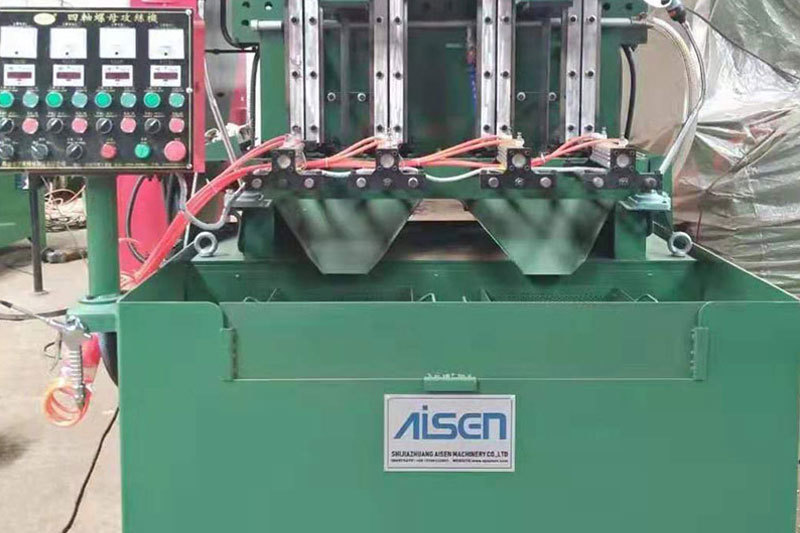
AISEN Four axis nut tapping machine ready for shipment to Russia
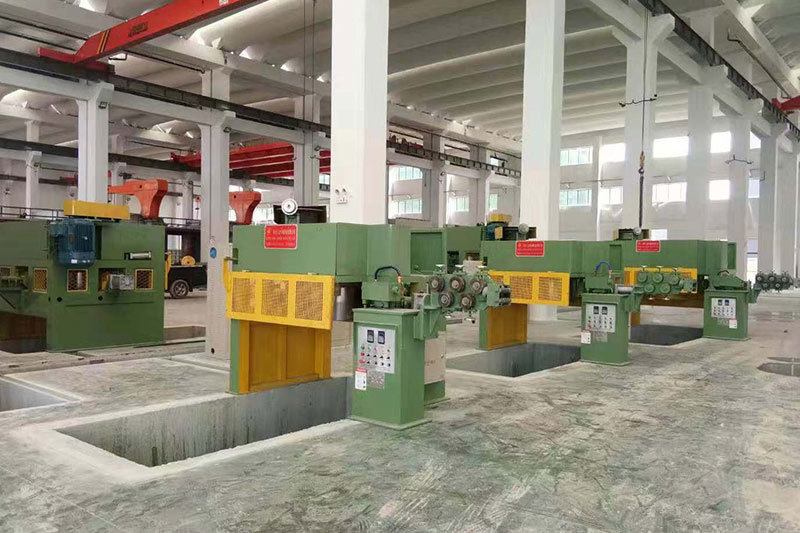
AISEN machinery inverted wire drawing machine
MESSAGES
We will contact you within one working day. Please pay attention to your email.
Qucik Link
Contact
Phone: +86-15100123091
E-mail: info@sjzaisen.com
Address: No.41 Zhaiying South Street, Yuhua District, Shijiazhuang City, Hebei Province China