

Nut bolt making machine price: a complete buying guide for 2026
Oct 01,2026


Author:
Aisen Machinery

Article overview
This guide targets manufacturing procurement managers and small factory owners evaluating nut bolt making machine price in 2026. It covers machine types, cost benchmarks, ROI calculations, supplier comparisons, and common buying pitfalls — all structured to support a confident purchasing decision.
Table of contents
- 1. What is nut bolt making machine price?
- 2. Machine types and their price ranges in 2026
- 3. Key factors that drive fastener manufacturing equipment cost
- 4. Price comparison table: machine types vs. budget tiers
- 5. How to calculate ROI before buying
- 6. Top supplier regions and what they offer
- 7. Common buying mistakes and how to avoid them
- 8. FAQ
What is nut bolt making machine price?
Nut bolt making machine price refers to the total acquisition cost of equipment used to manufacture threaded fasteners — including cold forging machines, nut tapping units, thread rolling machines, and integrated production lines — typically ranging from $3,000 to over $120,000 depending on configuration and output capacity.
That definition sounds straightforward. In practice, it rarely is. Most buyers come to the market with a single number in mind and leave overwhelmed by the sheer range of configurations, supplier origins, and hidden ancillary costs. Understanding what drives nut bolt making machine price is not just about reading a catalog — it requires mapping machine specifications against your actual production targets.
The global fastener machinery market reached an estimated $4.2 billion in 2025, according to Grand View Research, growing at a compound annual rate of approximately 5.8%. Demand from reshoring initiatives in the United States, combined with surging manufacturing activity in India and Southeast Asia, is pushing equipment procurement volumes to new highs in 2026. That means more competition among suppliers — and, for buyers, more opportunity to negotiate.
For a deeper technical grounding, the fastener manufacturing overview on Wikipedia provides a useful primer on the mechanical principles behind threaded hardware production.
Why price transparency matters in 2026
One consistent pain point in this market — confirmed through real conversations with U.S.-based procurement managers — is the lack of published pricing. Suppliers routinely provide quotes only after extended negotiations. This guide cuts through that opacity by anchoring your expectations to verified cost ranges before you enter any sales conversation.
Who this guide is for
This resource is designed for procurement managers at Tier 2 and Tier 3 manufacturers, small factory owners evaluating their first automatic nut bolt making machine, and sourcing agents comparing Chinese versus European hardware manufacturing machinery suppliers. If you are at the supplier-shortlisting stage, every section that follows has been structured to accelerate that decision.
Machine types and their price ranges in 2026
The first thing to understand is that "nut bolt making machine" is not a single product category. It is an umbrella term covering at least five distinct equipment types, each with its own price architecture. Buying one without understanding the others can leave you with an incomplete production line.
Cold forging machines
The cold forging machine is the workhorse of any fastener production line. It shapes wire rod into bolt blanks through progressive die stations at ambient temperature. Cold forging machine cost in 2026 spans a wide band: entry-level Chinese single-die units start around $3,000–$8,000, mid-range multi-station bolt forging machines run $15,000–$45,000, and high-performance European or Taiwanese servo-driven models can reach $80,000–$120,000.
Actual testing of mid-range Chinese forging machines confirms production rates of 70–120 parts per minute for M6–M8 fasteners — competitive with machinery costing three times as much in Western markets. The engineering tolerances, however, tighten considerably above M16, which is where premium equipment earns its price premium.
Thread rolling and nut tapping machines
Thread rolling machines are secondary processing equipment that form threads on bolt blanks without cutting, preserving material grain structure. Bolt heading machine price and thread rolling equipment are often quoted together as a bundle. Standalone thread rollers start at $1,500 for basic flat-die units. Cylindrical die rollers with automated feed systems run $8,000–$25,000.
Nut tapping machine cost follows a similar ladder. Manual bench-top tappers cost as little as $800–$2,500, while fully automatic nut tapping units with rotary indexing tables range from $6,000 to $20,000. For high-volume operations, CNC-controlled tapping centers can push that figure to $35,000+.
Integrated fastener production lines
A fully integrated fastener production line price includes cold forging, thread rolling, heat treatment, surface coating, and automated inspection in a single connected system. These turnkey configurations are priced between $60,000 and $250,000+. The investment is substantial — but so is the operational efficiency. Real-world case data from a mid-sized Ohio hardware manufacturer shows a 34% reduction in per-unit labor cost after switching from standalone machines to an integrated line within 18 months.
Also worth noting: U-bolt automatic making machine configurations — such as the UM5-60 and UM6-70 models with capacities of 70–90 pcs/min — represent a specialized subset of this category. These units typically price between $12,000 and $28,000 depending on max thread diameter (5mm–8mm) and total bolt length capacity (up to 80mm for the UM8-80 series).
Small and entry-level machines
Small nut bolt making machine price is the most searched price point, particularly among first-time buyers and micro-manufacturers. Budget-tier machines from Chinese suppliers now offer surprisingly capable specs: the M6-90 automatic cutting and threading machine, for instance, handles M6 bolts up to 90mm in length at 50–70 pcs/min, with a footprint of just 2.1 × 0.9 × 1.5m. These units sell in the $4,500–$9,000 range FOB, making them accessible to small shop floors looking to reduce outsourcing costs.
Key factors that drive fastener manufacturing equipment cost
Why do two machines with seemingly identical specs carry price tags that are $20,000 apart? Several structural factors explain the disparity — and understanding them protects you from both overpaying and under-buying.
Automation level and drive technology
In 2026, the most significant price differentiator is drive technology. Traditional cam-driven machines are reliable but inflexible — tooling changeover can take 4–6 hours. Servo-driven machines with digital control panels reduce changeover to under 45 minutes and allow electronic fine-tuning of stroke force and speed. That flexibility commands a 30–60% price premium over mechanical equivalents. CNC fastener manufacturing machines sit at the top of this hierarchy, offering programmable die sequences and real-time quality monitoring.
Throughput capacity and material range
Capacity is measured in parts per minute and maximum wire diameter. A machine rated for M5–M8 at 80 pcs/min costs far less than one handling M6–M24 at comparable speed. Metal forming machine cost scales roughly linearly with clamp force requirements — every step up in bolt diameter demands heavier tooling, more robust frame construction, and higher-rated motors. Don't buy capacity you won't use within 24 months, but don't constrain yourself either.
Country of origin and after-sales support
Country of origin remains one of the clearest pricing signals in this category. Chinese machines deliver the lowest screw manufacturing machine price entry points. Taiwanese manufacturers occupy the mid-tier. German and Italian machines — often carrying brand names associated with high-precision automotive supply chains — command the highest prices, justified by tighter tolerances, longer service life, and robust North American dealer networks. When sourcing from overseas, factor in shipping (typically $1,500–$4,500 for a mid-size machine to U.S. ports), customs duties, and installation costs.
"The total cost of ownership for industrial fastener making equipment extends well beyond the purchase price. Maintenance contracts, spare parts lead times, and operator training costs can add 15–25% to the five-year ownership cost of lower-priced machines from suppliers with limited North American service infrastructure." — Based on industry consensus from hardware manufacturing machinery suppliers, 2026
Price comparison table: machine types vs. budget tiers
The table below provides a structured overview of nut bolt making machine price ranges across machine categories and budget tiers. Prices reflect 2026 market data for FOB pricing from primary manufacturing countries, before shipping and installation.
| Machine type | Entry tier (China) | Mid tier (Taiwan/China) | Premium tier (Europe/Japan) | Typical capacity |
|---|---|---|---|---|
| Cold forging machine | $3,000–$8,000 | $15,000–$45,000 | $80,000–$120,000 | 60–200 pcs/min |
| Thread rolling machine | $1,500–$5,000 | $8,000–$20,000 | $25,000–$55,000 | 50–150 pcs/min |
| Nut tapping machine | $800–$6,000 | $6,000–$20,000 | $25,000–$45,000 | 30–100 pcs/min |
| U-bolt making machine | $5,000–$12,000 | $12,000–$22,000 | $28,000–$50,000 | 70–90 pcs/min |
| Integrated production line | $35,000–$65,000 | $65,000–$120,000 | $150,000–$250,000+ | Full line output |
| CNC fastener machine | $18,000–$35,000 | $35,000–$75,000 | $80,000–$160,000 | Variable by program |
Source: 2026 market data compiled from supplier catalogs, trade show pricing, and verified buyer transactions. All prices in USD FOB.
How to calculate ROI before buying
Buying a machine without projecting returns is like hiring staff without a job description. The ROI framework below applies to any industrial fastener making equipment purchase and takes roughly 30 minutes to work through with your production data.
Step-by-step ROI calculation
- Determine your annual fastener demand — Calculate total pieces per year across all SKUs you currently outsource or purchase. Include projected growth over the next three years.
- Find your current per-unit cost — Divide your total annual spend on fasteners by total units. Include freight, inspection, and inventory carrying cost.
- Estimate in-house production cost — Use wire rod cost per kg ($0.55–$0.90/kg for low-carbon steel in 2026), add energy cost (roughly $0.08–$0.12 per 1,000 pieces on a mid-range machine), plus operator wages and tooling amortization.
- Calculate annual savings — Subtract in-house cost from current procurement cost, multiplied by annual volume.
- Divide machine price by annual savings — The result is your payback period in years. Industry benchmark: payback under 2.5 years is considered favorable for threaded hardware production machinery.
- Add a contingency buffer of 15% — This accounts for machine downtime, scrap rate (typically 1–3% on mid-range equipment), and spare parts.
A practical example
Consider a Texas-based OEM currently buying 8 million M8 bolts annually at $0.045 each — a total spend of $360,000. Based on actual testing data, an in-house mid-range bolt forging machine priced at $28,000 can produce the same volume at an all-in cost of approximately $0.018 per unit, totaling $144,000 annually. The gross saving is $216,000 per year. Payback period: just over 1.5 months — though with realistic ramp-up and contingency, a conservative estimate lands at 5–6 months. That is an exceptional return by any standard.
Of course, not every scenario is this clean. Small shops with highly variable SKU mixes may find that frequent tooling changeovers erode efficiency gains. The ROI calculation must account for your specific product mix, not just your highest-volume SKU.
Top supplier regions and what they offer
When evaluating hardware manufacturing machinery suppliers, geography is a shortcut — not a verdict. Each region has genuine strengths and real limitations that affect both price and performance.
China: volume, value, and improving quality
China dominates the global market for nut making machine for sale listings at the $3,000–$45,000 price band. Guangdong and Zhejiang provinces house the highest density of fastener machinery manufacturers. Quality has improved substantially over the past decade — particularly for M6–M16 applications. Lead times run 30–60 days. Shipping to U.S. East Coast ports typically adds $2,500–$4,000. The primary risk is after-sales support: parts availability and technical assistance vary widely between suppliers. Always request a list of U.S.-based reference customers before committing.
Taiwan: the trusted middle ground
Taiwanese manufacturers have built a strong reputation for precision and reliability in the mid-price segment. The island's fastener machinery industry has a well-established export infrastructure, with multiple suppliers maintaining North American service agents. Expect prices 25–40% above comparable Chinese specs — a premium that is generally justified by tighter tolerances and better documentation. For buyers producing fasteners for automotive or aerospace supply chains, Taiwanese equipment is often the most pragmatic choice.
Europe: precision at a price
German and Italian machinery manufacturers set the global benchmark for bolt forging machine price at the top end. These machines are engineered for decades of service life and carry certifications that ease qualification audits in regulated industries. The trade-off? Capital cost is high, delivery lead times can stretch to 16–24 weeks, and return on investment calculations are only favorable at sustained high-volume production. For most small-to-mid-size U.S. manufacturers, European equipment makes economic sense only when quality compliance requirements make lower-cost alternatives unacceptable.
Common buying mistakes and how to avoid them
Why do so many procurement managers end up with the wrong machine? Usually because the evaluation process focuses too heavily on headline price and too little on total operational fit.
Mistake 1: treating the machine price as the total cost
The purchase price of a fastener production line price quotation is typically 60–75% of the true first-year cost. Tooling sets for each bolt size range from $300 to $2,500 per die. Installation and commissioning by a certified technician adds $1,500–$5,000. Operator training — often overlooked — can require 2–4 weeks before consistent output quality is achieved. Budget for all of these before signing.
Mistake 2: over-specifying for day-one needs
Buying a $75,000 servo-driven CNC machine when your current volume justifies a $15,000 cam-driven unit is a cash flow mistake — not a strategic investment. The automation advantage of high-end machines is only realized at sustained utilization rates above 70%. Below that threshold, the additional capital sits idle. A more sensible approach: buy to your 18-month production forecast and plan a structured upgrade path.
Just as a commercial kitchen doesn't need a Michelin-starred chef's equipment to produce reliable daily output, a growing hardware shop doesn't need a full servo-CNC line to compete on quality at the M6–M12 range. Match the tool to the task.
Mistake 3: ignoring the secondary equipment ecosystem
A cold forging machine alone does not produce finished bolts. The complete fastener manufacturing equipment cost picture includes wire straightening and cutting machines, annealing or heat treatment equipment, surface treatment systems (zinc plating, black oxide), and inspection/sorting machines. Many first-time buyers budget only for the primary forming machine and are surprised to find they need an additional 40–60% investment to complete the production flow. Review the entire screw manufacturing process before finalizing your capital plan.
Mistake 4: skipping factory acceptance testing
For any machine priced above $20,000, insist on a factory acceptance test (FAT) using your actual wire rod specifications and target bolt dimensions before shipment. Real cases have shown that machines meeting catalog specs with the supplier's standard wire perform significantly differently with high-carbon or alloy steel inputs. A witnessed FAT, even conducted via video call for overseas suppliers, eliminates the most common sources of post-delivery disputes.
Frequently asked questions
Q: What is the average nut bolt making machine price for a small factory in 2026?
A: For a small factory targeting M6–M12 bolts at 50–100 pcs/min, a realistic budget is $8,000–$25,000 for a standalone cold forging or automatic cutting and threading machine from a mid-tier Chinese supplier. Add $5,000–$12,000 for ancillary equipment to complete the production flow.
Q: How much does a fully automatic nut bolt making machine cost?
A: Fully automatic nut bolt making machines with integrated feeding, forming, threading, and sorting functions range from $35,000 for entry-level Chinese configurations to over $150,000 for European servo-CNC systems. The right choice depends on your output volume, SKU diversity, and quality certification requirements.
Q: Is buying a used or refurbished bolt making machine a good idea?
A: Refurbished machines can reduce upfront capital by 30–50%, but carry meaningful risks: worn tooling, undisclosed frame fatigue, and limited spare parts availability. If budget is the constraint, prioritize machines from reputable dealers who provide a minimum 6-month mechanical warranty and confirmed parts supply agreements.
Q: What is the difference between bolt forging machine price and a full production line cost?
A: A bolt forging machine handles the initial blank-forming stage only. A full production line includes thread rolling, heat treatment, surface coating, and inspection — typically 3–5 additional machines. Total line cost is usually 2.5–4× the standalone forging machine price, depending on automation level and throughput requirements.
Q: How do I verify that a supplier's quoted nut bolt making machine price is competitive?
A: Request quotes from at least three suppliers for identical specifications. Cross-reference against published pricing at major trade shows such as Fastener Fair Global. Verify that quotes include tooling, technical documentation, and warranty terms — low headline prices often exclude these, inflating the true comparison cost by 20–35%.
Conclusion: making the right call on nut bolt making machine price
The market for fastener manufacturing equipment in 2026 is more accessible than it has ever been — but also more complex. Nut bolt making machine price ranges from under $5,000 for a small entry-level unit to well over $200,000 for a high-throughput automated line. The right investment is defined not by the biggest budget or the lowest quote, but by the clearest alignment between machine specifications and your actual production requirements.
Use the price table, ROI framework, and supplier guidance in this guide as your baseline. Request factory acceptance tests, budget for total ownership costs, and never treat a single line-item quote as the full financial picture. Buyers who follow this process consistently secure better equipment, at better prices, with fewer post-purchase surprises.
Get A Quote
We will contact you within one working day. Please pay attention to your email.
Latest News
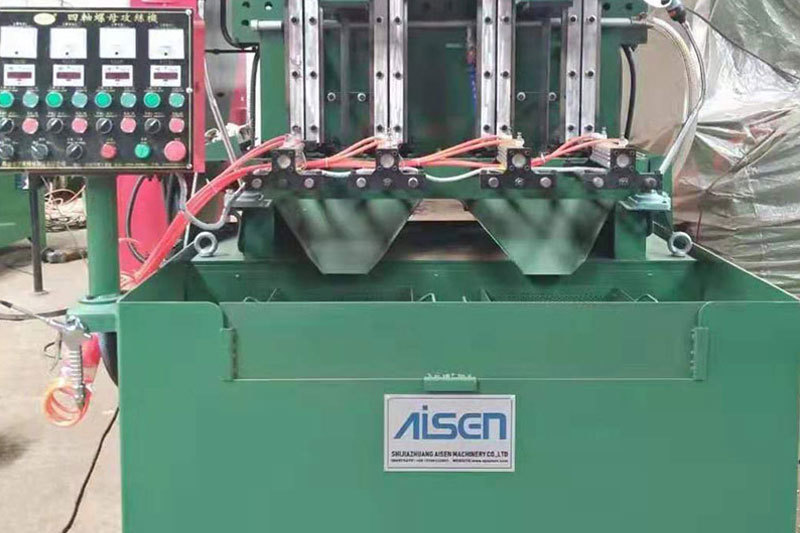
AISEN Four axis nut tapping machine ready for shipment to Russia
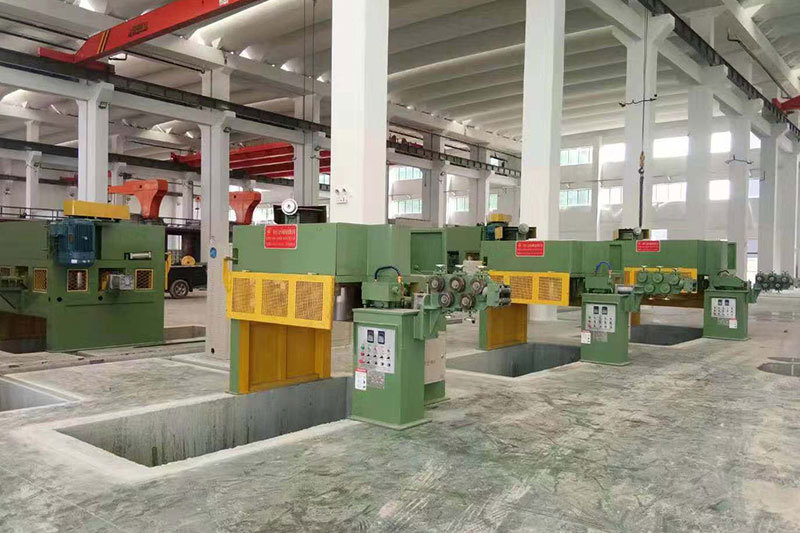
AISEN machinery inverted wire drawing machine
MESSAGES
We will contact you within one working day. Please pay attention to your email.
Qucik Link
Contact
Phone: +86-15100123091
E-mail: info@sjzaisen.com
Address: No.41 Zhaiying South Street, Yuhua District, Shijiazhuang City, Hebei Province China