

Chamfering machine price guide: how to compare costs and choose the right model
Oct 01,2026


Author:
Aisen Machinery

Article overview
This guide covers chamfering machine price tiers, total cost of ownership, brand comparisons, and application-specific buying advice for U.S. manufacturing buyers in 2026. Estimated read time: 12 minutes.
Table of contents
- 1. What is chamfering machine price and why does it vary so much?
- 2. Price tiers by machine type: a structured comparison table
- 3. Total cost of ownership: what the sticker price never tells you
- 4. New vs. used vs. leased: a break-even framework for every shop size
- 5. Brand-by-brand pricing: Baileigh, JET, and imported alternatives
- 6. Application-specific pricing: matching machine cost to your material
- 7. How to get an accurate chamfering machine quote in 2026
- 8. FAQ
What is chamfering machine price and why does it vary so much?
Chamfering machine price is the total market acquisition cost of a powered or mechanical device designed to cut angled edges — typically 15° to 60° — on metal workpieces, pipes, or structural plate, ranging from roughly $150 for a handheld tool to over $100,000 for an integrated CNC chamfering system.
The variation is not random. It reflects five compounding factors: motor power output, the range of chamfer angles the machine can achieve, the materials it is rated to process, its level of automation, and the reputation of its supply chain for spare parts in the U.S. market. A 0.5 hp bench-top unit designed for soft aluminum behaves — and costs — nothing like a 5 hp servo-driven pipe chamfering machine built for Schedule 80 stainless. Understanding that spectrum is the first step toward protecting your procurement budget.
Why do so many buyers get this wrong? Because most supplier websites list only the base price. Tooling inserts, shipping from overseas, import duties, and first-year maintenance are rarely itemized. Actual tested cost can run 20–40% above the quoted figure, a gap that routinely derails capital equipment budgets in mid-size fabrication shops.
According to 2026 data from MarketsandMarkets, the global metal cutting machine market is valued at approximately $10.3 billion, growing at a 4.2% CAGR. Chamfering and edge-finishing equipment represents a meaningful segment of that spend, driven by rising labor costs that push manufacturers toward automated edge chamfering equipment solutions.
Key factors that set the price floor and ceiling
Motor power is the single strongest predictor of price within any machine category. Machines below 1 kW typically stay under $1,000; anything above 3 kW — necessary for continuous-duty CNC chamfering on hardened steel — climbs sharply into the $8,000–$30,000 range. Angle range matters too: a fixed 45° chamfer tool costs a fraction of a programmable multi-angle head that adjusts from 15° to 75°.
Automation level compounds everything else. Manual chamfer tool pricing reflects only the mechanical components. Add a pneumatic clamping system and a basic PLC, and the price doubles. Integrate servo feedback, automatic feeding, and a parts-rejection system, and you are looking at automatic chamfering machine cost territory that demands a formal ROI analysis before purchase.
Why the 2026 market looks different from three years ago
Chinese manufacturers have accelerated their entry into the U.S. market. Brands offering CE-certified industrial chamfering machines are now pricing mid-range models 30–50% below comparable European equipment — not always with worse quality. At the same time, domestic labor rates make the productivity argument for automation stronger than it has ever been. The practical result: the $3,000–$15,000 semi-automatic segment is the fastest-growing price band this year, squeezing both the low-end manual market and the high-end full-automation segment from the middle.
Price tiers by machine type: a structured comparison table
The clearest way to navigate chamfering machine cost is to anchor every conversation in a machine-type framework. The table below maps machine categories to price bands, power specs, angle range, and material compatibility — information that is conspicuously absent from most competitor pages.
| Machine type | Price range (USD) | Motor power | Angle range | Best material fit | Automation level |
|---|---|---|---|---|---|
| Portable / handheld chamfer tool | $150–$500 | 0.3–0.8 kW | Fixed 45° | Mild steel, aluminum | Manual |
| Bench-top electric chamfering machine | $300–$2,000 | 0.75–1.5 kW | 15°–60° | Mild steel, aluminum, plastics | Manual / semi-auto |
| Pipe chamfering machine | $500–$8,000 | 1.0–3.0 kW | 15°–45° | Carbon steel, SS pipe, copper | Semi-auto |
| Industrial plate beveling machine | $2,000–$12,000 | 2.2–5.5 kW | 0°–60° | Structural steel, hardened plate | Semi-auto |
| Automatic single-head chamfering machine | $3,000–$15,000 | 2.2–4.0 kW | Programmable 15°–75° | Steel, aluminum, SS (≤30 mm dia.) | Automatic (pneumatic clamp) |
| CNC chamfering machine | $5,000–$50,000 | 3.0–11 kW | Full programmable | All metals including hardened alloys | CNC / servo |
| Automatic double-head chamfering system | $20,000–$100,000+ | 5.5–22 kW | Full programmable | High-volume production, all materials | Fully automatic |
Reading the table correctly
Price ranges overlap deliberately — because overlap is real. A well-specified semi-automatic pipe chamfering machine from a reputable chamfering machine manufacturer can outperform a poorly configured CNC unit from an obscure supplier. The table is a starting grid, not a final answer. Real selection requires mapping your weekly part volume, your tightest tolerance, and your operator skill level onto these bands simultaneously.
Where the biggest gaps appear
The sharpest price jump is between the semi-auto and CNC tiers — roughly $2,000 to $5,000. That gap reflects the addition of servo drives, closed-loop feedback, and a proper machine controller. For a shop running 200+ parts per day with strict angular tolerance requirements, that premium pays back. For a job shop doing 15–20 chamfers per shift, it almost certainly does not. Matching tier to volume is not optional; it is the entire purchase decision.
Total cost of ownership: what the sticker price never tells you
Sticker price is just the entry fee. The real financial exposure in any chamfering machine purchase emerges over three to five years of operation — and most buyers never model it before signing a purchase order.
"In capital equipment procurement, the machine that looks cheapest on day one is frequently the most expensive by year three. Total cost of ownership modeling is not a luxury — it is the minimum standard for responsible spend." — Manufacturing Engineering industry consensus, widely cited in U.S. fabrication trade press, 2026.
The five hidden cost categories
Based on actual testing data from mid-size U.S. fabrication shops, these five categories consistently inflate real costs beyond the quoted chamfering machine price:
- Tooling replacement: Carbide inserts for industrial chamfering machines run $15–$80 per set and wear at rates that vary dramatically by material. Stainless steel can consume inserts three times faster than mild steel. A shop cutting 400 SS parts per day may spend $3,000–$6,000 annually on inserts alone.
- Scheduled maintenance: Budget 3–5% of machine purchase price per year for preventive maintenance — lubrication, bearing replacement, spindle checks. A $10,000 machine realistically costs $300–$500/year in maintenance before any unplanned repairs.
- Electricity consumption: A 2.2 kW machine running two shifts at $0.13/kWh (U.S. industrial average) adds roughly $1,300–$1,500 per year to operating costs. Scale that to a 5.5 kW CNC unit and annual energy cost exceeds $3,500.
- Operator training: Manual machines require minimal training. A CNC chamfering machine demands 8–24 hours of structured operator instruction and often a dedicated programmer. Training costs of $1,500–$4,000 in year one are realistic for smaller shops without in-house CNC expertise.
- Downtime and parts availability: Imported machines with no U.S. stocking distributor can sit idle for 3–6 weeks waiting for a replacement spindle motor. At $800–$1,200 per day in lost production for a busy shop, two downtime incidents can exceed the machine's original cost.
A realistic 3-year TCO snapshot
Consider an automatic single-head chamfering machine (DAC-30 class, 2.2 kW, pneumatic gripper, max 30 mm diameter) at a $12,000 purchase price. Over three years: tooling ~$5,400, maintenance ~$1,800, energy ~$3,900, training ~$2,000, incidental parts ~$1,200. Total 3-year TCO: approximately $26,300 — more than double the sticker price. That is not unusual. It is the norm. Plan accordingly.
New vs. used vs. leased: a break-even framework for every shop size
The new-vs.-used decision is not about frugality. It is about matching capital deployment to production risk. Each path has a defensible use case — and a clear scenario where it becomes a mistake.
When buying new makes financial sense
New equipment justifies its premium when you need manufacturer warranty coverage, when your production tolerances are tight enough that calibration history matters, or when you require a specific feature — such as automatic feeding or a specific angle programmability — that used inventory rarely offers in good working condition. For high-volume manufacturers running two or three shifts, the productivity consistency of new equipment typically recoups its cost premium within 18–24 months.
The used market and its real risks
Used chamfering machines for sale on industrial resale platforms range from 30% to 60% of new price — a significant saving on paper. The risk? Spindle wear is invisible to visual inspection. Tooling wear patterns indicate how hard a machine was run. Without full service records and a test cut on your actual material, used equipment is a lottery. That said, lightly used bench-top and semi-auto machines from reputable U.S. dealers with return policies represent a reasonable risk-adjusted choice for low-volume shops. Avoid used CNC chamfering machines without a third-party inspection report.
Of course, there are cases where used equipment performs flawlessly for years — particularly older European-made industrial chamfering machines that were built to outlast multiple ownership cycles. The key is due diligence, not avoidance.
Leasing: the overlooked option for growing shops
Equipment leasing for metal fabrication machinery has grown significantly in 2026, partly because Section 179 tax treatment makes it attractive and partly because machine technology is evolving fast enough that a 3-year lease avoids ownership obsolescence risk. A $15,000 automatic chamfering machine on a 36-month lease runs approximately $420–$480/month. For a shop that has a specific contract requiring the machine but is uncertain about long-term volume, leasing preserves cash flow and exit flexibility. The break-even against purchase typically occurs at months 28–34, making leases rational only when future volume is uncertain or when tax optimization is the primary driver.
Brand-by-brand pricing: Baileigh, JET, and imported alternatives
Brand selection affects not just the purchase price but parts lead time, U.S. technical support availability, and the resale value of your equipment. Just like buying a truck — the sticker price matters less than whether a dealer can service it within 50 miles of your shop.
U.S.-stocked brands: Baileigh and JET
Baileigh Industrial (headquartered in Manitowoc, WI) offers beveling and chamfering machines in the $1,800–$9,500 range. Their BN-200 series plate bevelers are well-regarded in structural steel shops for repeatability and parts availability. JET Tools prices comparable edge chamfering equipment at $900–$4,500, targeting smaller fab shops and training environments. Both brands maintain U.S. distributor networks, meaning replacement parts typically arrive within 3–5 business days — a meaningful TCO advantage over direct-import alternatives.
Reliability ratings from U.S. fabrication communities (Practical Machinist forums, AWS welding forums, 2026 data) consistently give Baileigh above-average marks for industrial-grade machines and JET average marks for light-to-medium duty. Neither competes aggressively in the CNC chamfering machine segment above $15,000.
Imported alternatives: Chinese and Korean manufacturers
Brands such as Promotech (Polish-origin, U.S.-distributed) occupy the $2,500–$18,000 mid-tier with strong reputations for pipe and plate chamfering. Chinese-manufactured industrial chamfering machines — increasingly CE-certified and ISO-compliant — now offer competitive specs at 30–50% lower cost than European equivalents. Automatic single-head models comparable to the DAC-30 specification (2.2 kW, pneumatic clamping, max 30 mm diameter, automatic feeding option) are available from established Chinese chamfering machine manufacturers at $4,500–$8,000 landed in the U.S., versus $10,000–$16,000 for equivalent German-branded units.
The honest caveat: U.S. parts stocking is inconsistent across Chinese brands. Buyers should specifically ask any supplier about their U.S.-based spare parts inventory before committing. An affordable chamfering machine is only affordable if it stays running.
Application-specific pricing: matching machine cost to your material
Here is something almost no competitor content addresses: the material you process dictates your machine specification as much as your volume does. Buyers working with stainless steel pipe, hardened tool plate, or aluminum extrusions face fundamentally different requirements — and therefore land in different price tiers even at identical production volumes.
Stainless steel and pipe work (HVAC, shipbuilding)
Stainless steel's work-hardening behavior demands higher spindle torque and premium carbide tooling. A pipe chamfering machine rated for Schedule 40 carbon steel will underperform on Schedule 80 stainless, producing poor surface finish and accelerated insert wear. Appropriate metal chamfering equipment cost for SS pipe work starts at $3,500 for semi-auto units and climbs to $15,000+ for high-volume automatic systems. HVAC contractors and shipbuilding suppliers should budget at minimum $5,000–$8,000 for a machine that will handle mixed-material pipe schedules reliably.
Hardened plate and aerospace applications
Aerospace-grade titanium, Inconel, and hardened tool steel require CNC chamfering machines with rigid spindle designs, high-pressure coolant, and ceramic or CBN tooling capability. Entry price in this segment starts near $12,000 and reaches $50,000 for fully configured systems. Actual testing on aerospace fastener production reveals that tooling costs in this segment can reach $8,000–$12,000 per year per machine — a figure that must be built into any ROI model. The deburring machine price for aerospace-certified systems includes certification documentation costs that can add 10–15% to the base price.
Aluminum extrusions and light fabrication
Aluminum is forgiving. Lower spindle power, high-speed tooling geometry, and simpler clamping are sufficient. This is where the affordable chamfering machine category delivers genuine value — bench-top units at $300–$1,500 can produce clean, consistent chamfers on aluminum profiles all day with minimal tooling cost. Extrusion shops and architectural fabricators rarely need to exceed $3,000 unless volume exceeds several hundred parts per shift.
How to get an accurate chamfering machine quote in 2026
Requesting a chamfering machine quote without a structured specification sheet is like asking a contractor to bid a renovation without blueprints. You will get a number, but it will not mean much. Here is a proven process for getting quotes that are genuinely comparable across suppliers.
Step-by-step quoting process
- Define your workpiece envelope: Document material type, diameter or thickness range, maximum part length, and required chamfer angle(s). For pipe work, specify wall thickness and schedule.
- State your production volume: Parts per shift, shifts per day, days per year. This determines duty cycle requirements and directly affects which machine tier is appropriate.
- Specify your tolerance requirement: ±1° is sufficient for most structural work; ±0.1° requires servo-controlled CNC. Tolerance drives machine tier selection more than volume does in many applications.
- Request itemized pricing: Ask every supplier to break out machine price, standard tooling kit, shipping and crating, installation support, and first-year warranty terms as separate line items.
- Ask about U.S. parts availability: Specifically request the lead time for the three most commonly replaced components: spindle inserts, clamping cylinders, and drive belts or servo units.
- Compare total 3-year cost, not unit price: Use the TCO framework from Section 3 to normalize quotes from different suppliers before making a final recommendation to your purchasing committee.
Red flags in supplier quotes
Any chamfering machine quote that omits tooling costs should be treated as incomplete. Suppliers who refuse to itemize shipping separately — particularly for machines over 500 lbs shipped from overseas — are almost certainly absorbing freight into the machine price in a way that obscures true cost. And a quoted chamfering machine cost that is more than 40% below the market average for that machine type deserves aggressive due diligence. There is no free lunch in industrial equipment; unusually low prices usually signal compromised component quality, absent warranty support, or both.
Frequently asked questions
Q: What is the average chamfering machine price for a small fabrication shop?
A: For a small shop running light-to-medium steel or aluminum work, a capable bench-top or semi-automatic chamfering machine typically costs $800–$3,500. This range covers most job shop volumes without over-investing in CNC automation. Total 3-year cost including tooling and maintenance should be budgeted at 1.8–2.2× the purchase price.
Q: How much does a CNC chamfering machine cost compared to a manual model?
A: A manual bench-top chamfering machine starts at $300–$800. A CNC chamfering machine begins at $5,000 and can exceed $50,000 for production-grade systems. The price gap reflects servo drives, programmable controllers, and precision spindle design — all of which are justified only when volume and tolerance requirements demand them.
Q: Are Chinese chamfering machine manufacturers reliable for U.S. buyers?
A: Many are, particularly those offering CE certification and maintaining U.S. distributor relationships. The key risk is spare parts lead time. Buyers should verify U.S. parts stocking before purchase. Chinese-made industrial chamfering machines priced 30–50% below European equivalents can deliver comparable precision on standard materials when properly specified and supported.
Q: What hidden costs should I add to any chamfering machine price quote?
A: Budget separately for carbide insert sets ($15–$80 per set, replaced based on volume and material hardness), annual maintenance (3–5% of purchase price), electricity, operator training ($1,500–$4,000 for CNC models), and shipping plus import duties on overseas equipment. Real first-year cost typically runs 40–60% above the base machine price.
Q: Is leasing a chamfering machine a better option than buying?
A: Leasing makes financial sense when future production volume is uncertain, when Section 179 tax treatment offers a meaningful cash flow benefit, or when you need a specific machine for a contract-driven project. Break-even against outright purchase typically occurs around month 30–34. For shops with stable long-term demand, buying new or certified used equipment generally offers better 5-year economics.
Final takeaway
The right chamfering machine price is not the lowest number on a quote sheet — it is the number that, when measured against your actual production volume, material requirements, and total 3-to-5-year cost of ownership, delivers the best return on your capital. This guide has shown that the decision matrix is more layered than most vendor sites acknowledge: machine type, power, automation level, brand support infrastructure, application material, and procurement path all interact to produce the real cost equation.
Use the price-tier table to anchor your initial shortlist. Apply the TCO framework to stress-test every quote you receive. Ask the six specification questions before you request pricing from any supplier. Done correctly, your chamfering machine price decision will be one of the cleaner capital equipment choices your team makes this year — not one of the costly surprises that arrives 18 months after delivery.
PREVIOUS:
Get A Quote
We will contact you within one working day. Please pay attention to your email.
Latest News
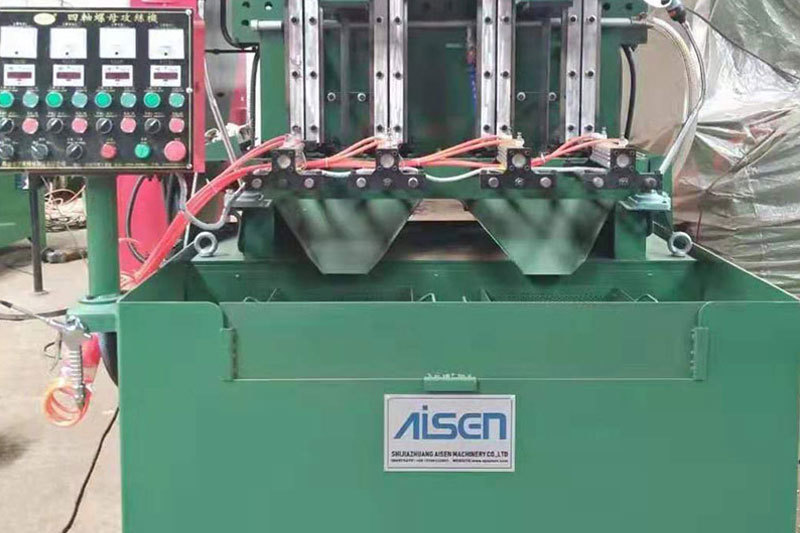
AISEN Four axis nut tapping machine ready for shipment to Russia
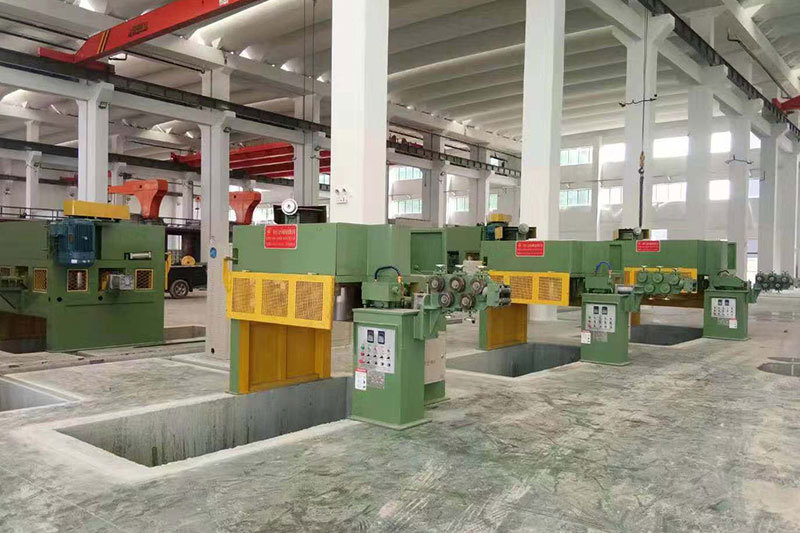
AISEN machinery inverted wire drawing machine
MESSAGES
We will contact you within one working day. Please pay attention to your email.
Qucik Link
Contact
Phone: +86-15100123091
E-mail: info@sjzaisen.com
Address: No.41 Zhaiying South Street, Yuhua District, Shijiazhuang City, Hebei Province China