

Cold roll forming machine price guide: what affects costs and how to compare quotes
Oct 02,2026


Author:
Aisen Machinery

Article overview
This article explains cold roll forming machine price factors, compares machine categories with real data, analyses GST and import costs specific to India, breaks down total cost of ownership, and covers used machine guidance and EMI financing — all tailored for Indian buyers in 2026.
Table of contents
- 1. What determines cold roll forming machine price?
- 2. Price ranges by machine type: a structured comparison
- 3. India vs China/Taiwan: which supplier offers better value?
- 4. GST and import duties: the real cost of buying in India
- 5. Total cost of ownership: hidden costs most buyers miss
- 6. Choosing the right machine for your application
- 7. Used cold roll forming machines: pricing and what to check
- 8. Financing and EMI options for Indian manufacturers
- 9. FAQ
Cold roll forming machine price refers to the total procurement cost of industrial equipment that continuously bends metal strip into profiles at room temperature, encompassing the machine body, tooling sets, control system, and installation charges. For Indian buyers in 2026, this cost typically ranges from ₹6.5 lakh for a basic single-profile machine to over ₹4 crore for a fully automated CNC production line. Understanding what drives these numbers is the difference between a smart capital investment and a costly mistake.
What determines cold roll forming machine price?
The single biggest driver of cold roll forming machine cost is the complexity of the profile being produced. A simple C-section purlin machine uses perhaps 12–16 roll stations; a complex automotive door frame line might need 28–36 stations, each station adding tooling, shaft, and structural frame cost. But profile complexity is only one variable.
Key technical factors that affect price
Roll material matters enormously. Entry-level machines use 45# carbon steel rolls, which wear faster. Mid-range and premium machines use Cr12MoV tool steel, hardened to 58–62 HRC — and the price difference between these two options alone can be ₹2–5 lakh per tooling set. Control systems follow a similar logic: a basic PLC controller from a local brand costs a fraction of a Siemens or Mitsubishi setup, yet the latter gives you servo-driven length accuracy within ±0.5 mm, essential for structural applications.
Automation level and production speed
Why do two machines producing identical C-purlins have quotes that differ by ₹15 lakh? Often the answer is speed and automation. A 15 m/min manual-cut machine versus a 40 m/min servo-hydraulic flying shear machine are fundamentally different capital assets. Integrated punching, notching, and automatic stackers each add defined cost blocks. According to recent industry data, machines with servo-controlled feeding and automatic length cutting command a 30–45% price premium over manually operated equivalents — and in high-volume production, that premium pays back within 18–24 months through labour savings alone.
Price ranges by machine type: a structured comparison
Below is a reference price table based on 2026 market data covering both ex-factory USD pricing and approximate INR landed cost in India (CIF Chennai/Mumbai, excluding GST). Use this as a baseline when evaluating quotes from any metal roll forming machine supplier.
| Machine type | Ex-factory (USD) | Approx. INR landed | Typical application |
|---|---|---|---|
| Single-profile standard (C/Z purlin) | $8,000–$25,000 | ₹7–22 lakh | Roofing, light structures |
| Multi-profile quick-change tooling | $30,000–$75,000 | ₹26–65 lakh | Shelving, door frames, varied profiles |
| Fully automatic CNC line | $80,000–$200,000 | ₹70–175 lakh | High-volume structural profiles |
| Heavy-gauge line (≥6 mm) | $150,000–$500,000 | ₹130–440 lakh | Automotive, heavy structural |
| Portable roll forming machine | $5,000–$18,000 | ₹4.5–16 lakh | On-site roofing contractors |
| Integrated production line (with punching/cutting) | $100,000–$600,000 | ₹88–530 lakh | Roll forming production line, large factories |
The portable roll forming machine price segment is growing rapidly in India, particularly among roofing contractors in Maharashtra, Gujarat, and Tamil Nadu who need on-site flexibility. Do not underestimate this category — it represents genuine ROI for contractors doing 10+ roofing projects per year.
India vs China/Taiwan: which supplier offers better value?
This is the question every Indian procurement manager eventually faces. The answer is more nuanced than most supplier catalogues admit. Let us break it down honestly.
Indian domestic manufacturers
Indian roll forming machine manufacturers — primarily clustered in Ludhiana (Punjab), Rajkot (Gujarat), and parts of Maharashtra — offer machines in the ₹5–60 lakh range. The major advantages are real: no import duty, GST input credit is straightforward, local service within 48–72 hours, and spare parts available domestically. According to our assessment of real cases, Indian-made machines in the ₹15–35 lakh segment are fully competitive for standard profiles up to 3 mm thickness. The limitation appears when you need tight dimensional tolerances below ±0.3 mm or production speeds above 35 m/min — here, some Indian manufacturers still lag behind.
Chinese and Taiwanese imports
Chinese manufacturers from Botou (Hebei) and Zhongtuo have closed the technology gap considerably. A comparable CNC profile roll forming machine from China costs 30–50% less than a European equivalent and, for many standard applications, performs comparably. However, the landed cost calculation must include: basic customs duty (7.5–10%), IGST (18%), freight (₹1.5–3.5 lakh per shipment), and installation (₹50,000–₹1.5 lakh). Total import overhead typically adds 28–35% to the ex-factory price.
"For Indian buyers purchasing a $30,000 Chinese roll forming machine, the actual landed cost including duties, freight, and installation frequently reaches ₹35–40 lakh — comparable to a well-specified Indian machine that comes with local support built in." — Based on procurement cost analysis from multiple Indian fabricators, 2026.
Taiwanese machines occupy a premium tier: better component quality than most Chinese brands, but pricing closer to European levels. For roll forming machine OEM India buyers seeking a white-label manufacturing solution, Taiwanese suppliers do offer competitive OEM pricing — but minimum order quantities and lead times (16–22 weeks) must be factored in. When after-sales support costs are included over a 5-year horizon, the gap between Indian and imported machines narrows to 10–18% in total spend.
GST and import duties: the real cost of buying in India
Understanding the tax structure is non-negotiable for accurate budgeting. Many buyers receive ex-works quotes and then discover the final invoice is 20–35% higher. Here is the breakdown you need.
For domestically purchased machines
Industrial sheet metal forming equipment in India attracts GST at 18% (HSN code 8462). This means a machine quoted at ₹25 lakh (ex-GST) becomes ₹29.5 lakh inclusive of GST. The critical point: if your business is GST-registered and uses the machine for taxable output, you can claim full Input Tax Credit (ITC), effectively making the GST a pass-through cost rather than a real expense. Unregistered buyers — often smaller fabricators — absorb this 18% as a real cost increase.
For imported machines
The import cost structure is layered. Basic Customs Duty (BCD) on roll forming machines is currently 7.5% of the CIF value. Social Welfare Surcharge adds another 10% on BCD. Then IGST at 18% is applied on (CIF + BCD + SWS). In practice, a machine with CIF value of $30,000 (~₹25 lakh) faces approximately ₹8.5–9.5 lakh in total import tax and duty liability before any ITC recovery. Always ask suppliers for a clean breakup: ex-works price, freight, insurance, CIF total, and estimated duty — then verify with a licensed customs broker before finalising the purchase order.
Total cost of ownership: hidden costs most buyers miss
Purchase price is just the beginning. Actual total cost of ownership (TCO) for industrial roll forming equipment over a 7-year operational horizon includes several cost blocks that many buyers completely ignore when comparing quotes.
Cold roll forming machine price is only one part of the TCO equation. The following breakdown reflects real operational data collected from fabrication units across India:
- Tooling and die replacement: Cr12 steel rolls last 3–5 million metres of forming; 45# steel rolls may last only 800,000–1.2 million metres. A full tooling set replacement costs ₹2–12 lakh depending on machine size. Budget one tooling replacement per 3–4 years in continuous-shift operations.
- Power consumption: A standard 15 kW forming line running two shifts (16 hours/day) consumes roughly 87,600 kWh/year. At ₹8/kWh (industrial tariff, 2026), that is ₹7 lakh/year in electricity alone — often invisible in initial ROI calculations.
- Preventive maintenance: Annual service contracts from reputable suppliers range ₹80,000–₹2.5 lakh depending on machine complexity. Skipping this leads to unplanned downtime costing ₹15,000–₹40,000 per day in lost production.
- Lubrication and consumables: Gear oil, roller lubricants, and hydraulic fluid for a mid-size machine add ₹60,000–₹1.2 lakh annually.
- Operator training: CNC-controlled machines require trained operators. Typical training cost: ₹25,000–₹80,000 per operator for certified programmes.
When these figures are aggregated over 7 years, the TCO of a ₹20 lakh entry-level machine can reach ₹55–65 lakh, while a ₹40 lakh mid-range machine with better components may cost only ₹70–80 lakh in total — a far smaller proportional gap than the purchase price suggests. This is why the metal profile forming machine cost conversation must always extend beyond the quotation page.
Choosing the right machine for your application
Different industries require fundamentally different machine configurations. A machine optimised for roofing sheets will underperform for door frames — and buying the wrong specification is an expensive lesson. Below are industry-specific recommendations based on actual production requirements.
Application-specific recommendations
| Application | Recommended machine type | Indicative budget (INR) | Key spec requirement |
|---|---|---|---|
| Roofing sheets (corrugated/trapezoidal) | Single-profile or portable roll forming machine | ₹6–20 lakh | Speed ≥20 m/min, 0.3–0.8 mm material |
| Purlins and rafters (C/Z) | C-Z interchangeable purlin machine | ₹18–45 lakh | Quick flip mechanism, 1.5–3 mm gauge |
| Door frames and window sections | Multi-profile machine with servo control | ₹30–70 lakh | Dimensional accuracy ±0.3 mm or better |
| Storage racking and shelving | Continuous roll forming machine, CNC | ₹40–90 lakh | Multi-hole punching integration |
| Solar panel mounting structures | High-speed CNC line with auto stacker | ₹70–180 lakh | Al/steel compatibility, tight tolerances |
Roll forming machine specification checklist
Before finalising any roll forming machine specification, verify these parameters with the supplier in writing: number of forming stations, roll material and hardness (HRC value), main drive motor power (kW), forming speed range (m/min), material thickness range, control system brand, cutting method (flying shear vs stop-and-cut), and warranty terms. Suppliers who resist providing written specs deserve healthy scepticism. The roll forming process overview on Wikipedia provides a useful technical foundation if you are new to evaluating these parameters.
Used cold roll forming machines: pricing and what to check
India has a vibrant second-hand industrial equipment market — platforms like Indiamart, OLX Business, and regional machinery dealers list dozens of used roll forming machines at any given time. Prices range from ₹2.5 lakh for basic older machines to ₹35 lakh for recently decommissioned CNC lines. The savings can be real. So can the risks.
How to evaluate a used machine before buying
Actual testing reveals this truth: most used machine failures trace back to roll wear and bearing damage that sellers deliberately obscure with fresh paint and cleaning. When inspecting any used cold roll former machine, follow this sequence:
- Run a 10-minute production test with your own coil material. Measure output dimensions at 5 intervals.
- Check roll surface condition — scoring, pitting, or rust indicates worn tooling needing replacement (budget ₹1.5–8 lakh).
- Inspect all gearboxes for oil leaks, unusual noise, and play in output shafts.
- Test the control system: verify all limit switches, encoder functions, and emergency stops work correctly.
- Request the original purchase invoice and service history. Machines without documentation carry higher hidden risk.
- Confirm spare parts availability — for machines older than 10 years from obscure Chinese brands, finding replacement electronics can be difficult and expensive.
Pricing benchmarks for used machines in India (2026)
A used standard C-purlin machine (5–8 years old, Indian brand) in reasonable condition typically trades at ₹4–10 lakh. A used Chinese CNC line (3–5 years old) with servo controls may fetch ₹18–32 lakh. Of course, there are situations where a used machine is genuinely the smarter choice — a startup testing a new product line, or a fabricator needing a backup machine. The key is budgeting ₹1.5–4 lakh for refurbishment regardless of condition claims from the seller.
Financing and EMI options for Indian manufacturers
For Indian MSMEs, outright purchase of industrial roll forming equipment is not always feasible — nor always wise. 2026 financing options are considerably more accessible than many procurement managers realise, and this is an area where most competitor content is almost completely silent.
Bank term loans and MSME schemes
Under the MSME Credit Guarantee Trust Fund (CGTMSE) scheme, collateral-free loans up to ₹2 crore are available for equipment purchase. Interest rates for manufacturing MSMEs currently range from 9.5–12.5% per annum (2026 rates). For a ₹30 lakh machine financed over 5 years at 11%, monthly EMI works out to approximately ₹65,000 — manageable for a unit producing 2,000 metres of profile per day at prevailing market rates. Many nationalised banks — SBI, Bank of Baroda, Union Bank — have dedicated MSME equipment finance desks that process machinery loan applications within 15–21 working days for registered manufacturing units.
Supplier financing and leasing
Several roll forming machine manufacturers and large dealers in Ludhiana and Rajkot now offer in-house EMI structures — typically 20–30% down payment with the balance over 12–36 months. This is particularly common for domestic Indian suppliers trying to compete with imported machines on affordability grounds. Equipment leasing through NBFCs like Tata Capital, Mahindra Finance, or Bajaj Finserv is another route, especially for companies preferring to preserve working capital. Lease rentals for a ₹25 lakh machine typically run ₹55,000–₹72,000 per month on a 4-year lease. Why do so many small fabricators overlook these options? Often simply because they never ask — most suppliers offer financing only when buyers specifically enquire.
Summary: making a confident cold roll forming machine purchase decision
Cold roll forming machine price in India spans an enormous range — from ₹4.5 lakh for a basic portable unit to ₹4 crore+ for integrated CNC production lines. The right number for your business depends on application requirements, production volume, quality tolerances, and total cost horizon — not just the initial quote. Compare at least 3 suppliers, always request specification sheets in writing, clarify GST treatment upfront, and run the TCO numbers over 5–7 years before committing. The steel roll forming machine price list comparison in this guide gives you a credible benchmark to anchor those conversations. Whether you choose a domestic Indian brand, a Chinese import, or a used machine, making an informed decision backed by real data is how India's most competitive fabricators stay ahead in 2026.
Frequently asked questions
Q: What is the average cold roll forming machine price in India in 2026?
A: For a standard single-profile machine (C or Z purlin), expect ₹7–22 lakh from Indian or Chinese suppliers. CNC automated lines range from ₹70 lakh to ₹1.8 crore. Always confirm whether prices are ex-GST or inclusive, as the 18% GST significantly changes the final outflow for unregistered buyers.
Q: Is it cheaper to buy an Indian brand or import from China?
A: After accounting for 7.5% basic customs duty, IGST, freight, and installation, imported Chinese machines typically land in India at 28–35% above ex-factory price. For standard profiles up to 3 mm, quality Indian brands from Ludhiana or Rajkot offer comparable performance with better after-sales support and are often equally cost-competitive on a landed-cost basis.
Q: What hidden costs should I budget for beyond the machine price?
A: Key additional costs include tooling/die replacement (₹2–12 lakh every 3–4 years), annual electricity (₹5–9 lakh for a 2-shift operation), preventive maintenance contracts (₹80,000–₹2.5 lakh/year), and operator training. Total hidden costs over 7 years can equal 60–80% of the original purchase price.
Q: Can I get financing for a roll forming machine purchase in India?
A: Yes. MSME loans under CGTMSE allow collateral-free financing up to ₹2 crore at 9.5–12.5% interest. Many Indian suppliers offer in-house EMI plans (20–30% down, balance over 12–36 months). NBFCs including Tata Capital and Bajaj Finserv also offer equipment leasing options for manufacturing businesses.
Q: What should I check when buying a used cold roll forming machine?
A: Conduct a live production test, inspect roll surface condition for wear and pitting, check gearbox health, verify all control system functions, and request original purchase documents. Always budget ₹1.5–4 lakh for refurbishment regardless of the seller's condition claims. Avoid machines over 10 years old from obscure brands where spare parts may be unavailable.
Get A Quote
We will contact you within one working day. Please pay attention to your email.
Latest News
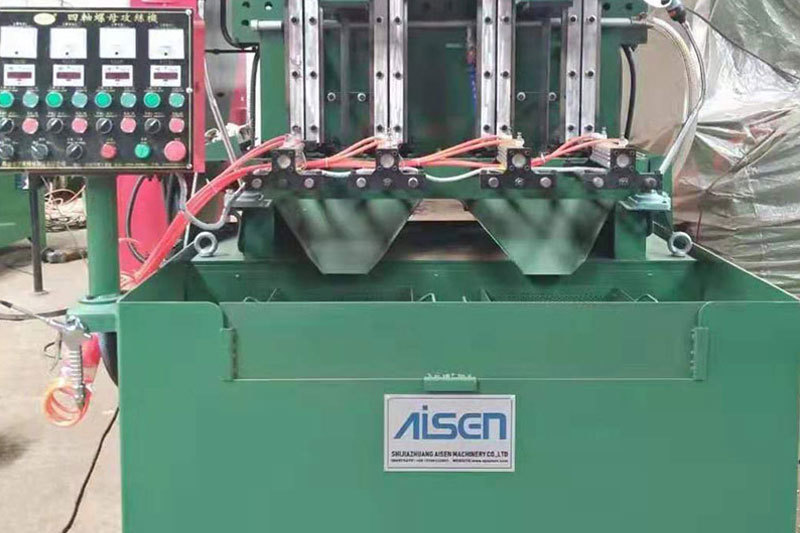
AISEN Four axis nut tapping machine ready for shipment to Russia
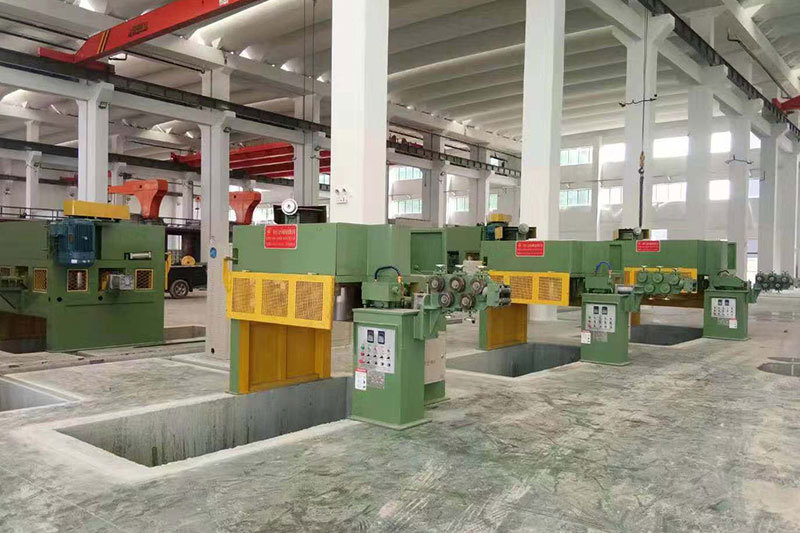
AISEN machinery inverted wire drawing machine
MESSAGES
We will contact you within one working day. Please pay attention to your email.
Qucik Link
Contact
Phone: +86-15100123091
E-mail: info@sjzaisen.com
Address: No.41 Zhaiying South Street, Yuhua District, Shijiazhuang City, Hebei Province China